24/02/2020
- State-owned carrier’s chief says it wouldn’t be ‘morally acceptable’ to stop flying to the country, and it will stand with its ‘Chinese brothers and sisters’
- Dozens of airlines have cancelled or reduced services to the nation amid the virus outbreak, including two East African rivals
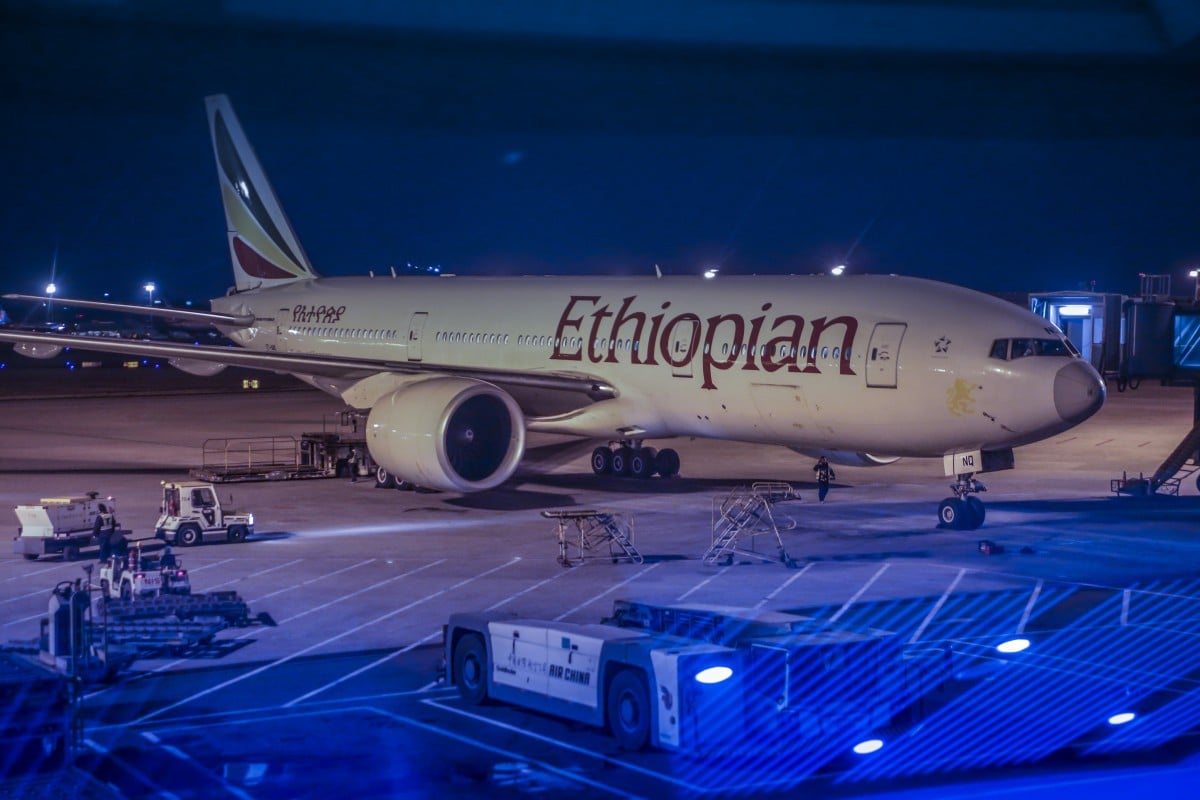
Ethiopian Airlines says it will continue flying to China. The routes are among its most profitable. Photo: Shutterstock
Ethiopian Airlines, Africa’s largest and most profitable carrier, will continue flying to China despite growing pressure for it to suspend services to the country as
.
Dozens of airlines around the globe have cancelled or reduced their services to cities in the world’s second-largest economy amid fears over the outbreak. Its East African rivals Kenya Airways and RwandAir have both suspended flights to China until the outbreak is contained.
But Ethiopian Airlines chief executive Tewolde GebreMariam said the carrier would not abandon the routes, which are among its most profitable.
Tewolde told media over the weekend that the airline had been flying to China since 1973 and it would not be ethical to suspend flights to the country.
“It will not be morally acceptable to stop flying to China today because they have a temporary problem,” he said, adding that the airline would stand with its “Chinese brothers and sisters”.
His remarks came days after Kenyan President Uhuru Kenyatta put pressure on the Ethiopian government – which wholly owns Ethiopian Airlines – to halt flights to China, citing the need to curb the spread of the virus into the East African region.
Global coronavirus deaths equal Sars, while new infections drop
The airline has bucked a trend that has seen major airlines – from the United States to Europe and Asia – staying away from Chinese airspace as governments around the world move to keep the deadly virus from their borders. The pneumonia-like illness has so far
in mainland China since the outbreak began in Wuhan in December, with cases reported in more than 20 other countries worldwide.
Speaking during a visit to Washington last week, Kenyatta – who is keen to court both China and the US – insisted that Kenya’s decision to suspend flights from Guangzhou to Nairobi was not political.
He said most African countries had weak health systems that would make it harder to handle the outbreak, so preventing its spread – even if through extreme measures such as grounding flights – was the only option.
“Our worry as a country is not that China cannot manage the disease. Our biggest worry is diseases coming into areas with weaker health systems like ours,” Kenyatta said while addressing members of US think tank the Atlantic Council.
Vaccine for new coronavirus unlikely to be ready before outbreak is over, says Sars expert
But Ethiopian Airlines said it would continue flying to Beijing, Shanghai, Guangzhou, Chengdu and Hong Kong and was taking measures to protect staff and passengers. Ethiopia receives about 1,500 visitors from mainland China every day.
According to Tewolde, if the airline halted its Chinese services, China and Africa would be completely disconnected.
“No one in Ethiopian Airlines would like to see this,” he said. “We have to take maximum precautions, but stopping flights is not one of them.”
He added: “Even if we stop flying, people will continue to come to Ethiopia through Singapore, Malaysia, Europe. The transmission of the disease will be dangerously hidden … British Airways stopped flying to China for its economic reasons. But Chinese carriers are flying to the UK.”
Chinese cities keen to get back to work but coronavirus concerns grow as workers return
In a separate statement, the carrier said China was “one of the strongest and one of the oldest markets for Ethiopian Airlines”.
“We have been connecting the great Chinese nation with the entire continent of African for almost half a century and it is our growth strategy,” the airline said, adding that it would continue operating in the five cities in compliance with international aviation and health guidelines.
Aside from seeking to shore up revenues, analysts noted that the airline was under tight state control, and Ethiopia would be reluctant to do anything that might harm its strong bilateral ties with China.
Ethiopia is among the nations on the continent with the highest number of Chinese immigrants. Most of them are workers involved in the construction of infrastructure projects including ports, railways, dams, bridges and malls. Those projects have been financed with billions of dollars in loans from China – Ethiopia is reportedly among the biggest recipients of Chinese lending in Africa.
Last year, China was forced to restructure Ethiopia’s debt after the latter edged closer to defaulting on a loan from Beijing for its standard gauge railway.
Chinese hotel workers arrested in Kenya after caning video prompts demands for action
Ethiopia, Algeria, Angola, Nigeria and Zambia together accounted for nearly 60 per cent of all Chinese workers on the continent at the end of 2017, according to a study by Johns Hopkins University.
Ethiopia is also a major recipient of direct foreign investment from China.
Source: SCMP
Posted in africa, Algeria, Angola, Asia, Atlantic Council, Beijing, bow, British Airways, Chengdu, China, coronavirus, direct foreign investment, East African, Ethiopian Airlines, Europe, Guangzhou, halt flights, Hong Kong, Kenya Airways, Kenyan president, Mainland China, Malaysia, Nigeria, pressure, refuses, rivals, SARs, Shanghai, Singapore, Uhuru Kenyatta, Uncategorized, United States, Zambia |
Leave a Comment »
14/08/2019
- Developers say their prototype craft could dive to 1,000 metres in five minutes
- Liu Kaizhou, who also worked the Jiaolong submersible, says ‘We are in uncharted water’
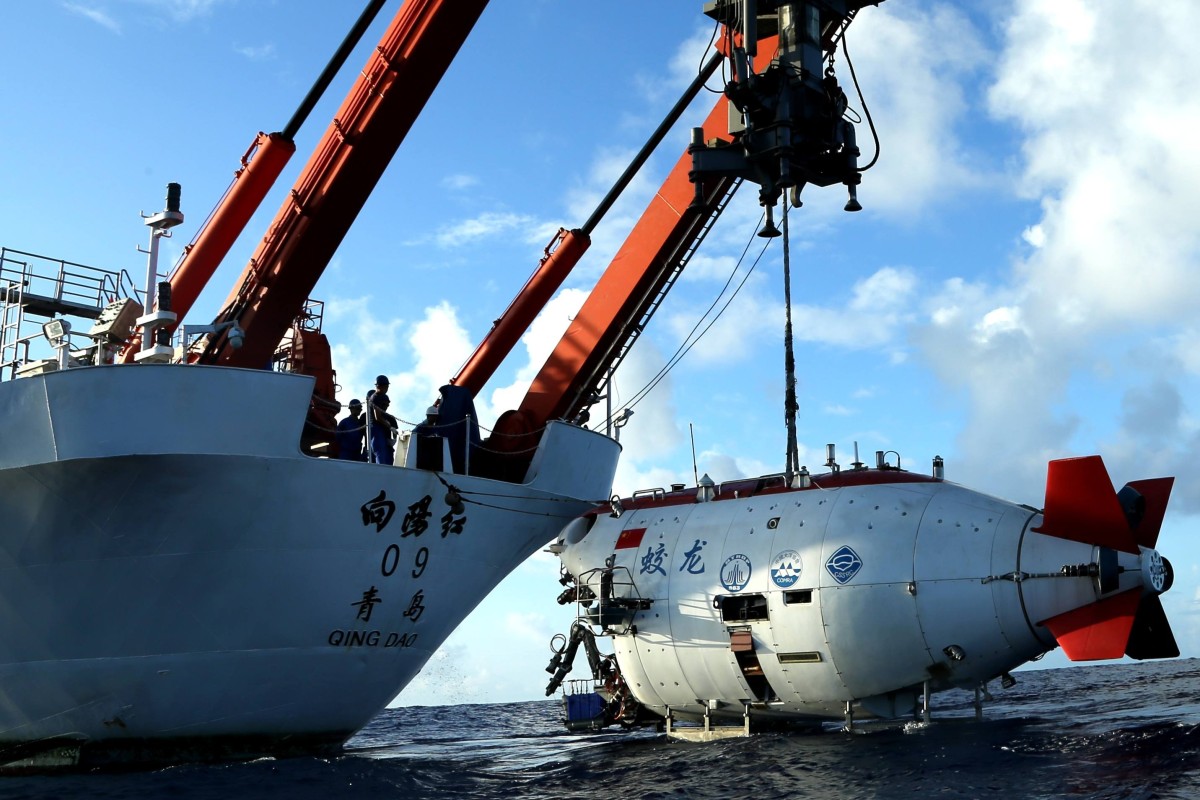
Professor Liu Kaizhou, who developed the autopilot for China’s manned Jiaolong submersible, says his team has designed a vessel that can move through water like a plane moves through the air. Photo: Xinhua
Chinese engineers say they are developing a radical design for a super-fast robot submersible which the project leader, who worked on the manned deep-sea vessel Jiaolong, or Sea Dragon, claims can “fly” in water like a plane travels through the air.
At 3 metres (9.8ft) long, the prototype consists of a cigar-shaped body, with a guidance system in the bow and a jet plane style rudder and a propeller in the stern.
Outriggers house batteries and two more propellers. These are attached to the body by wing-like planes that the developers said will give the vessel the kind of lift in water that takes an aeroplane into the air and back to the earth.
Developers said the prototype will be capable of 10 knots and could dive to a depth of 1,000 metres (3,281 feet) – or surface from that depth – at about three metres a second, taking about 5½ minutes.
Professor Liu Kaizhou, lead scientist of the project at the Shenyang Institute of Automation, part of the Chinese Academy of Sciences in Liaoning province, said the design had great potential.
If a traditional submarine was like an air balloon, he said, the prototype was like an aircraft. “It is technically flying, fast and freely, like a plane for the water.”
The prototype has 20 major components on board, including a computer, and communications and surveillance equipment. These were all developed and tested by the team, but getting them to work together posed some unexpected challenges, Liu said, meaning the transition to operations in a tough marine environment was some time away.
Underwater station could be a game changer, Chinese scientist says
“We aim to make the first open sea test in about a year,” he said.
The submersible can be powered by conventional batteries or a chemical engine that mixes lithium and sulphur hexafluoride to produce heated steam for electrical generators – an energy source often used by torpedoes.
Funded by the Ministry of Science and Technology from 2017, the project was driven by China’s growing ambition to become a superpower in the world’s oceans.
The team said their submersible had the potential to become the backbone of China’s search-and-rescue operations at sea, naval intelligence gathering, high-precision sea floor mapping, or to transport minerals from the seabed to the surface.
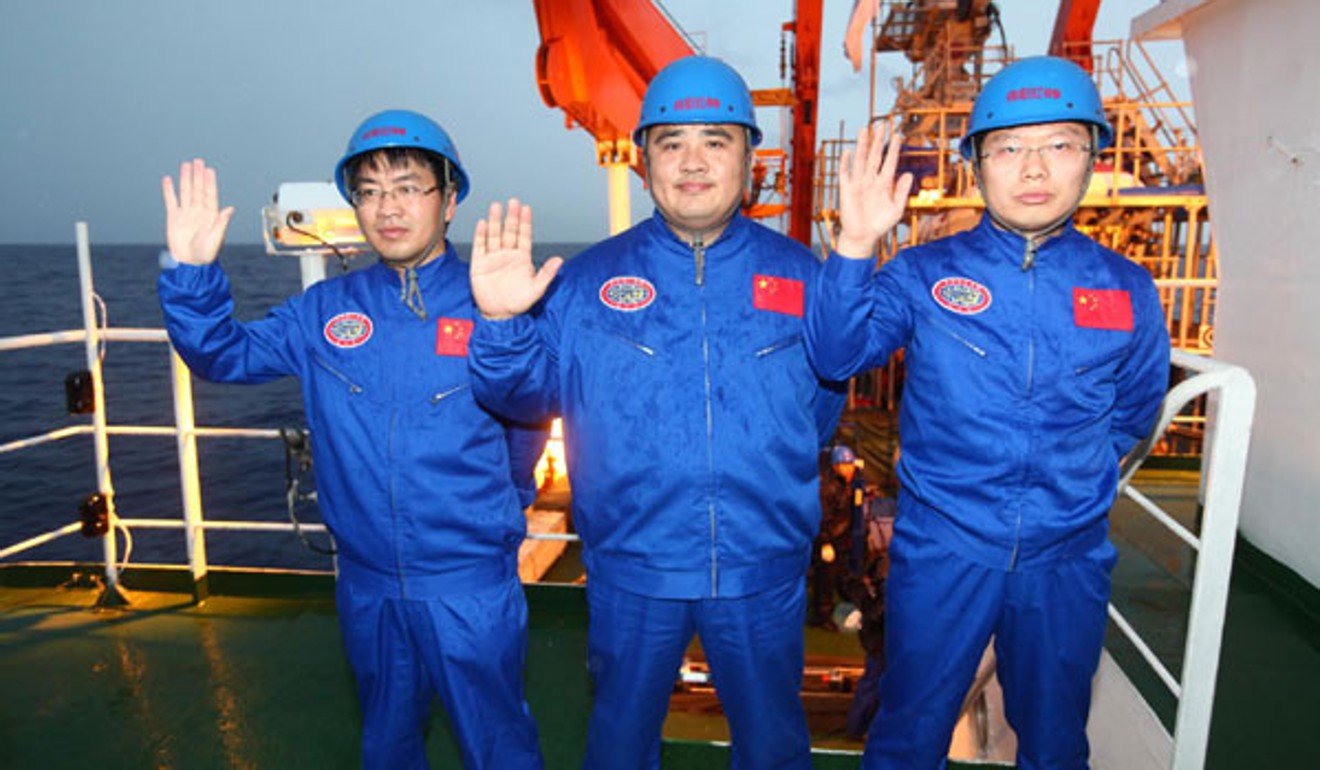
Professor Liu Kaizhou (left) with colleagues Ye Cong and Yang Bo, was instrumental in the success of China’s Jiaolong manned submersible. Photo: Xinhua
Professor Du Tezhuan, a researcher in fluid dynamics at the Institute of Mechanics of the Chinese Academy of Sciences in Beijing, said the design was a bold one but it posed the research team many hard questions.
The density of water was much higher than that of air, he said, which meant the vessel would encounter more drag and would need a strong power source.
“Without sufficient speed, the lift will be weak, and to reach high speeds, lots of energy will be needed. Flying in water is not as easy as flying in the air,” said Du, who was not involved in the project.
Why Beijing is speeding up underwater drone tests in the South China Sea
“But in theory it should work. It is worth a try.”
Liu – who led the design of the autopilot system that can take the Jiaolong to depths of more than 7,000 metres (23,000 ft) – said that after tests on the prototype were complete, other innovations were possible. These included covering the vessel with air bubbles to reduce friction.
“This technology is brand new,” he said. “We are in uncharted water and we are excited by the challenges.”
Source: SCMP
Posted in aeroplane, air, air bubbles, ambition, backbone, batteries, Beijing, bow, challenges, chemical engine, Chinese Academy of Sciences, Chinese engineers, Chinese Ministry of Science and Technology, cigar-shaped body, Communications equipment, computer, conventional batteries, covering the vessel, design, Earth, electrical generators, energy source, fly, friction, game changer, guidance system, heated steam, high-precision sea floor mapping, Institute of Mechanics, jet plane, Jiaolong submersible, Liaoning province, lithium, marine environment, Ministry of Science and Technology, naval intelligence gathering, new submersible, Outriggers, plane, propeller, propellers, prototype craft, robot submersible, rudder, search-and-rescue operations at sea, Shenyang Institute of Automation, South China Sea, stern, sulphur hexafluoride, superpower, surveillance equipment, the Sea Dragon, through water, torpedoes, transport minerals from the seabed, Uncategorized, uncharted water, Underwater station, wing-like planes, world's oceans |
Leave a Comment »




 CHINDIA ALERT: You'll be living in their world, very soon