15/03/2020
(Reuters) – France and Spain joined Italy in imposing lockdowns on tens of millions of people, Australia ordered self-isolation of arriving foreigners, and Argentina and El Salvadore extended entry bans as the world sought to contain the spreading coronavirus.
Panic buying in Australia, the United States and Britain saw leaders appeal for calm over the virus that has infected over 138,000 people globally and killed more than 5,000.
Several countries imposed bans on mass gathering, shuttered sporting, cultural and religious events, while medical experts urged people to practice “social distancing” to curb the spread.
All of Pope Francis’ Easter services next month will be held without the faithful attending, the Vatican said on Sunday, in a step believed to be unprecedented in modern times.
The services, four days of major events from Holy Thursday to Easter Sunday, usually draw tens of thousands of people to sites in Rome and in the Vatican.
Australian Prime Minister Scott Morrison said from midnight Sunday international travellers arriving in the country would need to isolate themselves for 14 days, and foreign cruise ships would be banned for 30 days, given a rise in imported cases.
“What we’ve seen in recent weeks, is more countries having issues with the virus and that means the source of some of those transmissions are coming from more and more countries,” Morrison told a news conference.
Australia’s latest restrictions mirror those announced by neighbouring New Zealand on Saturday. Australia has recorded more than 250 coronavirus cases and three deaths.
TRAVEL BANS, AIRLINE CUTBACKS
U.S. President Donald Trump declared a national emergency on Friday. The United States has recorded more than 2,000 cases and 50 deaths, but has been criticised for slow testing.
Travel bans and a plunge in global air travel saw further airline cut backs, with American Airlines Inc (AAL.O) planning to cut 75% of international flights through May 6 and ground nearly all its widebody fleet.
The dramatic announcement by the largest U.S. airline came hours after the White House said the United States would widen new travel restrictions on Europeans to include travellers in the United Kingdom and Ireland, starting Monday night.
Washington has already imposed flight restrictions on China.
China tightened checks on international travellers arriving at Beijing airport on Sunday, after the number of imported new coronavirus infections surpassed locally transmitted cases for a second day in a row.
Anyone arriving to Beijing from abroad will be transferred directly to a central quarantine facility for 14 days for observation starting March 16, a city government official said.
China, where the epidemic began in December, appears to now face a greater threat of new infections from outside its borders as it continues to slow the spread of the virus domestically.
China has reported 80,984 cases and 3,203 deaths, according to a Reuters tally, of which 66,911 have recovered in mainland China, which has imposed draconian containment policies, locking down several major cities.
LOCKDOWNS, STAY HOME
Spain put its 47 million inhabitants under partial lockdown on Saturday as part of a 15-day state of emergency to combat the epidemic in Europe’s second worst-affected country after Italy.
Spain had 193 coronavirus deaths and 6,250 cases, public broadcaster TVE said on Saturday, up from 120 deaths reported on Friday.
France will shut shops, restaurants and entertainment facilities from Sunday with its 67 million people were told to stay home after confirmed infections doubled in 72 hours.
French Prime Minister Edouard Philippe said the government had no other option after the public health authority said 91 people had died in France and almost 4,500 were now infected.
“We must absolutely limit our movements,” he said.
Britain is preparing to ban mass gatherings, while isolating people aged over 70 for up to four months is part of its action plan to tackle coronavirus which will be implemented in the coming weeks, Health Secretary Matt Hancock said on Sunday.
Argentina banned entry to non-residents who have travelled to a country highly affected by coronavirus in the last 14 days, the government officially announced late on Saturday.
The ban will last 30 days. Argentina has 45 cases of coronavirus, the health ministry said, up from 21 on March 12.
Panama said flights arriving from Europe and Asia would be temporarily suspended, with the exception of flights that transport doctors, medical equipment or other humanitarian aid.
Colombia will expel four Europeans for violating compulsory quarantine protocols, just hours after it closed its border with Venezuela, the government said on Saturday.
ANTI-TERRORISM TRACKING TO FIGHT VIRUS
Israel will use anti-terrorism tracking technology and partially shutdown its economy to minimise transmission risks, Prime Minister Benjamin Netanyahu said on Saturday.
Cyber tech monitoring would be deployed to locate people who have been in contact with those carrying the virus, subject to cabinet approval, Netanyahu told a news conference in Jerusalem.
Starting Sunday, South Korea began to subject visitors from France, Germany, Britain, Spain and the Netherlands to stricter border checks, after imposing similar rules for China, Italy and Iran which have major outbreaks.
Visitors from those countries now need to download an app which will report whether they have symptoms. South Korea has been testing hundreds of thousands of people and tracking potential carriers using cell phone and satellite technology.
Source: Reuters
Posted in AIRLINE CUTBACKS, American Airlines Inc (AAL.O), ANTI-TERRORISM TRACKING, Argentina, Australia, Australian Prime Minister Scott Morrison, Beijing, beijing airport, Benjamin Netanyahu, Britain, Cell Phone, Colombia, coronavirus, cruise ships, Easter services, El Salvadore, entertainment facilities, entry bans, epidemic, EU finance ministers, Europeans, fight, Foreigners, France, French Prime Minister, global, Health Secretary, imposed, Ireland, Israel, Italy, lockdowns, national emergency, New Zealand, Panama, Panic buying, restaurants, Reuters tally, satellite technology, self-isolation, shops, ski resorts, South Korea, Spain, spread, TRAVEL BANS, U.S. President Donald Trump, Uncategorized, United Kingdom, United States, Venezuela, Washington, White House |
Leave a Comment »
11/03/2020
- Infections outside China have risen 13-fold, according to World Health Organisation
WHO Director General Tedros Adhanom Ghebreyesus speaks during a news conference in Geneva in February. Photo: Reuters
The World Health Organisation declared the coronavirus outbreak a pandemic on Wednesday, saying cases outside China have risen 13-fold.
The top infectious-disease specialist in the US told lawmakers the pathogen is 10 times more deadly than the seasonal flu.
Britain announced a US$39 billion stimulus package, hours after the Bank of England cut interest rates. Cases in Britain jumped 22 per cent to 456.
German Chancellor Angela Merkel pledged to do “whatever is necessary”, and the European Central Bank’s president warned of a significant shock.
Source: SCMP
Posted in Angela Merkel, Bank of England, Britain, cases, coronavirus, declares, European Central Bank’s, German Chancellor, interest rates, pandemic, soar, stimulus package, Uncategorized, WHO, World Health Organisation, worldwide |
Leave a Comment »
10/03/2020
BEIJING (Reuters) – Chinese President Xi Jinping visited Wuhan, the epicentre of the coronavirus outbreak, on Tuesday, the first time he has done so since the epidemic began and a sign that Beijing believes its efforts to control the virus are working.
His arrival in the city, where the virus is believed to have first taken hold late last year, comes after its spread in mainland China has sharply slowed in the past week and as attention has turned to preventing imported infections from overseas hot spots such as Iran, Italy and South Korea.
News of the visit gave a lift to Chinese stocks, with the blue-chip index .CSI300 climbing back into positive territory after falling as much as 1% in morning trade.
“It is obvious that Xi could not have visited Wuhan earlier because the risk of him contracting the virus there was initially too high,” Zhang Ming, a professor at Renmin University in Beijing, told Reuters.
“He is there now to reap the harvest. His being there means the CCP (Communist Party of China) may declare victory against the virus soon,” Zhang said.
China came in for criticism at home and globally over its early response to the outbreak, suppressing information and downplaying its risks, but its draconian efforts at control, including the lock-down of Wuhan and Hubei province where it is originated, have been effective at curbing the spread.
Hubei province, of which Wuhan is the capital, said on Tuesday it would implement a “health code” system to allow people in areas at a medium or low risk of contracting the coronavirus to start travelling.
During his trip to Wuhan, Xi will “visit and express regards to medical workers, military officers and soldiers, community workers, police officers, officials and volunteers who have been fighting the epidemic on the front line, as well as patients and residents during the inspection,” state news agency Xinhua said.
Separately, Taiwan’s government said on Tuesday a second round of evacuations of its citizens who had been stranded in Wuhan had begun, after weeks of arguments between the Chinese-claimed island and Beijing over the arrangements.
NEW CASES FALL
Mainland China had 19 new coronavirus infections on Monday, the National Health Commission said on Tuesday, down from 40 a day earlier. It also marked the third straight day of no new locally transmitted coronavirus cases outside of Hubei.
Of the new cases, 17 were in Wuhan, while one was in Beijing and one other in Guangdong due to people arriving from abroad, according to the health authority.
That brings the total number of confirmed cases in mainland China so far to 80,754.
However, Chinese authorities have ramped up warnings about the risks from foreigners and Chinese nationals travelling to China from viral hot spots abroad such as Iran and Italy.
The one case in Beijing on Monday was due to a traveller from Britain, and the one in Guangdong was an imported case from Spain. As of Monday, there have been 69 imported cases.
More than 114,300 people have been infected by the coronavirus globally and over 4,000 have died, according to a Reuters tally of government announcements.
Outside China, Italy, South Korea and Iran have reported the most cases and deaths.
Since the outbreak, 59,897 patients have been discharged from hospitals in China. Recently discharged patients need to go into quarantine for 14 days.
In Wuhan, 12 of the 14 temporary hospitals dedicated to treating coronavirus patients have closed, with the remaining two due to shut on Tuesday.
On Saturday, a small hotel used to quarantine people under observation in southern Fujian province collapsed, killing 20, while 10 had yet to be rescued.
Of the 71 people inside the hotel in Quanzhou city at the time of the collapse, 58 were in under quarantine, the Quanzhou city government said.
As of the end of Monday, the overall death toll from the coronavirus outbreak in China reached 3,136, up by 17 from the previous day.
Hubei reported 17 new deaths, all of which were in Wuhan.
Xi, who was mostly absent from Chinese state media coverage of the crisis in its early days, has become for more visible in recent weeks.
The Global Times, a nationalist tabloid published by the official People’s Daily, on Tuesday detailed the various instructions and actions Xi had given and taken between Jan. 7 and March 2 to combat the epidemic.
“Xi personally commands the people’s war against the epidemic. He has been paying constant attention to the epidemic prevention and control work and made oral or written instructions every day,” the newspaper said.
Source: Reuters
Posted in Beijing, Britain, CCP (Communist Party of China), Chinese President Xi Jinping, Chinese-claimed island, community workers, coronavirus outbreak, epicentre, epidemic, fighting, front line, Government, Guangdong, hubei province, iran, Italy, Mainland China, medical workers, military officers, National Health Commission, nationalist tabloid, officials, People’s Daily, police officers, Quanzhou, quarantine, Reuters tally, soldiers, South Korea, Spain, Taiwan’s, The Global Times, Uncategorized, visited, volunteers, Wuhan, Xinhua |
Leave a Comment »
07/03/2020
UNITED NATIONS, March 6 (Xinhua) — China’s UN envoy on Friday said China welcomes the Russia-Turkey agreement on a ceasefire for Syria’s northwestern province of Idlib.
In a press encounter after a close-door Security Council meeting on Syria, China’s Permanent Representative to the UN Zhang Jun said “for China, we welcome the agreement signed by the Russian Federation and the Republic of Turkey, and we welcome the diplomatic efforts along this direction.”
He said the signing of the agreement is conducive to finding “what we have always longed … a comprehensive solution to the issue in Syria.”
It’s a step forward in promoting a Syrian-led and Syrian-owned political process, facilitated by the UN, he said, expressing the hope that the agreement will be fully implemented.
Zhang stressed that in the process of implementation, Syria’s sovereignty, territorial integrity and political independence should be fully respected.
He said China hopes the international community will continue to commit to the fight against terrorism in the process. “We do hope that we will see more encouraging progress.”
The Chinese envoy voiced support for the humanitarian effort made by the UN, pledging that China will do whatever it can to provide humanitarian aid. “We also hope that the comprehensive humanitarian situation in Syria will be taken care of by the international community.”
He also urged parties concerned to avoid any attack on the civilians in Idlib and in Syria as a whole.
Russia and Turkey agreed Thursday on a ceasefire in the de-escalation zone in Idlib, a development that could ease escalating conflicts and facilitate a peace process in the war-torn country.
The ceasefire became effective from 00:01 a.m. on Friday local time. Russia and Turkey also agreed to create a safety corridor 6 km to the north and 6 km to the south from the strategic M4 highway, which connects Aleppo in northern Syria with Latakia in the northwest.
Also in the press encounter, Russia’s Permanent Representative to the UN Vassily Nebenzia said the ceasefire does not “exempt” operations targeting terrorists in the area, and that he hopes the sporadic fighting after the ceasefire took effect will be put out.
Britain and Germany’s UN ambassadors also expressed hope that the fresh ceasefire will last.
In 2018, the two countries agreed on a deal in the southern Russian city of Sochi, which created a “de-escalation” zone in Idlib and allowed for the deployment of 12 Turkish observation posts. However, the “de-escalation” zone has been repeatedly violated.
More than 30 Turkish soldiers were killed last month around the area during an operation of the Syrian government, which Russia backs. The operation was attempting to regain control of the final rebel stronghold in the country after nearly nine years of war.
In response, Turkey targeted Syrian positions with aircraft, drones and artillery, raising fears of a direct military confrontation between Russia and Turkey.
Since March 2011, Syria has been in the throes of a conflict that has forced more than half of all Syrians to leave their homes.
According to The UN Office for the Coordination of Humanitarian Affairs, an estimated 5 million Syrians have fled the country, 6 million others are internally displaced, over 13 million people need assistance and an untold number of men, women and children are suffering greatly.
Source: Xinhua
Posted in Aleppo, Britain, ceasefire, China, China's Permanent Representative to the UN, envoy, Germany's, Idlib, Latakia, Republic of Turkey, Russia, Russia-Turkey agreement, Russian Federation, Syria, Syria's northwestern province, terrorism, The UN Office for the Coordination of Humanitarian Affairs, Turkey, UN ambassadors, Uncategorized, welcomes |
Leave a Comment »
25/02/2020
SEOUL/BEIJING (Reuters) – South Korea aims to test more than 200,000 members of a church at the centre of a surge in coronavirus cases, as countries stepped up efforts to stop a pandemic of the c that emerged in China and is now spreading in Europe and the Middle East.
More than 80,000 people have been infected in China since the outbreak began, apparently in an illegal wildlife market in the central city of Wuhan late last year.
China’s death toll was 2,663 by the end of Monday, up 71 from the previous day. But the World Health Organization (WHO) has said the epidemic in China peaked between Jan. 23 and Feb. 2 and has been declining since.
However, fast-spreading outbreaks in Iran, Italy and South Korea, and first cases in several Middle East countries, have fed worries of a pandemic, or worldwide spread of the virus.
“We are close to a pandemic, but there is still hope the epidemics in Iran, Italy, South Korea, etc. can be controlled,” said Raina MacIntyre, head of the Biosecurity Programme at the Kirby Institute at the University of New South Wales.
South Korea has the most virus cases outside China and reported its tenth death and 144 new cases, for a total of 977. President Moon Jae-in said the situation was “very grave”.
In Europe, Italy has become a new front line, with 220 cases reported on Monday, up from just three on Friday. The death toll in Italy is seven.
Global stock markets stabilised on Tuesday after a wave of early selling petered out and Wall Street futures managed a solid bounce after a sharp selloff the previous day on fears about the spreading coronavirus.
“If travel restrictions and supply chain disruptions spread, the impact on global growth could be more widespread and longer lasting,” said Jonas Goltermann, senior economist at research consultancy Capital Economics in London.
PUBLIC ANXIETY
About 68% of South Korea’s cases are linked to the Shincheonji Church of Jesus, where the outbreak is believed to have begun with a 61-year-old woman. It is not known how she became infected.
The church said it would provide authorities the names of all its members in South Korea, estimated by media at about 215,000 people. The government would test them all as soon as possible, the prime minister’s office said.
“It is essential to test all of the church members,” it said in a statement. Authorities said they were testing up to 13,000 people a day.
The U.S. and South Korean militaries have said they may cut back joint training due to the virus, in one of the first concrete signs of its fallout on global U.S. military activities.
The disclosure came during a visit to the Pentagon on Monday by South Korean Defence Minister Jeong Kyeong-doo, who said 13 South Korean troops had the virus.
The U.S. military said a woman who tested positive for the virus had visited one of its bases in the hard-hit city of Daegu. It was the first infection connected to U.S. Forces Korea, which has about 28,500 American troops on the peninsula.
The U.S. military urged troops to “use extreme caution” off base, while the U.S. Centers for Disease Control and Prevention said Americans should avoid non-essential travel to South Korea.
IRAN ISOLATION
Outside mainland China, the outbreak has spread to about 29 countries and territories, with a death toll of about three dozen, according to a Reuters tally.
Afghanistan, Bahrain, Iraq, Kuwait and Oman reported their first new coronavirus cases, all in people who had been to Iran where the toll was 14 dead, media said, and 61 infected.
The outbreak threatens to isolate Iran further. The United Arab Emirates, which has 13 virus cases, suspended all flights with Iran for at least a week, state media said.
Iraq extended an entry ban on travellers from China and Iran to those from five other countries over virus fears, its health ministry said.
In Japan, which has reported four deaths and 850 cases mostly linked to a cruise ship, Health Minister Katsunobu Kato said it was too early to talk about cancelling the Tokyo Olympics due to start on July 24.
The United States pledged $2.5 billion to fight the disease, with more than $1 billion going toward developing a vaccine, with other funds earmarked for therapeutics and the stockpiling of personal protective equipment such as masks.
China reported a rise in new cases in Hubei province, the epicentre of the outbreak. But excluding those, China had just nine new infections on Monday, its fewest since Jan. 20.
With the pace of new infections slowing, Beijing said restrictions on travel and movement that have paralysed economic activity should begin to be lifted.
“Low-risk areas … are to restore order in production and life, cancel transport restrictions and help enterprises,” state planner official Ou Xiaoli told a briefing.
Source: Reuters
Posted in $1 billion, Afghanistan, American troops, Bahrain, Beijing, Biosecurity Programme, Britain, coronavirus, coronavirus case, defence minister, epidemic, Europe, hubei province, illegal wildlife market, iran, Iraq, Italy, Japan, Kirby Institute, Kuwait, launch, London, Mainland China, Mass, Oman, pandemic, peaked, peninsula, Pentagon, pledges, Reuters, Rome, self isolate, Seoul, Shincheonji Church of Jesus, Sicily, South Korea, South Korean, spreading, testing, the Middle East, The United Arab Emirates, travellers, U.S., U.S. Centers for Disease Control and Prevention, U.S. Forces, Uncategorized, University of New South Wales, Vaccine, Virus, World Health Organization (WHO), Wuhan |
Leave a Comment »
24/02/2020
- An insect-killing fungus has been turned into a mass-produced biopesticide that will face its biggest challenge in East Africa
- Current swarm has put 13m people at risk of famine and this will be the first large-scale test of its effectiveness
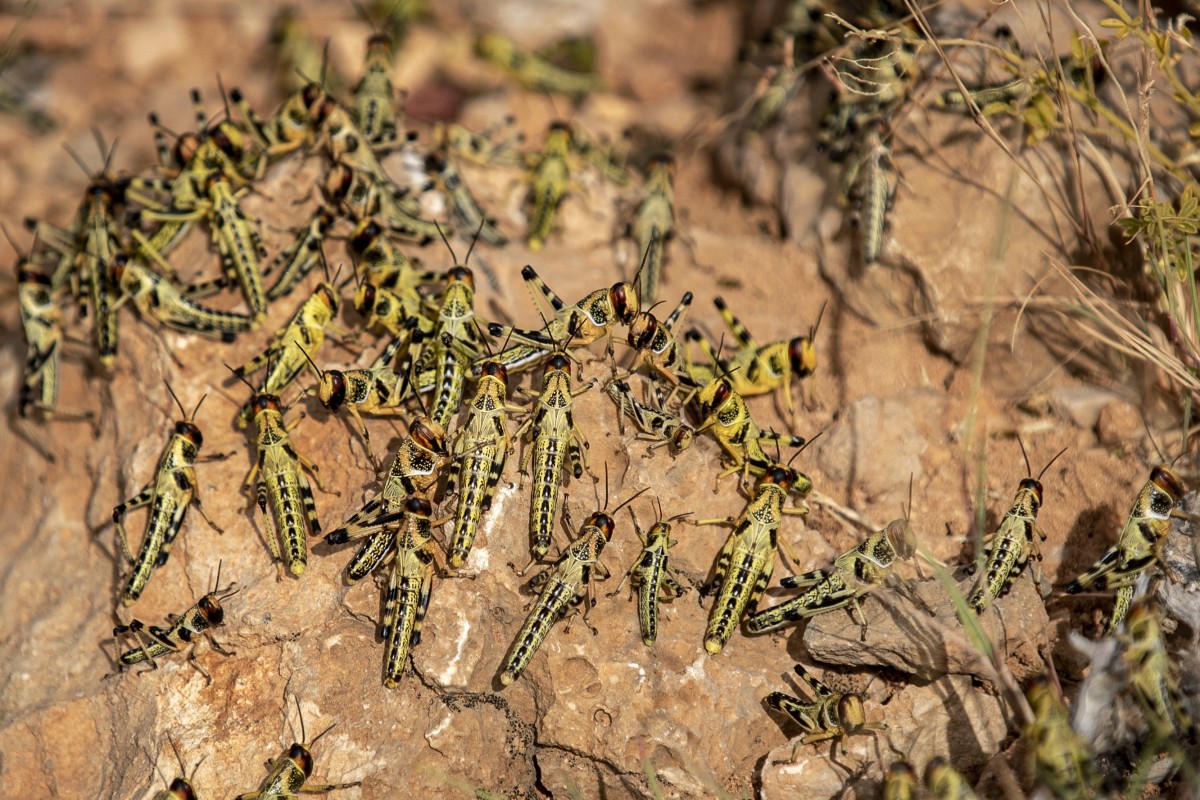
Young locusts in Somalia, where the fungus will be used to try to kill them. Photo: AP
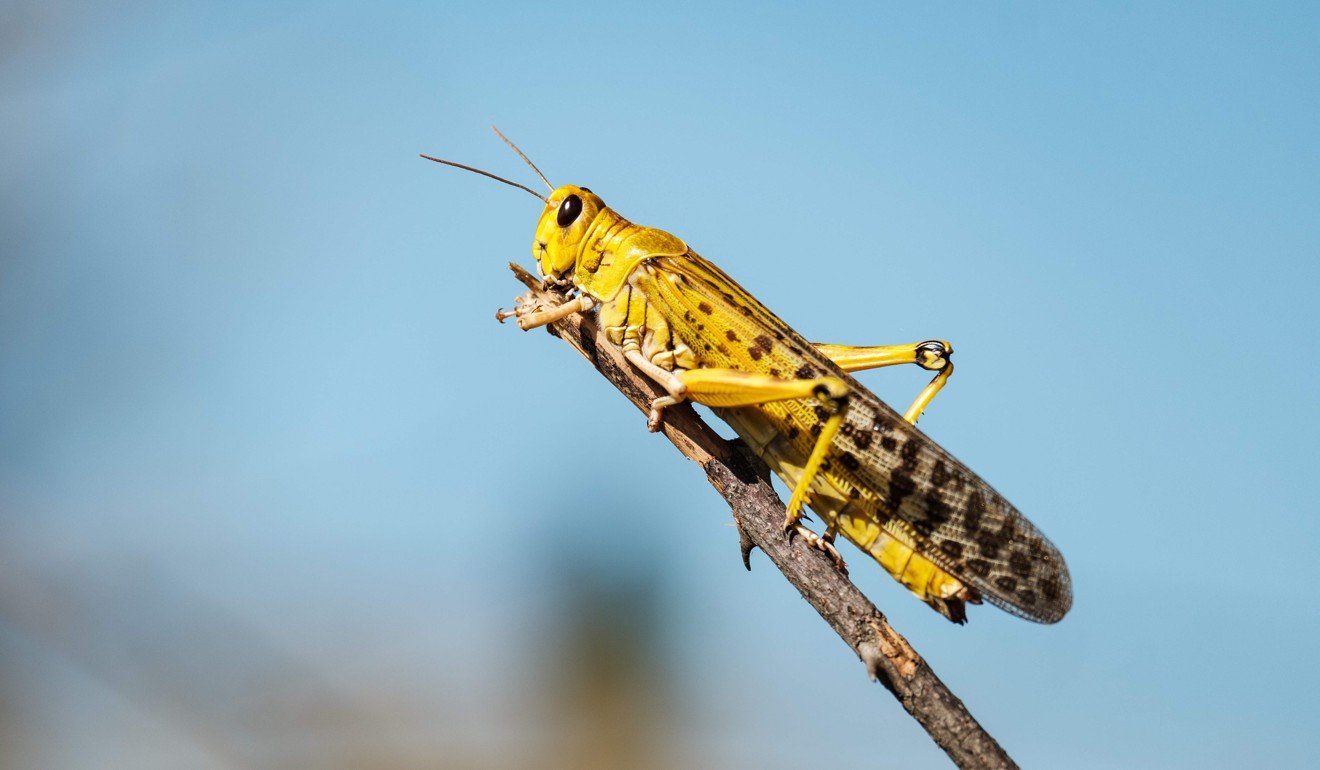
Chinese factories are producing thousands of tonnes of a “green zombie fungus” to help fight the swarms of locusts in East Africa.
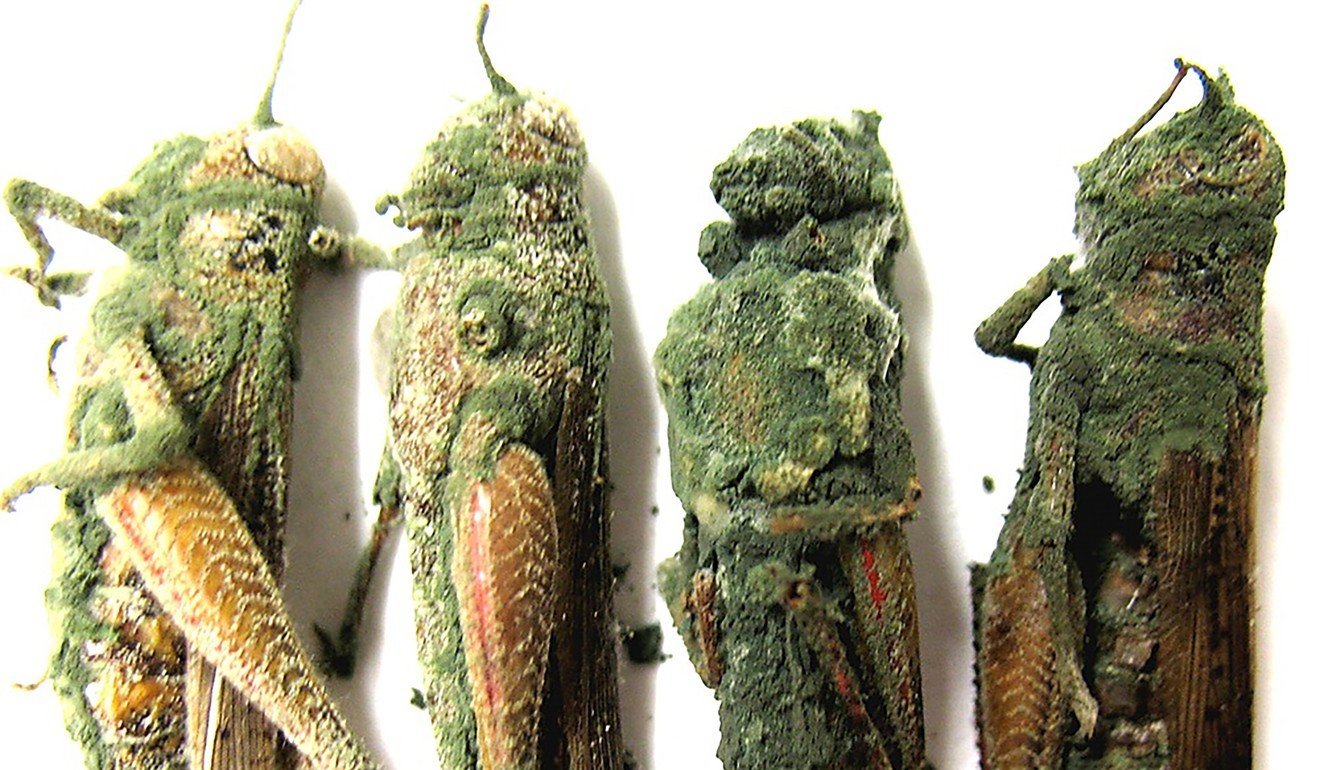
Metarhizium is a genus of fungi with nearly 50 species – some genetically modified – that is used as a biological insecticide because its roots drill through the insects’ hard exoskeleton and gradually poisons them.
In China it was named lu jiang jun, which means green zombie fungus, because it gradually turns its victims in a green mossy lump.
There are now dozens of factories across the country dedicated to producing its spores and despite the curbs introduced to stop the spread of Covid-19, many of them have resumed operations and are shipping thousands of tonnes to Africa.
Plague fears as massive East Africa locust outbreak spreads
These factories are set up in a similar way to breweries, growing the spores on rice which is kept in carefully controlled conditions to ensure the correct temperature and humidity.
Each plant can produce thousands of tonnes of fungi powder per year, each gram of which contains tens of billions of spores.
“I am sending off a truckload right now. Our stock is running out,” said the marketing manager of a production plant in Jiangxi province. “Some customers need it urgently. They need it to kill the locusts.”
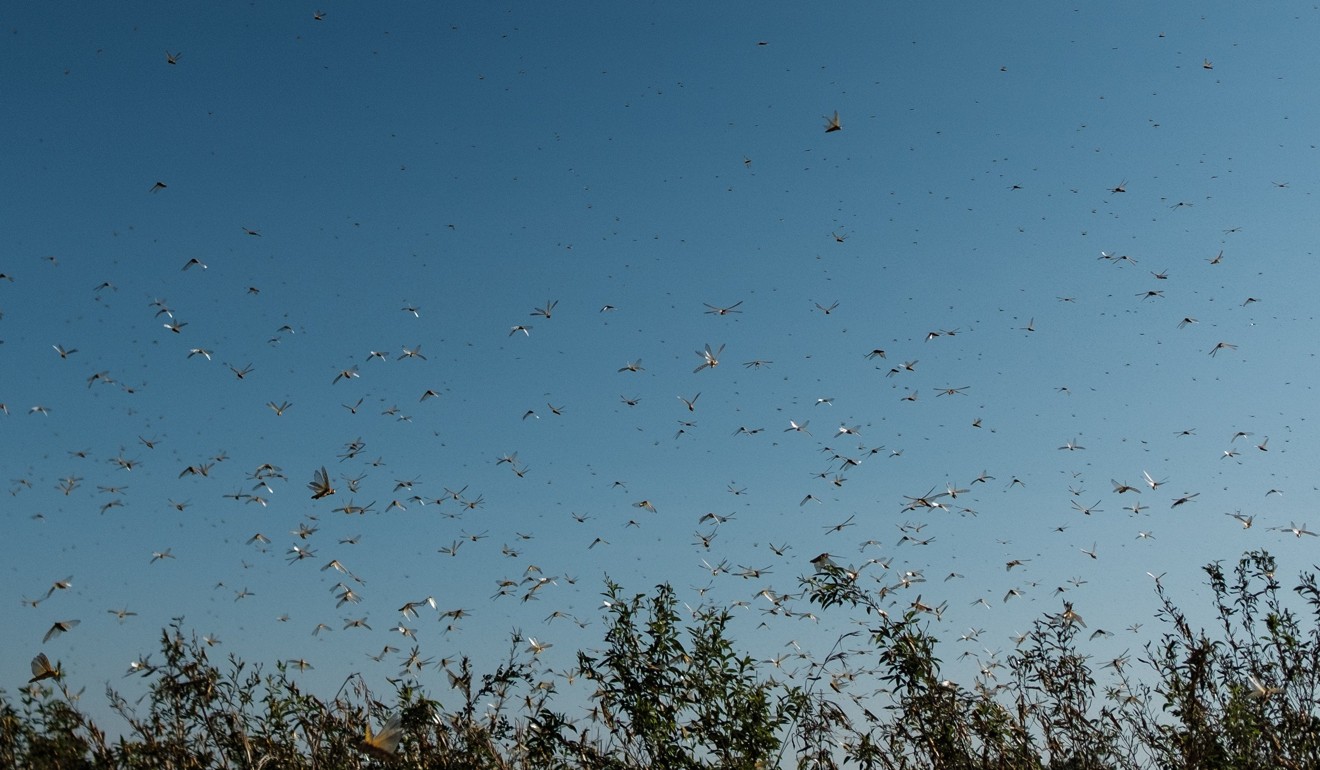
The need is particularly pressing in East Africa at the moment, where abnormally high levels of rainfall during the dry season allowed hundreds of billions of locusts to hatch in recent months.
So far the swarms have devastated crops in countries such as Ethiopia, Kenya, Somalia and Uganda and are moving on to neighbouring countries.
Up to 13 million people face the risk of famine in East Africa. Photo: AFP
The UN’s Food and Agriculture Organisation (FAO) has warned the situation could be the “worst in decades” and the resulting famine may affect 13 million people and cause international food prices to soar.
Last week, Science magazine reported that the Somalian government, working with the FAO, was preparing to a metarhizium species that only kills locusts and grasshoppers in what it described as the largest ever use of biopesticides against the insects.
Scientists do not believe that the fungus will be enough to solve the problem – monitoring the outbreak and targeting their breeding grounds will be more important in the long-run – but if it proves effective it could be an important weapon to target future outbreaks.
It will take time to gauge the effectiveness, partly because each fungus will take several days to take effect and partly because of the sheer scale of the challenge; a single swarm in Kenya was estimated to contain between 100 billion and 200 billion locusts.
By fair means or fowl: how Chinese herdsmen are planning to stop a locust invasion
The locusts have also swept eastward into the Middle East, travelling up to 150km (90 miles) a day, and are moving closer to China now that they have now reached some of its neighbours, including India and Pakistan.
At present China’s agriculture ministry believes some locusts may follow the monsoon into the country but “the chances of them causing damage is very small”.
Most scientists agree the swarms will not have lasting effect on food production but say developing countries can tap into China’s cutting-edge anti-locust technology.
Radar stations have been set up all the way along China’s western and southern borders to detect possible clouds of locusts, while unmanned devices lure the insects into traps to collect data about their species population and size.
A locust being eaten inside out by the metarhizium fungi. Photo: Chinese Academy of Sciences and the University of Maryland
The data is streamed to the ministry’s programme command, which is responsible for the planning and coordination of the national efforts to prevent an outbreak.
The scientists also said that planes loaded with biological and chemical sprays were standing by.
Today, most locust outbreaks happen in developing countries that do not have advanced monitoring networks and some of them are unable to produce pesticides on a mass scale, according to Li Hu, an associate professor with the China Agricultural University in Beijing.
The Chinese locust treatment technologies were highly advanced, and usually cheaper than competing solutions from the West, he said.
Chinese researchers are now working with colleagues in other countries to help them solve the problem.
One disadvantage of the Chinese research is that it is mostly focused on local species, or the East Asia migratory locust. The desert locusts currently swarming East Africa have different genes and behaviour, and Li warned that some methods that work in China might not work elsewhere.
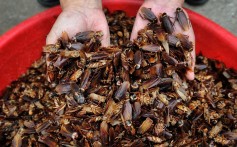
A giant indoor farm in China is breeding 6 billion cockroaches a year. Here’s why
There were some sightings of the species reported in Yunnan and Tibet in the past, but they did not build up to large colonies, Professor Kang Le, lead scientist of the locust research programme with the Institute of Zoology at the Chinese Academy of Sciences in Beijing, told China Science Daily last week.
The vast west China region of Xinjiang, which shares a border with eight countries, is currently too cold for a locust migration, but once temperatures start to rise in the spring it could see locusts swarming across the border with Afghanistan.
Shi Wangpeng, a senior government locust expert, told China Business Network on Sunday that China should be on high alert because many Afghan farms had already been affected.
“These areas share a long border with us, there are almost no barriers,” he was quoted as saying by the Shanghai-based magazine.
China has a long and bitter history of locust swarms, with more than 840 being recorded in the official records over the past 2,700 years.
One famine, in the year 628 was so devastating that even the Tang dynasty emperor Taizong was reported to have run short of food and resorted to eating the insects to survive.
China has a long and bitter history of locust swarms. Photo: AFP
This, in turn, means that China’s rulers have long been looking for innovative ways to solve the problem
In the past farmers tried remedies such as building huge fires, burying the insects in ditches or trying to kill them with sticks.
In one campaign organised by prime minister Yao Chong in 715, the farms collected 9 million sacks of dead locusts and managed to save a significant proportion of their crops, according to historic text.
In more recent times more sophisticated technologies have been deployed to tackle the menace.
Some researchers have spent decades chasing locust colonies and studying their individual and collective behaviour everywhere from coastal areas to inland deserts, and in 2014 Chinese scientists released the world’s most comprehensive genetic map of locusts.
Researchers have also developed chemical agents that can disorient swarms of locusts and disperse them.
Chinese scientists first became interested in the green zombie’s potential in the 1980s after discovering that South Pacific islanders had been using them to kill insects on coconut trees.
Research by US scientists confirmed its effectiveness in the 1990s and the Chinese started importing the fungus from the United States and Britain.
Their experiments led to the development of newer and deadlier strains and mass production started in the past decade.
Other fungi or bacteria can be used to fight locusts, and some laboratories are working with agricultural technology companies to modify their genes to turn them into more deadly or precise killers.
One genetically engineered species of microsporidia, another type of insect-killing fungus, for instance, can generate three times as many as the spores to those produced by nature species, according to a document from the China Association of Agricultural Science Societies last year.
While it remains to be seen whether the current swarms will reach China, these treatments have been effective in the past and there has not been a locust outbreak in China for a decade.
Source: SCMP
Posted in Afghan farms, Afghanistan, Agriculture ministry, Beijing, Britain, China Agricultural University, China Association of Agricultural Science Societies, China Business Network, China Science Daily, China’s, Chinese Academy of Sciences, cockroaches, coconut trees, desert locusts, different genes and behaviour, East Africa’s, East Asia migratory locust, Ethiopia, famine, fighting, Food and Agriculture Organisation (FAO), green zombie fungus, hold ke, hold key, India, insect-killing fungus, Institute of Zoology, Jiangxi Province, Kenya, locust treatment technologies, locusts, mass-produced biopesticide, microsporidia, Middle East, monsoon, Pakistan, Plague fears, Radar stations, Science, Somalia, South Pacific islanders, swarms, Taizong, Tang dynasty emperor, Tibet, Uganda, Uncategorized, United States, Xinjiang, Yunnan |
Leave a Comment »
24/02/2020
BEIJING/SEOUL (Reuters) – Italy, South Korea and Iran reported sharp rises in coronavirus infections on Monday, triggering concern from the World Health Organization (WHO), but China relaxed some curbs on movement, including in Beijing, as the rate of new infections there eased.
The virus has put Chinese cities into lockdown, disrupted air traffic to the workshop of the world and blocked global supply chains for everything from cars and car parts to smartphones.
The surge of cases outside mainland China triggered steep falls in global share markets and Wall Street stock futures as investors fled to safe havens. Gold soared to a seven-year high, oil tumbled nearly 4% and the Korean won KRW= fell to its lowest level since August.[MKTS/GLOB]
But U.S. Treasury Secretary Steven Mnuchin cautioned against jumping to conclusions about the impact on the global economy or supply chains, saying it was simply too soon to know.
The World Health Organization (WHO) said it no longer had a process for declaring a pandemic, but that the coronavirus outbreak remained an international emergency.
“We are specially concerned about the rapid increase in cases in … Iran, Italy and the Republic of Korea,” WHO head Tedros Adhanom Ghebreyesus told a news conference in Sweden via video link from Geneva.
South Korea reported 231 new cases, taking its total to 833. Many are in its fourth-largest city, Daegu, which became more isolated with Asiana Airlines (020560.KS) and Korean Air (003490.KS) suspending flights there until next month.
Iran, which announced its first two cases last Wednesday, said it had confirmed 43 cases and eight deaths. Most of the infections were in the Shi’ite Muslim holy city of Qom.
Elsewhere in the Middle East, Bahrain and Iraq reported their first cases and Kuwait reported three cases involving people who had been in Iran.
Saudi Arabia, Kuwait, Iraq, Turkey, Pakistan and Afghanistan imposed restrictions on travel and immigration from Iran. Afghanistan also reported its first case, officials said.
The WHO has been saying for weeks that it dreads the disease reaching countries with weak health systems.
Europe’s biggest outbreak is in Italy, with some 150 infections – compared with just three before Friday – and a fifth death.
‘SEVERE AND COMPLEX’
Scientists around the world are scrambling to analyze the virus, but a vaccine is probably more than a year away.
“Worryingly, it seems that the virus can pass from person to person without symptoms, making it extremely difficult to track, regardless of what health authorities do,” said Simon Clarke, an expert in cellular microbiology at the University of Reading in Britain.
China postponed the annual meeting of its parliament in Beijing.
But there was a measure of relief for the world’s second-largest economy as more than 20 province-level jurisdictions, including Beijing and Shanghai, reported zero new infections, the best showing since the outbreak began.
President Xi Jinping urged businesses to get back to work, though he said the epidemic was still “severe and complex, and prevention and control work is in the most difficult and critical stage”.
Excluding the central Hubei province, center of the outbreak, mainland China reported 11 new cases, the lowest since the national health authority started publishing nationwide daily figures on Jan. 20.
The coronavirus has infected nearly 77,000 people and killed more than 2,500 in China, most in Hubei.
Overall, China reported 409 new cases on the mainland, down from 648 a day earlier, taking the total number of infections to 77,150 cases as of Feb. 23. The death toll rose by 150 to 2,592.
Outside mainland China, the outbreak has spread to about 29 countries and territories, with a death toll of about two dozen, according to a Reuters tally.
Xi said on Sunday the outbreak would have a relatively big, but short-term, impact on the economy and the government would step up policy adjustments to help cushion the blow.
Mnuchin, speaking to Reuters in the Saudi city of Riyadh, said he did not expect the coronavirus to have a material impact on the Phase 1 U.S.-China trade deal.
“Obviously that could change as the situation develops,” he added.
In northern Italy, authorities sealed off the worst-affected towns and banned public gatherings across a wide area, halting the carnival in Venice, where there were two cases.
Austria briefly suspended train services over the Alps from Italy after two travelers coming from Italy showed symptoms of fever.
Both tested negative for the new coronavirus but Austrian Interior Minister Karl Nehammer said a task force would meet on Monday to discuss whether to introduce border controls.
Japan had 773 cases as of late Sunday, mostly on a cruise ship quarantined near Tokyo. A third passenger, a Japanese man in his 80s, died on Sunday.
In South Korea, authorities reported a seventh death and dozens more cases on Monday. Of the new cases, 115 were linked to a church in the city of Daegu.
Drone footage showed what appeared to be hundreds of people queuing in a neat line outside a Daegu supermarket under the winter sunshine to buy face masks. ( tmsnrt.rs/37WP6lA )
Source: Reuters
Posted in Afghanistan, Alps, Asiana Airlines (020560.KS), Austria, Bahrain, Beijing, Britain, Carnival, China, church, coronavirus cases, Cruise Ship, Daegu, Europe's biggest outbreak, fall, France, holy city, hubei province, iran, Iraq, Ireland, Italy, Korea, Korean Air (003490.KS), Kuwait, Mainland China, Middle East, Muslim, national health authority, new, Pakistan, President Xi Jinping, Qom, quarantined, Republic of Korea, Reuters, rise, Riyadh, Saudi Arabia, Seoul, Shanghai, Shi’ite, South Korea, Tokyo, Turkey, Uncategorized, University of Reading, Venice, World Health Organization (WHO) |
Leave a Comment »
20/02/2020
- A government task force has estimated a US$5 billion loss if Chinese students – angered and frustrated by the ban – cannot enrol for university
- The tourism sector is also likely to be hit by restrictions on travel from the mainland as Chinese visitors spend about U$8 billion in Australia each year
Some 150,000 Chinese nationals are enrolled at Australian universities, making up around 11 per cent of the student population. Photo: Shutterstock
Abbey Shi knows first hand the anger and frustration felt by Chinese students left stranded by the Australian government’s decision to ban travel from the mainland in response to the
coronavirus outbreak.
Shi, general secretary of the Students’ Representative Council at the University of Sydney, is in contact with more than 2,000 Chinese students who went home for the Lunar New Year holiday and now cannot return to
Australia with just weeks to go until the start of the new academic year.
“There is a lot of confusion about the ban and anger towards the government,” said Shi, an international student from Shanghai. Currently in Australia, she is sharing information with the stranded students via WeChat.
How to beat the coronavirus? Re-creating it in Singapore, Australia is vital first step
“The
education sector in Australia is being commercialised and students are being treated like cash cows,” she said. “Universities don’t care about our affected career path, life, tenancy issues, our pets at home.”
Prime Minister Scott Morrison on Saturday announced that non-citizens – excluding permanent residents and their immediate family members – who arrived from or passed through mainland China within the previous 14 days would be denied entry to Australia as part of efforts to halt the spread of the coronavirus, which was first detected in December in the Chinese city of Wuhan.
Other countries including the
United States,
Singapore and the
Philippines have introduced similar travel restrictions in response to the outbreak, which has sickened more than 19,000 people in at least 26 countries and territories outside mainland China and claimed 425 lives.
The travel ban, which is due to be reviewed on February 15, has upended the plans of numerous Chinese students who were due to begin or return to their studies from late February following the summer break.
Tony Yan, a mathematics undergraduate at Australian National University (ANU), said he had been left out of pocket for several weeks’ rent after being stranded in his home province of Jiangsu, but hoped he could return before classes started on February 24.
“I think the Australian government should have given a few days earlier notice,” Yan said. “I haven’t paid the tuition yet, many others haven’t as well.”
About 150,000 Chinese nationals are enrolled at Australian universities, making up around 11 per cent of the student population – a far greater proportion than in Britain and the United States, which came in at 6 per cent and 2 per cent respectively, in a 2017 report from an Australian think tank.
Coronavirus: Australia evacuates 243 people from China as deaths mount
ANU Vice-Chancellor Brian Schmidt on Saturday described the travel ban as “disappointing”, pledging that the university would be “generous and flexible in supporting our students” through the coming weeks.
Monash University in Melbourne has delayed the start of its academic year, while other universities are exploring options such as online tuition and intensive summer courses.
Australian universities, some of which rely on Chinese students for nearly one-quarter of their revenue, are bracing to take a major financial hit due to the ban.
Phil Honeywood, the head of a government task force initially set up to manage the reputation of Australia’s international education sector in the wake of the country’s bush fires crisis, on Sunday warned the ban could cost universities A$8 billion (US$5.34 billion) if Chinese students could not enrol for the first semester of the year.
Coronavirus: what we know so far about the outbreak spreading in China and abroad
Education minister Dan Tehan on Monday met with peak body Universities Australia to discuss ways to minimise fallout for the sector.
“Australia will remain an attractive study destination for Chinese students, but it may take several years for Chinese student numbers to recover,” said Salvatore Babones, associate professor at the University of Sydney and adjunct scholar at the Centre for Independent Studies. “Students who are already in the middle of a degree are likely to return at the first possible opportunity, even at the cost of missing one semester, but students who have not yet started may make other plans.”
But ANU tertiary education expert Andrew Norton said there remained too many unknowns, including the number of Chinese students stranded abroad, to gauge the impact of the ban.
How the coronavirus spread anti-Chinese racism like a disease through Asia
“This travel ban is a short-term policy to minimise the risk of disease spreading, which would be a more serious problem than a disruption to university timetables,” he said. “One of Australia’s major [education] competitors – the US – has a similar policy, and due to travel restrictions within China and the cancelling of commercial flights to and from China Australia’s competitors are unlikely to be able to take advantage.”
Norton noted that the sector had weathered previous outbreaks such as the 2003 outbreak of severe acute respiratory syndrome (Sars), and “although there were sometimes short-term dips in numbers, none of them have changed the long-term trend towards growth”.
The ban has also sent jitters throughout the tourism industry, which relies on Chinese visitors for a quarter of international spending. Nearly 1.5 million
visited Australia in 2018-19, Australian Bureau of Statistics records show, accounting for about one in eight arrivals.
Nearly 1.5 million Chinese nationals visited Australia in 2018-19, according to Australian Bureau of Statistics records. Photo: SCMP / Alkira Reinfrank
With Chinese tourists spending about A$12 billion (US$8 billion) in Australia each year, according to Tourism Research Australia, every month the travel ban remains in place could amount to billion-dollar losses for the sector.
Tourism Tropical North Queensland on Monday said the outbreak had already cost operators for Cairns and the Great Barrier Reef 25,000 direct bookings worth A$10 million. Chief executive Mark Olsen said the situation constituted a crisis for the industry that called for “unprecedented action” by the government.
David Beirman, senior lecturer in tourism at the University of Technology Sydney, said the ban was especially damaging for the industry as it came on the heels of devastating bush fires that had kept visitors away.
Coronavirus: how Facebook clickbait fuels a perfect storm of fake news
“There is no doubt that the coronavirus outbreak following on so closely to the bush fires will combine to hit international tourism to Australia very hard,” Beirman said. “Later this month the Australian Bureau of Statistics will reveal the December 2019 tourism figures, which are expected to show at best a 25 per cent downturn in international visitor arrivals compared to December 2018. January 2020 is likely to be far worse as the impact of coronavirus will certainly be a factor.”
Others have raised concerns about the impact of the travel restrictions on public attitudes toward Chinese and Chinese-Australians, warning they could stoke latent prejudices.
“This is an overreaction from the Australian government, and in many ways it feels like it is a form of racial targeting,” said Erin Chew, national convenor of the Asian Australian Alliance. “When previous viruses happened such as mad cow disease or the swine flu, Australia didn’t ban non-citizens from Britain and the US. Nor was the blame placed on the people in [those countries].
“Since the coronavirus outbreak it has been coined that this virus is the fault of Chinese people, not just in mainland China, but really all over the world.”
Source:, SCMP
Posted in Academic year, Asian Australian Alliance, Australia, Australia’s, Australian Bureau of Statistics, Australian National University (ANU), ‘We’re like cash cows’, Britain, bush fires crisis,, Chinese, Chinese Australians, coronavirus, enrol, immediate family members, Jiangsu, Lunar New Year holiday, mainland, Mainland China, Monash University, non-citizens, permanent residents, Philippines, Prime minister, Scott Morrison, Shanghai, Singapore, stranded, students, Students’ Representative Council, Tourism Research Australia, tourism sector, Tourism Tropical North Queensland, travel ban, Uncategorized, United States, university, University of Sydney, University of Technology Sydney, upset, US, WeChat, Wuhan |
Leave a Comment »
15/02/2020
MUNICH (Reuters) – U.S. Secretary of State Mike Pompeo defended on Saturday his nation’s global role despite misgivings in Europe, vowing that Western values would prevail over China’s desire for “empire”.
Pompeo was seeking to reassure Europeans troubled by U.S. President Donald Trump’s “America first” rhetoric, ambivalence over the transatlantic NATO military alliance and tariffs on European goods.
“I’m happy to report that the death of the transatlantic alliance is grossly exaggerated. The West is winning, and we’re winning together,” he said in a speech at the Munich Security Conference, listing U.S. steps to protect liberal democracies.
Pompeo was, in part, responding to German President Frank-Walter Steinmeier, who on Friday accused the United States, Russia and China of stoking global mistrust.
Trump’s decision to pull out of the 2015 Iran nuclear deal, as well as the Paris climate accord, have undermined European priorities, while moves such as recognition of Jerusalem as Israel’s capital have weakened European diplomacy, envoys say.
Pompeo defended the U.S. strategy, saying Europe, Japan and other American allies were united on China, Iran and Russia, despite “tactical differences.”
He reiterated Washington’s opposition to the Nord Stream 2 gas pipeline under construction between Russia and Germany under the Baltic Sea, a project backed by the government of German Chancellor Angela Merkel.
Citing Russia’s 2014 annexation of Crimea, cyber threats in Iran and economic coercion by China, Pompeo said those countries were still “desiring empires” and destabilising the rules-based international system.
U.S. Secretary of Defense Mark Esper, speaking immediately after Pompeo, focused his remarks solely on China, accusing Beijing of a “nefarious strategy” through telecommunications firm Huawei [HWT.UL].
“It is essential that we as an international community wake up to the challenges presented by Chinese manipulation of the long-standing international rules-based order,” Esper said.
He said it was not too late for Britain, which last month said it would allow Huawei a limited role in building its 5G networks, to take “two steps back,” but added he still needed to asses London’s decision.
“We could have a win-win strategy if we just abide by the international rules that have been set in place for decades … that respect human rights, that respect sovereignty,” he said.
Source: Reuters
Posted in 5G networks, ambivalence, Angela Merkel, annexation, “America first”, “nefarious strategy”, Baltic Sea, Beijing, Britain, China, Chinese 5G technology, Crimea, cyber threats, economic coercion, Europe, European goods, Europeans, German Chancellor, German President, Huawei, Huawei [HWT.UL], Human rights, iran, Japan, Mark Esper, Mike Pompeo, Munich, Munich Security Conference, Nord Stream 2 gas pipeline, Pompeo, rhetoric, Russia, sovereignty, tariffs, telecommunications firm, tells, transatlantic NATO military alliance, U.S. President Donald Trump’s, U.S. Secretary of Defense, U.S. Secretary of State, Uncategorized, United States, West, win-win strategy, winning |
Leave a Comment »
01/02/2020
- The decision, which follows a similar move by the US this week, came as the death toll from the outbreak soared to 259
- Health officials on Friday confirmed the first cases in the UK after two people tested positive for the virus
A coach carrying British nationals evacuated from Wuhan arrives at the Arrowe Park Hospital in Wirral, near Liverpool in northwest England. Photo: AFP
Britain on Saturday said it was temporarily withdrawing some staff and their families from its diplomatic sites in China, as Beijing struggles to contain the nationwide new
epidemic.
The decision, which follows a similar move by the United States this week, came as the death toll from the outbreak soared to 259 and the total number of cases neared 12,000 within China.
The Sars-like virus has also begun to spread around the world, with more than 100 infections reported in more than 20 countries.
“We are committed to ensuring the safety and well-being of our staff and their families,” a spokesman for the British Foreign Office said.
“We are therefore temporarily withdrawing some UK staff, and their dependents from our embassy and consulates in China.”
He added that
Britain’s ambassador in Beijing and staff needed to continue critical work will remain, and that British nationals in China would still have access to constant consular assistance.
The US, which on Friday temporarily banned the entry of foreign nationals, who had travelled to China over the past two weeks, has also made similar changes.
Two people in UK test positive for coronavirus
On Wednesday, it authorised the departure of non-emergency government employees and their family members from its offices in Beijing, Chengdu, Guangzhou, Shanghai, and Shenyang.
And on Friday, it ordered all relatives of staff members under the age of 21 to leave China immediately.
A spokesman for the US Embassy in Beijing said it made the decision “out of an abundance of caution related to logistical disruptions stemming from restricted transportation and overwhelmed hospitals related to the novel coronavirus”.
Coronavirus outbreak: global businesses shut down operations in China
British health officials on Friday confirmed the first cases in the UK, after two members of the same family tested positive for the virus.
One of the two individuals is a student at the University of York, a university spokesman said on Saturday.
Also on Friday, 83 British citizens returned on a UK government-chartered flight from Wuhan, the Chinese city at the centre of the epidemic.
They were immediately taken to a hospital in northwest England for a two-week quarantine.
Source: SCMP
Posted in 2,570th anniversary of Confucius' birth, around the world, Arrowe Park Hospital, Beijing, Britain, Britain’s ambassador, British Foreign Office, Chengdu, China, consulates, coronavirus, countries, death toll, embassy staff, England, families, Guangzhou, Health officials, Liverpool, outbreak, pulls, Sars-like virus, Shanghai, Shenyang, spread, tested positive, Uncategorized, University of York, US, Wirral, Wuhan |
Leave a Comment »








 CHINDIA ALERT: You'll be living in their world, very soon