Archive for ‘British Airways’

11/03/2020

Cathay Pacific expects ‘substantial loss’ this year

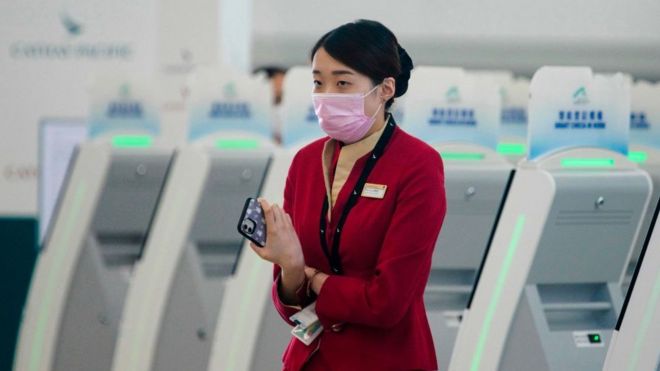
A Cathay Pacific staff member wearing a facemask next to a row of self-check in terminals in Hong Kong.Image copyright GETTY IMAGES

Cathay Pacific has said it expects a “substantial” loss in the first half of this year as the impact of the coronavirus outbreak takes it toll.

The Hong Kong carrier also saw a 28% drop in 2019 profits as it struggled during the city’s political protests.

The airline is now battling with the fallout of the virus as passenger numbers plummet.

Chairman Patrick Healy said the first half of 2020 was expected to be “extremely challenging financially”.

The development comes with thousands of flights already cancelled worldwide, as airlines struggle to cope with a slump in demand caused by the coronavirus outbreak.

British Airways, Ryanair and EasyJet have all cancelled flights to and from Italy until April, while Norwegian Air and American Airlines have also announced significant cuts to services.

Calling 2019 a “turbulent year”, Mr Healy said he expected “our passenger business to be under severe pressure this year and that our cargo business will continue to face headwinds”.

While Cathay Pacific has reduced flights to help save costs, “we expect to incur a substantial loss for the first half of 2020,” he added.

The airline reported a net profit of HK$1.69bn (£170m) for last year, down from a HK$2.35bn profit in 2018.

In other developments:

  • Dutch airline KLM is cancelling all its flights to and from Milan, Venice and Naples until 3 April
  • Austrian rail operator OBB has announced it is suspending all trains in and out of Italy – which has more than 10,000 confirmed cases of the virus – until further notice
  • Seat, the Spanish unit of car-maker Volkswagen, is considering temporary lay-offs at its Barcelona plant
  • Ride-hailing app Uber says it plans to offer an as-yet unspecified amount of financial assistance to its drivers who have to self-isolate for up to 14 days

Embattled sector

The airline industry faces a loss of revenue of up to $113bn this year, according to aviation trade body IATA, as thousands of planes are grounded amid travel restrictions across the globe.

After UK-based airline Flybe went into administration last week, analysts are warning of more failures to come for the embattled airline industry.

Earlier this week, Korean Air warned the coronavirus outbreak could threaten its survival, in a memo sent to employees.

The global spread of the coronavirus has hit both holidaymakers and business travellers. The Global Business Travel Association said on Wednesday that 43% of its member companies have cancelled business trips booked for this month.

Source: The BBC

06/03/2020

Cathay Pacific fined £500,000 over customer data protection failure

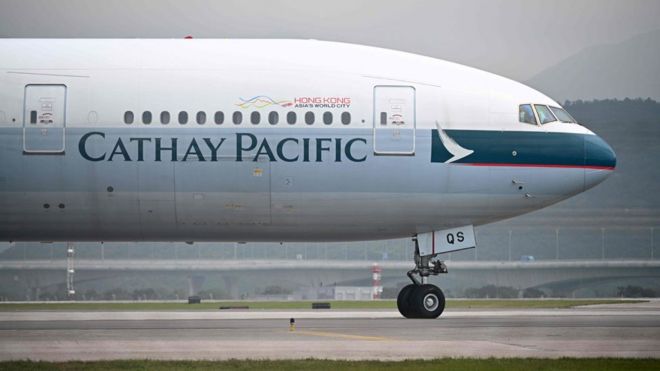
A Cathay Pacific plane lands on the tarmacImage copyright AFP

The Information Commissioner’s Office (ICO) has fined Cathay Pacific Airways £500,000 for failing to protect customers’ personal data.

The UK watchdog said the airline’s computer systems had exposed details of 111,578 UK residents and a further 9.4 million people from other countries.

These included names, passport details, dates of birth, phone numbers, addresses and travel history.

“Appropriate security” was not in place between October 2014 and May 2018.

The ICO said Cathay Pacific became aware of a problem in March 2018, when it suffered a “brute force” password-guessing attack.

The Hong Kong-based firm reported this to the ICO. The regulator said it subsequently uncovered “a catalogue of errors” during a follow-up investigation, including:

  • back-up files that were not password protected
  • internet-facing servers without the latest patches
  • operating systems that were no longer supported by the developer
  • inadequate anti-virus protection

At least one attack involved a server with a known vulnerability – but the fix was never applied, despite having been public knowledge for more than 10 years.

Steve Eckersley, the ICO’s director of investigations, said there were “a number of basic security inadequacies across Cathay Pacific’s system, which gave easy access to the hackers”.

The airline failed four out of five of the basic cyber-essentials guidance from the National Cyber Security Centre, he added.

Presentational grey line

Analysis: A wake-up call for others

By Joe Tidy, Cyber-security reporter

I’m told investigators were extremely concerned by the failures they found. It paints a picture of a company that did not take security of personal data seriously, and today’s fine will be a wake-up call to them and other firms. It is, however, only a pittance compared to what it could have been if the hack had occurred more recently.

New GDPR rules have increased the potential maximum fine, and it’s clear the failures here would have warranted a far more severe punishment.

Instead of a £500k penalty, Cathay Pacific could have been hit with a share-holder sickening £470m fine – 4% of its annual global turnover.

Presentational grey line

The £500,000 fine Cathay Pacific is facing is the maximum possible under the Data Protection Act 1998, which was used instead of the newer GDPR “due to the timing of the incidents in this investigation”.

In July 2019, the ICO announced it would fine British Airways £183m for a breach of its systems, and the Marriott hotel group £99.2m. But both fines were delayed until later this year.

The ICO said that Cathay Pacific had acted promptly once it became aware, and sought expert help from a top cyber-security firm, and had also contacted affected customers.

The report also noted there were no confirmed cases of the personal data being misused – but that it was very likely it would be in future.

In a statement about the fine, Cathay Pacific said it “would once again like to express its regret, and to sincerely apologise for this incident”.

It said “substantial amounts” of money had been spent on security in the past three years.

“However, we are aware that in today’s world, as the sophistication of cyber-attackers continues to increase, we need to and will continue to invest in and evolve our IT security systems.”

Source: The BBC

26/02/2020

Coronavirus: China’s airlines offer domestic flights for as little as US$4 as industry struggles amid outbreak

  • Around two thirds of the total number of flights scheduled every day in February were cancelled, placing huge financial pressure on airlines and airports
  • China’s aviation industry has also been affected by a series of restrictions by other countries and airlines, with British Airways extending its suspension until mid-April
The cancellation of around 10,000 flights a day, or around two thirds of the total number of flights scheduled every day in February, has placed huge financial pressure on airlines and airports. Photo: Kyodo

A one-way air ticket from the coastal economic hub of Shanghai to the inland municipality of Chongqing, a journey of over 1,400km (870 miles), now costs less than a cup of coffee, with Chinese airlines slashing prices in a bid to boost weak domestic demand amid the coronavirus outbreak.

The cancellation of around 10,000 flights a day, or around two thirds of the total number of flights scheduled every day in February, has placed huge financial pressure on airlines and airports.

The Civil Aviation Administration of China said in a notice on Tuesday that flights should resume gradually as part of the country’s efforts to return economic and social life back to normal, but passengers are still reluctant to fly with the deadly outbreak still not fully under control.

The one-way flight from Shanghai to Chongqing is being offered for just 29 yuan (US$4.10) by China’s biggest low-cost carrier, Spring Airlines, as a special offer for its frequent flyer club members, while a tall caffe latte at Starbucks in China costs 32 yuan (US$4.5).

Many Chinese carriers do receive subsidies for operating key domestic routes, so this also skews the economics as well Luya You

A one-way ticket from Shanghai to Harbin, the capital of the northern Heilongjiang province, a distance of over 1,600km (994 miles), costs just 69 yuan (US$9.80).

Shenzhen Airlines, a division of state-owned carrier Air China, is also running special offers to Chongqing, with a one-way ticket for the 1000km (621 miles) journey from Shenzhen costing just 100 yuan (US$14), around 5 per cent of the standard price of 1,940 yuan (US$276).
Chengdu Airlines, a unit of Sichuan Airlines, which counts China Southern Airlines as a shareholder, is also offering cheap one-way flights from Shenzhen to Chengdu, a distance of over 1,300km (808 miles), for just 100 yuan.
“Considering lower average costs of operating in mainland China, carriers could potentially offer deeper discounts while making slim profits or just breaking even,” said Luya You, an aviation analyst with Bank of Communication International. “As outbreak numbers stabilise or even decline, carriers will likely adjust their fares as well, so these low fares will not last if the situation quickly turns for the better.

“Many Chinese carriers do receive subsidies for operating key domestic routes, so this also skews the economics as well. If it is a key route, for example, the carrier may choose to continue operating regardless of fares or loads as the route constitutes a major link in the domestic network infrastructure.”

China’s aviation authority confirmed earlier this month that between January 25 and February 14, which included the Lunar New Year holiday, the average daily passenger traffic in China was just 470,000, representing a 75 per cent drop from the same period last year.

China’s aviation industry has also been affected by a series of restrictions by other countries and airlines, with British Airways last week extending its suspension of flights to China until after the Easter holiday in mid-April following travel advice from the British government.

The novel coronavirus, which causes the disease officially named Covid-19, has infected more than 78,000 people and killed 2,700 in China. In recent days, South Korea, Italy and Iran have all reported a surge in new cases, raising fears over the spread of the coronavirus.
“The flight suspensions will track the outbreaks, but not likely lead them. If there are more outbreaks, expect more flight suspensions,” said Andrew Charlton, managing director of Aviation Advocacy.
Source: SCMP
24/02/2020

Coronavirus: Ethiopian Airlines refuses to bow to pressure to halt flights to China

  • State-owned carrier’s chief says it wouldn’t be ‘morally acceptable’ to stop flying to the country, and it will stand with its ‘Chinese brothers and sisters’
  • Dozens of airlines have cancelled or reduced services to the nation amid the virus outbreak, including two East African rivals
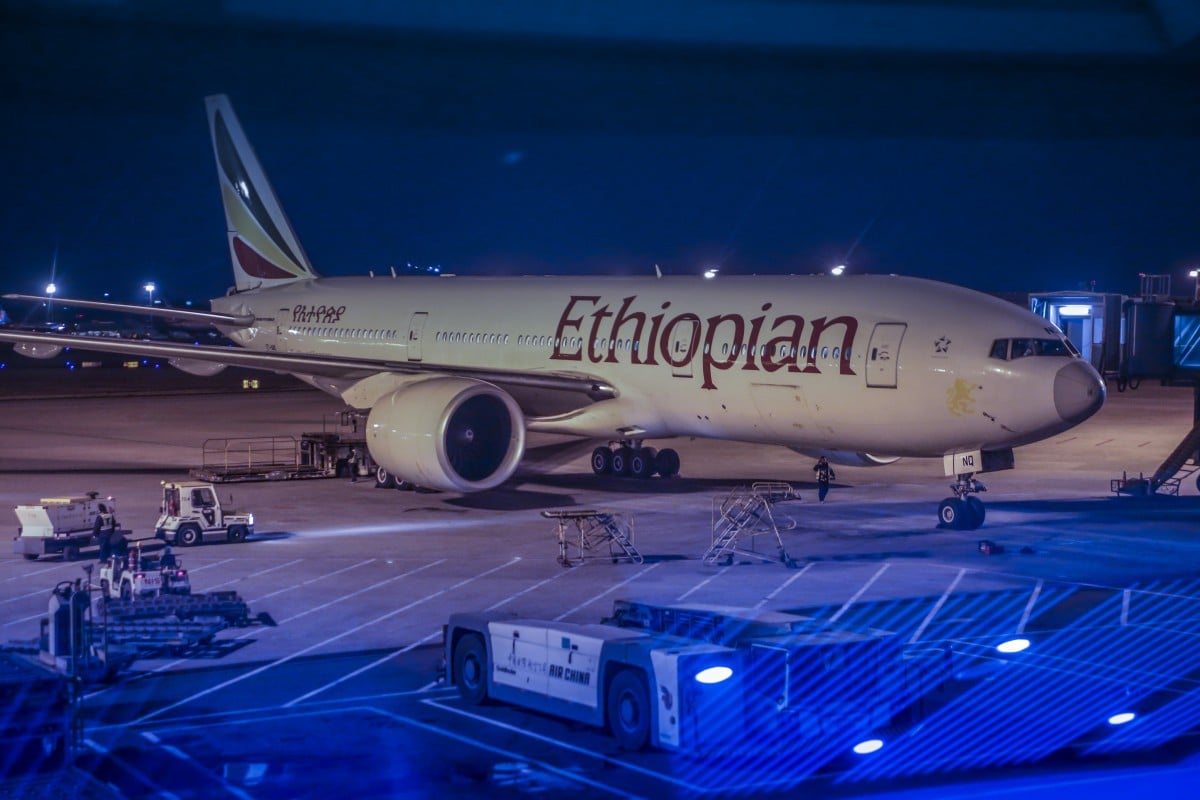
Ethiopian Airlines says it will continue flying to China. The routes are among its most profitable. Photo: Shutterstock
Ethiopian Airlines, Africa’s largest and most profitable carrier, will continue flying to China despite growing pressure for it to suspend services to the country as

the deadly new coronavirus spreads

.

Dozens of airlines around the globe have cancelled or reduced their services to cities in the world’s second-largest economy amid fears over the outbreak. Its East African rivals Kenya Airways and RwandAir have both suspended flights to China until the outbreak is contained.

But Ethiopian Airlines chief executive Tewolde GebreMariam said the carrier would not abandon the routes, which are among its most profitable.

Tewolde told media over the weekend that the airline had been flying to China since 1973 and it would not be ethical to suspend flights to the country.

“It will not be morally acceptable to stop flying to China today because they have a temporary problem,” he said, adding that the airline would stand with its “Chinese brothers and sisters”.

His remarks came days after Kenyan President Uhuru Kenyatta put pressure on the Ethiopian government – which wholly owns Ethiopian Airlines – to halt flights to China, citing the need to curb the spread of the virus into the East African region.

Global coronavirus deaths equal Sars, while new infections drop
The airline has bucked a trend that has seen major airlines – from the United States to Europe and Asia – staying away from Chinese airspace as governments around the world move to keep the deadly virus from their borders. The pneumonia-like illness has so far 
infected more than 40,000 people and killed more than 900

in mainland China since the outbreak began in Wuhan in December, with cases reported in more than 20 other countries worldwide.

Speaking during a visit to Washington last week, Kenyatta – who is keen to court both China and the US – insisted that Kenya’s decision to suspend flights from Guangzhou to Nairobi was not political.

He said most African countries had weak health systems that would make it harder to handle the outbreak, so preventing its spread – even if through extreme measures such as grounding flights – was the only option.

“Our worry as a country is not that China cannot manage the disease. Our biggest worry is diseases coming into areas with weaker health systems like ours,” Kenyatta said while addressing members of US think tank the Atlantic Council.

Vaccine for new coronavirus unlikely to be ready before outbreak is over, says Sars expert
But Ethiopian Airlines said it would continue flying to Beijing, Shanghai, Guangzhou, Chengdu and Hong Kong and was taking measures to protect staff and passengers. Ethiopia receives about 1,500 visitors from mainland China every day.

According to Tewolde, if the airline halted its Chinese services, China and Africa would be completely disconnected.

“No one in Ethiopian Airlines would like to see this,” he said. “We have to take maximum precautions, but stopping flights is not one of them.”

He added: “Even if we stop flying, people will continue to come to Ethiopia through Singapore, Malaysia, Europe. The transmission of the disease will be dangerously hidden … British Airways stopped flying to China for its economic reasons. But Chinese carriers are flying to the UK.”

Chinese cities keen to get back to work but coronavirus concerns grow as workers return

14 Feb 2020

In a separate statement, the carrier said China was “one of the strongest and one of the oldest markets for Ethiopian Airlines”.

“We have been connecting the great Chinese nation with the entire continent of African for almost half a century and it is our growth strategy,” the airline said, adding that it would continue operating in the five cities in compliance with international aviation and health guidelines.

Aside from seeking to shore up revenues, analysts noted that the airline was under tight state control, and Ethiopia would be reluctant to do anything that might harm its strong bilateral ties with China.

Ethiopia is among the nations on the continent with the highest number of Chinese immigrants. Most of them are workers involved in the construction of infrastructure projects including ports, railways, dams, bridges and malls. Those projects have been financed with billions of dollars in loans from China – Ethiopia is reportedly among the biggest recipients of Chinese lending in Africa.

Last year, China was forced to restructure Ethiopia’s debt after the latter edged closer to defaulting on a loan from Beijing for its standard gauge railway.

Chinese hotel workers arrested in Kenya after caning video prompts demands for action

14 Feb 2020

Ethiopia, Algeria, Angola, Nigeria and Zambia together accounted for nearly 60 per cent of all Chinese workers on the continent at the end of 2017, according to a study by Johns Hopkins University.

Ethiopia is also a major recipient of direct foreign investment from China.

Source: SCMP

21/02/2020

Airlines suspend China flights due to coronavirus outbreak

(Reuters) – Airlines have been suspending flights to China or modifying service in response to the coronavirus outbreak.

Below are details (in alphabetical order):

AIRLINES THAT HAVE CANCELLED ALL FLIGHTS TO MAINLAND CHINA

** American Airlines – Extends suspension of China and Hong Kong flights through April 24

** Air France – Said on Feb.6 it would suspend flights to and from mainland China for much of March

** Air India – Suspends flights to Shanghai, Hong Kong until June 30

** Air Seoul – The South Korean budget carrier suspended China flights from Jan. 28 until further notice.

** Air Tanzania – Tanzania’s state-owned carrier, which had planned to begin charter flights to China in February, postponed its maiden flights.

** Air Mauritius – Suspended all flights to China and Hong Kong

** Austrian Airlines – until end-February.

** British Airways – Jan. 29-March 31.

** Delta Airlines – Feb. 2-April 30

** Egyptair suspended flights on Feb, 1, but on Feb. 20 said it would resume some flights to and from China starting next week.

** El Al Israel Airlines – Said on Feb. 12 it would suspend its Hong Kong flights until March 20 and reduce its daily flights to Bangkok. It suspended flights to Beijing from Jan. 30 to March 25 following a health ministry directive.

** Iberia Airlines – The Spanish carrier extended its suspension of flights from Madrid to Shanghai, its only route, from Feb. 29 until the end of April.

** JejuAir Co Ltd – Korean airline to suspend all China routes starting March 1

** Kenya Airways – Jan. 31 until further notice.

** KLM – Will extend its ban up to March 28

** Lion Air – All of February.

** LOT – Extends flight suspension until March 28

** Oman and Saudia, Saudi Arabia’s state airline, both suspended flights on Feb. 2 until further notice.

** Qatar Airways – Feb. 1 until further notice.

** Rwandair – Jan. 31 until further notice.

** Scoot, Singapore Airlines’ low-cost carrier – Feb. 8 until further notice.

** United Airlines – Feb. 5-April 23. Service to Hong Kong suspended Feb. 8-April 23.

** Vietjet and Vietnam Airlines – Suspended flights to the mainland as well as Hong Kong and Macau Feb. 1-April 30, in line with its aviation authority’s directive.

AIRLINES THAT HAVE CANCELLED SOME CHINA FLIGHTS/ROUTES OR MODIFIED SERVICE

** Air Canada – Extended the suspension of its flights to Beijing and Shanghai until March 27. It also suspended its Toronto to Hong Kong flights from March 1 to March 27, but its Vancouver to Hong Kong route remains active. [bit.ly/39zgmI0]

** Air China – Said on Feb. 12 it will cancel flights to Athens, Greece, from Feb. 17 to March 18

** Air China – State carrier said on Feb. 9 it will “adjust” flights between China and the United States.

** Air New Zealand – Suspended Auckland-Shanghai service Feb. 9-March 29. Reduced capacity on Shanghai route throughout April and Hong Kong route throughout April and May.

** ANA Holdings – Suspended routes including Shanghai and Hong Kong from Feb. 10 until further notice.

** Cathay Pacific Airways – Plans to cut a third of its capacity over the next two months, including 90% of flights to mainland China. It has encouraged its 27,000 employees to take three weeks of unpaid leave in a bid to preserve cash.

** Emirates and Etihad – The United Arab Emirates, a major international transit hub, suspended flights to and from China, except for Beijing.

** Finnair – Cancelled all flights to mainland China and decreased the number of flights to Hong Kong until March 28.

** Hainan Airlines – Suspended flights between Budapest, Hungary, and Chongqing Feb. 7-March 27.

** Korean Air Lines Co. – The national flag carrier suspended eight routes to China and reduced services on nine Chinese routes between Feb. 7 and 22.

** Philippine Airlines – Cut the number of flights between Manila and China by over half.

** Qantas Airways – Suspended direct flights to China from Feb. 1. The Australian national carrier halted flights from Sydney to Beijing and Sydney to Shanghai between Feb. 9-March 29.

** Royal Air Maroc – The Moroccan airline suspended direct flights to China Jan. 31-Feb. 29. On Jan. 16, it had launched a direct air route with three flights weekly between its Casablanca hub and Beijing.

** Russia – All Russian airlines, with the exception of national airline Aeroflot, stopped flying to China from Jan. 31. Small airline Ikar will also continue flights between Moscow and China. All planes arriving from China will be sent to a separate terminal in the Moscow Sheremetyevo airport. Aeroflot reduced the frequency of flights to Beijing, Shanghai and Guangzhou until Feb. 29.

** Nordic airline SAS – Extended its suspension of flights to Shanghai and Beijing until March 29.

** Singapore Airlines – Suspended or cut capacity on flights to Beijing, Shanghai, Guangzhou, Shenzhen, Chengdu, Xiamen and Chongqing, some of which are flown by regional arm SilkAir.

** UPS – Cancelled 22 flights to China because of the virus and normal manufacturing closures due to the Lunar New Year holiday.

** Virgin Atlantic – Extended its suspension of daily operations to Shanghai until March 28.

** Virgin Australia – Said it will withdraw from the Sydney-Hong Kong route from March 2 because it was “no longer a viable commercial route” due to growing concerns over the virus and civil unrest in Hong Kong.

Source: Reuters

30/01/2020

Coronavirus: turbulent times ahead for air travellers as carriers cancel China flights

  • Lufthansa, British Airways, Air Canada among several big name airlines to halt flights, while others reduce services
  • Travel agents expecting slump in sales amid rising uncertainty over how epidemic will play out
Many airlines have cancelled flights into mainland China because of the coronavirus outbreak. Photo: AP
International air travellers and ticketing agents are in for a turbulent time in the weeks ahead as airlines around the world react to the coronavirus epidemic by cancelling or limiting flights to and from the Chinese mainland.
Lufthansa, British Airways, Air Canada and Indonesia’s Lion Air have 
cancelled all of their flights

, while United Airlines, American Airlines, IndiGo, Finnair, Delta Air Lines and Jetstar Asia have significantly reduced their services.

“It’s going to be pretty bad for travel agencies. We’ve had a lot of cancellations. Everyone is afraid of coming to China,” said Annabelle Auger from Travel Stone in Beijing.
“Many of our European clients are very worried because of the media coverage they’ve seen. Still, people are willing to wait and see for a few weeks to see how things go,” she said.
For foreigners looking to leave China, Auger said they should contact their embassy to find out about repatriation flights.

“The situation is very unclear, so it’s difficult to give any general recommendations,” she said.

Already this week, the embassies of the United States, Japan, South Korea and Britain have cleared flights to evacuate their nationals from Hubei, the central China province at the heart of the outbreak.

Auger said she and her colleagues had been busy rearranging flights for China-based foreigners who had gone away for the holidays.

“The schools are closed, so families with children abroad are thinking, ‘OK, let’s extend our stay for another week’,” she said.

Politics may have stalled information in coronavirus crisis, scientist says

30 Jan 2020
The Beijing government said on Monday it would extend the Lunar New Year
holiday until Sunday to help stop the spread of the disease, while school breaks have also been extended.

Another travel agent in Beijing, who asked not to be named, said the virus outbreak had yet to have a significant impact on business but concerns were growing.

“We are a bit worried that things may get difficult in the coming months,” she said. “But we trust that the government is doing all it can and will take the appropriate measures to solve the problems.”

Zhu Tao, director of the flight standards department at the Civil Aviation Administration of China (CAAC), said at a press conference in Beijing on Thursday that the relevant authorities were working closely with airlines to help Chinese nationals trapped overseas to get home.

The government had already chartered flights from Japan, Myanmar and South Korea to bring Chinese nationals back to Hubei, he said.

While all flights out of Hubei have been suspended since last week, Zhu said air transport was playing its part in fighting the disease.

As of Wednesday, the CAAC had sent 86 flights carrying 5,129 medical workers and 115,000 items of equipment and other supplies into Wuhan, he said.

Wu Zunyou, the chief epidemiologist at the China Centre for Disease Control and Prevention, said that efforts to prevent the coronavirus spreading outside the country had been successful, as only about 1 per cent of the confirmed infections were outside China.

Despite the flight cancellations, Beijing’s Capital International Airport was operating as normal on Thursday.

Andre Muchanga, a student from Abu Dhabi at the Beijing Institute of Technology, said he made a late decision to fly home.

“I decided to buy my ticket last night,” he said. “At school, our dormitory is almost completely empty. I knocked on a friend’s door last night and found there was no one there, so I decided I better just go home and spend some time with my family.”

He said he decided not to buy a return flight as it he did not know when his classes would resume.

Signs at check-in counters reminded passengers who had travelled to Hubei or had a Hubei address to put themselves in isolation for 14 days.

While flights out of Hubei have been stopped, there was still plenty of inbound traffic.

“The number of domestic inbound travellers seems pretty normal for this time of year,” a man working on an information desk at Capital airport said.

“It’s the sixth day of the Lunar New Year. Lots of people have to return to work.”

An Air China employee, surnamed Hu, said that the airport had stepped up its disinfecting and general cleaning work. Body temperature checks had been installed at all access points and employees had been told to wear masks, he said.

“I don’t mind working during the Lunar New Year holiday,” he said. “I’m not afraid of the virus, I’m here to serve the people.”

SOurce: SCMP

27/10/2019

Beijing’s new $63 billion mega-airport begins international flights

BEIJING (Reuters) – Beijing’s new $63 billion Daxing airport began its first scheduled international flights on Sunday as it ramped up operations to help relieve pressure on the city’s existing Capital airport.

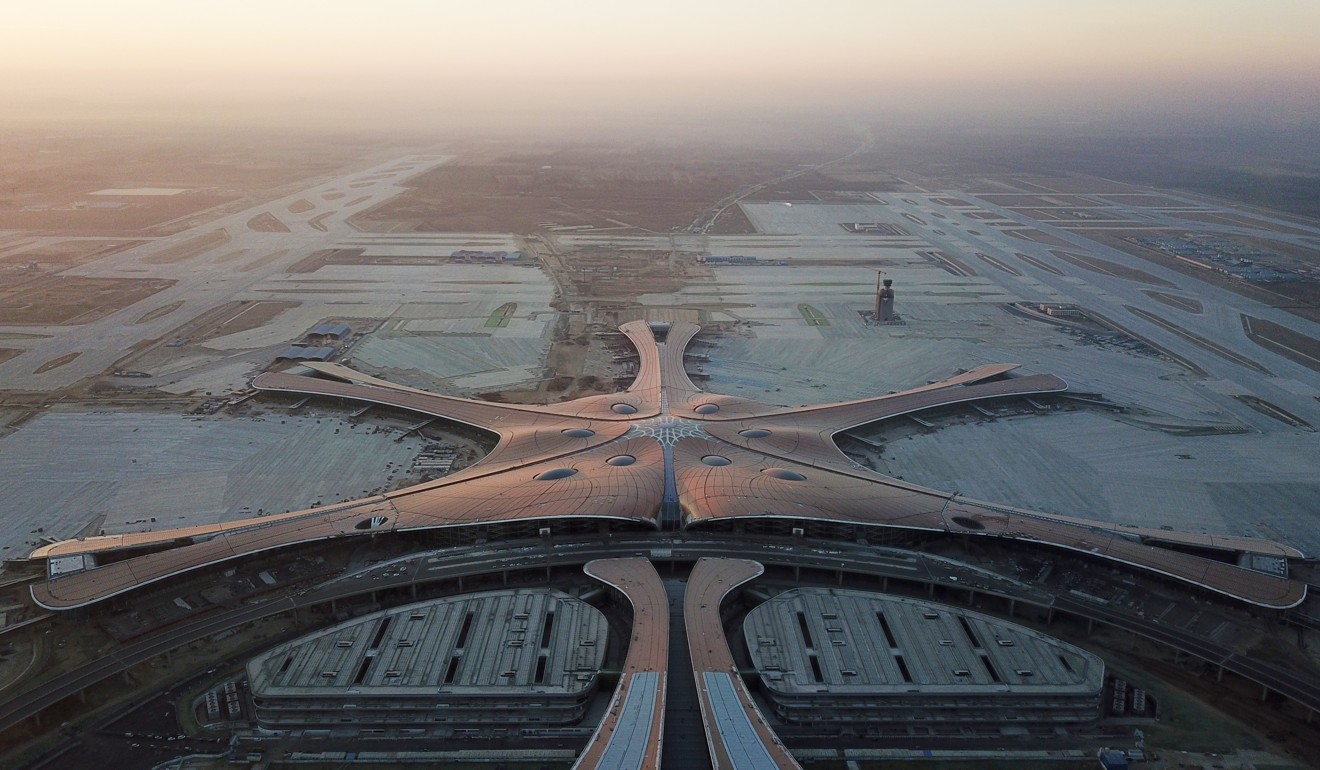
Shaped like a phoenix – though to some observers it is more reminiscent of a starfish – the airport was designed by famed Iraqi-born architect Zaha Hadid, and formally opened in late September ahead of the Oct. 1 celebrations of the 70th anniversary of the People’s Republic of China.

It boasts four runways and is expected to handle up to 72 million passengers a year by 2025, eventually reaching 100 million.

China Southern Airlines (600029.SS) and China Eastern Airlines (600115.SS) will be the main domestic carriers at Daxing, though Air China (601111.SS) will provide a small number of flights too.

An Air China flight to Bangkok was the first international flight to leave on Sunday, while British Airways (ICAG.L) will operate the first transcontinental flight, to London.

About 50 foreign airlines, including Finnair (FIA1S.HE), plan to move all or part of their China operations to the airport in the coming quarters.

The relocation of all the airlines which will use Daxing is to due to be completed by the winter of 2021. Air China and its Star Alliance partners will remain mostly at Capital airport.

The airport, roughly the size of 100 football fields and expected to become one of the world’s busiest, has come in for some criticism due to its distance from central Beijing.

By public transport it takes over an hour to reach it from Beijing’s central business district, more than double the time needed to reach Capital airport, which strains at the seams and is often hit by delays.
Officials say Daxing airport is not only designed to serve Beijing, but also the surrounding province of Hebei and next-door city of Tianjin, to boost regional development.
Source: Reuters
26/09/2019

Beijing Daxing airport – world’s largest terminal – takes flight

  • Visually spectacular and with the latest technology, the Chinese capital’s second international airport is open for business
The terminal building at Beijing Daxing International Airport, which has officially opened. Photo: Xinhua

At 4.23pm on Wednesday a China Southern Airlines A380 left Beijing for Guangzhou – on the first commercial flight out of the world’s latest and largest airport terminal at Daxing, five years after construction began on the ambitious project.

The 80 billion yuan (US$11 billion) Beijing Daxing International Airport was officially opened by Chinese President Xi Jinping on Wednesday morning.

China Southern Airlines, the mainland’s largest carrier, has 40 per cent of the flight slots at the new airport. It is one of 16 airlines which will be operating out of Beijing Daxing International Airport, the visually spectacular new facility at the southern end of the Chinese capital.

Six other flights, including China Eastern Airlines for Shanghai and Air China for Chengdu, took off before 5pm in the afternoon. These domestic airlines will have part of their operations moving to Daxing for the upcoming winter-spring season, according to the mainland’s aviation authority. No Hong Kong airlines were listed.

British Airways has announced its whole operation will be moved to Daxing, while some foreign airlines, such as Ethiopian Airlines, Polish Airlines, Malaysia Airlines, Royal Air Maroc and Finnair, will operate at both airports.

Spanning 47 sq km (18 square miles) – almost 50 per cent larger than the city of Macau – Daxing, with its 700,000 square metre (7.5 million sq ft) terminal is a spectacular sight. Its futuristic shape, resembling a giant hexagonal starfish or – as some internet users have dubbed it – an alien base, not only handles more aircraft, it also keeps passengers’ walks

From the centre of the security check to the furthest end gate in each wing is about 600 metres (1,970 feet), or less than an eight-minute walk.

Beijing’s new 7-runway, star-shaped Daxing airport opened by Xi Jinping
According to Xinhua, more than 70 restaurants, tea shops and coffee houses will operate in the airport, along with 36 international brands, including Louis Vuitton, Gucci and Bottega Veneta.

Daxing is designed to take pressure off the overcrowded Beijing Capital International Airport (BCIA) and, by 2021, is expected to handle 45 million passengers a year, rising to 72 million by 2025.

Located at the south of the capital, 46km (28.5 miles) from the central Tiananmen Square, the airport was once frowned upon for its less than optimal location, with its southern end at the border with Hebei province. But it may not be as time-consuming for travellers as originally thought.

The design of the airport means passengers will walk a much shorter distance to the check-in and security check.Hu Haiqing, China Southern Airlines

Hu Haiqing, deputy general manager of China Southern Airlines’ operation control centre, told Global Times that “although Daxing is further away from downtown Beijing than the Capital airport, there are still some advantages, especially for our airline”.
With most of its bases in the south of the country, China Southern Airlines flights to Daxing will be 10 to 15 minutes shorter than to the Capital airport. A further 15 to 20 minutes taxiing time will also be saved, thanks to its position in the new airport.
“The design of the airport also means passengers, once they leave their car or train, will walk a much shorter distance to the check-in and security check,” Hu said.
According to Xinhua, Daxing’s design also makes transit much quicker, with transfers between international and domestic flights up to 90 minutes shorter than from the Capital airport.
The futuristic shape of Daxing airport not only handles more aircraft, it also keeps passengers’ walks to a minimum. Photo: Xinhua

Public transport will be the quickest way to reach the new airport from downtown Beijing – 20 minutes from West Beijing railway station once the Beijing-Xiongan high-speed rail officially opens. The airport express service will also take passengers from Caoqiao station to the airport in 19 minutes.

There is no underground rail service or airport express connecting the Capital airport in the north with Daxing, but passengers can change trains at Caoqiao for downtown Beijing or other stations which connect with BCIA’s airport express service.

Waiting times at the new airport will be greatly reduced by the use of facial recognition technology for self-service check-in and smart security checks, according to Wang Hui, manager of Daxing’s terminal management department.

The technology does away with the need for a paper boarding pass and passengers can check-in, with or without luggage, and go through the security check by themselves.

Beijing is the window for China to go global … Daxing airport makes it possible to open more global routes.China Eastern Airlines pilot

“The airport has more than 400 self-service check-in kiosks, which means more than 80 per cent of check-ins will be self-service. That shortens each passenger’s queuing time to no more than 10 minutes,” Wang told Global Times.
“The smart security check channels are able to handle 260 passengers per hour, 40 per cent faster than using traditional means,” he said.
The opening of Daxing Airport could be a great boost for the mainland – and even the global – aviation industry by easing pressure on the Capital airport and making new routes possible, said a veteran China Eastern Airlines pilot who declined to be named.
5 things we know about Beijing’s new Daxing International Airport
Opening new flight routes from BCIA was almost impossible, he pointed out, because the centre of Beijing was a no-fly zone for security reasons. Daxing airport’s location at the southern end of the city, however, avoided the problem of planes having to bypass the restricted space, leaving room to open more routes for domestic and international flights.
“Beijing is the window for China to go global but the Capital airport’s schedule is saturated and unable to open new routes. Daxing airport makes it possible to open more global routes,” the pilot said.
He said the runway design at Daxing also meant fewer delays, because the four runways of phase one – more than any other airport in China – included one which was perpendicular to the other three, allowing flights to land and take off regardless of wind direction.
Source: SCMP
Law of Unintended Consequences

continuously updated blog about China & India

ChiaHou's Book Reviews

continuously updated blog about China & India

What's wrong with the world; and its economy

continuously updated blog about China & India