

- China has become the first nation to fully own and operate a floating launch platform for its space missions
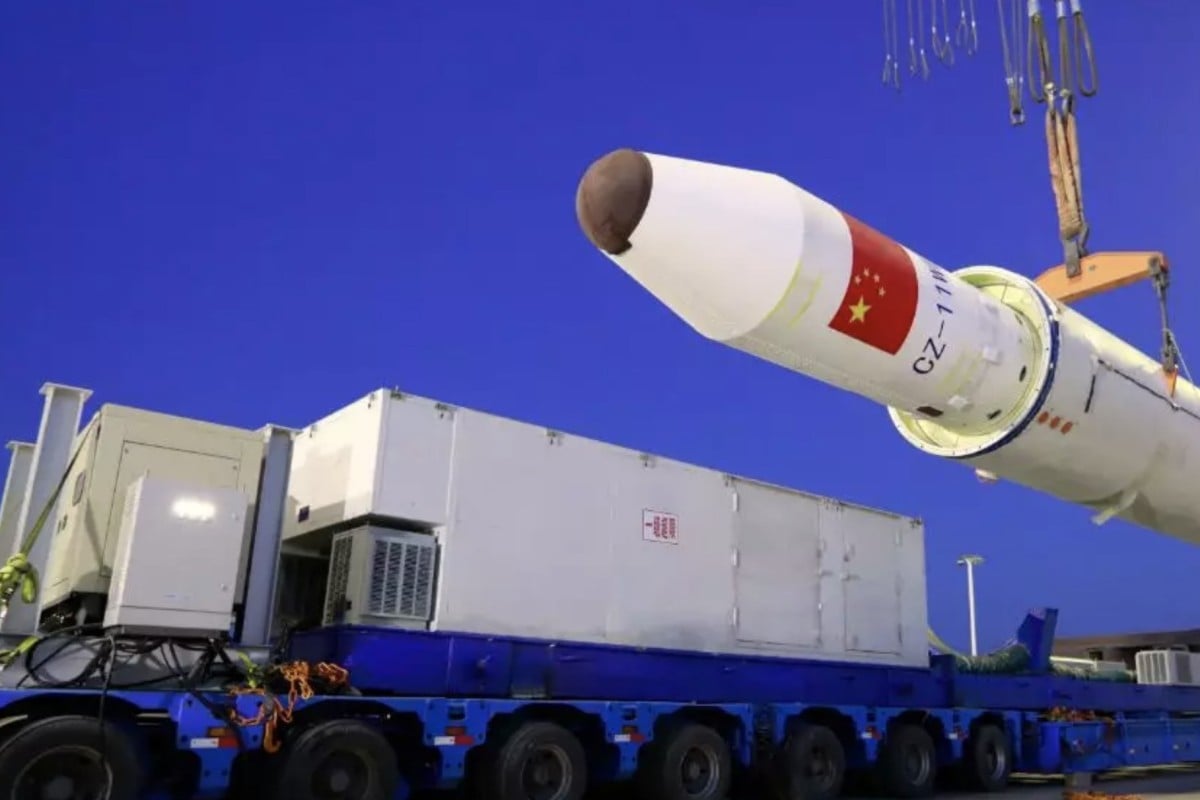
The Wind Catchers will work together to detect winds on the surface of the world’s oceans. They will boost China’s ability to monitor and forecast typhoons and other extreme weather events, according to the administration.
“Launching a rocket from the sea has the advantages of high flexibility, good adaptability for specific tasks, and excellent launch economy,” said a statement on the administration’s website.
“It can flexibly select the launch point and touchdown area to meet the needs of various payloads for different orbits, and provide better aerospace commercial launch services for countries along the belt and road,” it added, referring to the Belt and Road Initiative, China’s plan to grow global trade.
The Long March 11 is a four-stage, solid fuel rocket with a design similar to a ballistic missile. It can carry a payload of about 700kg to the Earth’s lower orbit.
The first two stages of the rocket dropped in open waters in the northern Pacific Ocean, according to the administration. The rocket was equipped with a flight suspension system in case of any abnormal situation, but none occurred.
“The rocket debris will not cause damage to surrounding waters,” the administration said.
The world’s first ocean rocket launch platform, the Sea Launch, was jointly built by companies from Russia, the United States, Norway and Ukraine in the late 1990s. Its operation was halted in 2014 after military conflicts broke out between Russia and Ukraine.
Li Hong, president of the China Academy of Launch Vehicle Technology, told state media in March that the Chinese rocket and launch platform were designed and owned entirely by China, so it would not have similar problems caused by international disputes as the Sea Launch.
The launch was expected to encounter many technical and engineering challenges, including simplified procedures for pre-launch testing, the rocking motion of the ship and heat dissipation in a confined space.
But Chinese space authorities have argued the inconvenience would be offset by numerous advantages. For instance, the technology would allow China to move its launch site to as far away as Hawaii for quicker, cheaper satellite insertion to certain orbits, according to Xinhua.
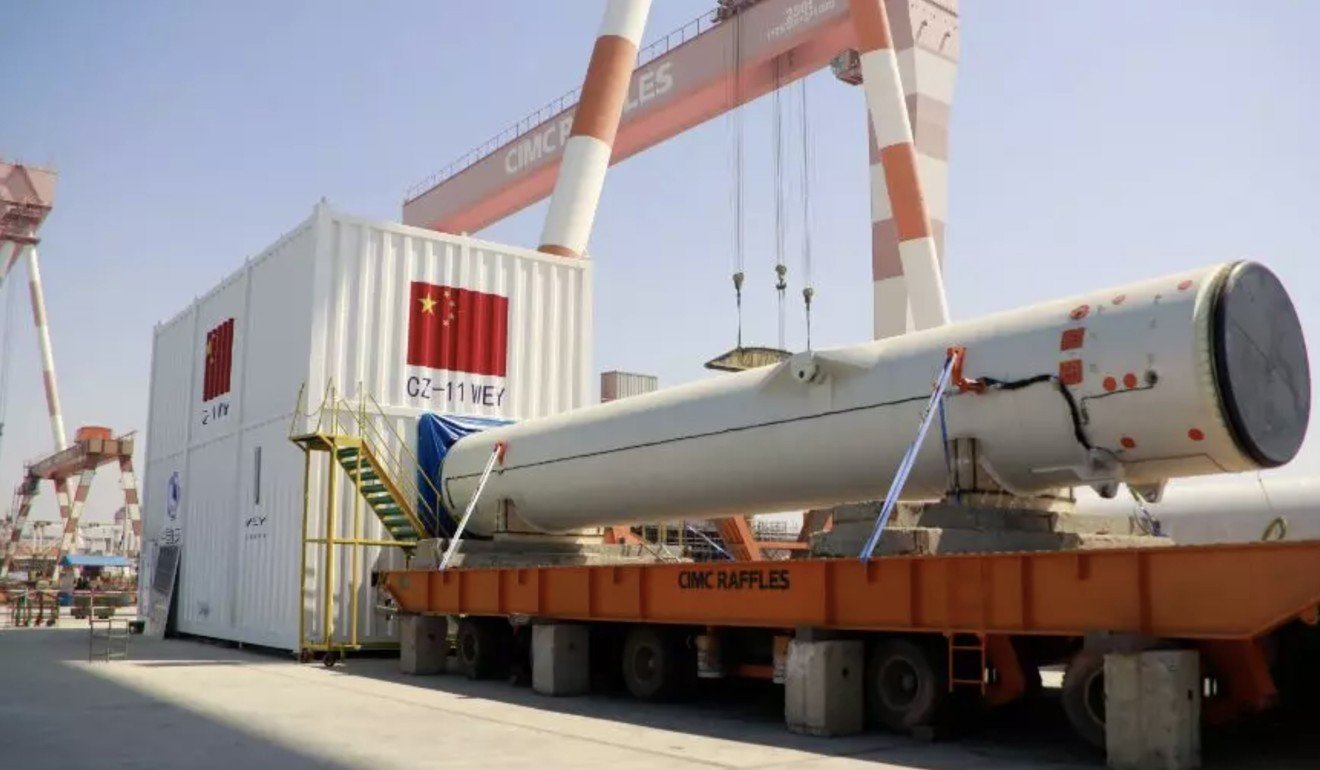
A maritime launch is also expected to reduce the risk of rocket debris falling into densely populated areas.
Chinese space launch sites are typically located inland for defence purposes.
China has built its sea launch capability mainly to bolster the commercial space sector, according to Chinese space authorities.
In this mission, the rocket was sponsored and named after WEY, a young luxury car brand by Chinese sports utility vehicle manufacturer Great Wall Motor.

 CHINDIA ALERT: You'll be living in their world, very soon