Archive for ‘bullet train’

28/04/2020

Coronavirus: China’s capital city struggles to get back to normal amid continued outbreak worries

  • Beijing’s Chaoyang district remains the last high-risk area in China, with virus preventive measures continuing to impact on travel and shopping plans
  • China faces the dilemma of preventing a re-emerge of the pandemic, while also pushing to get its economy back to normal
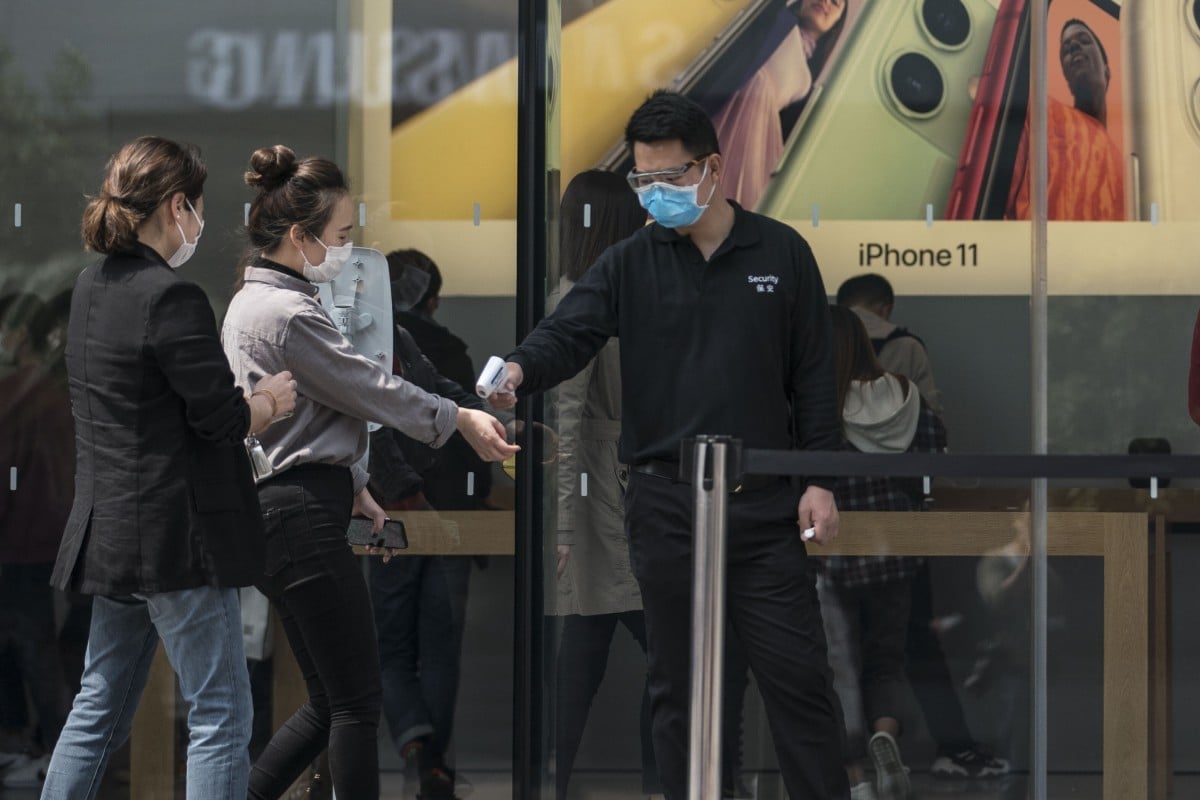
China’s continued pandemic prevention measures, coupled with still hesitant consumer demand, will inevitably lead to persistent limitations on the nation’s economic recovery, analysts said. Photo: Bloomberg

After nearly three months of being quarantined by herself in Beijing, Mary Zhao was looking forward to the upcoming long weekend at the start of May to be able to finally reunite with her parents.

But Zhao was forced to abandon her plan for the Labour Day holidays as Beijing’s upmarket Chaoyang district, where she lives, remains the only high-risk zone for coronavirus in the entire country.

If she travelled the five hours by car, or two hours via bullet train, to the neighbouring Hebei province, she would first have to undergo a 14-day quarantine before seeing her parents. Her parents would also have the same two week quarantine to look forward to once they returned home if they came to visit their daughter in Beijing.

These strict controls to prevent a re-emergence of the coronavirus outbreak are making a return to normal life impossible for many, and mean the final economic and social cost

 from China’s draconian preventive measures could be much larger than expected.
Wuhan declares ‘victory’ as central Chinese city’s last Covid-19 patients leave hospital
It underscores the dilemma facing China’s leaders on how to balance the need to

restart the economy

and to avoid a fresh outbreak. On the surface, China may be able to declare victory as even Wuhan, the city where the virus was first detected, announced that the last Covid-19 patient had left hospital on Sunday. But fears of a renewed outbreak have kept the country’s cinemas and most schools closed, with travel between provinces discouraged.

China’s national borders also remain largely closed, with flights being cut to a minimum, and a mandatory 14-day quarantine for every arrival. In the number of places where new cases have been reported, quarantine requirements have been tightened, including Harbin and a few other cities near the border with Russia.
Chaoyang, the home to one of Beijing’s main business districts and most foreign embassies, changed its risk rating to high from low in the middle of April after three new cases were reported, dealing a fresh blow to the district’s

struggling businesses,

and forcing many of the 3.5 million residents to cancel their travel plans.

On the outskirts of Beijing, near Beijing Capital International Airport, returning migrant workers to Picun village were ordered to stop at entrance and could only be escorted inside by their landlord, with many villages and residential compounds remaining closed to outsiders.

In the high-end shopping district of Guomao, some shops also remain closed as there are few potential customers, while over in the popular Sanlitun area, metal barriers restrict access and temperature checkpoints are still required.

The landmark Apple Store in the popular Taikoo shopping centre is open, but with limited customers allowed inside, there are long queues outside. Customers are required to scan a QR code to check their movements over the last few days before entering.

Coronavirus: More schools reopen in China for students preparing for university entrance exams
“Why do I have to spend 20 minutes just to get into the Apple Store? The sun has almost melted me down,” one visitor complained to the security guards at the front of the shop.

China’s continued pandemic prevention measures, coupled with still hesitant consumer demand, will inevitably lead to persistent limitations on the nation’s economic recovery, analysts said.

Ernai Cui, an economist at research firm Gavekal Dragonomics, said on Monday that China’s cautious approach to lifting restrictions “points to a weak second quarter for consumer services”, adding additional pressure to the economic recovery.Mao Zhenhua, a researcher at the China Institute of Economics at Renmin University, said China’s preventive measures will inevitably be a drag on production, employment and exports.

Source: SCMP
18/03/2019

India election 2019: Is India’s bullet train on time?

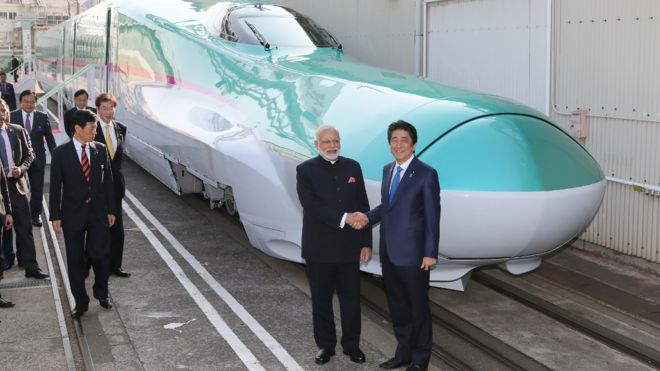
Modi and Abe with bullet trainImage copyrightGETTY IMAGES

India has undertaken an ambitious project for a bullet train to run between two of the country’s major cities.

A deal was signed in 2015 with Japan, which is helping to finance its construction.

The project is part of the government’s commitment to revitalise the country’s creaking 165-year-old rail network.

In the run-up to the Indian election, which gets under way on 11 April, BBC Reality Check is examining claims and pledges made by the main political parties.

Presentational grey line

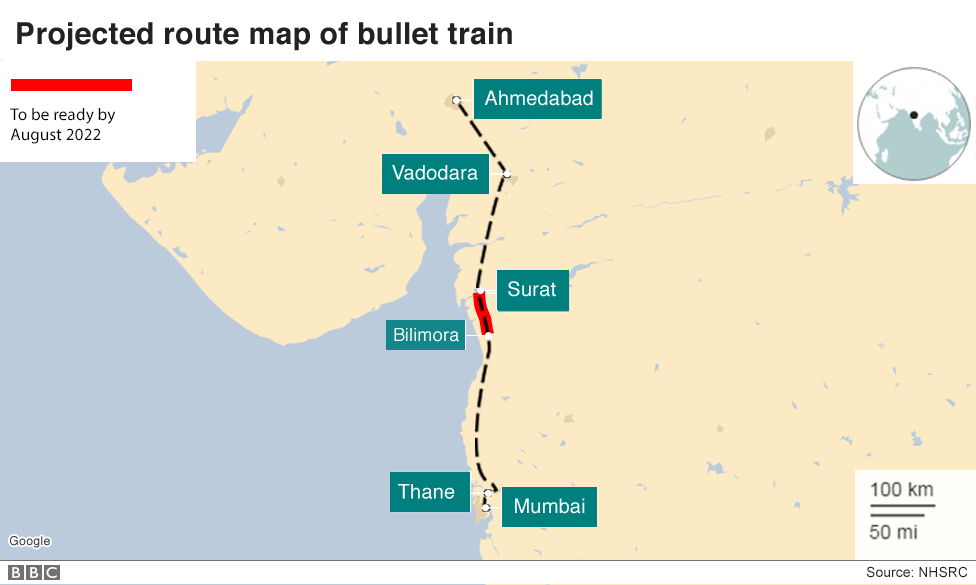
Claim: India will have a bullet train service running by August 2022. This will run down the west coast, connecting the cities of Mumbai and Ahmedabad.

Verdict: Passengers may get to experience a modern high-speed train on just a small section of line by 2022. It looks unlikely the promised bullet train will be fully operational by then or even by the following year.

Presentational grey line

The bullet train project was officially launched at a ceremony in September 2017 attended by the Japanese Prime Minister, Shinzo Abe.

That year, the Indian Ministry of Railways said “all-out efforts” would be made to complete the high speed rail project by 15 August 2022.

However, officials involved with the plan now estimate that only a small part of the route will be completed by this time, with the rest finished in 2023.

The Congress opposition leader, Rahul Gandhi, has described it as a “magic train” that will never be completed.

Why is it needed?

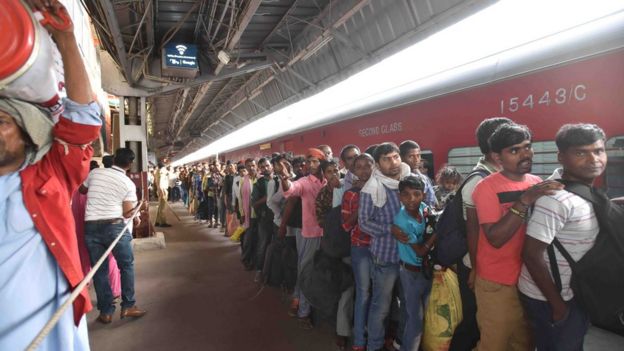
India’s vast rail network offers a cheap and vital transport service for 22 million people a day on about 9,000 trains.

But travellers have long complained of poor services and a lack of investment in modernisation.

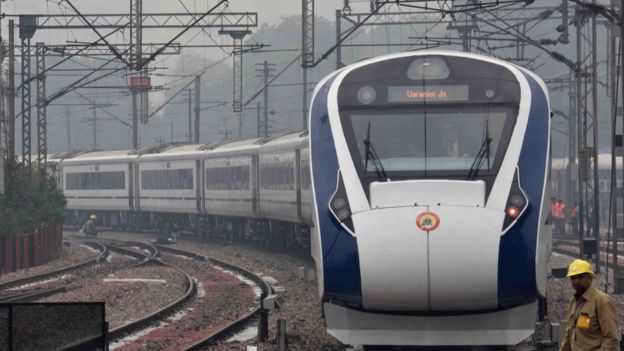
Vande Bharat leaving DelhiImage copyrightGETTY IMAGES
Image captionIndia’s Vande Bharat train – the fastest currently in service

Currently, India’s fastest train is the Vande Bharat Express, which has reached 180km/h (110mph) during trials.

The Japanese bullet train is almost twice as fast, capable of speeds up to 320km/h (200mph).

Once completed, the $15bn (£11bn) high-speed rail route will connect India’s major business and financial hub of Mumbai with important business centres in Gujarat state such as Surat and Ahmedabad.

The 500km-long journey now takes about eight hours.

That’s expected to drop to well under three hours, with the fastest journey times estimated at just two hours and seven minutes.

Map of bullet train route

When will it be finished?

Some experts think even the current deadline given by officials, of December 2023, is overly optimistic.

“I am not sure – considering how slow things are moving,” Debolina Kundu, an associate professor at the National Institute of Urban Affairs, told BBC News.

“And there are bureaucratic hurdles.”

Presentational grey line

Read more from Reality Check

Presentational grey line

The main obstacle is land acquisition.

The train project needs to acquire more than 1,400 hectares (14 sq km) of land, most of it privately owned.

The National High Speed Rail Corporation had been aiming to complete this process by the end of last year but has recently said it will continue until mid-2019.

In February, it told BBC News there were now agreements with more than 1,000 landowners – out of an estimated total of 6,000.

New Delhi railway station queueImage copyrightGETTY IMAGES

One barrier to the land sales has been dissatisfaction with the amount of compensation being offered to the owners.

There have been protests in some areas over plans for land acquisition – and multiple petitions filed in the courts.

And in India, court cases challenging land acquisition can drag on for years.

But those running the project say they are paying compensation of 25% above the legal requirement.

Another potential barrier is the need for wildlife and other environmental clearances, as the train will pass through three wildlife areas and coastal regions.

It will also cross areas classified as forest – and this land can be acquired only once environmental impact studies have been completed and reforestation plans drawn up.

Source: The BBC

20/01/2019

Bullet trains maintained in China’s Guiyang to ensure safety for Spring Festival travel rush

CHINA-GUIYANG-SPRING FESTIVAL-TRAVEL (CN)

Mechanics check a bullet train at a maintenance station to ensure safety for the upcoming Spring Festival travel rush in Guiyang, capital of southwest China’s Guizhou Province, Jan. 19, 2019. (Xinhua/Ou Dongqu)

Source: Xinhua

Law of Unintended Consequences

continuously updated blog about China & India

ChiaHou's Book Reviews

continuously updated blog about China & India

What's wrong with the world; and its economy

continuously updated blog about China & India