Archive for ‘buy’

29/01/2020

Indian ministries buy more air purifiers as capital battles toxic air

NEW DELHI (Reuters) – India’s government has stepped up the purchase of air purifiers over the last two years, taking the number of devices in ministries to protect against deteriorating air quality to nearly 300, government data seen by Reuters showed.

Six federal ministries – including the health, foreign and home affairs – bought at least 159 air purifiers during 2018-2019 at a cost of 5 million rupees ($70,353), according to previously unpublished data obtained under a Right to Information (RTI) law.

That compares with at least 140 air purifiers bought for $55,000 during 2014-2017 for the six ministries and Prime Minister Narendra Modi’s office, as previously reported by Reuters. The latest data on purchases for Modi’s office was not available. (reut.rs/2ppjyBj)

The purchases come as the federal and city governments faced criticism for failing to address the problem of worsening air pollution, especially in the winter, and drew criticism from one activist.

“It’s absolutely criminal to spend taxpayers’ money in buying air purifiers for government officials,” said environmentalist Vimlendu Jha, who is a member of a government panel tasked with solving Delhi’s pollution crisis.

In November, the level of pollution in the capital forced authorities to shut schools, restrict the use of cars and declare a public health emergency.

A senior official at the environment ministry, which bears the most responsibility for tackling pollution, said there was no particular drive to buy purifiers to protect civil servants.

“The government is not spending a fortune by buying air purifiers. And it’s not that officials don’t get to inhale toxic air by confining themselves to their offices,” said the ministry official.

The six ministries and Modi’s office did not respond to requests for comment.

Air purifiers can cost up to nearly $1,000 and are too expensive for most Indians.

Per capita income in New Delhi, a city of more than 20 million, is about $400 a month and thousands of homeless people endure the cold and the toxic air while sleeping on the streets.

Reuters requested for data using the RTI law from the six ministries as it had comparable numbers previously reported in 2018. These were the ministries of foreign affairs, tourism, agriculture, health, home affairs and the federal think-tank Niti Aayog.

(Graphic: Modi’s government purifer purchases 2018-2019 link: here).

Reuters Graphic

Of the total of 159 devices bought by the ministries, the home affairs ministry topped the list with 103 of them in 2018 and 2019, the data showed.

“All the air purifiers have been installed in various offices/rooms of this ministry,” the ministry said in its RTI response, adding the amount spent was 3.1 million rupees ($43,619).

In October and November, when New Delhi saw some its worst air pollution last year, the foreign ministry bought 12 purifiers. Four of them – bought for the minister’s office – were priced at nearly $1,000 each.

The federal health ministry bought 23 air purifiers in the last two years, including 14 in 2019, its highest annual purchases since 2015, the data showed.

Source: Reuters
20/12/2019

Uganda asks China to buy African agricultural products to cut trade deficit

  • President Yoweri Museveni tells Chinese diplomat Yang Jiechi trade between African nations is unsustainable
  • China is the continent’s largest trading partner and lender, but imports mostly its oil and minerals
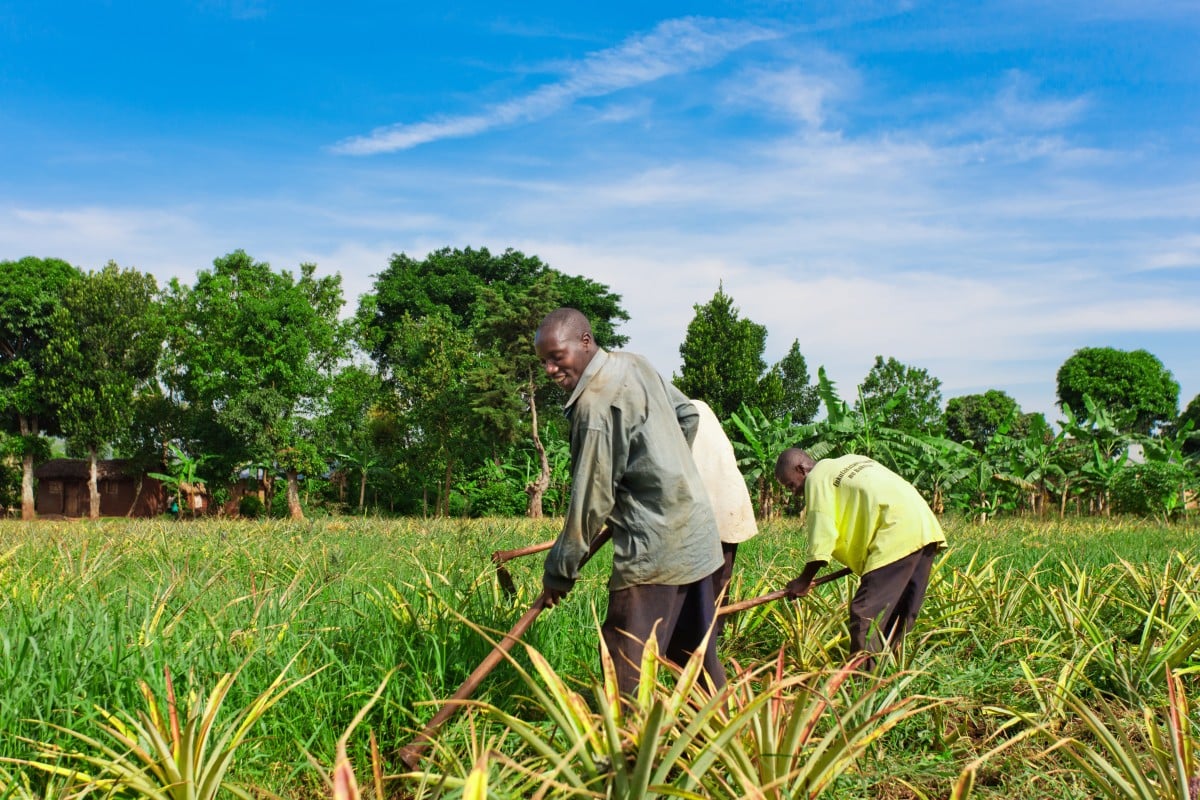
Africa has a surplus of agricultural products, Uganda’s leader says. Photo: Shutterstock
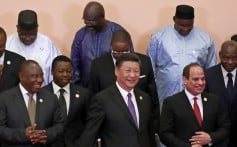
African countries want China to open up its markets to the continent’s agricultural products, Uganda’s President Yoweri Museveni told top Chinese diplomat Yang Jiechi after Beijing vowed to boost agricultural trade with the United States.
In a meeting with Yang in Uganda, Museveni said an increasing number of African
 countries wanted to sell to the lucrative Chinese market.
He said Africa had a surplus of agricultural products despite exporting to Europe and the US, partly because trade between African countries remained low.
“Africa’s 54 countries have come together through market integration in blocs such as Comesa [Common Market for Eastern and Southern Africa] that are not sustainable,” Museveni said. “The surplus of production needs another intercontinental market and an external market like China to come in.”

China is Africa’s largest trading partner, having surpassed the US in 2009. Africa’s trade with China was worth US$204 billion last year, according to figures from China’s Ministry of Commerce.

China is also the continent’s largest lender, having advanced more than US$143 billion between 2000 and 2017 to African countries for building motorways, power dams and railways, according to figures from the China Africa Research Initiative at the Johns Hopkins School of Advanced International Studies in Washington.
Museveni said China was interested in importing some aquatic products from Uganda, such as the Nile perch fish, which he said had high demand globally.
China pledges another US$60b to Africa as leaders meet in Beijing
4 Sep 2018

With China exporting far more to the continent than it imports from it, African nations are aiming to restructure the trading relationship to narrow their trade deficit by working out what Chinese consumers want and how to get it to them.

China’s imports of African goods are dominated by natural resources such as crude oil, copper, cobalt, iron ore, diamonds, gold and titanium, which it buys to meet its industrial and manufacturing needs. In return, Africa imports machinery, electronics and manufactured consumer goods.

The call from Museveni came after China and the US reached an interim deal to resolve aspects of their protracted trade war. US Trade Representative Robert Lighthizer has said that, under the deal, China had agreed to buy US$80 billion in American agricultural products over two years.
China has not confirmed the figure, but the deal is being watched closely by China’s other trading partners. Since the dispute with the US began in July last year, Beijing has diversified its agricultural product suppliers to include Argentina, Australia, Brazil, Germany, New Zealand and Spain.
China’s agricultural trade with Africa increased from US$650 million in 2000 to US$6.92 billion in 2018, Chinese Minister of Agriculture Han Changfu said this month. Han said he hoped that the figure would reach US$10 billion in the next decade.

Museveni said in the meeting with Yang that Beijing had “supported the continent’s prosperity through trade”, and that the memorandum of understanding he had signed last year with Chinese President Xi Jinping had “intensified the relationship” between their countries. A pipeline being constructed to Tanzania, to connect Uganda’s oil fields to the Indian Ocean, is being funded partly by Chinese investment, along with new industrial parks.

Yang said China would work with Uganda to implement the agreements reached by their respective heads of state and the outcomes of the Beijing Summit of the Forum on China-Africa Cooperation.

Beijing set to pledge further billions to Africa despite lending fears 2 Sep 2018

He said China would help Uganda to grow its economy, increase trade between the two countries, and build industrial parks and infrastructure. Beijing would continue to fund projects through the Belt and Road Initiative, its transcontinental infrastructure investment strategy, and through Uganda’s development plan Uganda Vision 2040, without providing details.
After Uganda, Yang will continue his African tour by visiting Congo-Brazzaville. The tiny oil-dependent central African nation recently fell into debt distress when global oil prices dropped, forcing Beijing to restructure its loans to unlock a bailout by the International Monetary Fund.
Xi denies China is spending money on African ‘vanity projects’
3 Sep 2018

Yang will then visit the West African nation of Senegal, where Beijing is funding large infrastructure projects.

Several other leading Chinese diplomats have made trips to Africa this year, including Foreign Minister Wang Yi, who visited South Africa in October. Last week, Ji Bingxuan, vice-chairman of the Standing Committee of the National People’s Congress – the permanent body of China’s legislature – led a group of officials visiting Congo-Brazzaville.

Source: SCMP

20/09/2019

Chinese city offers 400 teachers US$39,500 a year in bid to attract best graduates

  • As well as earning three times the industry average, successful candidates are promised 165 days’ leave
  • Social media posts linked to story attract more than 60 million views
Authorities in Shenzhen are offering three times the national average salary to attract more teachers. Photo: Weibo

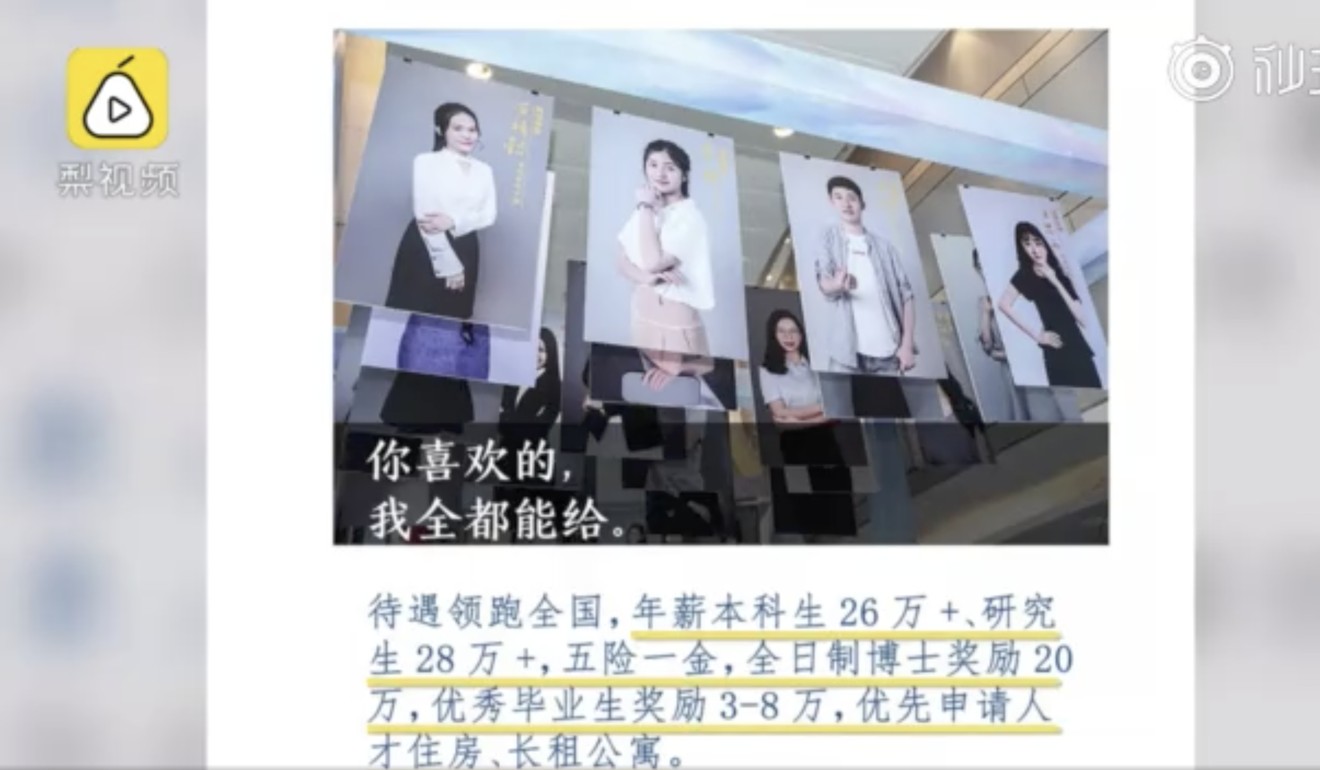
A recruitment advertisement offering schoolteachers in southern China the chance to earn up to 280,000 yuan (US$39,500) a year – more than three times the industry average – has sparked a massive response on social media.

Published by the Longhua district education bureau in Shenzhen, Guangdong province, the advert said it was looking for 400 high, middle and primary schoolteachers. As well as an annual salary of between 260,000 yuan and 280,000 yuan, depending on qualifications, the very best candidates would receive a bonus of between 30,000 and 80,000 yuan, it said.

New recruits would also be entitled to 165 days’ leave per year, though the advert – published on Tuesday on WeChat, China’s most popular messaging platform – did not make clear if that included weekends.

The Longhua district education bureau says it is looking for 400 new teachers. Photo: Weibo
The hashtag “Shenzhen middle schoolteachers are being recruited for almost 300,000 yuan a year” racked up almost 60 million views on Weibo, China’s Twitter-like platform.
While some people praised the authority for trying to attract the best possible candidates – it said itself that hundreds of teachers currently working in the district were graduates of China’s top universities, including Peking and Beijing Normal – others said that even with a sky-high salary most young professionals would find it hard to get by in Shenzhen.

“Do you know how expensive houses are in Shenzhen?” one person wrote on Weibo. “You need to wait several years after graduation before buying a house, unless you already have money.”

“Even if your starting salary is 200,000 yuan or 300,000 yuan, you’ll still need to wait 10 years before you’ve saved up enough to buy a house,” said another.

The advert said the new teachers will be get 165 days’ leave per year. Photo: Xinhua

The education bureau has not released any additional information about the recruitment campaign and calls to its offices on Friday went unanswered.

However, it said in a recent Q&A on its website that teachers’ salaries were in line with those of civil servants in the district, and had been steadily rising under a reform of the pay system.

Longhua is not the first district in Shenzhen to offer attractive salary packages, however. In May, 21st Century Business Herald reported that authorities in Yantian district had recruited 20 teachers from Beijing with the offer of between 290,000 yuan and 330,000 yuan a year.

According to central government figures released in May, teachers in China’s public schools earned an average of 92,383 yuan last year.

While Shenzhen has grown from a once sleepy fishing village to a vast metropolis, and is now slated to become a model city for China, its education facilities have failed to keep pace with other areas of development. It also faces competition from more established centres, like Beijing and Shanghai.
Despite having a population of about 15 million, the city has just 344 primary schools. By comparison, the provincial capital Guangzhou, which has a similar population, has 961 primary schools and about 17,000 more primary schoolteachers.
According to official figures, of the nearly 80,000 students who applied for places at public secondary schools in Shenzhen last year, just 35,000 were accepted. That left the parents of the remainder having no option but to pay for places at private schools in the city or, in some cases, send their children overseas to study.
The problem is set to get worse as Shenzhen’s preschool system is already straining under the pressure of the city’s high birth rate.
Source: SCMP
08/09/2019

How a ban on sale of wild African elephants to zoos could affect China

  • International watchdog to vote on whether to extend restrictions to southern African countries that are the biggest exporters
  • If passed, China may find it hard to buy elephants from Africa
An elephant is hoisted into Chongqing zoo in southwestern China, on loan from another Chinese zoo. Photo: Reuters

China, one of the leading buyers of African elephants, could face difficulty in acquiring the mammals if a widening of a ban on their sale to zoos is ratified next week by the global regulator of wildlife trade.

A motion further restricting the sale of live elephants was on Sunday supported by 46 countries at the committee stage of the Convention on International Trade in Endangered Species of Wild Fauna and Flora (Cites) in Geneva. It will go to a final vote on August 28.

The sale of elephants from West, Central and East Africa is already banned – but there is a lower level of protection for them in southern African countries such as South Africa, Namibia and Zimbabwe, which are the top three exporters of wild elephants to overseas zoos, according to Cites.

Keeping elephants caught from the wild in zoos is considered cruel by conservation and animal rights groups.

Conservationists criticised Zimbabwe’s capture of 35 baby elephants that were exported to a Chinese zoo in February. There was also uproar from activists in 2015 when a video filmed in a Chinese zoo showed two dozen elephants bought from Zimbabwe exhibiting signs of distress.

Zimbabwe was among 18 countries that opposed the potential ban at the committee stage, along with the United States – another leading buyer of elephants from Africa. China was one of 19 countries that abstained, while the European Union’s 28 countries did not vote.

If the motion is passed, China and the US – both known to be buying elephants from Africa and keeping them in so-called captive facilities or zoos – may find it hard to source the animals from the continent. Zimbabwe has come under global scrutiny
for its capture and sale of elephants to captive facilities including zoos and safari parks in China and the US.

Peter Knights, founder and chief executive of WildAid, an environmental organisation in San Francisco, explained that Cites still allowed the movement of live elephants for on-site conservation efforts such as moving the animals back into the wild or to a national park where they had been depleted.

“This is not primarily a conservation issue but more about animal welfare,” he said. “As highly social, intelligent animals, African elephants do not usually do well in captivity, requiring very large areas, and often developing behavioural problems in captivity and not usually reproducing successfully – indicating far from ideal housing.”

According to Humane Society International, which promotes animal welfare, Zimbabwe has sold more than 100 baby elephants to zoos in China since 2012, with a further 35 reportedly awaiting export.

On Monday, 55 elephant specialists protested to the US wildlife management agency about plans for the country’s zoos to import juvenile elephants caught in the wild from Zimbabwe. They asked the agency to prohibit imports of wild-caught elephants for captivity in US facilities.

“We are vehemently opposed to the proposed imports,” the experts wrote in a letter to the agency. “Young elephants are dependent on their mothers and other family members to acquire necessary social and behavioural skills. Male calves only leave their natal families at 12 to 15 years old and females remain for life. Disruption of this bond is physically and psychologically traumatic for both the calves and remaining herds and the negative effects can be severe and lifelong.”

The letter said that eSwatini, formerly Swaziland, had sold a total of 11 wild elephants to two American zoos in 2003, and a further 18 to three US zoos in 2016.

‘Hundreds’ of elephants are being poached each year in Botswana

Concerns about keeping elephants in zoos come at a time when the animals remain under threat in Africa from poachers who kill them for ivory.

Southern African countries such as Botswana, Namibia, Zimbabwe and Zambia are pushing to reopen the trade in ivory. Zambia is seeking to have the classification of its elephants downgraded to allow commercial trade in registered raw ivory with approved trading partners.

Other countries, including Kenya, Nigeria and Gabon, are seeking the highest possible levels of protection for all of Africa’s elephants.

Two previous attempts at regulating the ivory trade failed to curb poaching, which has caused elephant numbers to dwindle over the past two decades. A 2016 study estimated that 30,000 to 40,000 elephants were being killed every year, with about 400,000 remaining in total.

Knights, of WildAid, said that between 1975 and 1989 – the first period in which the ivory trade was regulated – half of Africa’s elephants were lost. During the second attempt at regulation between 2008 and 2017, participating countries claimed to have addressed the problem but poaching increased.

“It is clear that we cannot control ivory trade and that legal trade stimulates poaching and demand for ivory, rather than substituting for it as some countries suggest. The price fell by two-thirds when China banned domestic sales,” Knights said, adding that demand for ivory came primarily from Asia.

“Most seized shipments are en route to China. It has banned all sales and is making a great effort to crack down on illegal trade.”

Source: SCMP

Law of Unintended Consequences

continuously updated blog about China & India

ChiaHou's Book Reviews

continuously updated blog about China & India

What's wrong with the world; and its economy

continuously updated blog about China & India