Chindia Alert: You’ll be Living in their World Very Soon
aims to alert you to the threats and opportunities that China and India present. China and India require serious attention; case of ‘hidden dragon and crouching tiger’.
Without this attention, governments, businesses and, indeed, individuals may find themselves at a great disadvantage sooner rather than later.
The POSTs (front webpages) are mainly 'cuttings' from reliable sources, updated continuously.
The PAGEs (see Tabs, above) attempt to make the information more meaningful by putting some structure to the information we have researched and assembled since 2006.
There has been strong demand for air freight services since April, when Chinese factories got back to work
Cargo flights have become critical in moving protective health equipment across the globe
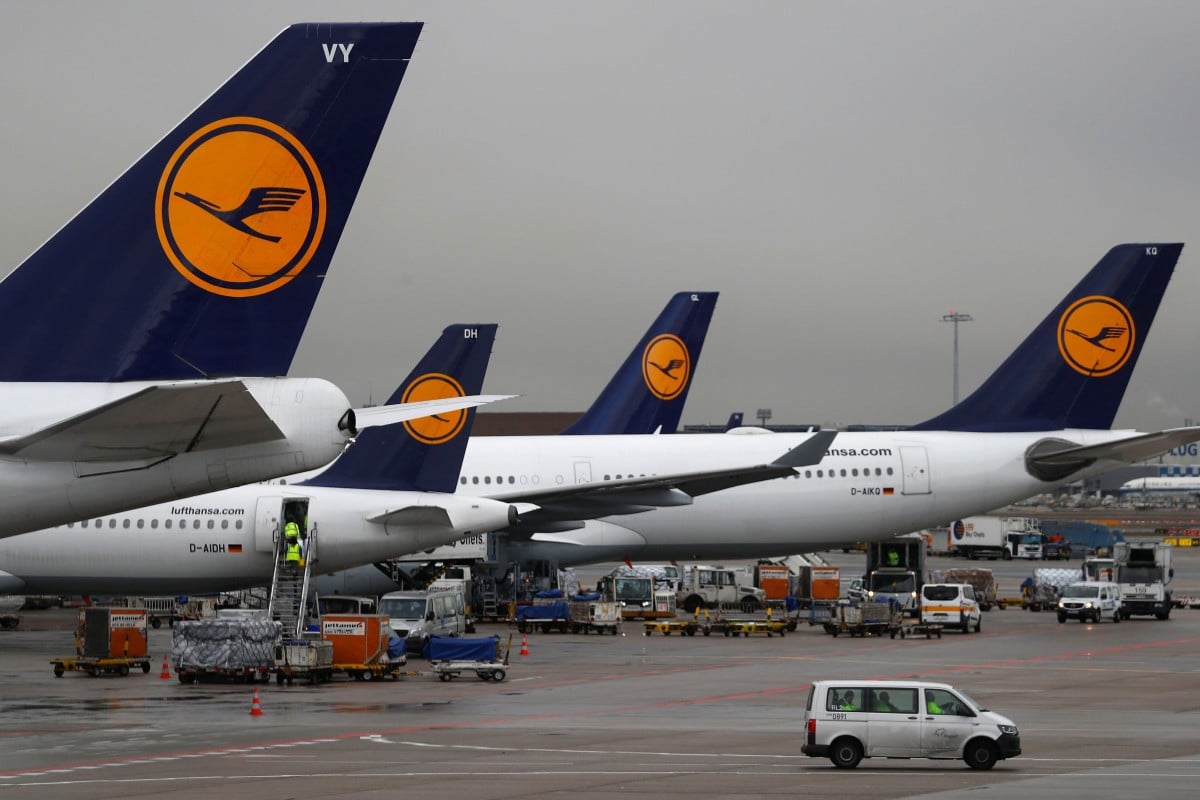
Planes of German air carrier Lufthansa at the country’s largest airport in Frankfurt. Photo: Reuters
German freight carrier Lufthansa Cargo is expanding in China, surpassing 100 weekly flights for the first time, and adding new flights to Shenzhen.
Peter Gerber, CEO of Europe’s largest cargo airline, said there had been heavy demand for its services, though this might cool by the peak of summer.
“At the moment, cargo demand is very, very strong,” he told the Post. “It started to get strong in April, when Chinese industries got back to work, and after that we have seen a constant, heavy demand, a real peak.”
Cathay Pacific and Cathay Dragon report combined HK$4.5 billion loss for start of 2020
15 May 2020
Global air freight capacity has been squeezed as two-thirds of the world’s aircraft have been grounded by the Covid-19 pandemic.
The collapse of air travel has practically put a stop to passenger flights, which typically carry half of all air cargo.
Since the pandemic, cargo flights have been critical in moving protective health equipment across the globe. From sending masks and other supplies to China in February, the German carrier is now taking urgent supplies from the mainland back to Europe.
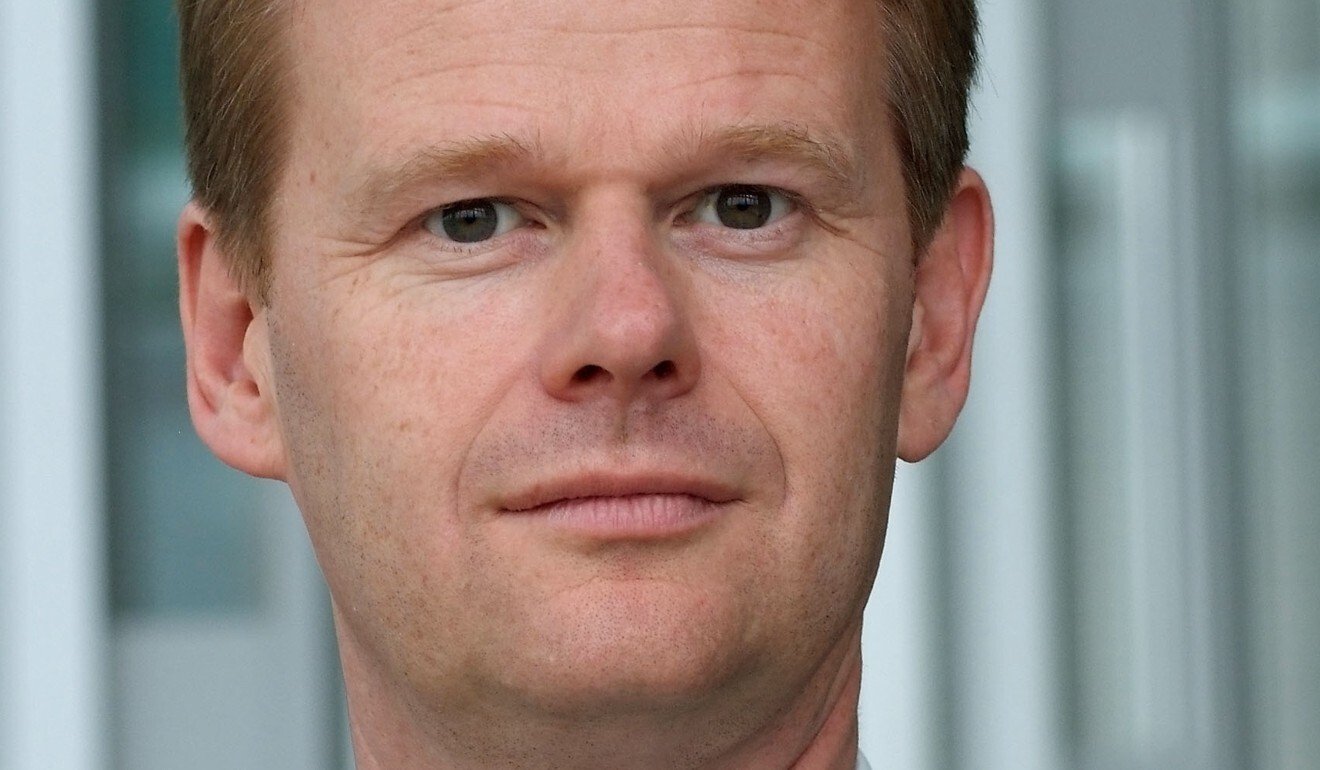
Peter Gerber says Lufthansa Cargo has a high responsibility in maintaining supply chains, for both global health and world trade. Photo: Handout
“We have a high responsibility in maintaining supply chains in these unprecedented times for both global health and world trade,” Gerber said.
With the addition of Shenzhen, Lufthansa Cargo will fly to five destinations in China. It serves more than 300 destinations in 100 countries.
The cargo carrier is part of the Lufthansa Group and coordinates all the freight that goes into the passenger planes of its sibling brands, including Lufthansa, Swiss and Austrian.
Coronavirus: South Africa asks Hong Kong to remove its citizens from government quarantine list
16 May 2020
By next week, Lufthansa Cargo will be running more freight flights to China than the 72 passenger flights the group flew weekly before the pandemic to Beijing, Shanghai, Shenyang, Nanjing and Qingdao.
Lufthansa Cargo has a fleet of seven Boeing 777 Freighters (777Fs), with two new 777Fs arriving this year as part of its strategy to operate a fleet with a single aircraft type.
It also has six McDonnell Douglas-11Fs that Gerber said would still be retired as planned at the end of 2020, despite the extra demand for cargo capacity.
Its additional flights to China will make use of “preighters” – passenger aircraft flying cargo only. Gerber felt the trend of using empty passenger planes as “preighters” had peaked, pointing out that they cost the same to operate as freighters but carry only a fraction of the cargo.
Although he did not rule out future expansion, he said: “Demand will gradually come down in the next two or three months because a lot of equipment would have been shipped by then and some shipments will go on rail or ocean shipping.”
Coronavirus: Cathay Pacific could get cash injection from shareholder Qatar Airways
13 May 2020
He said some uncertainty remained over continued demand for airfreighted cargo, given the battered state of the world economy. Airlines would have to consider longer-term demand before deciding to invest more in cargo aircraft. “It depends how it looks beyond the next year,” he said.
Gerber said no decision had been taken yet on whether to convert some of the group’s orders for Boeing’s newest widebody 777X passenger aircraft into cargo planes.
He added that future plane orders would be balanced against the wider needs and spending decisions at Lufthansa Group, which is currently negotiating a government pandemic bailout package in the region of €9 billion (US$9.7 billion).
Carrier targets return of daily services to major Asian cities and more frequent long-haul services
Airline to monitor global situation and adjustments may be made ‘as necessary’
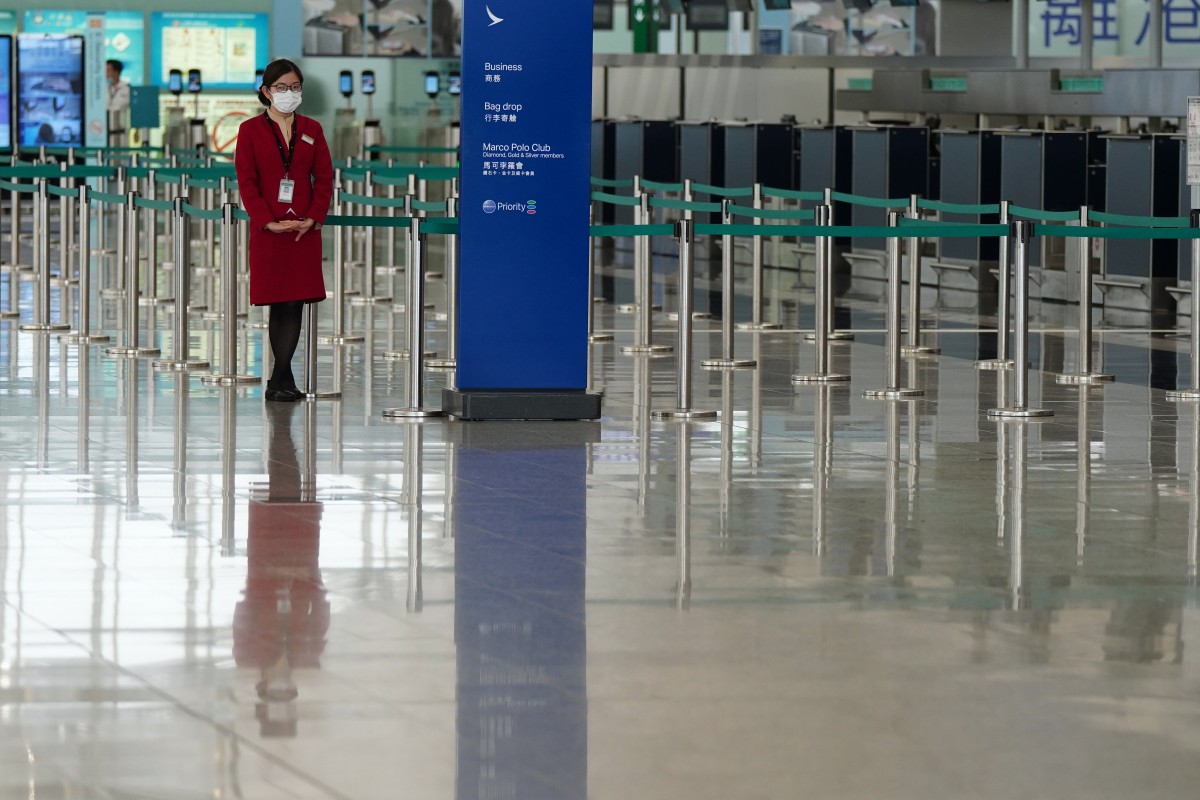
A Cathay Pacific employee stands near the check-in desks at a virtually deserted Hong Kong International Airport. Photo: Sam Tsang
Cathay Pacific Airways has signalled its intent to start reversing its near-total grounding of aircraft because of the coronavirus pandemic, and plans to start increasing its number of passenger flights in the last week of June.
The airline said it hoped to add more long-haul destinations, make flights more frequent, and reinstate some major Asian cities to its daily schedule for the first time in several months, “subject to government travel restrictions”.
Cathay scaled its operations back to a skeleton schedule of 3 per cent of services in early April, and that was extended until June 20. The newly announced increases would take that up to 5 per cent.
Tracking the massive impact of the Covid-19 pandemic on the world’s airline industry in early 2020 Singapore Airlines, another of Asia’s major carriers, said last week it would maintain a 96 per cent reduction in flights until the end of June.
Cathay, which has 236 aircraft, currently operates long-haul flights to London Heathrow, Los Angeles, Vancouver and Sydney twice a week, but will increase that to five times a week.
On top of that, Amsterdam, Frankfurt, San Francisco and Melbourne are among the long-haul destinations set to return three times a week.
With regional routes currently operating three times a week, including Tokyo Narita, Taipei, Beijing and Singapore, Asian routes will increase to a daily service. Osaka and Seoul would also return to the network, too.
“We will continue to monitor the developing situation and further adjustments may be made as necessary,” the airline said.
Coronavirus: ban on non-residents leaves Hong Kong airport virtually deserted
Earlier this month, Cathay’s budget unit HK Express extended its total grounding until June 18, having been on hiatus since March 23.
Meanwhile, Boeing has added to warnings of a very slow recovery in air travel, with Dave Calhoun, its CEO, saying demand may not return to 2019 levels for two to three years.
Cathay Pacific’s daily passenger volume has collapsed from regular previous peaks of 100,000 to less than 1,000 in April. Over the past two months, the company has been running more than 250 extra pairs of cargo-only passenger flights to maintain air freight capacity, much of which is accounted for by passenger services.
In a bid to cut costs, most of the Cathay Pacific Group’s 34,200 staff have taken three weeks of unpaid leave. Also, 433 cabin crew in the US and Canada were told they would be laid off, while about 200 pilots in the UK, Australia have been furloughed.
The International Air Transport Association, which revised down pandemic-related revenue losses for the global sector to US$314 billion (HK$2.4 trillion) two weeks ago, said last week the Hong Kong aviation market would take a US$7.5 billion hit this year, a 27 per cent increase on the previous estimate. That equates to a 59 per cent decline in air travel demand, or a loss of almost 31 million passengers, in 2020.
BOCOM International, a financial services company, forecast in a report on Monday that the city’s aviation sector would lose HK$65.2 billion in revenue in 2020, yet Cathay Pacific could emerge as a winner if it survived largely unscathed, given the weakness of rivals at home and in the region plus its dominant position in Hong Kong.
“Hong Kong aviation is at the most critical juncture in its history. Though calamitous, Covid-19 is set to reshape Hong Kong’s aviation industry for the years, possibly decades, to come,” said transportation analyst Luya You.
“Covid-19’s sweeping blows now offer a blank slate for remaining players to regain lost leadership or gain new markets. If [Cathay Pacific] can survive intact from Covid, the carrier could enjoy winner-takes-all growth trajectory in the years following [2020].”
Cathay Pacific has said it expects a “substantial” loss in the first half of this year as the impact of the coronavirus outbreak takes it toll.
The Hong Kong carrier also saw a 28% drop in 2019 profits as it struggled during the city’s political protests.
The airline is now battling with the fallout of the virus as passenger numbers plummet.
Chairman Patrick Healy said the first half of 2020 was expected to be “extremely challenging financially”.
The development comes with thousands of flights already cancelled worldwide, as airlines struggle to cope with a slump in demand caused by the coronavirus outbreak.
British Airways, Ryanair and EasyJet have all cancelled flights to and from Italy until April, while Norwegian Air and American Airlines have also announced significant cuts to services.
Calling 2019 a “turbulent year”, Mr Healy said he expected “our passenger business to be under severe pressure this year and that our cargo business will continue to face headwinds”.
While Cathay Pacific has reduced flights to help save costs, “we expect to incur a substantial loss for the first half of 2020,” he added.
The airline reported a net profit of HK$1.69bn (£170m) for last year, down from a HK$2.35bn profit in 2018.
In other developments:
Dutch airline KLM is cancelling all its flights to and from Milan, Venice and Naples until 3 April
Austrian rail operator OBB has announced it is suspending all trains in and out of Italy – which has more than 10,000 confirmed cases of the virus – until further notice
Seat, the Spanish unit of car-maker Volkswagen, is considering temporary lay-offs at its Barcelona plant
Ride-hailing app Uber says it plans to offer an as-yet unspecified amount of financial assistance to its drivers who have to self-isolate for up to 14 days
Embattled sector
The airline industry faces a loss of revenue of up to $113bn this year, according to aviation trade body IATA, as thousands of planes are grounded amid travel restrictions across the globe.
After UK-based airline Flybe went into administration last week, analysts are warning of more failures to come for the embattled airline industry.
Earlier this week, Korean Air warned the coronavirus outbreak could threaten its survival, in a memo sent to employees.
The global spread of the coronavirus has hit both holidaymakers and business travellers. The Global Business Travel Association said on Wednesday that 43% of its member companies have cancelled business trips booked for this month.
The Hong Kong-based firm reported this to the ICO. The regulator said it subsequently uncovered “a catalogue of errors” during a follow-up investigation, including:
back-up files that were not password protected
internet-facing servers without the latest patches
operating systems that were no longer supported by the developer
inadequate anti-virus protection
At least one attack involved a server with a known vulnerability – but the fix was never applied, despite having been public knowledge for more than 10 years.
Steve Eckersley, the ICO’s director of investigations, said there were “a number of basic security inadequacies across Cathay Pacific’s system, which gave easy access to the hackers”.
The airline failed four out of five of the basic cyber-essentials guidance from the National Cyber Security Centre, he added.
Analysis: A wake-up call for others
By Joe Tidy, Cyber-security reporter
I’m told investigators were extremely concerned by the failures they found. It paints a picture of a company that did not take security of personal data seriously, and today’s fine will be a wake-up call to them and other firms. It is, however, only a pittance compared to what it could have been if the hack had occurred more recently.
New GDPR rules have increased the potential maximum fine, and it’s clear the failures here would have warranted a far more severe punishment.
Instead of a £500k penalty, Cathay Pacific could have been hit with a share-holder sickening £470m fine – 4% of its annual global turnover.
The £500,000 fine Cathay Pacific is facing is the maximum possible under the Data Protection Act 1998, which was used instead of the newer GDPR “due to the timing of the incidents in this investigation”.
The ICO said that Cathay Pacific had acted promptly once it became aware, and sought expert help from a top cyber-security firm, and had also contacted affected customers.
The report also noted there were no confirmed cases of the personal data being misused – but that it was very likely it would be in future.
In a statement about the fine, Cathay Pacific said it “would once again like to express its regret, and to sincerely apologise for this incident”.
It said “substantial amounts” of money had been spent on security in the past three years.
“However, we are aware that in today’s world, as the sophistication of cyber-attackers continues to increase, we need to and will continue to invest in and evolve our IT security systems.”
HONG KONG (Reuters) – Staff at Cathay Pacific Airways, Hong Kong’s flagship airline, are on edge.
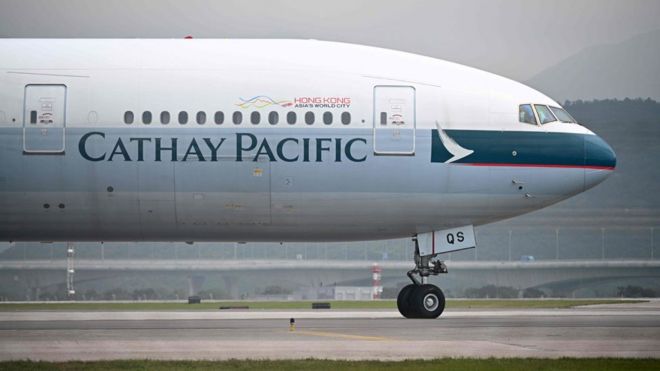
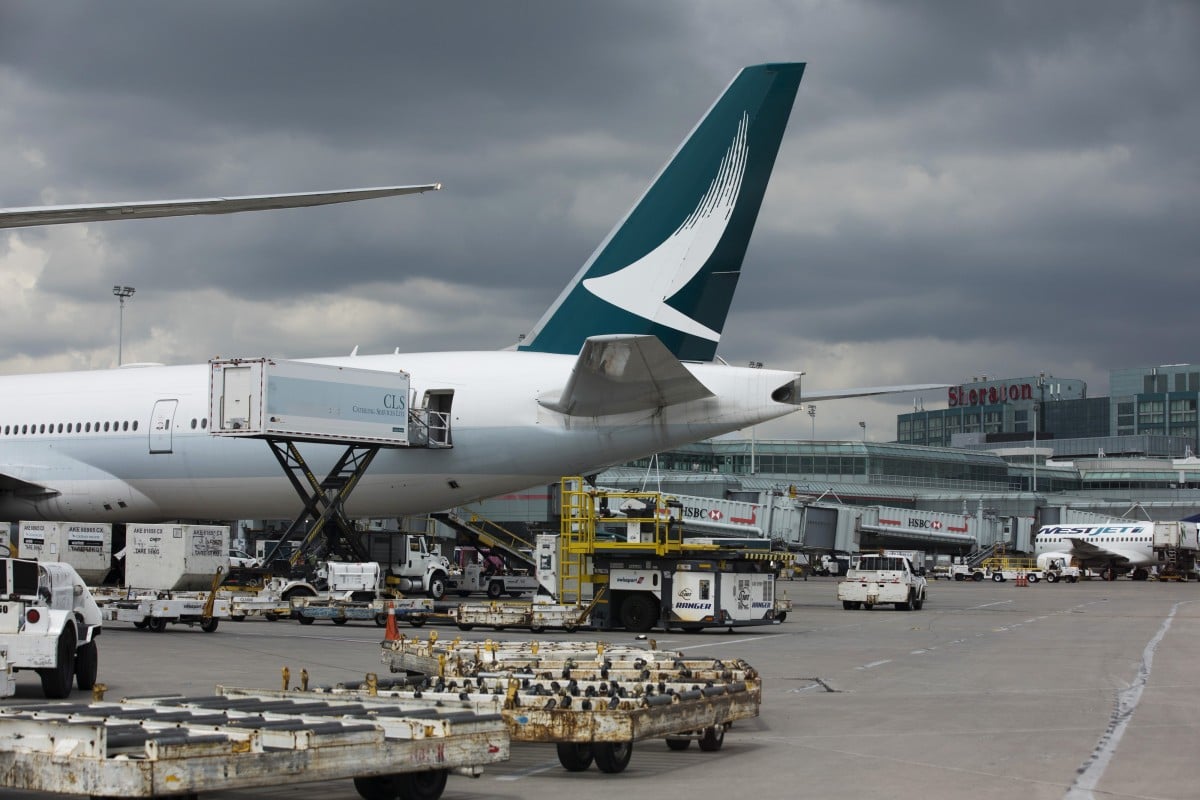
A Cathay Pacific Boeing 777-300ER plane lands at Hong Kong airport after it reopened following clashes between police and protesters, in Hong Kong, China August 14, 2019. REUTERS/Thomas Peter
Their city has been gripped by months of anti-government protests, and their company is feeling the wrath of China’s aviation regulator after some staff members took part or expressed support.
Since an Aug.9 directive by the Civil Aviation Authority of China (CAAC) that called for the suspension of staff who supported or participated in the demonstrations, the regulator has rejected some entire crew lists without explanation, two sources with knowledge of the matter told Reuters.
The rejections have forced Cathay to scramble, pulling pilots and flight attendants off standby while it investigates social media accounts in an effort to determine which crew member has been deemed a security threat, one of the sources said.
Other disruptions have come in the form of a huge jump in the number of plane inspections upon landing, four pilots said.
The flexing of regulatory muscle has contributed to a climate of fear within the airline, with employees telling Reuters they felt Cathay’s longer-term future as an independent company was highly uncertain and subject to Beijing’s whims.
The CAAC’s labelling of employees who support the protest as a security risk and its demand that they be suspended from flying over mainland airspace has been a de facto career killer.
Around three quarters of Cathay flights use mainland airspace and due to the directive, 30 rank-and-file staff, including eight pilots and 18 flight attendants, have been fired or resigned under pressure, according to the Hong Kong Cabin Crew Federation.
Cathay CEO Rupert Hogg and his top deputy also resigned in August amid the mounting regulatory scrutiny on the 73-year-old airline, one of the region’s most high-profile brands that draws on Hong Kong’s British heritage.
“Things changed very quickly,” said Jeremy Tam, a pro-democracy lawmaker and pilot who resigned from the airline after the CAAC directive, likening the atmosphere to a political trial. “The threat is huge and it’s almost like zero to 100 in two seconds.”
Reuters talked to 14 current and former employees for this article. Nearly all declined to be identified for fear of being fired or due to the sensitivity of the matter.
The CAAC did not respond Reuters requests for comment on the rejections of crew lists or the increase in plane checks.Cathay said in a statement it must comply with all regulatory requirements. “Quite simply, this is our licence to operate; there is no ground for compromise,” it said.
The airline declined to comment on the number of employee departures, but said any terminations took into account factors such as a person’s ability to perform their role.
DEMERIT SYSTEM
Aviation regulators around the world conduct occasional plane inspections at airports to ensure an airline is in compliance with safety regulations.
But after the CAAC’s Aug. 9 directive, the once-infrequent inspections occurred almost daily and included the new and unusual step of checking phones owned by crew for anti-China photos and messages, the pilots said, adding that this had led to flight delays.
The step-up in checks has increased the likelihood of regulators finding minor issues to write up, which pilots said had included dirt on the plane’s exterior and scratches on a fire extinguisher.
Infractions can have outsized consequences under the CAAC’s strict demerit points system, they said, noting the regulator could force Cathay to reduce its number of flights, cut destinations or in a worst-case scenario, revoke the airline’s right to fly to mainland China.
Management has urged staff to do their utmost to avoid infractions.
“It is nothing less than the survival of the airline at stake,” said a senior employee. “Management have made that abundantly clear at meetings.”
Executives are particularly sensitive after seven incidents outside mainland China in the past two months in which pre-flight checks found emergency oxygen bottles for crew were depleted.
The CAAC is more public than many regulatory peers about disclosing safety violations, warnings and punishments.
In 2017, Emirates was banned from expanding its operations for six months following two safety incidents, while flag carrier Air China Ltd was ordered last year to cut Boeing Co 737 flights by 10% after an emergency descent linked to a pilot smoking an e-cigarette in the cockpit.
Cathay declined to provide information on its points under the CAAC system but said it wanted to emphasise that there had been no impact on its flight services into mainland China.
The pilots said the high frequency of airplane checks, which one described as “very intimidatory”, was starting to recede.
A THOUSAND CUTS
Employees are also feeling pressure from other regulatory bodies.
Last week, ahead of China’s National Day on Oct.1, immigration officers at some mainland airports requested photos of crew with the Chinese flag, said a pilot at regional arm Cathay Dragon who flies to the mainland regularly.
He said to his knowledge, most pilots – many of whom are expats from Western countries – had refused but Hong Kong cabin crew were “too nervous to say no” given the scrutiny on their actions by the company and the Chinese government.
“Everyone is walking on eggshells in China,” the pilot said.
Cathay did not respond to a request for comment, while China’s Ministry of Public Security, which oversees immigration, did not respond to a request for comment during a week of public holidays.
There has been no let-up in the widespread, sometimes violent, unrest that has beset Hong Kong. Triggered by a now-withdrawn extradition bill, it has morphed into an outpouring of opposition to the former British colony’s Beijing-backed government.
The crisis has also meant a sharp drop in travel demand to Hong Kong, putting more pressure on Cathay.
Cathay’s overall passenger numbers were down 11.3% in August. Flights at Cathay Dragon, which does most of Cathay’s mainland flying, were on average 60-65% full in September, down from the usual 80%, according to estimates from two pilots.
The pilots said while the sharp drop in demand was in some ways similar in scale to that weathered by Cathay during the SARS epidemic and the global financial crisis, there were key differences that felt more threatening to the company’s future.
Some state-controlled firms such as China CITIC Bank International and Huarong International have told employees to avoid flying with Cathay, and it has been attacked by Chinese state news organisations as well as by many mainland consumers on social media.
CAAC’s Aug.9 statement which called staff who supported the protests a security risk has also put Cathay’s reputation as one of the world’s safest airlines under a cloud it does not deserve, employees said.
Many acknowledged the new management team, which oversees around 33,000 employees, has few palatable options in dealing with the situation given the sway Beijing holds over the airline’s operations.
But they lamented the loss of freedom of speech and sense of job security, saying employees are afraid to speak about anything even vaguely political or voice support for protests on social media for fear of being reported by colleagues under a whistleblower policy.
“It has become a Hong Kong company with mainland employment terms,” a pilot at Cathay Dragon said. “The risk is death by a thousand cuts.”
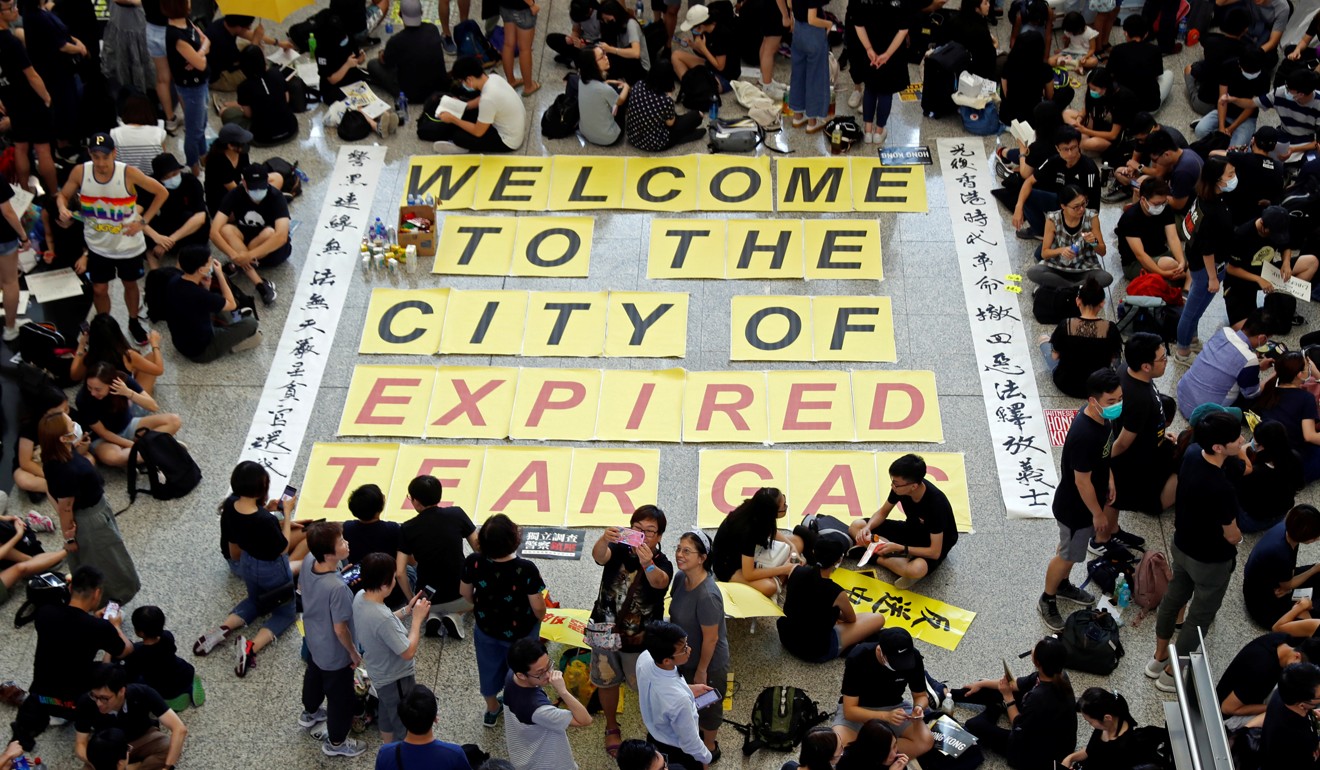
Image copyright EPAImage caption Officials say about 5,000 gathered for the fourth day of protests at the airport
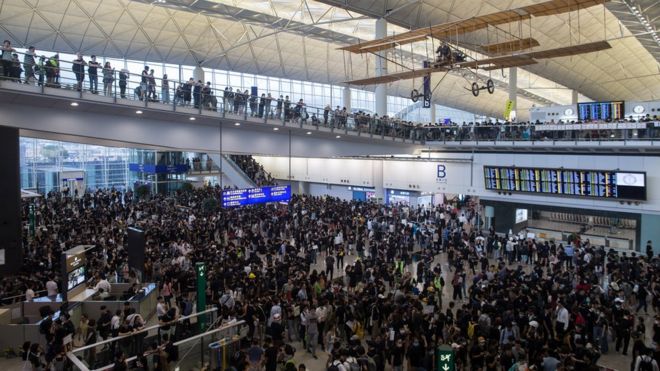
Hong Kong International Airport cancelled all departures on Monday, as thousands of anti-government protesters occupied and caused disruption.
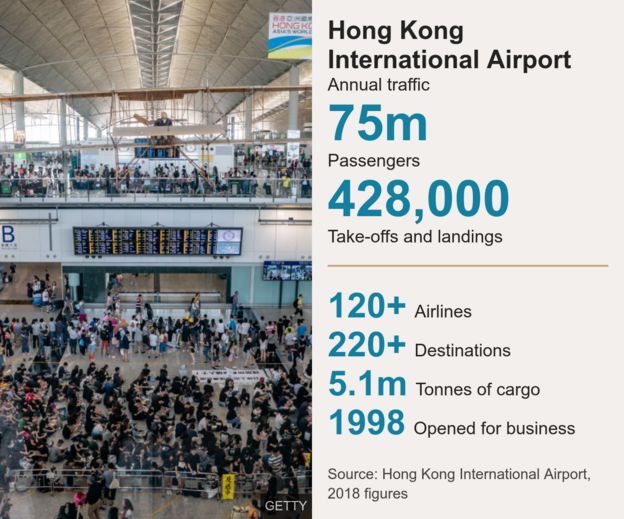
Passengers have been told not to travel to the airport, which is one of the world’s busiest transport hubs.
In a statement, officials blamed “seriously disrupted” operations.
Many of those protesting are critical of the actions of police, who on Sunday were filmed firing tear gas and rubber bullets at close range.
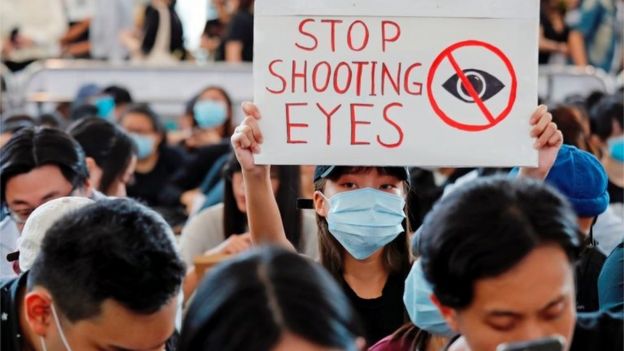
Some protesters wore bandages over their eyes in response to images of a woman bleeding heavily from her eye on Sunday, having reportedly been shot by a police projectile.
In a statement on Monday afternoon, Hong Kong’s Airport Authority said they were cancelling all flights that were not yet checked in.
More than 160 flights scheduled to leave after 18:00 local time (10:00 GMT) will now not depart.
Arrivals already heading into Hong Kong will still be allowed to land, but other scheduled flights have been cancelled.
Officials are now working to reopen the airport by 06:00 on Tuesday, a statement said.
Some passengers expressed annoyance at the disruption. “It’s very frustrating and scary for some people,” one man from Pakistan told the BBC. “We’ll just have to wait for our next flight.”
Helena Morgan, from the UK, said she was set to return to the UK to get her exam results on Thursday. “I’m hoping we get back for them and we’re not on a flight,” she said.
But others were more understanding of the protests. “I was expecting something, given all the news,” one arrival, Gurinda Singh, told Reuters news agency.
As rumours spread that police plan to move in on protesters on Monday evening, thousands opted to leave on foot. There are large backlogs for transport back into the centre, local reports say.
The BBC’s Stephen McDonell, who is at the scene, says the airport has effectively shut down while authorities work out how to deal with the crisis.
Hong Kong’s mass demonstrations and unrest show no sign of abating, more than two months after they were sparked by a controversial extradition bill.
Beijing officials have strongly condemned Sunday’s violence and linked violent protesters to “terrorism”.
Image copyright REUTERSImage caption Many of those who gathered carried signs condemning police conduct
What happened on Sunday?
On Sunday afternoon, a peaceful rally in the city’s Victoria Park led to clashes when protesters moved out of the area and marched along a major road despite a police ban.
There were confrontations in several central districts and police used rubber bullets in an attempt to disperse the demonstrators.
In the bustling central Wan Chai district, petrol bombs and bricks were thrown at police, who responded by charging at protesters.
A number of people, including a police officer, were injured in the clashes.
Videos on social media also showed officers storming enclosed railway stations and firing tear gas.
Footage inside another station showed officers firing what appeared to be rubber bullets at close range and several police officers beating people with batons.
Media caption Violence erupts in HK train stations
Local media outlets reported that suspected undercover police officers had dressed-up as protesters to make surprise arrests.
While protests in the city have turned increasingly violent, there were no reports of arrests during the three previous days of the airport sit-in.
What has the reaction been?
On Monday the Chinese authorities, who have not yet physically intervened to quell the unrest, used their strongest language yet to condemn violent protesters.
“Hong Kong’s radical demonstrators have repeatedly used extremely dangerous tools to attack police officers, which already constitutes a serious violent crime, and also shows the first signs of terrorism emerging,” Yang Guang, a spokesman for the Hong Kong and Macau Affairs Office (HKMAO), said at a press briefing.
“This wantonly tramples on Hong Kong’s rule of law and social order.”
Demonstrations started in June in opposition to a proposed extradition bill, which would have allowed suspected criminals to be sent to mainland China for trial.
Critics said it would undermine Hong Kong’s legal freedoms, and could be used to silence political dissidents.
Although the government has now suspended the bill, demonstrators want it to be fully withdrawn.
Their demands have broadened to include calls for an independent inquiry into alleged police brutality, and an amnesty for all arrested protesters.
Hong Kong is part of China but its citizens have more autonomy than those on the mainland.
It has a free press and judicial independence under the so-called “one country, two systems” approach – freedoms which activists fear are being increasingly eroded.
Chief executive Rupert Hogg says staff who ‘support or participate in illegal protests’ would face disciplinary action that ‘may include termination of employment’
Airline’s shares down 4.37 per cent on Monday morning to lowest level in 10 years, despite it complying with orders on Friday from China’s aviation authority
Cathay Pacific moved over the weekend to comply with new orders from China’s aviation authority. Photo: Bloomberg
Cathay Pacific has warned that it would sack staff taking part in illegal protests in Hong Kong, saying it would take a “zero tolerance” approach, as its shares slumped to their lowest level in 10 years in morning trading on Monday.
In a note to staff on Monday, chief executive Rupert Hogg said staff who “support or participate in illegal protests” would face disciplinary action that “could be serious and may include termination of employment”.
His warning indicated an escalation by the company, under pressure to crack down on employees after China’s civil aviation regulator said on Friday that airline staff supporting the Hong Kong protests would be barred from flights going to, from or through mainland China.
“We are all obliged to abide by law at all times,” Hogg said. “Cathay Pacific Group has a zero-tolerance approach to illegal activities. Specifically, in the current context, there will be disciplinary consequences for employees who support or participate in illegal protests. These consequences could be serious and may include termination of employment.”
By noon in Hong Kong, the stock had fallen 4.37 per cent to HK$9.85 (US$1.26), its lowest level since June 2009. Losses dragged the carrier’s parent company Swire Pacific down 5.4 per cent to HK$77.50, making it the worst performer on Hong Kong’s stock market during morning trading.
This was the lowest price since October 2018 for Swire, which owns 45 per cent of the airline. Air China, which owns 22.7 per cent of Cathay, also fell 1.53 per cent in Hong
On Friday, the Civil Aviation Administration of China (CAAC) told Hong Kong’s flagship carrier that any staff members who had taken part in what it called “illegal protests”, “violent actions” and “overly radical activities” would not be allowed to fly to or from the mainland, in a first warning shot at a Hong Kong-based corporate giant.
The CAAC also said that the airline would have to submit identification details of all crew operating all services using mainland China airspace, and that flights with unapproved crew lists would be barred. It gave the airline until Thursday to submit a detailed plan to improve its procedures.
Anti-extradition bill protesters join a sit-in protest at Hong Kong International Airport on Sunday. Photo: Reuters
Cathay Pacific had earlier said it would not stop staff members from taking part in demonstrations.
On Wednesday, Cathay Pacific chairman John Slosar said the company would not rein in staff for openly supporting the protests. “We certainly wouldn’t dream of telling them what they have to think about something,” Slosar said.
But in his second statement in two days in relations to the CAAC’s sanctions, Hogg said the “actions and words” of staff outside of work hours could have a “significant effect on the company”, adding that the actions of a few of Cathay’s 34,000 employees would be seen as a company position.
He also asked staff to not “support or participate” in the illegal protest at the airport, saying the carrier was concerned that the protests could become disorderly and violent.
No flights by Cathay Pacific, nor by its subsidiaries Cathay Dragon or HK Express, were delayed or cancelled on Saturday or Sunday, the company said.
The CAAC’s move was widely seen as a clear warning to Hong Kong’s business community to toe Beijing’s line to pressure ongoing anti-government protests in the city that have been taking place for over two months.
Despite the airline acting over the weekend to comply with the rules, Chinese state media continued to put pressure on the company.
Global Times, a tabloid associated with Communist Party mouthpiece People’s Daily, said on Sunday the airline had still not allayed all concerns despite its adjustments to comply with the ruling.
Carrie Lam’s remarks about Beijing’s sovereignty ‘add fuel to the fire’, analysts warn
“These are only small steps [showing] that Cathay Pacific is heading towards the right direction, and their sincerity will need to be tested over time,” the tabloid said in an opinion article on Sunday.
It said 2,000 company staff joined citywide strikes last Monday, and cited the case of a pilot who was arrested and charged with rioting during a demonstration on July 28.
“Cathay Pacific has touched on this behaviour lightly, which has a huge impact on the trust the industry and the public have towards the company,” the article said.
State broadcaster CCTV published a short video on Weibo on Monday morning of its anchor issuing further warnings to the airline, saying there were reports of staff continuing to join “illegal gatherings” and asking tourists not to go to Hong Kong.
“If this continues, it’s not a matter of whether or not people would still want to come to Hong Kong, but whether they would still want to be on your airline,” Kang Hui said in a one-minute video.
“Let me send a friendly reminder: one would not be in trouble had one not asked for it,” Kang said, in Mandarin and then in English, translating the popular Chinese internet meme phrase “No zuo no die” and claiming some Cathay Pacific staff pretended not to understand Mandarin. Cantonese is the dominant language in Hong Kong.
Elsewhere, the company announced that two of its airport employees
for leaking passenger information about a Hong Kong police soccer team who had been on a flight to mainland China. It has also suspended the pilot who was among 44 people charged with rioting on July 28.
Although the company does not clearly specify its country-by-country performance, China and Hong Kong produced half of all its 2018 revenue – HK$57 billion of a total of HK$111 billion. A fifth of all the carrier’s flight are to and from the mainland.
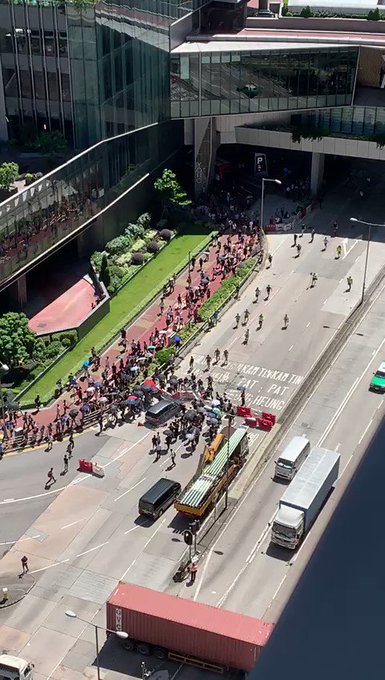
Police in Hong Kong have been fighting running battles with activists in a third consecutive day of protests, after a call for a general strike caused widespread disruption on Monday.
Protesters blocked roads and paralysed train services at peak times on a day of action across the city.
More than 200 flights were cancelled as the protests entered their ninth week.
Hong Kong’s leader, Carrie Lam, has pledged to restore law and order, rejecting calls for her resignation.
Initially the demonstrations, which began on 9 June, focused on a controversial extradition law, which would have allowed the transfer of suspects to mainland China. However, the protests have now become a wider challenge to Beijing’s authority.
Ms Lam warned that Hong Kong was “on the verge of a very dangerous situation”.
Media caption Protests take place in Hong Kong for the ninth weekend – for and against the authorities
In her first media address in two weeks, Ms Lam said the protesters’ actions had challenged the principle of “one country, two systems” – the extra freedoms granted to Hong Kong when it was returned from British to Chinese rule in 1997.
She also accused activists of using the extradition bill as a cover for their real goals.
“We continue to allow these violent protesters to make use of the [extradition] bill to conceal their ulterior motives,” she said. “Those ulterior motives are going to destroy Hong Kong.”
Image copyright GETTY IMAGES
The Chinese foreign ministry said no one should underestimate China’s resolve to safeguard the stability of Hong Kong, Reuters news agency reports.
What happened on Monday?
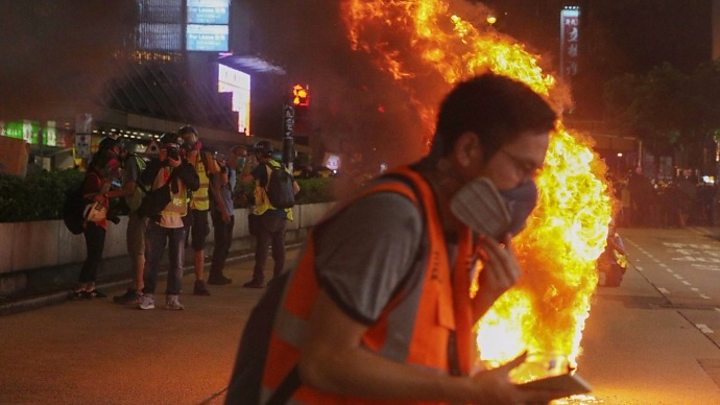
Police fired tear gas at several locations as protesters rallied into the night, setting fires and besieging police stations. In the North Point district, which has a reputation for pro-Beijing sympathies, men wielding long poles clashed with demonstrators before falling back.
More than 80 people were arrested, in addition to the 420 detained since 9 June. In that time, police said they had used more than 1,000 tear gas canisters and 160 rubber bullets.
Protest leaders had called for a general strike. While many people made it to work, in some areas protesters blocked trains from leaving stations and scuffled with commuters. Several lines of the Mass Transit Railway (MTR) were suspended for a time, and the Cross-Harbour Tunnel was also blocked.
One video circulating on Twitter reportedly showed a car in the district of Yuen Long forcefully hitting a barricade set up by protesters, injuring one person.
It is not clear how many joined the strike, but tens of thousands of protesters were out on the streets. Several shops and businesses were closed, including international fashion retailers like Topshop and Zara.
Hong Kong airport, one of the busiest in the world, said travellers should check its website and seek updates directly from the airlines.
Most of the cancelled flights were with local carriers Cathay Pacific and Hong Kong Airlines.
The protests were initially sparked by a controversial bill that would allow China to extradite suspects from Hong Kong to the mainland.
Critics said it would undermine the territory’s judicial independence and could be used to target those who spoke out against the Chinese government.
Although the bill has now been suspended, demonstrators want it fully withdrawn.
Their demands have broadened to include an independent inquiry into alleged police brutality, Ms Lam’s resignation, and the dropping of riot charges linked to the protests.
Last week, more than 40 activists appeared in court charged with rioting. If convicted, they could be jailed for up to 10 years.
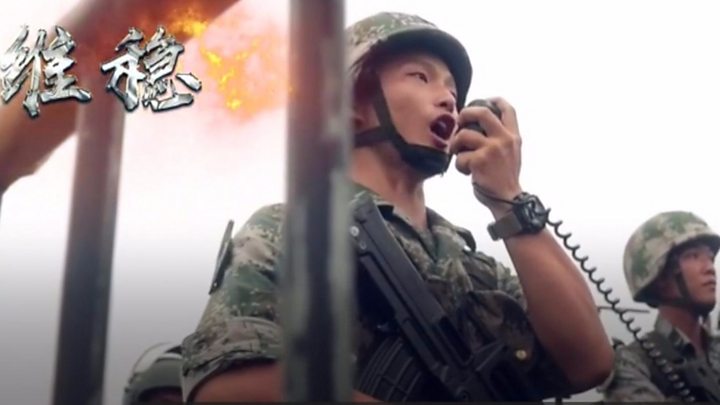
The Chinese army has so far stayed out of the dispute, but China’s top policy office in Hong Kong has previously condemned the protests, calling them “horrendous incidents” that have caused “serious damage to the rule of law”.










 CHINDIA ALERT: You'll be living in their world, very soon