17/03/2020
NEW DELHI (Reuters) – India plans to take advantage of low prices for oil from Saudi Arabia and the United Arab Emirates to top up its strategic petroleum reserves (SPR), two sources familiar with the matter said on Monday.
Global oil prices have fallen around 40% in March as the impact of the coronavirus pandemic has destroyed demand, while supplies are growing following Moscow’s refusal to back deeper output cuts at a meeting of the Organization of the Petroleum Exporting Countries and its OPEC+ allies.
Leading OPEC producers Saudi Arabia and Abu Dhabi have said they will increase output while cutting prices, giving big consumers the chance to fill up at discounted prices.
“It is an opportune time for us and for them (Abu Dhabi National Oil Company and Saudi Aramco) to finalize the deals and fill the SPRs…If there is any delay, we might fill the SPRs on our own,” said an official familiar with the matter, asking not to be named.
A second source, who also requested anonymity, said the oil ministry has written to the finance ministry to release about 48-to-50 billion rupees ($673.7 million) to buy oil in 8-9 very large crude carriers for filling the storage.
Indian Strategic Petroleum Reserves Ltd (ISPRL) and India’s oil and finance ministry had no immediate comment, while ADNOC and Saudi Aramco declined to comment.
India, the world’s third biggest oil importer and consumer, imports about 80% of its oil needs and has built strategic storage at three locations in southern India to store up to 36.87 million barrels of oil or about 5 million tonnes to protect against supply disruption.
ISPRL, a company charged with building of strategic storage, has signed a memorandum of understanding (MOU) with the UAE’s national oil company ADNOC for the lease of half of its 2.5 million tonnes Padur facility.
Last year it signed an MoU with Saudi Aramco for the lease of a quarter of Padur SPR.
The leases allow the national oil companies to store their oil, some of which will cater for India’s strategic needs, while they can sell the rest to Indian refiners.
Padur has four compartments that hold about 4.6 million barrels each. The ISPRL has received 1 VLCC with Arab Mix to fill one compartment and will get a second VLCC in April, a third source said.
The ISPRL has already leased half of the 1.5 million tonnes capacity in Mangalore storage to ADNOC, which has stored about 5.5 million barrels of Das oil in the cavern, while ISPRL has retained the remainder.
“This is the right time to fill the SPRs before prices start moving up,” a third source said.
India has also filled its 1.03 million tonnes Vizag facility with Basra oil from another OPEC producer Iraq.
While India is primarily taking advantage of low prices as a consumer nation, U.S. President Donald Trump aimed to help U.S. energy producers struggling to cope with the price fall by announcing he would take advantage of low prices to fill up the nation’s emergency reserve.
Source: Reuters
Posted in Abu Dhabi, Abu Dhabi National Oil Company, ADNOC, cheap, India, Indian Strategic Petroleum Reserves Ltd (ISPRL), Memorandum of Understanding (MOU), OPEC, Organization of the Petroleum Exporting Countries (OPEC), plans, Saudi Arabia, strategic, strategic petroleum reserves (SPR), tanks, The United Arab Emirates, top up, U.S. President Donald Trump, Uncategorized, VLCC |
Leave a Comment »
14/08/2019
- Scientists’ large-scale conversion of agricultural waste into fuel offers savings up to 60 per cent, they say
- Discovery could slash military costs and bring civilian applications of hypersonic flight technology closer
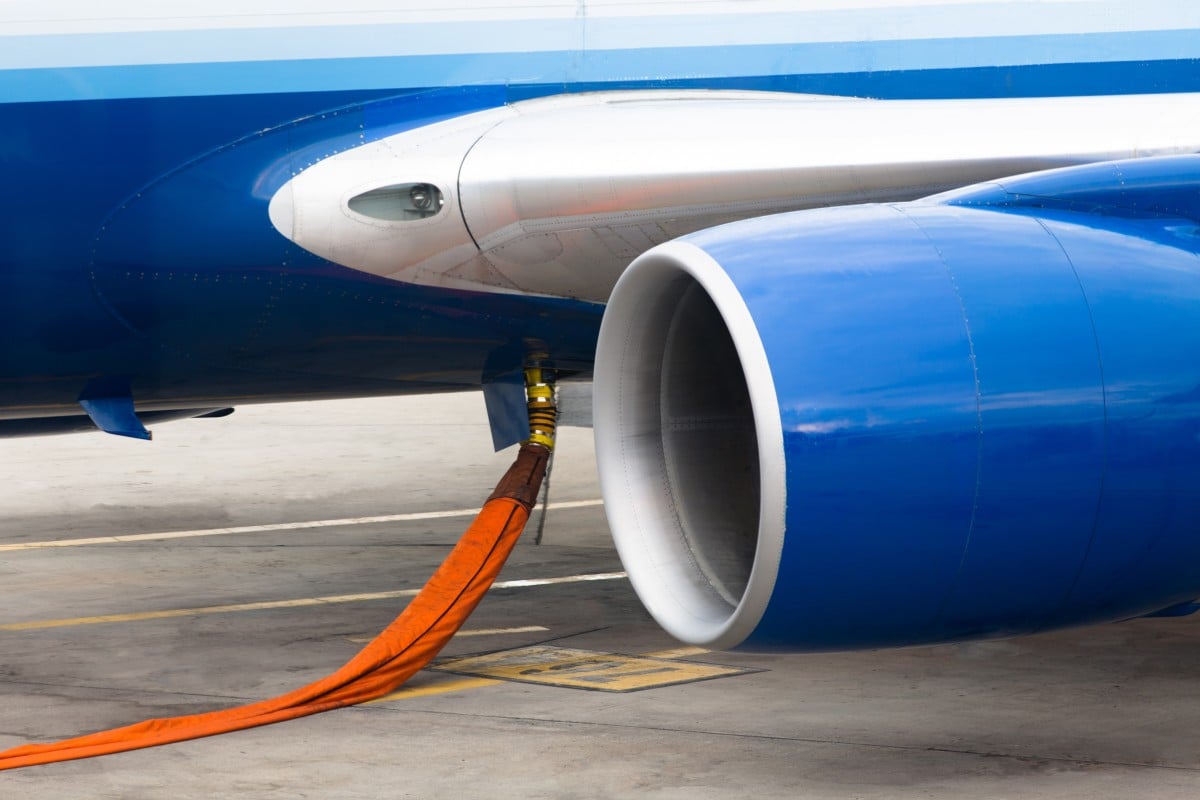
Super-fuel for military aircraft costs nearly 10 times as much as ordinary jet fuel for commercial planes. Photo: Shutterstock
Chinese scientists say they have developed a technology to convert bio-waste into fuel for missiles and hypersonic planes, reducing fuel costs by as much as 60 per cent.
The existing JP-10 super-fuel for military aircraft has numerous advantages including high energy density, good thermal stability and low freezing point, but it costs more than US$7,000 per tonne – nearly 10 times as much as ordinary jet fuel for commercial aircraft.
It is used mainly in cruise missiles and ramjet or scramjet engines on new-generation aircraft travelling at hypersonic speed, or five times faster than sound.
Scientists from the Dalian Institute of Chemical Physics, at the Chinese Academy of Sciences in the northeastern province of Liaoning, predicted using the new technology in the near future could reduce the cost to as low as US$2,547 per tonne.
The secret, according to their paper, published in the latest issue of German chemistry journal Angewandte Chemie, lies in cheap bio-waste.
Using agricultural and forestry residues including bran, chaff and mill dust, Professor Zhang Tao, Li Ning and colleagues discovered new chemical processes that can turn the waste to JP-10 fuel on a large scale with unprecedented efficiency.
At present, the super-fuel comes from coal tar or naphtha, and the synthesis is extremely costly and unfriendly to the environment.
The bio-JP-10 fuel can be produced by two different methods, one involving six steps of chemical reactions and the other only four, according to the paper.
China’s plan to make jet fuel from restaurant leftovers
Combining these methods with the latest technology in biomass conversion, the researchers said, the super-fuel can be mass-produced at a price equivalent to that of some of the bio-jet fuels already in commercial use, thanks to government subsidies provided for their environmental benefits.
“We believe that the future commercialisation of bio-JP-10 fuel is very promising, especially taking policy support and exemption from CO2 emission tax into consideration,” the authors wrote in the paper.
Liu Huoxing, professor at the school of energy and power engineering at Beijing University of Aeronautics and Astronautics, said civilian applications of hypersonic flight technology faced many challenges that remained to be solved, with the problem of high fuel prices being one of the headaches.
“No airline will buy a plane if the fuel costs too much, however fast it can fly,” he said.
Liu, who conducts research on engine technology for
hypersonic vehicles but was not involved in the Dalian study, said the reduction of production costs for jet fuel was usually incremental and it was quite rare to see a significant drop.
“This can be an important development,” he said of the Dalian findings.
China is developing various models of hypersonic speed aircraft for military and civilian use. Some are aimed at flying distances such as Shanghai to Los Angeles in a couple of hours.
Posted in agricultural waste, Angewandte Chemie, Beijing University of Aeronautics and Astronautics, bio-waste, biomass conversion, bran, chaff, cheap, China alert, Chinese Academy of Sciences, civilian applications, coal tar, commercialisation, costly, cruise missiles, Dalian Institute of Chemical Physics, Dalian study, Environment, faster than sound, forestry residues, hours, hypersonic flight technology, Hypersonic speed, jet fuel, JP-10 super-fuel, Liaoning, Los Angeles, mass-produce, Military aircraft, mill dust, missiles, naphtha, ramjet engines, restaurant leftovers, school of energy and power engineering, scramjet engines, Shanghai, super-fuel, synthesis, Uncategorized, unfriendly |
Leave a Comment »
19/05/2019
- US paper mills are expanding capacity to take advantage of a glut of cheap waste materials
- Some facilities that previously exported plastic or metal to China have retooled so they can process it themselves
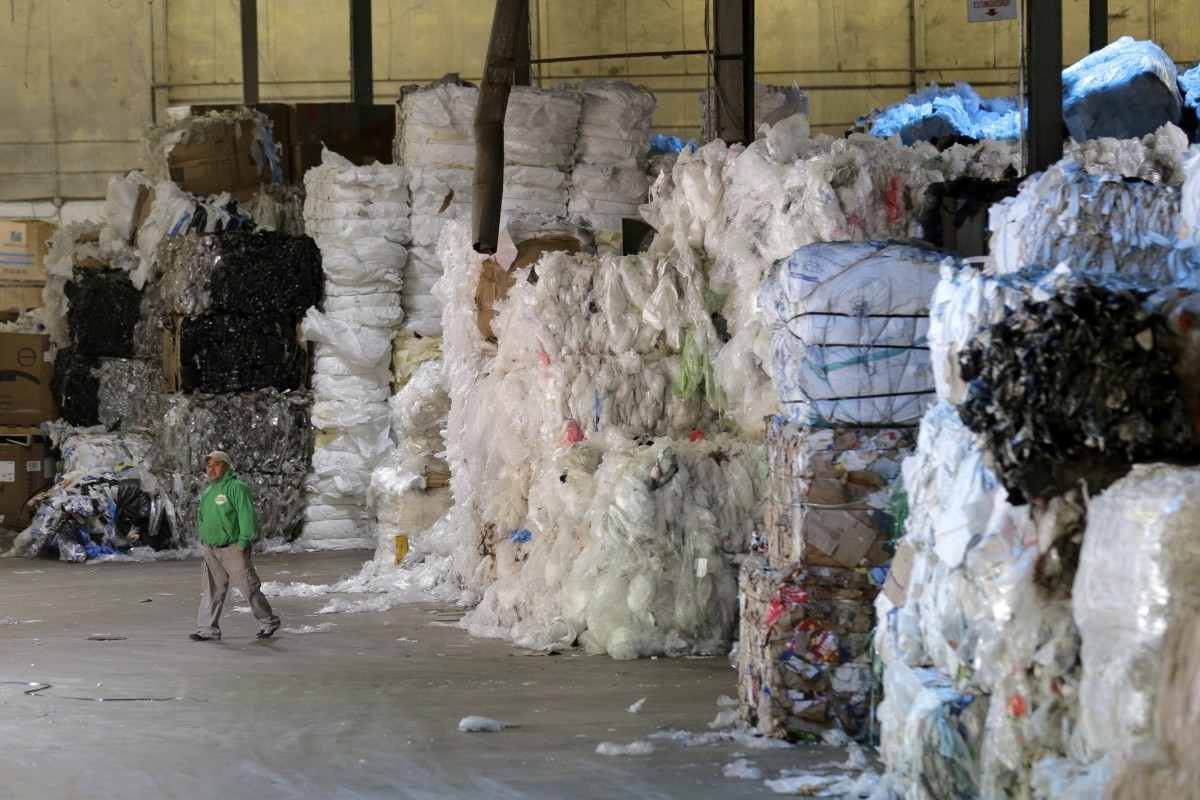
China phased in import restrictions on scrap paper and plastics in January last year. Photo: AP
The halt on China’s imports of waste paper and plastic that has disrupted US recycling programmes has also spurred investment in American plants that process recyclables.
US paper mills are expanding capacity to take advantage of a glut of cheap scrap. Some facilities that previously exported plastic or metal to China have retooled so they can process it themselves.
And in a twist, the investors include Chinese companies that are still interested in having access to waste paper or flattened bottles as raw material for manufacturing.
“It’s a very good moment for recycling in the United States,” said Neil Seldman, co-founder of the Institute for Local Self-Reliance, a Washington-based organisation that helps cities improve recycling programmes.
Global scrap prices plummeted in the wake of China’s ban. Photo: AP
China, which had long been the world’s largest destination for paper, plastic and other recyclables, phased in import restrictions in January last year.
Global scrap prices plummeted, prompting waste-hauling companies to pass the cost of sorting and baling recyclables on to municipalities. With no market for the waste paper and plastic in their blue bins, some communities scaled back or suspended kerbside recycling programmes. But new domestic markets offer a glimmer of hope.
How China’s ban on plastic waste imports became an ‘earthquake’
About US$1 billion in investment in US paper processing plants has been announced in the past six months, according to Dylan de Thomas, a vice-president at The Recycling Partnership, a non-profit organisation that tracks and works with the industry.
Hong Kong-based Nine Dragons, one of the world’s largest producers of cardboard boxes, has invested US$500 million over the past year to buy and expand or restart production at paper mills in Maine, Wisconsin and West Virginia.
Brian Boland, vice-president of government affairs and corporate initiatives for ND Paper, Nine Dragons’ US affiliate, said that as well as making paper from wood fibre, the mills would add production lines turning more than a million tonnes of scrap into pulp to make boxes.
“The paper industry has been in contraction since the early 2000s,” he said. “To see this kind of change is frankly amazing. Even though it’s a Chinese-owned company, it’s creating US jobs and revitalising communities like Old Town, Maine, where the old mill was shuttered.”
Hong Kong-based Nine Dragons has invested US$500 million in paper mills in Maine, Wisconsin and West Virginia. Photo: Handout
:
The Northeast Recycling Council said in a report last autumn that 17 North American paper mills had announced increased capacity to handle recyclable paper since the Chinese cut-off.
Another Chinese company, Global Win Wickliffe, is reopening a closed paper mill in Kentucky. Georgia-based Pratt Industries is constructing a mill in Wapakoneta, Ohio that will turn 425,000 tonnes of recycled paper per year into shipping boxes.
Plastics also had a lot of capacity coming online, de Thomas said, noting new or expanded plants in Texas, Pennsylvania, California and North Carolina that turned recycled plastic bottles into new bottles.
Chinese companies were investing in plastic and scrap metal recycling plants in Georgia, Indiana and North Carolina to make feedstocks for manufacturers in China, he said.
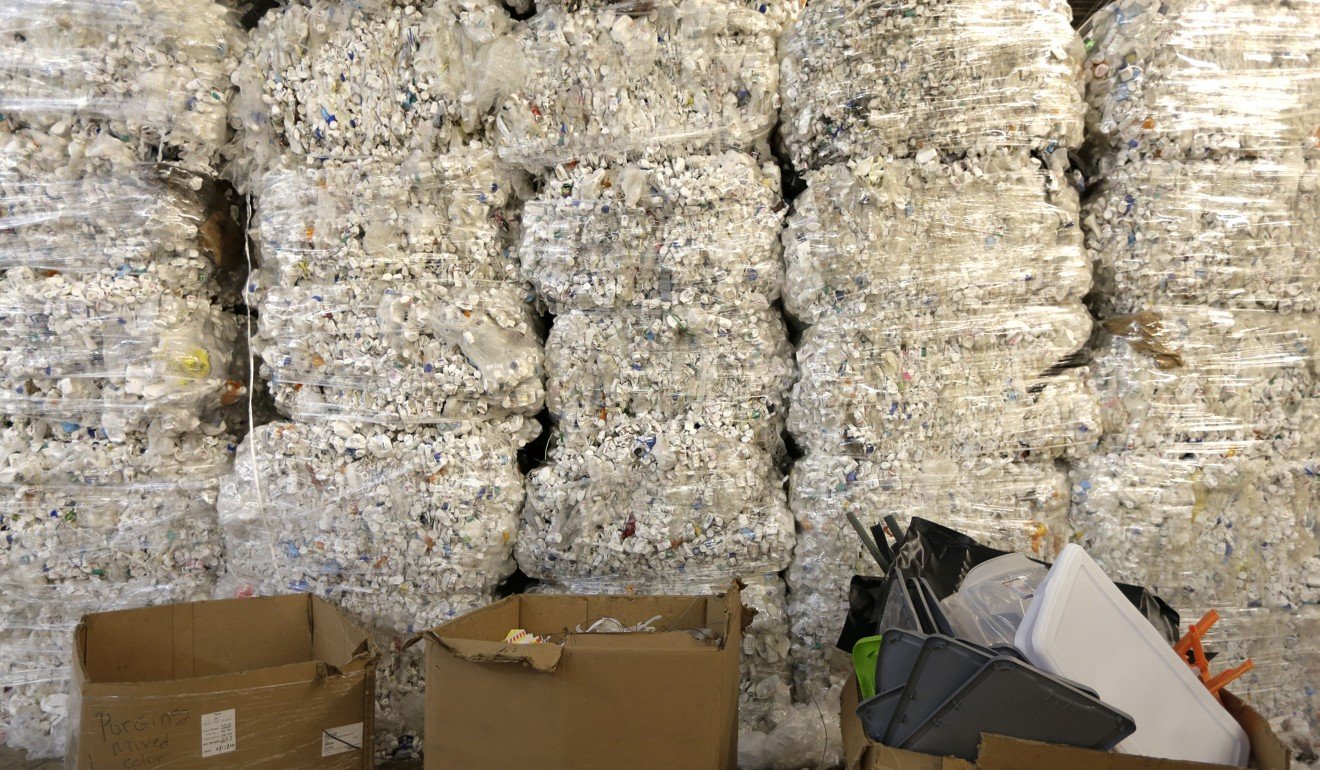
GDB International processes bales of scrap plastic film into pellets to make garbage bags and plastic pipe. Photo: AP
In New Brunswick, New Jersey, the recycling company GDB International exported bales of scrap plastic film such as pallet wrap and grocery bags for years. But when China started restricting imports, company president Sunil Bagaria installed new machinery to process it into pellets he sells profitably to manufacturers of garbage bags and plastic pipe.
The imports cut-off that China called “National Sword” was a much-needed wake-up call to his industry, he said.
“The export of plastic scrap played a big role in easing recycling in our country,” Bagaria said. “The downside is that infrastructure to do our own domestic recycling didn’t develop.”
China to suspend checks on US scrap metal shipments, halting imports
That was now changing, but he said far more domestic processing capacity would be needed as a growing number of countries restricted scrap imports.
“Ultimately, sooner or later, the society that produces plastic scrap will become responsible for recycling it,” he said.
It has also yet to be seen whether the new plants coming on line can quickly fix the problems for municipal recycling programmes that relied heavily on sales to China to get rid of piles of scrap.
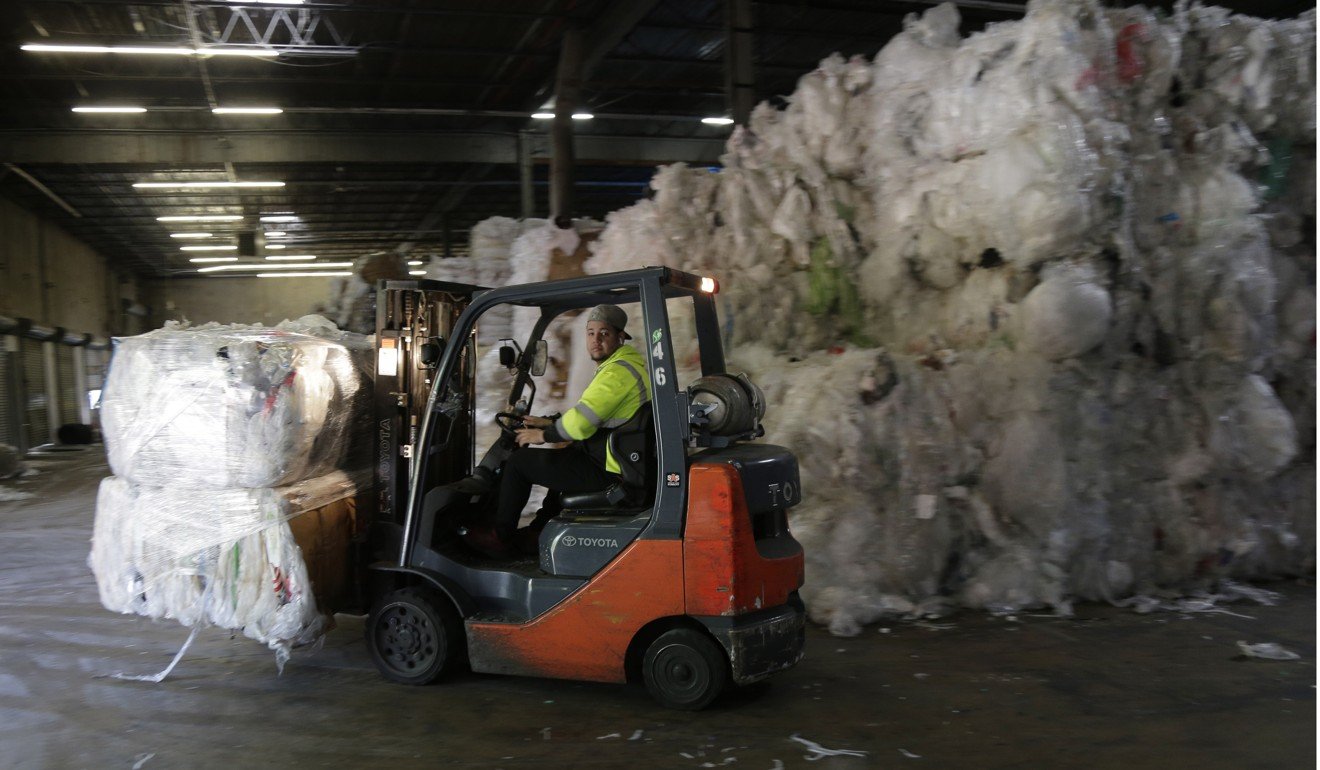
About US$1 billion in investment in US paper processing plants has been announced in the past six months, according to a non-profit group that tracks the industry. Photo: AP
“Chinese companies are investing in mills, but until we see what the demand is going to be at those mills, we’re stuck in this rut,” said Ben Harvey, whose company in Westborough, Massachusetts, collects trash and recyclables for about 30 communities.
He had a car park filled with stockpiled paper a year ago after China closed its doors, but eventually found buyers in India, Korea and Indonesia.
China to collect applications for scrap metal import licences from May
Keith Ristau, chief executive of Far West Recycling in Portland, Oregon, said most of the recyclable plastic his company collected used to go to China but now most of it went to processors in Canada or California.
To meet their standards, Far West invested in better equipment and more workers at its material recovery facility to reduce contamination.
In Sarepta, Louisiana, IntegriCo Composites is turning bales of hard-to-recycle mixed plastics into railroad ties. It expanded operations in 2017 with funding from New York-based Closed Loop Partners.
“As investors in domestic recycling and circular economy infrastructure in the US, we see what China has decided to do as very positive,” said Closed Loop founder Ron Gonen.
Source: SCMP
Posted in advantage, bales, boxes, California, capacity, cardboard boxes, cheap, Chief Executive, China’s ba, China’s ban, Closed Loop Partners, Dylan de Thomas, expanding, exported plastic, Far West Recycling, feedstocks, garbage bags, GDB International, Georgia, Georgia-based, Global Win Wickliffe, glut, grocery bags, Hong Kong, import restrictions, India alert, Indiana, Indonesia, Institute for Local Self-Reliance, IntegriCo Composites, Keith Ristau, Kentucky, Korea, Louisiana, Maine, manufacturers, metal, National Sword, Neil Seldman, New Brunswick, New Jersey, New York, Nine Dragons, non-profit organisation, North Carolina, Northeast Recycling Council, Ohio, old mill, Old Town, Maine, Oregon, pallet wrap, paper mills, pellets, Pennsylvania, plastic pipe, Plastics, Portland, Pratt Industries, process, producers, pulp, recycling industry, retooled, revitalises, Ron Gonen, Sarepta, scrap import, scrap metal import licences, scrap metal shipments, scrap plastic film, shuttered, Sunil Bagaria, Texas, The Recycling Partnership, Uncategorized, US, vice-president, Wapakoneta, waste materials, West Virginia, Wisconsin, wood fibre |
Leave a Comment »





 CHINDIA ALERT: You'll be living in their world, very soon