05/09/2019
BEIJING, Sept. 5 (Xinhua) — Chinese Premier Li Keqiang on Wednesday signed a State Council decree on the appointment of Ho Iat Seng as the fifth-term chief executive of the Macao Special Administrative Region (SAR).
The decision was made according to related regulations of the Basic Law of Macao SAR. Ho’s tenure will start from Dec. 20, 2019.
Source: Xinhua
Posted in appointment, Basic Law, Chief Executive, Chinese premier Li Keqiang, Ho Iat Seng, Macao Special Administrative Region (SAR), State Council decree, Uncategorized |
Leave a Comment »
19/05/2019
- US paper mills are expanding capacity to take advantage of a glut of cheap waste materials
- Some facilities that previously exported plastic or metal to China have retooled so they can process it themselves
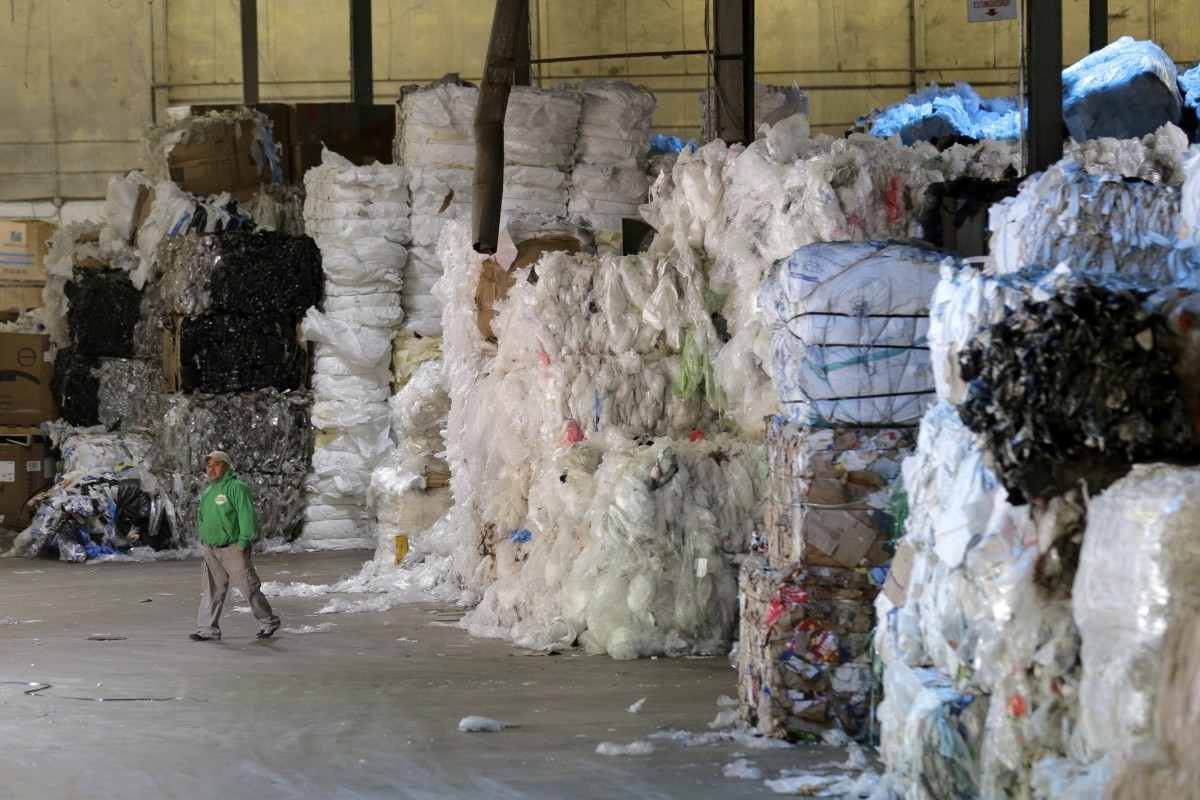
China phased in import restrictions on scrap paper and plastics in January last year. Photo: AP
The halt on China’s imports of waste paper and plastic that has disrupted US recycling programmes has also spurred investment in American plants that process recyclables.
US paper mills are expanding capacity to take advantage of a glut of cheap scrap. Some facilities that previously exported plastic or metal to China have retooled so they can process it themselves.
And in a twist, the investors include Chinese companies that are still interested in having access to waste paper or flattened bottles as raw material for manufacturing.
“It’s a very good moment for recycling in the United States,” said Neil Seldman, co-founder of the Institute for Local Self-Reliance, a Washington-based organisation that helps cities improve recycling programmes.
Global scrap prices plummeted in the wake of China’s ban. Photo: AP
China, which had long been the world’s largest destination for paper, plastic and other recyclables, phased in import restrictions in January last year.
Global scrap prices plummeted, prompting waste-hauling companies to pass the cost of sorting and baling recyclables on to municipalities. With no market for the waste paper and plastic in their blue bins, some communities scaled back or suspended kerbside recycling programmes. But new domestic markets offer a glimmer of hope.
How China’s ban on plastic waste imports became an ‘earthquake’
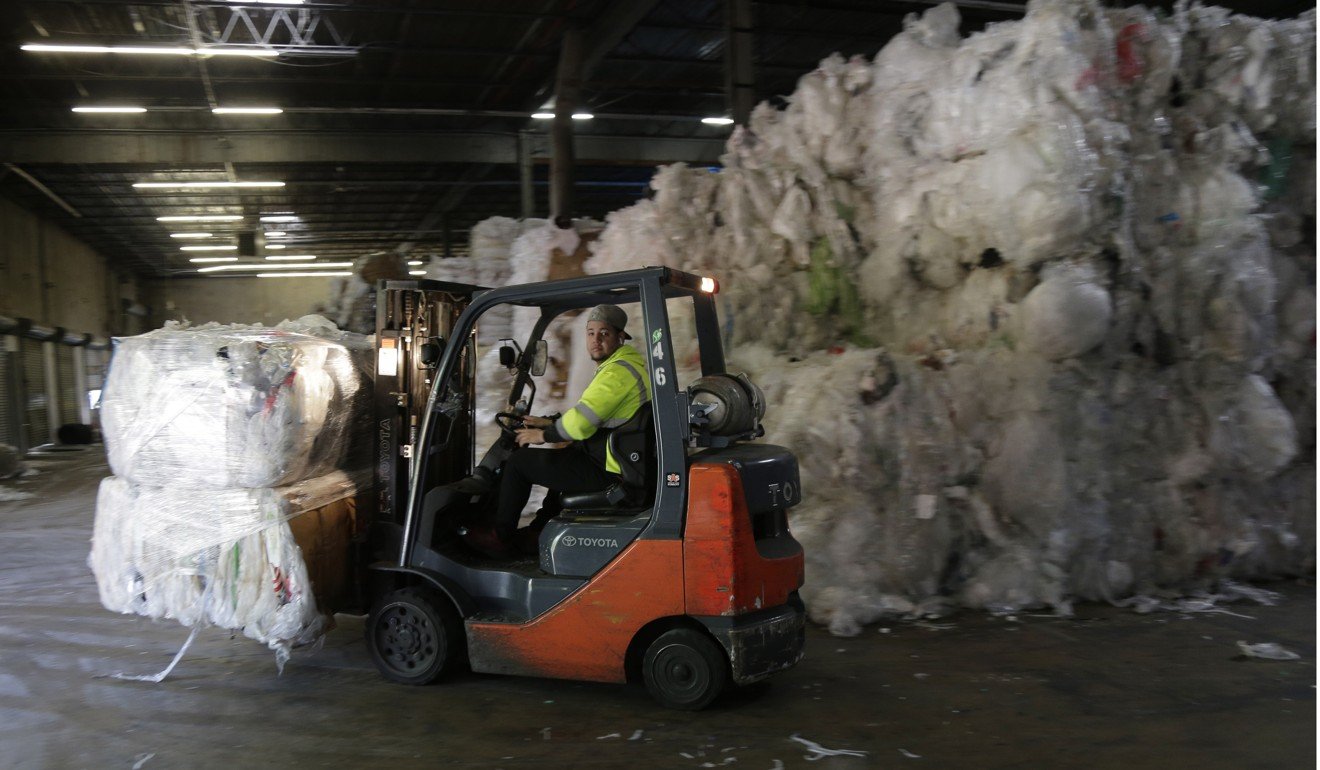
About US$1 billion in investment in US paper processing plants has been announced in the past six months, according to Dylan de Thomas, a vice-president at The Recycling Partnership, a non-profit organisation that tracks and works with the industry.
Hong Kong-based Nine Dragons, one of the world’s largest producers of cardboard boxes, has invested US$500 million over the past year to buy and expand or restart production at paper mills in Maine, Wisconsin and West Virginia.
Brian Boland, vice-president of government affairs and corporate initiatives for ND Paper, Nine Dragons’ US affiliate, said that as well as making paper from wood fibre, the mills would add production lines turning more than a million tonnes of scrap into pulp to make boxes.
“The paper industry has been in contraction since the early 2000s,” he said. “To see this kind of change is frankly amazing. Even though it’s a Chinese-owned company, it’s creating US jobs and revitalising communities like Old Town, Maine, where the old mill was shuttered.”
Hong Kong-based Nine Dragons has invested US$500 million in paper mills in Maine, Wisconsin and West Virginia. Photo: Handout
:
The Northeast Recycling Council said in a report last autumn that 17 North American paper mills had announced increased capacity to handle recyclable paper since the Chinese cut-off.
Another Chinese company, Global Win Wickliffe, is reopening a closed paper mill in Kentucky. Georgia-based Pratt Industries is constructing a mill in Wapakoneta, Ohio that will turn 425,000 tonnes of recycled paper per year into shipping boxes.
Plastics also had a lot of capacity coming online, de Thomas said, noting new or expanded plants in Texas, Pennsylvania, California and North Carolina that turned recycled plastic bottles into new bottles.
Chinese companies were investing in plastic and scrap metal recycling plants in Georgia, Indiana and North Carolina to make feedstocks for manufacturers in China, he said.
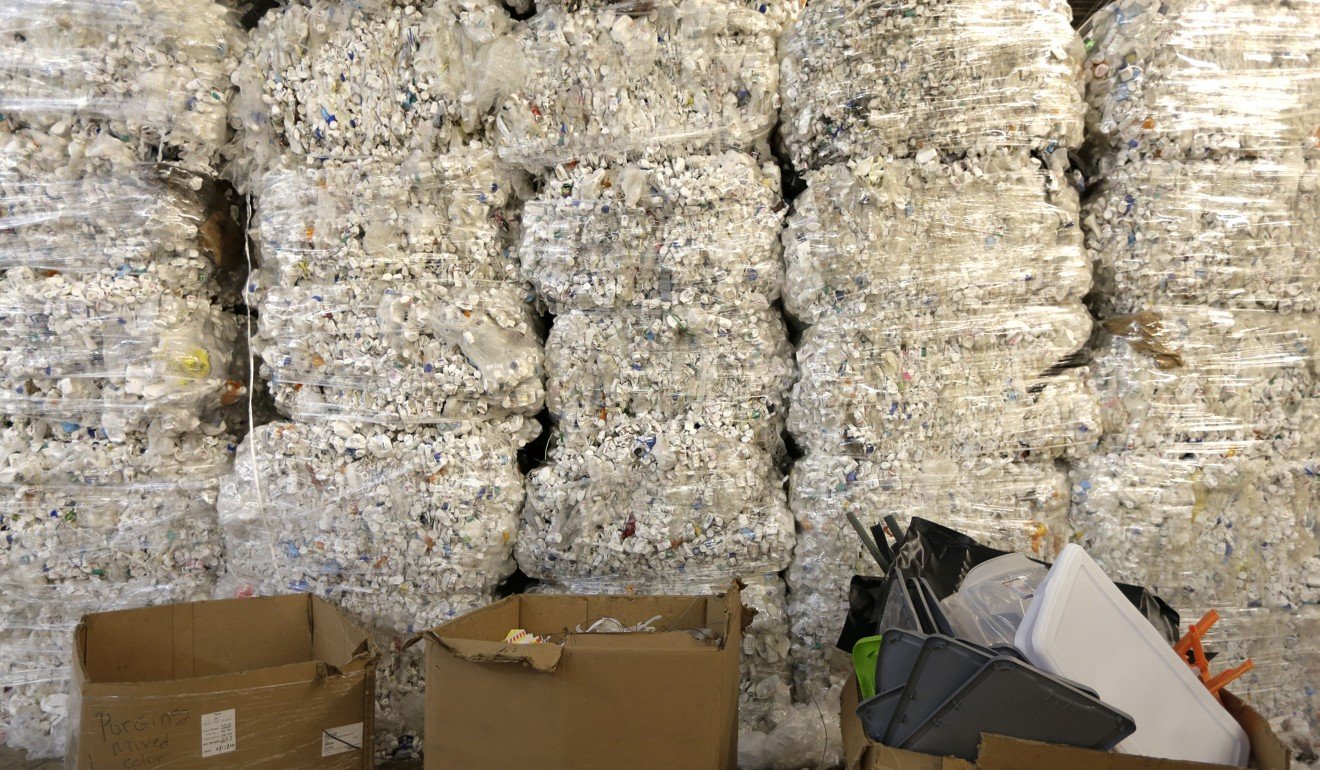
GDB International processes bales of scrap plastic film into pellets to make garbage bags and plastic pipe. Photo: AP
In New Brunswick, New Jersey, the recycling company GDB International exported bales of scrap plastic film such as pallet wrap and grocery bags for years. But when China started restricting imports, company president Sunil Bagaria installed new machinery to process it into pellets he sells profitably to manufacturers of garbage bags and plastic pipe.
The imports cut-off that China called “National Sword” was a much-needed wake-up call to his industry, he said.
“The export of plastic scrap played a big role in easing recycling in our country,” Bagaria said. “The downside is that infrastructure to do our own domestic recycling didn’t develop.”
China to suspend checks on US scrap metal shipments, halting imports
That was now changing, but he said far more domestic processing capacity would be needed as a growing number of countries restricted scrap imports.
“Ultimately, sooner or later, the society that produces plastic scrap will become responsible for recycling it,” he said.
It has also yet to be seen whether the new plants coming on line can quickly fix the problems for municipal recycling programmes that relied heavily on sales to China to get rid of piles of scrap.
About US$1 billion in investment in US paper processing plants has been announced in the past six months, according to a non-profit group that tracks the industry. Photo: AP
“Chinese companies are investing in mills, but until we see what the demand is going to be at those mills, we’re stuck in this rut,” said Ben Harvey, whose company in Westborough, Massachusetts, collects trash and recyclables for about 30 communities.
He had a car park filled with stockpiled paper a year ago after China closed its doors, but eventually found buyers in India, Korea and Indonesia.
China to collect applications for scrap metal import licences from May
Keith Ristau, chief executive of Far West Recycling in Portland, Oregon, said most of the recyclable plastic his company collected used to go to China but now most of it went to processors in Canada or California.
To meet their standards, Far West invested in better equipment and more workers at its material recovery facility to reduce contamination.
In Sarepta, Louisiana, IntegriCo Composites is turning bales of hard-to-recycle mixed plastics into railroad ties. It expanded operations in 2017 with funding from New York-based Closed Loop Partners.
“As investors in domestic recycling and circular economy infrastructure in the US, we see what China has decided to do as very positive,” said Closed Loop founder Ron Gonen.
Source: SCMP
Posted in advantage, bales, boxes, California, capacity, cardboard boxes, cheap, Chief Executive, China’s ba, China’s ban, Closed Loop Partners, Dylan de Thomas, expanding, exported plastic, Far West Recycling, feedstocks, garbage bags, GDB International, Georgia, Georgia-based, Global Win Wickliffe, glut, grocery bags, Hong Kong, import restrictions, India alert, Indiana, Indonesia, Institute for Local Self-Reliance, IntegriCo Composites, Keith Ristau, Kentucky, Korea, Louisiana, Maine, manufacturers, metal, National Sword, Neil Seldman, New Brunswick, New Jersey, New York, Nine Dragons, non-profit organisation, North Carolina, Northeast Recycling Council, Ohio, old mill, Old Town, Maine, Oregon, pallet wrap, paper mills, pellets, Pennsylvania, plastic pipe, Plastics, Portland, Pratt Industries, process, producers, pulp, recycling industry, retooled, revitalises, Ron Gonen, Sarepta, scrap import, scrap metal import licences, scrap metal shipments, scrap plastic film, shuttered, Sunil Bagaria, Texas, The Recycling Partnership, Uncategorized, US, vice-president, Wapakoneta, waste materials, West Virginia, Wisconsin, wood fibre |
Leave a Comment »
23/04/2019
- When recycling businesses gravitated to Malaysia, a black economy went with them
- Some countries treat China’s ban as an opportunity and have been quick to adapt
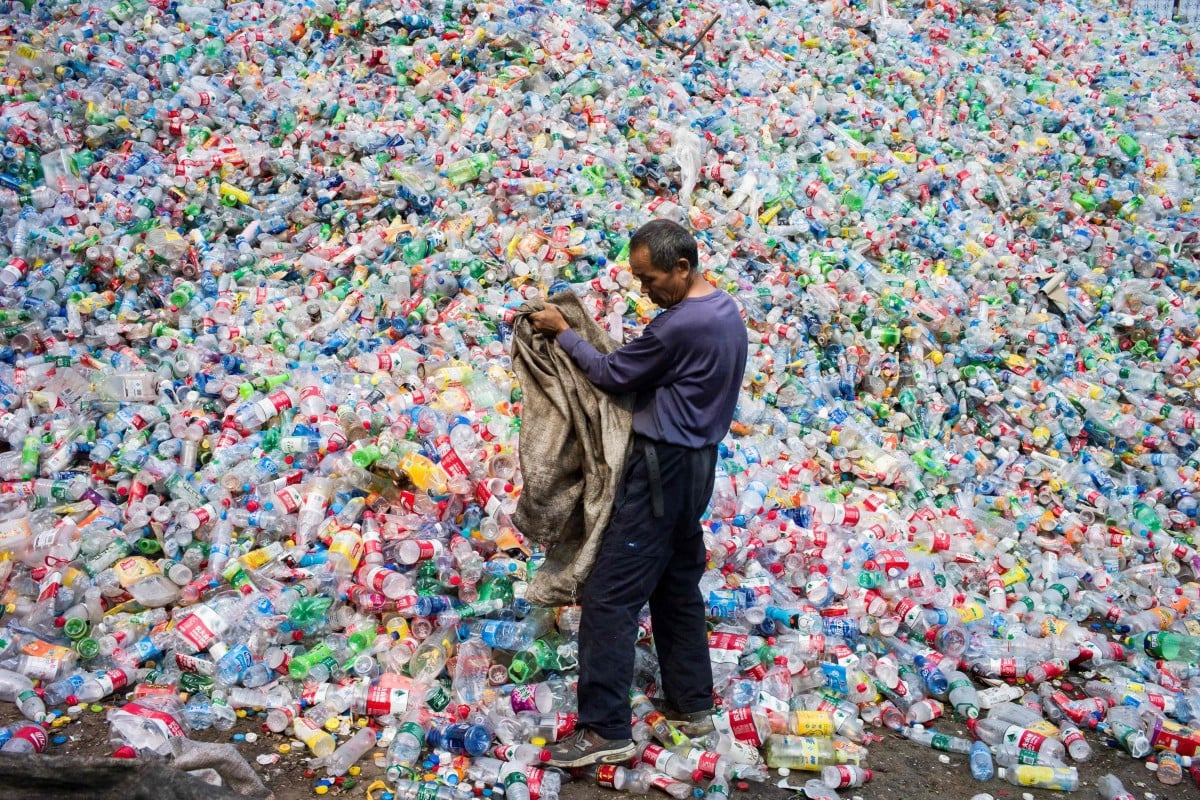
For years, China was the world’s leading destination for recyclable rubbish, but a ban on some imports has left nations scrambling to find dumping grounds for growing piles of waste. Photo: AFP
From grubby packaging that engulfs small Southeast Asian communities to waste that piles up in plants from the US to Australia, China’s ban on accepting the world’s used plastic has thrown recycling efforts into turmoil.
For many years, China took the bulk of scrap plastic from around the world, processing much of it into a higher quality material that could be used by manufacturers.
But, at the start of 2018, it closed its doors to almost all foreign plastic waste, as well as many other recyclables, in an effort to protect its environment and air quality, leaving developed nations struggling to find places to send their waste.
“It was like an earthquake,” Arnaud Brunet, director general of Brussels-based industry group The Bureau of International Recycling, said.
“China was the biggest market for recyclables. It created a major shock in the global market.”
Instead, plastic was redirected in huge quantities to Southeast Asia, where Chinese recyclers have shifted.
With a large Chinese-speaking minority, Malaysia was a top choice for Chinese recyclers looking to relocate, and official data showed plastic imports tripled from 2016 levels to 870,000 tonnes last year.
China to collect applications for scrap metal import licences from next month, trade group says
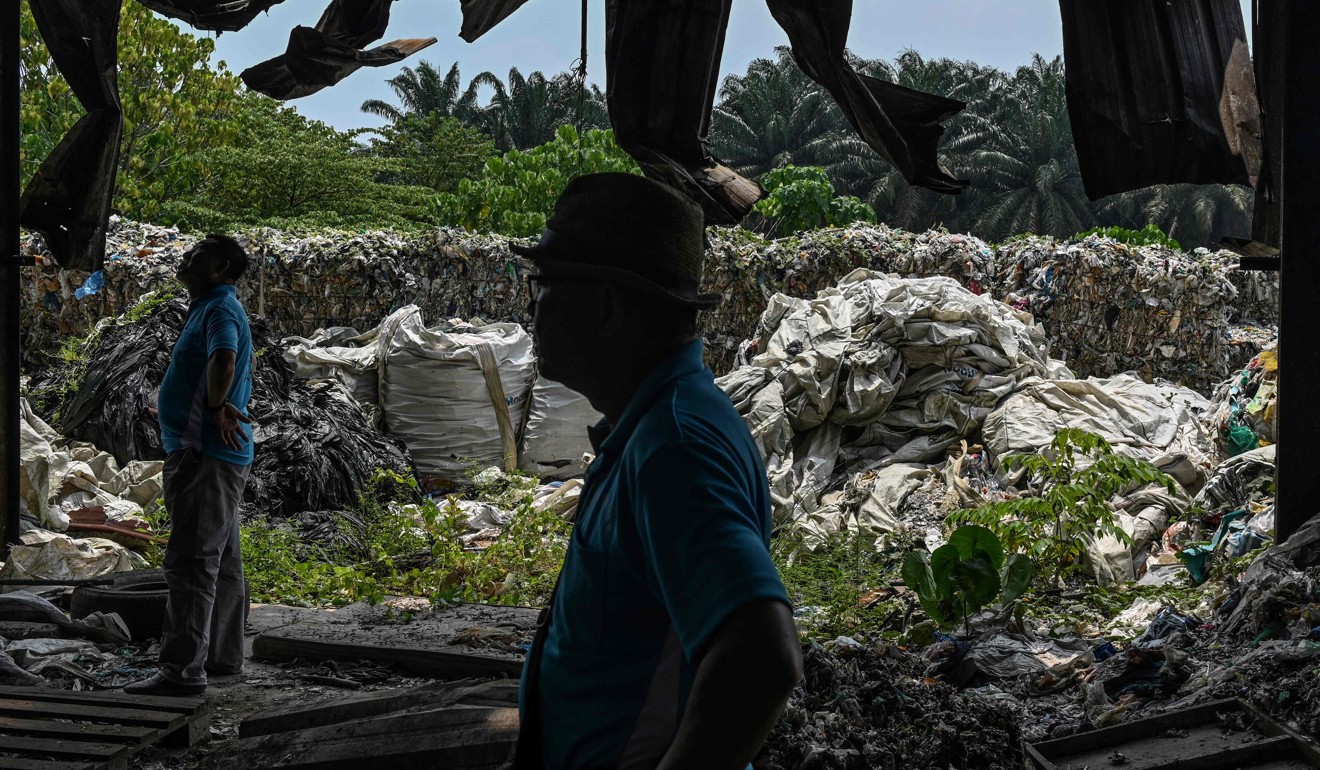
In the small town of Jenjarom, close to Kuala Lumpur, plastic processing plants appeared in large numbers, pumping out noxious fumes around the clock.
Huge mounds of plastic waste, dumped in the open, piled up as recyclers struggled to cope with the influx of packaging from everyday goods, such as foods and laundry detergents, from as far afield as Germany, the US, and Brazil.
Residents soon noticed the acrid stench over the town – the kind of odour that is usual in processing plastic, but environmental campaigners believed some of the fumes also came from the incineration of plastic waste that was too low quality to recycle.
“People were attacked by toxic fumes, waking them up at night. Many were coughing a lot,” resident Pua Lay Peng said.
“I could not sleep, I could not rest, I always felt fatigued,” the 47-year-old added.
Representatives of an environmentalist NGO inspect an abandoned plastic waste factory in Jenjarom, outside Kuala Lumpur in Malaysia. Photo: AFP
Pua and other community members began investigating and, by mid-2018, had located about 40 processing plants, many of which appeared to be operating without proper permits.
Initial complaints to authorities went nowhere but they kept up pressure, and eventually the government took action. Authorities started closing down illegal factories in Jenjarom, and announced a nationwide temporary freeze on plastic import permits.
Thirty-three factories were closed down, although activists believed many had quietly moved elsewhere in the country. Residents said air quality had improved but some plastic dumps remained.
Chinese recycling expert breeds thousands of flies to turn kitchen waste into cash
In Australia, Europe and the US, many of those collecting plastic and other recyclables were left scrambling to find new places to send it.
They faced higher costs to have it processed by recyclers at home and in some cases resorted to sending it to landfill sites as the scrap piled up so quickly.
“Twelve months on, we are still feeling the effects but we have not moved to the solutions yet,” said Garth Lamb, president of industry body Waste Management and Resource Recovery Association of Australia.
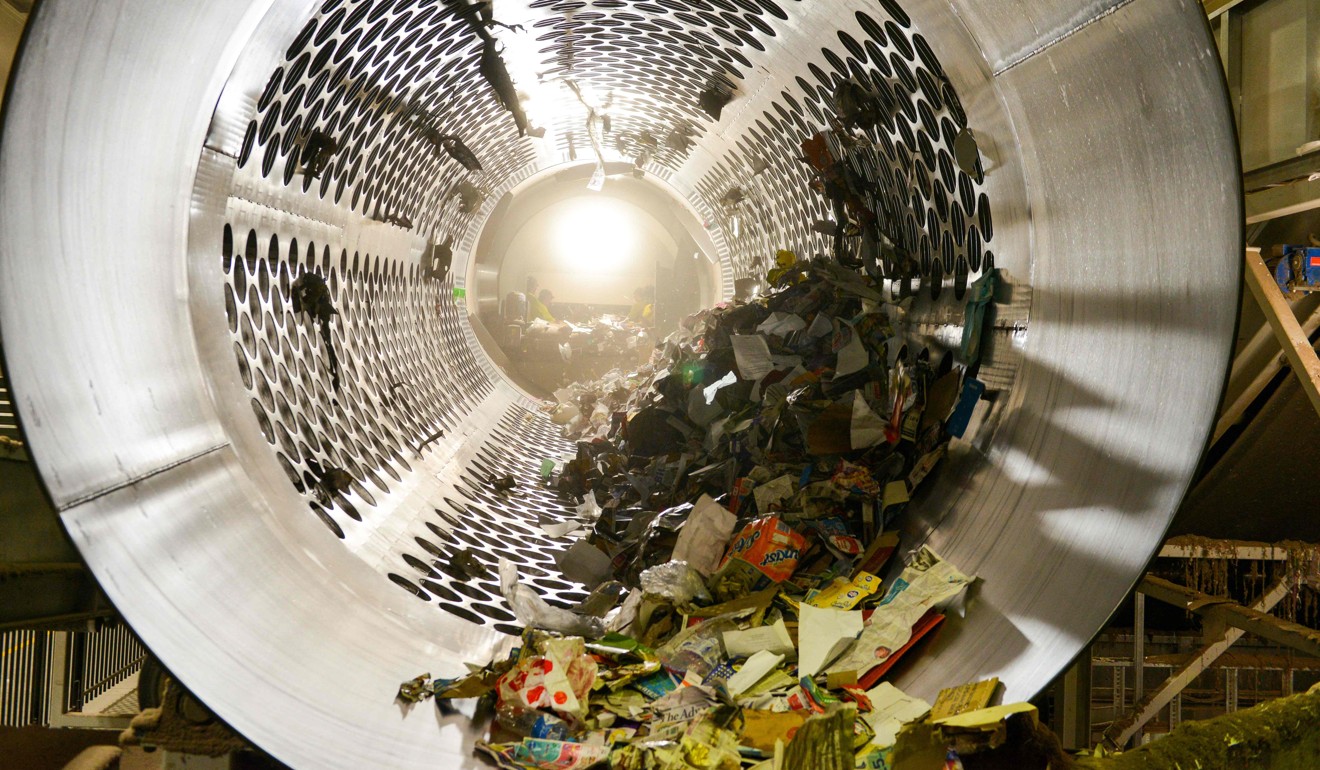
Some have been quicker to adapt to the new environment, such as some local authority-run centres that collect recyclables in Adelaide, South Australia.
The centres used to send nearly everything – ranging from plastic to paper and glass – to China but now 80 per cent is processed by local companies, with most of the rest shipped to India.
Rubbish is sifted and sorted at Northern Adelaide Waste Management Authority’s recycling site at Edinburgh, a northern suburb of the city of Adelaide. Photo: AFP
“We moved quickly and looked to domestic markets,” Adam Faulkner, chief executive of the Northern Adelaide Waste Management Authority, said.
“We’ve found that by supporting local manufacturers, we’ve been able to get back to pre-China ban prices.”
In mainland China, imports of plastic waste dropped from 600,000 tonnes per month in 2016 to about 30,000 a month in 2018, according to data cited in a recent report from Greenpeace and environmental NGO Global Alliance for Incinerator Alternatives.
Once bustling centres of recycling were abandoned as firms shifted to Southeast Asia.
How China’s plastic waste ban has left Japan to deal with mountains of trash
On a visit to the southern town of Xingtan last year, Chen Liwen, founder of environmental NGO China Zero Waste Alliance, found the recycling industry had disappeared.
“The plastic recyclers were gone – there were ‘for rent’ signs plastered on factory doors and even recruitment signs calling for experienced recyclers to move to Vietnam,” she said.
Southeast Asian nations affected early by the China ban – as well as Malaysia, Thailand and Vietnam were hit hard – have taken steps to limit plastic imports, but the waste has simply been redirected to other countries without restrictions, such as Indonesia and Turkey, the Greenpeace report said.
With only an estimated nine per cent of plastics ever produced recycled, campaigners said the only long-term solution to the plastic waste crisis was for companies to make less and consumers to use less.
Greenpeace campaigner Kate Lin said: “The only solution to plastic pollution is producing less plastic.”
Source: SCMP
Posted in Adam Faulkner, Adelaide, Arnaud Brunet, Australia, biggest market for recyclables, Brazil, Brussels-based industry group, Bureau of International Recycling, Chen Liwen, Chief Executive, China alert, China Zero Waste Alliance, China’s ban on plastic waste imports, director-general, earthquake, environmental ngo, Europe, founder, Garth Lamb, Germany, Global Alliance for Incinerator Alternatives, Greenpeace, Greenpeace campaigner, Japan, Jenjarom, Kate Lin, Kuala Lumpur, Malaysia, Mainland China, Malaysia, Northern Adelaide Waste Management Authority, president of industry body, Pua Lay Peng, recycling efforts, South Australia, Southeast Asian, Thailand, turmoil, Uncategorized, US, Vietnam, Waste Management and Resource Recovery Association of Australia, Xingtan |
Leave a Comment »
13/04/2019
- Shanghai Zhenhua Heavy Industries now exports quay cranes, gantry cranes to more than 300 ports in 100 countries, with 70 per cent of the global market
- China International Marine Containers Group (CIMC), took a little more than a decade to become the world’s largest maker of shipping containers
Quay cranes along a berth at the Yangshan deep-water port in Shanghai on September 14, 2011. Shanghai Zhenhua Heavy Machineries, established in 1992, has grown along with the explosive development of China’s ports to control 70 per cent of the global market for cranes, loaders and lifting equipment used in ports. Photo: Xinhua
The explosive growth of China’s container ports has turned one of the most important vendors in shipping into a best-in-class industry leader, whose cranes can now be found in 300 wharves in 100 countries, with 70 per cent of the global market share.
Shanghai Zhenhua Heavy Industries, a unit of China’s state-run construction behemoth China Communications Construction Company, makes quay cranes, gantry cranes, loaders and stackers used for loading and unloading shipping containers. It also developed the infrastructure for the automated berths in Phase IV of Shanghai’s Yangshan port, and in Qingdao.
Its net profit jumped 47.6 per cent last year to 443 million yuan, while sales was little changed at 21.8 billion yuan (US$3.25 billion).
“It is a major showcase of China’s manufacturing capability,” said Sun Can, a Chuancai Securities analyst. “The company has its own technologies and is a powerful player in the global port machinery industry.”
Why China now has six of the world’s 10 busiest container ports
Established in 1992, the company was formerly known as Zhenhua Port Machinery for its speciality in making lifting equipment on the harbourfront. Taking advantage of China’s low wages, Zhenhua quickly carved out a big chunk of the global market share by selling machines at lower prices than its competitors.
The company’s former chief executive Guan Tongxian, a confessed workaholic known for his hard-driving working ethic, retired at the age of 76 in 2009, the same year that the company renamed itself to reflect its forays into marine transport and installations, as well as the construction of special steel structures including the Las Vegas Ferris wheel, the San Francisco-Oakland Bay Bridge and Norway’s Hardangerfjord bridge.
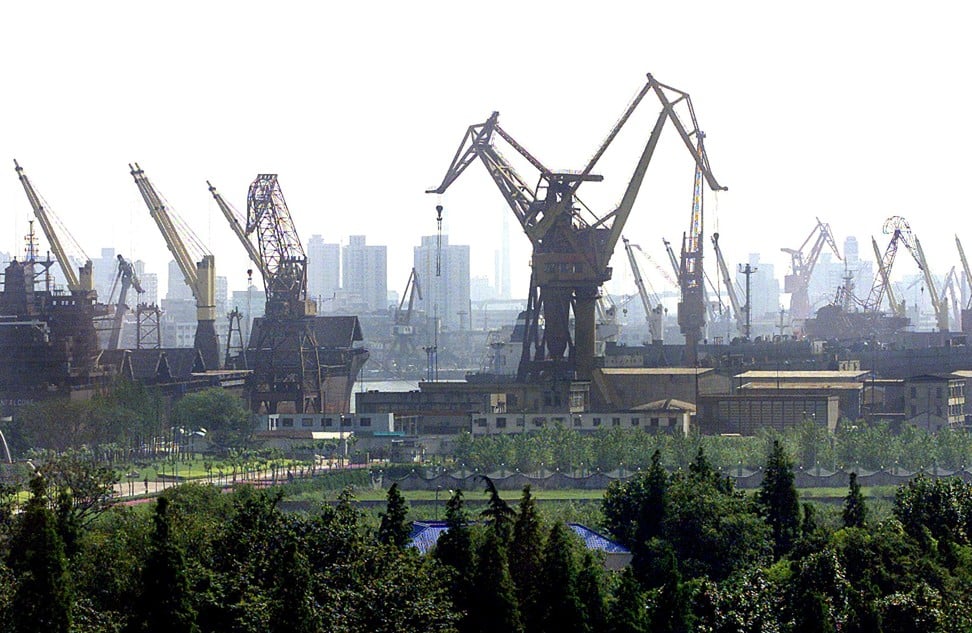
Rows of gantry cranes standing along the Huangpu River in Shanghai on 26 June 2002. A consortium of Chinese domestic banks provided a 17 billion yuan (US$2 billion) credit line toward the construction of Shanghai’s Yangshan deep-sea container port. Photo: AFP
Share:
Listed on the Shanghai exchange in 1997, Zhenhua’s shares have risen 41 per cent in the past 12 months, ending 2.1 per cent lower at 4.46 yuan on Friday. All three analysts who cover the stock recommend their clients either “buy” or “accumulate” the stock, expecting Zhenhua to be a major winner in China’s megaplan to build infrastructure along the old Silk Road in its Belt and Road Initiative (BRI).
Another major company that has emerged with China’s rising tide was China International Marine Containers (Group), or CIMC, a unit of the state-run conglomerate China Merchants Group. Established in 1980, the company took a little more than a decade to dominate the global industry, becoming the world’s largest maker of shipping containers since 1996.
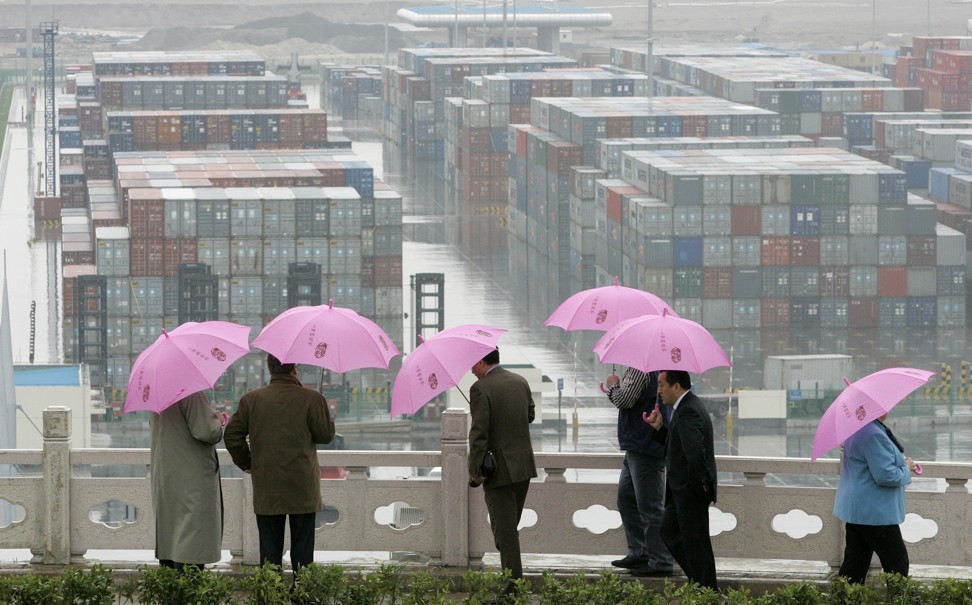
Visitors look at rows of containers at the Yangshan deep water port in Shanghai on April 6, 2006. Photo: AP
Share:
Net profit jumped 34.7 per cent to 3.38 billion yuan last year, while sales rose 22.5 per cent to 93.5 billion yuan.
The company has also diversified into land transport and vehicles, boarding bridges used in 200 airports around the world and even the development of industrial parks.
Guosen Securities said in a research report that CIMC would face lower profit margin this year amid rising raw material costs and fiercer competition from global rivals.
Its shares have risen 43.7 per cent in the past 12 months on the Shenzhen exchange to 15.20 yuan as of Friday.
Source: SCMP
Posted in Belt and Road Initiative (BRI), building frenzy, Chief Executive, China alert, China International Marine Containers Group (CIMC), containers, cranes, gantry cranes, Guan Tongxian, Hardangerfjord bridge, Huangpu River, International Marine Containers (Group), Las Vegas Ferris wheel, Norway, ports, Qingdao, quay cranes, San Francisco-Oakland Bay Bridge, Shanghai, Shanghai Zhenhua Heavy Industries, Shenzhen exchange, shipping containers, Silk Road, trade boom, Uncategorized, wharves, workaholic, world market, Yangshan deep-water port, Yangshan port, Zhenhua Port Machinery |
Leave a Comment »
19/02/2019
HONG KONG/LONDON (Reuters) – HSBC Holdings turned in a disappointing annual profit as higher costs and a stocks rout chipped away at its trading businesses, while warning that an economic slowdown in China and Britain would throw up further hurdles this year.
Chief Executive John Flint, rounding off his first year at the helm of the company, said the bank may have to scale back investment plans in order to avoid missing a key target known as ‘positive jaws’ – which tracks whether it is growing revenues faster than costs – for a second straight year.
HSBC remains alert to the downside risks of the current economic environment, economic environment and the future path of interest rates, Flint said, adding the bank was “committed” to the growth targets announced in June.
“We will be proactive in managing costs and investment to meet the risks to revenue growth where necessary, but we will not take short-term decisions that harm the long-term interests of the business,” Flint said on Tuesday, after HSBC reported a lower-than-expected 16 percent rise in 2018 profit before tax.
In June, Flint had said HSBC would invest $15-$17 billion in three years in areas including technology and China, while keeping profitability and dividend targets little changed.
ADVERTISEMENT
“The key thing is just to moderate the pace of investments … not to cancel it or change the shape of the investments,” Flint told Reuters.
The bank said it failed to achieve positive jaws in 2018 due to the negative market environment in the fourth quarter.
A combination of U.S.-China trade tensions, central banks turning off the money taps and cooling growth in former hot spots wiped 10 percent off MSCI’s 47-country world stocks index last year, its first double-digit loss in any year since the 2008 global financial crisis.
GROWING BUT SLOWLY
Flint’s comments come as an economic slowdown in China, exacerbated by a bitter Sino-U.S. trade war, challenges HSBC’s strategy of pouring more resources into Asia where it already makes more than three quarters of its profits.
China’s economic growth slowed to 6.6 percent in 2018, the weakest in 28 years, weighed down by rising borrowing costs and a clampdown on riskier lending that starved smaller, private companies of capital and stifled investment.
Pressure on the world’s second-largest economy could increase if Beijing and Washington do not reach a deal soon to end their year-long trade dispute, which is taking a growing toll on export-reliant economies from Asia to Europe.
HSBC’s profits in Asia grew by 16 percent to $17.8 billion last year, accounting for 89 percent of the group profit.
“Clearly our customers are really more cautious and are more thoughtful around this trade war with the U.S.,” Flint said.
“It’s possible that we’ll see slightly lower growth rate this year but we are still going to see a growth rate.”
Since taking over from Stuart Gulliver last February, Flint has largely stuck to the same China-focused strategy as his predecessor while attempting to revive HSBC’s ailing U.S. franchise and putting less emphasis on its investment bank.
Honda to close UK car plant cutting 3,500 jobs
Europe’s biggest bank by market value is also being buffeted by headwinds from Britain, which grew at its slowest in half a year in the three months to November as factories suffered from tough global trade conditions and the approach of Brexit.
HSBC joined its London-based peer Royal Bank of Scotland in warning that uncertainties related to Brexit could drive businesses under.
“The longer we have the uncertainty the worse it’s going to be for the customers. Customers are absolutely postponing investment decisions … and that’s been the part of this slowdown that we have seen in the U.K.,” Flint said.
DISAPPOINTING PROFIT
Earlier in the day, HSBC reported a profit before tax of $19.9 billion for 2018, versus $17.2 billion the year before, but below an average estimate of $22 billion, according to Refinitiv data based on forecasts from 17 analysts.
HSBC’s Hong Kong shares dropped as much as 2.7 percent after the earnings announcement.
The stock was down 1.4 percent at 0732 GMT, while the Hong Kong market index was 0.3 percent lower.
HSBC said it would pay a full-year dividend of $0.51 per share, roughly in line with analysts’ expectations. The bank was confident of maintaining the dividend at this level, it said.
The bank’s core capital ratio, a key measure of financial strength, fell to 14 percent at end-December from 14.5 percent at end-2017, mainly due to adverse foreign exchange movements.
Source: Reuters
Posted in Brexit, Britain, capital ratio, Chief Executive, China alert, costs, disappoints, Dividend, downside, economic environment, foreign exchange, HSBC, John Flint, key target, positive jaws, profit, revenues, Royal Bank of Scotland, slowdown, Uncategorized |
Leave a Comment »






 CHINDIA ALERT: You'll be living in their world, very soon