29/04/2020
- Hardline politicians want president to fulfil promise to overhaul constitution to reflect the self-ruled island’s political reality
- A petition calls for two referendums on the issue – proposing it either be replaced with a new one or revised
The push for constitutional change could lead to a cross-strait conflict. Photo: Handout
Taiwanese President Tsai Ing-wen is under growing pressure from the hardline camp to push for constitutional change to reflect the self-ruled island’s independent status – something observers say could provoke a cross-strait conflict.
With Tsai due to be sworn in for a second four-year term next month after a landslide victory in January’s election, hardline pro-independence politicians want her to fulfil a 2015 campaign promise: to overhaul the constitution so that it reflects Taiwan’s political reality. The process has been stalled since Tsai’s first term, which began in 2016.
Leading the charge is the Taiwan New Constitution Foundation, a group formed last year by a Tsai adviser and long-time independence advocate Koo Kwang-ming.
The foundation launched a petition at the end of March calling for two referendums on the constitution – proposing that it either be replaced with a new one or revised.
The existing constitution was adopted when Kuomintang leader Chiang Kai-shek and the KMT fled to Taiwan and set up an interim government in 1949 following their defeat by Mao Zedong’s communists in mainland China.
Drawn up in 1947, the constitution still puts the mainland and Mongolia under the Republic of China jurisdiction – Taiwan’s official name for itself. In reality, its jurisdiction extends only to Taiwan and its outlying islands of Penghu, Matsu and Quemoy, which is also known as Kinmen.
Taiwan’s constitution was adopted when KMT leader Chiang Kai-shek fled to the island in 1949. Photo: Handout
“We have garnered more than 3,000 signatures from the public for the first phase of initiating the proposals to hold two referendums asking the president to push for constitutional change,” Lin Yi-cheng, executive director of the Taiwan New Constitution Foundation, said on Wednesday.
He said they would propose that voters be asked two questions in the referendums: “Do you support the president in initiating a constitutional reform process for the country?”
And: “Do you support the president in pushing for the establishment of a new constitution reflecting the reality of Taiwan?”
“We’re ready to send the two referendum proposals to the Central Election Commission on Thursday,” he said.
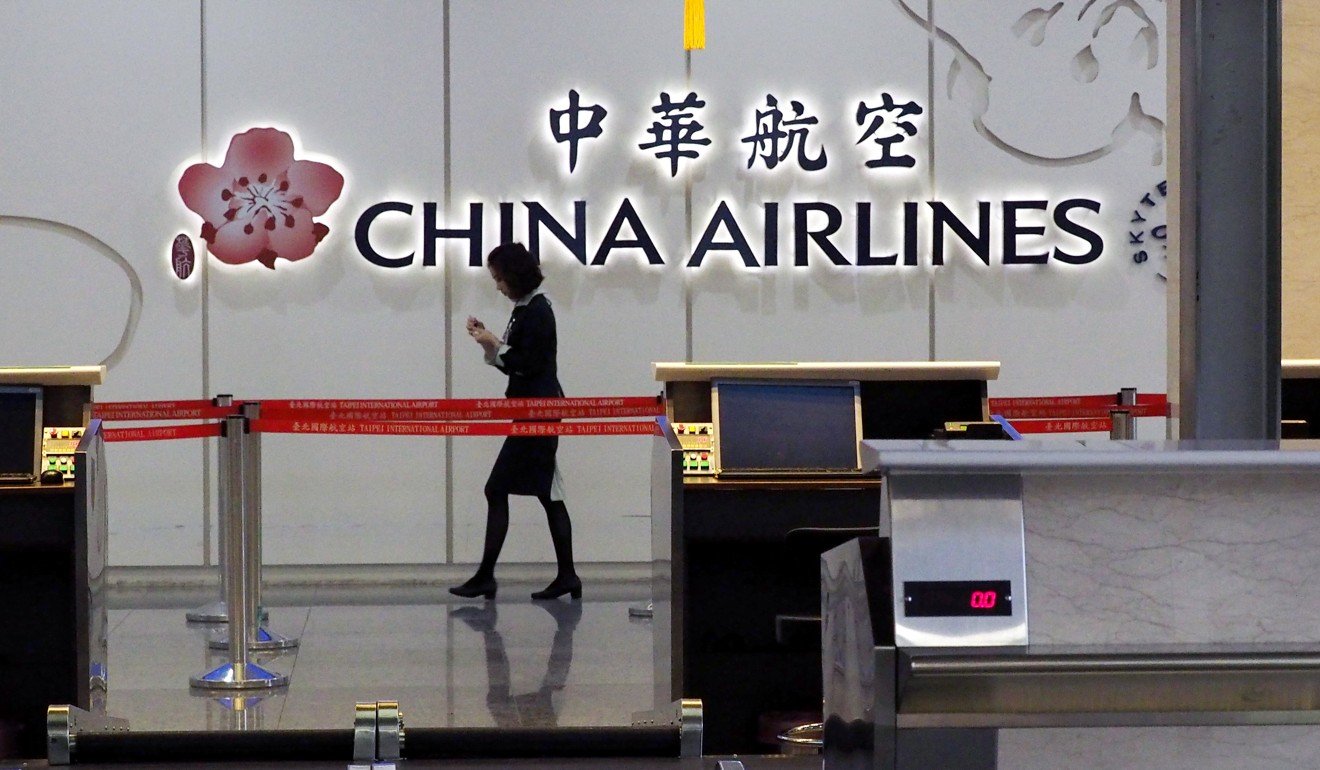
Confusion prompts call for China Airlines name change in Taiwan, but at what cost?
Under Taiwan’s Referendum Act, the process for holding a referendum involves three stages: a proposal, endorsement and voting.
Lin said there should be no problem for the commission to approve the proposal stage since they had gathered far more than the minimum 1,931 signatures needed under the act.
The endorsement stage requires a minimum of 290,000 signatures, and if the referendum is held, they will need at least 5 million votes.
Lin said if the process went smoothly, he expected a referendum could be held in August next year, allowing time for review and making the necessary arrangements.
He said if the referendum questions got enough public support, Tsai would need to deal with the issue.
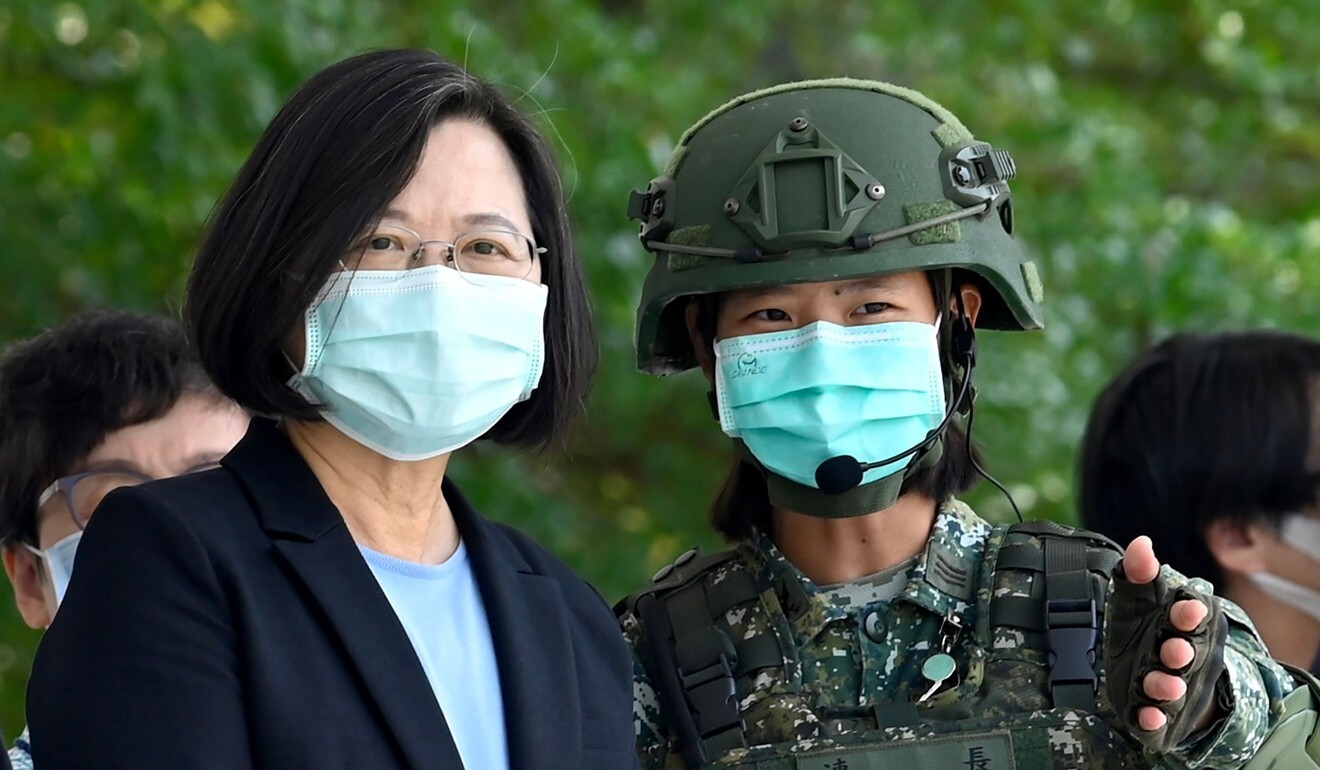
Tsai Ing-wen visits a military base in Tainan earlier this month. The pressure for constitutional change creates a dilemma for the president. Photo: AFP
Tsai’s Democratic Progressive Party government has been tight-lipped over the constitutional change issue, which Beijing sees as a move for the island to declare formal independence from the mainland.
Beijing considers Taiwan a wayward province that must be returned to the mainland fold, by force if necessary, and it has warned Tsai against declaring formal independence.
A DPP official said the foundation’s push would put Tsai in a difficult position.
“If she ignores the referendums, she will come under constant pressure from the hardline camp, and if she seriously considers taking action and instituting a new Taiwan constitution, she will risk a confrontation with Beijing, the consequence of which could be a cross-strait conflict,” said the official, who requested anonymity.
On Tuesday, Zhu Fenglian, a spokeswoman for the mainland’s Taiwan Affairs Office, warned the island against holding any referendum on constitutional revision, saying it would be doomed to end in an impasse and would ultimately fail.
“It will only push Taiwan towards an extremely dangerous abyss and bring disasters to Taiwanese compatriots,” she said.
Chinese air force’s drill ‘aimed at signalling deterrent around Taiwan’
But according to Wang Kung-yi, a political science professor at Chinese Culture University in Taipei, Tsai should not be too worried about the hardline camp move.
“The hardline camp has been marginalised greatly in the past several years as reflected by the poor showing in the legislative elections in January,” Wang said, adding that he expected Tsai to continue her relatively moderate cross-strait policy of not sharply provoking the mainland.
Source: SCMP
Posted in 1949, 2015, 2016, also known as, amid, August, be replaced, Beijing, by force, call for, calls for, campaign, Central Election Commission, Change, Chiang Kai-shek, China Airlines, Communists, confusion, considers, Constitution, constitutional, creates, cross-strait conflict, declare, defeat, Democratic Progressive Party, dilemma, earlier, either, Election, endorsement, fled, formal independence, four-year term, Hardline politicians, independent, island, islands, issue, January’s, jurisdiction, Kinmen, KMT, Kuomintang, mainland, Mainland China, Mao Zedong’s, March, marginalised, Matsu, military base, Mongolia, move for, name change, necessary, new one, next month, next year, observers, outlying islands, overhaul, Penghu, Petition, political reality, political science professor, politicians, President, pressure, pro-independence, promise, prompts, proposal, proposing, provoke, push for, Quemoy, Referendum Act, referendums, Republic of China, returned, revised, second, sees, self-ruled, status, sworn, Tainan, Taipei, Taiwan, Taiwan Affairs Office, Taiwan New Constitution Foundation, Taiwanese President, this month, Thursday, tight-lipped, to fulfil, to reflect, Tsai, Tsai Ing-wen, two, Uncategorized, under pressure, Voting, warned, wayward province |
Leave a Comment »
07/02/2020
- Cathay Pacific is latest to wield axe, while Taiwan’s new restrictions on visitors from Hong Kong is another blow
- More cancellations expected in the coming days as spread of deadly virus continues
The air industry in Hong Kong and beyond has been thrown into disarray by the coronavirus outbreak. Photo: Reuters
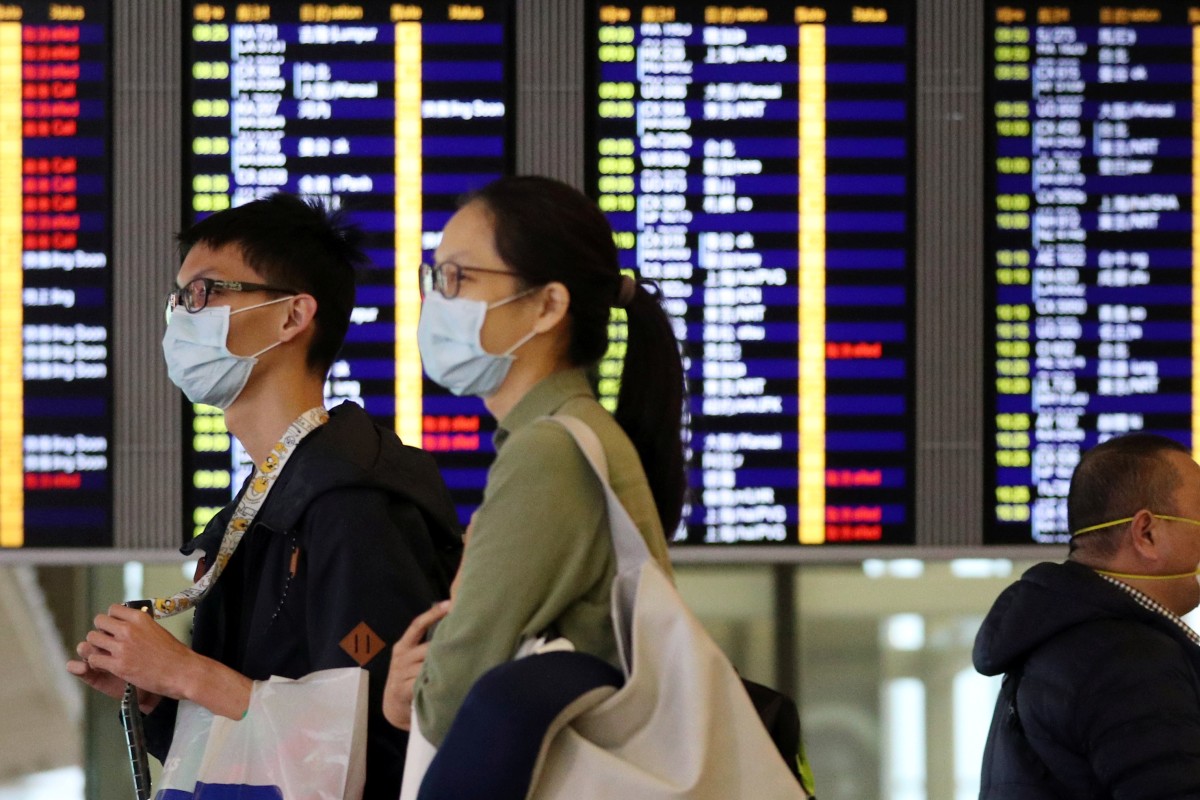
Hundreds more Hong Kong flights are set to be dropped as the floodgates open on airlines cancelling services during the city’s fight against the coronavirus.
Carriers based in Asia, Australia, South Africa and Middle East revealed on Friday morning and the previous night they would cut all or some of their flights to the city.
Cathay Pacific is the latest to wield the axe, announcing on Friday afternoon new suspensions of major Hong Kong routes to London, New York and across mainland China because of the virus.
Flights running on the busy route between Hong Kong and Taiwan’s capital Taipei are subject to major cuts. Photo: Shutterstock
The contagion, which started in the central Chinese city of Wuhan, has infected more than 31,400 people, mostly in mainland China, killing more than 635. In Hong Kong, 24 people have been infected, one of those fatally, as of Friday afternoon.
Passengers abandoning travel plans en masse have been compounded by the introduction of entry restrictions across the world against recent visitors to mainland China, some targeting those who had been to Hong Kong.
Destinations suspended by Cathay Pacific until March 28 include London Gatwick, Rome, Washington DC, Newark, Male, Davao, Clark, Jeju and Taichung.
All mainland cities with the exception of Beijing, Shanghai, Chengdu and Xiamen would also be dropped over that period. The company said the decision was made “in view of the novel coronavirus outbreak and the subsequent drop in market demand”.
Hong Kong airport to segregate all flights to and from mainland China
It followed Cathay Pacific Group revealing earlier this week there would be a 30 per cent reduction of flights across its worldwide schedule, as well as a 90% cut of mainland flights.
Budget carrier HK Express, controlled by Cathay, said on Thursday it would scrap 82 flights between February 12 and March 26, mostly to destinations such as Seoul and Osaka.
Hong Kong Airlines (HKA) at the same time revealed it would gradually impose even deeper cuts to flights it operated in mainland China and the rest of Asia until March 28.
The ailing carrier will suspend 10 routes and reduce flights on a further 15, amounting to an estimated 128 flights a week being axed. HKA has already cut 214 mainland Chinese flights between January 30 until February 11.
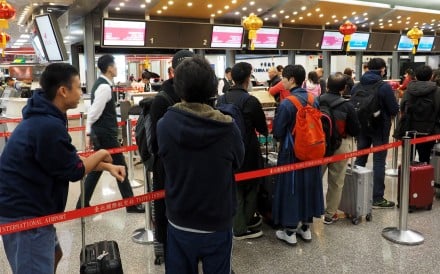
As Taiwan’s new restrictions took effect on Friday – ordering the home or hotel quarantine of anyone entering the self-ruled island who had visited Hong Kong or Macau within the previous 14 days – carriers based there slashed their schedules.
China Airlines would go from running 18 daily Hong Kong flights to just two from next week until March 28, according to Airline Route data published on Thursday.
Eva Air would switch from more than 11 daily flights to fewer than four a day for the rest of the month.
As health professionals treat coronavirus patients, global search for cures and vaccines accelerates
Eighty flights operate between Hong Kong and Taipei every week, a journey that regularly tops tables ranking the world’s busiest. But under the cuts to come more than half have already been scrapped.
Outside Asia, two airlines on Thursday cut ties with Hong Kong. The struggling Virgin Australia blamed the coronavirus and the anti-government protests that have gripped Hong Kong since June.
It concluded that “current circumstances demonstrate that Hong Kong is no longer a commercially viable route”.
The near-bankrupt South African Airways (SAA) has cancelled its route from Johannesburg amid a wholesale restructuring of the state-owned business. SAA had suspended flying to Hong Kong after November 21 last year amid the city’s civil unrest.
Hong Kong Airlines to axe 400 jobs as coronavirus adds to carrier’s cash woes
Meanwhile, American Airlines said on Thursday it would restart flights between Dallas Fort Worth and Hong Kong on February 21, while Hong Kong’s Airport Authority extended the cancellation of its Los Angeles flight to the city until March 27.
The US carrier warned its schedules were subject to an ongoing “review”. Currently there is no US carrier flying to Hong Kong International Airport after United Airlines also withdrew all services until February 20.
Among the Middle East carriers, Emirates was halving its four daily Airbus A380 flights to Hong Kong from next week until March 28. Etihad is also making minor adjustments, Airline Route data showed on Thursday.
Source: SCMP
Posted in across, air travel, Airbus A380, Airline Route, Asia, Australia, Beijing, cancelled, carriers, Cathay Pacific Group, Chengdu, China Airlines, Clark, contagion, coronavirus, Dallas Fort Worth, Davao, en masse, Etihad, Eva Air, hammers, Hong Kong, Hong Kong Airlines (HKA), Hong Kong flights, hundreds, Jeju, London, London Gatwick, Mainland China, Male, Middle East, New York, Newark, Osaka, routes, Seoul, Shanghai, South Africa, South African Airways (SAA), Taichung, Taipei, Uncategorized, Virgin Australia, Virus, Washington DC, Wuhan, Xiamen |
Leave a Comment »
23/02/2019
- Middle-aged man seen taking a nap mid-flight said to be senior pilot with the Taiwanese carrier
- His co-pilot who took the video has also been reprimanded
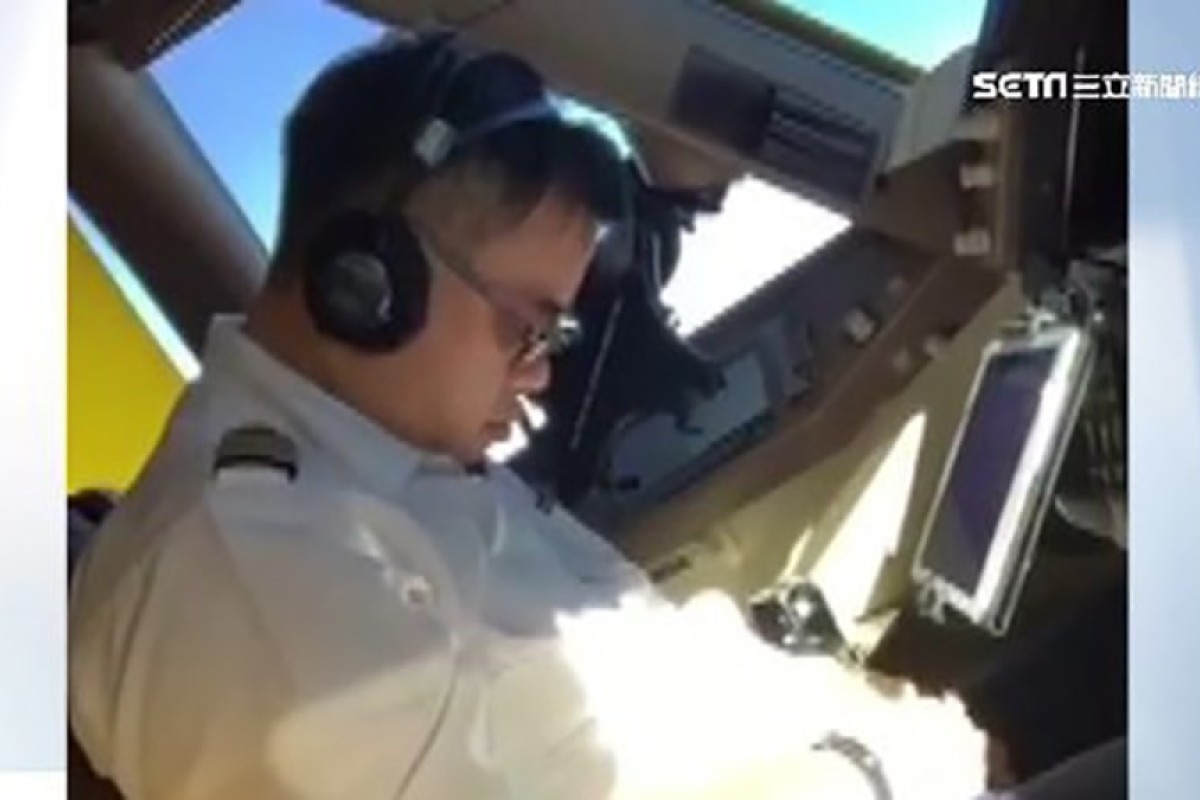
The video shows the pilot in the cockpit with his head down and eyes closed. Photo: setn.com
China Airlines, Taiwan’s biggest carrier, says it has punished a pilot after a video of him taking a nap in the cockpit mid-flight was posted online.
His co-pilot, who filmed the incident, has also been reprimanded, local television station SETN reported.
In the video, a middle-aged man in a pilot uniform and headphones appears to be asleep with his head down and eyes closed while in the cockpit of a Boeing 747.
The footage drew attention after it was shown in a report on Taiwanese TV network EBC on Wednesday. The man was identified as Weng Jiaqi, a senior pilot with almost 20 years of experience who was promoted to chief pilot last year.
Chinese airline Donghai suspends and fines pilot for allowing wife in cockpit
It was unclear when or on which flight the video was filmed, but the airline confirmed that Weng had reported his behaviour and been punished while his co-pilot had been reprimanded for “improper behaviour”, SETN reported.
Weng, who also supervises training, is a short-haul pilot to cities including Hong Kong, Shanghai, Beijing, Guangzhou, Tokyo, Okinawa and Seoul, according to the EBC report.
The China Airlines pilots went on strike on February 8, during the Lunar New Year holiday season. Photo: EPA-EFE
Share:
The incident comes after the airline last week reached a deal with the pilots’ union to
over working conditions and benefits that forced the cancellation of more than 200 flights.
But China Airlines told EBC that the video was filmed before the pilots walked off the job.
The Taoyuan Union of Pilots began the industrial action on February 8, stranding close to 50,000 passengers and inflicting over NT$500 million (US$16.2 million) in losses on the carrier.
Under a deal signed on February 14, the union agreed not to strike again in the next 3½ years. In return, China Airlines agreed to the union’s main demand to increase the number of pilots on various flights to combat fatigue and improve safety.
Chinese pilots, cabin crew told no more smoking in cockpits on domestic flights
The carrier will roster three pilots on flights of more than eight hours – up from the present two – and will have four pilots on flights over 12 hours, up from three.
China Airlines president Hsieh Shih-chien said the staffing increases were expected to sharply add to the cost of the company’s operations, but the carrier agreed to the terms in the interest of safety.
Source: SCMP
Posted in Beijing, China Airlines, China Airlines president, China alert, Donghai, Guangzhou, Hong Kong, Hsieh Shih-chien, lunar new year, Okinawa, pilot, Seoul, Shanghai, sleeping in cockpit, Taiwan’s biggest carrier, Tokyo, Uncategorized, Weng Jiaqi, working conditions and benefits |
Leave a Comment »
13/02/2019
BEIJING, Feb. 12 (Xinhua) — China’s Supreme People’s Procuratorate (SPP) on Tuesday unveiled measures to make its procuratorial network more efficient in dealing with public interest litigations.
The procuratorial organs still lack expertise and experiences in public interest litigation, a newly-conferred function by law, said an SPP statement.
As part of a five-year reform plan made public Tuesday, the SPP ordered procuratorates to give full play to the role of pre-suit procedure by smoothing communication with administrative agencies, offering procuratorial suggestions, and coordinating related parties for implementation.
Efforts should also be made to improve coordination among procuratorates, courts and administrative law enforcement organs, it read.
The SPP plans to introduce platforms to better link public interest litigation with administrative law enforcement, and standardize methods of handling public interest litigation cases.
Meanwhile, the SPP will explore a mechanism for hiring or consulting experts from administrative agencies for prosecutors who are dealing with litigation cases involving environmental protection or food or drug safety.
China’s top legislature passed the revised civil and administrative procedure laws in June 2017 to allow prosecutors nationwide to institute public interest litigation.
The reform aims to better protect the interests of the nation and the public, especially in the protection of the environment and resources, and food safety.
Source: Xinhua
Posted in China Airlines, litigation system, People's Procuratorate, public interest, SPP, Supreme Court, Uncategorized |
Leave a Comment »
09/02/2019
- Transport minister urges swift resolution so stranded travellers can get home after Lunar New Year holiday
- Airline rebuked for breakdown in negotiations and pilots urged to consider the rights of passengers
PUBLISHED : Saturday, 09 February, 2019, 7:17pm
UPDATED : Saturday, 09 February, 2019, 7:17pm
Taiwan’s largest airline China Airlines and its pilot union returned to the negotiating table on Saturday in a closed-door coordination meeting over an ongoing strike that so far has forced the cancellation of 34 flights, including at least 12 to or from Hong Kong.
The carrier cancelled four Saturday flights between Hong Kong and Kaohsiung and three between Taipei and Hong Kong, after scrapping five flights to and from Hong Kong the previous day. More than 12 flights have been delayed in the past two days, according to the airline.
The China Airlines branch of the Taoyuan Union of Pilots is protesting the airline’s failure to improve pilots’ working conditions and launched industrial action at 6am on Friday after talks broke down on Thursday, saying the strike would continue indefinitely until China Airlines agreed to meet its demands.
Taiwan’s transport ministry stepped in, asking China Airlines and the union to hold a new round of talks on Saturday afternoon under the supervision of the Taoyuan Labour Affairs Department.
Earlier on Saturday, transport minister Lin Chia-lung said airline management should have reviewed the reasons behind the breakdown in talks, in light of last year’s successful negotiations between EVA Air, another major Taiwan carrier, and its pilots.
“Senior officials of China Airlines should have listened to the voices of their employees and put aside their emotion to properly handle the labour dispute,” Lin said, adding that the union should also take note of the rights of travellers and resume negotiations with the employer to jump-start reform of China Airlines’ aviation safety and systems.
The union voted to strike in August and obtained approval from the labour authorities following disputes dating back to December 2017 between pilots and the two airlines over working conditions.
The EVA pilots agreed not to strike after a consensus was reached with airline, coordinated by the labour authorities, but no agreement was reached between China Airlines and its pilots, prompting Friday’s action.
Lin said he hoped the dispute could be settled as soon as possible so that stranded passengers could return home in time for work on Monday, the day after the official end of the Lunar New Year holiday.
In a statement released on Friday, the union said it staged the strike because China Airlines had refused to take note of the fatigued condition of pilots required to work overtime, which it said created a flight risk.
The union is demanding an additional backup pilot for flights lasting eight hours or more, and two pilots on long-haul flights lasting 12 hours or more.
The pilots also want a more transparent system of promotion, a year-end bonus similar to EVA Air’s, and other concessions, including replacement of the management staff they say were responsible for the breakdown in talks.
The union is also demanding an assurance that there will be no later punishment for the strike action.

China Airlines has rejected the union’s demand for extra manpower on long-haul flights, saying the pilots’ working conditions are in line with international practice and that “increasing manpower would raise human resources costs and seriously affect the competitiveness of the company”.
Deputy transport minister Wang Kwo-tsai appeared to support the union’s position on fatigue and promotion issues.
“After all, fatigue would cause flight risks and protection of the benefits for employees would enable the company to operate continuously,” he told reporters on Saturday.
Wang stressed the strike had already disrupted air traffic and stranded passengers, and said there was a strong need for the two sides to swiftly resolve the dispute to ensure the rights of passengers.
Source: SCMP
Posted in airport chaos, China Airlines, China alert, striking pilots, talks, Uncategorized |
Leave a Comment »








 CHINDIA ALERT: You'll be living in their world, very soon
COMMENTS: