29/02/2020
- Purchasing managers’ indexes for both manufacturing and service sectors drop to all-time lows
- Steep falls raise questions over extent of damage epidemic has caused to China’s economy and how long it will take the country to recover
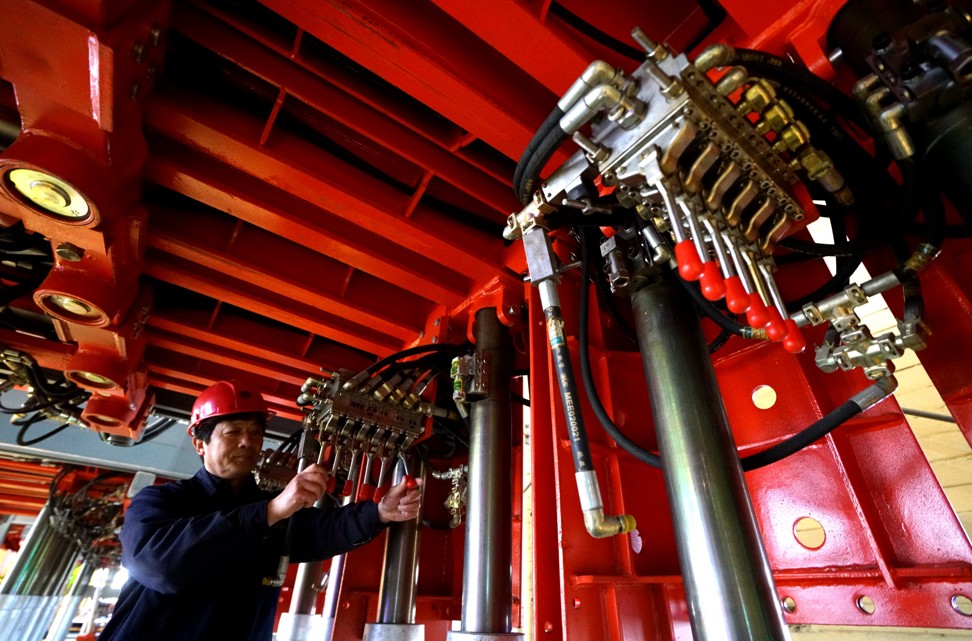
Many Chinese factories have faced a labour shortage as migrants have been unable to return to work because of the coronavirus outbreak. Photo: AFP
The damage caused by the
coronavirus outbreak to China’s US$14 trillion economy could be much worse than Beijing hoped, as official measures for the country’s factory and service activity indicated on Saturday, threatening President Xi Jinping’s vision for 2020 and underscoring his urgent appeal to get production back to normal.
Monthly economic indicators for February sank to all-time lows as the coronavirus halted China’s manufacturing machine and froze activity in the service sector – from retailing to recycling – painting a bleak picture of the world’s second-biggest economy and challenging Beijing’s repeated assurance that the impact would be manageable and short-lived.
Covid-19, the disease caused by the coronavirus – was first reported in Wuhan in December. Since then it has spread to more than 50 countries and more than 85,000 people have been infected. The outbreak has disrupted travel and cargo shipments, and caused stock markets to slump.
China’s official February purchasing managers’ indexes (PMI) for both manufacturing and services, released by the National Bureau of Statistics on Saturday, confirmed fears that China’s economy was in bad shape and fanned speculation that it may even contract in the first quarter.
Larry Hu, chief China economist at Macquarie Capital in Hong Kong, said in a note that Beijing might report negative growth for “the first time since the Cultural Revolution”.
The manufacturing PMI, which measures factory activity, dropped to 35.7 in February – below the previous all-time low of 38.8 set in November 2008 during the global financial crisis – from 50 in January when the impact of the epidemic was not apparent.
A reading below 50 indicates a contraction in activity.
The February PMI figures confirmed fears that China’s economy was in bad shape. Photo: AFP
All of the sub-indexes of the PMI pointed to the difficult situation facing Chinese factories. Output plummeted, new orders vanished, exports and imports stopped, and logistics were badly disrupted. Input prices, which reflects the costs factories must pay, was the only sub-index that remained above 50.
The non-manufacturing PMI – a gauge of sentiment in the services and construction sectors – also dropped, to 29.6 from 54.1 in January. This was also the lowest on record, beating the previous low of 49.7 in November 2011, according to the China Federation of Logistics and Purchasing, which produces the index with the National Bureau of Statistics.
The declines in the February reflect the difficulties businesses are having in bringing production back online due to shortages of labour as well as difficulties receiving supplies or shipping goods to market because of transport restrictions enacted to contain the spread of the virus.
An extended slump would put upwards pressure on unemployment, especially among small, private sector service firms. Beijing, which worries that rising joblessness could cause social unrest, has called on local governments to remove unnecessary restrictions to get businesses back to work.
The employment sub-index in the manufacturing PMI fell to 31.8 in February.
“It is not because factories have stopped hiring migrant workers, it is because the flow of migrant workers to factories has been blocked,” said Hua Changchun, an analyst at brokerage Guotai Junan Securities. “There’s no point talking about resuming production if workers can’t return to their jobs.”
Zhang Qiqun, a researcher with the Development Research Centre of State Council, said in a statement that the major economic indicators for this quarter would see “obvious drops” and China must “be prepared”.
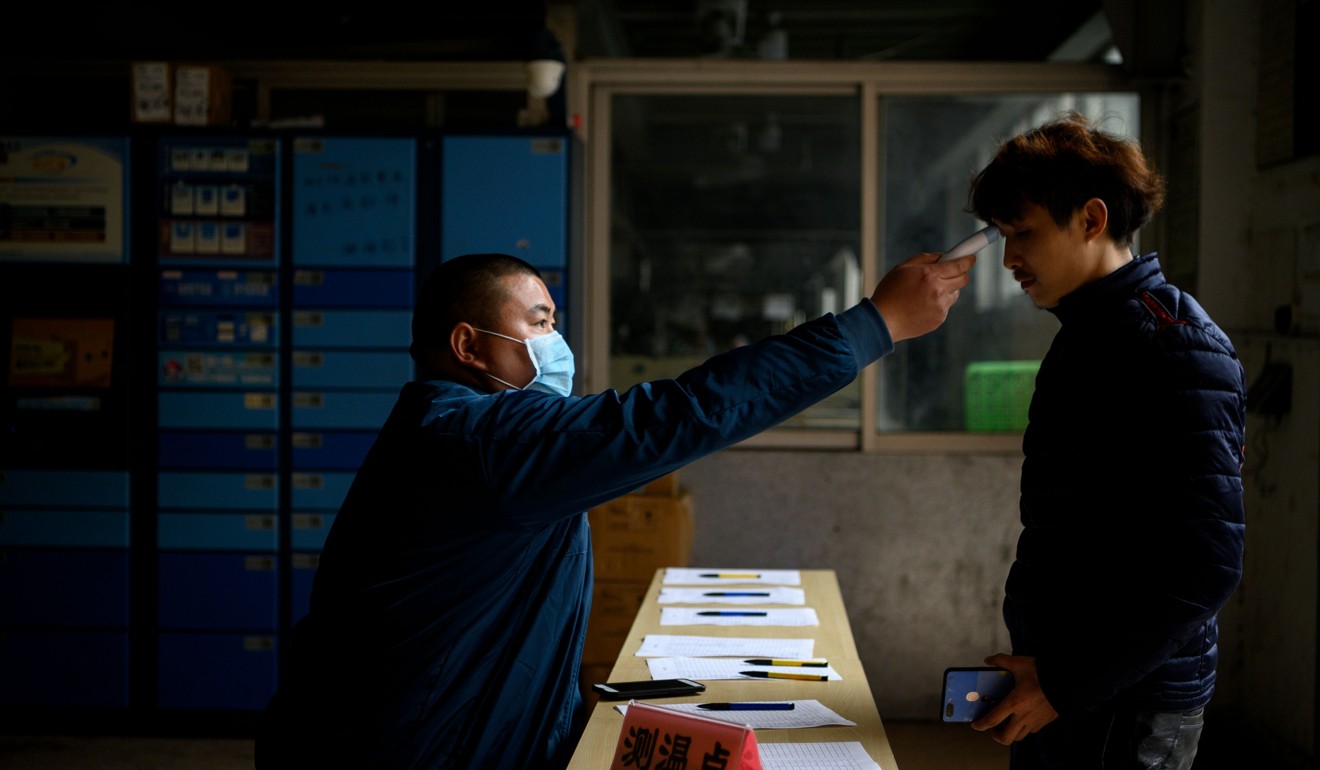
The employment sub-index in the manufacturing PMI fell to 31.8 in February. Photo: AFP
How quickly China can dig itself out of the coronavirus hole is a matter of debate.
According to the PMI survey, about 90 per cent of medium and large-sized manufacturers are expected to resume production in March, meaning about 10 per cent will still be closed four weeks from now.
As for small firms, the industry ministry said this week that two-thirds would still be closed at the end of February.
China’s production difficulties have resulted in economic problems for nations around the world that rely on supply chains that begin or pass through the country. The global spread of the coronavirus will only exacerbate the problem.
Barclays and Nomura forecast China’s first-quarter growth at 2 per cent, while Capital Economics said it would contract in year-on-year terms.
“The sharp drop in China’s manufacturing PMI in February reinforces our view that the normalisation in economic activity will be delayed,” said Xing Zhaopeng, an economist at Australia & New Zealand Banking Group.
“There’s scant chance for a V-shaped rebound – the authorities are using targeted aids more than stimulus to stabilise the economy and that will lead to a gradual bounce.”
The National Bureau of Statistics tried to put a brave face on the data, saying there would be a substantial improvement in March.
“The resumption of work is ramping up and market confidence is steadily recovering,” said Zhao Qinghe, a senior statistician at the NBS.
“Although the novel coronavirus pneumonia epidemic has caused a larger impact on production and operations of Chinese enterprises … currently the epidemic has come under initial containment, and the negative impact on production is gradually weakening.”
Source: SCMP
Posted in Beijing, China Federation of Logistics and Purchasing, China’s economy, coronavirus, cost, COVID-19, Cultural Revolution, Development Research Centre, Hong Kong, larger, manufacturing and service sectors, national bureau of statistics, plunge, purchasing managers’ indexes (PMI), State Council, Uncategorized |
Leave a Comment »
01/09/2019
- The manufacturing purchasing managers’ index, released by the National Bureau of Statistics on Saturday, was 49.5 in August
- Figure adds to a month of woe for policymakers in Beijing, even ahead of planned US tariff increases on September 1, October 1, and December 15
China’s manufacturing purchasing managers’ index fell by 0.2 points in August as the trade war continued to bite. Photo: Xinhua
As the trade war with the United States continues to gather pace, manufacturers in China remain gloomy about their prospects, with the sector activity contracting for the fourth successive month in August.
The manufacturing purchasing managers’ index (PMI), released by the National Bureau of Statistics (NBS) on Saturday, stood at 49.5 in August, down from a reading of
, and below analysts’ expectations. The median result of a survey of analysts by Bloomberg expected a reading of 49.6.
The PMI is a gauge of sentiment among factory operators, with 50 being the demarcation line between expansion and contraction in sector activity. In the survey, manufacturers are asked to give a view on business issues such as export orders, purchasing, production and logistics.
That the index has remained in contractionary territory for six of eight months this year shows that the effects of US tariffs are resonating through the Chinese economy. The manufacturing PMI only showed expansion in March and April of this year.
New and higher US tariffs scheduled to enter force on September 1, October 1 and December 15 could provide some very temporary boost to Chinese exports and therefore manufacturers, should they inspire American buyers to make early purchases to pay lower tariff rates. However the long term trajectory is negative, with many manufacturers scoping out or already relocating to production sites outside the world’s second largest economy.
Also released on Saturday was the official non-manufacturing PMI, a survey of the construction and services sectors. This stood at 53.8, up from 53.7 in July, showing that these sectors have remained more robust in the face of a general slowdown in China’s economy. The Bloomberg survey of analysts had expected non-manufacturing PMI in August to remain unchanged.
Composite PMI, a combined reading of both manufacturing and non-manufacturing, was 53, down from 53.1 in July.
The August PMI decline “indicates downward pressure on the economy,” said Zhang Liqun, an analyst with the China Federation of Logistics and Purchasing, which produces the index with the NBS.
“Corporations’ forecasts of the market outlook were quite poor while being cautious on their production operations,” Zhang said. The PMI indicated a drop in new orders, which also reflected a lack of domestic demand. Given that the US is escalating tensions with China, downward pressure on external demand is also apparent, Zhang said.
August was a month to forget for policymakers in Beijing, with a series of negative data highlighting the serious economic challenges facing the nation. With the trade war threatening to tip the global economy into a recession, China remains heavily exposed.
The trade war is having a significant impact on Chinese manufacturing. Photo: Xinhua
While exports grew by 3.3 per cent in July, a sign of front-loading, imports fell by 5.6 per cent, emphasising the issues with consumption in China. This problem was also clear in retail sales figure, which came in at a disappointing 7.6 per cent for July, down from 9.8 per cent growth in June.
, a measure of output in China’s manufacturing and mining sectors, grew by just 4.8 per cent in July, the lowest reading since February 2002.
Gross domestic product in China for the second quarter of 2019 grew at 6.2 per cent, the lowest rate since NBS quarterly records began in 1992.
Source: SCMP
Posted in Beijing, Bloomberg, China Federation of Logistics and Purchasing, China’s manufacturing, Chinese economy, Escalating trade war, export orders, factory operators, gross domestic product (GDP), hit, Industrial production, logistics, national bureau of statistics, National Bureau of Statistics (NBS), policymakers, production, purchasing, purchasing managers’ index (PMI), Uncategorized, United States, US tariff, Xinhua |
Leave a Comment »



 CHINDIA ALERT: You'll be living in their world, very soon