08/07/2019
- Compact plants proposed to ease pollution but backers must win over wary public
China is exploring the idea of using small nuclear power plants to phase out coal- and gas-fired heating generators in smog-afflicted northern China. Photo: Reuters
China plans to build a pilot small-scale nuclear reactor that could replace coal or gas to heat towns and cities in its colder northern regions, an official with the state-owned developer in charge of the project said on Monday.
The small heating reactor was planned for the city of Jiamusi in northeastern Heilongjiang province, one of two proposed units with a combined capacity of 400 megawatts, Wang Xujia, a senior engineer with the State Power Investment Corp, said on the sidelines of an industry conference.
“The project is still under central government review for approval,” Wang said, adding that the developer aimed to put the project into operation by 2024.
China has been exploring the use of small nuclear reactors – less than a fifth of the size of a standard reactor – as alternative heating systems in smog-prone northern regions.
The state provides heating throughout northern China from November to March, using predominantly coal- or gas-fired boilers.
State-owned China National Nuclear Corp (CNNC) has already conducted trial runs for a “district heating reactor” (DHR) design, which it says can supply heat to 200,000 urban households.
China-built nuclear reactors may enjoy home advantage as delays and costs stymie foreign competitors
The DHR model consists of a reactor core immersed in a water-filled tank. It is estimated to require investment of 1.5 billion yuan (US$217 million) and take three years to build, making it cheaper and quicker to construct than conventional reactors.
However, while the various designs will use only a fraction of the radioactive material of a conventional nuclear plant, officials acknowledge the biggest challenge is convincing the public the reactors are safe and reliable.
“The planned project in Jiamusi will be located in a remote area of the city which undermines its economic efficiency, but since it is just a demonstration project we just want to complete one first and show it to the public,” Wang said.
China aims to raise total nuclear capacity to 58 gigawatts by the end of next year, but it has not launched any new conventional reactors in more than three years.
China expected to miss target for 2020 nuclear capacity
After Japan’s Fukushima accident in 2011, China conducted a root-and-branch safety review and decided it would only use the most advanced “third generation” technology for any new projects.
However, those technologies – including Westinghouse’s AP1000 and the Areva-developed EPR – have proved to be expensive, complex and prone to long construction delays.
In a bid to broaden its options, the country is developing smaller units and plans to launch its first “small modular reactor” on the island province of Hainan at the end of this year.
China also planned to launch floating nuclear reactors with the aim of developing a fleet of ship-mounted nuclear generators that could be deployed on islands in Southeast Asia, Song Danrong, a reactor designer at CNNC, told Monday’s conference.
This article appeared in the South China Morning Post print edition as: Pilot nuclear reactor may replace coal in north
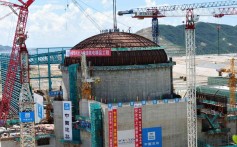
After brief pause, China rushes to build more nuclear power plants
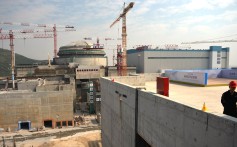
China General Nuclear Power and rival China National Nuclear plan to build four more reactors on mainland
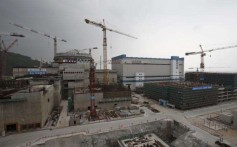
Under draft rules, nuclear power projects in China will need local support
Posted in Areva-developed EPR, “district heating reactor” (DHR), China General Nuclear Power, China National Nuclear Corp (CNNC), China National Nuclear Corporation, coal, coal or gas, coal- and gas-fired heating generators, floating nuclear reactors, Fukushima accident, heat, Heilongjiang province, Jiamusi, Pilot nuclear reactor, ship-mounted nuclear generators, small test nuclear reactor, smog-prone north, south china morning post, State Power Investment Corp, Uncategorized, Westinghouse’s AP1000 |
Leave a Comment »
08/07/2019
- Senior industry official Wang Shoujun predicts up to 30 reactors could be built over next decade
- Calls for more financial and policy support for sector to optimise export trade
A Hualong One ZH-65 steam generator, part of China’s home-grown nuclear technology which it is hoping to export as part of its Belt and Road Initiative. Photo: Xinhua
As many as 30 nuclear reactors could be built by China over the next decade as part of the Belt and Road Initiative, a senior industry official told a meeting of the country’s top political advisory body this week.
Wang Shoujun, a standing committee member of the China People’s Political Consultative Conference, told delegates on Wednesday that China needed to take full advantage of the opportunities provided by the belt and road plan and give more financial and policy support to its nuclear sector.
China-built reactors may have advantage over foreign competitors
“‘Going out’ with nuclear power has already become a state strategy, and nuclear exports will help optimise our export trade and free up domestic high-end manufacturing capacity,” he said, according to a report on the CPPCC’s official website.
Wang said China needed to improve research and development, localise the production of key nuclear components, and grow both the domestic and foreign nuclear markets to give full play to the country’s “comprehensive advantages” in costs and technology.
Wang, also the former chairman of the state-owned China National Nuclear Corp, said nuclear projects under the belt and road plan could earn Chinese firms as much as 1 trillion yuan (US$145.52 billion) by 2030, according to more details of his speech published by BJX.com.cn, a Chinese power industry news portal.
He said 41 nations taking part in the belt and road plan already had nuclear power programmes or were planning to develop them, and China only needed to secure a 20 per cent market share to create five million new jobs in the sector, according to the news portal.
The CPPCC did not immediately respond to a request for comment.
China is in the middle of a reactor building programme which it hopes will serve as a shop window to promote its home-grown designs and technologies overseas, especially its own third-generation reactor design known as Hualong One.
But the pace of construction at home has slowed amid technological problems and delays at some key projects, as well as a suspension of new approvals that lasted more than three years.
Wang, according to BJX.com.cn, said there was overcapacity among local nuclear manufacturers, but the domestic market value for nuclear equipment could reach more than 48 billion yuan a year within two years. He did not say how much it was worth currently.
Source: SCMP
Posted in Belt and Road Initiative (BRI), belt and road plan, BJX.com.cn, China expert, China National Nuclear Corp (CNNC), CPPCC’s official website, home-grown, Hualong One, Hualong One ZH-65 steam generator, lays out, nuclear path, nuclear reactors, nuclear technology, standing committee member of the China People’s Political Consultative Conference, trillion yuan, Uncategorized |
Leave a Comment »
27/06/2019
- Compact plants proposed to ease pollution but backers must win over wary public
China is exploring the idea of using small nuclear power plants to phase out coal- and gas-fired heating generators in smog-afflicted northern China. Photo: Reuters
China plans to build a pilot small-scale nuclear reactor that could replace coal or gas to heat towns and cities in its colder northern regions, an official with the state-owned developer in charge of the project said on Monday.
The small heating reactor was planned for the city of Jiamusi in northeastern Heilongjiang province, one of two proposed units with a combined capacity of 400 megawatts, Wang Xujia, a senior engineer with the State Power Investment Corp, said on the sidelines of an industry conference.
“The project is still under central government review for approval,” Wang said, adding that the developer aimed to put the project into operation by 2024.
China has been exploring the use of small nuclear reactors – less than a fifth of the size of a standard reactor – as alternative heating systems in smog-prone northern regions.
The state provides heating throughout northern China from November to March, using predominantly coal- or gas-fired boilers.
State-owned China National Nuclear Corp (CNNC) has already conducted trial runs for a “district heating reactor” (DHR) design, which it says can supply heat to 200,000 urban households.
China-built nuclear reactors may enjoy home advantage as delays and costs stymie foreign competitors
The DHR model consists of a reactor core immersed in a water-filled tank. It is estimated to require investment of 1.5 billion yuan (US$217 million) and take three years to build, making it cheaper and quicker to construct than conventional reactors.
However, while the various designs will use only a fraction of the radioactive material of a conventional nuclear plant, officials acknowledge the biggest challenge is convincing the public the reactors are safe and reliable.
“The planned project in Jiamusi will be located in a remote area of the city which undermines its economic efficiency, but since it is just a demonstration project we just want to complete one first and show it to the public,” Wang said.
China aims to raise total nuclear capacity to 58 gigawatts by the end of next year, but it has not launched any new conventional reactors in more than three years.
China expected to miss target for 2020 nuclear capacity
After Japan’s Fukushima accident in 2011, China conducted a root-and-branch safety review and decided it would only use the most advanced “third generation” technology for any new projects.
However, those technologies – including Westinghouse’s AP1000 and the Areva-developed EPR – have proved to be expensive, complex and prone to long construction delays.
In a bid to broaden its options, the country is developing smaller units and plans to launch its first “small modular reactor” on the island province of Hainan at the end of this year.
China also planned to launch floating nuclear reactors with the aim of developing a fleet of ship-mounted nuclear generators that could be deployed on islands in Southeast Asia, Song Danrong, a reactor designer at CNNC, told Monday’s conference.
Source: SCMP
Posted in Areva-developed EPR, China alert, China National Nuclear Corp (CNNC), Compact plants, ease pollution, fire up, heat, North, ship-mounted nuclear generators, small, smog-prone, Southeast Asia, State Power Investment Corp, test nuclear reactor, Uncategorized, wary public |
Leave a Comment »


 CHINDIA ALERT: You'll be living in their world, very soon