Chindia Alert: You’ll be Living in their World Very Soon
aims to alert you to the threats and opportunities that China and India present. China and India require serious attention; case of ‘hidden dragon and crouching tiger’.
Without this attention, governments, businesses and, indeed, individuals may find themselves at a great disadvantage sooner rather than later.
The POSTs (front webpages) are mainly 'cuttings' from reliable sources, updated continuously.
The PAGEs (see Tabs, above) attempt to make the information more meaningful by putting some structure to the information we have researched and assembled since 2006.
Around two thirds of the total number of flights scheduled every day in February were cancelled, placing huge financial pressure on airlines and airports
China’s aviation industry has also been affected by a series of restrictions by other countries and airlines, with British Airways extending its suspension until mid-April
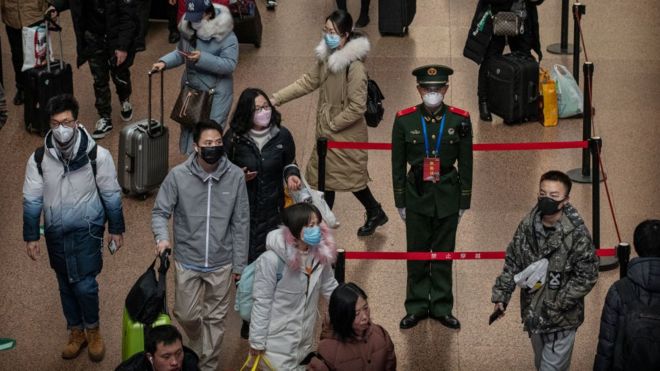
The cancellation of around 10,000 flights a day, or around two thirds of the total number of flights scheduled every day in February, has placed huge financial pressure on airlines and airports. Photo: Kyodo
A one-way air ticket from the coastal economic hub of Shanghai to the inland municipality of Chongqing, a journey of over 1,400km (870 miles), now costs less than a cup of coffee, with Chinese airlines slashing prices in a bid to boost weak domestic demand amid the coronavirus outbreak.
The cancellation of around 10,000 flights a day, or around two thirds of the total number of flights scheduled every day in February, has placed huge financial pressure on airlines and airports.
The Civil Aviation Administration of China said in a notice on Tuesday that flights should resume gradually as part of the country’s efforts to return economic and social life back to normal, but passengers are still reluctant to fly with the deadly outbreak still not fully under control.
The one-way flight from Shanghai to Chongqing is being offered for just 29 yuan (US$4.10) by China’s biggest low-cost carrier, Spring Airlines, as a special offer for its frequent flyer club members, while a tall caffe latte at Starbucks in China costs 32 yuan (US$4.5).
Many Chinese carriers do receive subsidies for operating key domestic routes, so this also skews the economics as well Luya You
A one-way ticket from Shanghai to Harbin, the capital of the northern Heilongjiang province, a distance of over 1,600km (994 miles), costs just 69 yuan (US$9.80).
Shenzhen Airlines, a division of state-owned carrier Air China, is also running special offers to Chongqing, with a one-way ticket for the 1000km (621 miles) journey from Shenzhen costing just 100 yuan (US$14), around 5 per cent of the standard price of 1,940 yuan (US$276).
Chengdu Airlines, a unit of Sichuan Airlines, which counts China Southern Airlines as a shareholder, is also offering cheap one-way flights from Shenzhen to Chengdu, a distance of over 1,300km (808 miles), for just 100 yuan.
“Considering lower average costs of operating in mainland China, carriers could potentially offer deeper discounts while making slim profits or just breaking even,” said Luya You, an aviation analyst with Bank of Communication International. “As outbreak numbers stabilise or even decline, carriers will likely adjust their fares as well, so these low fares will not last if the situation quickly turns for the better.
“Many Chinese carriers do receive subsidies for operating key domestic routes, so this also skews the economics as well. If it is a key route, for example, the carrier may choose to continue operating regardless of fares or loads as the route constitutes a major link in the domestic network infrastructure.”
China’s aviation authority confirmed earlier this month that between January 25 and February 14, which included the Lunar New Year holiday, the average daily passenger traffic in China was just 470,000, representing a 75 per cent drop from the same period last year.
China’s aviation industry has also been affected by a series of restrictions by other countries and airlines, with British Airways last week extending its suspension of flights to China until after the Easter holiday in mid-April following travel advice from the British government.
The novel coronavirus, which causes the disease officially named Covid-19, has infected more than 78,000 people and killed 2,700 in China. In recent days, South Korea, Italy and Iran have all reported a surge in new cases, raising fears over the spread of the coronavirus.
“The flight suspensions will track the outbreaks, but not likely lead them. If there are more outbreaks, expect more flight suspensions,” said Andrew Charlton, managing director of Aviation Advocacy.
As public health concerns rise over a new virus, the impact is being felt by China’s travel and tourism sector.
More than 400m Chinese were expected to travel over the Lunar New Year which starts today, normally one of the busiest periods for airlines, hotels and tourist attractions.
Instead, flights and hotels are being cancelled as people face travel restrictions or choose to stay home.
The virus has already taken 25 lives, with more than 800 cases globally.
Many airlines have agreed to refund fares or let passengers rebook free of charge if affected, while major hotel chains are now following suit as more travel restrictions are announced.
After the Civil Aviation Administration of China announced that airlines should give refunds for cancelled flights, the country’s three major airlines, China Southern Airlines, China Eastern Airlines and China Air all saw their share prices take a dive. China Eastern Airlines has seen its value fall about 13% this week.
Hong Kong’s national carrier Cathay Pacific was among the first airlines to allow passengers scheduled to fly to or from Wuhan to reschedule for free while, at the same time, allowing cabin crew to wear surgical masks on flights.
Wuhan is where the first cases in the outbreak were reported. The flu-like virus has since spread to several our parts of China and internationally with cases being confirmed in Singapore, Thailand and the US among others countries.
China’s biggest online travel agency, Trip.com, is also waiving cancellation fees on all hotels, car rentals and tickets for tourist attractions to Wuhan and is ”actively monitoring the situation to ensure the safety of all travellers”.
Hotels and casinos hit
Hotel groups are also paying out refunds to tourists who want to cancel trips to Wuhan and other parts of China.
Both InterContinental Hotels Group (IHG) and Hyatt will allow guests to change or cancel stays at the majority of their Chinese hotels over the Lunar New Year holiday. IHG has 443 hotels in China, Hong Kong, Macau and Taiwan under different brands, with four in Wuhan.
Casino operators have also seen shares fall, particularly those with businesses in Macau. The city is home to casinos owned by Las Vegas Sands and Wynn Resorts.
The release of seven movies over the Lunar New Year has also been postponed.
Blow to economy
Tourism has become an increasingly important part of the Chinese economy and is estimated to contribute about 11% of China’s economic growth and employ about 28 million people.
In 2018, 62.9 million tourists visited China, ranking it the fourth most popular tourist destination behind France, Spain and the US, according to the UN’s World Tourism Rankings.
Outside of China, luxury goods brands are also likely to take a battering as Chinese tourists stay at home rather than travel overseas for shopping sprees. LVMH, which owns the Burberry, Louis Vuitton and Hermes brands, saw its value slide this week.
BEIJING (Reuters) – Beijing’s new $63 billion Daxing airport began its first scheduled international flights on Sunday as it ramped up operations to help relieve pressure on the city’s existing Capital airport.
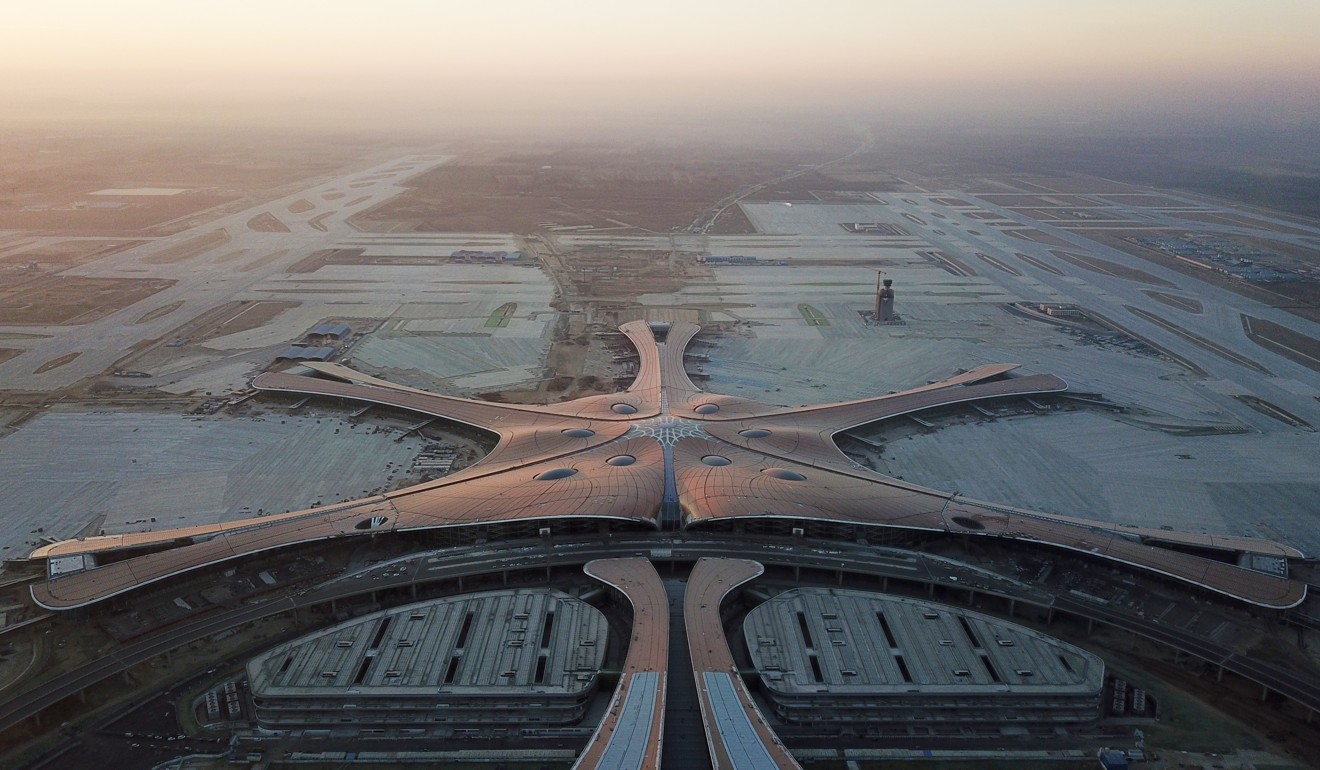
Shaped like a phoenix – though to some observers it is more reminiscent of a starfish – the airport was designed by famed Iraqi-born architect Zaha Hadid, and formally opened in late September ahead of the Oct. 1 celebrations of the 70th anniversary of the People’s Republic of China.
It boasts four runways and is expected to handle up to 72 million passengers a year by 2025, eventually reaching 100 million.
China Southern Airlines (600029.SS) and China Eastern Airlines (600115.SS) will be the main domestic carriers at Daxing, though Air China (601111.SS) will provide a small number of flights too.
An Air China flight to Bangkok was the first international flight to leave on Sunday, while British Airways (ICAG.L) will operate the first transcontinental flight, to London.
About 50 foreign airlines, including Finnair (FIA1S.HE), plan to move all or part of their China operations to the airport in the coming quarters.
The relocation of all the airlines which will use Daxing is to due to be completed by the winter of 2021. Air China and its Star Alliance partners will remain mostly at Capital airport.
The airport, roughly the size of 100 football fields and expected to become one of the world’s busiest, has come in for some criticism due to its distance from central Beijing.
By public transport it takes over an hour to reach it from Beijing’s central business district, more than double the time needed to reach Capital airport, which strains at the seams and is often hit by delays.
Officials say Daxing airport is not only designed to serve Beijing, but also the surrounding province of Hebei and next-door city of Tianjin, to boost regional development.
Visually spectacular and with the latest technology, the Chinese capital’s second international airport is open for business
The terminal building at Beijing Daxing International Airport, which has officially opened. Photo: Xinhua
At 4.23pm on Wednesday a China Southern Airlines A380 left Beijing for Guangzhou – on the first commercial flight out of the world’s latest and largest airport terminal at Daxing, five years after construction began on the ambitious project.
The 80 billion yuan (US$11 billion) Beijing Daxing International Airport was officially opened by Chinese President Xi Jinping on Wednesday morning.
China Southern Airlines, the mainland’s largest carrier, has 40 per cent of the flight slots at the new airport. It is one of 16 airlines which will be operating out of Beijing Daxing International Airport, the visually spectacular new facility at the southern end of the Chinese capital.
Six other flights, including China Eastern Airlines for Shanghai and Air China for Chengdu, took off before 5pm in the afternoon. These domestic airlines will have part of their operations moving to Daxing for the upcoming winter-spring season, according to the mainland’s aviation authority. No Hong Kong airlines were listed.
British Airways has announced its whole operation will be moved to Daxing, while some foreign airlines, such as Ethiopian Airlines, Polish Airlines, Malaysia Airlines, Royal Air Maroc and Finnair, will operate at both airports.
Spanning 47 sq km (18 square miles) – almost 50 per cent larger than the city of Macau – Daxing, with its 700,000 square metre (7.5 million sq ft) terminal is a spectacular sight. Its futuristic shape, resembling a giant hexagonal starfish or – as some internet users have dubbed it – an alien base, not only handles more aircraft, it also keeps passengers’ walks
From the centre of the security check to the furthest end gate in each wing is about 600 metres (1,970 feet), or less than an eight-minute walk.
Beijing’s new 7-runway, star-shaped Daxing airport opened by Xi Jinping
According to Xinhua, more than 70 restaurants, tea shops and coffee houses will operate in the airport, along with 36 international brands, including Louis Vuitton, Gucci and Bottega Veneta.
Daxing is designed to take pressure off the overcrowded Beijing Capital International Airport (BCIA) and, by 2021, is expected to handle 45 million passengers a year, rising to 72 million by 2025.
Located at the south of the capital, 46km (28.5 miles) from the central Tiananmen Square, the airport was once frowned upon for its less than optimal location, with its southern end at the border with Hebei province. But it may not be as time-consuming for travellers as originally thought.
The design of the airport means passengers will walk a much shorter distance to the check-in and security check.Hu Haiqing, China Southern Airlines
Hu Haiqing, deputy general manager of China Southern Airlines’ operation control centre, told Global Times that “although Daxing is further away from downtown Beijing than the Capital airport, there are still some advantages, especially for our airline”.
With most of its bases in the south of the country, China Southern Airlines flights to Daxing will be 10 to 15 minutes shorter than to the Capital airport. A further 15 to 20 minutes taxiing time will also be saved, thanks to its position in the new airport.
“The design of the airport also means passengers, once they leave their car or train, will walk a much shorter distance to the check-in and security check,” Hu said.
According to Xinhua, Daxing’s design also makes transit much quicker, with transfers between international and domestic flights up to 90 minutes shorter than from the Capital airport.
The futuristic shape of Daxing airport not only handles more aircraft, it also keeps passengers’ walks to a minimum. Photo: Xinhua
Public transport will be the quickest way to reach the new airport from downtown Beijing – 20 minutes from West Beijing railway station once the Beijing-Xiongan high-speed rail officially opens. The airport express service will also take passengers from Caoqiao station to the airport in 19 minutes.
There is no underground rail service or airport express connecting the Capital airport in the north with Daxing, but passengers can change trains at Caoqiao for downtown Beijing or other stations which connect with BCIA’s airport express service.
Waiting times at the new airport will be greatly reduced by the use of facial recognition technology for self-service check-in and smart security checks, according to Wang Hui, manager of Daxing’s terminal management department.
The technology does away with the need for a paper boarding pass and passengers can check-in, with or without luggage, and go through the security check by themselves.
Beijing is the window for China to go global … Daxing airport makes it possible to open more global routes.China Eastern Airlines pilot
“The airport has more than 400 self-service check-in kiosks, which means more than 80 per cent of check-ins will be self-service. That shortens each passenger’s queuing time to no more than 10 minutes,” Wang told Global Times.
“The smart security check channels are able to handle 260 passengers per hour, 40 per cent faster than using traditional means,” he said.
The opening of Daxing Airport could be a great boost for the mainland – and even the global – aviation industry by easing pressure on the Capital airport and making new routes possible, said a veteran China Eastern Airlines pilot who declined to be named.
5 things we know about Beijing’s new Daxing International Airport
Opening new flight routes from BCIA was almost impossible, he pointed out, because the centre of Beijing was a no-fly zone for security reasons. Daxing airport’s location at the southern end of the city, however, avoided the problem of planes having to bypass the restricted space, leaving room to open more routes for domestic and international flights.
“Beijing is the window for China to go global but the Capital airport’s schedule is saturated and unable to open new routes. Daxing airport makes it possible to open more global routes,” the pilot said.
He said the runway design at Daxing also meant fewer delays, because the four runways of phase one – more than any other airport in China – included one which was perpendicular to the other three, allowing flights to land and take off regardless of wind direction.
China’s three biggest airlines are demanding compensation from Boeing over its grounded 737 Max fleet.
Air China, China Southern and China Eastern have filed claims for payouts, according to state media reports.
China’s regulator was the first to ground the fleet in the wake of two deadly crashes involving the US-made aircraft.
It comes on the eve of a meeting of global aviation regulators that will provide an update on the troubled jets.
The Chinese airlines are seeking compensation for losses incurred by the grounded fleet, as well as delayed deliveries of the 737 Max jets, according to reports.
China operates the largest fleet of Boeing 737 Max aircraft and was the first country to take the jets out of service after the Ethiopian Airlines 737 Max 8 crash in March.
The disaster killed all 157 people on board. In October, 189 people were killed in a Lion Air crash involving the same model.
Both crashes were linked to the jet’s Manoeuvring Characteristics Augmentation System, a new feature on 737 Max planes, which was designed to improve the handling of the jet and to stop it pitching up at too high an angle.
The planemaker’s entire global fleet of 737 Max aircraft has been grounded since March and the firm is anxious to prove it is safe to return to the skies.
The move by China’s top airlines to seek compensation comes ahead of a closely watched summit of aviation regulators in Texas on Thursday.
The US Federal Aviation Administration (FAA) is due to provide an update on reviews of Boeing’s software fix and new pilot training.
The meeting in Texas will involve 57 agencies from 33 countries, including China, France, Germany and the UK, as well as the European Union Aviation Safety Agency.
But it is unclear if the planes will be back in the air before the end of the critical summer travel season.
BEIJING, May 13 (Xinhua) — Beijing Daxing International Airport completed its first test flight of passenger planes as four aircraft landed safely on the runway Monday morning.
China Southern Airlines, China Eastern Airlines, Air China and Xiamen Airlines sent their flagship models A380, A350-900, B747-8 and B787-9, respectively, for the test.
“The test shows that the new airport has now turned its focus from infrastructure construction to operation preparations,” said Wan Xiangdong, chief pilot of Civil Aviation Administration of China.
The test followed the airport’s first flight of verification planes on Jan. 22 this year. The airport is scheduled to take low-visibility flight test in August and go into operation before Sept. 30.
Located 46 km south of downtown Beijing, the new airport is aimed at taking pressure off the overcrowded Beijing Capital International Airport in the northeastern suburbs. It sits at the junction of Beijing’s Daxing District and Langfang, a city of neighboring Hebei Province.
It is expected to handle 45 million passengers annually by 2021 and 72 million by 2025.
GUANGZHOU, Feb. 11 (Xinhua) — China Southern Airlines (China Southern), the country’s largest air carrier, has transported more than 2.1 million passengers during the week-long Spring Festival holiday from Feb. 4 to 10, said the airline Monday.
The airline has provided air services to a total of seven million passengers since the start of this year’s Chinese Lunar New Year travel rush on Jan. 21, according to China Southern.
It represented an eight percent increase comparing with the figure over the same period in 2018. Meanwhile, the airline has also seen ten percent increases of passengers on its regional and international routes.
Guangzhou-based China Southern operates a fleet of about 840 airplanes, ranking the first in Asia and third worldwide. It is China’s largest air carrier with the largest passenger volume and air route network.
Traveling by air has become a major trip mode of Chinese thanks to expanding route networks and continuous rising household income.
A total of 12.59 million air passenger trips were made during the week-long holiday, up 10.6 percent from last year’s holiday, said statistics from Civil Aviation Administration of China (CAAC).
China is now the world’s second-largest civil aviation market. It is expected to become the largest by mid-2020s, according to the latest forecasts by the International Air Transport Association (IATA).




 CHINDIA ALERT: You'll be living in their world, very soon