Archive for ‘China’s’

05/03/2020

Direct shipping route links China’s Tianjin port with northern Europe

TIANJIN, March 4 (Xinhua) — German shipping giant Hapag-Lloyd AG launched a direct freight route Wednesday linking north China’s Tianjin port with northern Europe, according to the company’s local branch.

The route is expected to further increase the shipment exported from Tianjin to European ports and European goods will also arrive in Tianjin through the direct route, said Tian Liqiang, with Hapag-Lloyd’s Tianjin branch.

The port of Tianjin, a major link in the Beijing-Tianjin-Hebei region, saw its container throughput rise 8.1 percent year on year in 2019, according to the Tianjin Port Group Co. Ltd.

Headquartered in Hamburg, Hapag-Lloyd AG is a leading global liner shipping company that reaches 600 ports worldwide.

Source: Xinhua

04/03/2020

China’s Hubei to close temporary hospitals as situation improves

WUHAN, March 3 (Xinhua) — Central China’s Hubei Province, the center of the outbreak of novel coronavirus disease (COVID-19), is expected to gradually shut down temporary hospitals and cut the number of hospitals designated for the disease, local authorities said Tuesday.

The province will classify areas based on different risks of infection for management as more cities have seen zero growth in newly confirmed cases, according to Tu Yuanchao, deputy head of the provincial health commission.

The province will gradually resume normal medical order while maintaining strict prevention and control measures, Tu said.

In Wuhan, the provincial capital and the epicenter of COVID-19, which is classified as high-risk, the commission has designated hospitals for treating patients in critical and severe conditions and those with emergency medical needs, Tu said.

As of Friday, Wuhan had over 5,000 spare beds in its 16 temporary hospitals, which were converted from gyms, exhibition centers and other facilities.

Hubei reported 114 newly confirmed cases of novel coronavirus infection Monday.

Source: Xinhua

03/03/2020

Feature: China’s contribution to global IP governance “remarkable”

BEIJING, March 3 (Xinhua) — When talking about the development of intellectual property (IP) in China, World Intellectual Property Organization (WIPO) Director General Francis Gurry said “it’s a remarkable journey and a remarkable story.”

Born at the start of reform and opening-up, China’s IP cause has taken only decades to accomplish what the western IP system took hundreds of years to develop. While developing and improving its IP system, China has been active in international cooperation to boost global IP governance.

ACTIVE IN INT’L COOPERATION

Starting from zero at the beginning of its reform and opening-up, China has established a relatively complete IP legal system in line with prevailing international rules, joined almost all major related international treaties, and developed cooperative relations with over 80 countries and international or regional organizations in a relatively short period of time.

China has always been a follower, participant and upholder of the international rules of IP, Shen Changyu, commissioner of the National Intellectual Property Administration, told Xinhua in a recent interview.

China is an active participant in multilateral and bilateral affairs within the framework of WIPO to promote and improve global IP governance, Shen added.

In recent years, international cooperation with China on IP protection has has continuous innovative progress. IP cooperation under the Belt and Road Initiative has in particular achieved practical results.

In 2019, China and the European Union (EU) completed an eight-year negotiation on an agreement to protect geographical indications (GI), which included 275 GI from each of the two sides in the appendix, such as EU’s Irish whiskey and traditional Chinese Shaoxing wine.

With the ratification of Indonesia on Jan. 28, the Beijing Treaty on Audiovisual Performances will take effect for its 30 contracting parties on April 28.

The Beijing treaty, adopted by WIPO member states in 2012, fills a gap in the international treaty on the comprehensive protection of performers in audiovisual performance.

PROTECTION WITHOUT DISCRIMINATION

IP is not only an important strategic resource of a country, but also a booster of technological innovation and a bridge of trade globalization. China is a protector and creator of IP.

Statistics show that by the end of 2019, China had led the world in patent and trademark applications for several years running.

According to data from the WIPO for 2017 and 2018, China was the second largest applicant for international patent applications submitted through the Patent Cooperation Treaty, and the third largest for trademark registration under the Madrid System.

After about 40 years of development, China’s IP governance capability is in line with that of the international community and its IP protection has reached the international standard, which is fully recognized by the world, said Shan Xiaoguang, dean of Shanghai International College of IP at Tongji University.

In the process of advancing the development of its IP system, China has made great efforts to enhance protection and optimize policies, insisting on providing effective protection without discrimination for both domestic and foreign enterprises.

Foreign plaintiffs are able to win and receive injunctions in patent infringement cases brought in China according to the law, Patently-O, a U.S. leading patent law blog, wrote, adding that China’s IP protection practice is fair and just.

China’s effective protection brings huge benefits to foreign IP holders every year. Statistics show that the country paid 34 billion U.S. dollars for IP royalties in 2019.

China has strengthened IP protection with an open attitude, making it a magnet for global trade and innovative activities.

Global innovative activities occur mostly in metropolitan hotspots in China, Germany, Japan, South Korea and the United States, according to the 2019 edition of WIPO’s “World Intellectual Property Report.”

According to Doing Business 2020, an annual report published by the World Bank, China jumped to 31st in its ranking for ease of doing business and is among the top 10 improvers for a second consecutive year.

CHINESE WISDOM

Advanced experience accumulated during the rapid growth of the IP cause in China over the past decades has attracted worldwide attention.

China places IP at a strategic high level, pays attention to IP protection in all economic fields, and has shown its determination of long-term policy for decades, which set up examples for other countries, said Gurry.

Renata Righetti Pelosi, president of the International Association for the Protection of Intellectual Property, pointed out two reasons for the rapid development of the IP cause in China.

On the one hand, the needs of economic operators in China have increasingly overlapped with those in the world, and the two sides have reached more consensuses on IP protection, Pelosi said.

On the other, China has many IP talents with a global vision, who are leading the rapid growth of this sector, she added.

Through academic exchanges and personnel training, China is also actively contributing its wisdom to global IP governance and is more confident about joining global IP cooperation.

The first batch of students from countries that joined the Belt and Road construction successfully graduated from China with master’s degrees in IP in 2018, bringing the knowledge and experience of IP protection they learned from China to the world.

As global IP governance is facing new challenges posed by a new phase of development and a new round of scientific and technological revolution has brought great changes to the industry, many industries spawned by new technologies have gone beyond the scope of protection of the original IP system.

In the new round of scientific and technological revolution and industrial transformation, countries should learn from each other with a more open and inclusive attitude, said Shan, adding that China has led the world in such technological fields as artificial intelligence, big data and life science, and accumulated valuable experience on IP protection in related industries, which is conducive to solving global challenges.

Source: Xinhua

19/02/2020

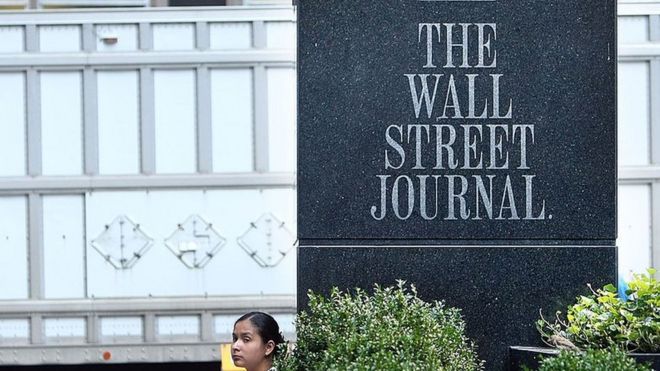
Coronavirus: China expels Wall Street Journal journalists for article it deemed racist

Three journalists with the Wall Street Journal have been told to leave China in five daysImage copyright GETTY IMAGES
Image caption The Wall Street Journal said the journalists were ordered to leave China in five days

China has ordered three foreign journalists of the Wall Street Journal to leave the country over an opinion piece it said was “racist”.

The article published on 3 February criticised the country’s response to the deadly coronavirus outbreak.

The Chinese foreign ministry said it had asked the newspaper to apologise several times but it had declined.

The newspaper said the journalists – who had not written the opinion piece – were given five days to leave China.

The article called the authorities’ initial response “secretive and self-serving” and said global confidence in China had been “shaken”.

China’s Foreign Ministry spokesman Geng Shuang said the article was “racist” and “denigrated” China’s efforts to combat the outbreak that has killed more than 2,000 people in the country.

“The Chinese people do not welcome media that publish racist statements and maliciously attacks China,” Mr Geng said, without naming the journalists being expelled.

The Wall Street Journal identified the reporters as two US citizens – Josh Chin, who is the deputy bureau chief, and Chao Deng – as well as Australian citizen Philip Wen. The newspaper has not yet commented.

It is the first time in more than two decades that journalists holding valid credentials have been ordered to leave China, the BBC’s John Sudworth in Beijing reports.

The Foreign Correspondents Club of China called the decision “an extreme and obvious attempt by the Chinese authorities to intimidate foreign news organizations”.

The measure comes a day after the US said it would begin treating five Chinese state-run media outlets that operate in the country in the same way as foreign embassies, requiring them to register their employees and properties with the US government.

The decision affects the Xinhua News Agency, China Global Television Network and China Daily Distribution Corp.

Presentational grey line

Press freedom in China

Presentational grey line

Last year, the government declined to renew the credentials – necessary for the work of foreign journalists in the country – of another Wall Street Journal reporter.

The journalist, a Singaporean national, had co-written a story that authorities in Australia were looking into activities of one of China’s President Xi Jinping’s cousins suspected of involvement in organised crime and money laundering.

And in 2018, the Beijing bureau chief for BuzzFeed News Megha Rajagopalan was unable to renew her visa after reporting on the detention of Muslim minority Uighurs and others in China’s Xinjiang region.

Meanwhile, two Chinese citizen journalists who disappeared last week after covering the coronavirus in Wuhan, the epicentre of the outbreak in Hubei province, remain missing.

Fang Bin and Chen Qiushi had been sharing videos and pictures online from inside the quarantined city.

Media caption Footage appearing to show people held in quarantine in a makeshift facility in Wuhan, has been shared across social media

Source: The BBC

10/02/2020

China’s first-quarter smartphone sales may halve due to coronavirus: analysts

SHANGHAI (Reuters) – China’s smartphone sales may plunge by as much as 50% in the first quarter, as many retail shops have closed for an extended period and production has yet to fully resume due to the fast spread of a new coronavirus, according to research reports.

The virus outbreak, which has killed more than 900 people and roiled China’s manufacturing industry, comes as top smartphone vendors such as Huawei had hoped China’s 5G rollout plans this year would help the world’s biggest smartphone market rebound after years of falling sales.

“Vendors’ planned product launches will be canceled or delayed, given that large public events are not allowed in China,” research firm Canalys said in a note last week.

“It will take time for vendors to change their product launch roadmaps in China, which is likely to dampen 5G shipments.”

Canalys expects China’s smartphone shipments to halve in the first quarter from a year ago, while IDC, another research firm that tracks the tech sector, forecasts a 30% drop.

Apple Inc said last week it is extending its retail store closures in China and has yet to finalise opening dates, as Foxconn, which assembles iPhones, struggles to fully resume factories.

Foxconn received government approval on Monday to resume production at a plant in the city of Zhenghzou, but its major plant in Shenzhen remain unopened.

Huawei, China’s biggest smartphone vendor, said its manufacturing capacity is “running normally” without specifying further. But like many other local peers, Huawei relies heavily on third-party manufacturers for production.

If factories cannot resume production to full capacity on time, this could delay brands’ ability to bring their newest products to market, analysts said.

Xiaomi Corp, Huawei, and Oppo, three of China’s top Android brands, are all expected to announce flagship devices in the first half.

Oppo told Reuters that while the impact of the virus will affect operations at some local factories, “manufacturing capacity can be guaranteed effectively” thanks to its plants overseas.

Xiaomi did not respond to requests for comment.

“The delays in reopening factories and the labour return time will not only affect shipments to stores, it will also affect the product launch times in the mid- and long-term,” Will Wong, an IDC analyst, said.

Globally, smartphone production will decrease by 12% in the March quarter to a five-year low of 275 million units, research firm TrendForce said on Monday. It revised down iPhone production by 10% to 41 million units, while Huawei’s output forecast was cut by 15% to 42.5 million phones.

Samsung Electronics Co, the world’s top smartphone maker, is seen the least affected by the virus outbreak as its main production base is in Vietnam, the report said, lowering its production forecasts by just 3% to 71.5 million units.

Source: Reuters

25/01/2020

China’s travel industry counts cost of coronavirus

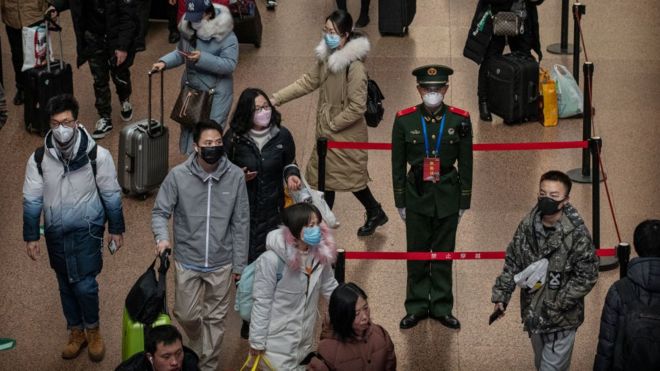
A Chinese police officer at a Beijing railway station.Image copyright GETTY IMAGES

As public health concerns rise over a new virus, the impact is being felt by China’s travel and tourism sector.

More than 400m Chinese were expected to travel over the Lunar New Year which starts today, normally one of the busiest periods for airlines, hotels and tourist attractions.

Instead, flights and hotels are being cancelled as people face travel restrictions or choose to stay home.

The virus has already taken 25 lives, with more than 800 cases globally.

Many airlines have agreed to refund fares or let passengers rebook free of charge if affected, while major hotel chains are now following suit as more travel restrictions are announced.

After the Civil Aviation Administration of China announced that airlines should give refunds for cancelled flights, the country’s three major airlines, China Southern Airlines, China Eastern Airlines and China Air all saw their share prices take a dive. China Eastern Airlines has seen its value fall about 13% this week.

Hong Kong’s national carrier Cathay Pacific was among the first airlines to allow passengers scheduled to fly to or from Wuhan to reschedule for free while, at the same time, allowing cabin crew to wear surgical masks on flights.

Wuhan is where the first cases in the outbreak were reported. The flu-like virus has since spread to several our parts of China and internationally with cases being confirmed in Singapore, Thailand and the US among others countries.

China’s biggest online travel agency, Trip.com, is also waiving cancellation fees on all hotels, car rentals and tickets for tourist attractions to Wuhan and is ”actively monitoring the situation to ensure the safety of all travellers”.

Hotels and casinos hit

Hotel groups are also paying out refunds to tourists who want to cancel trips to Wuhan and other parts of China.

Both InterContinental Hotels Group (IHG) and Hyatt will allow guests to change or cancel stays at the majority of their Chinese hotels over the Lunar New Year holiday. IHG has 443 hotels in China, Hong Kong, Macau and Taiwan under different brands, with four in Wuhan.

Casino operators have also seen shares fall, particularly those with businesses in Macau. The city is home to casinos owned by Las Vegas Sands and Wynn Resorts.

The release of seven movies over the Lunar New Year has also been postponed.

Blow to economy

Tourism has become an increasingly important part of the Chinese economy and is estimated to contribute about 11% of China’s economic growth and employ about 28 million people.

In 2018, 62.9 million tourists visited China, ranking it the fourth most popular tourist destination behind France, Spain and the US, according to the UN’s World Tourism Rankings.

Outside of China, luxury goods brands are also likely to take a battering as Chinese tourists stay at home rather than travel overseas for shopping sprees. LVMH, which owns the Burberry, Louis Vuitton and Hermes brands, saw its value slide this week.

Source: The BBC

23/12/2019

China’s northernmost province facilitates winter travel

HARBIN, Dec. 22 (Xinhua) — Northeast China’s Heilongjiang Province has extended train routes to the country’s northernmost city of Mohe in a move to boost winter travel in the province, according to the local railway operator.

Train K7068/9, which travels 1,348 km between Suihua in the middle of the province and Jiagedaqi in the northwest, has extended its route to reach Mohe from Dec. 20 to Feb. 17 next year, said China Railway Harbin Group Co., Ltd.

The group also added carriages to three train sets that travel to Mohe to increase transport capacity.

The temperature in Mohe this winter dropped to as low as minus 40 degrees Celsius, but many tourists still come, especially for its Arctic Village, which features a spectacular snow landscape, igloos and a starry sky.

Mohe has an annual ice and snow period of up to eight months. The city has developed a variety of winter tourism programs including the Arctic Plaza of China, an ice sculpture garden, ice and snow amusement park, and ice maze.

Source: Xinhua

18/12/2019

Xi Focus: Xi attends commissioning of first Chinese-built aircraft carrier

CHINA-HAINAN-XI JINPING-FIRST CHINESE-BUILT AIRCRAFT CARRIER-COMMISSIONING (CN)

Chinese President Xi Jinping, also general secretary of the Communist Party of China Central Committee and chairman of the Central Military Commission (CMC), presents the People’s Liberation Army (PLA) flag and the naming certificate to the captain and political commissar of aircraft carrier Shandong, respectively, during the commissioning ceremony of China’s first domestically built aircraft carrier at a naval port in Sanya, south China’s Hainan Province, Dec. 17, 2019. Xi attended the commissioning ceremony of China’s first domestically built aircraft carrier, the Shandong, here Tuesday afternoon. The new aircraft carrier, named after Shandong Province in east China, was delivered to the PLA Navy and placed in active service Tuesday at the naval port. (Xinhua/Li Gang)

SANYA, Dec. 17 (Xinhua) — President Xi Jinping, also general secretary of the Communist Party of China Central Committee and chairman of the Central Military Commission (CMC), attended the commissioning ceremony of China’s first domestically built aircraft carrier, the Shandong, here Tuesday afternoon.

The new aircraft carrier, named after Shandong Province in east China, was delivered to the People’s Liberation Army (PLA) Navy and placed in active service Tuesday at a naval port in Sanya, south China’s Hainan Province.

The ceremony started at around 4 p.m.

Xi presented a PLA flag and the naming certificate to the captain and political commissar of the Shandong, respectively, and posed for a group photo with them.

After the ceremony, Xi boarded the Shandong and reviewed the guards of honor. He also inspected the onboard equipment and asked about the work and life of carrier-based aircraft pilots.

On the bridge of the Shandong, Xi greeted the officers and soldiers and signed his name in the log.

Xi also met with representatives of the aircraft carrier unit and the manufacturer at the dock.

Commending China’s achievements in aircraft carrier construction, Xi encouraged them to continue their efforts to make new contributions in the service of the Party and the people.

Approved by the CMC, the Shandong was given the hull number 17.

Source: Xinhua

02/12/2019

China’s icebreakers unload cargos for Zhongshan Station in Antarctica

(EyesonSci)CHINA-ICEBREAKERS-ANTARCTIC EXPEDITION-UNLOADING CARGOS

Members of China’s 36th Antarctic expedition team unload cargos from China’s icebreaker Xuelong at the roadstead off the China’s Zhongshan Station in Antarctica, Nov. 23, 2019. The task of unloading cargos for China’s Zhongshan Station and inland departure base draws to a close. (Xinhua/Liu Shiping)

Source: Xinhua

26/11/2019

China’s rocket-carrying ships wrap up transporting mission

NANJING, Nov. 25 (Xinhua) — China’s rocket-carrying ships Yuanwang-21 and Yuanwang-22 wrapped up their mission of transporting the Long March-5 Y3 rocket and arrived at a port in eastern China’s Jiangsu Province Monday.

The two rocket-carrying ships departed from northern China’s Tianjin Port on Oct. 22 and arrived at Qinglan Port in Wenchang in southern China’s Hainan Province after a five-day journey.

The two rocket-carrying ships are China’s first ships made exclusively to carry rockets. With a length of 130 meters, a width of 19 meters and a height of 37 meters, the ships have a displacement of 9,000 tonnes. Each ship is equipped with two 120-tonne cranes that can hoist large rockets.

Each ship has traveled around 4,900 nautical miles, and new hoisting methods have been adopted to improve efficiency, according to Shi Zhe, head of the ships.

Source: Xinhua

Law of Unintended Consequences

continuously updated blog about China & India

ChiaHou's Book Reviews

continuously updated blog about China & India

What's wrong with the world; and its economy

continuously updated blog about China & India