Chindia Alert: You’ll be Living in their World Very Soon
aims to alert you to the threats and opportunities that China and India present. China and India require serious attention; case of ‘hidden dragon and crouching tiger’.
Without this attention, governments, businesses and, indeed, individuals may find themselves at a great disadvantage sooner rather than later.
The POSTs (front webpages) are mainly 'cuttings' from reliable sources, updated continuously.
The PAGEs (see Tabs, above) attempt to make the information more meaningful by putting some structure to the information we have researched and assembled since 2006.
Li Zhanshu (R), chairman of China’s National People’s Congress Standing Committee, holds talks with Speaker of the Grand National Assembly of Turkey Binali Yildirim at the Great Hall of the People in Beijing, capital of China, Dec. 3, 2018. (Xinhua/Pang Xinglei)
BEIJING, Dec. 3 (Xinhua) — China and Turkey on Monday vowed to strengthen parliamentary exchanges and cooperation to strengthen bilateral ties.
The pledge came as China’s top legislator Li Zhanshu held talks with Binali Yildirim, speaker of the Grand National Assembly of Turkey, in Beijing.
Bonded by the ancient Silk Road in the past, China and Turkey are more closely connected today by the Belt and Road Initiative, said Li, chairman of China’s National People’s Congress Standing Committee, adding that the two countries were at a similar development stage, shared common interests, and had great cooperation potential.
Li said the leaders of the two countries had met twice this year, reaching important consensus on developing bilateral relations and on major international and regional issues, and making strategic planning and top-level design for promoting bilateral ties in a new era.
He said that China had always viewed the two countries’ strategic cooperative relationship from a strategic and long-term perspective, and hoped to deepen mutual trust and beneficial cooperation to lift bilateral ties to a new level.
“The Chinese NPC is ready to work with the Grand National Assembly of Turkey to enhance exchanges and cooperation, and make it a priority to implement the consensus reached by the two countries’ leaders,” Li said.
Li suggested the two sides carry out friendly exchanges and provide legal protection for bilateral cooperation, to improve the development of the China-Turkey strategic cooperative relationship.
Yildirim said the two countries had broad prospects for cooperation in many areas, including on co-building the Belt and Road, as well as in trade, railways, tourism and anti-terrorism.
“Turkey firmly adheres to the one-China policy and supports China in combating terrorism,” he said. “The two parliaments should strengthen friendly exchanges, support pragmatic cooperation in all fields, and add impetus to the development of bilateral ties.”
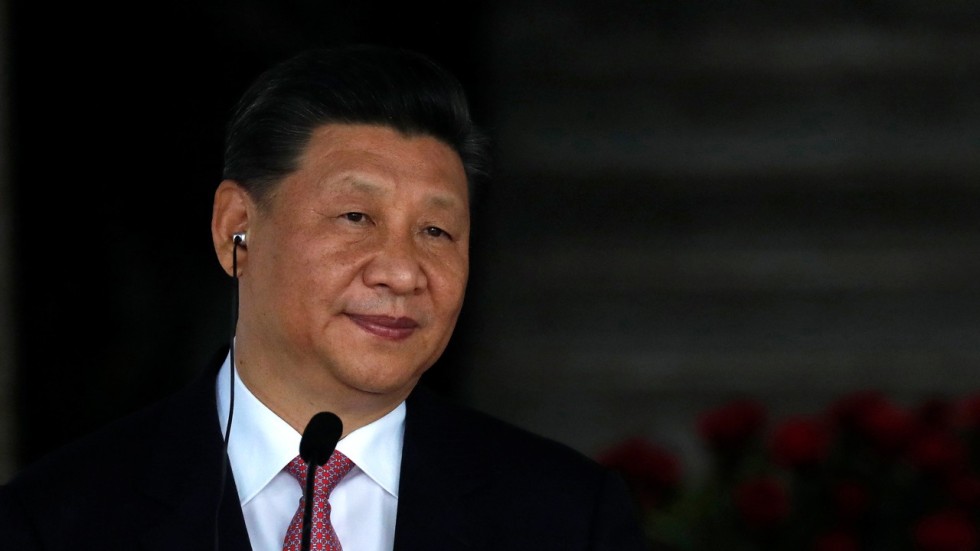
Chinese President Xi Jinping (L) holds talks with his Panamanian counterpart Juan Carlos Varela in Panama City, Panama, on Dec. 3, 2018. (Xinhua/Li Xueren)
PANAMA CITY, Dec. 3 (Xinhua) — Visiting Chinese President Xi Jinping on Monday reached extensive consensus with his Panamanian counterpart, Juan Carlos Varela, on further promoting bilateral relations.
Xi arrived here on Sunday for a state visit to Panama, the first of its kind since China and the Central American country established diplomatic relations in June 2017.
During their talks on Monday, the two leaders spoke highly of the momentum of bilateral relations and cooperation results since the forging of diplomatic ties.
Xi hailed the strong start of bilateral relations highlighted by the exchange of visits of the two presidents and the deepening of mutual political trust.
He also lauded the rapid development of bilateral cooperation in various fields and the achievements made so far led by the joint construction of the Belt and Road Initiative.
Facts have proven and will continue to prove that the establishment of diplomatic relations is an absolutely correct decision and will benefit the two peoples.
Cementing and developing the China-Panama friendly relations is China’s unwavering diplomatic principle regardless of the changes in international situations, the Chinese president stressed.
China supports Panama’s efforts in safeguarding the country’s security and stability, improving its people’s livelihood and increasing its international influence, and in playing a bigger role in promoting regional economic integrity and connectivity, Xi said.
The two countries also issued a joint press communique on Monday to advance the development of their ties.
Chinese President Xi Jinping (L) holds talks with his Panamanian counterpart Juan Carlos Varela in Panama City, Panama, on Dec. 3, 2018. (Xinhua/Li Xueren)
PANAMA CITY, Dec. 3 (Xinhua) — Visiting Chinese President Xi Jinping on Monday reached extensive consensus with his Panamanian counterpart, Juan Carlos Varela, on further promoting bilateral relations.
Xi arrived here on Sunday for a state visit to Panama, the first of its kind since China and the Central American country established diplomatic relations in June 2017.
During their talks on Monday, the two leaders spoke highly of the momentum of bilateral relations and cooperation results since the forging of diplomatic ties.
Xi hailed the strong start of bilateral relations highlighted by the exchange of visits of the two presidents and the deepening of mutual political trust.
He also lauded the rapid development of bilateral cooperation in various fields and the achievements made so far led by the joint construction of the Belt and Road Initiative.
Facts have proven and will continue to prove that the establishment of diplomatic relations is an absolutely correct decision and will benefit the two peoples.
Cementing and developing the China-Panama friendly relations is China’s unwavering diplomatic principle regardless of the changes in international situations, the Chinese president stressed.
China supports Panama’s efforts in safeguarding the country’s security and stability, improving its people’s livelihood and increasing its international influence, and in playing a bigger role in promoting regional economic integrity and connectivity, Xi said.
The two countries also issued a joint press communique on Monday to advance the development of their ties.
Fresh from a visit to Spain last week, Xi’s two-day stay in Portugal will include a meeting with President Marcelo Rebelo de Sousa and the signing of cooperation agreements.
One of them will bring the Portuguese port of Sines, in the southwest, into China’s “Belt and Road Initiative”, a strategy that offers loans to build railways, roads and ports across Asia, Europe and Africa.
In an opinion editorial published on Sunday in Portuguese newspapers, Xi stressed the importance of China’s relationship with Portugal as part of a broader network of trade links.
But China’s growing influence in Europe, welcomed by Greece and several eastern European countries, is viewed warily by others on the continent
At the initiative of France and Germany, EU countries last week agreed a framework regulating foreign investment, particularly from China.
Portuguese Prime Minister Antonio Costa said on Friday that Lisbon did not back the idea and was relieved that the final accord provided for only an advisory role on the part of the European Commission.
Foreign investment does not worry Portugal, and the EU should not “take the path of protectionism” in the face of globalisation, he said.
Portugal, one of western Europe’s poorest countries, was open to Chinese investment after being hit hard by the 2008 global financial crisis.
Its 78 billion euro (US$89 billion) EU-IMF rescue package in 2011 came with required austerity policies – and a wide-ranging privatisation programme that opened the doors to Chinese investment.
Chinese investment accounted for 3.6 per cent of Portugal’s GDP between 2010 and 2016, according to figures from Spain’s ESADE business school.
China now owns a 28 per cent stake in Portuguese energy utility EDP, the country’s largest firm, via China Three Gorges and China’s state-owned international investment company CNIC.
It also has a stake in Portugal’s biggest private bank, BCP, and its leading insurance company, Fidelidade.
Perhaps the most contentious issue is China Three Gorges’ bid to take a controlling stake in EDP, of which it is already the main stakeholder. The 9 billion euro operation was launched in May.
But although it has been welcomed by the Portuguese government, it still risks falling foul of barriers imposed by regulators in around 15 countries where EDP operates, including the United States.
Luis Castro Henriques, head of Portugal’s trade and investment agency Aicep, says Chinese investment in Portugal has been good for the country.
China has risen to Portugal’s 11th-largest trade partner in the decade since 2008, when it was 28th on the list.
“We want now to attract large-scale industrial investment, notably in the automobile and agro-food sectors,” Castro Henriques said.
Image copyrightAFPImage captionProf He says there is a potential second pregnancy
China has halted the work of the scientist who claims to have created the world’s first genetically edited babies, and says it will investigate.
He Jiankui caused outrage earlier this week when he told a genome summit he had altered the genes of twin baby girls so they could not contract HIV.
His statement has not been confirmed, but if true breaks tight rules around the use of gene editing in humans.
Prof He’s university said it was unaware of his experiment.
The Southern University of Science and Technology in Shenzhen said earlier in the week he had been on unpaid leave since February, and it would be investigating the claims.
On Thursday, China’s science ministry said it had “demanded that the relevant organisation suspend the scientific activities of relevant personnel”.
The National Health Commission has already said Prof He’s work “seriously violates China’s laws, regulations and ethical standards” and would investigate the claims.
Speaking to the Human Genome Editing Summit at the University of Hong Kong, he said the girls were “born normal and healthy” and they would be monitored over the next 18 years.
He said he had funded the experiment himself and confirmed his university had not been aware of it.
Prof He also explained that eight couples – comprised of HIV-positive fathers and HIV-negative mothers – had signed up voluntarily for the experiment. One couple dropped out, but there was “another potential pregnancy” of a gene-edited embryo in its early stages.
He said his study had been submitted to a scientific journal for review, though he did not name the journal. He was also evasive about other details, including the names of “some experts” he said had reviewed his work and offered feedback.
Why is his work controversial?
The Crispr gene editing tool he claims to have used is not new to the scientific world, and was first discovered in 2012.
Media captionFergus Walsh: “CRISPR gene editing …. uses molecular scissors to cut both strands of DNA”
It works by using “molecular scissors” to alter a very specific strand of DNA – either cutting it out, replacing it or tweaking it.
Gene editing could potentially help avoid heritable diseases by deleting or changing troublesome coding in embryos.
But experts worry meddling with the genome of an embryo could cause harm not only to the individual but also future generations that inherit these same changes.
Hundreds of scientists, both in China and around the world, swiftly condemned his claims.
Professor Julian Savulescu, an ethics expert at the University of Oxford, said if true “this experiment is monstrous”.
“Gene editing itself is experimental and is still associated with off-target mutations, capable of causing genetic problems early and later in life, including the development of cancer,” he told the BBC. “This experiment exposes healthy normal children to risks of gene editing for no real necessary benefit.”
Many countries, including the UK, have laws that prevent the use of genome editing in embryos for assisted reproduction in humans. Scientists can do gene editing research on discarded IVF embryos, as long as they are destroyed immediately afterwards and not used to make a baby.
China allows in-vitro human embryonic stem cell research for a maximum period of 14 days, China’s Deputy Minister of Science and Technology Xu Nanping clarified.
Image copyrightGETTY IMAGESImage captionStaff members were penalised more the further away from the target they were
A company in China has come under fire for fining employees if they don’t walk at least 180,000 steps a month, it’s reported.
According to Information Times, employees at an unnamed real estate firm in the southern city of Guangzhou have been fined 0.01 yuan (0.1 cents; 0.1 pence) for every step that they fail to make when trying to reach their target.
One employee, ‘Little C’, told the paper that frequent overtime made it difficult for staff to walk at least 6,000 steps a day outside of work hours.
“I understand that the company wants to encourage us to get more exercise,” she said, “but I don’t even have enough time to sleep because I need to take walks to meet the target.”
Liu Fengmao, a representative from a local law firm, says that the company has no legal grounds for tracking staff members’ steps as a measure of performance, and that such a workplace rule could create further complications for the employer.
Mr Liu says that staff could potentially claim that walking outside of the office constitutes as overtime, or that a walking injury was a workplace incident.
Information Times says that this is not the first known case of a firm introducing a workplace walking rule. In January 2017, a technology firm in Chongqing in the south-west of the country was criticised for urging staff to walk 10,000 steps a day. The Chongqing Evening Post says that the company used this as a criterion for assessing their performance.
Many on the popular Sina Weibo microblog have expressed bemusement at the workplace rule, but have also been critical of it. “This company is just looking for a reason to deduct money,” one user says of the Guangzhou firm.
But others argue that such a regulation comes with some benefit. “The reward is that you’re healthy!” one user says.
Yu Delu’s highest finish at a ranking event was the semi-finals of the 2016 Scottish Open
China’s Yu Delu has been banned from snooker for 10 years and nine months after a major match-fixing inquiry.
His compatriot Cao Yupeng also pleaded guilty to fixing and was banned for six years, although three and a half years of his sentence are suspended.
Suspicious betting patterns in numerous matches were investigated over two years in one of the sport’s biggest corruption scandals.
Yu has been described as a “scourge to the game of snooker”.
As reported first by the BBC, the pair are the first Chinese players to be banned for cheating.
Yu, who manipulated the outcome of five matches over a two-and-a-half-year period, will serve the longest suspension since English player Stephen Lee was given a 12-year ban in 2013.
In one match, the stakes placed on the result totalled £65,000, which would have generated a profit of £86,000.
The 31-year-old reached the semi-finals of the 2016 Scottish Open and was ranked 43 in the world when he was charged.
Twenty-eight-year-old Cao, who fixed three matches, was runner-up in the Scottish event last year and world number 38 when initially suspended in May.
Both players were investigated by the World Professional Billiards and Snooker Association (WPBSA) before an independent tribunal ruled on their cases.
The tribunal, chaired by David Casement QC, found that Yu “engaged in deliberate and premeditated corruption to secure substantial financial gain for his friends/associates and himself.”
Yu also admitted lying to the investigator, failing to cooperate with the inquiry and betting on snooker when prohibited from doing so.
“It is very sad when talented players are attracted to the opportunity to make money from fixing matches,” said WPBSA chairman Jason Ferguson.
Cao Yupeng “expressed his sorrow” over match-fixing and said he had financial difficulties
The fixed matches
Yu Delu admitted fixing in five matches:
Indian Open qualifiers: WON 4-3 v Martin McCrudden – 12 February 2015
Paul Hunter Classic: LOST 4-1 v Dominic Dale in Germany – 29 August 2015
Welsh Open: WON 4-3 v Ian Glover – 15 February 2016
European Masters qualifiers: LOST 4-1 v Michael Georgiou – 4 August 2017
Shanghai Masters: LOST 5-3 v Kurt Maflin – 15 November 2017
He also failed to report approaches to fix matches, did not cooperate with the investigation and breached rules by betting on snooker.
The scandals involved betting on markets in the Far East.
Yu won two of the five fixed matches, but had arranged for the correct score to be 4-3 to either player.
There is no suggestion any of the opponents were aware of the match-fixing plan.
Cao Yupeng admitted fixing in three matches:
Welsh Open: LOST 4-1 v Ali Carter – 15 February 2016
Indian Open qualifiers: LOST 4-0 v Stuart Bingham – 30 June 2016
UK Championship: LOST 6-1 v Stephen Maguire – 24 November 2016
Cao also failed to provide material that was requested during the investigation.
He told investigators that he received £5,000 for each of the matches he fixed and he was initially given an eight-year ban, but this was reduced to six – three and a half of which were suspended – because of his co-operation with the inquiry.
“Cao Yupeng has shown true remorse and he will assist the WPBSA in player education and in its fight against corruption, which is reflected in his reduced sanction,” said Ferguson.
Yu was given a 12-year ban, to match the sanction imposed on Lee five years ago, but this was reduced to 10 years and nine months because of his late guilty plea.
These two players are well known in China, and this story will be headline news there.
Lengthy bans show that the sport’s world governing body, the WPBSA, has the capability and desire to investigate such cases all over the world, and not just in Europe.
Sanctions like this send out a clear message to any player tempted to get involved in match fixing that it’s not worth the risk of getting caught.
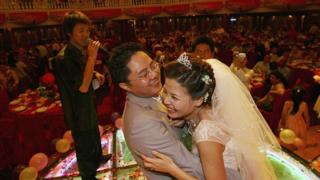
Image copyrightCHINA PHOTOSImage captionChinese weddings can feature lavish feasts with hundreds of guests
China is trying to put the brakes on a trend towards increasingly lavish weddings and pre-wedding pranks which can often become violent or sexualised.
Authorities have said modern weddings are both too extravagant and against Chinese and socialist values.
The traditional “hazing” rituals couples are put through have also often been getting out of control.
Beijing’s suggested answer is to try to standardise ceremonies to a more traditional and simple format.
Stop pulling all stops
People in China, as in many countries, have increasingly found themselves competing with neighbours and friends over weddings, and caught up in spiralling spending as bigger weddings become the fashion.
That means expensive receptions, elaborate outfits and overseas wedding photo shoots, pulling out all the stops no matter the cost.
Guests are also expected to bring ever more lavish gifts.
Image captionBeijing says weddings should become frugal and traditional again
Meanwhile the tradition of playing pranks on the bride and groom – originally meant as a way of helping them relax on their big day – has often been getting out of hand.
There are regular news reports of wedding-goers carrying out humiliating or violent pranks which have crossed the line into assault.
One week before, several bridesmaids were injured by broken glass when the groom’s party tried to get into the bride’s house by breaking the door with an axe.
There have also been reports of brides being forced to mime sexual acts or bridesmaids being pursued to the point of sexual harassment.
The ministry of civil affairs condemned all this as “extravagance and wastefulness” and instead proposed a clear “guidance” towards more “simple and moderate” weddings, China’s Xinhua news agency said.
Ceremonies should “integrate socialist values and Chinese traditional culture” to combat “negative social trends and wrong values” and instead set an example for society.
Authorities would “set guidelines on the process of weddings and the amount of cash gifts,” ministry official Yang Zongtao said in an interview on state TV broadcast on Sunday.
It’s not the first time China has tried to steer how exactly it wants its citizens to tie the knot.
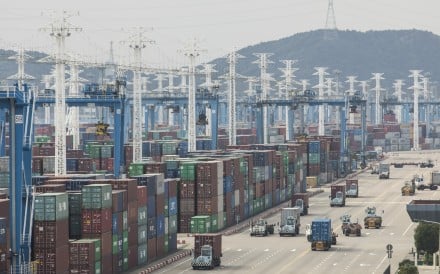
Failure to strike a deal would have seen tariffs on $200bn worth of Chinese goods rise from 10% to 25% at the start of next year, and would have opened the way for tariffs on additional Chinese goods.
On Monday, China’s foreign ministry said the presidents of China and the US had instructed their economic teams to work towards removing all tariffs following the G20 meeting,
But it didn’t say if that was a plan with specifics or something that was merely desirable.
Asian markets rallied after news of the trade war truce. In China, Hong Kong’s Hang Seng index climbed 2.5% and the Shanghai Composite index jumped 2.6%. Japan’s Nikkei 225 index rose 1%.
The gains spread to Europe, with the UK’s FTSE 100 index, the Cac 40 in France and Germany’s Dax index all up by about 2% in early trade.
The trade war has seen the US and China hit each other with escalating tariffs in an attempt to make their domestically made goods more competitive.
The US says its tariff policy is a response to China’s “unfair” trade practices and accuses it of intellectual property theft.
Since July, the US has hit China with tariffs on $250bn (£195.9bn) worth of goods. China has retaliated with duties on some $110bn of US goods over the same period.
As part of this, the US imposed a 25% tariff on Chinese cars, on top of the 2.5% already in place.
In July, China, which is the world’s largest market for cars, imposed a 40% tariff on US vehicle imports. The rate is much higher than the 15% it places on other trading partners and forced many carmakers to raise prices.
In his tweet, President Trump said Beijing had “agreed to reduce and remove tariffs on cars coming into China from the US”.
He did not provide a new level for the Chinese tariffs, and Beijing did not immediately confirm the statement.
What was agreed at the G20?
In a statement, the White House said US tariffs on Chinese goods would remain unchanged for 90 days, but added: “If at the end of this period of time, the parties are unable to reach an agreement, the 10 percent tariffs will be raised to 25 percent.”
Image captionThe US manufactures cars for export to China, the world’s largest car market
The US said China agreed to “purchase a not yet agreed upon, but very substantial, amount of agricultural, energy, industrial, and other products from the United States to reduce the trade imbalance between our two countries”.
Both sides also pledged to “immediately begin negotiations on structural changes with respect to forced technology transfer, intellectual property protection, non-tariff barriers, cyber intrusions and cyber theft”, according to the White House.
Chinese Foreign Minister Wang Yi told reporters after the talks that “the principal agreement has effectively prevented further expansion of economic friction between the two countries”.
Are tariffs still in place?
Yes. The truce prevents raising tariffs as planned on $200bn worth of Chinese goods.
But it does not remove tariffs that apply to a total of $250bn of Chinese goods targeted since July.
The truce also does not affect the existing duties China has imposed on $110bn of US goods in a tit for tat retaliation.
Will this resolve the dispute?
While the result of the G20 meeting was better than expected, it is unclear how the two countries will manage to resolve their underlying differences.
“There should be no wishful thinking that the truce would end the trade war between the world’s two largest economies,” DBS strategist Philip Wee wrote in a research note.
He said it “remains to be seen if real progress could be achieved during this narrow window to resolve the contentious issues, not just on trade, but also intellectual property”.
Louis Kuijs, head of Asia economics at Oxford Economics, said while the agreement itself was “positive” the next steps remained unclear.
“Whether we will see further de-escalation or whether it is temporary reprieve continues to be very much up to a political decision in Washington DC – that will continue to make this uncertain,” Louis Kuijs, head of Asia economics at Oxford Economics said.
China’s densely populated cities are making it easier for companies to deliver everything from food takeout to large appliances quickly and at cheaper rates than other parts of the world. China boasts 156 cities with over 1 million people, compared with just 10 in the United States. This density has enabled Chinese companies to build an elaborate supply chain network that ships more than 140 million parcels a day and makes China the world’s largest eCommerce market, according to Ronald Keung of Goldman Sachs Research. Keung notes that the nation’s online retail segment is projected to reach $2 trillion by 2020.
The strong logistics supply chain is currently the key driver of much higher online penetration in China that will lead the rest of the world.
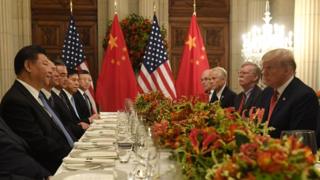
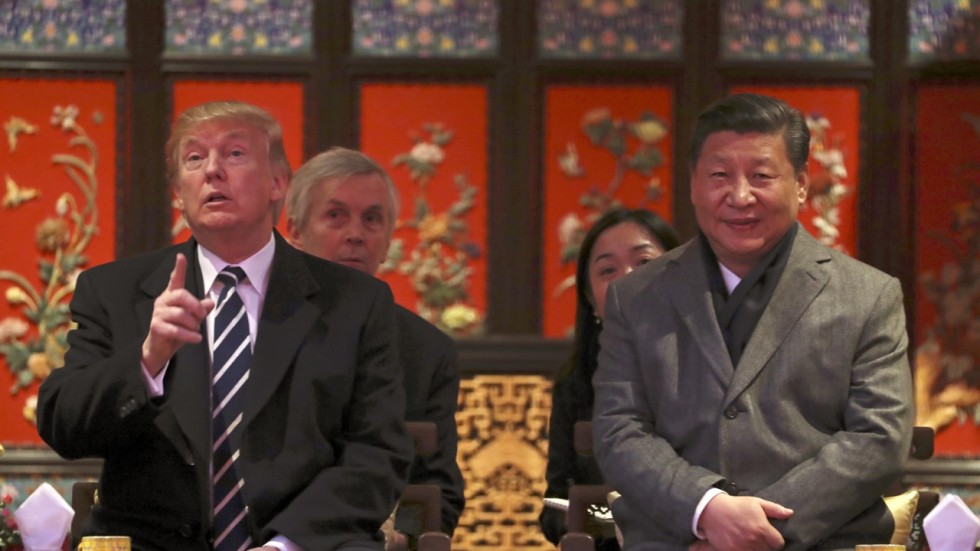
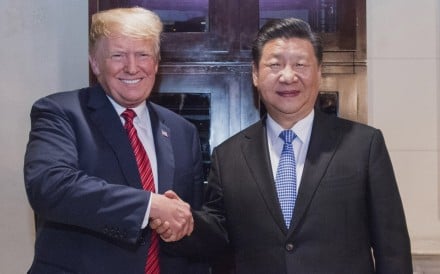
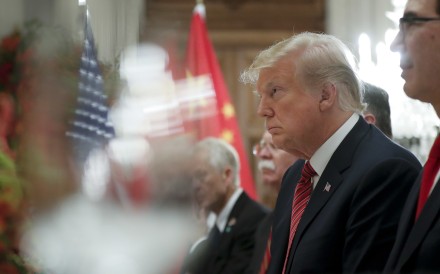
China and the United States agreed to a 90-day ceasefire on new tariffs in their trade war at the G20 summit in Buenos Aires, allowing a reprieve after months of threats and stalled talks.
The decision for the US to hold off on planned tariff increases on US$200 billion in Chinese goods from 10 to 25 per cent on January 1 came over a grilled steak dinner in Argentina, the first face-to-face meeting between US President Donald Trump and his Chinese counterpart Xi Jinping since the start of the conflict.
Here is a look back at how it all began.
The first shots
The truce comes almost a year after the two countries began sparring over trade. Trump first slapped 30 per cent tariffs on solar panels and washing machines in February, prompting a complaint to the World Trade Organisation from Beijing. Then in March, the Trump administration imposed steel and aluminium tariffs across the board, including on China, which the Chinese government responded to with tariffs on 128 US products such as wine, fruit, and pork.
But the trade war began in earnest in July with the US levying its first round of punitive tariffs, triggered by an investigation under Section 301 of the Trade Act into Chinese trade and intellectual property practices.
Washington’s duties on US$34 billion in Chinese products was quickly matched by Beijing. The US imposed tariffs on another US$16 billion in August – again matched by China – and then US$200 billion in September. Beijing responded to the third round by targeting US$60 billion in US goods.
Beijing’s US$110 billion total targeted industries that analysts said were aimed at Trump’s political base, including a particularly stinging 25 per cent duty on American soybeans.
While business leaders in both countries called for a resolution, a series of trade talks – including low-level discussions in Washington in late August – failed to yield a breakthrough.
After the Chinese side reportedly cancelled scheduled talks in September, US officials signalled that they would not return to the negotiating table without a concrete proposal from Beijing.
Then just before the G20 summit, Chinese Vice-Premier Liu He, Xi’s top economic aide, called off a planned meeting in Washington at the last minute and pinned everything on talks in Buenos Aires.
Just how bad has it been?
The trade war cast a long shadow over the Asia-Pacific Economic Cooperation forum in Papua New Guinea in November, resulting in the leaders failing for the first time to issue a joint communique. And as the China-US conflict has rolled on, it has spilled over into a broader strategic concern, one some analysts have described as the start of a new cold war.
In October, US Vice-President Mike Pence slammed Beijing not only for unfair trade practices, but for militarisation of the energy-rich South China Sea, domestic repression including massive state imprisonment of ethnic Uygurs in Xinjiang, and expanded global influence through “debt diplomacy”. Without offering evidence, Trump also accused China of meddling in US elections ahead of the November midterms.
As tensions escalated, Washington tightened export restrictions on strategic industries, sanctioned a key department of the Chinese military for purchases from Russia, and increased visa scrutiny for Chinese academics in the US.
Meanwhile, American companies in China have reported increased scrutiny from regulators and delayed approvals for licences.
What’s next?
Xi and Trump initially appeared to hit things off with reciprocal lavish state visits in Mar-a-Lago in Florida and Beijing, but their apparent honeymoon was short-lived. A 100-day plan that outlined ways for China to open its economy failed to address the Trump administration’s fundamental concerns.
Those concerns include US complaints about Chinese intellectual property theft and industrial subsidies, centred on Beijing’s state-backed “Made in China 2025” initiative, a programme to turn China into a leader in a range of advanced technologies.
Despite the ceasefire, analysts are sceptical that a deal can be reached on the wide range of prickly trade issues. Only days before the G20 summit, Trump told TheWall Street Journal that it was “highly unlikely” he would delay the January 1 tariff increases, insisting that the brunt of the existing tariffs were being borne by China.
He also said the US was ready to levy tariffs on the remaining US$267 billion in Chinese imports, including consumer goods such as Apple products.
The White House is insisting on structural reforms to China’s economy, beyond window-dressing measures to close the trade imbalance, but Xi is unlikely to make major concessions given the inevitable domestic political backlash, analysts say.
“Both sides got the time out they wanted, to recalibrate their strategies and figur
e out what to do next,” Patrick Chovanec, managing director and chief strategist at Silvercrest Asset Management, said on Twitter.
“But the underlying issues – some due to China’s protectionist ideology, some due to Trump’s – remain unresolved.”


 Chinese President Xi Jinping (L) holds talks with his Panamanian counterpart Juan Carlos Varela in Panama City, Panama, on Dec. 3, 2018. (Xinhua/Li Xueren)






 CHINDIA ALERT: You'll be living in their world, very soon

COMMENTS: