Archive for ‘China alert’

07/12/2016

The Great Wall: China takes on the world with new Matt Damon film – BBC News

Despite a long tradition of movie-making, and much critical acclaim for its directors overseas, China has never yet produced a truly global blockbuster.

But this is being billed as the moment when Chinese film finally takes on the world.

The Great Wall is one of the most lavish and expensive films ever shot in China.

Directed by the living-great of Chinese cinema, Zhang imou, it makes use of vast theatrical sets, elaborate costumes as well as great Chinese cultural icons like, er, Matt Damon.

Matt Damon?

The US superstar’s leading role in the swashbuckling Chinese showcase has already been the subject of much controversy.

“Well, ‘whitewashing’ you’ve got to define,” he tells me.”Whitewashing for me was always like Chuck Connors playing Geronimo, so I don’t know if that would even be the right term to accuse us of.

‘We never consider race first’

The accusation that a Caucasian male star has somehow been shoehorned into the piece to give the film a more direct appeal to American and European audiences is something that also rankles with Zhang Yimou.

“Matt Damon plays a foreign mercenary who comes to China to steal gun powder,” Mr Zhang tells me.

“Of course he is a foreigner. For the director, we never consider the race question first. We always think about the story first. If the story flows, if the story is good.”

Mr Damon joins the massed ranks of the Chinese army on top of perhaps the greatest cultural icon of them all, the Great Wall, built not to keep out men, according to the fantastical plot, but monsters.

The budget of at least $100m (£80m) underwrites a US-China collaboration of a kind that is becoming increasingly common nowadays.

And such collaborations align neatly with one of the political priorities of the Chinese government: to expand its international cultural influence.

The Great Wall’s director Zhang Yimou with actors Matt Damon, Pedro Pascal and Willem Dafoe

Rivalling Hollywood‘s soft power

As Hollywood comes to China in desperate search of new, lucrative audiences, China is desperate to harness something of the elusive magic.

If it can build its own film industry, the argument goes, it can use it to develop its so-called “soft power”, in the same way US movies have carried American values and norms around the world for a century or more.

And that appears, on some level at least, to be what The Great Wall is trying to do.It can appeal to Chinese and international audiences alike, hence the internationalised plot line, allowing the incorporation of a Hollywood star.

And it carries a central message about time-honoured Chinese ingenuity (the gunpowder), as well as lasting cultural power (the Great Wall).

Matt Damon though is having none of it.”No, I didn’t for a second think this film was a propaganda tool,” he says.

“I think our world is a much better place when we’re talking to each other and collaborating and making art together.”

Performers promoting The Great Wall film in Beijing

‘No director has 100% freedom’For Zhang Yimou, the experience of working on such a giant US-Chinese co-production has, he says, opened his eyes.

Not to the political sensitivities of communist China, of which he is already well aware of course, but of the restrictions that commercial pressures bring to bear.

“This time I discovered that Hollywood has lots of restrictions too,” he says.”It is a system based on producers and companies… As far as creativity is concerned, I think there is not 100% freedom for any directors around the world. The job of a director is to do his best under limited circumstances.

“Whatever the truth in that, it is surely the case that American films have been such powerful vehicles for the transportation of American values for the simple reason that those values have universal appeal.

So is the first all made-in-China blockbuster finally about to be released?Zhang Yimou thinks the time has come.”The world is following Hollywood. Everyone else is absent,” he tells me.

“This is not normal.”

Source: The Great Wall: China takes on the world with new Matt Damon film – BBC News

06/12/2016

Tsai says call with Trump does not reflect US policy change | South China Morning Post

Taiwanese President Tsai Ing-wen said on Tuesday her phone call with US president-elect Donald Trump should not be interpreted a significant shift in American policy, and stressed that both sides saw the value of maintaining regional stability.

“Of course I have to stress that one phone call does not mean a policy shift,” she told a small group of American reporters in Taipei. “The phone call was a way for us to express our respect for the US election as well as congratulate president-elect Trump on his win.”

Taiwan’s Tsai Ing-Wen initiated phone call with Donald Trump, says island’s presidential spokesmanTrump’s phone call with Tsai broke four decades of diplomatic protocol, alarming some commentators who feared it could spark a dangerous confrontation with Beijing.

Others though, especially US Republicans, have welcomed it as a sign Trump will not be bullied by Beijing, and believe the United States should offer more support to Taiwan’s democracy.

Sources in Trump’s team said the call was planned weeks in advance to establish the incoming president as a break from the past, although vice-president-elect Mike Pence described it as a “courtesy” call, not intended to show a shift in US policy on cross-strait ties.

Tsai echoed that line. “I do not foresee major policy shifts in the near future because we all see the value of stability in the region,” she said.Beijing has reacted with relative calm to the call, lodging what it called a “solemn protest” with the US government, but also underlining that its economic and diplomatic relationship with Washington depended on the US acceptance of the one-China principle, which recognises Beijing as the sole representative of the Chinese nation.

Beijing blocks Taiwan from taking part in almost all international bodies. Tsai’s office said she had told Trump during the phone call that she hoped the United States “would continue to support more opportunities for Taiwan to participate in international issues”.

Reacting to criticism of the call, Trump himself pointed out that the United States sold billions of dollars of arms to Taiwan.

Beijing has already increased the pressure on Taiwan since Tsai’s election, upset that she has not publicly endorsed the “one China” principle – although she consistently expresses the need for dialogue.

China’s Foreign Minister Wang Yi appeared to blame Taiwan for the phone call, calling it a “petty” move, and the nationalist Global Times tabloid initially recommended that Beijing should continue to talk to Trump but punish Taiwan.

Michael Cole, a Taipei-based senior non resident fellow at the China Policy Institute, University of Nottingham, wrote that this could include renewed efforts to deny Taiwan access at various multilateral organisations, the stealing of diplomatic allies, punitive economic measures and more intense or frequent military exercises aimed at Taiwan.

If that happens, the domestic support Tsai had received for her call could be countered by greater tensions with Beijing, he said, “What remains to be seen is what kind of ally Taiwan will have in Washington if and when such a shift occurs in the Taiwan Strait,” he wrote in The National Interest.

On Tuesday, there were also signs of growing concern in Beijing that Trump’s constant criticism of Beijing in his speeches and on Twitter might actually mean something. His latest salvo – complaining about China’s currency and trade policy, and its actions in the South China Sea – sparked a frustrated response in the Global Times.What does Donald Trump’s phone call with President Tsai mean for future US arms sales to Taiwan?

“Trump’s China-bashing tweet is just a cover for his real intent, which is to treat China as a fat lamb and cut a piece of meat off it,” it wrote. “China should brace itself for the possible fluctuations of the Sino-US relationship after Trump is sworn in. We must confront Trump’s provocations head-on, and make sure he won’t take advantage of China at the beginning of his tenure.

”The Communist Party mouthpiece People’s Daily took a more measured line, arguing that dialogue was vital to maintaining friendly relations and correct some of Trump’s “inaccurate” criticisms of Beijing.

“Trump’s recent demeanour has proved people’s doubts on his inexperience in diplomatic relations. In fact, Trump is not that ignorant on China and China-US relations, he has some sensible understandings and his own take on matters. But the problem is that Trump’s rhetoric shows that he only knows one side of China and China-US relations,” it wrote in a front-page editorial on its overseas edition.

“At the present, the peaceful transition of China-US relations is the key task that both countries face. It depends on joint efforts, not just good wishes from one side.”

Source: Tsai says call with Trump does not reflect US policy change | South China Morning Post

06/12/2016

Beer Diplomacy: Another Investment Follows a Visit by Xi Jinping – China Real Time Report – WSJ

After pulling a pint for Chinese President Xi Jinping last year, an iconic English pub has now pulled in Chinese investors.

The Plough at Cadsden was purchased by a London-based investment company that the broker, Christie & Co., described as a Chinese company. Terms weren’t disclosed.

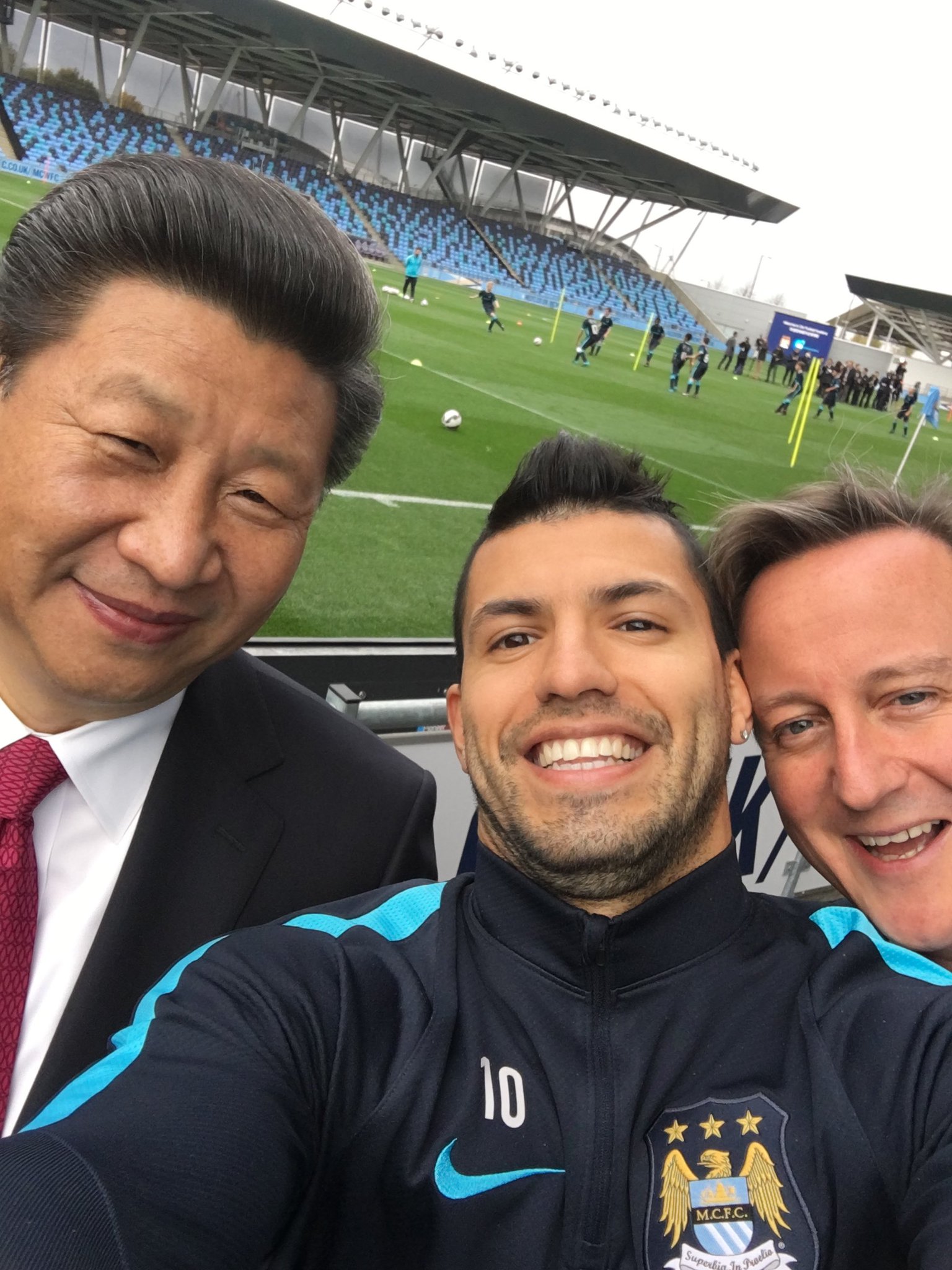
The purchase, by SinoFortone Investment, came after Mr. Xi shared a beer with former U.K. Prime Minister David Cameron at the pub.

Unknown is how his visit may have led to the purchase. But it is the latest deal to follow the Chinese leader’s movements.

On the same day Mr. Xi visited the pub, he also joined Mr. Cameron on a visit to the Manchester City soccer club, in the north of England. The following month a Chinese consortium said it had invested $400 million for a minority stake in the successful soccer club.

Closer to home, Mr. Xi’s patronage of the state-owned Qing Feng Steamed Dumpling Shop in Beijing was followed by an announcement that the restaurant chain plans an IPO. The Plough, which describes itself as “probably the most famous pub in England,” is near Chequers, the country house retreat for British prime ministers. The pub “has become quite a tourist attraction for Chinese visitors” since Mr. Xi’s appearance, Christie & Co said.

SinoFortone Investment extolled the virtues of beer diplomacy, calling pubs “the best way culturally to link people from different countries and build friendships.” The company added that “The English pub concept is growing very fast in China.” SinoFortone has also invested £100 million ($1.28 million) in London Paramount Entertainment, a large theme park proposed for construction on the Swanscombe Peninsula in North Kent. The deal was announced while Xi Jinping was in the U.K.

Source: Beer Diplomacy: Another Investment Follows a Visit by Xi Jinping – China Real Time Report – WSJ

01/12/2016

Divorce is on the rise in China | The Economist

WITH his slick navy suit, silver watch and non-stop smoking, Yu Feng is an unlikely ambassador for Chinese family values. The office from which he operates, in Chongqing in western China, looks more like a sitting room, with grey sofas, cream curtains and large windows looking out on the city’s skyscrapers.

Women visit him here and plead for help. They want him to persuade their husbands to dump their mistresses.

Mr Yu worked in family law and then marriage counselling before starting his business in 2007. He charges scorned wives 100,000-500,000 yuan ($15,000-75,000); cases usually take 7-8 months. He befriends both the two-timing husband and the mistress, encouraging them to find fault with each other, and gradually reveals that he has messed up his own life by being unfaithful. He claims a 90% success rate with clients, most of whom are in their 30s and early 40s. “This is the want, buy, get generation,” he says; sex is a part of China’s new materialism. But changing sexual mores and a rocketing divorce rate have prompted soul-searching about the decline of family ties.

The ernai, literally meaning “second wife”, is increasingly common. So many rich men indulge that Chinese media sometimes blame extramarital relationships for helping to inflate property prices: some city apartment complexes are notorious for housing clusters of mistresses, paid for by their lovers, who often provide a living allowance too.

It is not just businessmen who keep mistresses: President Xi Jinping’s anti-corruption campaign has revealed that many government officials do too. According to news reports Zhou Yongkang, the most senior person toppled by the current anti-graft crusade, had multiple paramours; former railways minister Liu Zhijun is rumoured to have kept 18.

China has a long history of adultery. In imperial times wealthy men kept multiple concubines as well as a wife; prostitution was mostly tolerated, both by the state and by wives (who had little choice). Married women, in contrast, were expected to be chaste. After 1950 concubines were outlawed and infidelity deemed a bourgeois vice. Even in the 1980s few people had sex with anyone other than their spouse or spouse-to-be.

Over the past 30 years, however, sexual mores have loosened and more young Chinese are having sex, with more partners and at a younger age. Some clearly continue to wander after marriage. Some 20% of married men and women are unfaithful, according to a survey of 80,000 people in 2015 by researchers at Peking University.

In many respects growing infidelity is a predictable consequence of economic development. Individuals are increasingly willing to put their own emotions or desires above familial obligations or reputation. Improved education and living standards mean they have more financial freedom to do so. Most Chinese couples previously had few chances to meet members of the opposite sex in social situations after marriage, but migration means that many couples live apart. Even if they live together, the pool of temptation has grown larger and easier to dip into, thanks partly to social media.

Businesses like Mr Yu’s indicate that not all spouses see affairs as an unpardonable offence. But surveys also suggest that infidelity is the “number one marriage killer”. Last year 3.8m couples split, more than double the number a decade earlier. China’s annual divorce rate is 2.8 per 1,000 people (also double a decade ago). That is not quite as high as America’s 3.2, but higher than in most of Europe. Chinese families are fraying fast.

Source: Divorce is on the rise in China | The Economist

01/12/2016

As Trump retreats, Xi Jinping moves to upgrade China’s global power play | South China Morning Post

With US president-elect Donald Trump threatening to build a wall on the Mexican border and force Asian allies to increase defence spending, Beijing is busy luring countries across the eastern hemisphere into its orbit.

President Xi Jinping, who is consolidating his power at home, is planning to host a big “One Belt, One Road” summit in China next year, sources close to the central government told the South China Morning Post, adding that the event would match, if not exceed, the scale of this year’s G20 summit in Hangzhou, which attracted about 30 state leaders.

China plans US$2 billion film studio and ‘One Belt, One Road’ theme park

At a time when established world powers are struggling with domestic problems, Xi sees a chance to push ahead with his oddly worded brainchild, a geopolitical push to extend Beijing’s influence to remote corners of the globe.

The belt and road initiative encompasses 65 countries including China, stretching through Southeast, South, Central and West Asia to the Middle East, Africa and East and Central Europe.

However, with globalisation facing increasing scrutiny and electoral scepticism in developed countries, it’s doubtful whether a one-party state with its own deep-rooted economic woes will be able to bind countries together through a programme viewed by critics as a Chinese plot to export its infrastructure and influence.

In addition, China’s shrinking foreign exchange reserves, the falling value of its currency and a tightening of central government control on big overseas investments have raised questions about whether there will be sufficient funds to grease China’s ambitions.

Hong Kong trade presence needed in ‘One Belt, One Road’ cities

The belt and road initiative was launched by Xi in 2013 as an attempt to boost connectivity between China and other countries along the ancient land-based and maritime Silk Roads through trade and infrastructure projects, including high-speed railway lines and energy pipelines. But the wave of populist, anti-globalisation reflected in Trump’s stunning victory in last month’s US presidential election has put its smooth implementation in doubt.

Previous Chinese infrastructure projects overseas, including energy- and resource-related ones in Africa, have triggered resentment in local communities, with Beijing accused of exploitation and failing to benefit local workers.

Even though an increasing number of key US allies, such as Canada and Britain, have joined the Beijing-led Asian Infrastructure Investment Bank (AIIB), set up as part of the belt and road initiative, mistrust over Beijing’s efforts to extend its geopolitical influence are mounting.

James McGregor, greater China chairman of APCO Worldwide, a public relations and consulting firm, said the level of cooperation between Beijing and the incoming Trump administration would be crucial in determining the success of the belt and road initiative.

One of Trump’s policy advisers, former CIA director James Woolsey, has described the current Obama administration’s opposition to the AIIB as a “strategic mistake”.

How One Belt, One Road is guiding China’s football strategy

“Through OBOR and various diplomatic initiatives, China is seeking to lead peacekeeping and economic development efforts in the region,” McGregor said, referring to the belt and road initiative. “But this will be very difficult if the US and China are not aligned and working together in the region to help provide security and promote peace.“

So if Trump pushes an agenda of confrontation with China in regard to trade and security arrangements in Asia, China will have a more difficult time managing its investments in Afghanistan and elsewhere in the region.”

But Professor Wang Yiwei, from the school of international studies at Renmin University in Beijing, said Trump’s protectionist agenda, most notably with his vow to withdraw the United States from the 12-nation Trans-Pacific Partnership (TPP) trade pact, would provide an opportunity for the belt and road initiative to “fill the gap in the market”.

“For a long time, countries around the world have been following America’s standards and development model. But now even the US itself has suffered from its system,” he said. “The US has not learned its lesson from the financial crisis – it has failed to adjust and reform its industries – and it is now blaming the problem on globalisation.”

Wang said that with the belt and road initiative, China was becoming more resistant to the risk posed by the incoming Trump administration and the anti-globalisation trend sweeping the West.“

[The belt and road initiative] is designed to counter the risk posed by the market in the West,” Wang said.

Long-term planning: China’s 21st century Silk Road strategy will take time to reap rewards

The decrease in America’s purchasing power in the wake of the financial crisis had caused the surplus production capacity in China, he said, and the belt and road initiative was a new way to boost China’s exports.

AIIB president Jin Liqun said in early November that the AIIB was “on track” to meet its big first-year targets, including lending US$1.2 billion by the end of this year. So far it has lent US$829 million to six projects in Pakistan, Tajikistan, Indonesia and Bangladesh.

China invested about US$14.8 billion in 49 countries of the 64 other countries along the Silk Road last year, or 12.6 per cent of the country’s total outbound investment, according to the Ministry of Commerce. The US and the European Union remain the top destinations for Chinese outbound investment, which totalled US$146 billion in the first 10 months of this year.

Whether Chinese companies will be as enthusiastic as they used to be about pouring money into overseas projects remains to be seen, with Beijing banning overseas investment deals of more than US$10 billion until September next year and cracking down on overseas mergers, acquisitions and real estate deals involving more than US$1 billion because of concerns about capital flight.

But economists, citing the unsustainability of a strong US dollar, uncertainty about Trump’s policies and China’s need to push ahead with economic reforms, said the restrictions were more of a short-term constraint than a permanent hurdle.

“Restricting outflows is a step back, but it will not alter China’s long-term direction of capital opening,” said Tim Condon, chief Asian economist at ING.

Professor Zhang Jiadong, a belt and road specialist at Shanghai’s Fudan University, said the impact of foreign exchange controls on the belt and road initiative would be limited.

“Forex controls will mainly affect the speed of approval, but will have little impact on infrastructure investments, which usually involve lengthy preparations for feasibility studies and financing arrangements,” he said.

State-owned enterprises, with their capital size and building expertise, are major participants in the initiative. Foreign exchange clearance is just one of many long regulatory procedures they have to navigate, and they usually needed approval from the state asset watchdog and financial backing from state-owned banks.

“Overall, OBOR investment represents only a small proportion [of their activities],” Zhang said.

Chen Fengying, an economist at the China Institute of Contemporary International Relations, said the foreign exchange regulator did not cover belt and road projects.

“Investment in OBOR countries is groundbreaking and needs more government support,” Chen said. “They should be encouraged, rather than regulated.”

The biggest difficulty faced by the belt and road initiative is the need to ease suspicions among countries such as India and Japan, another big investor in Asian development projects, about Beijing’s strategic intentions.

Foreign Minister Wang Yi told a forum in Beijing on Wednesday that China would be accommodative to the needs of different nations in pushing ahead with the belt and road initiative. The AIIB is regarded as a rival to the Japan-led Asian Development Bank and the US-headquartered International Monetary Fund.

Zhang Jianping, an expert on belt and road policy at the National Development and Reform Commission’s Institute for International Economic Research, said mistrust remained a hurdle for China.

“Just because the US withdrew from the TPP doesn’t necessarily mean that its economic power is in decline,” he said. “All the major global financial and investment standards and institutions are still led by the US and Europe. Any attempt by China to rewrite those rules is bound to meet scepticism from the West.”

Observers said investors’ top concerns were returns on investment and safety, and that made developed countries the top destination for market, technology and management expertise, rather than developing countries . They faced bottlenecks in terms of capital, talent and management expertise in belt and road investment, which usually involved labour-intensive manufacturing or resource projects.
Beijing is pushing to build dozens of economic cooperation zones, which will be used to facilitate bilateral trade and investment and potentially draw more private firms. However, more government guidance in terms of policy and financing is needed to help private Chinese firms better integrate into economic development plans in other countries.

Liang Haiming, chief economist at the China Silk Road iValley Research Institute, said opportunities were opening up for China.

“The yuan’s depreciation against the US dollar will not affect China’s investment plans in OBOR countries,” he said. “The Chinese currency is actually strengthening against major Southeast Asian currencies.

“The capital flowing from emerging economies to the US will leave a good opportunity for Chinese capital to enter those countries.”

The Post’s annual China Conference in Hong Kong on Friday will bring business leaders and policy advisers together to share their latest insights on the business opportunities and challenges brought about by the belt and road strategy.

Source: As Trump retreats, Xi Jinping moves to upgrade China’s global power play | South China Morning Post

30/11/2016

All-American pick-up trucks aim to lure China’s wealthy | Reuters

Automakers Ford (F.N) and General Motors (GM.N) are aiming the pick-up truck, an iconic staple in the United States, at upmarket buyers in China, where most associate trucks with farmers and construction workers.

“The Chinese call it pika, pika – a very low-end worker’s (vehicle). But the (Ford F-150) Raptor is totally different,” said Wesley Liu, Ford’s Asia-Pacific sales director, ahead of this month’s Guangzhou autoshow.

Trucks are largely restricted to overnight driving in most Chinese cities, but four provinces – Yunnan, Liaoning, Hebei and Henan – have this year launched trial programmes allowing them into urban zones in an attempt to stimulate production as economic growth, and car sales, slow.

With those looser restrictions, U.S. pick-up makers aim to distance their trucks from local models made by Great Wall Motor (601633.SS), Jiangling Motors Corp (JMC) (000550.SZ) and others – and appeal to Chinese premium buyers, like Meng Shuo.

The 32-year-old founder of an investment consultancy, who already owned a Chevrolet Camaro when he bought an F-150 pick-up truck five years ago through an unofficial grey market importer. He has since traded it in for a Toyota (7203.T) Tundra, and also owns a Mercedes (DAIGn.DE) luxury sedan and Porsche (PSHG_p.DE) and Mitsubishi (7211.T) sports cars.

Ford said in April it would bring a high-performance version of its F-series – the best-selling vehicle in the U.S. for 34 years – to China, the world’s biggest auto market. A spokesman said the company is studying whether to also bring a mass-market model such as the F-150 or Ranger pick-up to China, depending on demand and future regulations.

“The people who buy the Raptor maybe own some other premium vehicle already. This is another toy,” Liu said.The truck is aimed at four types of buyers, he said – the wealthy, who want to stand out from the crowd; business owners, who want more than a traditional commercial vehicle; drivers who want a single car for all situations; and “gearheads”, who just like the mechanics.

Even as Chinese authorities throw vast subsidies at green, clean auto technologies, the growing wealth of Chinese consumers has driven a boom in larger cars and sport-utility vehicles (SUV). With margins now under pressure in the crowded SUV sector, automakers see potential profits in high-end foreign pick-ups.

Ford and GM – which displayed its Chevrolet Colorado and Silverado trucks around the Guangzhou show, with t-shirt clad urban cowboys and an all-leather rock band selling the trucks’ macho, all-American appeal – have not yet announced prices for their pick-ups, expected to be launched next year. But they should command a sizeable premium to locally made models as China slaps a 25 percent tax on imports.

PICKING UP

For now, pick-ups are a tiny fraction of China’s market.

IHS Markit sees sales increasing by 14 percent this year to 368,791 pick-up trucks, but that would still be only 1.4 percent of China’s light vehicle market.

By contrast, sales in the U.S. are forecast at 2.7 million pick-ups, about 15 percent of the market.

Yan Ningya, an official involved in the Hebei pilot project, said the province, home to Great Wall and other automakers, accounts for half of China’s pick-up production.

The trial has not yet resulted in higher production, he told Reuters, but the local government will need a year from the pilot project’s launch in May to gauge its impact.

After that, the central government may do more to drive production, possibly reclassifying pick-ups as passenger cars rather than commercial vehicles, he said.

The Ministry of Industry and Information Technology, which directed the provinces to launch the pilot projects, did not respond to a faxed request for comment.

“China’s pick-up truck market will be very large in the future,” said Yan, noting domestic brands would likely upgrade their trucks to meet the tastes of middle-class drivers.

Source: All-American pick-up trucks aim to lure China’s wealthy | Reuters

29/11/2016

How China Plans to Revamp Job Security – The Short Answer – Briefly – WSJ

China’s leaders are preparing to loosen job-security regulations as part of efforts to keep businesses afloat amid slowing economic growth. Here is what you need to know.

What Is China’s Labor Contract Law?

A broad set of standards on employment practices that took effect in 2008 after an unusually lengthy debate to safeguard worker rights and boost job security. Some businesses blame it for inflating wages.What Is Happening?The labor ministry has been consulting academics, lawyers and businesses on ways to revise the law to make it easier for businesses to hire and fire workers. The focus is on regulations related to open-ended contracts and severance pay.

What Is at Stake?

The law’s most contentious regulations include one that gives employees the right to request an open-ended contract after 10 consecutive years at a company or two consecutive fixed-term contracts. Another contested provision states that laid-off workers are entitled to one month’s salary for every year of employment.

What Is Next?

Observers say the government may publish draft amendments for public comment next year. They would eventually go to the rubber-stamp parliament for approval.

Source: How China Plans to Revamp Job Security – The Short Answer – Briefly – WSJ

25/11/2016

China battles foreign influence in education | The Economist

CHINA has long oscillated between the urge to equip its elite with foreign knowledge and skills, and an opposing instinct to turn inward and rebuff such influences.

In the 1870s the Qing imperial court ended centuries of educational isolation by sending young men to America, only for the Communist regime to shut out the world again a few decades later. Today record numbers of Chinese study abroad: over half a million people left in 2015 alone, many for America (see chart).

The Communist Party officially endorses international exchanges in education while at the same time preaching the dangers of Western ideas on Chinese campuses. A new front in this battlefield is emerging, as the government cracks down on international schools catering to Chinese citizens.

Only holders of foreign passports used to be allowed to go to international schools in China: children of expat workers or the foreign-born offspring of Chinese returnees. Chinese citizens are still forbidden from attending such outfits, but more recently a new type of school has proliferated on the mainland, offering an international curriculum to Chinese nationals planning to study at foreign universities. Their number has more than doubled since 2011, to over 500. Many are clustered on the wealthy eastern seaboard, but even poor interior provinces such as Gansu, Guizhou and Yunnan have them.

Some international schools are privately run, including offshoots of famous foreign institutions such as Dulwich College in Britain or Haileybury in Australia. Even wholly Chinese ventures often adopt foreign-sounding names to increase their appeal: witness “Etonkids”, a Beijing-based chain which has no link with the illustrious British boarding school. Since 2003 some 90 state schools have opened international programmes too, many of them at the top high schools in China, including those affiliated with Peking University and Renmin University in Beijing.

New laws are making it harder for such schools to operate. In 2014 Beijing’s education authorities stopped approving new international programmes at public high schools. Several other cities, including Guangzhou, Shanghai, Shenzhen and Wuhan, have also tightened their policies on such institutions. Some have capped fees for international programmes. The Ministry of Education says it is pondering a law that would require public high schools to run their international programmes as private entities (fearing this event, a few schools have already begun doing so).

Earlier this month a new law banned for-profit private schools from teaching the first nine years of compulsory education. That came only days after Shanghai started to enforce an existing ban on international schools using “foreign curriculums”. Some such institutions already offer a mixture: Wycombe Abbey International, which is based in Changzhou in eastern China and affiliated to a British girls’ boarding school, teaches “political education”, a form of government propaganda, and follows a Chinese curriculum for maths. But the new regulations threaten to nullify the very point of such institutions for most parents, which is to offer an alternative to the mainstream Chinese system, in which students spend years cramming for extremely competitive university-entrance exams that prize rote learning over critical or lateral thinking.

Lawmakers say the rules are prompted by concerns about the quality of international schools. The expansion of international programmes within regular Chinese schools also spurred a popular backlash against the use of public facilities and funds to teach pupils who plan to leave China. Since the number of people attending public schools is fixed, the elite high schools are accused of squeezing out regular students to feed their lucrative international stream. Local governments often provide capital for private schools, too.

The move to control international schools is “the next logical iteration” of a wider campaign against Western influences, reckons Carl Minzner of Fordham University in America. In 2015 China’s education minister called for a ban on “textbooks promoting Western values” in higher education.

This mission extends far beyond the educational realm: the government has called for artists and architects to serve socialism, clamped down on video-streaming sites that carry lots of foreign content and even proposed renaming housing developments that carry “over-the-top, West-worshipping” names. Chinese organisations that receive foreign funding, particularly non-governmental ones, face increasing scrutiny.

The Communist Party is instead seeking to inculcate young Chinese with its own ideological values: the new directive on for-profit schools calls on them to “strengthen Party-building”. After pro-democracy protests in Tiananmen Square in 1989, nationalistic “patriotic education” classes were stepped up in schools, a move that Xi Jinping, the president, has taken to new levels since 2012, seeking to infuse every possible field with “patriotic spirit”. “Morals, language, history, geography, sport and arts” are all part of the campaign now. Unusually, he also seeks to include students abroad in this “patriotic energy”.

But lashing out against international schools could prove risky. Any attack aimed at them essentially targets China’s growing middle class, a group that the ruling Communist Party is keen to keep onside. Chinese have long seen education as a passport to success, and it is not just the super-rich who have the aspiration or means to send their offspring abroad to attend university. Some 57% of Chinese parents would like to do so if they could afford it, according to the Shanghai Academy of Social Sciences. Even Mr Xi sent his daughter to Harvard, where she studied under a pseudonym.

Since school is optional after 15, and parents must pay for it, even at public institutions, the state will find it tricky to prevent high schools from teaching what they want. Moreover, constraints on international schooling in China are likely to swell the growing flow of Chinese students leaving to study abroad at ever younger ages. This trend is the theme of a 30-episode television series, “A love for separation”, about three families who send their children to private school in America.

Restricting for-profit schooling also risks hitting another growing educational market: urban private schools that cater to migrant children who cannot get places in regular state schools because they do not have the required residence permits. A law that undermines educational opportunities for the privileged and the underprivileged at once could prove far more incendiary than a little foreign influence.

Source: China battles foreign influence in education | The Economist

25/11/2016

China breaks patent application record – BBC News

China-based innovators applied for a record-setting number of invention patents last year.

The country accounted for more than a million submissions, according to an annual report by the World Intellectual Property Organization (Wipo). It said the figure was “extraordinary”.

Many of the filings were for new ideas in telecoms, computing, semiconductors and medical tech.

Beijing had urged companies to boost the number of such applications.

But some experts have questioned whether it signifies that the country is truly more inventive than others, since most of China’s filings were done locally.

What is a patent?

A patent is the monopoly property right granted by a government to the owner of an invention.

This allows the creator and subsequent owners to prevent others from making, using, offering for sale or importing their invention into the country for a limited time.

In return they must agree for the patent filing to be publicly disclosed.

To qualify as an “invention” patent, the filing must contain a new, useful idea that includes a step – a new process, improvement or concept – which would not be obvious to a skilled person in that field.

Some countries – including China – also issue other types of patents:

Utility model patents. The ideas must still be novel, but it is less important that there is a “non-obvious step”

Design patents. These require the shape, pattern and/or colour of a manufactured object’s design to be new, but do not require there to be a novel technical aspect

Skewed figures

A total of 2.9 million invention patent applications were filed worldwide in 2015, according to Wipo, marking a 7.8% rise on the previous year.

China can lay claim to driving most of that growth. Its domestic patent office – the Property Office of the People’s Republic of China (Sipo) – received a record 1,101,864 filings. These included both filings from residents of China and those from overseas innovators who had sought local protection for their ideas.

The tally was more than that of Sipo’s Japanese, South Korean and US equivalents combined.

Applicants based in China filed a total of 1,010,406 invention patents – the first time applicants from a single origin had filed more than one million in a single year.

But they appeared to be reticent about seeking patent rights abroad.

According to Wipo, China-based inventors filed just 42,154 invention patent applications outside their borders – Huawei and ZTE, two smartphone and telecoms equipment-makers, led the way.

There was a rise in the number of medical tech patent filings from China

By comparison US-based inventors sought more than five times that figure. And Japan, Germany and France also outnumbered the Asian giant.

One patent expert – who asked not to be named – suggested the disparity between Chinese inventors’ local and international filings reflected the fact that not all the claims would stand up to scrutiny elsewhere.

“The detail of what they are applying for means they would be unlikely to have the necessary degree of novelty to be granted a patent worldwide,” he said.

But Wipo’s chief economist said things were not so clear cut.

“There is clearly a discussion out there as to what is the quality of Chinese patents,” said Carsten Fink.

“But questions have also been asked about US and other [countries’] patents.”

And one should keep in mind that China is a huge economy.

“If you look at its patent filings per head of population, there are still fewer patents being filed there than in the United States.”

Patent boom

Part of the reason so many applications were made locally was that China set itself a target to boost all types of patent filings five years ago.

Sipo declared at the time that it wanted to receive two million filings in 2015.

The government supported the initiative with various subsidies and other incentives.

Adding together China’s invention, utility and design patents, its tally for 2015 was about 2.7 million filings, meaning it surpassed its goal by a wide margin.

One London-based patent lawyer noted that Chinese firms were not just filing patents of their own but also buying rights from overseas companies.

“This all goes to show the growth of the telecoms and high-tech industries in China, and that these companies are playing a more significant role globally than hitherto,” said Jonathan Radcliffe from Reed Smith.

“The fact we are now seeing them suing and being sued for patent infringement in Europe and in the US on subject matter such as mobile phones and telecoms standards – and indeed seeing Chinese companies suing each other over here in Europe for patent infringement – shows that they have truly arrived.”

Source: China breaks patent application record – BBC News

21/11/2016

A victory for China? | The Economist

THE relationship between China and America, as diplomats often intone, is more important than any other between two countries. But that did not help China understand the election of Donald Trump any better than anyone else. The government’s initial reaction was one of confusion, verging on denial. Many ordinary citizens expressed horror, but even more voiced admiration. Mr Trump, it seems, has a remarkable following in a country he blames for America’s malaise.

When news broke of Mr Trump’s victory, official media buried it. That evening, the flagship news programme on state television informed viewers of events in America in the final four minutes of a half-hour broadcast. While the rest of the world was glued to Mr Trump’s victory speech, Chinese viewers had to make do with Xi Jinping, China’s president, talking to Chinese astronauts orbiting the planet.

Chinese officials pay obsessive attention to ensuring the Communist Party’s line is reflected accurately by the country’s main media. But Mr Trump’s victory caught them in a muddle. Several outlets said Mr Xi had telephoned his compliments to Mr Trump. But Mr Trump said he had spoken to or heard from most foreign leaders—except Mr Xi. The phone call did not take place until six days after the vote. In most countries such a mistake would be insignificant, the result of sloppy reporting or ambiguous phrasing (in Mandarin, the phrase “sent a congratulatory note” can also mean “congratulate by phone”). In China it suggested that media overlords were not sure what line to take.

They had hoped the message from the election would be clear: that American democracy is in disarray and that “socialism with Chinese characteristics” is the best choice for China. For the first time, an American election was given extensive coverage (the third presidential debate was broadcast in its entirety). The authorities may have made the right call, as they would see it. “Thank God we don’t use this voting system,” said one blogger.

Unlikely hero

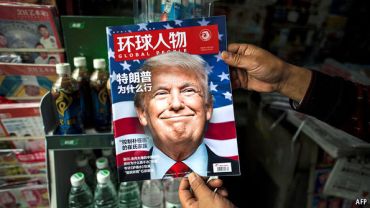
But if some netizens disliked what they saw of the process, many more were captivated by the electoral drama and, especially, by one of the candidates. Ordinary citizens followed the campaign with unprecedented interest. Online, 20 times more posts referred to Mr Trump in the past year than to Barack Obama in the past eight years. One blogger compared Telangpu, as Mr Trump’s name is commonly rendered in Chinese, to the late Deng Xiaoping. Both, apparently, are visionary dealmakers. In China’s online world, wrote another netizen, “Trump has this almost untouchable presence.”

Having digested the news of the victory, Chinese officials have begun to see possible benefits in a Trump presidency (see Banyan). But Ma Tianjie, who runs a website called Chublic Opinion, argues that support for the president-elect is based on culture and values, not calculation. This suggests it has three significant things to say about Chinese society.

First, younger Chinese are not so dissimilar to Mr Trump’s American supporters. As one user wrote on Zhihu, a question and answer site: “Most Chinese born after the 1980s are from a working-class background, who can still sympathise with the uneducated ignorance demonstrated by the less refined.” Anti-elitism retains a broad appeal. “Trump won because he truly spoke in the people’s voice,” wrote one microblogger.

Next, decades of unbridled economic growth have created a Trump-like worship of money and winners. As Lao Lingmin argued on the Financial Times’s Chinese-language website, support for Mr Trump reflected China’s “law of the jungle”. Chinese society, he wrote, “does not exist for the protection of vulnerable groups”.

Thirdly, says Mr Ma, pro-Trump sentiments in China show how far views can be swayed by zealotry, fanned by social media. On Zhihu, a supporter of Mr Trump repeated the president-elect’s falsehood that “there are towns in Britain that are completely under the control of Muslim extremists, who are openly using white girls as sex slaves.” The post got 18,000 likes.Yet online reactions also showed that Chinese opinions are sharply divided. A well-known blogger on Weibo called Chinese Trump supporters “spiritual rednecks”. Another pointed out that China may suffer: “Don’t they know his policies will give China a really hard time?” Intellectuals were aghast.

A news website in Shanghai, however, published an article by an academic who said Mr Trump’s win revealed America’s “ever greater decline”. Official opinion is closer to this view than to Mr Trump’s Chinese cheerleaders.

Source: A victory for China? | The Economist

Law of Unintended Consequences

continuously updated blog about China & India

ChiaHou's Book Reviews

continuously updated blog about China & India

What's wrong with the world; and its economy

continuously updated blog about China & India