Archive for ‘China alert’

24/08/2016

The perils of peace in China’s commodity industries | The Economist

WHEN the number of strikes plummets, something significant is usually going on. Strikes in China’s mining, iron and steel industries have fallen from more than 40 in January to four a month or fewer between May and August, according to China Labour Bulletin, an NGO based in Hong Kong. The explanation seems to be that China is backtracking on plans for the restructuring of state-owned firms in these sectors.

In February the government announced that it would redeploy 1.8m people, or 15% of the workforce, in the bloated and debt-laden coal, iron and steel industries. Just after that, a huge strike over unpaid wages by coal miners in the north-east dramatised the risks of trying to force through massive lay-offs and plant closures. So local officials have dragged their feet. According to the national planning authority, in the first seven months of the year provincial governments achieved only 38% of their full year’s targets for coal production cuts.

Fear of unrest is not the only explanation. Commodity prices have rebounded slightly this year, so local authorities are playing a game of chicken, keeping mines and factories open and hoping the neighbours will close theirs, so they themselves will be the ones to gain from higher prices. China itself is not benefiting.

Source: The perils of peace in China’s commodity industries | The Economist

22/08/2016

Capturing China’s $5 trillion productivity opportunity | McKinsey & Company

It won’t be easy, but shifting to a productivity-led economy from one focused on investment could add trillions of dollars to the country’s growth by 2030.

After three decades of sizzling growth, China is now regarded by the World Bank as an upper-middle-income nation, and it’s on its way to being one of the world’s advanced economies. The investment-led growth model that underpinned this extraordinary progress has served China well. Yet some strains associated with that approach have become evident.In 2015, the country’s GDP growth dipped to a 25-year low, corporate debt soared, foreign reserves fell by $500 billion, and the stock market dropped by nearly 50 percent. A long tail of poorly performing companies pulls down the average, although top-performing Chinese companies often have returns comparable with those of top US companies in their industries. More than 80 percent of economic profit comes from financial services—a distorted economy. Speculation that China could be on track for a financial crisis has been on the rise.

The nation faces an important choice: whether to continue with its old model and raise the risk of a hard landing for the economy, or to shift gears. A new McKinsey Global Institute report, China’s choice: Capturing the $5 trillion productivity opportunity, finds that a new approach centered on productivity could generate 36 trillion renminbi ($5.6 trillion) of additional GDP by 2030, compared with continuing the investment-led path. Household income could rise by 33 trillion renminbi ($5.1 trillion), as the exhibit shows.

Pursuing a new economic model

China has the capacity to manage the decisive shift to a productivity-led model. Its government can pull fiscal and monetary levers, such as raising sovereign debt and securing additional financing on the basis of 123 trillion renminbi in state-owned assets. China has a vibrant private sector, earning three times the returns on assets of state-owned enterprises. There are now 116 million middle-class and affluent households (with annual disposable income of at least $21,000 per year), compared with just 2 million such households in 2000. And the country is ripe for a productivity revolution. Labor productivity is 15 to 30 percent of the average in countries that are part of the Organisation for Economic Co-operation and Development (OECD).

A new productivity-led model would enable China to create more sustainable jobs, reinforcing the rise of the consuming middle class and accelerating progress toward being a full-fledged advanced economy. Such a shift will require China to steer investment away from overbuilt industries to businesses that have the potential to raise productivity and create new jobs. Weak competitors would need to be allowed to fail rather than drag down profitability in major sectors. Consumers would have more access to services and opportunities to participate in the economy.

Making this transition is an urgent imperative. The longer China continues to accumulate debt to support near-term goals for GDP growth, the greater the risks of a hard landing. We estimate that the nonperforming-loan ratio in 2015 was already at about 7 percent, well above the reported 1.7 percent. If no visible progress is made to curb lending to poorly performing companies, and if the performance of Chinese companies overall continues to deteriorate, we estimate that the nonperforming-loan ratio could rise to 15 percent. This would trigger a substantial impairment of banks’ capital and require replenishing equity by as much as 8.2 trillion renminbi ($1.3 trillion) in 2019. In other words, every year of delay could raise the potential cost by more than 2 trillion renminbi ($310 billion). Although such an escalation would not lead to a systemic banking crisis, a liquidity crunch among corporate borrowers and waning confidence of investors and consumers during the recovery phase would have a significant negative impact on growth.

Our report identifies five major opportunities to raise productivity by 2030:

  • unleashing more than 39 trillion renminbi ($6 trillion) in consumption by serving middle-class consumers better
  • enabling new business processes through digitization
  • moving up the value chain through innovation, especially in R&D-intensive sectors, where profits are only about one-third of those of global leaders
  • improving business operations through lean techniques and higher energy efficiency, for instance, which could deliver a 15 to 30 percent productivity boost
  • strengthening competitiveness by deepening global connections, potentially raising productivity by 10 to 15 percent

Capturing these opportunities requires sweeping change to institutions. China needs to open up more sectors to competition, enable

corporate restructuring, and further develop its capital markets. It needs to raise the skills of the labor force to fill its talent gap and to sustain labor mobility. The government will need to manage conflicts among many stakeholders, as well as shift governance and incentives that rewarded a single-minded focus on rising GDP, even as it modernizes its own processes.

Exactly how can China’s economy become more productive? Go to Tableau Public to examine how six industry archetypes contribute to the country’s growth by province.

Source: Capturing China’s $5 trillion productivity opportunity | McKinsey & Company

20/08/2016

The Chinese admiral who spread Islam across Southeast Asia | South China Morning Post

Near my childhood home in Kunming (昆明), Yunnan (雲南) province, is a park dedicated to its most famous son: Admiral Zheng He.

Our teacher would take us to pay tribute to the great eunuch of the Ming dynasty, recounting his legendary seven expeditions that brought glory to the motherland.

The marble bust of Zheng He shows the face of a typical Chinese, with a square chin, brushy eyebrows and a flat nose. My father joked it more resembled comrade Lei Feng than the admiral. Not until years later did I realise how true this was.

A statue of Zheng He in Nanjing, where his armada was built. File photo

The statue was erected in 1979 – a year after Deng Xiaoping (鄧小平) launched his open-door policy. Zheng, barely mentioned during the Cultural Revolution, was plucked from obscurity and hailed as a national hero who embodied China’s open spirit. A park near his ancestral home was dedicated to him. The same craftsmen who churned out revolutionary statues were employed to build his.

In real life, Zheng probably looked very different. My school textbook mentioned only that he was a Hui minority (Muslim Chinese). In fact, the admiral was a descendent of a powerful Persian family. Records discovered in 1913 trace his lineage to Sayyid Ajall, who was sent by Kublai Khan to conquer Yunnan and became its first governor. In 2014, Chinese scientists at Fudan University in Shanghai put the theory to test. They examined DNA samples collected from descendents of the admiral’s close kin and found they originated from Persia, modern-day Iran. In addition to Zheng He, most senior officers of the storied Ming armada were also Muslims.

Beijing follows the route well travelled by Admiral Zheng He in its belt and road initiative

Over the past decades, researchers have concluded Zhang and his armada were the key force behind Islam’s spread in Southeast Asia. The Arabs established settlements in Southeast Asia from the eighth century. But Islam did not become dominant there until the 15th century – around the time Admiral Zheng began to sail in the South China Sea. Historians found evidence of Zheng’s missionary work in documents discovered in Semarang, Indonesia, by Dutch officials in 1925. This prompted Indonesian religious leader Hamka to write in 1961: “The development of Islam in Indonesia and Malaysia is intimately related to a Chinese Muslim, Admiral Zheng He.

”A crowning moment of Zheng’s expedition was converting the King of Malacca, Parameswara, to Islam shortly after he paid homage to the Yongle Emperor in Beijing in 1411. The conversion played a crucial role in the spread of Islam in Southeast Asia, according to Professor Xiao Xian of Yunnan University.

A replica of a ship used by Ming Dynasty eunuch explorer Zheng He, in Nanjing. Photo: Reuters

Xiao was one of the scholars who presented research work on Zheng He at an international symposium in 2005. They painted a vivid picture of the Ming armada, which had all the elements of a multinational enterprise.

The 300 ships – many twice as big as the largest European vessels of the time – were constructed in dry docks in Nanjing ( 南京 ), Jiangsu ( 江蘇 ) province. Building materials were sourced from across the Ming Empire. The 27,000-strong crew included Han Chinese, Muslim Hui, Arabs, Persians, and peoples from Central and East Asia. The lingua franca was Persian or Sogdian – a language used for centuries by merchants of the ancient Silk Road, according to Professor Liu Yingsheng of Nanjing University.

Size was not the only difference between Zheng’s fleet and that of Christopher Columbus 70 years later. The Europeans aboard the Santa Maria were exclusively Catholic – the Ming fleet was culturally and religiously diverse. Zheng was a Muslim but he was fluent in the teachings of Confucius, Buddhism and classic Chinese philosophy. The fleet included many Buddhist missionaries. Many regard his expeditions as the high-water mark of Chinese civilization. The Ming armada’s true greatness lay not in its size or sophistication but in its diversity and tolerance.

A statue of famed Chinese navigator Zheng He overlooks the city of Nanjing, Jiangsu province. Photo: AFP

After the Yongle Emperor’s death, the Ming court lost its global vision. Power was in the hands of the Confucius gentry-class, who jealously guarded against other schools of thoughts. China became increasingly introspective and insulated. The court stopped further expeditions and banned seafaring. The Chinese civilization gradually lost its vigour and started a long decline.

Today as the new “Silk Road” and “soft power” become China’s new catchphrases, it is important to remember what makes the Chinese civilization unique in the first place. Its greatest strength lies in its people’s amazing ability to absorb, adopt and assimilate different cultures.

Buddhism, which originated in India, flourished in China. The Zen school – a hybrid of Indian Buddhism and Chinese Taoism – spread to East Asia by monks in the Tang dynasty and became mainstream. Islam arrived from Central Asia and the Middle East during the Yuan and Ming dynasties. It took root in western China before spreading to Southeast Asia with Zhang’s fleet. We should remember that until 100 years ago, China was not a nation state in the Westphalian sense. Narrow-minded nationalism and xenophobia are the exception rather than the norm of the world’s oldest surviving civilization.

Source: The Chinese admiral who spread Islam across Southeast Asia | South China Morning Post

19/08/2016

The return of the Xia | The Economist

CHINA’S leaders are immensely proud of their country’s ancient origins. President Xi Jinping peppers his speeches with references to China’s “5,000 years of history”. The problem is that archaeological evidence of a political entity in China going back that far is scant.

There is some, including engravings on animal bones, that shows the second dynasty, the Shang, really did control an area in the Yellow river basin about 3,500 years ago. But no such confirmation exists for the legendary first ruling house, the Xia. Even inside China, some historians have long suspected that the country’s founding story—in which Emperor Yu tames flooding on the Yellow river (with the help of a magic black-shelled turtle, pictured), earns for himself the “mandate of heaven” and establishes the first dynasty—was either a Noah’s-Ark flood-myth or perhaps propaganda invented later to justify centralised state power. This month, however, state-controlled media have been crowing over newly published evidence in Science, an American journal, that at least the flooding was real. This, they say, has made it more credible that the Xia was, too. Not everyone is so convinced.

Catastrophic floods leave their mark on soil and rocks. Qinglong Wu of Peking University and others have examined the geology of the upper reaches of the Yellow river. In the journal, they conclude that a vast flood did take place in the right area and not long after the right time for the supposed founding of the Xia. Although their evidence does not prove the existence of an Emperor Yu or of the dynasty he founded, it does provide a historical context in which someone might have gained power with the help of flood-taming exploits.

According to Mr Wu, a vast landslide, probably caused by an earthquake, blocked the course of the Yellow river as it flowed through the Jishi gorge on the edge of the Tibetan plateau. For six to nine months as much as 16 cubic kilometres (3.8 cubic miles) of water built up behind the accidental dam, which, when it finally burst, produced one of the biggest floods ever. At its peak, the authors calculate, the flow was 500 times the normal discharge at Jishi Gorge. Mr Wu reckons the ancient flood could easily have been felt 2,000km downstream in the area of the Yellow river said by Chinese historians to have been the realm of the Xia.

At about this time, either coincidentally or (more probably) because of the flood, the river changed its course, carving out its vast loop across the north China plain. The significance is that, while the river was finding its new course, it would have flooded repeatedly. This is consistent with old folk tales about Emperor Yu taming the river not through one dramatic action, but by decades of dredging.

The ancient flood can be dated because the earthquake that set the catastrophic events in motion also destroyed a settlement in the Jishi gorge. Radiocarbon dating of inhabitants’ bones puts the earthquake at about 1920BC—not 5,000 years ago but close-ish. Xinhua, a state news agency, lauded the study as “important support” for the Xia’s existence. Xu Hong of the Chinese Academy of Social Sciences challenged this, saying the scholars’ findings had not proved their conclusions. The first dynasty has gone from myth to controversy.

Source: The return of the Xia | The Economist

13/08/2016

How Alibaba is Tapping India – The Numbers – WSJ

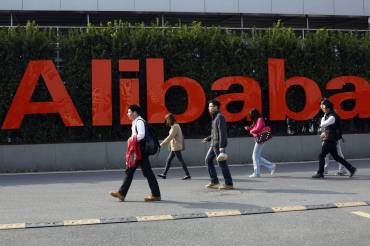
As its business matures at home, Chinese e-commerce giant Alibaba Group Holding Ltd. is looking to boost growth elsewhere in Asia — especially India, home to a nascent but fast-growing online shopping sector.

Here’s how — and why – it is targeting the world’s second-most-populous nation.

1.2 billion

The number of customers outside of China that Alibaba would like to reach, according to the company’s Chairman Jack Ma.

$127 billion

The projected value of India’s e-commerce market in 2025, up from $11.2 billion last year, according to Goldman Sachs Global Investment Research.

$500 million

The amount of money New Delhi, India-based e-commerce startup Snapdeal.com raised in a fundraising round led by Alibaba last year.

More than $500 million

The amount Alibaba and its affiliate Ant Financial Services Group last year paid for 40% of One97 Communications, the parent company of Noida, India-based online-payment and marketplace startup Paytm.

2 or more

Prominent executives Alibaba has hired in recent months who have experience in India’s e-commerce sector.

Source: How Alibaba is Tapping India – The Numbers – WSJ

13/08/2016

Asia’s scramble for Africa | The Economist

IF THERE is a modern gateway from the east to Africa, it is arguably Addis Ababa’s airport. Passengers passing through its dusty terminals on their way to some far-flung capital will be surprised to find that getting an Ethiopian meal is remarkably difficult. Asian dumplings, however, are available at two different cafés. Signs marking the gates are in English, Amharic and Chinese, as are announcements.

Dozing gently on the beige loungers are untold numbers of young Chinese workers waiting for flights. They are part of a growing army of labourers, businessmen and engineers who can be seen directing the construction of roads, railways and ports across much of east Africa.

Concerns about China’s involvement in Africa are often overplayed. Accusations that it is buying up vast tracts of farmland, factories and mines, for instance, are blown out of proportion. Even so, its growing influence on the continent has nettled India and Japan, who are both boosting their engagement in response.

As with previous rounds of rivalry in Africa, such as during the cold war, at least some of this activity relates to access to bases and ports to control the sea. China’s involvement in Africa now includes a growing military presence. Thousands of Chinese soldiers have donned the UN’s blue helmets in Mali and South Sudan, where several have been killed trying to keep an imaginary peace. Chinese warships regularly visit African ports.

China maintains a naval squadron that escorts mostly Chinese-flagged vessels through the Gulf of Aden. But some diplomats fret that China has been using these patrols to give its navy practice in operating far from home, including in offensive actions. “You wouldn’t normally use submarines for counter-piracy patrols,” says one.

Patrolling for pirates has also given China an excuse to set up its first overseas base in Djibouti, next door to an existing American one. Yet the more alarmist worries about China—that it is planning to build naval bases in a “string of pearls” stretching from China to the Red Sea and as far as Namibia’s Walvis Bay on the Atlantic coast—have not materialised. The Walvis Bay rumour seems to be a red herring. China has used its ships and soldiers to protect its own citizens in Africa and the Middle East: in 2011 it evacuated 35,000 of them from Libya and last year one of its ships rescued 600 from Yemen. But its main naval focus remains the South China Sea.

Wary does it

Still, India is deeply suspicious of China’s presence in the Indian Ocean. A wide network of some 32 Indian radar stations and listening posts is being developed in the Seychelles, Madagascar and Mauritius, among other countries. This will enable India to monitor shipping across expanses of the ocean. It is also improving its ability to project power in waters it considers its own, and is arming friendly countries such as Mauritius. Among other things, India is building a naval and air base on Assumption Island, north of Madagascar and within easy reach of many of east Africa’s newly discovered offshore gasfields. “It’s the Indian Ocean, stupid,” quips one seasoned commentator in mimicry of Indian diplomats on its power projection. “They say it’s ‘our near abroad’.”

Japan has also been flexing its naval muscle but in a more limited manner. This month it pledged $120m in aid to boost counter-terrorism efforts in Africa. It has been a stalwart contributor to the multinational naval force policing the seas off Somalia’s coast. Sino-Japanese rivalry is fiercest in diplomacy and trade. Two prizes are on offer: access to natural resources and markets, and the continent’s 54 votes at the UN. Much of the effort to win the former was pioneered by Japan in the 1990s, when it helped build ports and railways. Akihiko Tanaka of the University of Tokyo, a former president of the Japan International Co-operation Agency, says that for years Japan’s aid to Africa was “qualitatively different” from that of other rich nations in part because it focused on infrastructure rather than the direct alleviation of poverty. “We were criticised a lot,” he says. “Now there is an almost unanimous view that you need to invest in infrastructure.”

Japan’s latest spending spree on infrastructure will speed economic growth on the continent; but there is a degree of one-upmanship and duplication. Japan recently handed over the keys to a new cargo terminal at Kenya’s main port in Mombasa. Meanwhile, a short hop down the coast at Bagamoyo, Tanzania is building east Africa’s biggest port—with Chinese cash.

On the diplomatic front both Japan and India are trying to make common cause with African states that want to reform the UN Security Council. They argue that Africa deserves permanent seats on it, as do they. China favours a permanent seat for an African country, and it doesn’t mind India having one. But in return it expects endorsement of its stand against Japan getting a seat.

Both Japan and China back up such diplomatic efforts with aid and, at least in China’s case, this seems to have helped win it friends. Countries that vote with China in the UN (for instance over Taiwan) usually get more cash from it, according to AidData, a project based at the College of William and Mary in Virginia.

China also makes African friends by selling arms. In the five years to 2015 it nearly doubled its share of weapons supplied to sub-Saharan Africa, from little more than a tenth of the total to almost a quarter, according to the Stockholm International Peace Research Institute, a think-tank. It has sold tanks and jets to Tanzania, armoured vehicles to Burundi and Cameroon, and missile launchers to Morocco, to name but a few. It also wins friends among the continent’s war criminals through its policy of “non-interference” in the internal affairs of other countries, for instance by opposing the International Criminal Court (ICC).

Japan, which until 2014 was prohibited by its constitution from selling weapons, and supports the ICC, has had a harder time. It has concentrated on dispensing aid and using soft power, such as awarding scholarships for study in Japan and free classes in akido and karate at its embassy in Nairobi. But even in this sphere it is outclassed by China, which has established some 46 Confucius Institutes in Africa to teach Chinese language and culture. China also flies thousands of Africa’s ruling-party officials, civil servants and trade unionists to attend political-training schools in China. This has worked so well in South Africa that the ruling African National Congress last year published a foreign-policy discussion document suggesting that China’s Communist Party “should be a guiding lodestar of our own struggle.”

Yet apart from South Africa, which has slavishly aligned itself with China (for instance by voting with it against a UN resolution to protect the right of people to hold peaceful protests), most African countries are good at playing off rivals against each other, says Alex Vines of Chatham House, a London think-tank. Many have diversified their diplomatic links by opening new embassies, including ones that cross previous divisions between rival powers in Africa. Countries including Burundi, Mauritania and Togo, that used to fall firmly within France’s sphere of influence have opened embassies in Britain. “This is a really great time for clever African countries to get really good deals,” says Mr Vines.

Source: Asia’s scramble for Africa | The Economist

13/08/2016

U.S. and UK tech startups welcome in China – with a little supervision – The Stack

U.S. and UK tech startups welcome in China – with a little supervision Martin Anderson. Editor, The Stack, Friday 12th August

On August 1st Travis Kalanick, CEO and co-founder of Uber, finally admitted defeat regarding the company’s three-year crusade to gain a foothold in China, with the ‘merging’ (most consider it a ‘sale’) of Uber’s Chinese operations with local incumbent Didi Chuxing. Whatever Kalanick may have recovered from the concession, it seems unlikely that Uber will recoup the billions it has already poured into its most distant territory. But there was no alternative – by January of this year, the Uber board was urging that the ride-sharing giant – such an indefatigable combatant in so many contested territories – throw in the towel.

Ultimately Didi was going to win this battle; despite cash and equity of $28 billion vs Uber’s $68 billion, Didi had reserved $10 billion to strengthen its grip on this fundamental societal change in China – almost on a par with what the  better-financed Uber was willing to invest.

A headline-grabbing contest of this nature gives the false impression of China as isolationist in terms of cooperating with global tech startups – it isn’t. The country runs a UK-China tech incubator in Shenzhen, backed by Tencent and providing crucial advice on the peculiarities of the Chinese market to Brit startups. The deal even offers free office space, business counsel and pitch opportunities. Whilst willing to repel boarders on the scale of Uber, China has no problem in contributing to a post-Brexit UK brain drain.

Likewise Alibaba runs a similar scheme to increase tech migration from the United States – almost impossibly tempting for new companies dazzled by the economy-of-scale that Chinese success promises, and struggling for attention in saturated home markets. Perhaps the most useful aspect of these international schemes is the business advice from native sources – western entrepreneurs see huge opportunities in Chinese numbers, yet fail to take account of national psychology; either on an individual level (the Chinese consumer), or at the level of a state which is well aware of its riches – and needs only as much western genius to exploit them as serves its future interests in the post-sharing economy.

Source: http://email.thestack.com/q/11mUpgMA6G1pvcOkWw5ppxj/wv

11/08/2016

‘Primordial Girl’ or: How China Learned to Stop Gold-Medal Worship and Love Sporting Effort – China Real Time Report – WSJ

For two days in row, Chinese swimmer Fu Yuanhui clambered out of the Olympic pool in Rio clueless about her breakthrough performances: breaking personal records and clinching a bronze medal.

Each time a poolside reporter had to break the news to the bubbly 20-year-old, whose vivacious epiphanies on live television have broken the Chinese internet.“I was so fast! I’m really pleased!” Ms. Fu exclaimed Monday after learning that she swam the 100-meter backstroke semifinal in 58.95 seconds, a new personal best. “I’ve already… expended my primordial powers!”

After Tuesday’s final, when told that she trailed the silver medalist by just 0.01 second, Ms. Fu replied, “Maybe it’s because my arms are too short.”

Her gleeful candor made her an overnight online sensation. Fans feted her as “Primordial Girl” in online memes and viral videos spoofing her exuberant expressions. Her Weibo microblog following swelled more than sixfold to 3.8 million users.

China has a new sports star, and never mind that she didn’t finish first. In a country long obsessed with winning gold medals, Ms. Fu’s newfound fame seemed to signal shifting social perceptions about the meaning of sport.

“‘Primordial Girl’ and the netizens who appreciate her have taught all of us a lesson: sport is about the struggle and, especially, enjoyment, but most definitely not about spinning gold,” the Communist Party’s flagship newspaper, People’s Daily, said in a Tuesday commentary.

“The warm support from netizens,” according to the newspaper, “shows that public attitudes toward competitive sport and the Olympics have sublimated to a higher level.

”Ms. Fu’s fans, for their part, credited her “authentic” demeanor, which contrasted with the mild mien typical of Chinese Olympians. “We love your happy optimism and strong personality,” a Weibo user wrote on Ms. Fu’s microblog. “That’s what makes a true athlete.

”Winning used to be everything for China’s Olympians, virtually all of whom came through a grueling state-run sports regime that fetishized success. Athletes who strike gold can expect fame and fortune, while those who disappoint often suffer neglect or even ignominy.

Liu Xiang, a hurdler who became the first Chinese man to win an Olympic gold in athletics at the 2004 Athens Games, saw public adulation turn into anguish and anger at the Beijing Games four years later, when an injury forced him to withdraw just before running his first race.E

China nonetheless crowned a grandly staged Beijing Olympics by topping the gold-medal tally for the first time, with 51 in all. Their gold haul dropped to a second-place 38 at the 2012 Games in London, and some Chinese pundits expect a further slip in Rio, to between 30 and 36.

State media, for its part, has tried to manage public expectations about China’s ebbing gold rush.

“As we mature in mentality, learn how to appreciate competition, and become able to calmly applaud our rivals, we’d showcase the confidence and tolerance of a great country,” state broadcaster China Central Television said Sunday in a Weibo post after a goldless first day.

“We still need our first gold medal to boost morale, but what we really need is to challenge ourselves, surpass ourselves,” CCTV said. By Tuesday Chinese athletes had racked up eight golds, alongside three silvers and six bronzes.The message seems to be filtering through, with many Chinese fans appearing more tolerant of athletes who underperformed.

Among the beneficiaries was Ning Zetao, a swimmer who won widespread popularity at last year’s world championships with his boyish good looks—and a 100-meter freestyle gold.

After crashing out of the same event in Rio at the semifinal stage on Tuesday, the 23-year-old appeared philosophical about his failure.

“I’ve done my best,” he told a CCTV reporter.

His comments found a receptive audience among his Weibo fandom. “This is Ning Zetao’s first time participating in the Olympics,” one user wrote. “Don’t give him too much pressure!”

Source: ‘Primordial Girl’ or: How China Learned to Stop Gold-Medal Worship and Love Sporting Effort – China Real Time Report – WSJ

06/08/2016

Science and History Align to Hint at China’s Founding Legend – China Real Time Report – WSJ

Like Noah and his animal-laden ark, China has its own creation legends. Thousands of years ago, one story goes, a man named Yu tamed the country’s terrible flooding with the assistance of a dragon and was ultimately named emperor.

Now the authors of a new paper published in the U.S. journal Science say they’ve found evidence of an ancient, cataclysmic flood that helps to underpin at least part of that legend. In a bigger leap, they also say their research helps offer evidence for the existence of what some describe as China’s first dynasty, the Xia, long seen in some quarters as a myth.

The team found that a massive flood took place around 1920 B.C., a time that coincides with when many scholars believe the Xia dynasty first emerged. The flood finding is notable, they say, because annals that mention the Xia dynasty say that Yu went on to found the dynasty and become its emperor after successfully dispelling flooding along the Yellow River.

“Many foreigners haven’t heard of the Xia dynasty or don’t believe it existed,” says Wu Qinglong, who led the team’s work during a recent post-doctorate stint at Peking University. “But in China, it’s different, this is a story passed down by tradition.

”According to their findings, an earthquake triggered a landslide that in turn swallowed up a large gorge located in Qinghai province traversed by the Yellow River. That landslide created a “huge cork” and a natural dam 200 meters tall that caused water to build up for six to nine months before breaking free, causing some 16 cubic kilometers of water to surge forth, says David Cohen, assistant professor in anthropology at National Taiwan University and a co-author on the paper.

The precise date determined by researchers was derived from the analysis of findings at a village downstream from the dam destroyed by the earthquake. A test of bones of children killed in the quake found they died around 1920 B.C. The presence of sediment from the flood found in fissures caused by the quake helped establish the flood’s timing, Mr. Cohen said.

Still, scholars caution against too hastily connecting the dots between the existence of a flood, however sizable, and that of the Xia. James T. Williams, an assistant professor at Renmin University who studies the economy of Bronze Age societies in China, notes that written records invoking the Xia dynasty weren’t produced until hundreds of years later. While the flood evidence may be persuasive, he notes, “a one-to-one correlation” with the existence of the Xia is a harder case to make.Mr. Cohen acknowledges such skepticism. “A number of assumptions have to be made,” he says. “First, you have to accept that there was a Xia dynasty, and you have to accept that its founding was somehow related to a massive flood of the Yellow River.”

But for China, he says, “It’s a story of the foundation of civilization and how it came into being.

”Flooding remains a massive problem in China, with torrential rains leading to widespread urban flooding that has killed hundreds this year.

For its lead author, producing the report wasn’t easy. After completing his post-doctorate and leaving Peking University in 2012, Mr. Wu spent several years unemployed as he sought to complete his research. At times, he relied on loans from friends, he said. In Beijing, he lived in various subdivided apartments, including a three-room place shared among 10 for which he paid 600 yuan ($90) a month.

Still, he says he is gratified by his team’s findings. “We’ve found existence of a big flood. We think it’s very possible it’s the one from our legends and it helps support the history of the Xia dynasty,” he says. “The evidence supports the veracity of it all.”

Source: Science and History Align to Hint at China’s Founding Legend – China Real Time Report – WSJ

05/08/2016

Yellow River yields clues to Chinese legend of ancient ‘Great Flood’ | Reuters

A view of the Yellow river near the Lajia site, hit by a flood 4,000 years ago, in Qinghai province, China in this undated handout photo. Wu Qinglong/Science/Handout via REUTERS

The crushed skeletons of children point to an earthquake and catastrophic flood on China’s Yellow River 4,000 years ago that could be the source of a legendary “Great Flood” at the dawn of Chinese civilization, scientists say.

A Chinese-led team found remnants of a vast landslide, caused by an earthquake, big enough to block the Yellow River in what is now Qinghai province near Tibet.

Ancient sediments indicated that the pent-up river formed a vast lake over several months that eventually breached the dam, unleashing a cataclysm powerful enough to flood land 2,000 km (1,200 miles) downstream, the scientists wrote in the journal Science.

The authors put the Yellow River flood at around 1920 BC by carbon-dating the skeletons of children in a group of 14 victims found crushed downstream, apparently when their home collapsed in the earthquake. Deep cracks in the ground opened by the quake were filled by mud typical of a flood and indicated that it struck less than a year after the quake.

The flood on Asia’s third-longest river would have been among the worst anywhere in the world in the last 10,000 years and matches tales of a “Great Flood” that marks the start of Chinese civilization with the Xia dynasty.

“No scientific evidence has been discovered before” for the legendary flood, lead author Wu Qinglong of Nanjing Normal University told a telephone news conference.

In traditional histories, a hero called Yu eventually tamed the waters by dredging, “earning him the divine mandate to establish the Xia dynasty, the first in Chinese history,” the scientists wrote.

Their finds around the Jishi Gorge from about 1900 B.C. would place the start of the Xia dynasty several centuries later than traditionally thought, around the time of a shift to the Bronze Age from the Stone Age along the Yellow River.

Some historians doubt the Xia dynasty existed, reckoning it part of myth-making centuries later to prop up imperial rule. Written records date only from 450 BC.

The evidence of a massive flood in line with the legend “provides us with a tantalizing hint that the Xia dynasty might really have existed,” said David Cohen of National Taiwan University, one of the authors.

Deluges feature in many traditions, from Hindu texts to the Biblical story of Noah. In pre-history, floods were probably frequent as ice sheets melted after the last Ice Age ended about 10,000 years ago, raising world sea levels.

Source: Yellow River yields clues to Chinese legend of ancient ‘Great Flood’ | Reuters

Law of Unintended Consequences

continuously updated blog about China & India

ChiaHou's Book Reviews

continuously updated blog about China & India

What's wrong with the world; and its economy

continuously updated blog about China & India