Archive for ‘China alert’

18/06/2016

India looks to China’s technology for making clouds rain|Government|chinadaily.com.cn

China is in talks with India on the transfer of cloud-seeding technology.In the first such engagement between the Asian giants, a team of scientists and officials from Beijing, Shanghai and East China’s Anhui province, were recently in Maharashtra to discuss weather conditions with the government of the western Indian state, parts of which have experienced severe droughts over the past two years.

line art drawing of cloud seeding.

line art drawing of cloud seeding. (Photo credit: Wikipedia)

The Chinese team’s days-long tour concluded on June 2.If the discussions are successful, Chinese experts would provide training to officials of the Indian Meteorological Department on their latest cloud-seeding technology, according to two sources with knowledge of the matter.

One of the sources had earlier described it as an “exploratory visit by the Chinese side to discuss with relevant Indian authorities how to go about it”.

The training is expected to be given on procedures to seed clouds successfully, the source said.

The training is aimed at inducing rain over Maharashtra’s Marathwada region in the summer of 2017 if needed, the source said.

While summer rains have arrived this year in India, the region has been traditionally vulnerable to drought.

The sources spoke to China Daily on condition of anonymity.

An official in the China Meteorological Administration said that arrangements are still in progress.

The development follows a meeting between Han Zheng, Shanghai’s top official, and Maharashtra chief minister Devendra Fadnavis, in the Indian state’s capital of Mumbai in early May.

Han, who is also a Communist Party of China Politburo member, had asked Fadnavis if China could do anything for drought relief in Maharashtra, one of the sources said.

Monsoons and temperatures nearing 50 C have triggered many agrarian crises in India, with poor farmers being hit the hardest.

Indian media said in April that the Maharashtra government would begin cloud-seeding experiments in June and continue through August – the period of summer monsoons.

China started to use cloud-seeding technology in 1958, and today has one of the most advanced systems in the world.

Source: India looks to China’s technology for making clouds rain|Government|chinadaily.com.cn

18/06/2016

The great crawl | The Economist

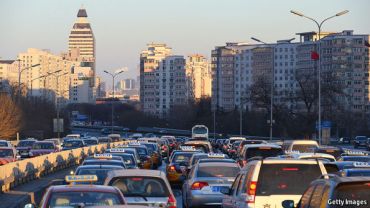
LATE last month a black-and-white photograph of a professor from Beijing Jiaotong University spread on social media. His image was edged by a black frame, like those displayed at funerals in China, and trimmed with white flowers of mourning. Though Mao Baohua is still very much alive, he had angered netizens enough to depict him as dead. His crime? To suggest that Beijing should follow the likes of London and Stockholm, by charging drivers 20-50 yuan ($3-7.50) to enter the capital’s busiest areas in the hope of easing traffic flow in the gridlocked city.

Most Chinese urbanites see buying a vehicle as a rite of passage: a symbol of wealth, status and autonomy, as it once was in America. Hence their outrage at any restraint on driving. Since car ownership is more concentrated among middle- and high-income earners in China than it is in richer countries, any attack on driving is, in effect, essentially aimed at the middle class, a group the Communist Party is keen to keep on side. That makes it hard to push through changes its members dislike.

Since 2009 officials in Beijing and the southern city of Guangzhou have repeatedly aired the idea of introducing congestion charges. Netizens have fought back, accusing their governments of being lazy, brutal and greedy. Many also gripe that the policy would be “unfair” because the fee would have less impact on the super-rich. Complaints about the inequality of congestion charging echo those made in London and other cities before they launched such schemes. But the party, nervous of being accused of straying from socialism, is particularly sensitive to accusations that it is favouring the wealthiest.

Because of such objections, city governments have not pushed their proposals very hard. But that is now changing in Beijing, where officials face a dilemma. Traffic jams in the city and appalling air pollution—30% of which comes from vehicle fumes, by official reckoning—may end up causing as much popular resentment as any surcharge. The local government is trying to work out how close it is to this tipping point. It is conducting surveys to “pressure test” how people would react to a congestion fee, says Yuan Yue of Horizon, China’s biggest polling company (the results will not be made public). It is likely that a concrete plan for a congestion charge will be announced soon. Beijing’s environmental and transport departments (not usual partners) are collaborating on a draft. State media have recently published a flurry of articles about this, not all in favour.

Public opinion is not the only challenge a congestion scheme faces. The urban planners who conceived Beijing’s layout, and that of other Chinese cities, never imagined that so many people would want to drive. The capital now has 3.6m privately owned cars: the number per 1,000 people in Beijing has increased an astonishing 21-fold since 2000, according to our sister company, the Economist Intelligence Unit (see chart).

On most days large tracts of the capital are now bumper to bumper amid a cacophony of car horns. Beijingers have the longest average commute of any city in China, according to data collected by Baidu, a Chinese search engine. The problem is not confined to Beijing. The capital has higher vehicle ownership than any other Chinese city, but car use is rising rapidly across the country. Many second- and third-tier cities are already clogged.

Beijing’s congestion scheme would be the first outside the rich world, where a handful of cities now charge drivers to enter a designated area. (Singapore has a different form of road pricing, with tolls on individual arterial roads.) Such measures have been credited with reductions in downtown car-use, improved traffic flow and greater use of public transport. They have also cut pollution, including emissions of the tiny PM2.5 particles that are particularly dangerous to health and abundant in Beijing’s air.

Transport planners reckon a congestion zone would have similar effects in Beijing, and complement existing attempts to restrict car use. In 2008, after Beijing staged the Olympic games, the city launched the current system whereby each car is banned from the urban core one workday per week, depending on the last digit of its licence plate. Beijing is now one of 11 Chinese cities with similar restrictions.

But some drivers choose to pay the 100 yuan fine, which is far higher than the congestion charge that Beijing is now mulling (around the sums suggested by Professor Mao). People also drive without plates, or buy second cars, to bypass the rules. In 2011 the capital introduced a lottery for obtaining new licence plates (six other cities do this). In Beijing the scheme has slowed the increase in car ownership, but not enough to cut congestion; some residents use vehicles registered elsewhere. Also in 2011 the capital raised parking fees, hoping to deter drivers. But people often park on pavements and traffic islands instead, usually with impunity.

Source: The great crawl | The Economist

18/06/2016

Study Finds China’s Ecosystems Have Become Healthier – China Real Time Report – WSJ

China’s skies may be toxic, and its rivers fetid and prone to sudden infestations of pig carcasses. But according to a new study, the country’s environmental battle has also been making quiet, measurable progress.

The paper, a collaboration between U.S. and Chinese researchers published in this week’s issue of Science, found that China’s ecosystems have become healthier and more resilient against such disasters as sandstorms and flooding. The authors partly credit what they describe as the world’s largest government-backed effort to restore natural habitats such as forests and grasslands, totaling some $150 billion in spending since 2000.

“In a more and more turbulent world, with climate change unfolding, it’s really crucial to measure these kinds of things,” says Gretchen Daily, a Stanford biology professor and a senior author on the paper.

The study didn’t examine air, water or soil quality, all deeply entrenched problems for the country.

Beijing’s investments in promoting better ecosystem protection were triggered after a spate of disasters in the 1990s. In particular, authors note, two decades after China started to liberalize its economy, rampant deforestation and soil erosion triggered devastating floods along the Yangtze River in 1998, killing thousands and causing some $36 billion in property damage.

The government subsequently embarked on an effort to try to forestall such environmental catastrophes. According to the study, in the decade following, carbon sequestration went up 23%, soil retention went up 13% and flood mitigation by 13%, with sandstorm prevention up by 6%.

The paper also involved authors from the Chinese Academy of Sciences and the University of Minnesota, among other institutions. Data was collected by remote sensing and a team of some 3,000 scientists across China, said Ms. Daily, who praised the “big-data” approach to tracking the quality of China’s ecosystems.

“The whole world is waking up to the need to invest in natural capital as the basis for green growth,” she said.

Reforestation was one particular bright spot, she said. Under the country’s founding father, Mao Zedong, China razed acres of forests to fuel steel-smelting furnaces. To reverse the trend–and combat creeping desertification in the country’s north — the country embarked on a project in 1978 to build a “Great Green Wall” of trees. Today, authorities say that 22% of the country is covered by forest, up 1.3 percentage points compared with 2008.

The authors note that the study has limits. While China has reported improving levels of air quality in the past year, urban residents still choke under regular “airpocalypses.” The majority of Chinese cities endure levels of smog that exceed both Chinese and World Health Organization health standards.

“You can plant trees till the end of time,” says Ms. Daily. “But they’ll never be enough to clean up the air.”

Source: Study Finds China’s Ecosystems Have Become Healthier – China Real Time Report – WSJ

16/06/2016

Reaping what they sow: Shaolin monks harvest wheat as a form of Zen practise | South China Morning Post

Monks at Shaolin Temple in Henan province have been harvesting wheat as a method to practice Buddhism, the China News Agency reported on Thursday.

The 1,400-year-old temple, famed as the birthplace of Chan (Zen) Buddhism and martial arts traditions, operates a farm of of about 70 hectares where they grow wheat, corn, vegetables and herbs.

During the wheat reaping season in June, groups of monks cut the crops, thrash the grain, bag it and carry it to the barn.

Farming is also a kind of self-cultivation,” said Shi Yanzi, the monk in charge of the farm. “We farm with the spirit of Zen, and plough and sow in our own mind too.

”Shaolin’s millennium-long tradition of farming was interrupted in the past decades, but was resumed by head abbot Shi Yongxin in recent years.

Shi believes producing food in the temple’s fields can also ensure food safety.

The Shaolin temple farm also opens to tourists to experience harvesting fresh vegetables or fruit.

Source: Reaping what they sow: Shaolin monks harvest wheat as a form of Zen practise | South China Morning Post

16/06/2016

Disney’s China fairytale begins with $5.5 billion park opening | Reuters

Walt Disney Co has opened the gates to its first theme park in China, prompting a rush from thousands of gathered Mickey Mouse enthusiasts to be the first to storm Treasure Cove, ride the Roaring Rapids or visit Disney’s tallest castle.

Disney’s largest overseas investment at $5.5 billion, the park is a bet on China’s middle class and booming domestic tourism. The U.S. firm hopes it will offset an otherwise lackluster international theme park business, better known for cash-burning sites such as Euro Disney.

“This is one of the proudest and most exciting moments in the history of the Walt Disney Company,” chief executive Bob Iger said at the official ribbon cutting ceremony on Thursday, where he was flanked by Chinese government officials.

Iger and Chinese Vice Premier Wang Yang read out letters of support from Barack Obama and President Xi Jinping.

Not everything has gone quite to plan though.The opening gala – meant to be a bonanza of fireworks, live music and dance – was rained off on Wednesday night, while at Disney’s park in Orlando, Florida, a young boy was grabbed by an alligator and killed.

Disney, though, sees China as its biggest opportunity since Walt Disney bought land in Florida in the 1960s for what is now Walt Disney World – the world’s most-visited theme park.

With that in mind, Main Street has been replaced by Mickey Avenue to reduce the feel of Americana while attractions include the Chinese-style Wandering Moon tea house, a Chinese Zodiac-themed garden and a Tarzan musical featuring Chinese acrobats.

Disney estimates 330 million people within a three-hour radius of Shanghai will be able to afford to come to the park: that includes Zhao Qiong, 36, who was one of the first visitors inside the park on Thursday with her 4-year-old daughter.”Since she was young, my little girl has always loved Disney princesses, so I wanted to bring her to the park to fulfill her dream,” she told Reuters.

Source: Disney’s China fairytale begins with $5.5 billion park opening | Reuters

16/06/2016

U.S., India and Japan Begin to Shape a New Order on Asia’s High Seas – India Real Time – WSJ

From the waters of the Philippine Sea this week emerged a partial outline of Washington’s vision for a new Asian maritime-security order that unites democratic powers to contend with a more-assertive and well-armed China.

A U.S. Navy aircraft-carrier strike group along with warships from India and Japan jointly practiced anti-submarine warfare and air-defense and search-and-rescue drills in one of the largest and most complex exercises held by the three countries.

The maneuvers were being tracked by a Chinese surveillance vessel, a U.S. Navy officer aboard the carrier USS John C. Stennis said on Wednesday. Last week, China’s Foreign Ministry spokesman Hong Lei said Beijing hoped the training “will be conducive to regional peace, security and stability.

”Washington and Tokyo have long cooperated closely on defense. And the U.S. has been working to deepen strategic ties with India and to encourage New Delhi to play a more active role, not just in the Indian Ocean but also in the Pacific, as China’s rise shifts the regional balance of power.

Americans are looking for those who can share the burden,” said C. Raja Mohan, director of the Carnegie Endowment for International Peace’s India center. A strengthened three-way partnership among the U.S., Japan and India is “an important strategic shift.”

Source: U.S., India and Japan Begin to Shape a New Order on Asia’s High Seas – India Real Time – WSJ

16/06/2016

In China, One Nail House Doesn’t Get Hammered – China Real Time Report – WSJ

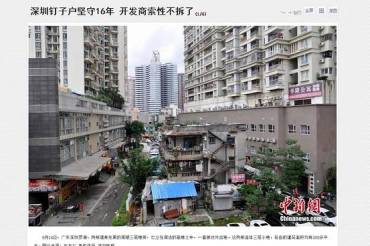
Standoffs between developers and property owners in China are usually grim affairs almost always ending the same way: demolition. One holdout in the southern city Shenzhen is scoring a rare–but perhaps mixed–victory after fending off the bulldozers for more than a dozen years.

Developer Shenzhen Xiafeilong Real Estate has given up knocking down a three-story building belonging to unidentified owners in the city’s Luohu district, according to state-owned China News Service.

Photographs online show the water-stained facade of the three-story building, juxtaposed against newer high-rise apartments that are more than 20-stories high.

Resistance by homeowners to development usually draws sympathy from ordinary Chinese, who often complain that local governments in their zeal for growth and revenues favor developers and ignore property rights. Holdouts like the Shenzhen building have become popular symbols of resistance, known as “nail houses”  because they stick out like nails from a flat surface, such as a razed construction site for example.

“The fact that the government decides you’re going to move and the price you’re going to accept as compensation results in nail houses. It’s a form of negotiation tactic, or sometimes, an act of civil disobedience,” said Michael Cole, a property market observer and founder of real estate website Mingtiandi.com.

Xiafeilong, the developer, couldn’t be reached for comment, nor could the owner or owners of the nail house, who weren’t identified in media reports or in a government statement on the matter.

The three-story building appears to be mostly for residential use, with a computer repair shop at a corner storefront, according to photos and media accounts. A female employee answering the phone at the computer repair shop said she wasn’t aware of any demolition plans or faced any pressure to move.

China News Service said the landlord and the developer spent years on legal battles after they couldn’t agree on compensation for the demolition in 2000.

Xiafeilong initially wanted to build a high-rise apartment and offered the owner an apartment in the new development as compensation, according to Shenzhen Business News. The owner demurred as he wanted cash compensation or another home in a nearby complex, the Shenzhen Business News said in a 2014 article.

In 2013, the space around the nail house became a car park for residents in the surrounding residential towers, China News Service said. The Shenzhen government’s Internet Information Office, in a posting on its official social media account, said the developer realized that the nail house “did not impact its main development, so it simply stopped asking.

”Unlike previous nail-house standoffs, support online was more mixed. Some praised the outcome. “This shows that Shenzhen is civilized, unlike other places,” said a web user on the comments section following pictures of the nail house hosted by Tencent Holdings.

Others, however, saw it as an example of the landlord’s bad timing or greed. Prices for apartments and land in Shenzhen have soared by more than 60% on a year-over-year basis in recent months.

“The nail-house owner has a heart which not content like a snake that wants to swallow an elephant,” said another web-user. “Why could other parties come to an agreement but not you?

”A hotpot restaurant owner in a nearby building said it’s a blow to the neighborhood. “It would be better to demolish the building and build something modern so that it can drive more economic development in the area. Right now it’s an eyesore,” said the shop owner, who declined to give his name.

The government’s Internet Information Office gave its own assessment, citing an unidentified–and perhaps fictitious–web user: “The owner of the nail-house weeps in the toilet.”

Source: In China, One Nail House Doesn’t Get Hammered – China Real Time Report – WSJ

12/06/2016

Electronics Maker Automates as China Costs Rise – China Real Time Report – WSJ

Regardless of the assurances, I am concerned that we have started down a very slippery slope and in a generation or two we will have personless factories and maybe personless offices.  When that happens where will humans be earning salaries and hence, are going to be buying the stuff the factories will be churning out and who will pay for the offices; and – indeed – what will be done in those offices?

Is anyone in government, whether Chinese, Swedish, Japanese or American, putting their minds to this frightening future?

“A new generation of machines is gradually transforming this electronics factory in China’s manufacturing hub.Inside the sprawling factory, owned by Jabil Circuit Inc.—the world’s third-largest contract manufacturer for companies such as Apple Inc. and Electrolux SA—robotic arms assemble circuit boards as driverless components-laden carts glide nearby. Machines also are starting to replace workers in checking circuit-board assemblies for errors.

“This is the past,” said David Choonseng Tan, an operations director at Jabil, pointing to a line of workers hunched over the assembly line. “And this,” he said, gesturing to a line of machines next to them, “is the future.”

Rapidly changing product models make it challenging for electronics companies like Jabil to automate all aspects of the assembly process, according to John Dulchinos, a vice president at the company. Still, Jabil has increasingly embraced automation and advanced technology, a shift encouraged by the Chinese government as the world’s second-largest economy grapples with labor shortages and high costs that are making neighboring countries like Vietnam increasingly competitive for mass production.

Manufacturers elsewhere in the world are also investing in automation and robotics in an effort to wean themselves off “chasing the needle”—moving to ever-lower-cost countries in pursuit of cheap labor.

In Stockholm, Sweden, roughly 8,000 miles away from China, fuel-cell maker myFC has built a 2,000 square-foot smart factory that will eventually have five robots doing the work of 20 full-time humans. The robots assemble power cards used for portable electronic devices while 3D printers churn out prototypes of new designs.

“We are building one cell, then we can export that to any country, any customer,” says Bjorn Westerholm, chief executive of myFC.

Jabil says that it’s hoping that a key piece of its automation—a boxy white platform it calls Flexi-Auto Cell—can also be redeployed at factories elsewhere in the world. The idea, according to Jabil, is for technology to be able to emulate the worker’s flexibility in switching from one task to another.

Jabil’s vision of manufacturing, however, isn’t one in which machines will replace workers completely, but rather one in which they’re freed up to focus on less-tedious tasks.

“We are not going for a lights-off factory,” says KC Ong, a senior vice president of operations for Jabil. In the factory of the future, “we’ll still have a lot of people.””

Source: Electronics Maker Automates as China Costs Rise – China Real Time Report – WSJ

10/06/2016

China now rivals US and Europe as growth engine for Asian exports | South China Morning Post

China is now an equal or even bigger driver of export growth in neighbouring economies than the US and EU combined, marking a significant shift in the economic pecking order since the 2008 global financial crisis.

That’s according to research by Deutsche Bank AG economists who weighed up the influence of the US and China over the rest of Asia through the prism of export growth, as well as the currency and bond markets.China committed to free trade, market reforms, says senior official

In Taiwan and Indonesia, for example, the growth of China’s gross domestic product (GDP) dominates the US and European Union’s as a source of export demand. In other economies, the trading giants are equally important.

“This is noticeably different from the pre-crisis years when China was much less important –- bordering on irrelevance – as an engine of growth in the region,” Deutsche analysts led by Asia-Pacific chief economist Michael Spencer wrote in a note.

After a rocky start to the year, China has been aided in its growth prospects by a record surge in credit in the first quarter. Key indicators for May are expected to show that the economy is continuing to find its footing and growth is on track to hit the Communist Party’s goal of 6.5 per cent to 7 per cent for 2016.

The International Monetary Fund in April upgraded its China growth forecasts by 0.2 percentage point for this year and next, following signs of “resilient domestic demand” and growth in services that offset weakness in manufacturing.

China needs market-driven interest rate system to help yuan become global currency: economists

Beyond the pace of GDP growth, China’s currency gyrations are also increasingly important across the region. While the dollar still drives volatility in most Asian currencies, the yuan is as least as important for fluctuations in the Malaysian ringgit and South Korean won and is growing in significance for other exchange rates, except the Philippines peso.

“Asia is far from being a ‘yuan bloc’, but idiosyncratic shocks to the yuan cannot be ignored,” according to the Deutsche analysts.

The People’s Bank of China (PBOC) surprised traders this week by setting the reference rate at weaker-than-expected levels, helping send the currency to its biggest declines in four months versus a trade-weighted basket that includes the yen and the euro. The rate’s fixing had become more predictable since early February after the PBOC pledged greater transparency and the yuan increasingly tracked moves in the dollar against major currencies. That was after a sudden weakening of the yuan in January fuelled fears of a devaluation and triggered global market turmoil. During the subsequent three months, the central bank adopted a more market-based system to set the rate and said the basket would play a bigger role.

China cooling imports are sending a huge chill across the global economy

But the US still dominates in the bond markets, and moves in Treasury yields continue to steer Asian bond trading. And even if Asia central banks don’t match rate tightening by the US Federal Reserve, financial conditions in the region may tighten if US yields increase.

“We find only weak evidence that fluctuations in Chinese yields have any impact on other countries’ bond markets,” the analysts said.

Source: China now rivals US and Europe as growth engine for Asian exports | South China Morning Post

10/06/2016

Is China Rattled By the India-U.S. Love-In? – India Real Time – WSJ

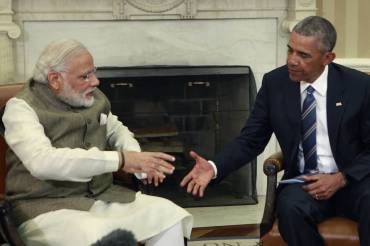
Indian Prime Minister Narendra Modi has made strengthening ties with the U.S. one of his key foreign-policy objectives, as the two countries seek to counterbalance China’s growing footprint in Asia.

In a speech to a joint meeting of the U.S. Congress Wednesday, the conclusion of a three-day trip to the country, Mr. Modi didn’t directly mention China, but said: “In Asia, the absence of an agreed security architecture creates uncertainty.

”A strong India-U.S. partnership can “help ensure security of the sea lanes of commerce and freedom of navigation on seas,” he added.

So is the beefed-up alliance between the two countries making Beijing uncomfortable? The country’s press provides some clues.

Source: Is China Rattled By the India-U.S. Love-In? – India Real Time – WSJ

Law of Unintended Consequences

continuously updated blog about China & India

ChiaHou's Book Reviews

continuously updated blog about China & India

What's wrong with the world; and its economy

continuously updated blog about China & India