You must watch this video. Inspirational (at least to me).
http://shareably.net/little-boy-and-girl-sing-you-raise-me-up-on-chinese-show/
continuously updated blog about China & India

You will be living in their world, very soon

Beware the Waking Dragon
“SEX, sex, sexual intercourse, penis, penis, vagina.”
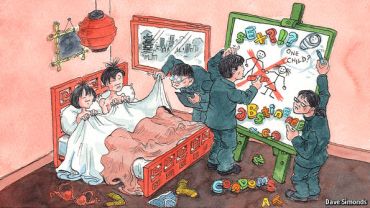
More than 150 undergraduates are sitting in a lecture hall at China Agricultural University in Beijing, shouting loudly. Many are sexually active, or soon will be. Yet for most it is the first sex education class they have attended.
Their instructor hopes that shouting such words will help youngsters talk more openly about sex. Lu Zhongbao, a 24-year-old forestry student, says he was told as a child that he “emerged from a rock”. When he started having sex with his university girlfriend he had little idea about contraception. This evening he arrived an hour early armed with another question: will masturbating damage his health?
It is not just China’s economy that has loosened up since 1979. The country is in the midst of a sexual revolution. A 2012 study found that more than 70% of Chinese people have sex before marriage. Other polls put that figure lower but consistently indicate that over the past 30 years, more young Chinese are doing it, with more partners, at a younger age. But a lack of sex education means that many are not protecting themselves, resulting in soaring abortion rates and a rise in sexually transmitted diseases.
The Communist Party has stuck its nose into people’s bedrooms for 30 years through its harsh family-planning policies. Yet taboos on sex before marriage prevailed, the result of paternalistic—not religious—values about female chastity, with a dose of Communist asceticism thrown in. Pre-marital sex fell foul of a range of laws, including the catch-all charge of “hooliganism”, only scrapped in 1997.
The social climate remains chilly. Most news items about sex involve scandals or crimes. Schools ban pupils from dating and many deploy “morality patrols” to root out flirting or frolicking couples. Sex outside wedlock is not illegal but children born to unmarried mothers face obstacles obtaining a hukou, or household residency, that entitles them to subsidised education and welfare. Yet with greater freedom from their parents, more money and increasing exposure to permissive influences from abroad, China’s youth are clearly separating sex from procreation.
Education on the subject is compulsory in Japan, South Korea and Taiwan—societies that have some cultural similarities with China. But most Chinese schools teach only basic anatomy.
This is not entirely for lack of trying. Pilot campaigns in Shanghai and Beijing schools in the 1980s were incorporated into a nationwide programme in 1988 but it was never implemented. In 2008 the Ministry of Education included sex education in the national health and hygiene curriculum. The barriers are not just prudery. Like football, fashion and other teenage pastimes, sex (and learning about it) is seen as a distraction from studies. “Sex is not an exam subject,” says Sheng Yingyi, a 21-year-old student.
Where classes happen, most students are merely given a textbook. “Happy Middle School Students”, written for 12- to 15-year-olds in 2006 and still widely used, refers to sperm meeting egg without describing the mechanics of intercourse. A more explicit volume for primary-school pupils published in 2011, which did explain how sperm were delivered, was criticised for being pornographic.
The dominant message is to abstain. A 2013 review by UNESCO and Beijing Forestry University noted the prevalence of “terror-based” sex education, with content largely focused on the horrors of pregnancy, abortion and HIV. Earlier this month a university in Xi’an in central China ran a course entitled “No Regrets Youth” where students received a “commitment card”, essentially a pledge to remain a virgin until marriage.
FOR anybody who fears that China’s interest in elephants’ tusks could spell doom for the great beasts, there have been two pieces of good news.

On September 25th Xi Jinping, the Chinese president, joined Barack Obama in pledging “significant and timely steps” to halt commercial trade in ivory. Then on October 15th China announced a one-year ban on the import of ivory hunting trophies from Africa, closing a big loophole. Wildlife activists are delighted. These moves should have “a profound effect” on elephant numbers, says Peter Knights of WildAid, a charity.
The world’s elephant population has dived from 1.2m in 1980 to under 500,000 today. In 1989 the sale of ivory was banned worldwide. But in 1999 and again in 2008, the Convention on International Trade in Endangered Species (CITES), a conservation pact, allowed the sale of stockpiles of ivory from southern Africa to China. The countries vowed to use the proceeds for conservation; China claimed it had a robust registration system that would keep illegal ivory out. But conservationists rightly predicted the concession would fuel more smuggling and so more killing.
Permitted sales became a cover for illegal ones. In 2010-12 about 100,000 elephants were slain for their tusks. In the past five years, Mozambique and Tanzania have lost half their elephants to poaching.
This dire trend reflects China’s deeper engagement with Africa, combined with corruption and the presence of criminal gangs. But it seems that Chinese leaders have seen the trade’s effects on their reputation, says Dominic Dyer of the Born Free Foundation, a charity. They should now close the legal carving workshops and ban the domestic trade, too, he adds.
Despite strong demand for ivory among China’s rising middle class, attitudes may gradually be changing. As of 2012, nearly half of Chinese people saw elephant poaching as a problem, according to a survey by WildAid. The figure has been boosted by the support of celebrities. Yao Ming, a basketball player, and Jackie Chan, an actor, appear on posters everywhere with the message: “When the buying stops, the killing can too.” The government has donated $200m worth of media space every year since 2008.
Opinion on ivory has shifted fast, says Mr Knights, partly because of the success of another campaign, to protect sharks. In the markets of Guangzhou, the global centre for the trade, dried shark fins have fallen from 3,000 yuan ($470) per kilo five years ago to 1,000 yuan today, as Chinese people abjure shark-fin soup, a delicacy.
WildAid raised its voice over that issue, too, but more important was the Communist Party’s ban in 2013 of shark-fin soup at official banquets, part of a drive against corruption and excess. The Hong Kong government followed, as did airlines and hotels. A survey in 2013 found 85% of people said they had stopped eating shark-fin soup in the past three years.
One scourge is untouched by all this: the illegal trade in rhinoceros horn. More than 1,200 rhinos were killed for their horns in 2014 in South Africa alone, up from just 13 killed in 2007. This partly reflects a huge rise in demand in Vietnam, but China is also a consumer. Ground rhino horn is believed to cure fever and improve sexual performance. One kilo can cost up to $70,000.
Ominously, some African nations now want a one-off sale of rhino-horn stocks, as happened twice with ivory. To secure this, South Africa must win two-thirds of the member states at the next CITES conference, which it hosts next year. Mr Dyer hopes other countries, including China, will dissuade the Africans. “We are in exactly the same place we were with ivory nearly ten years ago,” he frets.
China’s Shan Dong Sun Paper Industry Joint Stock Co (002078.SZ) said on Monday it would spend about $1.36 billion to build a pulp mill in the United States in its first investment outside the country.
The facility is expected to break ground in 2016 and start operations in 2018, Sun Paper spokesman Song Weihua told Reuters.
The mill in the southeastern state of Arkansas is slated to make fluff pulp, a raw material for diapers and sanitary products.
On Friday Sun Paper Chairman Li Hongxin signed a memorandum of understanding for this at a ceremony in Jinan which was attended by U.S. Commerce Secretary Penny Pritzker and Arkansas Governor Asa Hutchinson.
The U.S. Food and Drug Administration has approved the company to manufacture paper at the mill, Sun Paper said in a statement to the Shanghai Stock Exchange on Monday.
The investment by the northern China-based company is the latest in a slew of deals by Chinese manufacturers looking to diversify their operations and take advantage of initiatives and rebates in western countries.
Shandong Tranlin Paper Co Ltd invested $2 billion in a paper and fertilizer plant in Virginia last year. (reut.rs/1PUY1r4)
Sun Paper declined to give details on its financing of the project, although sources said the company is likely to involve a combination of equity and debt.
Source: China’s Sun Paper to build $1.36 billion facility in U.S. | Reuters
ASKED what they think of Lu Hao, their governor, residents of Harbin, capital of the north-eastern province of Heilongjiang, often reply with the word xiaozi. This roughly translates as “young whippersnapper”.

Mr Lu’s youthfulness is indeed striking. Born in 1967, he is the youngest of China’s current provincial governors. He was also the youngest to hold most of his previous positions. Those include factory boss at a large state-owned enterprise, deputy mayor of Beijing and leader of the Communist Youth League, an important training ground for many a national leader.
China’s system of political succession produces occasional surprises, such as the purge three years ago of another provincial leader, Bo Xilai, on the eve of what appeared to be his likely elevation to the pinnacle of power, the Politburo Standing Committee, alongside Xi Jinping, who is now president. But at least since the Communist Party began institutionalising succession arrangements in the 1990s, high-flyers have often been easy to spot. Mr Lu is one of them.
His stint at the youth league was of greatest portent. The organisation is something like an American fraternity club (without the misbehaviour)—its members form close ties which are often maintained in their later careers. Its leaders have a tendency to move into high national office. Hu Yaobang, a party chief in the 1980s, grew to prominence in the league, as did Hu Jintao, Mr Xi’s predecessor. Li Keqiang, the current prime minister, is also an ex-head of the league. Mr Lu’s stint in that role from 2008-13 made him an obvious rising star. His subsequent promotion to a provincial governorship confirmed this impression.
Youth is on his side. The next rung on the ladder to the top may be induction into the 25-member Politburo, possibly as early as 2017. But it will not be until around the time of the party’s 20th congress in 2022—a year after its 100th birthday—that Mr Xi will retire and Mr Lu will have a chance to shine, likely as one of the (now seven) members of the Standing Committee. He will then be 55, a year older than Mr Xi was when he joined the body in 2007. That would give Mr Lu a good few years at the top: Standing Committee members are expected to retire around 70. He would be a member of what party officials already call the “sixth generation” of Communist leaders (the first having been led by Mao Zedong, Mr Xi representing the fifth).
There are several other likely members of the upcoming generation. They include Hu Chunhua, Mr Lu’s predecessor as head of the youth league who is now the party boss of the southern province of Guangdong; and Sun Zhengcai, the party chief of Chongqing, a south-western region. One rising star has already fallen, however. Su Shulin was thought to have bright prospects until he was removed as governor of coastal Fujian province after being snared in a corruption investigation in October.
China’s media often drop hints of who to watch. Mr Lu’s appointment as Heilongjiang’s governor (a few months after he became the youngest full member of the party’s 370-strong Central Committee) was accompanied by a flurry of celebratory articles in the party’s main mouthpiece, the People’s Daily, and other newspapers. They emphasised Mr Lu’s youth, impeccable work ethic and solid record of excellent performance in his previous jobs.
Source: The north star | The Economist
Yale Zhang, the head of Shanghai-based consultancy Automotive Foresight, called the export of the Buick Envision SUV from China to the U.S. a “landmark.”
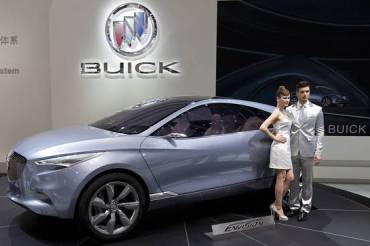
“It means that China’s manufacturing quality has met the requirements of the world’s strictest market,” he said.
GM introduced the Buick Envision SUV in China last October. Since then, it has been one of the best-selling cars sold by GM in the country. According to the China Association of Automobile Manufacturers, a government-backed industry group, the Envision ranked seventh in China’s fast-growing SUV market in October, with monthly sales of 17,300 vehicles. Data from Automotive Foresight show that sales of Buick Envision SUVs totaled 100,826 cars in the period from January to September.
Despite the progress, experts say that Chinese home-grown car manufacturers will continue struggling to compete with foreign brands, even in China.
China is already the world’s largest market for cars in terms of sales and production. But global auto makers have been slow to ship Chinese vehicles to the U.S. and Europe on worries that Western buyers would shun them over quality concerns. European car maker Volvo Car Corp., which is owned by China’s Zhejiang Geely Holding Group Co., was the first to challenge that assumption when it started shipping sedans from a plant in China to the U.S. this spring. A Volvo China spokesman declined to disclose how many Chinese-made Volvos have been shipped to the U.S., saying only that it is a “small volume.”
A study released by automotive industry consultants J.D. Power in October shows that although Chinese car makers have been improving in quality in recent years, they still lag behind international brands in producing reliable vehicles. According to the study, Chinese brands had 120 problems for every 100 vehicles this year, compared with 131 in 2014 and 155 in 2013. International brands had 98 problems for every 100 vehicles in 2015.
“Buick is a household brand in the U.S.,” said Ms. Li from Deren Electronic. “American consumers are probably not aware that the car is made in China. But Chinese local auto brands, like Chery and Geely, are little known outside of China.” Victor Yang, a spokesman for Zhejiang Geely Holding Group Co., said that as a global player, it’s normal for GM to sell its China-made cars at home in the U.S. “All the cars made by foreign companies in China should be produced in line with their global standards,” Mr. Yang said.
“Geely aims to sell its cars to developed markets including the U.S. By doing so, our quality and technology will be well recognized,” he said, without specifying a time frame. Jin Yibo, a vice president for Chery Automobile, said that Chinese home-grown auto makers “will absolutely go to the U.S. and other developed markets to sell their cars.”
But he cautioned: “It will take time.”
Source: In ‘Milestone’ Move, GM to Sell Chinese-Made Cars in U.S. – China Real Time Report – WSJ
A widely held Western view of China is that its stunning economic success contains the seeds of imminent collapse. This is a kind of anchoring bias,1 which colors academic and think-tank views of the country, as well as stories in the media. In this analysis, China appears to have an economy unlike others—the normal rules of development haven’t been followed, and behavior is irrational at best, criminal at worst.
There’s no question, of course, that China’s slowdown is both real and important for the global economy. But news events like this year’s stock-market plunge and the yuan’s devaluation versus the dollar reinforce the refrain, among a chorus of China watchers, that the country’s long flirtation with disaster has finally ended, as predicted, in tears. Meanwhile, Chinese officials, worried about political blowback, are said to ignore advice from outside experts on heading off further turmoil and to be paranoid about criticism.
My experience working and living in China for the past three decades suggests that this one-dimensional view is far from reality. Doubts about China’s future regularly ebb and flow. In what follows, I challenge five common assumptions.
A key tenet of the China-meltdown thesis is that the country has simply not established the basis for a sustainable economy. It is said to lack a competitive, dynamic private-enterprise structure and to have captured most of the value possible from cheap labor and heavy foreign investment already.
Clearly, China lacks some elements of a modern market economy—for example, the legal system falls short of the support for property rights in advanced countries.2 Nonetheless, as China-economy scholar Nicholas Lardy recently pointed out, the private sector is vibrant and tracing an upward trend line. The share of state-owned enterprises in industrial output continues to drop steadily, from 78 percent in 1978 to 26 percent in 2011.3 Private industry far outstrips the value added in the state sector, and lending to private players is growing rapidly.
In fact, much of China’s development model mirrors that of other industrializing and urbanizing economies in Asia and elsewhere. The high savings rate, initial investments in heavy industries and manufacturing, and efforts to guide and stabilize a rapidly industrializing and urbanizing economy, for example, resemble the policies that Japan, South Korea, and Taiwan followed at a similar stage of their development. This investment-led model can lead to its own problems, as Japan’s experience over the past 20 years indicates. Still, a willingness to intervene pragmatically in the market doesn’t imply backwardness or economic management that’s heedless of its impact on neighboring economies and global partners.
Furthermore, China’s reform initiatives4 since 2013 are direct responses to the structural changes in the economy. The new policies aim to spur higher-value exports, to target vibrant emerging markets, to open many sectors for private investors, and to promote consumption-led growth rooted in rising middle-class incomes. Today, consumption continues to go up faster than GDP, and investors have recently piled into sectors from water treatment to e-commerce. These reforms are continuing at the same time China is stepping up its anticorruption drive, and the government hasn’t resorted to massive investment spending (as it did in 2008). That shows just how important the reforms are.
Think tanks, academics, and journalists alike maintain that China has, at best, a weak capacity to innovate—the lifeblood of a modern economy. They usually argue as well that the educational system stomps out creativity.
My work with multinationals keen on partnering with innovative Chinese companies suggests that there’s no shortage of local players with a strong creative streak. A recent McKinsey Global Institute (MGI) study describes areas where innovation is flourishing here.5 Process innovations are propelling competitive advantage and growth for many manufacturers. Innovation is at the heart of the success of companies in sectors adapting to fast-changing consumer needs, so digital leaders like Alibaba (e-commerce) and Xiaomi (smartphones) are emerging as top global contenders. Heavy investment in R&D—China ranks number two globally in overall spending—and over a million science and engineering graduates a year are helping to establish important beachheads in science- and engineering-based innovation. (See “Gauging the strength of Chinese innovation.”)
To believe this, you need to think that the Chinese are content with a dirty environment and lack the financial muscle to clean things up. OK, they got things wrong in the first place, but so did most countries moving from an agrarian to an industrial economy.
In fact, a lot that’s good is happening. Start with social activism. A documentary on China’s serious air-pollution problems (Under the Dome), by Chai Jing—a former journalist at China Central Television (CCTV), the most important state-owned broadcaster—was viewed over 150 million times in the three days after it was posted online, in March 2015. True, the 140-minute video, which sharply criticizes regulators, state-owned energy companies, and steel and coal producers, was ultimately removed. But the People’s Daily interviewed Chai Jing, and she was praised by a top environmental minister.
China is spending heavily on abatement efforts, as well. The nation’s Airborne Pollution Prevention and Control Action Plan, mandating reductions in coal use and emissions, has earmarked an estimated $277 billion to target regions with the heaviest pollution.6That’s just one of several policy efforts to limit coal’s dominance in the economy and to encourage cleaner energy supplies. My interactions with leaders of Chinese cities have shown me that many of them incorporate strict environmental targets into their economic master plans.
To believe this, you would have to think, as many skeptics do, that the Chinese economy is fundamentally driven by overbuilding—too many roads, bridges, and buildings.7 In fact, as one economist has noted, this is a misperception created by the fact that the country is just very big. An eye-popping statistic is illustrative: in 2013, China consumed 25 times more cement than the US economy did, on average, from 1985 to 2010. But adjusted for per-capita consumption and global construction patterns, China’s use is pretty much in line with that of South Korea and Taiwan during their economic booms.8
China’s rising debt, of course, continues to raise alarms. In fact, rather than deleveraging since the onset of the financial crisis, China has seen its total debt quadruple, to $28.2 trillion last year, a recent MGI study found.9 Nearly half of the debt is directly or indirectly related to real estate (prices have risen by 60 percent since 2008). Local governments too have borrowed heavily in their rush to finance major infrastructure projects.
While the borrowing does border on recklessness, China’s government has plenty of financial capacity to weather a crisis. According to MGI research, state debt hovers at only 55 percent of GDP, substantially lower than it is in much of the West. A recent analysis of China’s financial sector shows that even in the worst case—if credit write-offs reached unprecedented levels—only a fairly narrow segment of Chinese financial institutions would endure severe damage. And while growth would surely slow, in all likelihood the overall economy wouldn’t seize up.10
Finally, the stock-market slide is less significant than the recent global hysteria suggests. The government holds 60 percent of the market cap of Chinese companies. Moreover, the stock market represents only a small portion of their capital funding. And remember, it went up by 150 percent before coming down by 40.
Rumors drive the volatility on China’s stock exchange, often in anticipation of trading by state entities. The upshot is that the direct impact on the real economy will most likely be some reduction in consumer demand from people who have lost money trading in shares.
On this one, I agree with the bears, but it’s not just China that must worry about this problem. While economic growth has benefited the vast majority of the population, the gap between the countryside and the cities is increasing as urban wealth accelerates. There’s also a widening breach within urban areas—the rich are growing richer.11
Urban inequality and a lack of access to education and healthcare are not problems unique to China. People here and in the West may find fruitful opportunities to exchange ideas because the pattern across Western economies is similar. Leaders of the central government have suggested policies to improve income distribution and to create a fair and sustainable social-security system, though implementation remains a matter for localities and varies greatly among them.
In short, China’s growth is slower, but weighing the evidence I have seen, the sky isn’t falling. Adjustment and reform are the hallmarks of a stable and responsive economy—particularly in volatile times.
China and Taiwan must not let proponents of Taiwan’s independence split them, China’s President Xi Jinping told Taiwan’s president on Saturday at the first meeting between leaders of the two sides since China’s civil war ended in 1949.
Ma Ying-jeou, president of self-ruled, democratic Taiwan, where anti-Beijing sentiment has been rising ahead of elections, called for mutual respect for each other’s systems and said Taiwan people were concerned about mainland missiles pointing their way.
The talks, at a luxury hotel in the neutral venue of Singapore, lasted less than an hour but were heavy with symbolism.
The two leaders shook hands and smiled in front of a mass of journalists when they met, with Xi wearing a red tie, the color of the Communist Party, and Ma a blue one, the color of his Nationalist Party.
Moving into a meeting room, Xi, speaking first and sitting opposite Ma, said Chinese people on the two sides of the Taiwan Strait had the ability and wisdom to solve their own problems.
“No force can pull us apart because we are brothers who are still connected by our flesh even if our bones are broken, we are a family in which blood is thicker than water,” Xi said.
In response, Ma said he was determined to promote peace across the Taiwan Strait and that relations should be based on sincerity, wisdom and patience.
Ma also asked Xi indirectly to respect Taiwan’s democracy.
“Both sides should respect each other’s values and way of life to ensure mutual benefit and a win-win situation across the straits,” he said.
China’s Nationalists, also known as the Kuomintang (KMT), retreated to Taiwan after losing the civil war to the Communists, who are still in charge in Beijing.
The mainland has never renounced the use of force to bring what it considers a breakaway province under its control.
Speaking to reporters after the talks, Ma said he hoped Xi could pay attention to China’s missile deployment – the island has long fretted about batteries pointed its way – to which Xi replied that was not an issue about Taiwan, he said.
“I at least raised the issue, and told him that the Taiwanese people have questions and concerns about it, and hope he will treat it with importance,” Ma said.
Zhang Zhijun, the head of China’s Taiwan Affairs Office, said Xi told Ma that the biggest threat to the peaceful development of relations was pro-independence forces. “The compatriots on both sides should unite and firmly oppose it,” Zhang said.
Source: Oppose Taiwan independence, China’s Xi says at historic meeting | Reuters
The choice of Singapore as the venue for Saturday’s historic meeting between the Chinese and Taiwanese presidents is a diplomatic coup for the famously neutral city-state.

The meeting is the first between China’s President Xi Jinping and Taiwan’s President Ma Ying-jeou, and the first time leaders from both sides have met since Taiwan and China split in 1949.
The decision to hold the summit in Singapore shows it maintains its reputation as a rare neutral ground in a region where tensions are rising, even after the death in March of the city-state’s widely-respected former leader, Lee Kuan Yew.
Mr. Ma said this week the summit is the product of years of diplomacy between the two sides, and that Singapore was chosen for its impartiality.
Singapore’s selection as host “further highlights Singapore’s role in international politics,” said Huang Jing, professor of U.S.-China relations and director of the Centre on Asia and Globalisation at the National University of Singapore. The meeting “gives Singapore a status that no other country except Singapore can match up to,” he said, adding that the city-state’s relations with both sides will likely improve as a result.
Mr. Lee, Singapore’s first and longest-serving prime minister, earned the admiration of many national leaders, such as Britain’s Margaret Thatcher and Ronald Reagan in the U.S., during his 31-year tenure in the top job. Many foreign leaders, including U.S. President Barack Obama, sought meetings with Mr. Lee to discuss international relations, both before and after he stepped down.
His son, Lee Hsien Loong, now heads a government that is keen to maintain Singapore’s regional relations. The younger Mr. Lee, although viewed as a competent and respected leader, has not inherited his father’s reputation for straight-talking, no-nonsense politics, and doesn’t yet have the leadership experience that drew his predecessor favor with other politicians in Asia.
Still, the younger Mr. Lee has worked to maintain diplomatic and economic relations with Singapore’s neighbors, sharing his father’s view that a small, multi-ethnic island surrounded by much larger countries is best served by fostering strong relationships, rather than by taking sides. It’s a position that is rare in a region brimming with diplomatic tension, as shown by current disputes such as the conflicting territorial claims in the South China Sea.
Singapore, which Chinese ethnic majority and large Indian and Malay populations, is frequently chosen as a diplomatic hub, hosting Asia-Pacific Economic Cooperation meetings and other summits. It is also the annual venue for the Shangri-La Dialogue, a high-profile international security conference.
The Shangri-La Hotel, close to the city’s central shopping district, was the venue of choice for Saturday’s meeting between Messrs. Xi and Ma. The National University of Singapore’s Mr. Huang said that allowed the Singapore government to maintain its policy on China-Taiwan relations by avoiding hosting the meeting in a government facility.
The city-state maintains a “one-China” policy on cross-strait issues, officially recognizing only Beijing as China’s capital. Lee Kuan Yew broke Singapore’s relations with Taiwan in 1990 to open them with China, although relations with both sides today are close. He also helped ease decades of tension between the two nations. In 1993, shortly after Mr. Lee stepped down from his post as prime minister to take an advisory role, Singapore hosted the first talks between representatives of China and Taiwan since the two sides clashed.
Source: China-Taiwan Summit a Success for Singapore – China Real Time Report – WSJ
The sales are a significant rise compared with the three million phones the company said it sold in its first year of business in India.
 Xiaomi aims to sell 80 to 100 million smartphones this year and has been valued by investors at $46 billion. But increasing competition at home, from companies who mimic Xiaomi’s business model of selling high-end phones at low prices, will make it tough to meet its sales target. So the five-year-old startup is setting its hopes on growth in India. Xiaomi found success in China by combining razor-thin profit margins on hardware with glitzy product launches that helped build its fanbase.
The closely-held company needs to prove that it can export its business model to other countries to continue to justify its high valuation.
Xiaomi introduced its first model, the Mi 4i, outside China, at a launch in New Delhi in April. In August, it said it would begin assembling its entry-level Redmi 2 Prime in India.
Xiaomi’s recent success in India shows that its model can work there, said the company’s Vice President Hugo Barra. Since January, sales in the South Asian country increased 45% quarter-over-quarter, on average.
The firm’s Indian office is tweaking Xiaomi’s model of Internet flash sales, designed to boost demand and cut costs. During the company’s sale for the Hindu holiday Diwali, items were sold for as little as a rupee. “Some people bought a Mi TV for one rupee,” Mr. Barra said. One rupee is equal to $0.02. The heavily discounted deals meant that Xiaomi spent nothing on marketing. “This is an idea the India team came up with that you will see reused in other markets,” he said. The company still faces challenges in India.
While Xiaomi says it sold three million phones in its first year in India, market leader Micromax Informatics Ltd. says it sells three million phones a month. While the Chinese company relies mostly on online sales to cut costs, the majority of Micromax’s sales are in brick-and-mortar retail outlets, where most Indians still shop.
It remains unclear how much India can help bolster Xiaomi’s balance sheet. While smartphone sales are booming in India, the market is still tiny.
Xiaomi’s Mr. Barra says the company will slowly add to its catalogue of products in India, which currently includes phones and a handful of accessories like headphones and a fitness tracker. In China, Xiaomi sells everything from water purifiers to power strips.
Next up could be the company’s line of Internet routers, Mr. Barra said, which includes a model with six terabytes of storage.
“We are looking at bringing the router family to India,” he said. But don’t expect the smart bathroom scale to show up in India right away, or even the company’s newest gadget: a cut-price Segway-like device. “We carefully select things that will sell in India in good volumes. We have to be thoughtful and plan carefully.”
Source: Xiaomi’s Big Bet on Indian Internet Revolution Starts to Pay Off – China Real Time Report – WSJ

continuously updated blog about China & India
continuously updated blog about China & India
continuously updated blog about China & India
 CHINDIA ALERT: You'll be living in their world, very soon