Archive for ‘China alert’

20/12/2019

China welcomes Sri Lankan president’s remarks over Hambantota Port

COLOMBO, Dec. 20 (Xinhua) — China highly appreciates the remarks made by Sri Lankan President Gotabaya Rajapaksa over the Hambantota Port agreement, said a statement released by the Chinese Embassy in Colombo on Friday.

China is willing to guide related enterprises to work with the Sri Lankan side to expedite implementing the established agreement and further promote the prosperity and development of Hambantota Port, according to the statement.

China highly respects the sovereignty and territorial integrity of Sri Lanka and the security and control of Hambantota Port was entirely in the hands of the Sri Lankan government and navy, which is no difference from any other port in Sri Lanka, said the statement.

President Rajapaksa, in a meeting with Colombo based foreign correspondents on Thursday said he would not renegotiate the Hambantota Port agreement with China and would look to ensure that the security of the port lied with the Sri Lankan side.

Rajapaksa said he would not renegotiate the commercial agreement of the project as that had already been signed, and he was studying to see if the entire security of the port was under Sri Lanka’s control.

Rajapaksa said if additional clauses are needed to be inserted to reassure the security deal, then the government would go ahead with it.

The president further said that he would not renegotiate the 99-year lease agreement of the port, as this was purely commercial and he did not want to convey a message to investors that commercial agreements would change every time a new government was elected to power.

Source: Xinhua

20/12/2019

China, Brazil deepen aerospace cooperation

TAIYUAN, Dec. 20 (Xinhua) — China and Brazil will continue to develop more satellites together and deepen aerospace cooperation, said Chinese and Brazilian officials after a new satellite jointly produced by the two countries was sent into space on Friday.

The launch of the China-Brazil Earth Resource Satellite-4A (CBERS-4A) also marks the 45th anniversary of the establishment of diplomatic relations between China and Brazil.

The two countries will expand the application of the CBERS satellite data in their own countries and those participating in the Belt and Road Initiative, said Wu Yanhua, deputy director of the China National Space Administration (CNSA).

China and Brazil have devised a 10-year plan to collaborate in developing remote-sensing, meteorological and communication satellites. The cooperation could also be expanded to deep space exploration, lunar exploration, manned space and aerospace education, said Wu.

In 1988, the two countries signed an agreement to start the China-Brazil earth resource satellite program. They shared the costs and separately developed its systems. Both sides brought different advantages to the table and were highly complementary.

In 1999, the first China-Brazil earth resource satellite was successfully launched, giving each country their first transmission-type remote-sensing satellite. It was rated one of the top 10 scientific and technological advances of the year in China.

It was also the first satellite jointly developed by China and another country, and was a model for space technology cooperation among developing countries.

The partnership has lasted more than 30 years. The two countries have sent six satellites into space, and the resolution of the images has gradually improved.

The China-Brazil earth resource satellites have provided more than 6 million images to users in the two countries, and the data have been widely used in agriculture, forestry, water conservation, land and resources, environmental protection, and disaster prevention and mitigation, helping the Brazilian government monitor the Amazon rainforest and the country’s environmental changes, according to the CNSA.

The remote-sensing data are also provided to developing countries for free, and have helped monitor disasters such as forest fires in Australia, floods in Pakistan, and an earthquake and tsunami in Japan.

China has also helped train Brazilian personnel, and scientists and technologists of the two countries have conducted many exchanges over the past 30 years.

“The space cooperation between China and Brazil has been very successful, and sets a good example for space cooperation among developing countries,” Wu said.

Brazilian Minister of Science, Technology, Innovation and Communication Marcos Cesar Pontes said the cooperation has contributed to international economic and social development.

Source: Xinhua

20/12/2019

Uganda asks China to buy African agricultural products to cut trade deficit

  • President Yoweri Museveni tells Chinese diplomat Yang Jiechi trade between African nations is unsustainable
  • China is the continent’s largest trading partner and lender, but imports mostly its oil and minerals
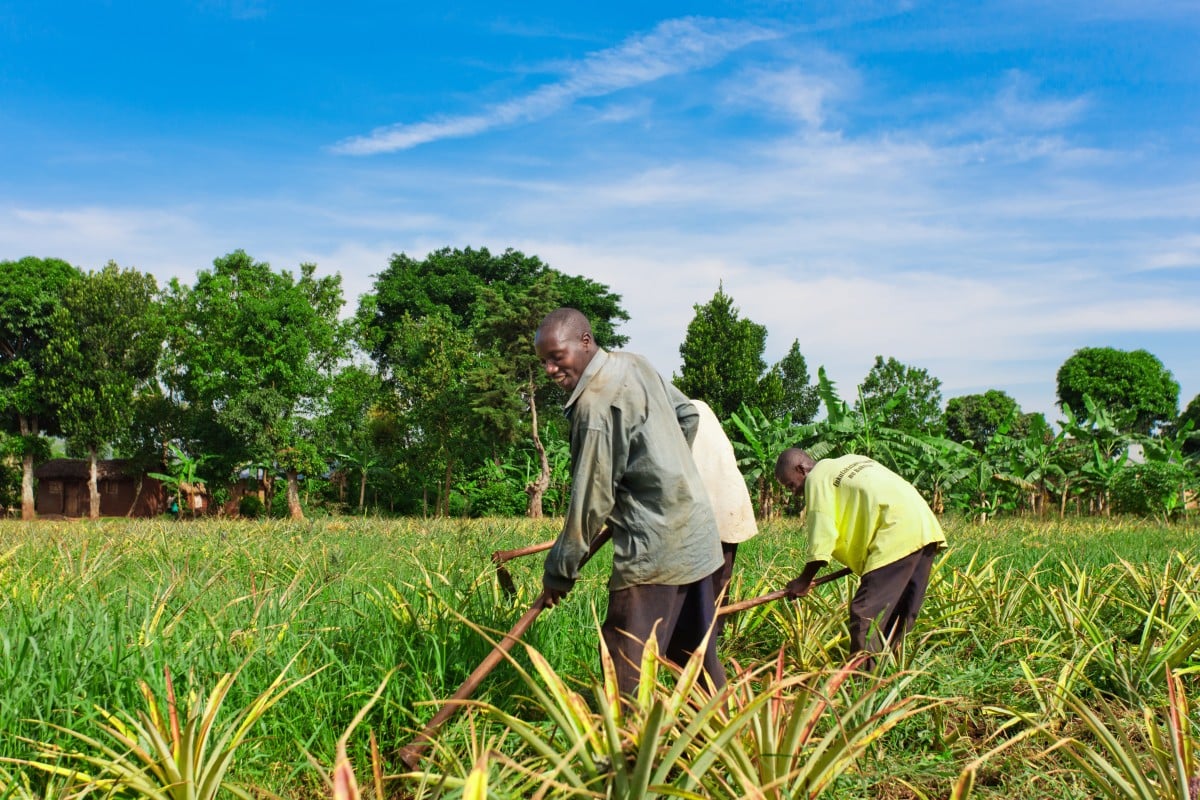
Africa has a surplus of agricultural products, Uganda’s leader says. Photo: Shutterstock
African countries want China to open up its markets to the continent’s agricultural products, Uganda’s President Yoweri Museveni told top Chinese diplomat Yang Jiechi after Beijing vowed to boost agricultural trade with the United States.
In a meeting with Yang in Uganda, Museveni said an increasing number of African
 countries wanted to sell to the lucrative Chinese market.
He said Africa had a surplus of agricultural products despite exporting to Europe and the US, partly because trade between African countries remained low.
“Africa’s 54 countries have come together through market integration in blocs such as Comesa [Common Market for Eastern and Southern Africa] that are not sustainable,” Museveni said. “The surplus of production needs another intercontinental market and an external market like China to come in.”

China is Africa’s largest trading partner, having surpassed the US in 2009. Africa’s trade with China was worth US$204 billion last year, according to figures from China’s Ministry of Commerce.

China is also the continent’s largest lender, having advanced more than US$143 billion between 2000 and 2017 to African countries for building motorways, power dams and railways, according to figures from the China Africa Research Initiative at the Johns Hopkins School of Advanced International Studies in Washington.
Museveni said China was interested in importing some aquatic products from Uganda, such as the Nile perch fish, which he said had high demand globally.
China pledges another US$60b to Africa as leaders meet in Beijing
4 Sep 2018

With China exporting far more to the continent than it imports from it, African nations are aiming to restructure the trading relationship to narrow their trade deficit by working out what Chinese consumers want and how to get it to them.

China’s imports of African goods are dominated by natural resources such as crude oil, copper, cobalt, iron ore, diamonds, gold and titanium, which it buys to meet its industrial and manufacturing needs. In return, Africa imports machinery, electronics and manufactured consumer goods.

The call from Museveni came after China and the US reached an interim deal to resolve aspects of their protracted trade war. US Trade Representative Robert Lighthizer has said that, under the deal, China had agreed to buy US$80 billion in American agricultural products over two years.
China has not confirmed the figure, but the deal is being watched closely by China’s other trading partners. Since the dispute with the US began in July last year, Beijing has diversified its agricultural product suppliers to include Argentina, Australia, Brazil, Germany, New Zealand and Spain.
China’s agricultural trade with Africa increased from US$650 million in 2000 to US$6.92 billion in 2018, Chinese Minister of Agriculture Han Changfu said this month. Han said he hoped that the figure would reach US$10 billion in the next decade.

Museveni said in the meeting with Yang that Beijing had “supported the continent’s prosperity through trade”, and that the memorandum of understanding he had signed last year with Chinese President Xi Jinping had “intensified the relationship” between their countries. A pipeline being constructed to Tanzania, to connect Uganda’s oil fields to the Indian Ocean, is being funded partly by Chinese investment, along with new industrial parks.

Yang said China would work with Uganda to implement the agreements reached by their respective heads of state and the outcomes of the Beijing Summit of the Forum on China-Africa Cooperation.

Beijing set to pledge further billions to Africa despite lending fears 2 Sep 2018

He said China would help Uganda to grow its economy, increase trade between the two countries, and build industrial parks and infrastructure. Beijing would continue to fund projects through the Belt and Road Initiative, its transcontinental infrastructure investment strategy, and through Uganda’s development plan Uganda Vision 2040, without providing details.
After Uganda, Yang will continue his African tour by visiting Congo-Brazzaville. The tiny oil-dependent central African nation recently fell into debt distress when global oil prices dropped, forcing Beijing to restructure its loans to unlock a bailout by the International Monetary Fund.
Xi denies China is spending money on African ‘vanity projects’
3 Sep 2018

Yang will then visit the West African nation of Senegal, where Beijing is funding large infrastructure projects.

Several other leading Chinese diplomats have made trips to Africa this year, including Foreign Minister Wang Yi, who visited South Africa in October. Last week, Ji Bingxuan, vice-chairman of the Standing Committee of the National People’s Congress – the permanent body of China’s legislature – led a group of officials visiting Congo-Brazzaville.

Source: SCMP

20/12/2019

Fishermen cry foul as China bids to fix drought-hit lake

WUCHENG, China (Reuters) – After wading through mudflats, Fan Xinde, a 36-year-old fisherman, sifts old copper coins from the debris scooped from the bed of a dwindling river that feeds China’s biggest freshwater lake, the Poyang.

As residents fled invading Japanese troops 80 years ago, the coins were packed into boxes and sent down the river on rafts, with many sinking without trace. They are now being unearthed as the water in the Poyang recedes to its lowest level in decades, providing a small income for fishermen like Fan facing an uncertain future.

On Jan. 1 2020, China will ban fishing in environmentally sensitive regions along the Yangtze, China’s longest river, and by the start of 2021, fishing throughout the Poyang itself will be prohibited for at least 10 years.

Fan, who has worked half his life on the lake, said he and as many as 100,000 other fishermen were being unfairly blamed for mounting local environmental problems and must now find other ways to make a living.

“Our sources of income have been cut off. We don’t have anything else,” he said. “To be honest, we shouldn’t be collecting the coins at all because they are owned by the state, but it is only a tiny amount.”

The government says excessive fishing has brought stocks down to perilously low levels and put endangered species under threat, including China’s last surviving river mammal, the Yangtze finless porpoise.

But the Poyang, described by President Xi Jinping as a vital “kidney” filtering the water supplies of 40% of China’s population, has also been hurt by intensive sand mining, untreated wastewater and the impact of the giant Three Gorges Dam some 560km (350 miles) upstream.

Water in the Poyang, which spills off from the middle reaches of the Yangtze River in Jiangxi province, routinely declines in winter. But the lake is now at its lowest in 60 years. With little rain since July, hundreds of shriveled anchovies and tiny shellfish have been baked into the exposed shoreline flats.

DAMS AND QUARRIES

Residents blame the Three Gorges Project for the problems facing the lake, with its vast 660km-long (410 mile-long) reservoir storing huge volumes of water behind a giant dam for power generation.

“The Three Gorges is blocking off all the water,” said Zhang Yingsheng, a 59-year old fisherman picking clams from the edge of the lake. “Every winter is like this now, but this year is especially low because of the drought.”

With the 181-metre (600-foot) dam reducing the Yangtze’s flow in winter, water from the Poyang drains quickly and easily back into the river.

But the primary cause of problems is the two decades of intensive sand mining in the Poyang, said David Shankman, professor at the University of Alabama, who studies the lake.

“Sand mining has made the drainage channel (in the northern part of the lake) deeper and wider” accelerating the draining, he said.

Zhang said quarrying by giant dredgers had hit fishing hard, with deeper lake beds making it harder for fishermen to deploy their nets. The sand industry had also damaged the lake’s ecosystem, he said.

According to policy plans seen by Reuters, the local government is already working to reduce mining activity in the Poyang after banning it in the Yangtze River two decades ago.

Annual sand production will be limited to 39.9 million tonnes from 2019-2024, down 26.9% compared to the 2014-2018 period. Dredgers will be permitted to mine 65 square km (25 square miles) of the lake area, a quarter of the previous level.

The new policy was a sign officials had recognized sand mining had become a serious environmental liability, Shankman said, but simply stopping the activity wouldn’t automatically solve the problems.

“It depends not only on the extent of the mining, and not on the total area of the mining, but where they are mining,” he said.

IRREVERSIBLE

China is in the middle of a campaign aimed at ending big and “destructive” development along the Yangtze. President Xi said restoring the Poyang was a crucial element of the plan to revitalize regions along the river’s banks.

But experts say many of the devastating changes to the lake are irreversible.

Even before the Three Gorges Dam and the sand mining boom, the lake had already shrunk considerably as a result of an earlier campaign to reclaim farmland and curb floods through the use of dykes and diversions.

“Everything in the lake has been dramatically altered by landscape change, dams and sand mining,” said Shankman. “The amount of water in the lake, in the Yangtze River, the sediment going in and going out – everything is affected by human activity.”

Source: Reuters

17/12/2019

China and Europe are partners not rivals, says Chinese FM

BRUSSELS, Dec. 16 (Xinhua) — China and Europe are partners, not rivals, Chinese State Councilor and Foreign Minister Wang Yi said in a speech here on Monday evening.

“In recent years, we have heard an argument suggesting that China has become a rival of Europe in the economic field and should be subjected to all sorts of restrictions,” Wang said while speaking at an event hosted by the European Policy Center, a think tank.

“Although it is not the mainstream view, we must raise our vigilance and not allow it to go unchecked. In fact, any cool-headed person with an objective view will see that, for China and the EU, cooperation far outweighs competition, and our areas of consensus far exceed differences. We are partners, not rivals,” he said.

Over the years, Europe has benefited tremendously from cooperation with China, Wang said.

Between 2001 and 2018, EU’s exports to China grew by 14.7 percent on average each year, more than twice the EU’s average export growth, supporting about four million local jobs. Investment of Chinese companies in the EU has also been growing. As of the end of 2017, Chinese companies have set up over 2,900 ventures in EU countries through direct investment, creating 176,000 jobs for the local people, according to Wang.

Acquisition of Volvo by China’s automaker Geely injected new energy to the Volvo factory in Ghent, Belgium, retaining and creating over 6,000 jobs, said the senior Chinese official, noting that China is now the most profitable market for European companies — as many as 7 million cars, or nearly a quarter of all automobiles sold in China, are produced by European automakers.

Wang said that despite trade friction and the world economy in downward pressure, economic and trade cooperation between China and the EU has bucked the trend and kept growing.

He pointed out that in the first 11 months of this year, trade between China and the EU, according to statistics, was estimated to grow by 7.7 percent from last year. From January to July, EU investment in China was up by 18.3 percent year on year, and sixty percent of EU companies regard China as a leading destination of investment.

China, as a major developing country with some 1.4 billion people, a 900-million-strong labor force and 120 million market entities, has solid internal growth momentum, great resilience, and enormous economic potential, said Wang, adding that China is bound to offer a new round of cooperation opportunities and share the development dividend with countries in Europe.

Source: Xinhua

12/12/2019

China has ‘important concerns’ about Boeing 737 MAX design changes: regulator

BEIJING/SYDNEY (Reuters) – China has raised “important concerns” with Boeing Co (BA.N) regarding design changes proposed to end the grounding of the Boeing 737 MAX airliner, Beijing’s aviation regulator said on Thursday, declining to say when it might fly in China again.

The remarks broke months of public silence from China, the first country to ground the 737 MAX in March following the second deadly crash involving the model in less than five months.

“Boeing is currently upgrading its software to the 737 MAX, and it is still a work in progress. The CAAC has raised our important concerns on areas such as system reliability and safety assessment,” Civil Aviation Administration of China (CAAC) spokesman Liu Lusong told reporters at a monthly briefing.

The 737 MAX would need to be re-certified and pilots given comprehensive and effective training before it could fly in China, he reiterated.

He said the causes of two crashes that killed 346 people needed to be investigated with effective measures put in place to prevent another one.

China in April said it had set up a task force to review design changes submitted by Boeing.

The U.S. Federal Aviation Administration (FAA) will not allow the 737 MAX to resume flying before the end of 2019, its chief, Steve Dickson, said on Wednesday.

“We continue to work with the FAA, CAAC and global regulators on addressing their concerns in order to safely return the MAX to service,” Boeing said in a statement on Thursday.

FAA approval would allow the 737 MAX to resume flights in the United States, but individual national regulators could keep the planes grounded pending completion of their own reviews.

“Due to the trade war, the jury is still out on when China would reintroduce the aircraft,” said Rob Morris, global head of consultancy at Ascend by Cirium.

Source: Reuters

10/12/2019

China Uighurs: Detainees ‘free’ after ‘graduating’, official says

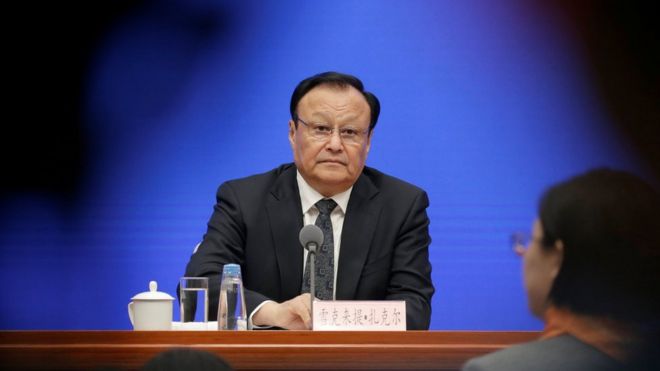
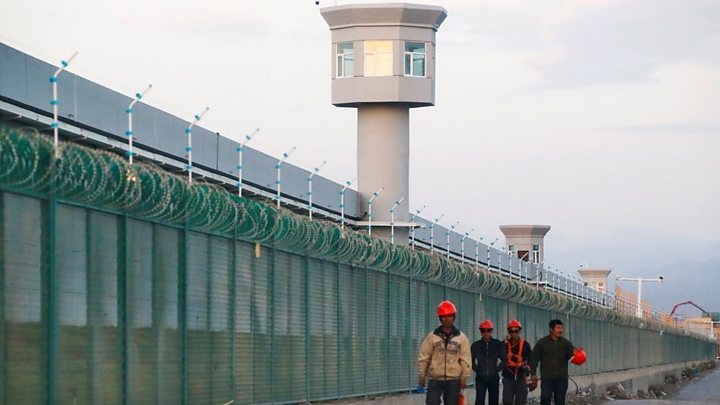
Shohrat Zakir, deputy secretary of the Communist Party committee for China's Xinjiang and chairman of the Xinjiang Uighur Autonomous Region, attends a news conference in BeijingImage copyright REUTERS
Image caption Shohrat Zakir told reporters the released detainees now had an “improved quality of life”

A senior Chinese official has said that all of the people sent to detention centres in the western region of Xinjiang have now been released.

Regional government chairman Shohrat Zakir told reporters those held in what Beijing say are “re-education camps” had now “graduated”.

It is not possible to independently verify Mr Zakir’s claims.

Rights groups say the camps are actually high-security prisons, holding hundreds of thousands of Muslims.

Beijing has always denied this, despite the prevalence of high-security features, like watchtowers and razor wire, and leaked documents detailing how inmates at the so-called centres are locked up, indoctrinated and punished.

What is Beijing saying?

Mr Zakir told reporters in the Chinese capital on Monday that everyone in the centres had completed their courses and – with the “help of the government”- had “realised stable employment [and] improved their quality of life”.

He said that, in future, training would be based on “independent will” and people would have “the freedom to come and go”.

Media caption The BBC’s John Sudworth meets Uighur parents in Turkey who say their children are missing in China

BBC China correspondent John Sudworth points out it is not possible to verify the claims, as access for journalists is tightly controlled and it’s impossible to contact local residents without placing them at risk of detention.

In recent months, independent reports have suggested that some camp inmates are being released, only to face house arrest, other restrictions on their movement or forced labour in factories.

What could be behind the move?

Pressure has been increasing on Beijing in recent months.

A number of high-profile media reports based on leaks to the New York Times and the International Consortium of Investigative Journalists (ICIJ) have shone a spotlight on what is happening at the network of centres, which are believed to hold more than a million people, mainly Uighur Muslims and other minorities.

Then last week, the US House of Representatives passed a bill to counter what it calls the “arbitrary detention, torture, and harassment” of the Uighurs, calling for “targeted sanctions” on members of the Chinese government – and names the Communist Party secretary in the Xinjiang autonomous region, Chen Quanguo.

The bill still needs approval from the Senate and from President Donald Trump.

However, Mr Zakir used the press conference to dismiss the numbers detained as “pure fabrication”, reiterating Beijing’s argument that the centres were needed to combat violent religious extremism.

Media caption“An electric baton to the back of the head” – a former inmate described conditions at a secret camp to the BBC

“When the lives of people of all ethnic groups in Xinjiang were seriously threatened by terrorism, the US turned a deaf ear,” Mr Zakir said at a press briefing.

“Now that Xinjiang society is steadily developing and people of all ethnicities are living and working in peace, the US feels uneasy, and attacks and smears Xinjiang.”

What’s going on in Xinjiang?

Reports of widespread detentions first began to emerge in 2018, when a UN human rights committee was told there were credible allegations that China had “turned the Uighur autonomous region into something that resembles a massive internment camp”.

Rights groups also say there’s growing evidence of oppressive surveillance against people living in the region.

The Chinese authorities said the “vocational training centres” were being used to combat violent religious extremism. However, evidence showed many people were being detained for simply expressing their faith, by praying or wearing a veil, or for having overseas connections to places like Turkey.

Presentational white space

Records seen by the BBC show China has deliberately been separating Muslim children from their families.

This is an attempt to “raise a new generation cut off from original roots, religious beliefs and their own language”, Dr Adrian Zenz, a German researcher, told BBC News earlier this year.

“I believe the evidence points to what we must call cultural genocide.”

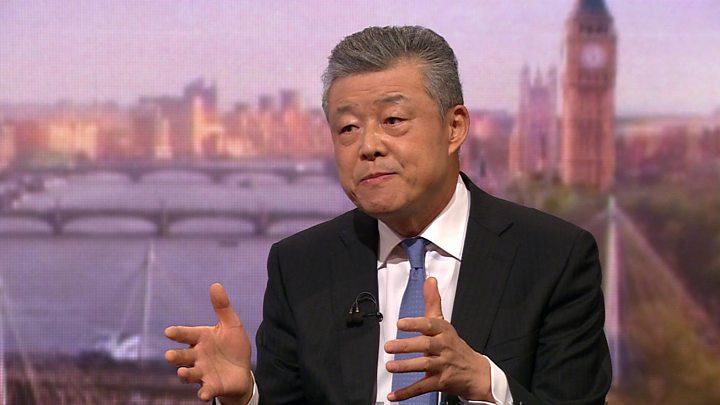
China’s ambassador to the UK said the allegations were “lies”.

Media caption Chinese Ambassador Liu Xiaoming dismisses evidence of a separation campaign in Xinjiang

Source: The BBC

09/12/2019

China, Myanmar pledge to strengthen communication, high-level exchanges

MYANMAR-NAY PYI TAW-CHINESE FM-MEETING

Myanmar’s State Counsellor and Foreign Minister Aung San Suu Kyi (R) meets with visiting Chinese State Councilor and Foreign Minister Wang Yi in Nay Pyi Taw Dec. 7, 2019. (Xinhua/U Aung)

NAY PYI TAW, Dec. 8 (Xinhua) — China and Myanmar pledged on Saturday to strengthen communication and high-level exchanges, according to a meeting held between Myanmar’s State Counsellor and Foreign Minister Aung San Suu Kyi and visiting Chinese State Councilor and Foreign Minister Wang Yi.

Wang said in light of the 70th anniversary of the establishment of their diplomatic relations next year, China and Myanmar should hold a series of celebrations, plan and prepare for high-level exchanges, comprehensively push forward cooperation in areas including economy, trade, people-to-people and cultural exchanges.

Wang said China and Myanmar should also carry forward the “Paukphaw” (fraternal) friendship, deepen the comprehensive strategic cooperative partnership and jointly build a community of shared future.

Wang said China is willing to promote China-Myanmar Economic Corridor from concept and plan into substantial implementation and build it into a flagship program of joint construction of the Belt and Road between the two countries.

Wang said infrastructure connectivity is framework of China-Myanmar Economic Corridor and the two sides should cooperate on pressing forward projects including Kyaukphyu Special Economic Zone and border economic cooperation zones.

Wang stressed that China always upholds democratization of international relations, advocates equality among countries, opposes interference in internal affairs of other countries, and disapproves of complicating bilateral issues by involving more parties.

Wang said China’s development will bring opportunities to the world, especially neighboring countries and China will stand firm with people of Myanmar during the future development process of the country.

Suu Kyi appreciated support extended by China on safeguarding national sovereignty, opposing foreign interference, promoting social and economic development of Myanmar, adding that Myanmar is willing to strengthen communication with China on international and regional issues and jointly uphold the purpose and principles of the UN Charter.

She said the two sides will seize the 70th anniversary of the establishment of their diplomatic relations as an opportunity to strengthen high-level exchanges, jointly build the Belt and Road as well as China-Myanmar Economic Corridor.

Wang also met with U Kyaw Tint Swe, minister of the State Counsellor’s Office, U Thuang Tun, minister of Investment and Foreign Economic Relations, U Han Zaw, minister for Construction, U Kyaw Tin, minister for International Cooperation, and attended the signing ceremony of a cooperation agreement on the same day.

Wang said China pays close attention to Rakhine issue and is ready to provide assistance on repatriation-related work and help promote economic development in Rakhine and improve people’s livelihoods. Meanwhile, Myanmar hopes that China continues to play an important and positive role in Rakhine issue.

Source: Xinhua

09/12/2019

China, Japan sign cooperation deals on energy saving, environmental protection

JAPAN-TOKYO-ENERGY SAVING-ENVIRONMENTAL PROTECTION-FORUM

Attendants from China and Japan exchange documents of cooperation projects at the 13th China-Japan Comprehensive Forum on Energy Saving and Environmental Protection in Tokyo, Japan, Dec. 8, 2019. Officials, entrepreneurs, experts and scholars from China and Japan discussed cooperation and inked agreements on 26 cooperation projects at the 13th China-Japan Comprehensive Forum on Energy Saving and Environmental Protection here on Sunday. (Xinhua/Du Xiaoyi)

TOKYO, Dec. 8 (Xinhua) — Officials, entrepreneurs, experts and scholars from China and Japan discussed cooperation and inked agreements on 26 cooperation projects at the 13th China-Japan Comprehensive Forum on Energy Saving and Environmental Protection here on Sunday.

Some 800 people attended the forum co-organized by the National Development and Reform Commission, Ministry of Commerce, Chinese embassy in Japan, and Japan’s Ministry of Economy, Trade and Industry, and the Japan-China Economic Association.

Deputy Director of the National Development and Reform Commission Zhang Yong briefed the attendants about China’s achievements in recent years in energy saving, emission reduction and development of environment-friendly industries.

Noting that this year marks the 70th anniversary of the founding of the People’s Republic of China, Zhang said China will continue to open up to the outside world at a higher level and improve the quality of the ecological environment at a new historical starting point.

He urged Japanese enterprises and institutions to take an active part in China’s energy conservation and environmental protection and work together to promote green and sustainable development.

China and Japan should strengthen policy communication and coordination, deepen bilateral practical cooperation, jointly explore the international market and boost people-to-people exchanges and cooperation, so as to deepen cooperation in energy conservation and environmental protection, he added.

Attendants held discussions on energy saving, circular economy, development of intelligent vehicle and new energy vehicle, clean coal technology and coal-fired power generation, as well as China-Japan long-term trade.

The two sides inked 26 cooperation projects in various areas, including energy saving, circular economy, pollution prevention and control, hydrogen energy and green technology innovation.

The China-Japan Comprehensive Forum on Energy Saving and Environmental Protection, first held in 2006, has seen agreement achieved on a total of nearly 400 cooperation projects and provides a good platform for enterprises, research organizations and local governments of the two countries to enhance cooperation.

Source: Xinhua

08/12/2019

China Focus: China’s paleolithic relics gain recognition from int’l experts

FUZHOU, Dec. 7 (Xinhua) — Chinese and foreign experts have marveled at the archaeological and anthropological value of the Wanshouyan Paleolithic Relics in east China’s Fujian Province.

Dozens of archaeological experts from China, Malaysia, Poland, Russia and Japan gathered in Sanming City on Friday and Saturday for a visit to the relics and academic exchanges.

“I have never seen such a thing,” said Lucyna Domanska, a professor with the Institute of Archaeology at the University of Lodz from Poland, pointing to a 120-square-meter space floored with pebbles inside a cavern.

The artificial floor, built about 40,000 years ago, is part of the Wanshouyan Paleolithic Relics, a habitat of human ancestors dating back as early as 200,000 years ago.

“This site is very exciting,” Domanska said. “It is important not only for Asia but for the whole world.”

Some of the relics are “unusual,” said Evgeny Rybin, a senior researcher at the Institute of Archaeology and Ethnography at the Siberian branch of the Russian Academy of Sciences, noting that “it could be a source of scientific advancements.”

Standing inside a cavern named Lingfeng where ancient stone choppers, scraping devices and hammering tools were unearthed, Rybin said the relics from this site broadened their understandings about the capabilities of ancient people.

“The relics show that ancient people not only used caves but also changed them to fit their lifestyles,” he said.

It is a contribution to the world, said Mohd Mokhtar Saidin, a professor and director of Malaysia’s Center for Global Archaeological Research.

“This is very important. Not every country has evidence of human activities 200,000 years ago, and not every region has this type of cave,” he added.

Inside the limestone hill of Wanshouyan, archaeological remains of the Paleolithic Age have been found in several caverns, which provide important evidence for studying human life as early as hundreds of thousands of years ago.

In 2000, the Wanshouyan Paleolithic Relics was listed as one of China’s top 10 archaeological discoveries of the year.

Source: Xinhua

Law of Unintended Consequences

continuously updated blog about China & India

ChiaHou's Book Reviews

continuously updated blog about China & India

What's wrong with the world; and its economy

continuously updated blog about China & India