Archive for ‘China alert’

24/05/2019

China, Russia vow to strengthen cooperation along Yangtze, Volga rivers

RUSSIA-CHEBOKSARY-WANG YONG-VOLGA-YANGTZE-COOPERATION-MEETING

Chinese State Councilor Wang Yong (L) and Igor Komarov, Russia’s Presidential Plenipotentiary Envoy to the Volga Federal District, co-chair the third meeting of the Council of Cooperation between the upper and middle reaches of the Yangtze River and the Volga Federal District in Cheboksary, Russia, May 23, 2019. (Xinhua/Bai Xueqi)

CHEBOKSARY, Russia, May 23 (Xinhua) — China and Russia pledged to strengthen cooperation along the Yangtze and Volga rivers as local governments from these areas on Thursday signed an array of cooperation deals.

The third meeting of the Council of Cooperation between the upper and middle reaches of the Yangtze River and the Volga Federal District was co-chaired by Chinese State Councilor Wang Yong and Igor Komarov, Russia’s Presidential Plenipotentiary Envoy to the Volga Federal District, in the Russian city of Cheboksary.

Wang said that both sides should work to achieve more outcomes from local governments cooperation and make such partnership a new growth area for China-Russia relations.

Komarov said the unique “Volga-Yangtze” mechanism has been fruitful in trade and investment cooperation as well as people-to-people exchanges, and Russia is ready to work with China for more achievements.

Source: Xinhua

23/05/2019

Boeing 737 Max: China’s top airlines seek compensation

China’s three biggest airlines are demanding compensation from Boeing over its grounded 737 Max fleet.

Air China, China Southern and China Eastern have filed claims for payouts, according to state media reports.

China’s regulator was the first to ground the fleet in the wake of two deadly crashes involving the US-made aircraft.

It comes on the eve of a meeting of global aviation regulators that will provide an update on the troubled jets.

The Chinese airlines are seeking compensation for losses incurred by the grounded fleet, as well as delayed deliveries of the 737 Max jets, according to reports.

China operates the largest fleet of Boeing 737 Max aircraft and was the first country to take the jets out of service after the Ethiopian Airlines 737 Max 8 crash in March.

The disaster killed all 157 people on board. In October, 189 people were killed in a Lion Air crash involving the same model.

Both crashes were linked to the jet’s Manoeuvring Characteristics Augmentation System, a new feature on 737 Max planes, which was designed to improve the handling of the jet and to stop it pitching up at too high an angle.

Last week, Boeing said it had completed development of a software update for its 737 Max planes.

The planemaker’s entire global fleet of 737 Max aircraft has been grounded since March and the firm is anxious to prove it is safe to return to the skies.

The move by China’s top airlines to seek compensation comes ahead of a closely watched summit of aviation regulators in Texas on Thursday.

The US Federal Aviation Administration (FAA) is due to provide an update on reviews of Boeing’s software fix and new pilot training.

The meeting in Texas will involve 57 agencies from 33 countries, including China, France, Germany and the UK, as well as the European Union Aviation Safety Agency.

But it is unclear if the planes will be back in the air before the end of the critical summer travel season.

Source: The BBC

23/05/2019

China Focus: China honors amputee demining soldier

BEIJING, May 22 (Xinhua) — Du Fuguo, a soldier who lost his eyes and arms in an explosion during a mine clearance operation, was honored by the Publicity Department of the Communist Party of China Central Committee on Wednesday.

Du, who was a demining soldier of the People’s Liberation Army (PLA), was awarded the title “role model of our times” at a ceremony in Beijing.

Du’s family members and fellow soldiers, as well as representatives from all walks of life, attended the award ceremony.

The 28-year-old soldier was seriously injured in the landmine explosion trying to protect his fellow soldier during the operation in southwest China’s Yunnan Province in October last year.

Du would have finished his military service in December 2018, just two months after the explosion.

In 2015, Du and over 400 fellow soldiers started clearing mines in the border area in Yunnan, where over 100 minefields were located.

“I couldn’t stay calm after getting to know the villagers living in the area suffered three explosions within 10 years,” said Du, who volunteered to participate in the demining operations in 2015.

Du’s father wished to become a solider at an early age, which was not fulfilled, while Du Fuguo joined the PLA in 2010.

“I am reflecting what kind of life is truly meaningful and valuable, and the only standard is what has been done for the country and for the people,” Du wrote in his application submitted for mine clearance operations.

“When the people are in need and the country is calling upon us, there is not even half a step that I can retreat,” he responded when being told mine clearance was dangerous.

A minefield Du worked has deterred local people from growing crops and picking tea. They beat gongs and sounded drums to welcome the arrival of the mine clearance group.

Over the past three years, Du has entered minefields over 1,000 times, defusing more than 2,400 mines and bombs.

“I feel like it is my destiny to carry out this mission and there was a voice calling me to clear the mines,” he wrote in his application.

While various equipment has been developed for mine clearance, it is believed that manual demining remains the most efficient method, albeit the most dangerous.

The explosion happened in an afternoon when Du and a fellow soldier tried to defuse a bomb, but it suddenly exploded and Du quickly protected his colleague who was left with only bruises.

“Step back and I’ll do the job,” Du said before he started the defusing work in which he lost his forearms and eyes.

One month later, in November last year, Du’s team members confirmed that the minefield where the explosion took place was safe to be used as farmland, meaning that the three-year demining operation had finished.

In the area where Du was injured, people have named tea picked this year as “Fuguo.” They are hoping that Du could come back to have a taste of his eponymous tea.

“Despite my lost hands, I have legs to continue chasing after dreams; despite my lost sight, as long as the sun can rise in my heart, my world remains blazing with color,” Du said.

Source: Xinhua

23/05/2019

Ozone layer: Banned CFCs traced to China say scientists

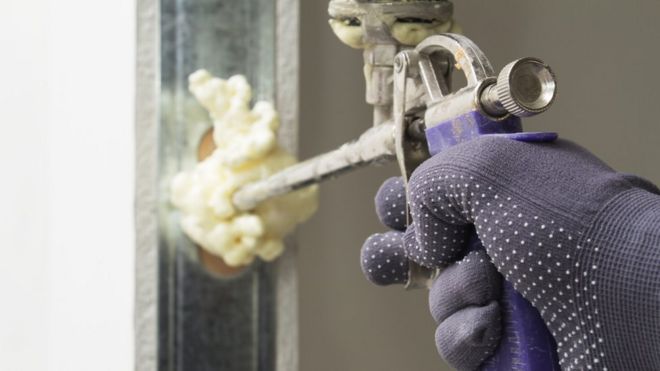
home insulationImage copyright GETTY IMAGES
Image caption Much of the CFC-11 gas has been used in home insulation

Researchers say that they have pinpointed the major sources of a mysterious recent rise in a dangerous, ozone-destroying chemical.

CFC-11 was primarily used for home insulation but global production was due to be phased out in 2010.

But scientists have seen a big slowdown in the rate of depletion over the past six years.

This new study says this is mostly being caused by new gas production in eastern provinces of China.

CFC-11 is also known as trichlorofluoromethane, and is one of a number of chloroflurocarbon (CFC) chemicals that were initially developed as refrigerants during the 1930s.

However, it took many decades for scientists to discover that when CFCs break down in the atmosphere, they release chlorine atoms that are able to rapidly destroy the ozone layer which protects us from ultraviolet light. A gaping hole in the ozone layer over Antarctica was discovered in the mid 1980s.

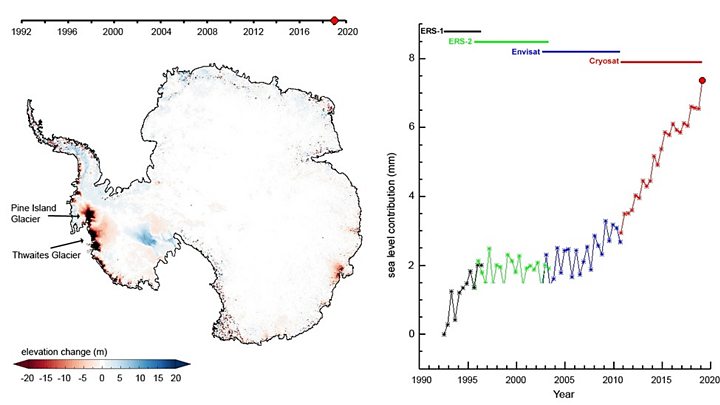
Media caption Twenty-five years of ice loss in the Antarctic

The international community agreed the Montreal Protocol in 1987, which banned most of the offending chemicals. Recent research suggests that the hole in the Northern Hemisphere could be fully fixed by the 2030s and Antarctica by the 2060s.

When was the CFC problem discovered?

CFC-11 was the second most abundant CFCs and was initially seen to be declining as expected.

However in 2018 a team of researchers monitoring the atmosphere found that the rate of decline had slowed by about 50% after 2012.

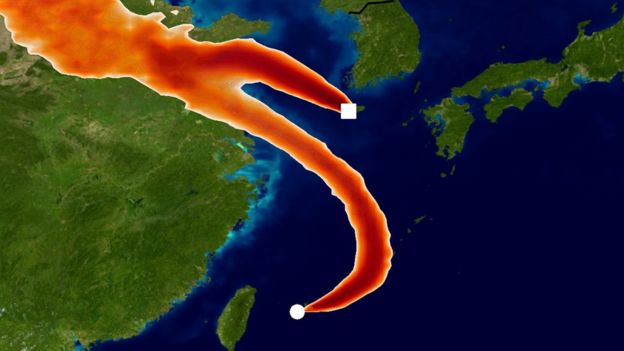
graphic
Image caption Monitoring stations in Korea and Japan were key to detecting the mystery sources of CFC-11

That team reasoned that they were seeing new production of the gas, coming from East Asia. The authors of that paper argued that if the sources of new production weren’t shut down, it could delay the healing of the ozone layer by a decade.

What did investigators find on the ground?

Further detective work in China by the Environmental Investigation Agency in 2018 seemed to indicate that the country was indeed the source. They found that the illegal chemical was used in the majority of the polyurethane insulation produced by firms they contacted.

One seller of CFC-11 estimated that 70% of China’s domestic sales used the illegal gas. The reason was quite simple – CFC-11 is better quality and much cheaper than the alternatives.

So what does this latest study show?

This new paper seems to confirm beyond any reasonable doubt that some 40-60% of the increase in emissions is coming from provinces in eastern China.

Using what are termed “top-down” measurements from air monitoring stations in South Korea and Japan, the researchers were able to show that since 2012 CFC-11 has increased from production sites in eastern China.

home insulationImage copyright GETTY IMAGES

They calculated that there was a 110% rise in emissions from these parts of China for the years 2014-2017 compared to the period between 2008-2012.

“This new study is based on spikes in the data on air that comes from China,” lead author Dr Matt Rigby, a reader at the University of Bristol, told BBC Inside Science.

“Using computer simulations of the transport of these gases through the atmosphere we can start to put numbers on emissions from different regions and that’s where we come up with this number of around 7,000 tonnes of extra CFC-11 emissions coming out of China compared to before 2012.

“But from the data, all we just see are the ultimate releases to the atmosphere, we don’t have any information on how that CFC-11 was used or where it was produced, it is entirely possible that it was manufactured in some other region, some other part of China or even some other country and was transported to the place where they are making insulating foams at which point some of it could have been emitted to the atmosphere.”

Where are the rest of the emissions coming from?

The researchers are not sure. It’s possible that the missing emissions are coming from other parts of China, as the monitoring stations just can’t see them. They could also be coming from India, Africa or South America as again there is very little monitoring in these regions.

Does this have implications for climate change?

Yes – the authors say that these CFCs are also very potent greenhouse gases. One tonne of CFC-11 is equivalent to around 5,000 tonnes of CO2.

“If we look at these extra emissions that we’ve identified from eastern China, it equates to about 35 million tonnes of CO2 being emitted into the atmosphere every year, that’s equivalent to about 10% of UK emissions, or similar to the whole of London.”

Will China clampdown on the production?

The Chinese say they have already started to clamp down on production by what they term “rogue manufacturers”. Last November, several suspects were arrested in Henan province, in possession of 30 tonnes of CFC-11.

Clare Perry from the Environmental Investigations Agency (EIA) said that the new findings re-affirmed the need to stamp out production.

“I think with this study, it is beyond doubt that China is the source of these unexpected emissions, and we would hope that China is leaving no stone unturned to discover the source of the CFC-11 production.

“Unless the production of the chemical is shut down it will be near impossible to end the use and emissions in the foam companies.”

The study has been published in the journal Nature.

Source: The BBC

23/05/2019

U.S. Navy again sails through Taiwan Strait, angering China

WASHINGTON (Reuters) – The U.S. military said it sent two Navy ships through the Taiwan Strait on Wednesday, its latest transit through the sensitive waterway, angering China at a time of tense relations between the world’s two biggest economies.

Taiwan is one of a growing number of flashpoints in the U.S.-China relationship, which also include a bitter trade war, U.S. sanctions and China’s increasingly muscular military posture in the South China Sea, where the United States also conducts freedom-of-navigation patrols.

The voyage will be viewed by self-ruled Taiwan as a sign of support from the Trump administration amid growing friction between Taipei and Beijing, which views the island as a breakaway province.

The transit was carried out by the destroyer Preble and the Navy oil tanker Walter S. Diehl, a U.S. military spokesman told Reuters.

“The ships’ transit through the Taiwan Strait demonstrates the U.S. commitment to a free and open Indo-Pacific,” Commander Clay Doss, a spokesman for the U.S. Navy’s Seventh Fleet, said in a statement.

Doss said all interactions were safe and professional.

Chinese Foreign Ministry spokesman Lu Kang said Beijing had lodged “stern representations” with the United States.
“The Taiwan issue is the most sensitive in China-U.S. relations,” he told a daily news briefing in Beijing.
Taiwan’s Defense Ministry said the two U.S. ships had sailed north through the Taiwan Strait and that they had monitored the mission.
Taiwan President Tsai Ing-wen said there was no cause for alarm.
“Nothing abnormal happened during it, please everyone rest assured,” she wrote on her Facebook page.
U.S. warships have sailed through the Taiwan Strait at least once a month since the start of this year. The United States restarted such missions on a regular basis last July.
The United States has no formal ties with Taiwan but is bound by law to help provide the island with the means to defend itself and is its main source of arms.
The Pentagon says Washington has sold Taipei more than $15 billion in weaponry since 2010.
China has been ramping up pressure to assert its sovereignty over the island, which it considers part of “one China” and sacred Chinese territory, to be brought under Beijing’s control by force if needed.
Beijing said a recent Taiwan Strait passage by a French warship, first reported by Reuters, was illegal.
China has repeatedly sent military aircraft and ships to circle Taiwan on exercises in the past few years and worked to isolate it internationally, whittling down its few remaining diplomatic allies.
The U.S. Defense Intelligence Agency released a report earlier this year describing Taiwan as the “primary driver” for China’s military modernization, which it said had made major advances in recent years.
On Sunday, the Preble sailed near the disputed Scarborough Shoal claimed by China in the South China Sea, angering Beijing.
The state-run China Daily said in an editorial on Wednesday that China had shown “utmost restraint”.
“With tensions between the two countries already rife, there is no guarantee that the presence of U.S. warships on China’s doorstep will not spark direct confrontation between the two militaries,” it said.
Source: Reuters
22/05/2019

China plans to remove all expressway toll booths by end of 2019

BEIJING, May 21 (Xinhua) — China has unveiled a guideline to meet the goal of removing all expressway toll booths at provincial borders by the end of this year.

Local governments should work to improve toll collecting systems and promote the application of non-stop electronic toll collection systems, according to the guideline released by the General Office of the State Council.

Meanwhile, related laws and regulations should be optimized, said the guideline.

Through the move, China aims to help solve the issue of expressway traffic congestion, enhance traffic efficiency and reduce logistics costs.

Source: Xinhua

22/05/2019

China, Kenya relations have developed with deep roots: Chinese envoy

NAIROBI, May 21 (Xinhua) — China and Kenya have deepened mutual political trust and expanded cooperation over the years, pushing their relations to the level of a comprehensive strategic cooperative partnership, Chinese Ambassador to Kenya Wu Peng said on Tuesday.

Wu said increased cooperation has seen China’s non-financial direct investment in Kenya record double-fold increase to about 520 million U.S. dollars in 2018.

“Now we have over 400 Chinese companies in Kenya, creating thousands of jobs for local community,” Wu said.

“Both sides enjoy frequent exchanges in education, science and culture. The China-Africa Joint Research Center and China-Kenya Joint Laboratory for Crop Molecular Biology have been operating smoothly in Kenya,” Wu said during the sixth press club meeting in Nairobi.

Since 2015, he said, China has provided over 67,000 training opportunities for Kenyans.

“Currently, over 2,400 Kenyan students are studying in China. In 2018, over 81,000 Chinese tourists traveled to Kenya for leisure and adventure,” he said.

Wu observed that China’s funding to Kenya and other developing countries is aimed at development.

“China always attaches high importance to debt sustainability. Before making decisions, Chinese companies and banks, even the third party, go through rigorous feasibility studies, evaluation, and review of a country’s credit rating,”said Wu, who used the occasion to discuss some hot topics about the China-Kenya partnership.

Huge infrastructural projects like the standard gauge railway (SGR) may take long to yield returns, but they are solid and valid assets, whose value will grow in time, he stressed.

The SGR, according to Wu, is a flagship project that showcases the fast speed and high quality of China-Kenya cooperation.

The building of Mombasa-Nairobi SGR has driven the Kenya’s economic growth by 1.5 percent and created 46,000 jobs for local residents.

He said the train shortened the Nairobi-Mombasa trip from over 10 hours to five hours. Since its launch in May 2017, with an average booking rate of 99 percent, over 2.77 million passengers have traveled by the SGR, and around 4.2 million tonnes of goods have been transported, said Wu.

In the first full year of operation, SGR earned nearly 10.33 billion Kenyan shillings (about 103 million dollars, which is very close to the operation cost of 120 million dollars a year, he said, adding that for an infrastructural project of SGR’s magnitude, it is not easy to achieve near break-even in one year.

China and Kenya are currently discussing the construction of the Mombasa Special Economic Zone and the Naivasha Industrial Park, said the ambassador.

“With the development of the industrial chain from railway transportation, port economy to industrial parks, we have every reason to believe that SGR will benefit Kenya’s efforts towards industrialization, and strongly boost Kenya’s GDP growth significantly.”

He noted that China does not pursue a policy of trade surplus with Kenya, adding it is paying great attention to Kenya’s desire to expand exports.

“We understand how important agricultural exports are to Kenya. Consequently, we have been working hard to expand China’s imports for Kenya’s agricultural produce,” said Wu.

Last year, China and Kenya signed an agreement on export of stevia to China. An agreement on the export of frozen avocados was also signed, which makes Kenya the first African country to export avocados to China, he added.

He said the two countries are working to seal the deal on export of fresh avocados, as well as working on other horticultural products.

Christopher Chika, head of Asia and Australasia affairs at Kenya’s Ministry of Foreign Affairs, said Kenya will continue to engage with China as long as the relationship is beneficial.

“Our relationship is based on mutual respect and equality. China plays a great role in stabilizing Africa and we shall work with the Chinese nationally, regionally and internationally,” Chika said.

Source: Xinhua

21/05/2019

China, EU sign milestone agreements on civil aviation cooperation

BELGIUM-BRUSSELS-CHINA-EU-CIVIL AVIATION-COOPERATION

Representatives from China and the European Union shake hands after signing agreements on civil aviation cooperation in Brussels, Belgium, on May 20, 2019. China and the European Commission on Monday signed two milestone agreements on civil aviation, marking an important step to implement the consensuses reached by leaders from both sides during the China-EU Summit held last month. (Xinhua/European Union)

BRUSSELS, May 20 (Xinhua) — China and the European Commission on Monday signed two milestone agreements on civil aviation, marking an important step to implement the consensuses reached by leaders from both sides during the China-EU Summit held last month.

The two agreements are Agreement on Civil Aviation Safety between China and the European Union (EU) and Agreement between China and the EU on Certain Aspects of Air Services.

Hailing the two aviation agreements as “a first big step”, European Commission President Jean-Claude Juncker said: “In an increasingly unsettled world, Europe’s partnership with China is more important than ever before.”

“The EU firmly believes that nations working together makes the world a stronger, safer and more prosperous place for all,” Juncker said in a statement.

The two agreements “will create jobs, boost growth and bring our continents and peoples closer together. Today’s agreements show the potential of our partnership (with China) and we should continue on this path of cooperation,” he said.

Feng Zhenglin, head of the Civil Aviation Administration of China (CAAC), said the two agreements will further promote cooperation between China and Europe in civil aviation fields while enriching the content of China-EU comprehensive strategic partnership.

“Signing of the first agreement and its airworthiness certification annex is a response to the call for aviation industry development in both China and Europe, and is conducive to the two-way exchanges of civil aviation products developed and manufactured by both sides,” Feng said ahead of the signing ceremony.

“The signing of the second one will remove the contradiction between the bilateral air services agreements signed by China and EU member states and EU law, and will provide legal certainty for the operation of air carriers from both sides,” said Feng.

“The two agreements will for sure bring China-EU civil aviation cooperation to a new stage and a new high,” he added.

“The two agreements … are highly professional and reflect the broadness and depth of the two sides’ cooperation. Both China and the EU stand for multilateralism and want to build an open world. Strengthening cooperation in the field of civil aviation is a strong example of walking the talk,” Ambassador Zhang Ming, head of the Chinese Mission to the EU who also attended the ceremony, said in a statement.

The main objective of the first agreement is to support worldwide trade in aircraft and related products, the EU said in the statement.

“This agreement will remove the unnecessary duplication of evaluation and certification activities for aeronautical products by the civil aviation authorities, and therefore reduce costs for the aviation sector. The agreement will also promote cooperation between the EU and China towards a high level of civil aviation safety and environmental compatibility,” it said.

The second agreement marks China’s recognition of the principle of EU designation, whereby all EU airlines will be able to fly to China from any EU member state with a bilateral air services agreement with China under which unused traffic rights are available, read the statement.

Up until now, only airlines owned and controlled by a given member state or its nationals could fly between that member state and China. The conclusion of a horizontal agreement will thereby bring bilateral air services agreements between China and EU member states into conformity with EU law — a renewed legal certainty which will be beneficial to airlines on both sides, it said.

Source: Xinhua

21/05/2019

China names and shames major state enterprises for breaching pollution limits

  • Heavy industry among companies fined up to US$1 million amid fears economic slowdown is undermining war on pollution
  • Environment ministry fines business for exceeding limits and says some regions have used slowing economy as excuse to backslide on curbs
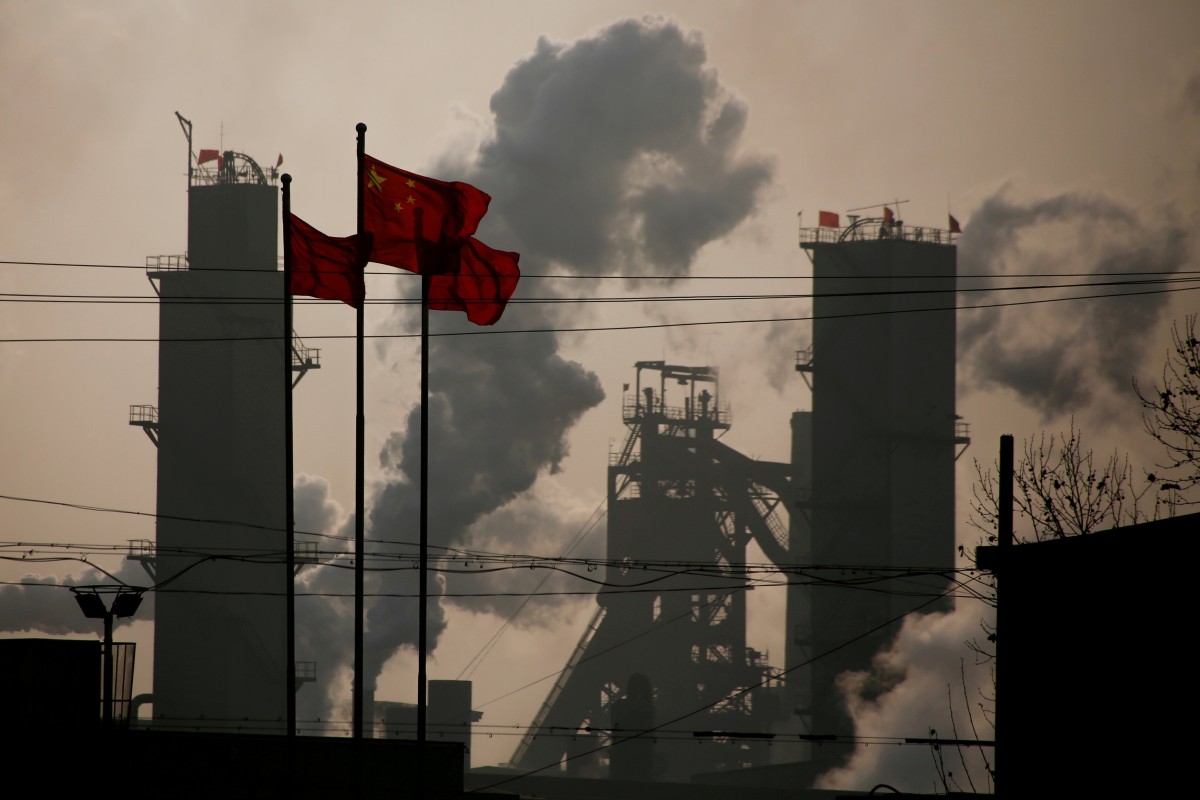
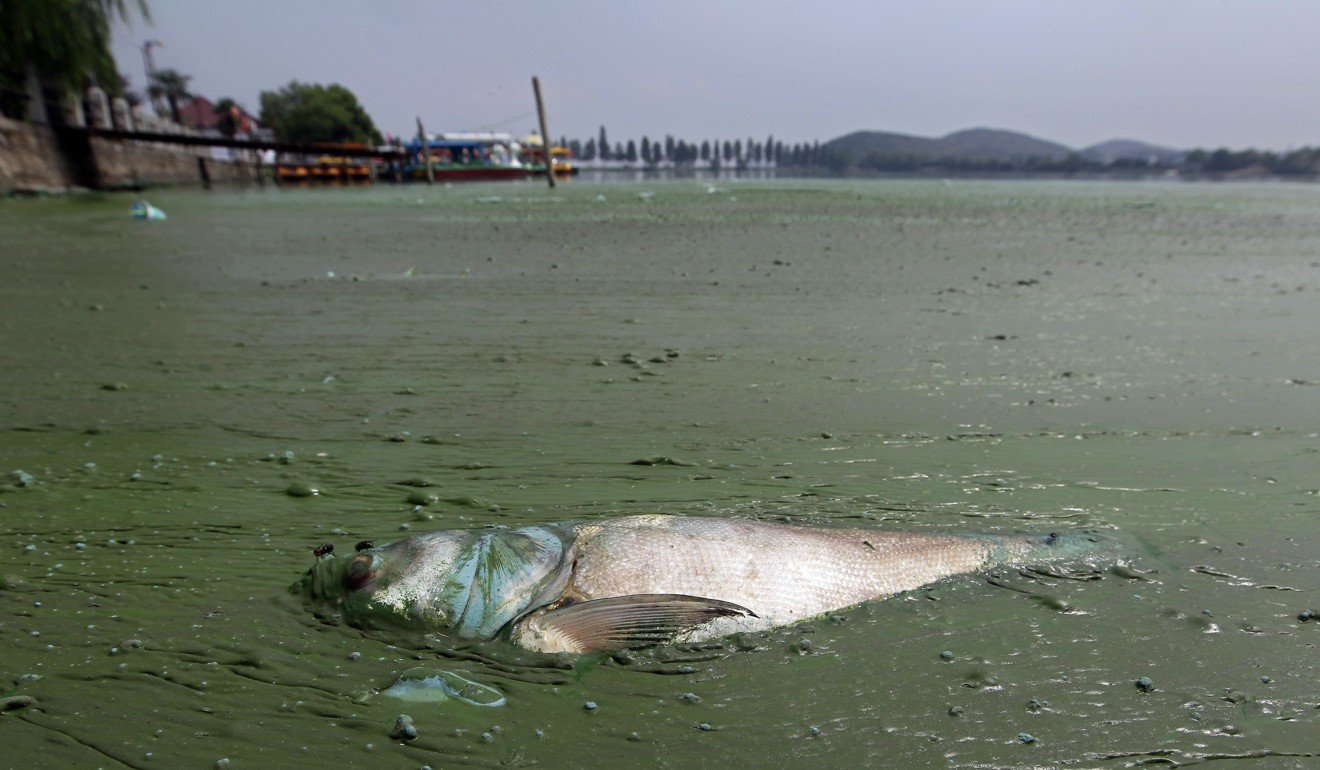
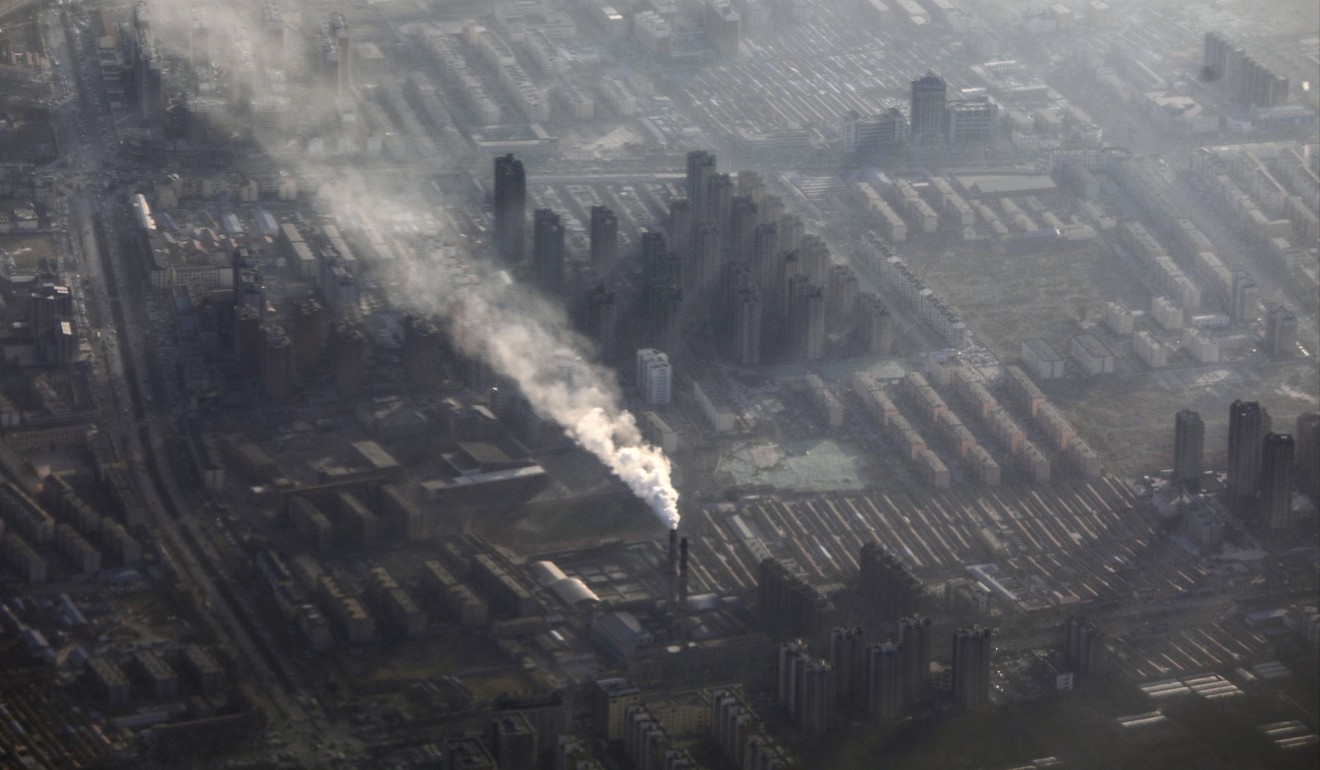
Pollution levels in some parts of China worsened this winter. Photo: Reuters
China has publicly accused dozens of firms, including some of its largest state enterprises, of exceeding pollution limits and breaching monitoring standards, as concerns grow that the slowing economy is undermining a five-year war on pollution.
In lists published by the Ministry of Ecology and Environment over the past week, subsidiaries of state giants such as China Baowu Steel Group and the Aluminium Corporation of China were cited and fined for breaching emissions standards among other violations.
China has been stepping up its supervision capabilities and has plugged thousands of factories into a real-time emissions monitoring system, but enforcement remains one of its biggest challenges.
The ministry has continued to warn that China’s slowing economy had given some regions an excuse to “loosen their grip” on environmental protection.
In the first quarter of this year, air quality in smog-prone northern regions fell compared with last year, and some regions also saw pollution readings in major lakes and rivers rise over the period.
Pollution levels in some lakes or rivers have also worsened. Photo: Reuters

A notice published last Friday said as many as 82 Chinese enterprises exceeded waste water emissions standards in the fourth quarter of 2018, including 44 sewage treatment plants and six waste water treatment facilities.

A unit of the Aluminium Corporation of China in Shanxi province was named as one of five “serious offenders”.

China’s green efforts hit by fake data and grass-roots corruption

It said the unit had exceeded emissions restrictions for a total of 92 days during the period. The firm did not respond to requests for comment.

As well as being fined, the companies cited were told to restrict operations until problems were resolved.

China has a five-year plan for fighting pollution. Photo: Simon Song

The biggest fine was meted out to a waste water treatment plant in Liaoning province, which was ordered to pay 7.2 million yuan (US$1 million).

In a separate review of monitoring standards in the Yangtze River Delta and the Fenwei plain regions, the ministry identified more than 300 firms for equipment quality violations and exceeding waste water discharge restrictions. It found only 22 per cent of equipment was of the required standard.

The list included a special steel producing unit of Baosteel, China’s biggest steelmaker. Baosteel did not respond to a request to comment.

Source: SCMP

21/05/2019

North Korean women ‘forced into sex slavery’ in China – report

Prostitute in a Shanghai back alley (credit: Lei Han)Image copyright KOREA FUTURE INITIATIVE
Image caption The trade of North Korean women in China is said to be worth $100m a year for criminal organisations

Thousands of North Korean women and girls are being forced to work in the sex trade in China, according to a new report by a London-based rights group.

They are often abducted and sold as prostitutes, or compelled to marry Chinese men, says the Korea Future Initiative.

The trade is worth $100m (£79m) a year for criminal organisations, it says.

The women are often trapped because China repatriates North Koreans, who then face torture at home, it says.

“Victims are prostituted for as little as 30 Chinese yuan ($4.30; £3.40), sold as wives for just 1,000 yuan, and trafficked into cybersex dens for exploitation by a global online audience,” the report’s author Yoon Hee-soon said.

The girls and women in question are usually aged between 12 and 29, but can sometimes be younger, the report said.

They are coerced, sold, or abducted in China or trafficked directly from North Korea. Many are sold more than once and are forced into at least one form of sexual slavery within a year of leaving their homeland, it adds.

Many are enslaved in brothels in districts in north-east China with large migrant worker populations.

The girls – some as young as nine – and women working in the cybersex industry are forced to perform sex acts and are sexually assaulted in front of webcams. Many of the subscribers are thought to be South Korean.

Women forced into marriage were mostly sold in rural areas for 1,000 to 50,000 yuan, and were raped and abused by their husbands.

Media caption North Korean defectors who had to escape twice

The group collected its information from victims in China and exiled survivors in South Korea.

One woman, named as Ms Pyon from Chongjin City, North Korea, is quoted as saying in the report:

“I was sold [to a brothel] with six other North Korean women at a hotel. We were not given much food and were treated badly…After eight months, half of us were sold again. The broker did bad things to me.”

“When I arrived [at the new brothel] I had bruises on my body. [The broker] was beaten then stabbed in the legs by some members of the gang.”

Another, Ms Kim, said: “There are many South Koreans [in Dalian, China]…We put advertising cards under their doors [in hotels]…The cards are in the Korean-language and advertise what we offer…We are mostly taken to bars [by the pimp].

“South Korean companies want [North Korean prostitutes] for their businessmen…Prostitution was my first experience of meeting a South Korean person.”

Source: The BBC

Law of Unintended Consequences

continuously updated blog about China & India

ChiaHou's Book Reviews

continuously updated blog about China & India

What's wrong with the world; and its economy

continuously updated blog about China & India