Archive for ‘China alert’

29/07/2012

* Bo wife murder charge vexes skeptical Chinese

Reuters: “China’s ruling Communist Party might insist that the murder charge against Gu Kailai, the wife of ousted Politburo member Bo Xilai, is a simple case of all being equal before the law, but winning over the jury of public opinion is proving tough.
Since China’s last big political scandal — the purge of Shanghai party chief Chen Liangyu in 2007 — its citizens have flocked to sign up to the Twitter-like microblogging site Sina Weibo, ensuring this time there will be lively public debate about the case against Bo and Gu, despite tight censorship.

In its first official statement on Gu’s case since April, state news agency Xinhua ran a brief report last week saying China will try Gu on charges of murdering a British businessman. The news spread rapidly on Weibo.

While state media generally stuck to reprinting that story, the influential tabloid the Global Times on Friday wrote an editorial warning nobody was above the law.

But that is a line the party is going to have a hard time convincing people is true, as suspicion swirls that populist politician Bo and his wife Gu are victims of a power struggle — and no more corrupt than other Chinese leaders.

People already have little faith in government statements despite repeated pledges to be transparent, after the SARS cover-up in 2003, among others, and refusal to discuss events such as the 1989 crackdown on pro-democracy demonstrators in Beijing.”

via Bo wife murder charge vexes skeptical Chinese | Reuters.

See also: 

29/07/2012

* China waste water pipeline scrapped after protest

BBC News: “Authorities in China say a project to build a waste water pipeline in the city of Qidong has been scrapped after a protest over pollution.

Demonstrators took to the streets of the city, north of Shanghai, and ransacked local government offices. They said the pipeline, proposed as part of a paper-making company, would pollute their coastal waters.

China has seen rising anger about environmental damage after three decades of rapid economic growth.

The thousands of protesters overturned cars as well as storming the local government offices and throwing documents from the windows. Items which the protesters allege are often received as bribes by officials – such as wine – were also seized from the offices, reports say.”

via BBC News – China waste water pipeline scrapped after protest.

Yet another example that ‘people power’ is beginning to affect decisions by local authorities in China.

See also: https://chindia-alert.org/2012/07/03/china-factory-construction-halted-amid-violent-protests/

24/07/2012

* Second child is a growing option

China Daily: “Increasing number of eligible parents want another baby.

Beijing mother Han Xue had a second child last year, 10 years after her first. But despite eligibility the process was far from easy and entailed a bureaucratic paper chase.

Han, 31, felt that two children would keep each other company and provide better support to her and her husband in old age.

“As soon as my first child turned 4, we filed an application for a permit to have a second child to the government office that oversees the street where I was born,” Han said.

Han and her husband were both single children and allowed, under the family planning policies introduced in the 1970s, to have a second child.

An increasing number of parents in this category are opting to do so.

Nanjing offers a prime example. Applications filed in the capital of Jiangsu province surged to 600 last year from 85 in 2007, family planning authorities said.

Meanwhile, the number of urban couples eligible to have two children has also increased as the single-child generation comes of marriageable age.

About 10,000 couples are eligible in Nanjing annually, and authorities estimate that by 2015 up to 17 percent of couples in the city will be entitled to have two children.

Already, about 15 percent of women in Nanjing who booked maternity beds for the second half of 2012 were expecting their second baby.

Since 1985, couples in the province are allowed a second child if both parents were single children.

In the province of Jiangxi, the story is much the same.”

via Second child is a growing option |Society |chinadaily.com.cn.

See also: Single-child policy has some negative effects

24/07/2012

* CNOOC to buy Nexen for $15.1 billion in China’s largest foreign deal

Reuters: “State-controlled CNOOC Ltd launched China’s richest foreign takeover bid yet on Monday by agreeing to buy Canadian oil producer Nexen Inc for $15.1 billion, forcing Ottawa to decide whether security concerns outweigh its desire for foreign investment in its energy resources.

CNOOC, China’s third-largest oil company, hopes to sell the deal to shareholders and the government with a hefty 61 percent premium to Nexen’s Friday stock price. It promised to retain all employees and to make Canada home base for its Western Hemisphere operations.

CNOOC is offering $27.50 cash a share for Nexen, which has oil sands operations in the Canadian province of Alberta, shale gas in the province of British Columbia and extensive exploration and production holdings in the North Sea, Gulf of Mexico and offshore West Africa.

The initial shareholder reaction was enthusiastic. Shares of Nexen, whose board unanimously approved the deal, surged C$9.06, or 52 percent, to C$26.35 in Toronto on Monday.

The move is the most ambitious foray by resource-hungry China into North American energy since a 2005 attempt to buy U.S.-based Unocal for $18.5 billion was thwarted by a political backlash there.

Chinese companies have been among the most aggressive in targeting assets around the globe to help feed demand in the world’s second-biggest economy.

As for Canada, Prime Minister Stephen Harper has pushed to attract more energy investments from China. The CNOOC deal shows his efforts are bearing fruit, and Canada has more reasons to accept the deal than to veto it.

“For Canada, this agreement provides a stable source of investment for the many projects that Nexen operates, which includes the exploitation of bitumen in Alberta,” CNOOC Chief Executive Li Fanrong said in a conference call.

“Because we intend to be a local company as much as a global one, we also intend to seek a listing for CNOOC Ltd on the Toronto Stock Exchange.”

The deal is subject to a review by the Industry Ministry, which by law must decide if the takeover would bring a “net benefit” to Canada.

In its favor is both CNOOC’s commitments to Canada, and the fact that Nexen’s operations are mostly outside Canada.”

via CNOOC to buy Nexen for $15.1 billion in China’s largest foreign deal | Reuters.

See also: https://chindia-alert.org/2012/02/13/pattern-of-chinese-overseas-investments/

23/07/2012

* Chariots of Fire’s Eric Liddell is Chinese ‘hero’

BBC News: “The story of Scottish athlete Eric Liddell – a devout Christian who refused to take part in an Olympic race because it took place on a Sunday – became famous after being told in the Oscar-winning film Chariots of Fire. But almost a century later, why is the athlete regarded as a hero in China?

In the corner of a quiet Chinese courtyard, 5,000 miles from Scotland, stands a memorial in Isle of Mull granite. The stone commemorates Eric Liddell – one of Scotland’s greatest Olympians – who is buried nearby. The stone was gifted by Edinburgh University after a Scottish engineer, Charles Walker, rediscovered his grave in the Chinese city of Weifang.

Eric Liddell won a gold medal at the 1924 Olympics in Paris

Liddell, the son of Christian missionaries, had been born in China in 1902 and lived there until he was five when he returned to Britain to be educated. While he was at Edinburgh University, Liddell excelled at athletics and also played rugby for the Scottish national team – as well as being a noted evangelist preacher.

At the 1924 Olympics in Paris, he famously refused to run on a Sunday, ruling him out of the 100 metres race to which he was best suited. Instead, he took part in the 400 metres race and, against the odds, still won a gold medal.

Soon after his Olympic triumph, Liddell finished his studies and returned to China to become a missionary. As well as religious duties, he worked as a science and sports teacher at the Anglo/Chinese College in Tianjin.

After the Japanese invasion in 1937, Liddell carried on his missionary work even when it became dangerous to do so. Liddell’s wife and children left China for Canada in 1941 but he stayed to help in any way he could.

In 1943 he was interned at Weifang and he died of a brain tumour just months before the end of World War II, at the age of 43.

Liddell’s achievements are taught at the school on the site of the prison camp

The prisoner-of-war camp which held about 2,000 Westerners is now a place of learning for 2,000 Chinese teenagers. Every new pupil at the school is taught about the camp and Eric Liddell’s achievements on and off the track

“This part of history is a great treasure for our school,” said head teacher, Zhao Guixia.

“We can see the great value of humanity, especially in Eric Liddell’s stories.”

In the camp, Liddell was affectionately known as “Uncle Eric” because he spent most of his time teaching children, organising sports and helping others.

via BBC News – Chariots of Fire’s Eric Liddell is Chinese ‘hero’.

20/07/2012

* China’s health reforms for all

China Daily: “Vice-Premier Li Keqiang on Thursday urged the country to push forward with medical reform.

The basic public health insurance system has covered both urban and rural areas, but the system to insure people with acute diseases and serious chronological diseases has not yet been established, Li said. He said a person who suffers from such an illness is likely to impose a major financial burden on their whole family.

Li asked medical reformers to cover such diseases under the current public health insurance system.

He also suggested that the insurance industry and the government work together to help people combat such diseases. He said government, individuals and insurance companies can together share the burden of chronic disease.

China is set to build a “relatively sound” public service system and achieve “equalization” in public service supply by 2020, according to the country’s first national plan for public services.

The State Council issued the plan, which covers the 12th Five-Year Plan period (2011-15), on Thursday. It specifies the scope of public services and defines standards and operating mechanisms for the provision of services.

The basic public services listed cover eight major sectors — public education, labor and employment services, social security, social services, healthcare, population and family planning services, and housing services, as well as culture and sports.

“It establishes a future trend that each Chinese citizen, regardless of gender, social status, wealth or place of residence, is equally entitled to basic social services, which will be detached as an ultimate goal from the household registration system,” Hu Zucai, vice-minister of the National Development and Reform Commission, said at a news conference.

Also, “it will help accelerate the transformation of the country’s economic growth pattern and boost domestic consumption”, he said.

“Promoting the equalization of basic public services is necessary to build a harmonious society and safeguard social fairness and justice,” he said.

At present, there are huge gaps in public service supply and access between urban and rural areas, different population groups and regions, Hu said.

For instance, the number of doctors serving every 1,000 people in urban areas is more than twice that in rural areas, according to the Ministry of Health.

To address discrepancies, the government will channel more social resources toward rural areas, poor regions and vulnerable social groups in order to ensure that all people have equal access to basic public services, Hu said.”

via China’s health reforms for all |Politics |chinadaily.com.cn.

20/07/2012

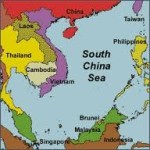
* ASEAN to claim common ground on South China Sea, but no communiqué

Reuters: “Southeast Asian states have reached a “common position” on the disputed South China Sea, but will not resurrect a joint communiqué aborted after unprecedented discord over the issue at a summit last week, Indonesia’s Foreign Minister said on Friday.

Marty Natalegawa sought to put a positive gloss on two days of shuttle diplomacy that failed to rally members of the Association of Southeast Asian nations (ASEAN) behind a belated, face-saving communiqué.

They had failed to agree the customary end-of-summit joint statement last Friday for the first time in the bloc’s 45-year history. The divisions follow a rise in incidents of naval brinkmanship involving Chinese vessels in the oil-rich waters that has sparked fears of a military clash.

Natalegawa told Reuters the 10 members had agreed on the components of an ASEAN “instrument” that would be issued by chair Cambodia later on Friday and would detail what was agreed upon during last week’s ASEAN Regional Forum in Phnom Penh, including the maritime dispute.

“We are trying so that other decisions made by the foreign ministers will be formulated in a different instrument for follow up,” Natalegawa told Reuters.

“The non-existence of a joint communiqué is behind us,” he said, adding that the customary communiqué was aborted last week because one of the four paragraphs relating to the South China Sea in the 132-paragraph draft could not be agreed on.

Disputes over how to address the increasingly assertive role of China – an ally of several ASEAN states – in the strategic waters of the South China Sea has placed the issue squarely as Southeast Asia’s biggest potential military flashpoint.

China has territorial claims over a huge area covering waters that Vietnam and the Philippines say they also have sovereignty over. All three countries are eager to tap possibly huge offshore oil reserves.

The failure to issue the communiqué and the bitter rows behind closed doors over what words to use and what to exclude have been a huge embarrassment for a 10-member bloc planning to form an EU-style economic community by 2015.

The row illustrated how Southeast Asian nations have been polarized by China’s rapidly expanding influence in the region and the economic dependence on Beijing that some of ASEAN’s poorer states now have, among the Cambodia, this year’s chair.”

via ASEAN to claim common ground on South China Sea, but no communiqué | Reuters.

20/07/2012

* Rural Chinese get online as mobile overtakes desktop

BBC News: “Mobile phones are now the most common way for people to connect to the internet in China, a report has said.

For the first time, desktop computers are no longer the leading method for the country’s 538 million connected citizens to get online.

The report from the China Internet Network Information Center (CINIC) said over 50% of the year’s new internet users were from rural areas.

A fall in smartphone costs has been the key cause of growth, experts said. “Mobile phones are a cheaper and more convenient way to access the internet for [residents in] China’s vast rural areas and for the enormous migrant population,” said the report from the state-linked CINIC.

Mobile internet users now number 388 million, up almost 10% since the start of the year. “Mobile phone prices continued to drop,” the report said.

“The emergence of smartphones under 1,000 yuan [$157, £100] sharply lowered the threshold for using the devices and encouraged average mobile phone users to become mobile web surfers.”

The total number of those online has risen 5% since the end of last year, many of whom are very active in cyberspace.”

via BBC News – Rural Chinese get online as mobile overtakes desktop.

See also: https://chindia-alert.org/economic-factors/information-technology/

20/07/2012

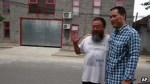
* China artist Ai Weiwei’s tax evasion appeal rejected

BBC News: “A court in China has rejected an appeal by Chinese artist and dissident Ai Weiwei against a tax evasion fine, his lawyer says.

Police barred Mr Ai from attending court in Beijing’s Chaoyang district to hear the verdict delivered.

Tax authorities imposed a 15m yuan ($2.4m, £1.5m) fine on Mr Ai’s firm for tax evasion in 2011. Supporters say the fine is politically motivated and Mr Ai wanted the court to overrule the penalty.

”We will keep appealing, until the day comes when we have nothing to lose,” Mr Ai said via Twitter. His lawyer Pu Zhiqiang, who was in court for the verdict, told reporters that the ruling was ”totally without reason”.

The artist, a outspoken critic of the government, was detained for almost three months without charge last year. “This country has once again proved to the world that law and justice don’t exist here” said Ai Weiwei on Twitter.

Outside his door witnesses counted up to 32 police cars.

His lawyers told the court the police were acting illegally preventing a free man from hearing the verdict in his own case. The entire case they say is illegal, from the secret detention of Mr Ai to the fact there’s no real evidence of tax evasion.

Ai Weiwei’s fame, his adept use of social media, his refusal to stay silent, and his persistent, sometimes impudent, criticisms of the Communist Party’s rule have all made this a litmus test for the way the party deals with dissent.

But, with the transfer of power to a new generation of leaders looming, China’s huge security apparatus appears determined to put ”stability” and ”harmony” first, and, critics will say, due process second.

After he was released, he was accused of tax evasion and the fine imposed.”

via BBC News – China artist Ai Weiwei’s tax evasion appeal rejected.

20/07/2012

* India now top migrant source for Australia

BBC News: “India has become Australia’s largest source of permanent migrants for the first time, with six other Asian nations in the top 10, a report says.

Indian migrants comprised 15.7%, or 29,000, of Australia’s total migrants based on the 2011-12 Migration Programme report. China came in second, with 25,500, and then Britain with 25,275.

Most were skilled professionals, with accountants, cooks and software engineers topping the list.

China was top last year, with the UK top for the two years before that.

Of the almost 185,000 permanent migrants arriving in Australia during the June 2011- June 2012 period, more than 125,000 were from the skilled migrant programme.

————————————–

Australia migration 2011-2012

Total: 184,998

India: 29,018

China: 25,509

UK: 25,274

Philippines: 12,933

South Africa: 7,640

Source: Department of Immigration and Citizenship

====================================

Most of the new arrivals came from Asian nations. Aside from India and China, other source countries included the Philippines, Sri Lanka, Malaysia, South Korea and Vietnam.”

via BBC News – India now top migrant source for Australia.

Law of Unintended Consequences

continuously updated blog about China & India

ChiaHou's Book Reviews

continuously updated blog about China & India

What's wrong with the world; and its economy

continuously updated blog about China & India