Archive for ‘China alert’

30/04/2012

* China launches two navigation satellites

Xinhua: “China successfully launched two satellites into space at 4:50 a.m. Beijing Time Monday, the 12th and 13th satellites for its Beidou global navigation and positioning network, the launch center said.

The launch of Long March 3B Rocket, Xichang Sa...

The launch of Long March 3B Rocket, Xichang Satellite Center, China. (Photo credit: Wikipedia)

The Beidou-2 satellites, launched from the Xichang Satellite Launch Center in the southwestern province of Sichuan, was boosted by a Long March-3B carrier rocket and has entered the scheduled orbit. It is the first time China has launched two navigation satellites with one rocket, and the two satellites will help to improve the accuracy of the Beidou, or Compass system, the center said in a statement. China will launch three more satellites for the Beidou network this year and a global satellite positioning and navigation system will be completed in 2020 with more than 30 orbiters, the statement said. Monday’s mission marked the 160th flight of Chinas Long March series of carrier rockets.”

via China launches two navigation satellites – Xinhua | English.news.cn.

China continues on its path to reduce reliance on Western hi-tech.

Related post: https://chindia-alert.org/2012/04/29/china-plans-national-unified-cpu-architecture/

29/04/2012

* China plans national, unified CPU architecture

Extreme Technology: “According to reports from various industry sources, the Chinese government has begun the process of picking a national computer chip instruction set architecture ISA.

This is a 1987 Madge Networks Token Ring 4/16M...

This ISA would have to be used for any projects backed with government money — which, in a communist country such as China, is a fairly long list of public and private enterprises and institutions, including China Mobile, the largest wireless carrier in the world. The primary reason for this move is to lessen China’s reliance on western intellectual property.

There are at least five existing ISAs on the table for consideration — MIPS, Alpha, ARM, Power, and the homegrown UPU — but the Chinese leadership has also mooted the idea of defining an entirely new architecture. The first meeting to decide on a nationwide ISA, attended by government officials and representatives from academic groups and companies such as Huawei and ZTE, was held in March. According to MIPS vice president Robert Bismuth, a final decision will be made in “a matter of months.””

via China plans national, unified CPU architecture | ExtremeTech.

Firstly, I’m not really surprised. As you may know China is developing its own GPS to remove its reliance on US technology – http://online.wsj.com/article/SB10001424052970203479104577123600791556284.html . If (God forbid) it comes to ‘real’ war, the US can apparently switch off GPS for civilian and unfriendly consumption! It has its own social media technology – http://www.mckinseychina.com/2012/04/25/chinas-social-media-boom/ . And it has even developed an iPad – http://www.huffingtonpost.com/2012/01/19/redpad-number-one-china_n_1215393.html .

And despite some views in the West, China is gaining in innovation, almost at level of US and Japan in terms of patents lodged (see – https://chindia-alert.org/prognosis/innovation/ )

My own view is that the Chinese will select the architecture that suits its long term purposes best. That would be a combination of rational, systems-oriented reasons and emotive, political reasons. If the current top leadership is consulted, the former will have some leverage as 7 out out the top 9 leaders are all engineers by training and early experience (see – https://chindia-alert.org/2012/02/18/chinese-leadership-are-mostly-engineers/ ).

28/04/2012

* Chinese Activist Chen Guangcheng Escapes House Arrest in China

New York Times: “The dramatic nighttime escape of a blind rights lawyer from extralegal house arrest in his village dealt a major embarrassment to the Chinese government and left the United States, which may be sheltering him, with a new diplomatic quandary as it seeks to improve its fraught relationship with Beijing.

The lawyer, Chen Guangcheng, one of the best-known and most politically savvy Chinese dissidents, evaded security forces surrounding his home this week and, aided by an underground network of human rights activists, secretly made his way about 300 miles to Beijing, where he is believed to have found refuge in the American Embassy, according to advocates and Chinese officials. An official in the Chinese Ministry of State Security on Friday said that Mr. Chen had reached the United States Embassy, but American officials would not confirm reports that Mr. Chen had found shelter there.

Mr. Chen’s escape represents a significant public relations challenge for the Chinese government, which has sought to relegate him to obscurity, confining him to his home in the remote village of Dongshigu and surrounding him with plainclothes security guards, even though there are no outstanding legal charges against him.

The case also poses a major new diplomatic test for the United States. In February, the Obama administration was thrust into an internal Chinese political dispute when Wang Lijun, the former top police official from the region of Chongqing, sought refuge in the American Consulate in Chengdu. Mr. Wang revealed details about the killing of a British businessman, setting off a cascade of events that led to the downfall of Bo Xilai, who was the party chief in Chongqing and a member of China’s Politburo. American diplomats said they had determined that Mr. Wang’s case did not involve national security, and he was turned over to Chinese officials, prompting criticism from some in Washington about their handling of the case. Both sides insist Mr. Wang left of his own accord.”

via Chinese Activist Chen Guangcheng Escapes House Arrest in China – NYTimes.com.

28/04/2012

* China, Russia sign 27 contacts worth 15 billion USD

Xinhua: “China and Russia have signed 27 trade contracts worth 15 billion U.S. dollars, Chinese Vice Premier Li Keqiang said here on Saturday.

Li attended the signing ceremony of the contracts before a meeting on China-Russia trade and investment. Addressing the meeting, Li proposed that both China and Russia endeavor together to further promote their trade and economic cooperation. The two countries could expand their cooperation in various fields, including finance, direct investment, energy, mechanical and electronic products, he said. Russian First Deputy Prime Minister Igor Shuvalov also attended the meeting.

China is the top trade partner of Russia. Bilateral trade volume reached 79.25 billion U.S. dollars in 2011, up 42.7 percent year-on-year.”

via China, Russia sign 27 contacts worth 15 billion USD – Xinhua | English.news.cn.

Related articles
27/04/2012

* China Wants More Trade With Central and Eastern Europe

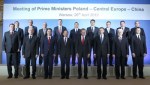
New York Times: “Prime Minister Wen Jiabao said Thursday that China wanted to double trade with the countries of Central and Eastern Europe to $100 billion a year by 2015, and pledged billions in loans to help promote investment in the region.

Mr. Wen made the announcement at a gathering in Warsaw that brought together business and political leaders of countries stretching from the Baltics to the Balkans that are eager to do business with China, even as they struggle to overcome stereotypes still held by many in the region who associate the Chinese as makers of inexpensive toys and designer knock-offs.

Infrastructure, high technology and green technology are target areas for growth, Mr. Wen said, announcing that Beijing would set up a $10 billion line of credit to support investment in these specific industries. He also pledged an additional $500 million in funds to be made available to Chinese companies seeking to make first-stage investment in the region.”

via China Wants More Trade With Central and Eastern Europe – NYTimes.com.

China continues to woo everyone. And Mr Wen is making himself very busy in his final year in office.

Related post: https://chindiapedia.wordpress.com/wp-admin/post.php?post=5753&action=edit

https://chindia-alert.org/political-factors/geopolitics-chinese/

27/04/2012

* Wen paints Europe green in 4-nation trip

China Daily: “Trade and investment deals and business cooperation have been the focus of Premier Wen Jiabao’s tour to four European nations this week. Such fare is common for such visits, but

Wen Jiabao (温家宝), Chinese Premier

Wen Jiabao (温家宝), Chinese Premier (Photo credit: Wikipedia)

there was a new ingredient in the latest trip: Wen and his delegation have been paying particular attention to green and innovative industries in almost every destination of the seven-day visit, which ends on April 29.

As China switches from high growth to sustainability in the current five-year plan and as the country’s foreign trade growth slows, politicians, businesses and industrial leaders from China and Europe are seeing more opportunities in each others markets. Before his scheduled arrival in Warsaw on April 27, Wen pressed for global action on sustainable development that strikes a balance between economic growth, social progress and environmental protection, instead of focusing exclusively on the environment, at the Stockholm+40 conference in Sweden.”

via Wen paints Europe green in 4-nation trip|News|chinadaily.com.cn.

This relatively new theme of ‘sustainability’ goes along with strenuous efforts to reduce carbon and increase renewable energy sources. Good for China and good for the world.

Related pagehttps://chindia-alert.org/economic-factors/greening-of-china/

27/04/2012

* China’s vice-premier starts landmark European mission

Li Keqiang, Chinese politician

Li Keqiang, Chinese politician (Photo credit: Wikipedia)

China Daily: “Visit covers Russia, Hungary, Belgium and EU headquarters

Business opportunities will emerge from the economic development of China and Russia and both countries will benefit from increasing prosperity and global influence, Vice-Premier Li Keqiang said on Thursday. “The two countries are in total agreement on this point,” Li said in a Russian newspaper article.

The vice-premier started a 10-day visit on Thursday, to promote trade and investment. He will visit Russia, Hungary, Belgium and EU headquarters in Brussels.”We view each others growth as opportunities because both nations share similar targets,” Li said.”

via Chinas vice-premier starts landmark European mission|Politics|chinadaily.com.cn.

The wooing continues unabated; Premier Wen visits Iceland, Sweden, Germany and Poland, then VP Li visits Russia, Hungary, Belgium and EU.

Related posts:

27/04/2012

* US Is Seeing Positive Signs From Chinese

New York Tines: “When China suddenly began cutting back its purchases of oil from Iran in the last month,  officials in the Obama administration were guardedly optimistic, seeing the move as  the latest in a string of encouraging signs from Beijing on sensitive security issues  like Syria and North Korea, as well as on politically fraught economic issues like China’s exchange rate.

As with so many signals from Beijing, though, its underlying motives for reducing its imports of Iranian oil remain a mystery: Are the Chinese embracing Western sanctions? Or, as some experts suspect, are they trying to extract a better price from one of their main suppliers of crude? The answer is probably a bit of both, according to senior administration officials who acknowledge that they do not know for certain. But for the White House, which has labored to build a more constructive relationship with China, Beijing’s motives may matter less than the general direction in which it appears to be moving.”

via U.S. Is Seeing Positive Signs From Chinese – NYTimes.com.

26/04/2012

* Understanding social media in China

McKinsey Quarterly: “The world’s largest social-media market is vastly different from its counterpart in the West. Yet the ingredients of a winning strategy are familiar.

No Facebook. No Twitter. No YouTube. Listing the companies that don’t have access to China’s exploding social-media space underscores just how different it is from those of many Western markets. Understanding that space is vitally important for anyone trying to engage Chinese consumers: social media is a larger phenomenon in the world’s second-biggest economy than it is in other countries, including the United States. And it’s not indecipherable. Chinese consumers follow the same decision-making journey as their peers in other countries, and the basic rules for engaging with them effectively are reassuringly familiar.

In addition to having the world’s biggest Internet user base—513 million people, more than double the 245 million users in the United States. China also has the world’s most active environment for social media. More than 300 million people use it, from blogs to social-networking sites to microblogs and other online communities. That’s roughly equivalent to the combined population of France, Germany, Italy, Spain, and the United Kingdom. In addition, China’s online users spend more than 40 percent of their time online on social media, a figure that continues to rise rapidly.

This appetite for all things social has spawned a dizzying array of companies, many with tools more advanced than those in the West: for example, Chinese users were able to embed multimedia content in social media more than 18 months before Twitter users could do so in the United States. Social media began in China in 1994 with online forums and communities and migrated to instant messaging in 1999. User review sites such as Dianping emerged around 2003.  Blogging took off in 2004, followed a year later by social-networking sites with chatting capabilities such as Renren. Sina Weibo launched in 2009, offering microblogging with multimedia. Location-based player Jiepang appeared in 2010, offering services similar to foursquare’s. This explosive growth shows few signs of abating, a trend that’s at least partially attributable to the fact that it’s harder for the government to censor social media than other information channels. That’s one critical way the Chinese market is unique.

As you shape your own social-media strategy, it’s important to fully understand some other nuances of the country’s consumers, content, and platforms.”

via Understanding social media in China – McKinsey Quarterly – Marketing & Sales – Digital Marketing.

26/04/2012

* China offshores manufacturing to the U.S.

CNN Money: “Chinese conglomerates, on a mission to expand their global footprint and avoid “anti-dumpingtariffs, are shifting more of their production to America.

This flag is for the Chinese community in the ...

(Photo credit: Wikipedia)

In the United States, cash-strapped states desperate for revenue and jobs, are rolling out the welcome mat for foreign companies that can guarantee both. More Chinese manufacturers have been launching their own U.S. facilities in the last five years, said Thilo Hanemann, research director at Rhodium Group, a New York-based economic advisory group. The biggest investments are being made by Chinese firms with products that have been slapped with hefty anti-dumping tariffs, he said.”

via http://d2pnews.com/index.php/2012/04/24/chinese-manufacturers-offshore-to-the-u-s/.

Related post: https://chindia-alert.org/2012/02/13/reverse-outsourcing/

Law of Unintended Consequences

continuously updated blog about China & India

ChiaHou's Book Reviews

continuously updated blog about China & India

What's wrong with the world; and its economy

continuously updated blog about China & India