Archive for ‘China alert’

08/04/2019

Shell enters China’s shale oil scene with joint study with Sinopec

SINGAPORE (Reuters) – Royal Dutch Shell has entered China’s shale oil sector, signing an agreement with state-owned Sinopec to study an East China block, part of the nation’s early efforts to unlock the potentially massive unconventional resource.

China is already in the initial stages of developing its vast shale gas resources, with production last year making up just 6 percent of total gas output after more than a decade of work. China’s shale oil is at an even more basic phase due to challenging geology and hefty development costs, experts said.

Shale oil makes up less than 1 percent of China’s crude output after several years of development, according to Angus Rodger, research director of Asia-Pacific upstream at Wood Mackenzie.

“China’s shale oil has very low permeability, which means very low per well output that makes the economics hard to work,” said an oil and gas official with China’s Ministry of Natural Resources (MNR). The official declined to be named because he’s not authorized to speak with the press.

Sinopec said on Monday it had agreed with Shell to study the Dongying trough of Shengli in China’s eastern province of Shandong, without giving further details.

Shell confirmed the joint study agreement, but did not offer further comment.

That makes Shell one of the few international oil and gas explorers venturing into China’s shale oil sector, and follows the Anglo-Dutch company’s exit from shale gas drilling in Sichuan province in the southwest after spending at least $1 billion (766.22 million pounds) and getting unsatisfactory results.

Unlike shale gas resources, which are highly concentrated in Sichuan, most of China’s shale oil is trapped in eastern regions such as the Songliao and Bohai Rim basins. North China’s Ordos and Junggar basins are also believed to hold large shale oil resources, the experts said.

The Dongying trough is part of the Bohai Rim basin, where top Chinese oil and gas group China National Petroleum Corp (CNPC) said in February that it is developing another small shale oil field with an annual output of 50,000 tonnes this year.

In 2013, U.S. energy firm Hess Corp signed a production-sharing contract with PetroChina, CNPC’s listed arm, to develop the Malang block of Santanghu basin in the northwest region of Xinjiang, China’s first shale oil deal.
Hess quit the block around late 2014 due to poorer-than-expected drilling prospects and as global oil prices plunged, said the MNR official.
“The understanding of geology, resource and the best recovery techniques (for shale oil) has only just begun,” said Woodmac’s Rodger.
Sinopec is hoping Shell’s expertise in shale oil exploration could help the Chinese state major turn around its fortunes at Shengli oilfield as the reserves at the giant conventional oilfield are depleting rapidly, said Rodger.
Source: Reuters
07/04/2019

China textile overseas investment flows to BRI region

BEIJING, April 6 (Xinhua) — Countries and regions along the Belt and Road Initiative (BRI) have become major destinations for China’s overseas investment in the textile sector, an industry association has said.

Over 80 percent of the industry’s global investment has flown to the BRI region in the past five years, according to the China National Textile and Apparel Council (CNTAC).

The textile industry can help industrial development, as well as create national wealth and employment in BRI regions, said CNTAC deputy director Xu Yingxin.

The CNTAC will facilitate international textile production capacity partnership, especially the development of overseas cooperation zones, Xu added.

Industrial data showed that China’s textile and apparel export to the BRI region continued to grow in 2018, up 5.3 percent year on year.

Source: Xinhua

07/04/2019

China-EU tourism cooperation receives boost, official says

BRUSSELS, April 6 (Xinhua) — China-European Union (EU) relations in tourism get a boost as the 2018 EU-China Tourism Year has scored a success, an official recently said.

During the tourism year, China and the EU held more than 100 promotional activities. It “has been extremely successful,” said Eduardo Santander, executive director of the European Travel Commission (ETC).

There was a 5.1-percent year-on-year increase in Chinese arrivals in EU destinations in 2018, and among the top ones in terms of the volume of Chinese arrivals were Britain, Germany and France, according to the latest figures from the ETC and the air travel analysis agency ForwardKeys.

“We continue to see the benefits in 2019,” Santander added. “The growth in Chinese travellers has been solid, and the near future, judging by current bookings, will see the EU continuing to increase its share of this valuable market, not just to traditional destinations, but lesser-known and emerging ones as well.”

Chinese bookings to the EU for the first four months of 2019 are 16.9 percent ahead of where they were at the end of 2017, said the ETC, adding that this compares very favorably to the global trend, which is 9.3 percent ahead.

According to a recent report by China Tourism Academy and China’s online travel agency Ctrip, 70 percent of Chinese tourists in 2018 chose “package tours” when traveling in Europe, due to language, visa, culture and other factors.

Nevertheless, the proportion of independent and customized travel continues to rise. In 2018, the demand for customized European tours booked by the travel website increased by 127 percent over the past year, far higher than the growth rate of the overall market, said the report.

In addition, a number of new routes were launched between China and Europe in 2018, including direct flights from Fuzhou to Moscow, Changsha to London, Jinan to Paris, and Shenzhen to Brussels. In 2018, there were more than 600 flights a week between China and Europe, according to the report.

Ctrip in 2018 forecast that consumption of each tourist in Europe will exceed 25,000 yuan (about 3,721 U.S. dollars) in two years, with the total annual consumption to reach 150 billion yuan (about 22.3 billion dollars).

“Our findings confirm what a concerted effort to boost tourism can achieve. It also appears to have lasting effects, as we can see in the forward booking figures,” said Olivier Jager, CEO of ForwardKeys.

China’s domestic travel agencies are also deepening the cooperation with Europe. For example, the SkyScanner, Ctrip’s online travel search platform, set up its first overseas calling service center in Edinburgh in April 2018.

Source: Xinhua

07/04/2019

Opera on “The Long March” to be restaged at China’s prime theater for Army Day

BEIJING, April 6 (Xinhua) — An opera dedicated to the epic Long March led by the Communist Party of China will return to the National Center for the Performing Arts (NCPA) in Beijing for this year’s Army Day, which falls on Aug. 1.

“The Long March” will be performed in Guangzhou, capital of Guangdong Province, in south China, at the end of May.

The six-act opera is an original NCPA production that debuted in 2016 to mark the 80th anniversary of the victory of the Long March.

The Long March was a military maneuver carried out by the Chinese Workers’ and Peasants’ Red Army from 1934 to 1936. During this period, they left their bases and marched through rivers, mountains and arid grassland to break the siege of Kuomintang forces and continue to fight Japanese aggressors. Many marched as far as 12,500 kilometers.

Source: Xinhua

07/04/2019

Greece says EU’s China concerns must not harm its economic interests

  • Deputy prime minister Yannis Dragasakis hopes ‘logic will prevail’ ahead of EU-China summit
  • Affirms Greek support for Beijing’s belt and road plan for global trade
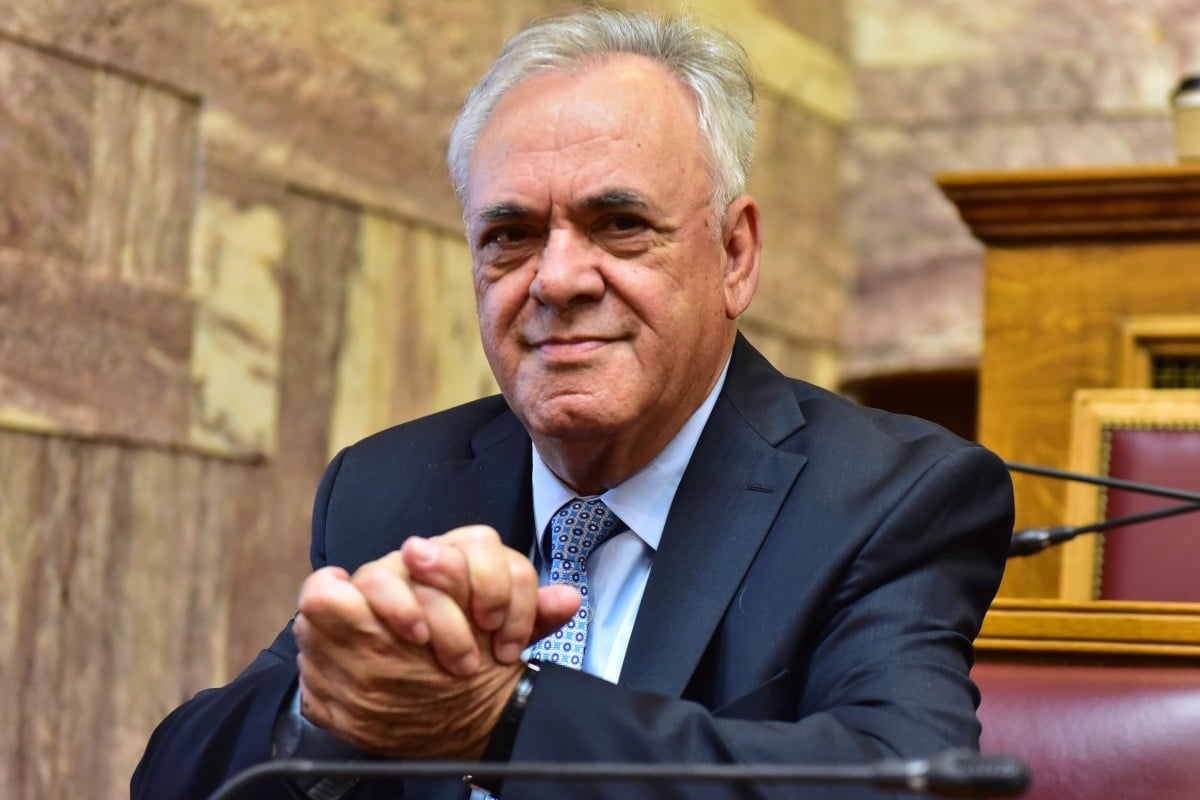
Greece’s deputy prime minister Yannis Dragasakis says the European Union’s suspicion about China is in danger of becoming a “self-fulfilling prophecy”. Photo: Alamy
The deputy prime minister of Greece has warned that European Union suspicion of China is in danger of becoming a “self-fulfilling prophecy” while reaffirming his country’s support for Beijing’s controversial “Belt and Road Initiative”.
In an exclusive interview with theSouth China Morning Post in Athens on Monday, Yannis Dragasakis said he hoped logic would prevail in the EU’s relationship with the world’s second-largest economy.
“We would like to see the EU having good relations with China,” he said.
“Seriously, we should start [the discussion about China] from the opposite end, which is, what are the needs and problems that we can work on with China?”
Dragasakis was speaking ahead of the annual summit between the EU and China in Brussels on Wednesday, which this year will take place against a backdrop of suspicion among some EU countries over Beijing’s political and commercial ambitions in the region.
Europe has been divided over whether to work with China’s enormous belt and road plan, which aims to link China by sea and land with southeast and central Asia, the Middle East, Europe and Africa, through an infrastructure network along the lines of the old Silk Road.
Italy becomes first G7 nation to sign up for China’s belt and road plan

Washington has criticised the scheme as a “vanity project”, and the EU looks set to refer to China as a “strategic rival”, with some European leaders fearing Beijing’s diplomatic manoeuvres could derail unity among member states.

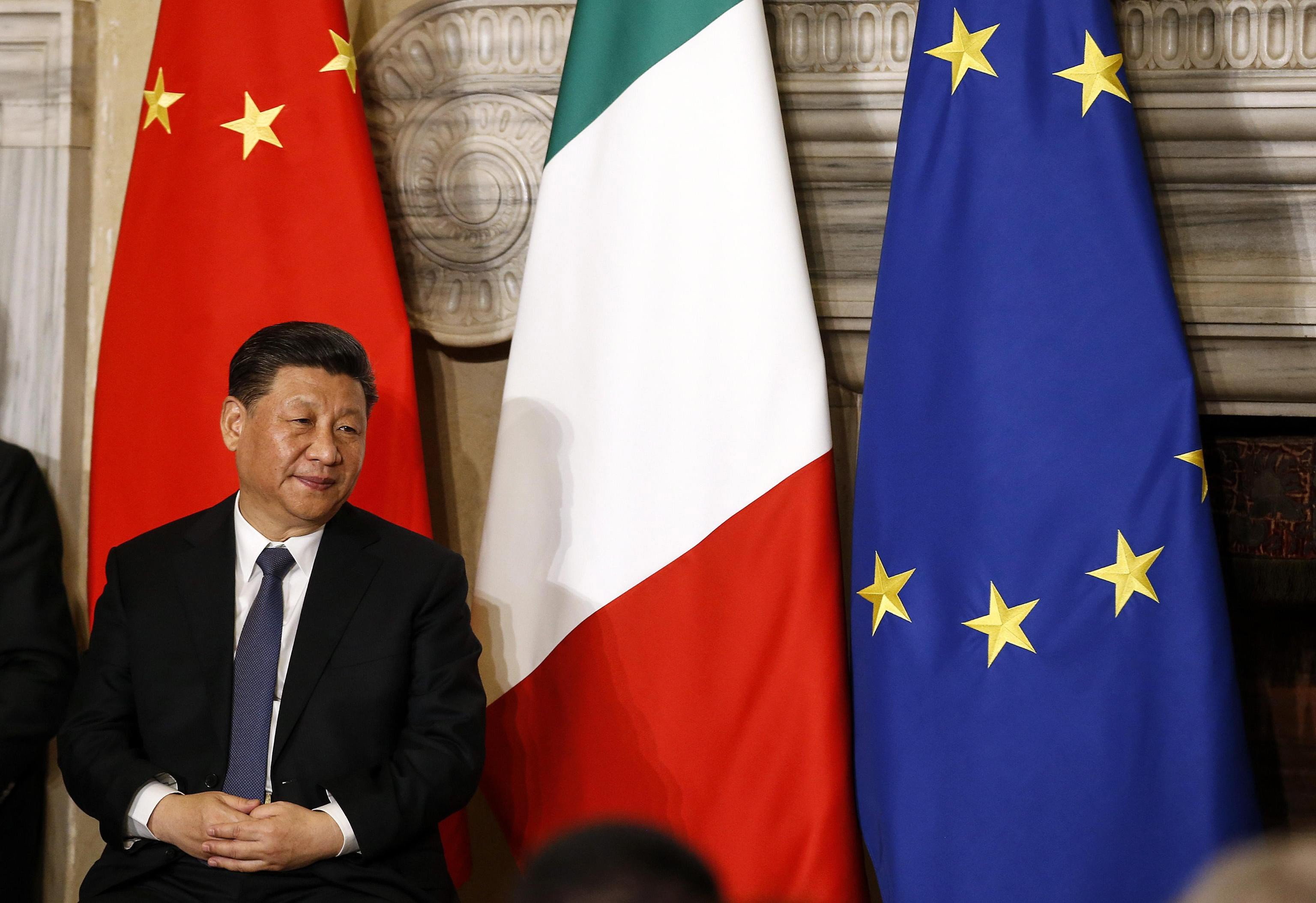
Last month Italy, which is grappling with its third recession in a decade, became the first G7 nation to join the belt and road programme, in a bid to boost exports and upgrade its port facilities.

Last year Greece – ranked second lowest in economic competitiveness within the EU by the World Economic Forum in 2018 – signed up to the scheme, after years of relying on China to help it through its own financial crisis.

Chinese state-owned shipping company Cosco bought a 51 per cent stake in Pireaus Port, Greece’s most important infrastructure hub in 2016 with an option to buy another 16 per cent after five years.

China aims to make the port the “dragon head” of its belt and road programme, serving as a gateway for its cargo to Europe and North Africa.

Will Greece be China’s bridge to the rest of Europe?

With its warming relationship with Beijing, Athens has, at times, departed from EU positions on China.

In 2016, Greece helped stop the EU from issuing a unified statement against Chinese aggression in the South China Sea. The following year, Athens stopped the bloc from condemning China’s human rights record. Days later, it opposed tougher screening on China’s investments in Europe.

Dragasakis was clear that the EU should not devise any policies that may hinder Greece’s ability to revive its economy.

“Greece badly needs investment. We hope logic will prevail at the end of the day, which means we should take advantage of all opportunities and build on these prospects to further our collaboration,” he said.

“Greece will keep following a multidimensional policy, an inclusive policy, without excluding anyone.”

Dragasakis hit back at France and Germany for treating China as a geopolitical rival, while simultaneously signing up to trade agreements with Beijing.

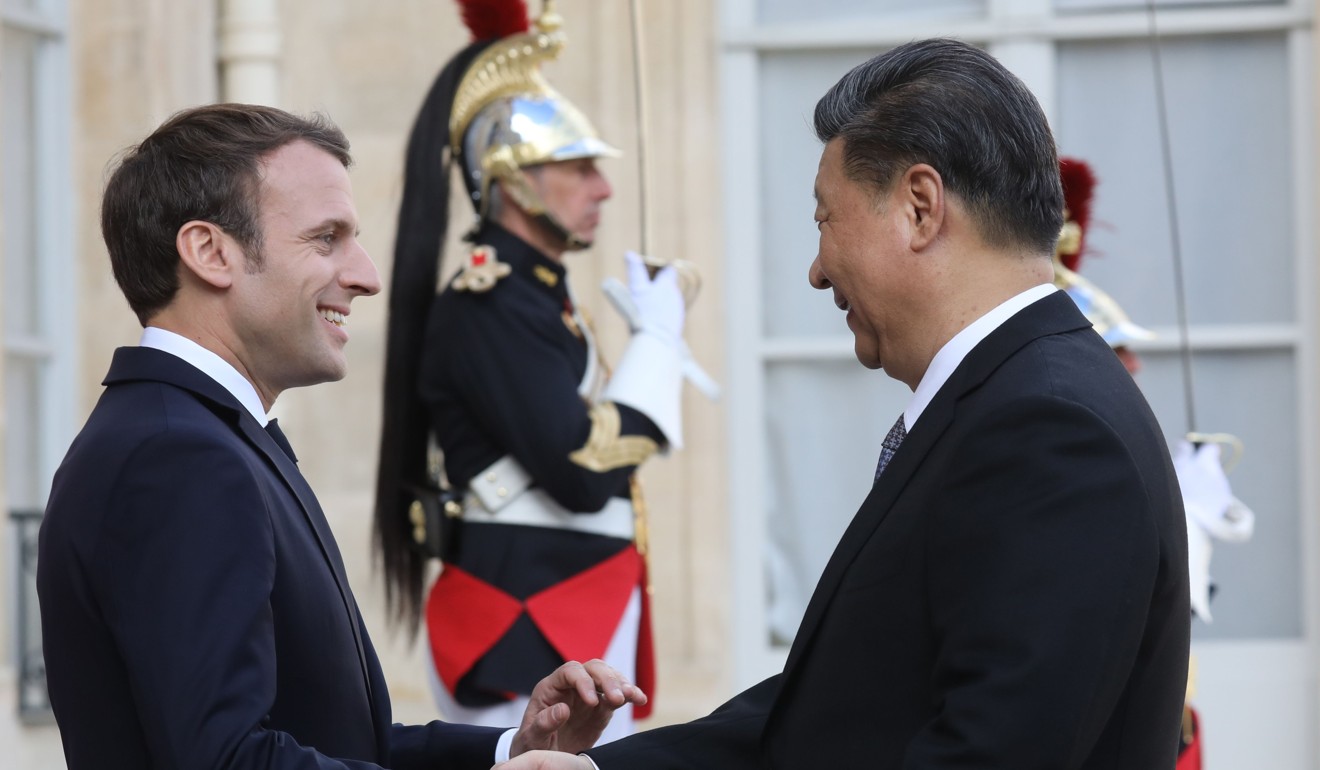
Days before receiving Chinese President Xi Jinping in France last month, President Emmanuel Macron declared that the “time of European naivety” towards China was over – a remark the Greek deputy prime minister described as “interesting” during the interview.

“It’s so interesting, yes. Mr Macron, despite his statement, actually signed very large-scale agreements with China,” he said, adding: “Germany, the same”.

French President Emmanuel Macron welcomes Chinese President Xi Jinping to the Elysee Palace in Paris last month. Photo: AFP

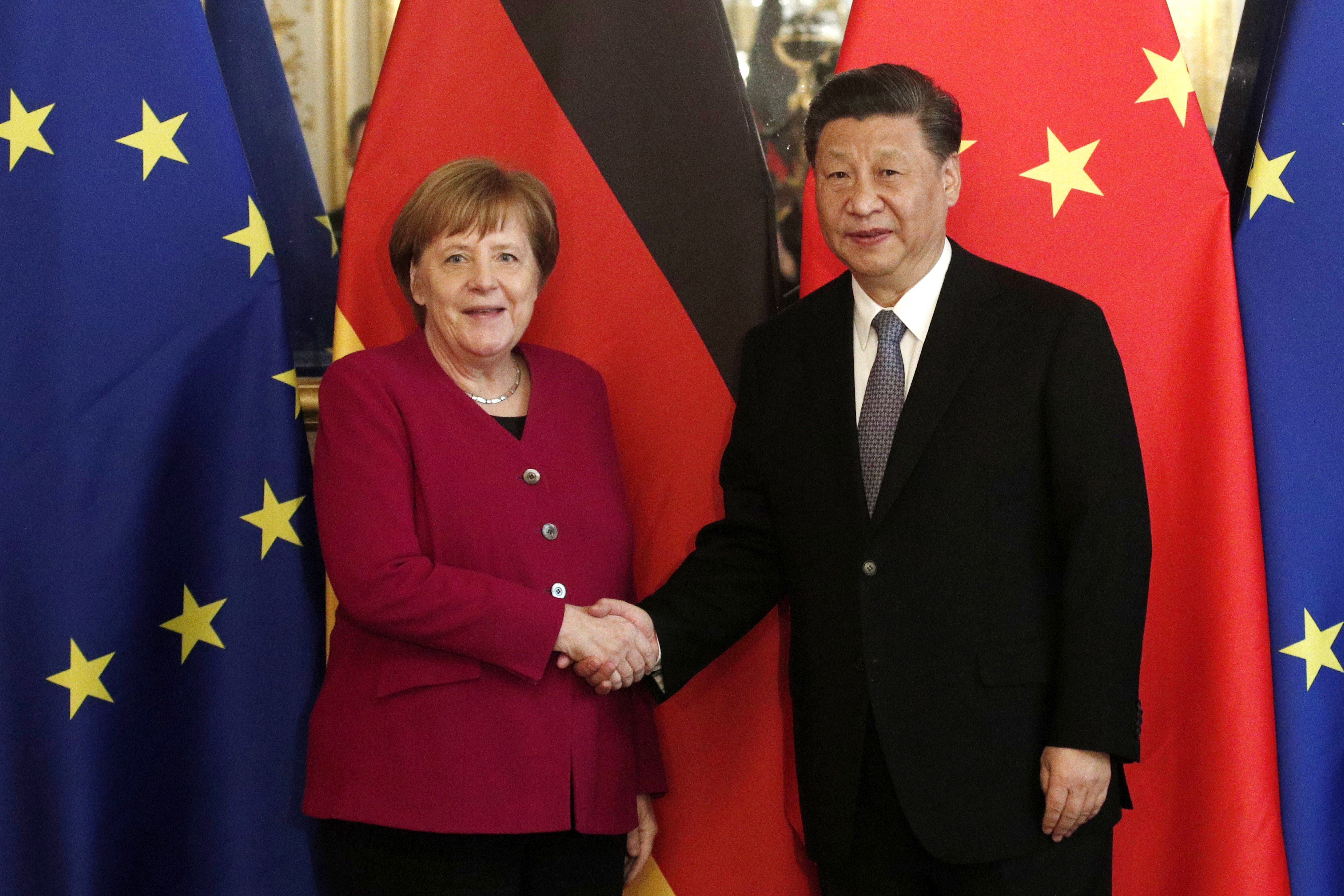
Macron invited German Chancellor Angela Merkel and European Commission President Jean-Claude Juncker to his meeting in Paris with Xi, where the four sought to reassure each other over economic cooperation between the European trading bloc and China.

Dragasakis said Greece’s relations with China were based on “very solid ground” with the two countries sharing complementary interests, particularly through the belt and road plan.

Greek Prime Minister Alexis Tsipras is understood to be considering joining Foreign Minister George Katrougalos at the belt and road summit in Beijing, which will be hosted by Xi later this month.

More than 40 heads of state are expected to attend the summit, with China’s foreign ministry recently saying that Europe had started to see the value of the scheme.

If confirmed, Tsipras’ presence at the summit will be interpreted as an attempt by Greece to consolidate Chinese support in the wake of Italy’s joining of the scheme.

He will also need to mend ties with Beijing, following a recent decision by Greece’s archaeological body to block a plan by Cosco to upgrade facilities at the Piraeus port, throwing the future of the multimillion euro privatisation deal into uncertainty.

Portugal’s support for China’s belt and road plan ‘bad news’ for EU

Dragasakis said there were strong prospects for the future relationship between Greece and China because of the two countries’ reciprocal interest.

Relations with other Asian countries, while not yet as close as Greek ties with China, would continue to be developed, he said.

Dragasakis said Athens would not adopt discriminatory policies against any country as it looked to shore up foreign investments to boost its economy.

India, for instance, has set its sights on Greece as a potential business partner, with President Ram Nath Kovind becoming its first titular head of state to visit Greece last year.

“Relations with India are lagging behind – they are not at the same level as with China, but of course we are mulling further developments with India,” Dragasakis said, adding that Greece would also work more closely with Japan, South Korea and Vietnam.

EU leaders hold out olive branch to Chinese ‘rival’ by saying they want active role in Belt and Road Initiative

EU leaders hold out olive branch to China over belt and road

Read more

China will not divide Europe, senior diplomat says

China will not divide Europe, senior diplomat says

Read more

Beijing calls for ‘objective’ assessment of human rights record.


Source: SCMP

07/04/2019

US and China edge closer to ‘epic’ trade deal, says Trump

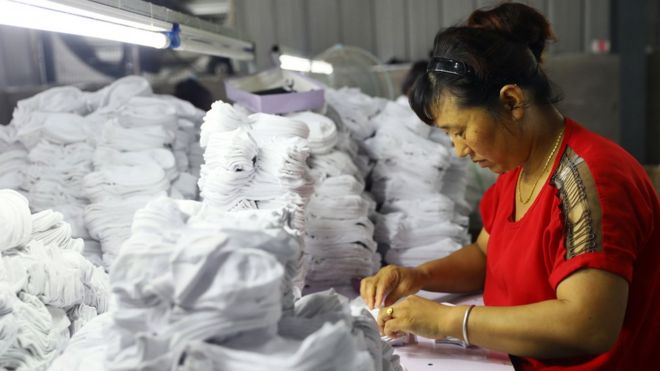
A woman works on socks that will be exported to the US at a factory in Huaibei in China's eastern Anhui province on August 7, 2018Image copyrightGETTY IMAGES

President Donald Trump says the US has found agreement on some of the toughest points in trade talks with China.

He said a deal could come in the next four weeks, but added some sticking points remained.

The Chinese echoed the optimism, with President Xi Jinping touting substantial progress, according to the Chinese state news agency Xinhua.

The US and China have been in talks since December trying to end a trade war that is hurting the global economy.

Mr Trump said the US and China had agreed on “a lot of the most difficult points” but that “we have some ways to go”.

He was speaking from the White House, before a meeting with Chinese Vice Premier Liu He.

The US president said if there was a deal, he would hold a summit with President Xi.

“This is an epic deal, historic – if it happens,” said Mr Trump.

“This is the Grand Daddy of them all and we’ll see if it happens. It’s got a very good chance of happening.”

Sticking points in negotiations in recent weeks have included how fast to roll back tariffs and how a deal would be enforced.

Mr Trump suggested at the press conference that some of these persisted.

He said it would be tough for the US to allow trade to continue with China in the same way as in the past, if a deal did not materialise.

‘Conflicting signals’

The world’s two largest economies imposed tariffs on billions of dollars worth of one another’s goods over the past year.

Negotiations between them have continued since a trade truce was agreed in December, but have at times been rocky.

The BBC’s China correspondent Robin Brant said that both sides were – yet again – giving conflicting signals.

Mr Liu said the US and China had reached a new consensus on important issues like the text of the economic and trade agreement, Xinhua reported.

While that echoed Mr Trump’s comments, US Trade Representative Robert Lighthizer sounded more cautious. He said there were still some major issues left in trade talks, according to reports.

Mr Brant said there was clearly still significant distance between the two sides on the crucial issue of enforcement.

What’s being discussed?

The US accuses China of stealing intellectual property from American firms, forcing them to transfer technology to China.

Washington wants Beijing to make changes to its economic policies, which it says unfairly favour domestic companies through subsidies and other support, and wants China to buy more US goods to rein in a lofty trade deficit.

China accuses the US of launching the largest trade war in economic history, and is unlikely to embrace broader structural changes to its economy.

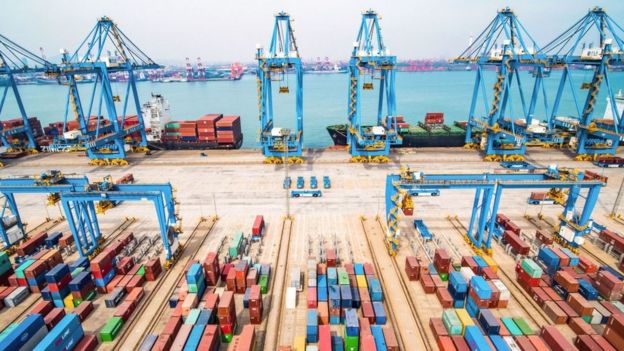
An aerial view of a port in Qingdao in China's eastern Shandong province on March 8, 2019Image copyrightGETTY IMAGES

What’s at stake?

Failure to achieve a deal may see the US more than double the 10% tariffs on $200bn (£153bn) of Chinese goods and impose fresh tariffs.

Mr Trump has in the past threatened to tax all Chinese goods going into the US.

The US has already imposed tariffs on $250bn worth of Chinese goods, and China has retaliated with duties on $110bn of US products.

The damaging trade war has already cast a shadow over global trade and the world economy.

Source: The BBC

06/04/2019

China’s outbound investment in U.S. expected to rebound, expert says

U.S.-NEW YORK-COMMITTEE 100 CHAIRMAN-CHINESE OUTBOUND INVESTMENT

H. Roger Wang, chairman of Committee of 100, a non-profit U.S. leadership organization of Chinese Americans, speaks during a press conference in New York, the United States, April 5, 2019. Speaking at a press conference on Friday, H. Roger Wang said he is positive that the situation would improve although China’s outbound investment in the United States currently hit the bottom. (Xinhua/Wang Ying)

NEW YORK, April 5 (Xinhua) — China’s outbound investment in the United States is going to recover after posting a deep drop in 2018, according to chairman of Committee of 100, a non-profit U.S. leadership organization of Chinese Americans.

Speaking at a press conference on Friday, H. Roger Wang said he is positive that the situation would improve although China’s outbound investment in the United States currently hit the bottom.

“You will see more Chinese investment into the United States,” said Wang.

Chinese investors only invested 4.8 billion U.S. dollars in the United States in 2018, down from 29 billion U.S. dollars in 2017 and 46 billion U.S. dollars in 2016, according to data from the research institute Rhodium Group.

The slump of Chinese investment in the United States last year resulted from tighter regulatory checks from both the United States and China, according to Wang.

Most companies indicated that they would maintain or accelerate their investment in each other’s markets in 2019, according to a new snap survey with top executives from companies which are committed to doing business in both the United States and China.

“Businesses in both countries plan to stay engaged with most planning to maintain or increase investment,” said a release issued on Friday on the survey jointly conducted by Committee of 100 and the U.S.-China Business Council, which represents American companies that do business with China.

Source: Xinhua

06/04/2019

China, CEEC see steady trade growth

BEIJING, April 6 (Xinhua) — China and Central and Eastern European Countries (CEEC) saw steady trade growth last year as cooperation between the two sides strengthened.

Bilateral trade reached 82.23 billion U.S. dollars last year, up 21 percent year on year, according to the Ministry of Commerce (MOC).

China’s exports to the CEEC totaled 59.19 billion dollars last year, while imports reached 23.04 billion dollars, up 19.6 percent and 24.6 percent respectively, said MOC spokesperson Gao Feng.

Investment between the two sides also expanded. Chinese firms have invested over 10 billion dollars in the CEEC, while receiving more than 1.5 billion dollars from them. Bilateral investment covers sectors including auto parts, chemicals, finance and medicine.

China is willing to deepen economic and trade cooperation with the CEEC and further align the Belt and Road Initiative with CEEC national development strategies to seek win-win partnership, Gao said.

Source: Xinhua

06/04/2019

China to build 15 national logistics hubs in 2019

BEIJING, April 6 (Xinhua) — China will start building about 15 national logistics hubs this year in its bid to build a nation-wide logistics hub network.

In principle, The national logistics hubs will be built on existent logistics hubs which have a sound infrastructure, strong market demand and huge growth potential, according to an implementation plan released by the National Development and Reform Commission and the Ministry of Transport.

The two ministries will determine the locations of the first batch of national logistics hubs based on the demand of the development under national strategies like the Yangtze River economic belt and local government plans.

China aims to build about 30 national logistics hubs by 2020, and 150 by 2025, when the ratio of total logistics expenses to GDP will be reduced to about 12 percent.

The country’s logistics volume totaled 283.1 trillion yuan (42.14 trillion U.S. dollars) in 2018, up 6.4 percent year on year. The ratio of total logistics expenses to GDP stood at 14.8 percent.

Source: Xinhua

06/04/2019

Mobile payment gaining steam in rural China

BEIJING, April 6 (Xinhua) — Mobile payment is gaining steam in China’s rural areas, strengthening its dominant position in online payment in rural areas, according to the country’s central bank.

A total of 274.883 billion mobile payment transactions were made via non-banking payment platforms in 2018, worth 74.42 trillion yuan (11.08 trillion U.S. dollars), up 112.25 percent and 73.48 percent respectively, data from the People’s Bank of China showed.

Mobile payment dominates the online payment market in rural areas, with total transaction deals and volume making up nearly 95 percent and 97 percent of the online payment totals in rural areas.

Rural areas also reported increasing banking transaction accounts and bank cards.

China had 126,600 rural banking outlets by the end of 2018, with about 1.31 bank serving every 10,000 people in rural areas on average.

Source: Xinhua

Law of Unintended Consequences

continuously updated blog about China & India

ChiaHou's Book Reviews

continuously updated blog about China & India

What's wrong with the world; and its economy

continuously updated blog about China & India