Archive for ‘China alert’

01/04/2019

Unmanned express delivery vehicle put into service at Xiongan citizen service center

CHINA-XIONGAN NEW AREA-UNMANNED EXPRESS DELIVERY VEHICLE (CN)

An unmanned express delivery vehicle runs to a Cainiao Network Station in Xiongan New Area, north China’s Hebei Province on March 31, 2019. The unmanned express delivery vehicle, independently researched and developed by Cainiao Network, Alibaba’s logistics arm, was recently put into service at Xiongan citizen service center. The new energy vehicle can convey about 200 small packages at one time from delivery station to intelligent cabinet. (Xinhua/Jin Liangkuai)

Source: Xinhua

01/04/2019

Central China’s Wuhan to run for int’l wetland city

CHINA-WETLAND-PROTECTION (CN)

Aerial photo taken on June 23, 2018 shows a wetland of the Yellow River Delta national nature reserve in Dongying, east China’s Shandong Province. The city of Wuhan in central China’s Hubei Province will apply for the 2021 Wetland City Accreditation of the Ramsar Convention, the municipal forestry bureau announced. The announcement was made as the city joined the global “Earth Hour” campaign Saturday night by turning off lights on major landmarks. Wuhan, which sits at the confluence of the Yangtze River and its longest tributary Han River, boasts about 1,624 square km of wetlands, accounting for 18.9 percent of the city’s total area. The bureau said Wuhan’s wetlands are home to more than 400 wild animal species and over 400 plant species. A total of 18 cities from seven countries were honored as international wetland cities in 2018. Six Chinese cities were among the list, namely Haikou, Harbin, Changde, Changshu, Dongying and Yinchuan. (Xinhua/Guo Xulei)

WUHAN, March 31 (Xinhua) — The city of Wuhan in central China’s Hubei Province will apply for the 2021 Wetland City Accreditation of the Ramsar Convention, the municipal forestry bureau announced.

The announcement was made as the city joined the global “Earth Hour” campaign Saturday night by turning off lights on major landmarks.

Wuhan, which sits at the confluence of the Yangtze River and its longest tributary Han River, boasts about 1,624 square km of wetlands, accounting for 18.9 percent of the city’s total area.

The bureau said Wuhan’s wetlands are home to more than 400 wild animal species and over 400 plant species.

“Wuhan is a competitive applicant not only because of its abundant wetland resources, but also due to its pioneering wetland protection mechanism,” said Lei Gang, an expert with World Wildlife Fund (WWF) China’s freshwater program.

“Wuhan was the first Chinese city to implement an ecological compensation mechanism for wetlands and to carry out the strictest lake management regulations,” Lei added.

The Ramsar Convention, or the Convention on Wetlands, is an inter-governmental environmental treaty adopted in 1971. It provides the framework for national actions and international cooperation regarding the conservation and wise use of wetlands and their resources.

The Ramsar Convention introduced the Wetland City Accreditation scheme in 2015, aiming to recognize cities that make exceptional efforts to safeguard their urban wetlands.

A total of 18 cities from seven countries were honored as international wetland cities in 2018. Six Chinese cities were among the list, namely Haikou, Harbin, Changde, Changshu, Dongying and Yinchuan.

01/04/2019

China launches new data relay satellite

CHINA-XICHANG-NEW DATA RELAY SATELLITE-LAUNCH (CN)

The Tianlian II-01 satellite is launched by a Long March-3B carrier rocket at the Xichang Satellite Launch Center in southwest China’s Sichuan Province, on March 31, 2019. China sent the new data relay satellite into orbit from the Xichang Satellite Launch Center late Sunday night. The Tianlian II-01 satellite was launched at 11:51 p.m. Beijing Time by a Long March-3B carrier rocket. As the first satellite to constitute China’s second-generation data relay satellite network, the Tianlian II-01 will provide data relay, measurement and control, transmission services for manned spacecraft, satellites, carrier rockets and other non-spacecraft users. (Xinhua/Guo Wenbin)

BEIJING, April 1 (Xinhua) — China sent a new data relay satellite into orbit from the Xichang Satellite Launch Center in southwest China’s Sichuan Province late Sunday night.

The Tianlian II-01 satellite was launched at 11:51 p.m. Beijing Time by a Long March-3B carrier rocket.

As the first satellite to constitute China’s second-generation data relay satellite network, the Tianlian II-01 will provide data relay, measurement and control, transmission services for manned spacecraft, satellites, carrier rockets and other non-spacecraft users.

The Tianlian II network will be markedly more advanced in mission planning, system management and operations than the first-generation network composed of Tianlian I satellites.

The new network, with faster data transfer and higher multi-objective service capability, will play an important role in improving the transmission promptness, in-orbit security and mission flexibility for medium- and low-Earth orbiting satellites and manned spacecraft.

The satellite is developed by the China Academy of Space Technology under the China Aerospace Science and Technology Corporation.

The launch marks the 301st mission of the Long March carrier rocket series.

Source: Xinhua

01/04/2019

Chinese man critically ill after being hit by shared bike falling from building

  • Police investigating after 78-year-old sustains bleeding in the brain and multiple broken bones
  • Incident is latest mishap to hit China’s shared bike industry
Yang had been taking a stroll when he was struck by the falling bike. Photo: Weibo

A 78-year-old man in eastern China is in critical condition after being hit by a shared bicycle that fell from a tall building on Friday, mainland media reported.

The man, surnamed Yang, was standing by a ground-floor gate of the building where he lives in Nanchang, Jiangxi province, when a bicycle owned by bike-sharing company Ofo fell from one of the windows above, Jiangxi Television’s City Channel reported.

He was being treated in hospital for bleeding in the brain and several broken bones.

Yang’s daughter-in-law, surnamed Li, told the broadcaster Yang had been resting beside the gate while taking a walk on Friday afternoon when the bike hit him, knocking him to the ground.

Yang was hit as he paused by a gate to the building where he lives. Photo: Weibo
Source: SCMP
01/04/2019

Huawei sales top $100bn despite US-led pressure

Person stands in front of Huawei logoImage copyrightGETTY IMAGES

Chinese telecoms giant Huawei said revenues topped $100bn in 2018 despite a US-led campaign against the business on fears it poses a security threat.

The firm said revenue for 2018 hit 721.2bn yuan ($107bn), while net profit jumped 25% to 59.3bn yuan.

The US and others have restricted the company over concerns that its ties to Beijing represent a security threat.

Huawei says it is independent and strongly denies its products pose a security risk.

The Shenzhen-based firm said global revenue surged 19.5% in 2018, its fastest pace of growth in two years. The result was supported by strong sales of smartphones in China.

At the same time its carrier business, which sells telecoms infrastructure to countries around the world, eased 1.3%.

Huawei is the world’s largest maker of telecoms equipment. It faces a growing backlash from Western countries on concerns over the security of its products used in next-generation 5G mobile networks.

The US, Australia and New Zealand have all blocked local firms from using Huawei to provide the technology for their 5G networks.

Several European telecoms operators are considering removing Huawei equipment from their networks, and a report by UK cyber authorities out this week strongly criticised the tech firm.

The report, issued by the National Cyber Security Centre, said it can provide “only limited assurance that the long-term security risks can be managed in the Huawei equipment currently deployed in the UK”.

Huawei has begun pushing back. It has launched a more aggressive strategy in recent months to counter what it sees as an American “smear” campaign.

Earlier this month, it filed a lawsuit against the US government over a ban that restricts federal agencies from using its products, arguing it is “unconstitutional.”

01/04/2019

China manufacturing returns to growth in March: Caixin PMI

BEIJING (Reuters) – China’s manufacturing sector unexpectedly returned to growth for the first time in four months in March, in a sign that government stimulus measures may be slowly gaining traction, a private business survey showed on Monday.

But growth in new domestic and exports orders was marginal, suggesting the economy will remain under pressure in coming months and will likely require more policy support before it can convincingly stabilize.

The Caixin/Markit Manufacturing Purchasing Managers’ Index (PMI) expanded at the strongest pace in eight months in March, rising to 50.8 from 49.9 in February, above the neutral 50-mark dividing expansion from contraction on a monthly basis and the highest level seen since July 2018.

Economists polled by Reuters had forecast the reading for March would stay unchanged at 49.9. The surprise expansion seen in the Caixin survey echoed that seen in the official PMI released on Sunday, which also showed factory activity defying expectations for another contraction in March.

“With a more relaxed financing environment, government efforts to bail out the private sector and positive progress in Sino-U.S. trade talks, the situation across the manufacturing sector recovered in March,” Zhengsheng Zhong, director of macroeconomic analysis at CEBM Group, said in a commentary accompanying the data release.

China has made proposals in talks with the United States on a range of issues that go further than it has before, including on forced technology transfer, as the two sides work to overcome obstacles to a deal to end their protracted trade war, U.S. officials told Reuters on Wednesday.

But sources close to the talks have stressed that a deal is by no means certain, and tit-for-tat tariffs on both sides have remained in place.

Zhang noted the employment situation improved significantly in March, a trend that may ease some government and investor concerns after the unemployment rate in urban areas for February rose to the highest since early 2017.

Caixin’s findings showed factories added headcount in March for the first time in 65 months, arresting a relentless spell of job shedding since October 2013. Some firms were hiring to support higher production and new business development, the release said.

New orders — an indicator of future activity — increased for the second month running, though the pace of growth was marginal. Output also grew for the second straight month.

New export orders expanded after contracting in the previous month. Though the rate of increase was fractional, Caixin said the broad trend appeared to have steadied in the first quarter.

Chinese manufacturers also signaled an improvement in pricing power in March, which could ease pressure on profit margins. Output charges edged up into expansionary territory and outpaced growth in input prices, reflecting reduced pressure from raw material costs.

“The producer price index might have risen faster year-on-year in March, and increased month-on-month, compared with a monthly decline in February,” Zhong added.

Optimism among businesses edged up to a 10-month high partly on expectations that market conditions, both at home and abroad, will improve, the statement said.

But purchasing activity declined for the third straight month, suggesting some firms remain cautious.
Economists at Nomura have forecast that China’s industrial production growth will moderate again in April and May after a brief rebound in March mainly due to last year’s low base.
Source: Reuters
31/03/2019

Construction of 2,240-MW hydropower station underway in upper Yangtze

LHASA, March 30 (Xinhua) — Construction started Saturday on the main structure of a 2,240-MW hydropower station on the Jinsha River, the upper section of the Yangtze River.

A cofferdam was built upstream of the construction site on Saturday in preparation for further building work.

The Yebatan Hydropower Station is located at the junction of Baiyu County in southwest China’s Sichuan Province and Konjo County in Tibet Autonomous Region.

It will be the largest hydropower station on the upper reaches of the Jinsha River upon completion.

With a total installed capacity of 2,240 MW, the power station will be able to generate about 10.2 billion kilowatt hours of electricity per year.

The project is undertaken by China Huadian Corp., with a total investment of about 33.4 billion yuan (about 5 billion U.S. dollars).

Wei Yongxin, of Huadian Jinsha River Upstream Hydropower Development Co., Ltd., said the station’s first generating unit is expected to start operation in 2025.

The power station is expected to replace 3.99 million tonnes of coal and reduce 7.37 million tonnes of carbon dioxide emissions per year after it is put into operation, said Jia Zhongqi, another Huadian official.

To protect the fragile ecosystem along the upper reaches of the Jinsha River, more than 1.5 billion yuan will be invested in environmental protection projects such as fish ladders and fish breeding stations during the construction of the power station, Jia added.

Source: Xinhua

31/03/2019

Many Chinese cities turn off lights in global relay of “Earth Hour”

BEIJING, March 30 (Xinhua) — At 8:30 pm Beijing Time sharp, lights on major landmarks as well as in households were turned off in several cities across China in commemoration of “Earth Hour”.

“Earth Hour” is a global initiative first launched by World Wildlife Fund (WWF) in 2007 and soon became a popular movement worldwide.

From 8:30 to 9:30 pm on every last Saturday of March, individuals, communities, enterprises and government departments around the globe are encouraged to turn off their lights for an hour, with the purpose of inspiring reflections and actions regarding environmental issues.

All over China, lights were out on emblematic landmarks including Beijing’s Olympic Towers, The Oriental Pearl Tower in Shanghai, Wuhan’s historic Yellow Crane Tower as well as Yinli Plaza in Shenzhen.

The event aims to alert people of the loss of the world’s biodiversity and the urgency to protect the integrity of the ecosystem, Jean-Paul Paddack, WWF’s Global Initiatives Director told Xinhua in an exclusive interview before the lights went out at the Olympic Tower in Beijing.

In China, the state strategy of building an ecological civilization has made tremendous progresses, he said.

China has been leading the way in the global efforts in finding a development model for man and nature to live in harmony, he said, stating the importance of China’s leading role expected in the United Nations Biodiversity Conference to be held in Beijing next year.

In recent years, China has been intensifying measures to tackle environmental issues, pushing for the transformation and upgrading of its industries such as new energies, Zhang Qian, vice executive chair of China NGO Network for International Exchanges, co-organizer of Earth Hour in the country.

Besides themed exhibitions and galleries, Earth Hour in China has engaged a wider public through interactive campaigns.

In Wuhan, rock musicians joined the event by unplugging their electric guitars and using Chinese traditional instrument Zheng at a music festival.

In Shanghai, tourist cruises on the Huangpu River and 20 skyscrapers on both banks went dark.

“We hope that the Earth Hour can go beyond the 60 minutes, for everyone to make personal effort in turning the eco-consicous actions into a habit, and the habit a culture,” said Lu Lunyan, vice executive director of WWF China.

The participation scale of the Chinese public online and offline has set a new record this year, according to the organizers.

Source: Xinhua

31/03/2019

2019 China-New Zealand Year of Tourism kicks off

NEW ZEALAND-WELLINGTON-CHINA-YEAR OF TOURISM

China’s Minister of Culture and Tourism Luo Shugang addresses the opening ceremony of the 2019 China-New Zealand Year of Tourism in Wellington, New Zealand, on March 30, 2019. The 2019 China-New Zealand Year of Tourism was launched here Saturday with an aim to strengthen economic and cultural ties between the two countries. (Xinhua/Guo Lei)

WELLINGTON, March 30 (Xinhua) — The 2019 China-New Zealand Year of Tourism was launched here Saturday with an aim to strengthen economic and cultural ties between the two countries.

An official ceremony was held at Wellington’s Te Papa Tongawera, Museum of New Zealand, and attended by high-level officials and hundreds of representatives from the tourism industry in both countries.

China’s Minister of Culture and Tourism Luo Shugang read the welcoming message by Chinese Premier Li Keqiang for the opening ceremony.

“Tourism is an important area of our cooperation and a driving force for our peoples’ mutual understanding and friendly ties. Chinese tourists are attracted by scenic beauty and cultural diversity of New Zealand, and visitors from New Zealand marvel at China’s natural wonders and rich heritage as an ancient civilization,” Li said in the message.

“Last year, around 600,000 visits were exchanged between the two countries. China remains the second largest overseas tourist market of New Zealand,” Li said.

“The China-New Zealand Year of Tourism presents an opportunity for our two countries to enhance tourism cooperation through people-to-people contact. More people-to-people contact between China and New Zealand will increase our mutual knowledge and awareness, which are central to more popular support for our bilateral relations and cooperation,” the Chinese premier said.

New Zealand Tourism Minister Kelvin Davis read the welcoming message by New Zealand Prime Minister Jacinda Ardern for the opening ceremony.

Ardern said “Tourism is a crucial strand in our bilateral relationship, and is a particularly important driver of economic growth. There was an 8.8 percent increase in Chinese holidaymakers to New Zealand from 2017 to 2018, and China is New Zealand’s second-largest tourism market. The number of New Zealanders visiting China has also reached a new high.”

“The recent Christchurch terrorist attacks brought into sharp relief the importance of building interactions and understanding across peoples, cultures and borders. Initiatives during the Year of Tourism reflect China and New Zealand’s shared commitment to doing just that,” Ardern said.

Chinese Ambassador to New Zealand Wu Xi said “New Zealand is a natural extension of the 21st Century Maritime Silk Road. During Chinese Premier Li Keqiang’s visit to New Zealand in 2017, the two sides signed Belt and Road cooperation documents. The connection between facilities and people’s hearts is an important part of the Belt and Road Initiative.”

Wu said “Sino-New Zealand’s Belt and Road cooperation will not only help to enhance New Zealand’s tourism infrastructure, but also further strengthen New Zealand’s advantage as an ideal tourist destination for Chinese tourists and attract more Chinese tourists.”

Richard Davies, manager of tourism policy at the Ministry of Business, Innovation and Employment, said the Year of Tourism gives New Zealand an opportunity to showcase the things that makes it a world class destination.

Tourism New Zealand General Manager — New Zealand & Government Relations, Rebecca Ingram said “Tourism New Zealand’s focus is on ensuring New Zealand remains a desirable destination and top of mind as an option for Chinese travelers.”

“China is New Zealand’s most valuable visitor market. With the highest daily spend of all our visitors and a highly seasonal profile, our Chinese visitors help to spread the benefits of tourism throughout the year.”

During the 2019 China-New Zealand Year of Tourism, New Zealand’s tourism sector and beyond is encouraged to think about what they can do to get their China business ready.

Source: Xinhua

31/03/2019

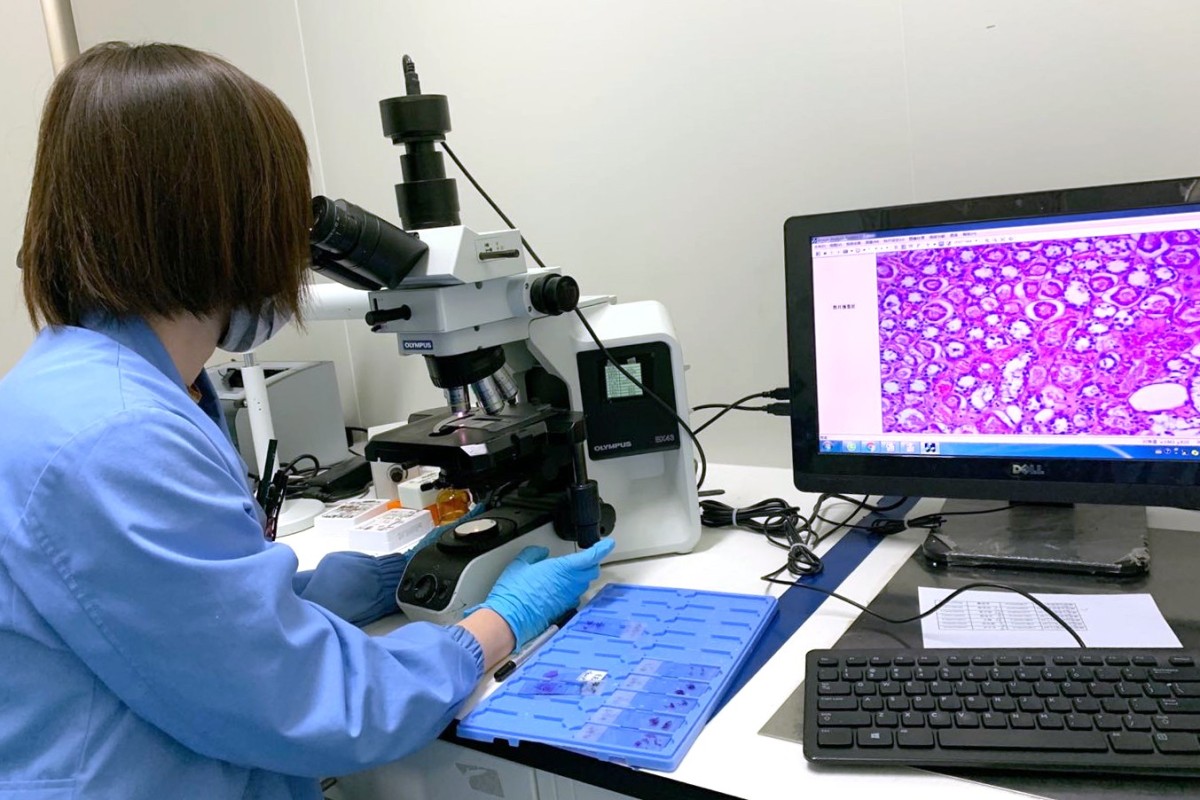
How a Chinese firm is using artificial intelligence to zero in on liver cancer

  • Genetron Health has developed a technique that detects the disease earlier than other methods
Liver cancer is generally difficult to detect in its early stages. Photo: Handout

A Chinese genomics firm says it has found a way to detect liver cancer linked to hepatitis B months before it can be picked up by other methods.

The conclusion was based on a study by Genetron Health and the Chinese Academy of Medical Sciences Cancer Hospital using a method called HCCscreen, which applies artificial intelligence to look for tumour-related mutations in DNA in blood.

The researchers found that the new method could pick up early signs of the cancer in people who had tested negative based on traditional alpha-fetoprotein (AFP) and ultrasound examinations.

Genetron Health chief executive Wang Sizhen said early detection was important because it significantly increased the chances of survival.
“The study is a breakthrough in genomics technology and it’s likely to help hepatitis B virus carriers, whose risk of liver cancer is much higher,” Wang said.
The researchers first used AI technology to identify biomarkers common in known cases of a type of liver cancer called hepatocellular carcinoma, or HCC.
The team then developed the HCCscreen technique to look for those markers and used it on 331 people with hepatitis B who had tested negative for liver cancer in AFP and ultrasound exams.
Genetron Health chief executive Wang Sizhen says early detection is important because it significantly increases the chances of survival. Photo: SCMP

Twenty-four people tested positive with HCCscreen and were tracked over eight months, with four eventually being diagnosed with early-stage liver cancer.

four patients had surgery to remove the tumours and the other 20 in the positive group had a second HCCscreen test, with mixed results. Wang said all participants in the group of 20 would continue to be monitored.

“This is the first large-scale prospective study on early diagnosis [of liver cancer],” he said.

The results were published in the Proceedings of the National Academy of Sciences earlier this month.

There are about 93 million people with hepatitis B in China and carriers of the virus have a much higher risk of developing liver cancer.

China’s race to test ‘mutation-free’ gene-editing technology on cancer patients

Liver cancer is generally difficult to detect in its early stages, and twice-yearly ultrasounds and AFP tests for the disease are recommended for high-risk groups such as people with hepatitis B virus infections, or cirrhosis – scarring of liver tissue.

But in China, most HCC cases were detected at advanced stage, the authors of the study wrote.

According to the National Cancer Centre, 466,000 people were diagnosed with liver cancer and 422,000 died from the disease in China in 2015.

Wang said the company aimed to commercialise the technology but even then it would take time to ensure it was affordable.

“[High-risk] people need to have regular screening. This is important for public health but the technology must be affordable enough to be widespread,” Wang said. “The ultimate goal of this study is to develop a product that people in China can afford.”

Source: SCMP

Law of Unintended Consequences

continuously updated blog about China & India

ChiaHou's Book Reviews

continuously updated blog about China & India

What's wrong with the world; and its economy

continuously updated blog about China & India