Archive for ‘China alert’

20/03/2019

Piles of pigs: Swine fever outbreaks go unreported in rural China

BAODING, China (Reuters) – When pigs on the Xinda Husbandry Co. Ltd breeding farm in northern China began dying in growing numbers in early January, it looked increasingly likely that the farm had been struck by the much feared African swine fever, an incurable disease that has spread rapidly across the country since last year.

But after taking samples from some pigs, local officials in the Xushui district of Baoding city, about an hour’s drive from Beijing, said their tests came back negative, said Sun Dawu, chairman of Hebei Dawu Agriculture Group, the farm owner.

As hundreds of pigs began dying daily on the 20,000-head farm, the company obtained a test kit that showed some positive results for the virus. But after further lobbying by Xinda, officials just offered the company subsidies for farm buildings and other investments, said Sun.

Sun’s account of events and pictures taken by farm staff of dead pigs lying in rows and a pile outside the farm could not be independently verified.

Xushui district said in a faxed response to Reuters on Tuesday that it was opening an investigation into the case, adding that it had found some “discrepancies” with the reported version of events.

“If there is illegal behaviour, relevant departments will handle it according to the law,” added the statement from the local government’s investigative committee.

Farmers and other industry insiders told Reuters that China’s African swine fever epidemic is far more extensive than official reports suggest, making the disease harder to contain, potentially causing pork shortages and increasing the likelihood that it will spread beyond China’s borders.

“Our full expectation is that the number of cases is under-reported,” said Paul Sundberg, executive director at the Swine Health Information Center in Ames, Iowa, which is funded by American pork producers.

“And if there’s so much of that virus in the environment in China, then we are at increased risk of importing it.”

China does not permit the commercial sale of African swine fever test kits, though many are now available. Official confirmation must come from a state-approved laboratory.

“Public confirmation of disease is the government’s job,” Sun told Reuters at his company headquarters in Xushui in late February.

Frustrated by the lack of action and mounting losses from the disease, Sun eventually published details of the suspected outbreak on China’s Twitter-like platform Weibo on Feb. 22.

ADVERTISEMENT

By then, more than 15,000 pigs on the Xinda farm had already died, said Sun, and the company even sold on thousands of pigs – potentially spreading the disease further.

Sun said officials did not explain why their first test had been negative, though he suggested it may have been because they took samples from live pigs on the farm and did not test the dead ones.

China’s Ministry of Agriculture and Rural Affairs did not reply to a faxed request for comment on the case.

The agriculture ministry has warned against covering up outbreaks of the disease, and in January highlighted two large farms that had tried to conceal outbreaks.

UNCONFIRMED OUTBREAKS

Detailed accounts of unconfirmed outbreaks shared with Reuters by two other farm company managers suggest Sun’s experience is not unique.

In one case in northern China last year, local officials declined to even carry out a test. In another case in Shandong province, official test results came back negative, despite clinical symptoms that strongly pointed to African swine fever and a positive test result obtained by the company itself.

Neither manager was willing to be named because of the sensitivity of the issue.

Once an outbreak of African swine fever (ASF) is confirmed, all pigs on the farm, as well as any within a 3-km (1.8-mile) radius, must be culled and disposed of, according to Chinese law, and farmers should be paid 1,200 yuan ($180) per pig culled.

For some cash-strapped county governments, avoiding compensation payments could be an incentive not to report disease, said a senior official with a major pig producer.

When the disease hit one of the company’s 6,000-head sow farms in the northeast in November, local authorities did nothing, the official said.

“It was never tested by the government. We couldn’t do the test because we didn’t have the capability. But there’s no question it was ASF, based on the symptoms and lesions,” he told Reuters, declining to be identified because of company policy.

A county official in northeastern Liaoning province told Reuters in January that the local government had poured so much money and resources into preventing and controlling African swine fever that it risked bankrupting the county.

But wealthy Shandong province, northern China’s biggest producer of hogs, has only confirmed one case of the disease, on Feb. 20.

Insiders at one company said four of its farms in the province had suffered swine fever infections, however, suggesting more unconfirmed outbreaks may have occurred.

After the company’s first outbreak in early January the local government tested and the results came back negative, said an executive, who declined to be identified because of the sensitivity of the issue.

Shandong province’s animal husbandry bureau did not respond to a fax seeking comment on unreported cases.

‘SPATIAL RANDOMNESS’

There is no cure or vaccine for African swine fever and it kills about 90 percent of infected pigs.

Analysts forecast pig production in China, which eats about half of the world’s pork, will fall more than during the 2006 ‘blue ear’ epidemic, one of the worst disease outbreaks in recent years, with some expecting a decline of around 30 percent in 2019.

That would send meat prices soaring and trigger huge demand for imports.

The agriculture ministry said last week the pig herd in February had dropped 16.6 percent year-on-year, and sow stocks were down more than 19 percent.

China also has a patchy record of reporting disease. Details of the blue ear outbreak, which infected more than 2 million hogs, did not emerge until months after the damage had already been done, and the number of pigs that died is still disputed.

Like blue ear, African swine fever does not harm people. But it is classified a reportable disease by the Paris-based World Organisation for Animal Health (OIE), a global body that promotes transparency, and member country China is obliged to report each outbreak.

“You need to move faster than the virus, it’s a very simple equation of how to control disease,” said Trevor Drew, director of the Australian Animal Health Laboratory at the national research agency, the Commonwealth Scientific and Industrial Research Organisation. “If you don’t know where the virus is, you can’t stop it.”

Since August 2018, Beijing has reported 112 outbreaks in 28 provinces and regions. The increase has slowed considerably in 2019 and the agriculture ministry said earlier this month the situation was “gradually improving”.

But some suspect the disease is worse than the official data suggest.

“I am very much hoping that I am wrong, but if I consider the epidemiological characteristics of this virus disease, I would have to be extremely sceptical,” said Dirk Pfeiffer, a professor of veterinary epidemiology at the City University of Hong Kong.

He pointed to the “spatial randomness” of the reported outbreaks, unusual for an infectious disease, which normally develops in clusters.

The high rate of detection of the virus in food products carried from China to Japan, South Korea, Taiwan and Australia, as well as domestically, also indicated a much higher presence of the virus in Chinese pigs than reported, said Pfeiffer and others.

LARGE FARMS, LARGE LOSSES

With extremely high density of pigs, raised largely on low-biosecurity farms, tackling disease is widely recognised as a major challenge for China.

But the disease has hit both small farms and large producers, say industry insiders, despite better hygiene and training at factory farms.

“The large producers have not been spared,” said a manager with a company that supplies several of China’s top pig producers. “Everyone is trying really hard on biosecurity, but they’re still getting outbreaks, and they’re frustrated and losing hope.”

He said he knew of eight large breeding farms that had experienced outbreaks, including two on very large, 10,000-head sow farms. None were officially reported.

He declined to be named or to reveal the names of the producers because of client confidentiality.

Beijing has not officially reported any swine fever on the farms of large listed producers, whose shares are trading at record levels as investors bet the big producers will benefit from tighter supplies.

Qin Yinglin, chairman of China’s No.2 producer, Muyuan Foods Co Ltd, which raised 11 million pigs for slaughter last year, said most large companies were likely to be infected.

“If you checked carefully, testing one-by-one, then for sure everyone has it,” he told Reuters in an interview. “This is a high probability event.”

He said it was “not yet known” if his firm had been hit.

Source: Reuters

19/03/2019

Chinese envoy calls for helping DRC with security capacity-building

UNITED NATIONS, March 18 (Xinhua) — A Chinese envoy on Monday urged the international community to help the Democratic Republic of the Congo (DRC) with its security capacity-building.

“The current focus should be put on helping the DRC to enhance its security capacity-building, supporting the effort of the DRC government to maintain peace and stability,” Wu Haitao, the charge d’affaires of China’s Permanent Mission to the United Nations, told the Security Council meeting on the situation in the DRC.

The international community should “fully respect the sovereignty and independence and territorial integrity of the DRC,” Wu said, adding that it should also “fully respect the ownership and leadership of the DRC government in handling its own affairs, strengthen communication with the DRC government, and help the DRC to resolve its challenges in humanitarian, security, development and other fields.”

The Chinese envoy also called on the world to continue supporting regional and sub-regional organizations in playing their roles to facilitate and strengthen interactions between the parties within the DRC government to advance the implementation of the peace security and cooperation framework for the DRC and the Great Lakes Region, so as to jointly contribute to the realization of peace and stability in the DRC and a wider region.

“International partners should help with the DRC’s effort to make sure that armed groups in the DRC to abandon the military solution and instead resolve the issues through dialogue and consultation,” he added.

Wu also said that efforts must be made to “continue providing necessary humanitarian assistance and economic support to the DRC government.”

“International partners should focus on increasing input in education, healthcare, infrastructure and other areas, help the DRC to increase employment, improve people’s life, and restore economic and social development,” he said.

“We hope bodies such as UN Development Programme and UN Environment Programme can play a bigger role,” he added.

“The international community should continue actively responding to the DRC’s humanitarian assistance appeal, support the activities of the World Health Organization and the International Committee of the Red Cross and help contain the Ebola outbreak.

Noting that MONUSCO, the UN peacekeeping mission in the DRC, is “indispensable” to peace and stability in the country, Wu said that China supports the extension of its mandate.

“We hope MONUSCO can continue its activities according to its mandate to help the DRC realize peace stability and development,” he said.

“In the meantime, we hope the (UN) Secretariat, the DRC government and the troop-contributing countries can engage in communication, and in view of the development, conduct timely review and put forward proposals of adjustment to MONUSCO mandate, so as to ensure a step-by-step and orderly handover of security responsibilities from MONUSCO to the DRC security forces,” said the envoy.

China is ready to work with the wider international community to continue contributing to the DRC’s efforts to achieve early peace, stability and development, Wu noted.

Leila Zerrougui, the UN secretary-general’s special representative for the DRC, briefed the Security Council on the situation in the DRC.

UN Secretary-General Antonio Guterres on Feb. 15 submitted to the President of the Security Council an update on the situation in the DRC.

The update, which covers developments in the DRC from Jan. 1 to 31, was submitted pursuant to Resolution 2409 (2018), in which the Security Council requested the secretary-general to provide a written update every 30 days on political and technical progress towards the holding of elections in the DRC and on obstacles to the implementation of the political agreement of Dec. 31, 2016.

Source: Xinhua

19/03/2019

More population to have electricity in Tibet

LHASA, March 18 (Xinhua) — The State Grid’s Tibet branch announced that 25,000 more people in the plateau region will be covered by the main power grid by the end of this year.

In 2019, Tibet plans to build 140 electric substations of 35 kilovolts and above and 7,000 km of power transmission lines as the region continues to expand and upgrade its electricity infrastructure.

By the end of 2018, 2.76 million people in 63 counties, or over 80 percent of Tibet’s population, were covered by the main power grid, thanks to an investment of 8.89 billion yuan (about 1.3 billion U.S. dollars) in the year.

If the plan goes well, the figure will rise to 66 counties by the end of 2019.

A 16.2-billion-yuan power interconnection project was put into operation in Tibet last November, linking the region with the national grid network for the first time.

Source: Xinhua

19/03/2019

China hopes DPRK, U.S. to continue talks

BEIJING, March 18 (Xinhua) — China hopes the Democratic People’s Republic of Korea (DPRK) and the United States will cherish the hard-won momentum of dialogue and keep talking until a peaceful denuclearized Korean Peninsula is realized, a foreign ministry spokesperson said Monday.

Spokesperson Geng Shuang made the remarks at a daily press briefing in response to a question on DPRK Vice Foreign Minister Choe Son Hui’s comment on a briefing held in Pyongyang.

Choe Son Hui said on Friday that the recent summit between the top leader of the DPRK Kim Jong Un and U.S. President Donald Trump failed because the U.S. side lacked sincerity.

“After the Hanoi summit, the DPRK and the U.S. both expressed willingness to continue dialogues. We commend and encourage this,” Geng said.

China always believes that the Korean Peninsula issue can only be solved peacefully through political dialogues, he said.

He added that the key to keeping up and advancing dialogue is to accommodate all parties’ legitimate concerns in a balanced way, build up mutual trust and consensus, take phased and synchronized steps, and start with easier moves.

“As the nuclear issue has dragged on for decades and complicated factors are at play, one cannot expect it to be solved overnight. All parties need to have reasonable expectations. One shouldn’t set the bar too high at the outset or make unilateral, unrealistic demands,” Geng quoted Foreign Minister Wang Yi as saying.

He also said China hoped that the DPRK and the United States could cherish the hard-won momentum of dialogue, seize the opportunity, meet each other halfway, build up mutual trust and consensus, keep talking till something good comes out of the talks and a peaceful denuclearized Korean Peninsula is realized.

“The international community should encourage both sides to keep moving toward the goal of denuclearizing the Korean Peninsula and establishing a peace regime,” Geng said.

China will continue to play a constructive role along with other parties, the spokesperson stressed.

Source: Xinhua

19/03/2019

China opens first cross-sea bridge across active faults

CHINA-HAINAN-HAIWEN BRIDGE-OFFICIAL OPERATION (CN)

Aerial photo taken on March 18, 2019 shows the Haiwen Bridge, south China’s Hainan Province. The cross-sea bridge, which was built over seismic faults, officially started operation on Monday. The total length of the bridge is 5.597 km, including about 3.959 km across the sea. The bridge, which links Yanfeng Township of Haikou City and Puqian Township of Wenchang City, cut the trip between the two places from an hour and a half to about 20 minutes. (Xinhua/Guo Cheng)

HAIKOU, March 18 (Xinhua) — The Haiwen Bridge opened to traffic Monday in the island province of Hainan as the first cross-sea bridge crossing active faults and the most earthquake-resistant bridge in China.

The 5.59-km bridge connects the Hainan capital Haikou and Puqian, an island town in the city of Wenchang which is also known as the hometown of many overseas Chinese.

The six-lane bridge, which cuts the travel time between Puqian and Haikou from 1.5 hours to just 20 minutes, is expected to promote the integration of coastal industries in northeast Hainan, said Lin Dong, head of the provincial department of transportation.

With a total investment of 3 billion yuan (about 447 million U.S. dollars), the bridge was under strict marine monitor throughout its construction.

19/03/2019

China-EU strategic dialogue stresses cooperation

BELGIUM-BRUSSELS-CHINA-WANG YI-CHINA-EU HIGH-LEVEL STRATEGIC DIALOGUE

Chinese State Councilor and Foreign Minister Wang Yi (L) shakes hands with Federica Mogherini, EU High Representative for Foreign Affairs and Security Policy during the ninth round of the China-EU high-level strategic dialogue in Brussels, Belgium, March 18, 2019. (Xinhua/Zhang Cheng)

BRUSSELS, March 18 (Xinhua) — The ninth round of the China-EU High-level Strategic Dialogue on Monday in Brussels underlined the need to strengthen the bilateral partnership.

The dialogue was co-chaired by Chinese State Councilor and Foreign Minister, Wang Yi and EU High Representative for Foreign Affairs and Security Policy, Federica Mogherini.

Wang said that China and the European Union are comprehensive strategic partners. Facing the turbulent international situation, the two sides have developed fruitful communication and cooperation, playing the role of “stabilizer”.

China and Europe, as two major powers in the world, should take this responsibility. The level and scale of bilateral cooperation are at a historic high, and there is still great potential, said Wang.

The two sides should continue cooperation, adopt problem-solving orientation, explore new methods, new areas and new impetus in the partnerships regarding peace, growth, reform and civilization, and further the enhancement of the comprehensive strategic partnership between China and the EU.

Wang underlined three points. Firstly, cooperative partnership is the nature of China-EU relations. The common ground is to appreciate the development of bilateral relations, although the two have differences on some issues.

Wang believed there is no essential conflict of interest between China and the EU. The two can seek common ground while reserving differences, but also consolidate the common ground while resolving differences, maximizing the common interest and perception.

Secondly, the goal of China-EU cooperation is to achieve mutual benefit and win-win outcome, said Wang, hoping that Europe will stand to benefit from the new round of Chinese reform and opening-up. He welcomed Europe to participate in the construction of the Belt and Road Initiative, and expected to see the Europe-Asia connectivity plan to complement the Belt and Road Initiative.

Thirdly, Wang said the respect of each other’s core interest is the trademark of the trust between China and the EU, and he hoped the EU could be discreet in words and deeds. China is willing to work with the EU to maintain a sound development of bilateral relations, benefit the people of the two sides, and contribute more to the world’s peace and development.

Mogherini said the EU-China relations have reached a new high in the past five years in terms of their depth and extent. The two share common stance and goal against unilateralism and protectionism, and both support the international order established around the United Nations.

For the first time, the Chinese foreign minister met the foreign ministers of the 28 EU members on Monday, and they discussed about strengthening the EU-China cooperation. The EU regards China as its important strategic partner, not only economically but also politically, Mogherini noted.

The EU’s new document on policy towards China published last week will not replace the current EU strategic cooperation with China, she said. The EU has no intention to impede the development of China, and it is impossible to do it. The EU wants to see a bigger leading role played by China on global issues.

The EU has differences with China in a number of issues, but has always looked upon the bilateral strategic partnership from the perspective of common prosperity. The EU will continue sticking to the one-China policy without any change, she added.

Mogherini noted that the EU, along with China, will push for the implementation of multilateral agreements, and work closely on issues like the Paris agreement, Iran nuclear agreement, sustainable development goals, African development and so on.

The EU is willing to enhance the connectivity and communication with Asia, explore the complementarities with the Belt and Road Initiative, and vigorously carry out third-party cooperation. The EU hopes to strengthen the security and defense cooperation with China, which is not targeting any third parties. The two sides can cooperate in cyber-security, safeguard the openness, safety and stability of the internet, and establish an order of the digital world based on rules, noted Mogherini.

The two sides also exchanged opinions on the current international situation, the respective relations with major powers, and global and regional hot issues.

Source: Xinhua

19/03/2019

Chinese train operator apologises for demanding medical ID from doctor treating sick passenger

  • Physician ‘felt terrible’ after questioning by train conductor
  • Train company says ID check on volunteers is not standard procedure
Dr Chen answered a call for medical assistance aboard a China Railway Nanning Group train, and staff demanded that she produce her licence. Photo: Pear Video
China Railway Nanning Group apologised to medical professionals after train staff demanded that a doctor produce her licence as she treated a fellow passenger.
The physician, identified only as Chen, was on a train from Liuzhou to Nanning in Guangxi on Sunday when there was a call for a volunteer to attend an emergency, she told Jianghuai Medicine, a social media news source for medical professionals.

She went to the carriage and found a man in his 40s complaining of severe pain in his abdomen.

Chen asked the man for his medical history, checked his vital signs and examined him before concluding the passenger might have a gastrointestinal disorder.
The man’s condition improved after she gave him medicine from the train’s first-aid kit. She then advised the traveller to go to hospital and request an ultrasound to rule out other conditions.
When Chen made her way back to her carriage, she was stopped by a conductor and asked for her medical licence. The doctor then realised the conductor had recorded her entire diagnosis and treatment.

Chen could not produce her licence, and the conductor asked her to write down her diagnosis, her name, address and signature and photographed her identity card and train ticket details.

Chinese Good Samaritans offered insurance policy to protect them against extortion scams by the people they help

On Jianghuai Medicine, Chen said she “felt terrible” after the questioning and “I may as well not step up in future if something similar happens”.

On social media, some people agreed that a volunteer should be able to identify themselves, while others called for trust. One Weibo user said: “Should such appeals [for help] be changed to ‘doctors with a medical licence on them please come to help’?”

Another asked: “Why not put medical staff on each train since no doctors would dare to come forward?”

On China Railway Nanning Group’s Weibo feed, the company thanked the doctor for attending the patient and apologised for hurting her feelings.

Before being good Samaritans, Hongkongers need to learn the basics

“The staff did not communicate well with Dr Chen, causing a misunderstanding and creating bad feeling … The Nanning section of the group apologises to doctors and other medical professionals who have been participating in saving and treating patients,” it said.

The group said it was not standard procedure to ask for a copy of a medical licence in such circumstances, and recording the treatment on video was for the benefit of the patient.

Source: SCMP

19/03/2019

Philippines goes cap in hand to China as water shortage bites

  • Delegation from Manila lands in Beijing to seek loans and unlock funds for controversial China-backed Kaliwa dam
  • Critics say the Duterte government has engineered the water shortage to gain backing for the dam, which indigenous tribes oppose
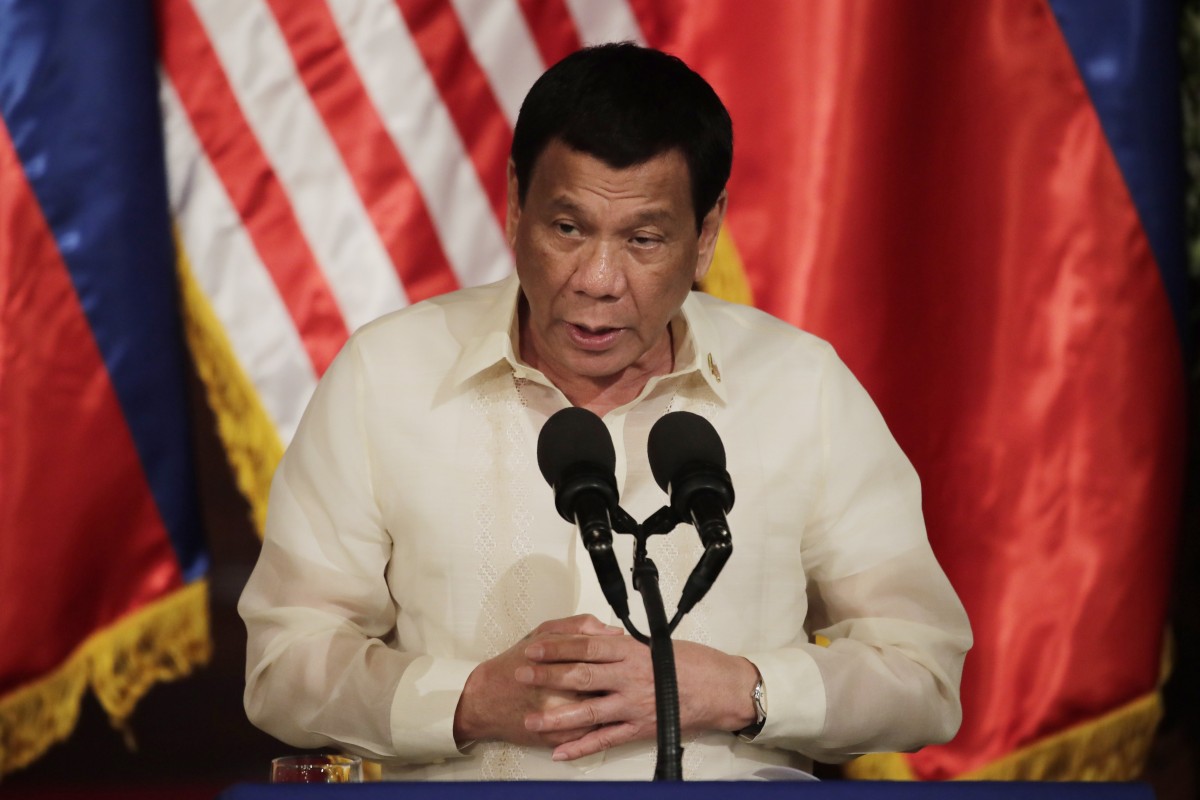
Philippine President Rodrigo Duterte. Photo: EPA
The Philippines has gone cap in hand to China as it struggles with a severe water shortage that has seen taps in its capital city run dry.
A delegation from Manila landed in China on Tuesday hoping to attract further infrastructure investment and speed up the delivery of loans Beijing has pledged for an irrigation project and a controversial dam that government ministers say will ease the water shortage. Any new loans they negotiate would be on top of the US$10 billion China has already pledged to President Rodrigo Duterte’s “build, build, build” project to transform the Philippines’ economy.
The site of the controversial Chinese-funded Kaliwa Dam Project. Photo: MWSS

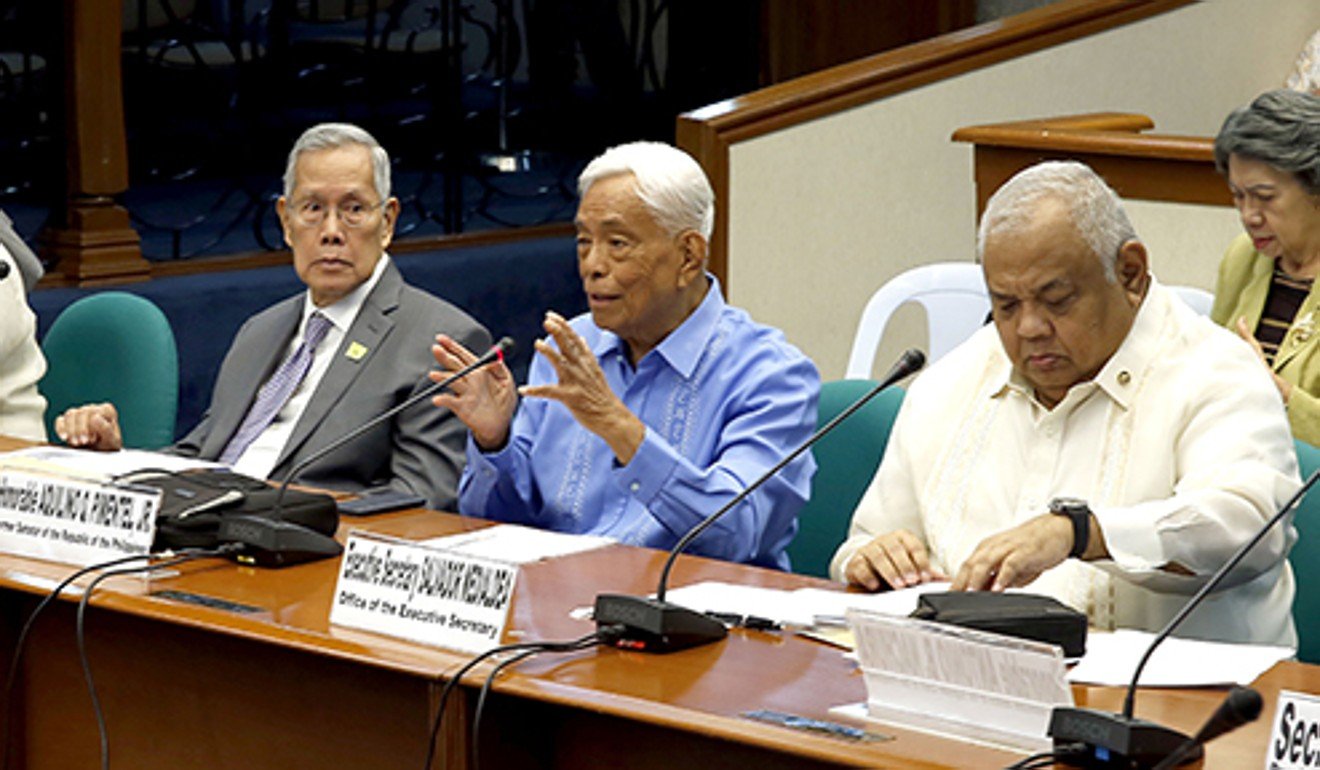
The delegation, led by Duterte’s Executive Secretary Salvador Medialdea, will meet Chinese Vice-President Wang Qishan and officials at the Ministry of Commerce, China’s Export-Import Bank and China International Development Cooperation Agency, which reviews foreign aid projects. They will also brief potential investors from the private sector.

Duterte’s Executive Secretary Salvador Medialdea, right. Photo: PRIB

The trip comes amid the most severe water shortage to have hit the Philippine capital in the past decade, with dozens of districts having gone days without water. However, it is likely to prove controversial in some quarters, as critics believe the water shortage has been engineered by the Duterte government as a ploy to win support for the long-stalled Chinese-funded Kaliwa Dam Project. The project, which has been shelved for decades, is controversial partly because Duterte asked China to fund it rather than put it to public tender. It is also opposed by indigenous communities, who stand to be displaced, and by NGOs and the Catholic Church, who question its safety.

The task of Medialdea’s delegation will include trying to speed up the delivery of a promised US$211 million loan from the Export-Import Bank to fund the Kaliwa dam.

Finance Secretary Carlos Dominguez said last week the dam was “absolutely” the solution to Manila’s water shortage and defended the conditions of the loan.

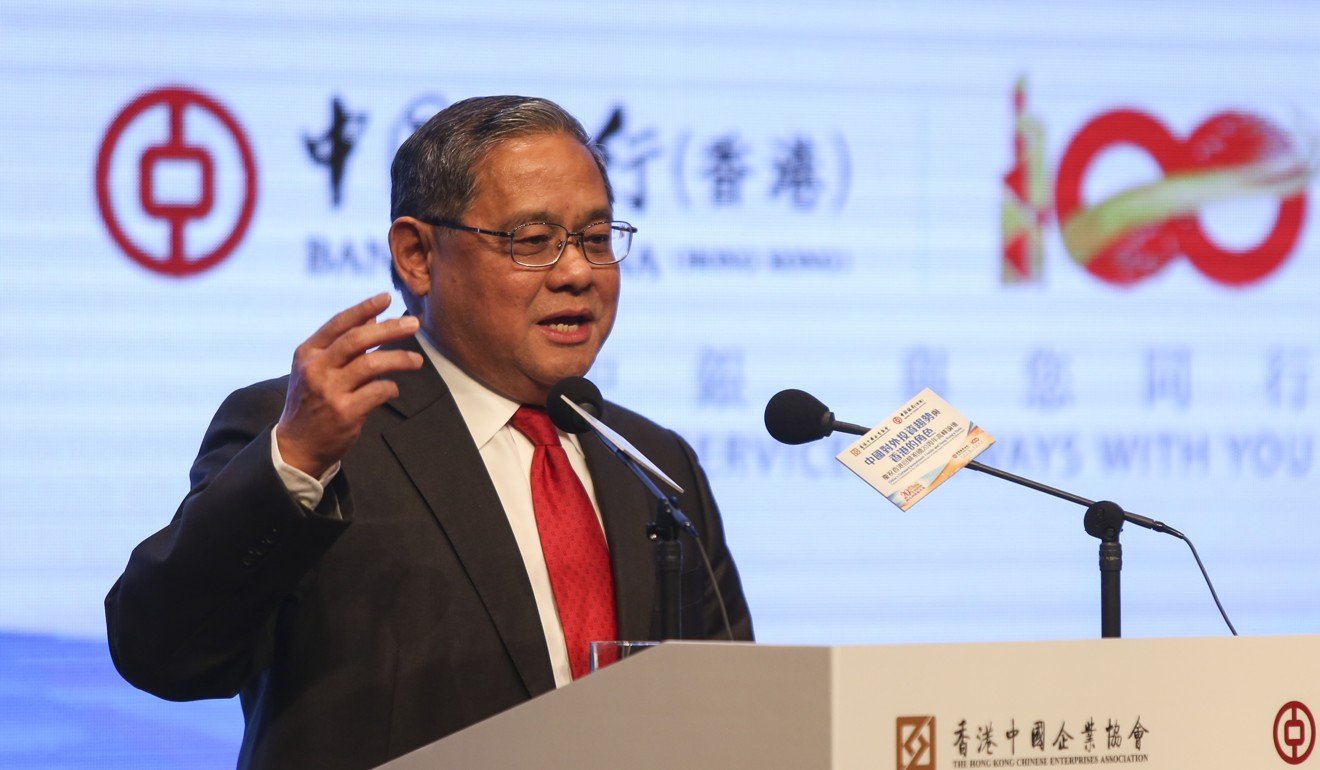
Philippine Finance Secretary Carlos Dominguez. Photo: Xiaomei Chen

He said the bank was giving Manila a preferential rate of 2 per cent per annum for 20 years, with a seven-year grace period; a commitment fee of 0.3 per cent of the loan amount and a management fee of 0.3 per cent of the loan amount.

The delegation will also seek to speed up the delivery of a US$62 million loan pledged by the Export-Import Bank to build the Chico River Pump Irrigation Project in the north of the country.

Dominguez urged the Chinese contractors in both projects to build quickly.

Still, in the Philippines, “quickly” can be a relative term.

China holds the cards as online betting booms in the Philippines

Even as the delegation landed in Beijing, a senate probe into the water crisis was hearing from the Metropolitan Waterworks and Sewerage System (MWSS) administrator Reynaldo Velasco that it would take five years to build the dam, which was still in the consultation stages.

Velasco said that since the dam would be located in the ancestral domain of indigenous communities, “we have to go through a process to be able to get their approval including the agreement [on what displaced families should be paid and their relocation].”

Velasco said if the tribes did not consent, “we will not start the dam”.

Opposition by the tribes has stalled the project for decades.

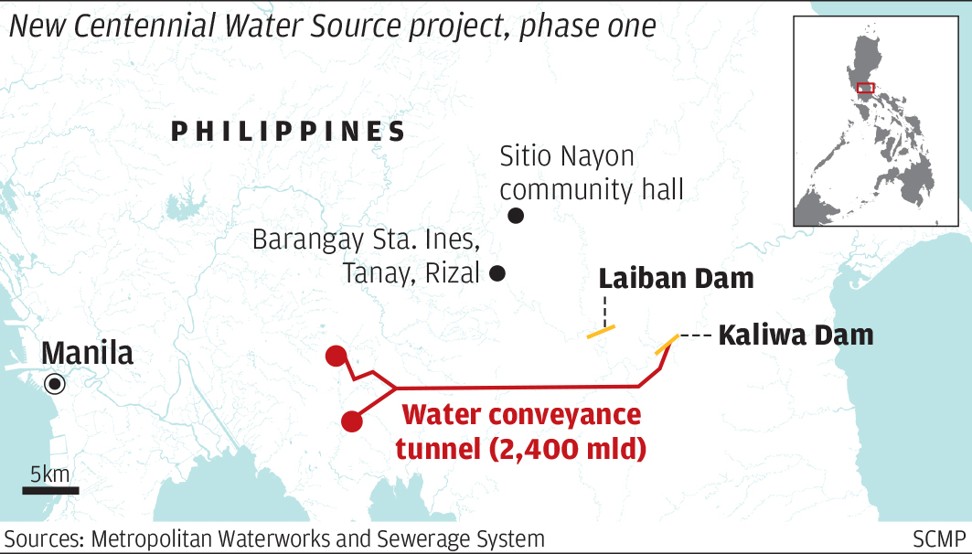
Graphic: SCMP
Graphic: SCMP

According to Ramcy Astoveza, chief of the Agta tribe, the tribes will never change their mind because “the dam project is a matter of life and death for us. Once we allow the dam inside our natural habitat, what would follow is the death of our tribe”.

Environmental NGOs including the Save Sierra Madre Network Alliance, Alyansa Laban sa Kaliwa Dam, Task Force Sierra Madre and Tribal Centre for Development have warned that, aside from submerging seven villages, the dam project was “within a zone of two active tectonics – the Philippine Fault Zone and the Valley Fault System”.

The winners and losers in Duterte’s China play

Meanwhile, the Catholic Bishops Conference of the Philippines has warned the dam would endanger 100,000 residents downstream of Kaliwa River, particularly during earthquakes and extreme flooding events brought about by climate change.

As Patrick Ty, chief of the MWSS Regulatory Office, said: “With all the problems Kaliwa Dam is facing, it might get delayed.”

Despite such concerns, the government remains optimistic both projects will go ahead. Velasco said the MWSS hoped to start building the Kaliwa dam by August this year. He denied that Manila’s water shortage was artificial and a ploy to get Metro Manila residents to support the China-funded project.

Source: SCMP

19/03/2019

China’s first cloned police dog reports for duty

  • Kunxun, a two-month-old Kunming wolfdog, was born after scientists took the DNA from a ‘one in a thousand’ animal
  • Police hope the programme to clone the force’s best dogs will eventually give it a bigger pool of animals suited to police work

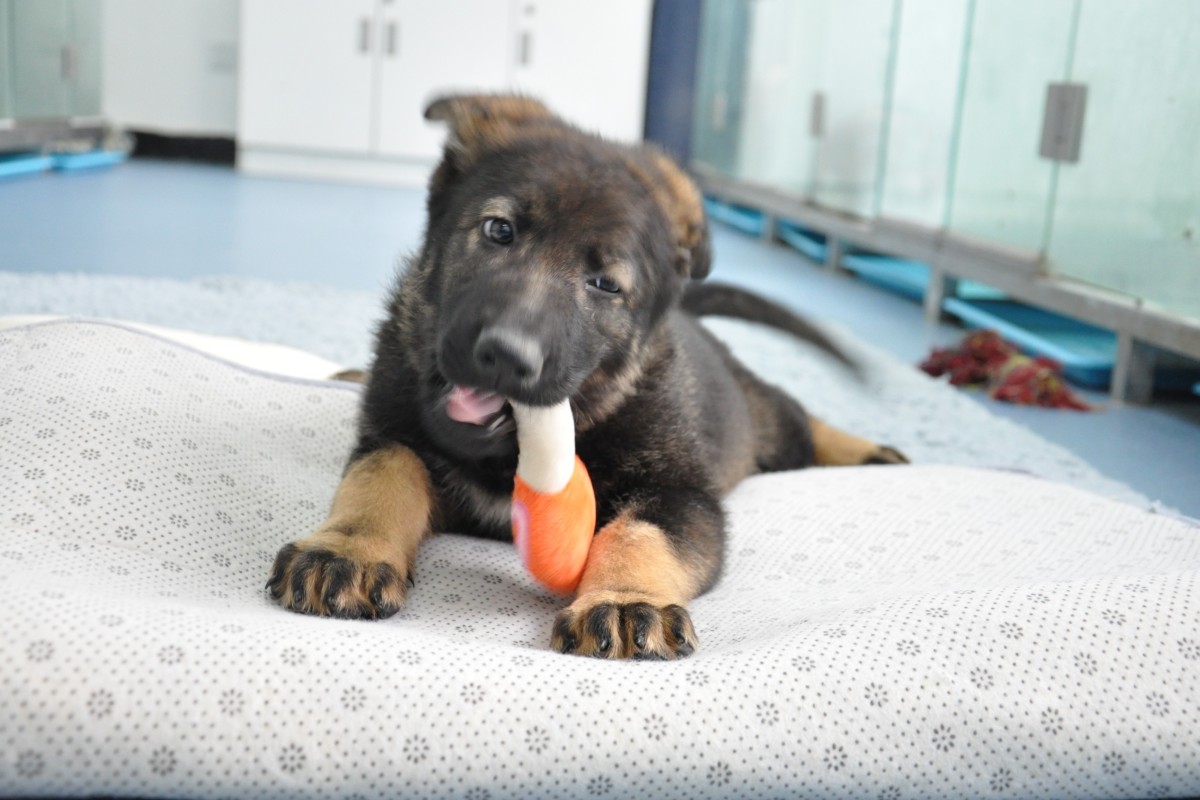
Police say the cloned puppy Kunxun is already showing promise. Photo: Sinogene

Police say the cloned puppy Kunxun is already showing promise. Photo: Sinogene
A cloned puppy, which was bred using DNA from an award-winning police sniffer dog, has started training with a force in the southwest of China.
Earlier this month Kunxun, a two-month-old female, began training at Kunming Police Dog Base in Yunnan province, according to media reports.
The Kunming wolfdog is China’s first cloned police dog and was born after scientists took a DNA sample from a seven-year-old female named Huahuangma, which has won a string of awards for helping to crack multiple cases in the city of Puer.

Since arriving in Kunming, Kunxun has adjusted well to the local environment, the base’s project analyst Wan Jiusheng told Science and Technology Daily.

“She is friendly to humans, sociable and alert,” said Wan, adding that the pup is not scared of the dark or unfamiliar spaces, has a strong sense of smell and can quickly find hidden food.

Kunxun with friend. Photo: Sinogene

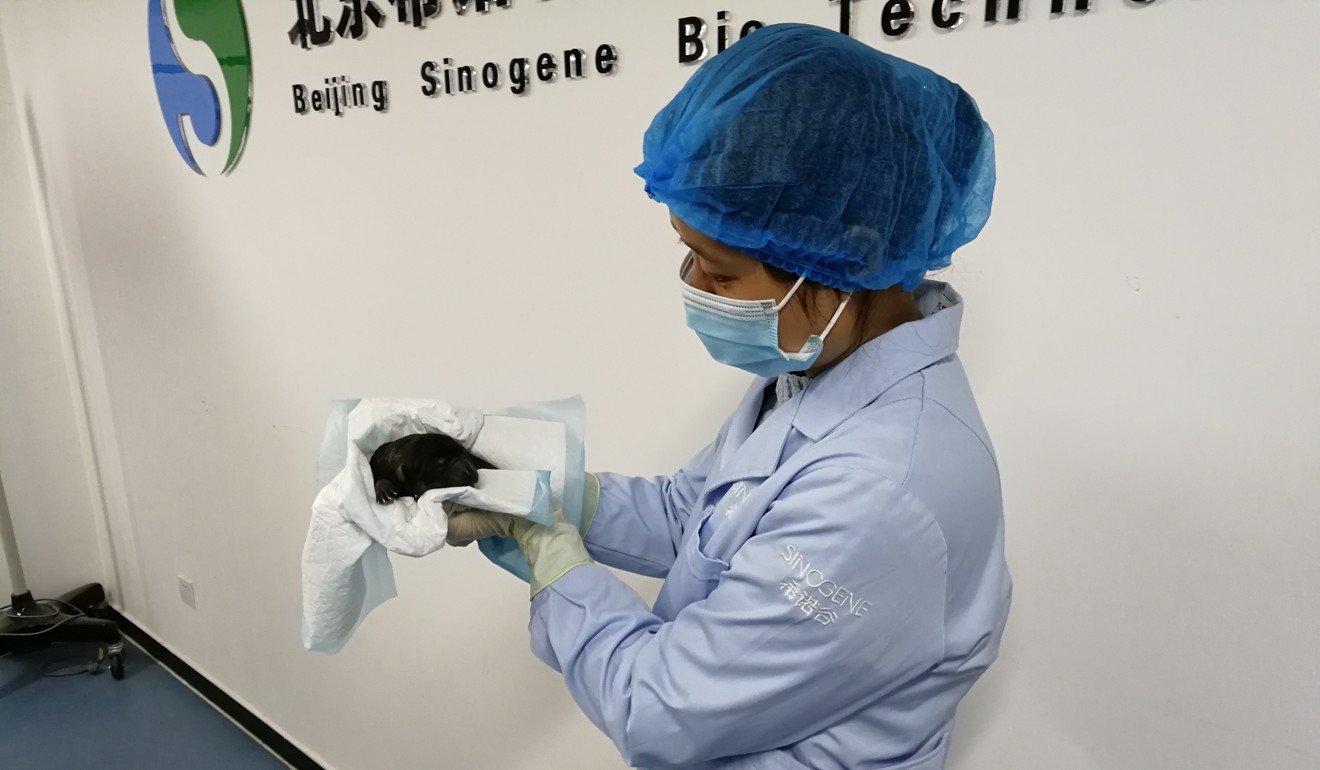
The project was carried out by Yunnan Agricultural University and Sinogene, a Beijing-based company specialising in cloning pets and animals for commercial uses, the newspaper reported.

To produce Kunxun, Huahuangma’s genetic material was extracted and sent to a laboratory in Beijing. An embryo was engineered using an egg from another dog and implanted into a surrogate mother.

“The surrogate was a gentle beagle. To prevent complications and improve the survival rate, we carried out a caesarean section,” Sinogene project technician Liu Xiaojuan told Science and Technology Daily.

Police hope to expand their pool of cloned dogs. Photo: Sinogene

Beagles are the standard breed used for lab work by the company, which charges a market rate of 380,000 yuan (US$56,000) for each cloned dog.

It can take years to find a police dog like Huahuangma – she was described by Kunming police dog base as “one in a thousand” – and Sinoegene argued that cloning was a better way than breeding of preserving the genetics of such animals.

In one of her more high-profile cases, Huahuangma helped find a crucial piece of evidence – a hotel key – that led to the arrest of a murder suspect in 2016, the company added.

The cloning programme aims to establish a pool of outstanding police dog specimens.

If basic training proves successful, the young Kunming wolf dog will move on to specialist training. Photo: Sinogene

“Currently, police dog cloning is still in the experimental stage. We hope in the next 10 years, once the technology becomes more sophisticated, to mass clone exceptional police dogs,” project analyst Wan said.

Kunxun, whose name contains characters for her breed and “achievement”, is currently undergoing basic training for police puppies.

After six months, the young dogs will enter a “university” and trained to specialise in tracking, drug detection, security or evidence detection.

South Korea was the first country to introduce cloned dogs for police or military use in 2007.

Animal cloning is becoming increasingly prevalent in China for research and commercial uses. Recently, five genetically edited monkeys were cloned to test drugs to treat mental illnesses.

Source: SCMP

19/03/2019

Hong Kong subway trains collide amid new signal system trials

Mass Transit Railway (MTR) trains collide near Central station during a signal system trial in Hong Kong, 18 March 2019Image copyrightREUTERS
Image captionThe collision was said to have involved a “modernised train” and occurred during a signal trial

Two subway trains have collided during a new signal system test in Hong Kong, halting services and threatening travel disruption for millions of commuters.

The incident occurred between the Central and Admiralty stations before the service was open to the public early on Monday morning.

While the trains had no passengers on board, both drivers were taken to hospital.

Rail officials warned that repairs were likely to take “quite a long time”.

Network operator Mass Transit Railway (MTR) said sections of the Tsuen Wan Line had been suspended and urged commuters to avoid the route affected and to use other forms of transport if possible.

MTR Corporation has said a failure with the new signal system was to blame for the crash, Hong Kong’s South China Morning Post newspaper reports.

An investigation has been launched.

Mass Transit Railway (MTR) trains collide near Central station during a signal system trial in Hong Kong, 18 March 2019Image copyrightREUTERS
Image captionNeither of the two trains involved was carrying passengers at the time

Further disruption was caused later on Monday morning when a woman fell on to the tracks at Kowloon Tong station, causing a temporary suspension of service in that area.

Hong Kong’s subway network is used by up to six million people on weekdays, Reuters news agency reports.

Source: The BBC

Law of Unintended Consequences

continuously updated blog about China & India

ChiaHou's Book Reviews

continuously updated blog about China & India

What's wrong with the world; and its economy

continuously updated blog about China & India