Chindia Alert: You’ll be Living in their World Very Soon
aims to alert you to the threats and opportunities that China and India present. China and India require serious attention; case of ‘hidden dragon and crouching tiger’.
Without this attention, governments, businesses and, indeed, individuals may find themselves at a great disadvantage sooner rather than later.
The POSTs (front webpages) are mainly 'cuttings' from reliable sources, updated continuously.
The PAGEs (see Tabs, above) attempt to make the information more meaningful by putting some structure to the information we have researched and assembled since 2006.
BEIJING, Feb. 11 (Xinhua) — Xi Jinping, chairman of the Central Military Commission, has signed an order to release a trial regulation on the supervision of military training, the first of its kind in the country.
The regulation, which will take effect on March 1, 2019, focuses on improving the combat readiness of the People’s Liberation Army.
The regulation formulates measures to rectify practices that are inconsistent with the requirements of actual combats. It also details the criteria for identifying malpractices and discipline violations during military training.
The regulation also clearly states the responsibilities, power and priorities of military training supervision and regularizes the methods and procedures for carrying out such work.
The regulation is expected to consolidate the strategic role of military training under the new circumstances, strengthen the management of military training, and deepen military training under combat conditions.
Investors are seen at a stock exchange in Hangzhou, east China’s Zhejiang Province, Feb. 11, 2019, the first trading day of the Year of the Pig. China’s major stock indices ended notably higher Monday as investors greeted the Year of the Pig in China’s lunar calendar with bullish sentiment. The benchmark Shanghai Composite Index closed 1.36 percent higher at 2,653.9 points while the Shenzhen Component Index surged by 3.06 percent to close at 7,919.05 points. (Xinhua/Long Wei)
BEIJING, Feb. 11 (Xinhua) — China’s major stock indices ended notably higher Monday as investors greeted the Year of the Pig in China’s lunar calendar with bullish sentiment.
The benchmark Shanghai Composite Index closed 1.36 percent higher at 2,653.9 points while the Shenzhen Component Index surged by 3.06 percent to close at 7,919.05 points.
Companies in the agricultural sector were among the biggest winners, with Jiangxi Zhengbang Technology, a Shenzhen-listed agro-processing firm, jumping by the daily limit of 10 percent.
Liquor makers saw a strong performance, with the share price of top liquor brand Kweichow Moutai jumping 4.71 percent, bringing the company’s market capitalization to over 911 billion yuan (135 billion U.S. dollars).
Beijing Jingxi Culture & Tourism Co., Ltd, an investor of Chinese sci-fi blockbuster “The Wandering Earth”, surged by the daily limit after the film claimed the winner of the Chinese box office during the week-long Spring Festival holiday.
The film had earned over 1.94 billion yuan (about 288 million U.S. dollars) since its release on Tuesday as of 7:00 p.m. Sunday, according to Maoyan, a professional box office tracker.
The ChiNext Index, China’s NASDAQ-style board of growth enterprises, gained 3.53 percent to close at 1,316.1 points.
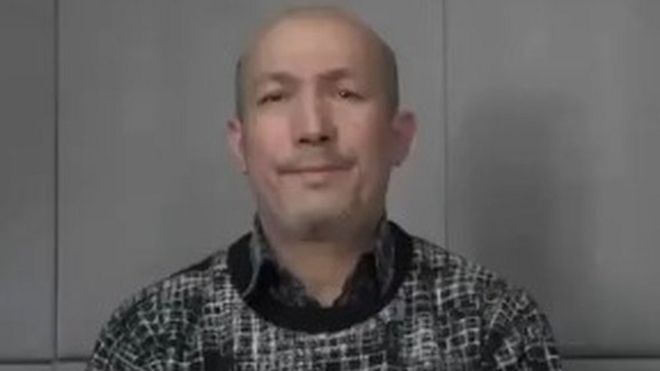
Image copyrightCRIImage captionA screenshot of the footage appearing to show Mr Heyit
China has railed at Turkish claims it is mistreating its Uighur minority, after a dispute about the fate of a prominent musician.
Turkey cited reports Abdurehim Heyit had died in a detention camp, and called China’s treatment of the Uighurs a “great embarrassment for humanity”.
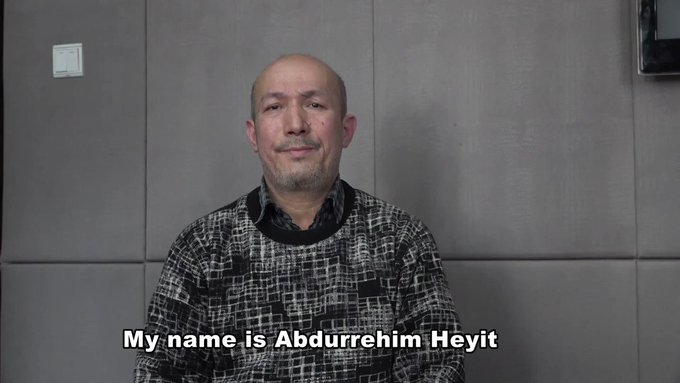
China then released a video allegedly showing Mr Heyit alive.
The Uighurs are a Muslim minority in north-western China who speak a language closely related to Turkish.
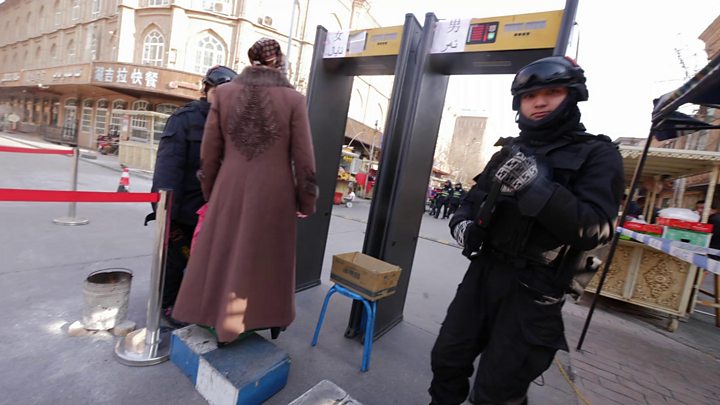
They have come under intense surveillance by the authorities and up to a million Uighurs are reportedly being detained. A significant number of Uighurs have fled to Turkey from China in recent years.
China has asked Turkey to revoke its “false” claims. A Chinese foreign ministry spokeswoman said the musician was “very healthy”.
“We hope the relevant Turkish persons can distinguish between right and wrong and correct their mistakes,” spokeswoman Hua Chunying told reporters.
What is in the video?
The video was released by China Radio International’s Turkish-language service, which said Turkey’s criticism of China was unfounded.
Dated 10 February, the video features a man said to be Mr Heyit stating that he is in “good health”.
So far, few Muslim-majority countries have joined in public international condemnation of the allegations.
Analysts say many fear political and economic retaliation from China.
Turkey’s strategic blunder?
By John Sudworth, BBC News, Beijing
Critics have long seen Turkey’s silence over the plight of China’s Uighurs as a strategic blunder, undermining President Recep Tayyip Erdogan’s lofty claim to moral leadership of the Muslim world.
But belatedly basing its condemnation of China’s system of internment camps on a wrongful claim of a death in custody might be seen as an even bigger blunder.
That is certainly the view of China’s foreign ministry. “The video clip has provided very good evidence for the truth,” the ministry’s spokeswoman said.
In reality, it’s impossible to verify anything about the status of Abdurehim Heyit. Before the claims of the musician’s death, and China’s quick rebuttal, there had been no official word about his detention at all.
Like hundreds of thousands of Uighurs, he had simply disappeared into a legal black hole.
And the video bears all the hallmarks of the forced, televised confessions regularly produced by the combined efforts of China’s Communist Party-controlled courts, police investigators and state-run media.
China has been quick to claim that the reports of Mr Heyit’s death prove that much of the criticism of the situation in Xinjiang is based on falsehoods.
But critics will continue to argue that the confusion – stemming from the lack of any independent scrutiny – shows precisely why there’s such growing concern, even, finally, in Turkey.
Heyit was a celebrated player of the dutar, a two-stringed instrument that is notoriously hard to master. At one time, he was venerated across China. He studied music in Beijing and later performed with national arts troupes.
Mr Heyit’s detention reportedly stemmed from a song he had performed, titled Fathers. It takes its lyrics from a Uighur poem calling on younger generations to respect the sacrifices of those before them.
But three words in the lyrics – “martyrs of war” – apparently led Chinese authorities to conclude that Mr Heyit presented a terrorist threat.
Who are the Uighurs?
The Uighurs make up about 45% of the population in Xinjiang.
Media captionJohn Sudworth reports from Xinjiang, where one million Uighurs have reportedly been detained
They see themselves as culturally and ethnically close to Central Asian nations.
In recent decades, large numbers of Han Chinese (China’s ethnic majority) have migrated to Xinjiang, and the Uighurs feel their culture and livelihoods are under threat.
Xinjiang is officially designated as an autonomous region within China, like Tibet to its south.
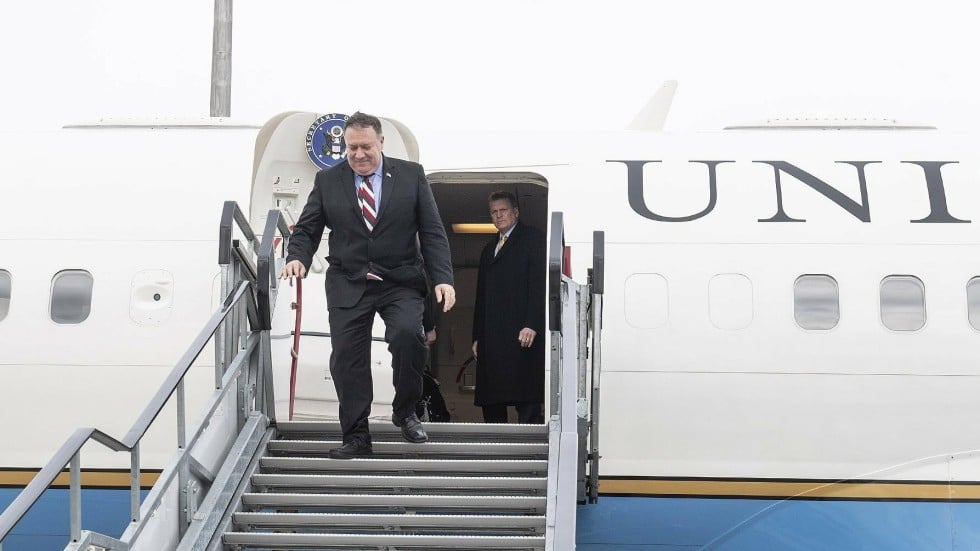
US Secretary of State Mike Pompeo is in Hungary on the first leg of a five-nation European tour during which he will raise concerns about China and Russia’s growing influence in Central Europe.
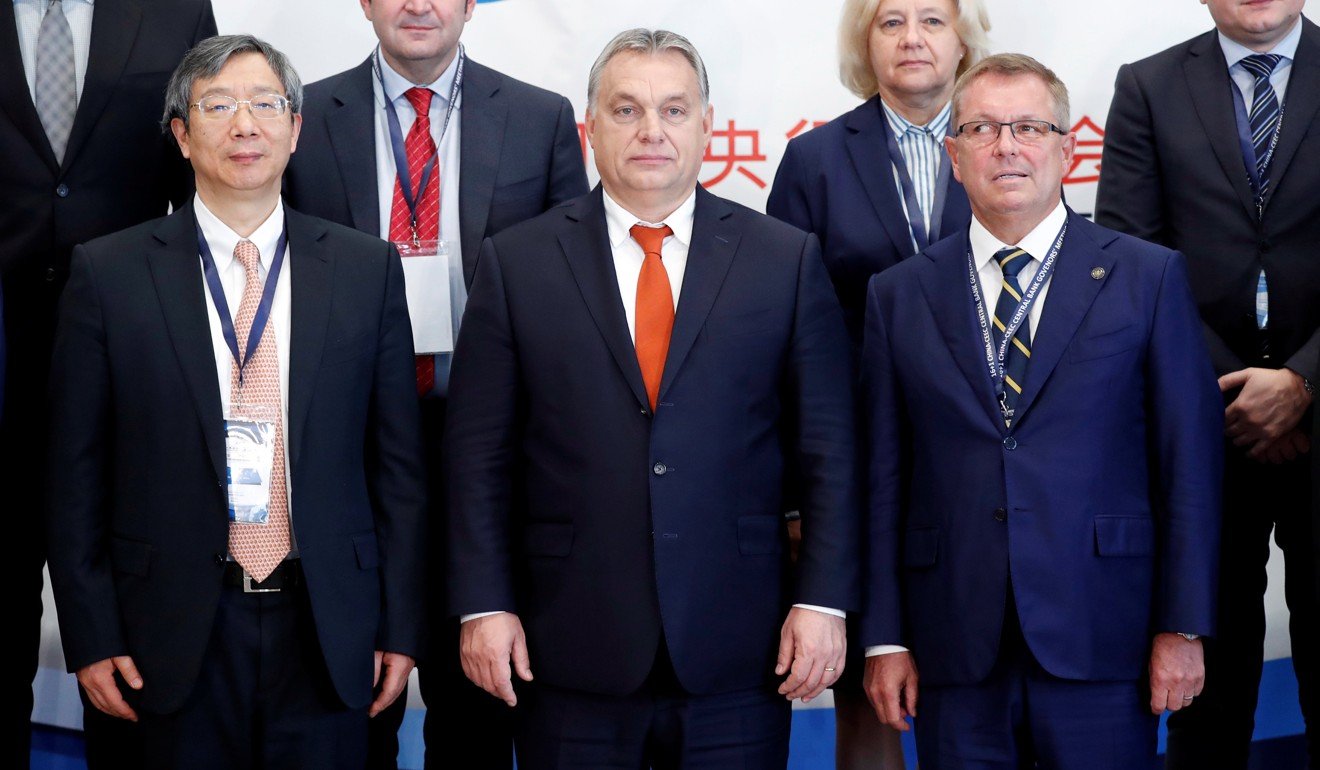
Pompeo was meeting in Budapest on Monday Hungary’s nationalist Prime Minister Viktor Orban and other senior officials to stress the importance of promoting democracy and the rule of law. The US sees those as key to countering Russian and Chinese efforts to pull Hungary and other countries in the region away from the West and sow division in the European Union and Nato, officials said.
Pompeo will specifically point to Central Europe’s reliance on Russian energy and the presence of the Chinese hi-tech telecoms firm Huawei, particularly in Hungary, according to the officials, who were not authorised to publicly discuss Pompeo’s travel and spoke on the condition of anonymity.
US officials are deeply troubled by Huawei’s expansion in Europe, especially in Nato member states where they believe it poses significant information security threats.
We have to show up [in Hungary] or expect to lose
U.S. OFFICIAL
Pompeo will take the same message to his next stop, Slovakia, on Tuesday, before heading to Poland, where he will participate in a conference on the future of the Middle East expected to focus on Iran. He will wrap up the tour with brief stops in Belgium and Iceland.
Before his visits to Budapest and Bratislava, US officials said Pompeo hoped to reverse what they called a decade of US disengagement in Central Europe that created a vacuum Russia and China have exploited. Over the past 10 years, the officials said, Russian President Vladimir Putin and Chinese leaders have become much more aggressive in the region and made inroads.
One official said Pompeo’s aim is to “wrong-foot the West’s rivals in places where they have gained bridgeheads”.
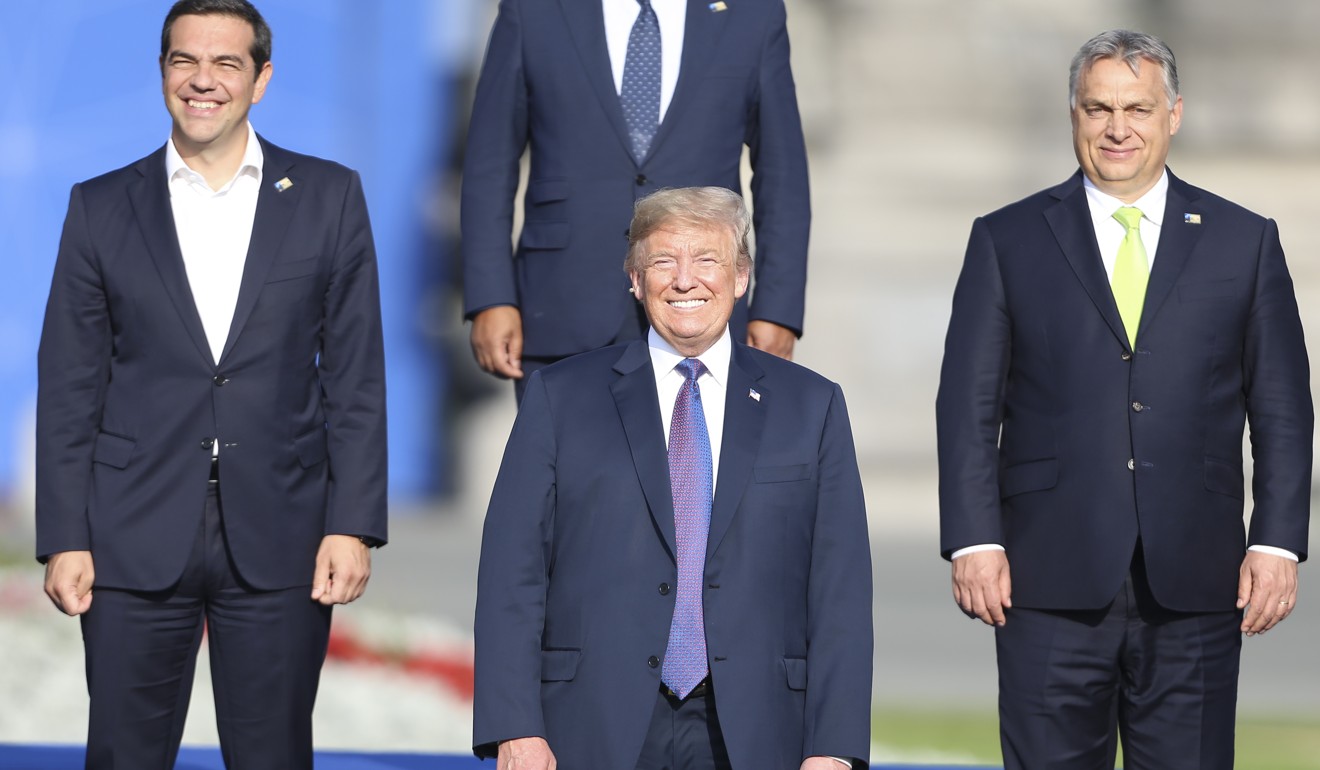
President Donald Trump’s administration has made a point of reaching out to Orban, who shares Trump’s strong stance on limiting immigration and has adopted increasingly authoritarian measures, including cracking down on the opposition, trade unions, independent media and academia.
Former US president Barack Obama’s administration largely steered clear of Orban, who won a third consecutive term last year in a campaign based on anti-immigration policies which have been met with concern by some EU members.
Orban on Sunday announced a programme to encourage women to have more children and reverse Hungary’s population decline. He said the initiative is meant to “ensure the survival of the Hungarian nation”.
“This is the Hungarians’ answer, not immigration,” he said.
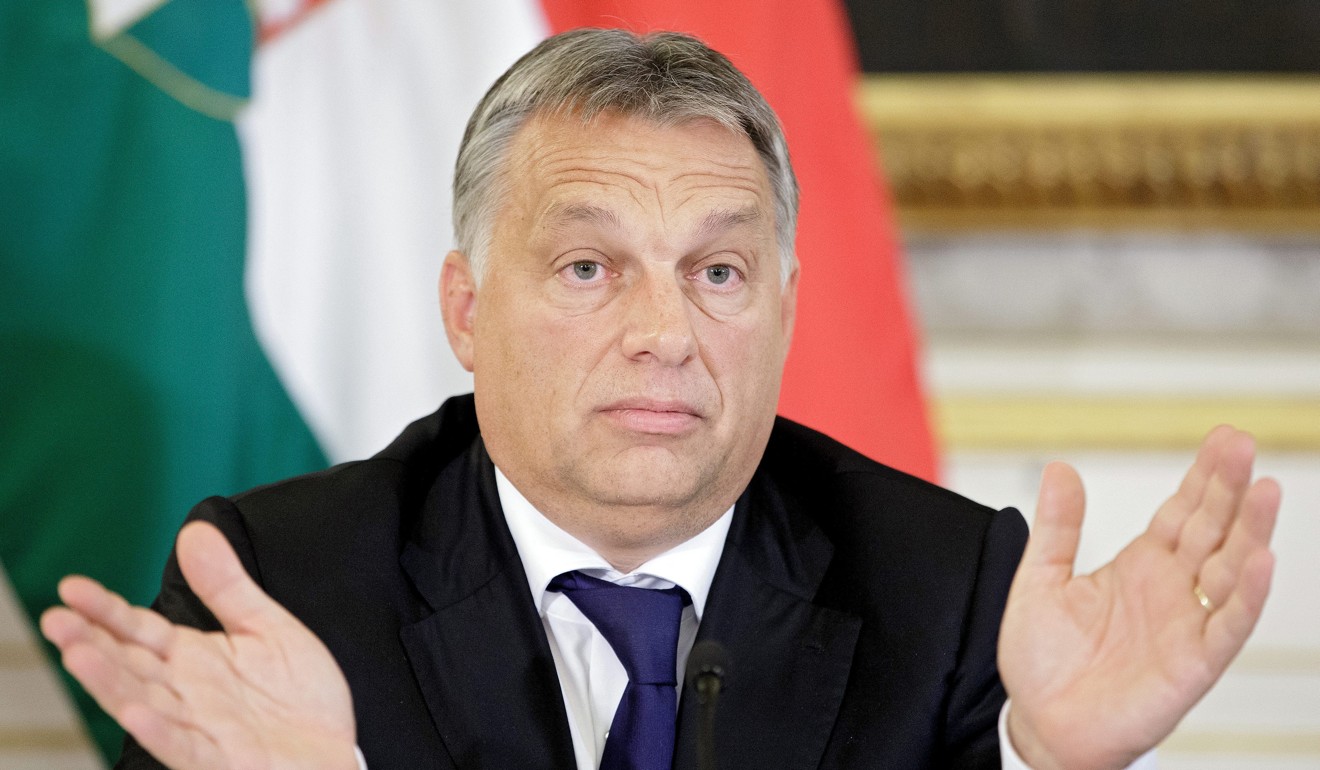
Last month, Orban said he wanted “anti-immigration forces” to become a majority in all EU institutions, including its parliament and the European Commission, and predicted there would soon be two civilisations in Europe – one “that builds its future on a mixed Islamic and Christian coexistence” and another in Central Europe that would be only Christian.
Orban’s fiery rhetoric against immigrants and refusal to join a new European Union public prosecutor’s office focusing on fraud and corruption also have raised concerns.
Human rights groups and others have lamented Pompeo’s plans to meet Orban and urged him to take a strong stance against his policies, which they consider worrisome.
The US officials defended the Budapest stop, saying it is impossible to promote US positions and interests in Hungary effectively without meeting Orban.
“We have to show up or expect to lose,” one official said.
BEIJING, Feb. 11 (Xinhua) — China announced Monday that it is developing the modified version of the Long March-6 rocket with four additional solid boosters to increase its carrying capacity.
The improved medium-left carrier rocket will be sent into space by 2020, according to the Shanghai Academy of Spaceflight Technology under the China Aerospace Science and Technology Corporation (CASTC), which designed the rocket.
With a short launch preparation cycle, the Long March-6 has been mainly used for the academy’s commercial launches. The rocket completed two space tests in September 2015 and November 2017, carrying 20 satellites and three satellites, respectively.
The three-stage rocket is 29.3 meters long, with a launch weight of 103 tonnes. It has a carrying capacity of one tonne for sun-synchronous orbit.
Fueled by a liquid propellant made of liquid oxygen and kerosene, the Long March-6 is China’s first carrier rocket that uses non-toxic and non-polluting fuel.
Ding Xiufeng, executive manager of the Long March-6 project, said in response to the growing demand for commercial launches, they will have the rockets’ market competitiveness enhanced through technical improvements, so that they can provide easier, faster and more comprehensive services to users at home and abroad.
In January, the China Great Wall Industry Corporation, affiliated with the CASTC, signed a multiple launch services agreement with Satellogic to use the Long March-6 and the Long March-2 rockets to launch 90 satellites for a private Argentine company in the coming years.
The first 13 satellites will be delivered later this year. It will be the first time for the Long March-6 to provide launch services for an international user.
Passengers are seen at the station hall of Nanchangxi Railway Station in east China’s Jiangxi Province, Feb. 10, 2019. Railway trips in China reached 60.3 million during the week-long Spring Festival holiday from Feb. 4 to Feb. 10, data from the national railway operator showed Monday. (Xinhua/Peng Zhaozhi)
BEIJING, Feb. 11 (Xinhua) — Railway trips in China reached 60.3 million during the week-long Spring Festival holiday from Feb. 4 to Feb. 10, data from the national railway operator showed Monday.
On Feb. 10, some 12.6 million passenger trips were made by rail, up 4.4 percent year on year, according to the China Railway Corporation (CRC).
Hundreds of millions of Chinese went back to their hometowns to celebrate the Chinese Lunar New Year with their families. The annual travel rush around the festival, known as “chunyun,” often puts the country’s transportation system to the test.
This year’s Spring Festival travel rush started from Jan. 21 and will last till March 1, with railway trips expected to hit 413 million in total, up 8.3 percent.
CHANGCHUN, Feb. 9 (Xinhua) — Lu Caishu sold his 110 cows to support his small tourism business in Erhe, a village in northeastern China’s Jilin Province, known for thick snow during the winter.
Lu’s decision was considered risky two years ago, especially among villagers who mostly had a stable income from raising cattle, but Lu was convinced that the tourism industry would offer a more lucrative and sustainable way to make money.
In 2018, the money Lu invested in his business began to pay off. During the winter, his business received over 5,000 customers, bringing in nearly 300,000 yuan (about 44,500 U.S. dollars)
“It only takes me three to four months to take care of my business, but I had to work for a whole year when I used to make a living on raising cattle,” Lu said.
Lu not only runs one of the most profitable guesthouses in the village but also set up a travel company to further enhance the reputation of the businesses, allowing household investors to receive dividends by the end of the year.
More ambitious villagers began to start their own guesthouses and cash in on booming tourism as profits have snowballed over the years. There are now 50 guesthouses and restaurants in the village owned by 126 households.
Erhe attracts more than 8,000 tourists on average each winter. The number is expected to reach 100,000 this year, according to the local tourism sector.
“I’ve always wanted to start my own business, and the winter tourism helps me realize the dream,” said Sun Linlin, who invested over 2 million yuan in her guesthouse.
Sun’s guesthouse, now the biggest in Erhe, receives nearly 400 customers each day during the peak season.
“There is huge potential in winter tourism as more townspeople seek the rural lifestyle to reduce the pressure they face in big cities,” she said.
Erhe’s total tourism revenue reached 10 million yuan last winter. More than 80 percent of the villagers now work in the industry, and over 60 percent run their own businesses. Restaurants, guesthouses, souvenir shops, theatres and snow museums have sprung up in the village.
The booming tourism also attracts more villagers who previously moved to bigger cities for better opportunities to come home and get a slice of the cake.
“I had never imagined snow would become Erhe’s most valuable asset,” said Liu Hongcai, owner of a brewery that sells grain alcohol to local restaurants and tourists.
“I have my own business and can stay with my family. It is the best time of my life,” he said.
Volunteers carry bamboos for sale in Chishui, southwest China’s Guizhou Province, July 14, 2018. More than 100 million Chinese have registered as volunteers by the end of 2018, according to the Ministry of Civil Affairs. There have been about 12,000 organizations of volunteer services registered by the end of 2018, which provided more than 1.2 billion hours of service in total, according to a ministry statement published earlier. Chinese have taken an increasingly active part in volunteering in recent years, particularly at major international events such as the 2008 Beijing Olympic Games, the 2010 Shanghai World Expo, the G20 Hangzhou summit in 2016 and the Shanghai Cooperation Organization Qingdao summit in 2018. The country’s first regulation on volunteer services took effect in December 2017, clarifying the principles and establishing administrative institutions in this regard. With the number of volunteers growing fast, more efforts will be made to encourage their participation in public service and social governance, and improve the quality of their service, said a statement from the China Volunteer Service Federation. (Xinhua/Wang Changyu)
BEIJING, Feb. 9 (Xinhua) — More than 100 million Chinese have registered as volunteers by the end of 2018, according to the Ministry of Civil Affairs.
There have been about 12,000 organizations of volunteer services registered by the end of 2018, which provided more than 1.2 billion hours of service in total, according to a ministry statement published earlier.
Chinese have taken an increasingly active part in volunteering in recent years, particularly at major international events such as the 2008 Beijing Olympic Games, the 2010 Shanghai World Expo, the G20 Hangzhou summit in 2016 and the Shanghai Cooperation Organization Qingdao summit in 2018.
The country’s first regulation on volunteer services took effect in December 2017, clarifying the principles and establishing administrative institutions in this regard.
With the number of volunteers growing fast, more efforts will be made to encourage their participation in public service and social governance, and improve the quality of their service, said a statement from the China Volunteer Service Federation.
XINING, Feb. 9 (Xinhua) — Clean energy powers the economy of northwest China’s Qinghai Province as China seeks to reduce coal consumption to improve its energy mix.
By the end of 2018, the total installed power generating capacity in Qinghai reached nearly 28 million kilowatts, with clean energy contributing to 86 percent, according to the State Grid Qinghai Electric Power Company.
The installed solar power generating capacity reached 9.6 million kilowatts and that of wind power hit 2.7 million kilowatts. The hydropower capacity reached 11.9 million kilowatts, the company said.
Qinghai started to invest heavily in solar energy in 2009. And in the past few years, it started to build two 10 million kilowatts renewable power generating bases.
Qinghai, rich in solar and wind power, has 100,000 square kilometers of desertified land suitable for the construction of solar and wind farms.
Local authorities have been encouraging more local consumption of the clean energy-generated electricity and pushing to transmit more to other regions.
Last year, the grid transmitted 10 billion kwh of such electricity to other regions. So far this year, the firm has signed deals with regions like Shanghai, Chongqing, Henan and Jiangsu to send them 7 billion kwh of electricity.
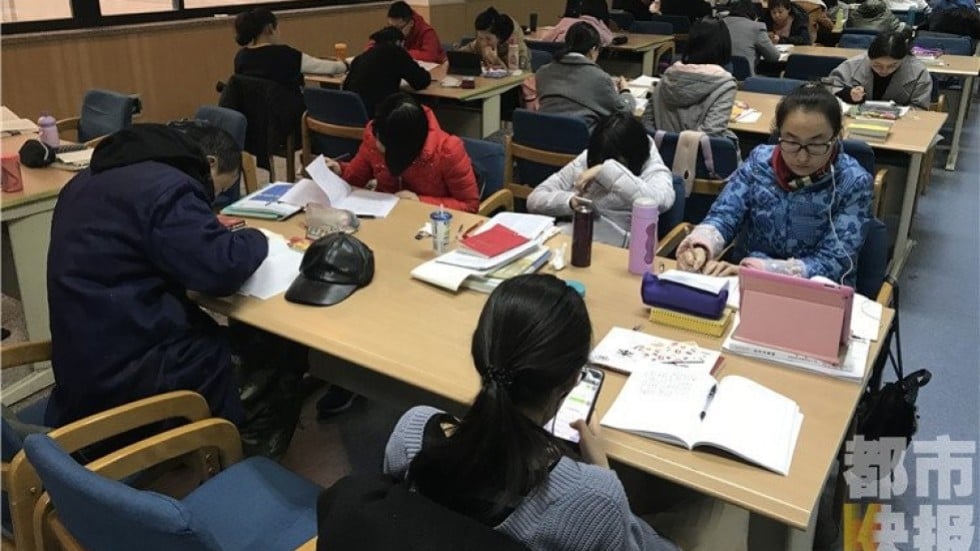
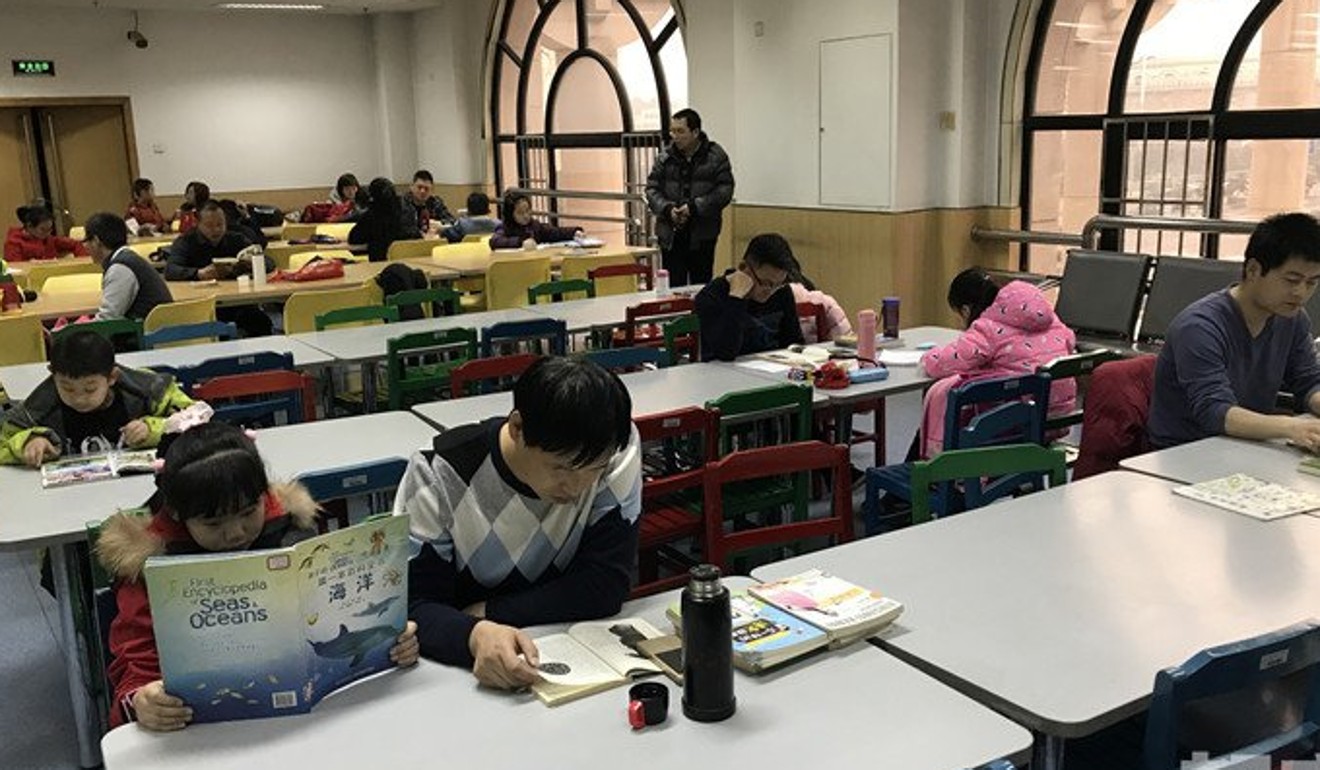
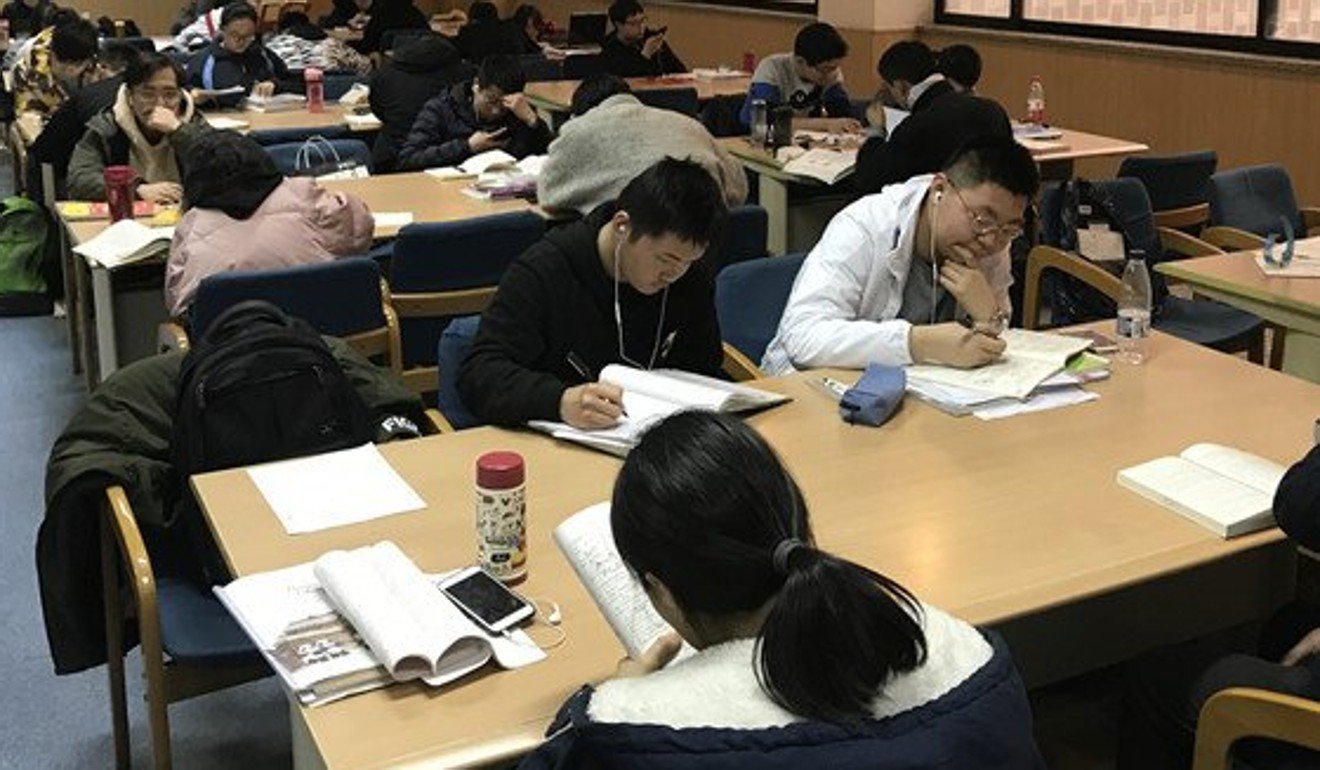
While most schoolchildren in the east China city of Hangzhou spent last week’s Lunar New Year holiday visiting relatives and opening cash-filled red envelopes, others found themselves taking extra lessons at a privately run tuition centre.
The manager of the company, surnamed Wong, said business had been brisk over the holiday period.
“Usually students have a week’s break for Lunar New Year, but not those who are sitting the gaokao,” he said, using the informal name for the National Higher Education Entrance Examination.
Demand for extra tuition from parents whose children were preparing for the test had been “overwhelming”, he said.
The cost of lessons during the holiday period was 250 yuan (US$37) per hour, Wong said, adding that most students had four lessons a day.
Chinese schoolchildren get a month’s holiday in the winter, which incorporates the national Lunar New Year break.
Wong’s centre does not just cater for older children. According to a report by local newspaper Metro Express, a woman surnamed Lu paid for her son, who goes to primary school, to have extra lessons in mathematics and science.
“Many children spend their whole winter holiday studying,” she said, but added that she had allowed her son to have last week off.
Another woman was quoted in the report as saying she had signed her child, who also goes to primary school, up for nine classes.
There are no laws against the operation of private tuition centres in China but they are governed by certain regulations. For instance, they cannot recruit people whose primary job is as a teacher and they are not allowed to teach classes beyond what the children have already learned in school.
China’s education ministry last year launched a review of more than 400,000 tuition centres and found problems of one sort or another at 65 per cent of them.
In the wake of that assessment, authorities in the cities of Beijing, Tianjin and Shanghai, and the provinces of Shanxi, Liaoning and Zhejiang said they had rectified the problem. Hangzhou is the capital of Zhejiang.
According to a report by Xinhua, a secondary school student from Shanghai, nicknamed Xiao Ma, said she had to get up at 6.30am every day during the winter holiday to get to her extra lessons by 8.30am.
“I don’t ask for a lot,” she said. “I just wish there were a few days when I could get a bit more sleep and have time to see my friends.”








 CHINDIA ALERT: You'll be living in their world, very soon
COMMENTS: