Archive for ‘China alert’

10/02/2019

Turkey demands China close camps after reports of musician’s death

John Sudworth reports from Xinjiang, where one million Uighurs have reportedly been detained

Turkey has called on China to close its detention camps following the reported death of a renowned musician from the ethnic Uighur minority.

Abdurehim Heyit is thought to have been serving an eight-year sentence in the Xinjiang region, where up to a million Uighurs are reportedly being detained.

A statement from Turkey’s foreign ministry said they were being subjected to “torture” in “concentration camps”.

China described the comments as “completely unacceptable”.

The Uighurs are a Muslim Turkic-speaking minority based in the north-west Xinjiang region of China, which has come under intense surveillance by Chinese authorities.

Their language is close to Turkish and a significant number of Uighurs have fled to Turkey from China in recent years.

So far few Muslim-majority countries have joined in public international condemnation of the allegations. Analysts say many fear political and economic retaliation from China.

What did Turkey say?

In a statement issued on Saturday, foreign ministry spokesman Hami Aksoy said: “It is no longer a secret that more than a million Uighur Turks exposed to arbitrary arrests are subjected to torture and political brainwashing” in prisons, adding that those not detained were “under great pressure”.

“The reintroduction of concentration camps in the 21st century and the systematic assimilation policy of Chinese authorities against the Uighur Turks is a great embarrassment for humanity,” Mr Aksoy said.

He also said the reports of Heyit’s death “further strengthened the Turkish public’s reaction to the serious human rights violations in Xinjiang” and called on UN Secretary General Antonio Guterres “to take effective steps to end the human tragedy” there.

Presentational grey line

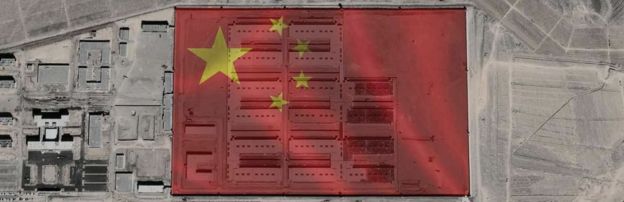
China’s hidden camps

BBC
Presentational grey line

Rights groups say Uighurs, Kazakhs and other Muslim minorities are being detained indefinitely without charge for infractions like refusing to give a DNA sample, speaking in a minority language, or arguing with officials.

What was Beijing’s response?

In a statement quoted by the Associated Press, China through its embassy in Ankara called on Turkey to withdraw its “false accusations”.

“Both China and Turkey face the arduous task of fighting terrorism. We are opposed to maintaining double standards on the question of fighting terrorism,” it said.

“We hope the Turkish side will have a correct understanding of the efforts made by China to legally deploy measures to effectively fight terrorism and extremism, withdraw its false accusations and take measures to eliminate their harmful effects.”

Beijing claims that the detention camps in Xinjiang are “vocational education centres” designed to help rid the region of terrorism.

Speaking last October, the top Chinese official in Xinjiang, Shohrat Zakir, said “trainees” in the camps were grateful for the opportunity to “reflect on their mistakes”.

What do we know about Heyit’s fate?

Amnesty International said it was very concerned about reports of his death, which has not been officially confirmed.

Heyit was a celebrated player of the Dutar, a two-stringed instrument that is notoriously hard to master. At one time, he was venerated across China. He studied music in Beijing and later performed with national arts troupes.

Heyit’s detention reportedly stemmed from a song he performed titled Fathers. It takes its lyrics from a Uighur poem calling on younger generations to respect the sacrifices of those before them.

But three words in the lyrics – “martyrs of war” – apparently led Chinese authorities to conclude that Heyit presented a terrorist threat.

Presentational grey line

Who are the Uighurs?

Uighur men read newspapers in Xinjiang (2015)Image copyrightGETTY IMAGES

The Uighurs make up about 45% of the population in Xinjiang.

They see themselves as culturally and ethnically close to Central Asian nations.

In recent decades, large numbers of Han Chinese (China’s ethnic majority) have migrated to Xinjiang, and the Uighurs feel their culture and livelihoods are under threat.

Xinjiang is officially designated as an autonomous region within China, like Tibet to its south.

Source: The BBC
10/02/2019

China border crossings up over Lunar New Year holiday – Xinhua

SHANGHAI (Reuters) – Border crossings into and out of China during the Lunar New Year holiday rose 11 percent to 12.53 million this year from the same 2018 period, the official Xinhua news agency reported on Sunday as the week-long holiday drew to a close.

More than 6.2 million arrivals were recorded, an increase of 9.5 percent, while there were over 6.3 million exits, up 12.5 percent, it said, citing data from the State Immigration Administration.

Chinese residents crossing the border for personal reasons made a combined 7.22 million entries and exits, an increase of nearly 16 percent over the previous year, Xinhua said.

The growth in border crossings during the country’s biggest holiday underscores the rise of Chinese tourism and comes in spite of a slowing economy.

Top overseas destinations for Chinese residents this Lunar New Year were Thailand, Japan, Vietnam, South Korea, Singapore, Malaysia, the United States, Hong Kong, Macau and Taiwan, Xinhua reported.

In 2017, Chinese people made 143 million international tourist trips and were the world’s biggest spenders on international tourism, the United Nations World Tourism Organization said.

The Lunar New Year holiday is one of China’s longest breaks and over 400 million people – more than a quarter of the population – had been expected to travel domestically for family reunions, according to Chinese travel agency Ctrip.

Source: Reuters

09/02/2019

China Airlines resumes talks with striking pilots amid airport chaos

  • Transport minister urges swift resolution so stranded travellers can get home after Lunar New Year holiday
  • Airline rebuked for breakdown in negotiations and pilots urged to consider the rights of passengers
PUBLISHED : Saturday, 09 February, 2019, 7:17pm
UPDATED : Saturday, 09 February, 2019, 7:17pm

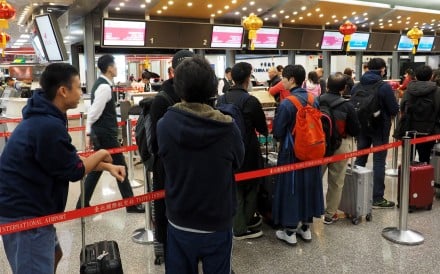
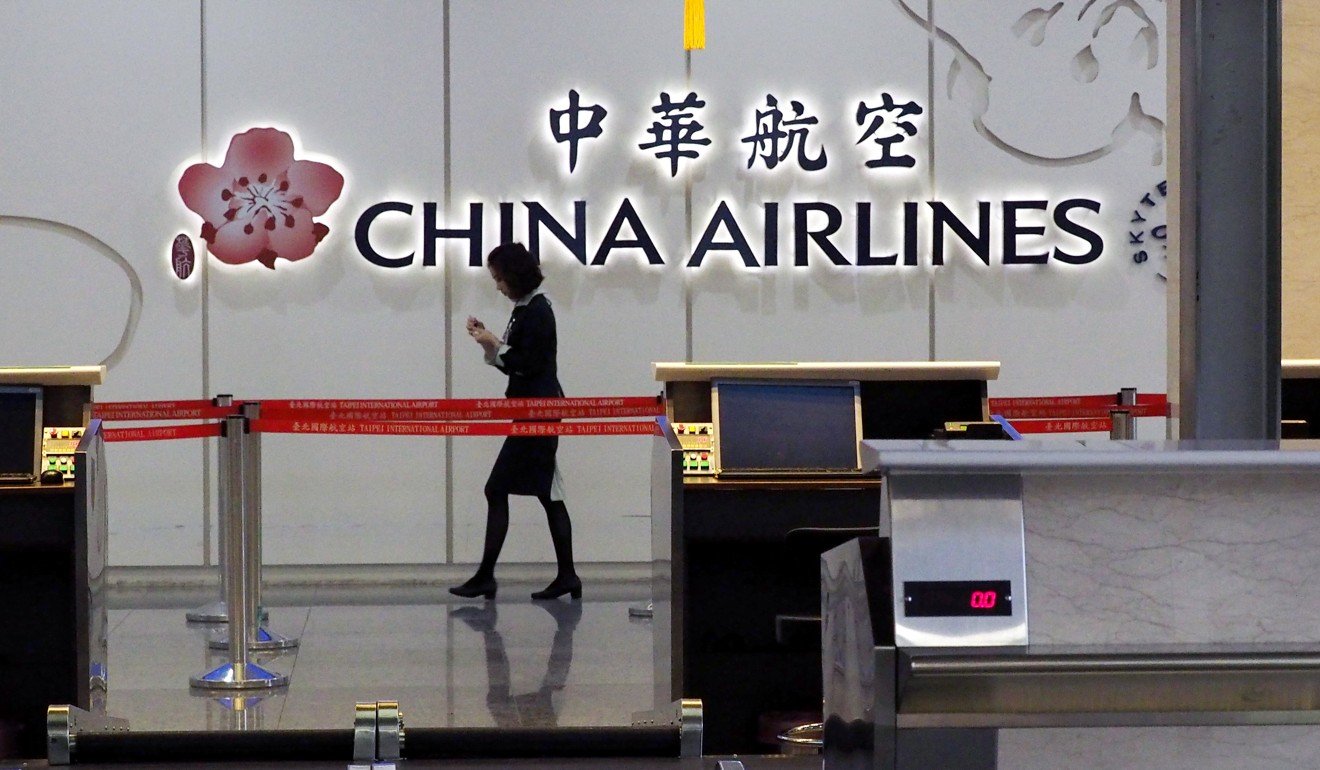
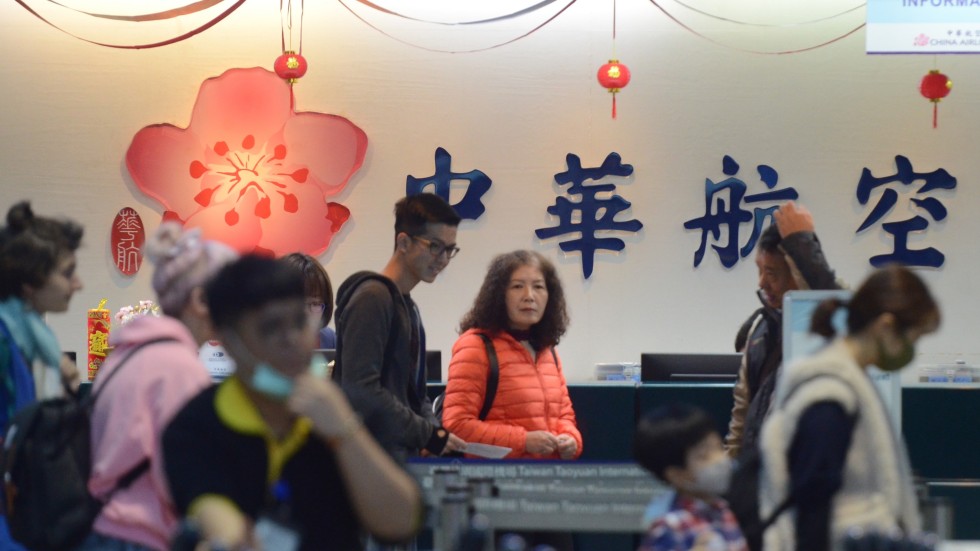
Taiwan’s largest airline China Airlines and its pilot union returned to the negotiating table on Saturday in a closed-door coordination meeting over an ongoing strike that so far has forced the cancellation of 34 flights, including at least 12 to or from Hong Kong.

The carrier cancelled four Saturday flights between Hong Kong and Kaohsiung and three between Taipei and Hong Kong, after scrapping five flights to and from Hong Kong the previous day. More than 12 flights have been delayed in the past two days, according to the airline.

The China Airlines branch of the Taoyuan Union of Pilots is protesting the airline’s failure to improve pilots’ working conditions and launched industrial action at 6am on Friday after talks broke down on Thursday, saying the strike would continue indefinitely until China Airlines agreed to meet its demands.

Taiwan’s transport ministry stepped in, asking China Airlines and the union to hold a new round of talks on Saturday afternoon under the supervision of the Taoyuan Labour Affairs Department.

Earlier on Saturday, transport minister Lin Chia-lung said airline management should have reviewed the reasons behind the breakdown in talks, in light of last year’s successful negotiations between EVA Air, another major Taiwan carrier, and its pilots.

“Senior officials of China Airlines should have listened to the voices of their employees and put aside their emotion to properly handle the labour dispute,” Lin said, adding that the union should also take note of the rights of travellers and resume negotiations with the employer to jump-start reform of China Airlines’ aviation safety and systems.

The union voted to strike in August and obtained approval from the labour authorities following disputes dating back to December 2017 between pilots and the two airlines over working conditions.

The EVA pilots agreed not to strike after a consensus was reached with airline, coordinated by the labour authorities, but no agreement was reached between China Airlines and its pilots, prompting Friday’s action.

Lin said he hoped the dispute could be settled as soon as possible so that stranded passengers could return home in time for work on Monday, the day after the official end of the Lunar New Year holiday.

In a statement released on Friday, the union said it staged the strike because China Airlines had refused to take note of the fatigued condition of pilots required to work overtime, which it said created a flight risk.

The union is demanding an additional backup pilot for flights lasting eight hours or more, and two pilots on long-haul flights lasting 12 hours or more.

The pilots also want a more transparent system of promotion, a year-end bonus similar to EVA Air’s, and other concessions, including replacement of the management staff they say were responsible for the breakdown in talks.

The union is also demanding an assurance that there will be no later punishment for the strike action.

China Airlines has rejected the union’s demand for extra manpower on long-haul flights, saying the pilots’ working conditions are in line with international practice and that “increasing manpower would raise human resources costs and seriously affect the competitiveness of the company”.

Deputy transport minister Wang Kwo-tsai appeared to support the union’s position on fatigue and promotion issues.

“After all, fatigue would cause flight risks and protection of the benefits for employees would enable the company to operate continuously,” he told reporters on Saturday.

Wang stressed the strike had already disrupted air traffic and stranded passengers, and said there was a strong need for the two sides to swiftly resolve the dispute to ensure the rights of passengers.

Source: SCMP

09/02/2019

Relief reaches blizzard-hit Tibetan prefecture

XINING, Feb. 9 (Xinhua) — After days of snow storms, roads in many areas of Yushu Tibetan Autonomous Prefecture, northwest China’s Qinghai Province, are covered under snow as deep as 45 centimeters.

Tsertra, deputy director of the Yushu Disaster Relief Work and Emergency Headquarters, said one city and five other counties in Yushu were hit by the snow storms. Thousands of livestock were reported dead.

The local authority has sent vets, medicine and fodders to the blizzard-hit areas.

Drapa Sum, director of the health center in Gyeldo County, one of the worst-hit areas, said that he and his colleagues this week visited a number of blizzard-hit villages, some 5,000 meters above sea level on average.

“Villagers were relieved to see doctors and vets come to their rescue,” said Drapa Sum.

He said the trips were extremely dangerous, as roads were buried in snow.

By Friday, 4,653 tonnes of fodders had been transported to the blizzard-hit areas. The bureau of agriculture and rural affairs with the Qinghai Provincial Government has set aside 10 million yuan (about 1.48 million U.S. dollars) to purchase more fodders, said He Bo, deputy head of Yushu Tibetan Autonomous Prefectural Government.

He said the primary relief work now is to clear the snow-covered roads to ensure supplies reach the disaster-hit villages. Strong winds are blowing snow to block the roads despite the efforts to clear them.

The snowstorms have also led to the deaths of wild animals by the hundred in the region.

The Administration for the National Park of Sanjiangyuan (Three-River-Source) has earmarked a fund of 100,000 yuan for helping wild animals survive the harsh winter.

Source: Xinhua

09/02/2019

China’s information consumption surges in 2018

BEIJING, Feb. 9 (Xinhua) — China’s information consumption saw a rapid increase last year, according to the Ministry of Industry and Information Technology (MIIT).

Total business volume of the telecommunication sector rose by 137.9 percent from the previous year, the MIIT has said.

Services of 4G continued to develop last year, with the number of users reaching 1.17 billion.

The average household usage of mobile traffic reached 6.25GB per month in December 2018, more than double the amount in the same period in the previous year, the ministry said.

The ministry attributed the soaring information consumption to Chinese telecommunications operators’ measures of increasing Internet connection speed and cutting connection costs.

Wen Ku, director of the telecom department at the MIIT, said the ministry would make continued efforts to expand Internet coverage, improve service quality and release the potential of the digital economy.

Source: Xinhua

09/02/2019

China voices strong opposition to Modi’s visit to region on east section of its border with India

BEIJING, Feb. 9 (Xinhua) — The Chinese Foreign Ministry on Saturday expressed strong opposition to Indian Prime Minister Narendra Modi’s visit to a region on the east section of the China-India border.

Spokeswoman Hua Chunying’s remarks came in response to a query about news reports saying that Prime Minister Modi visited the so-called “Arunachal Pradesh” earlier in the day.

“China’s position on the China-India border issue is consistent and clear-cut,” said Hua, stressing that the Chinese government has never recognized the so-called “Arunachal Pradesh.”

While urging the Indian side to bear in mind the common interests of the two countries, Hua called on the neighboring country to respect interests and concerns of the Chinese side, cherish the momentum of improvement in bilateral ties and refrain from “any action that may lead to an escalation of disputes or complicate the border issue.”

Source: Xinhua

09/02/2019

After China objects to PM Modi’s Arunachal visit, MEA says state integral part

Modi’s visit was part of a series of public meetings in the region aimed at garnering support for the Bharatiya Janata Party ahead of elections that are due to be held by May.

INDIA Updated: Feb 09, 2019 16:14 IST

HT Correspondent
HT Correspondent
Hindustan Times, New Delhi/Bejing
China,PM Modi,Arunachal Pradesh
Both India and China have sought to rebuild trust after an armed standoff over a stretch of the Himalayan border in 2017.(Twitter/BJP4India)

Prime Minister Narendra Modi’s visit to Arunachal Pradesh on Saturday saw jagged exchange between China and India. China’s foreign ministry Objected to PM Modi’s Arunachal visit saying “resolutely opposes” activities of Indian leaders in the region.

Responding to China’s objection to PM Modi’s visit to the northeastern state, the Ministry of External Affairs (MEA) said the state is “an integral and inalienable part of India.” Modi’s visit was part of a series of public meetings in the region aimed at garnering support for the Bharatiya Janata Party ahead of elections that are due to be held by May.

“The State of Arunachal Pradesh is an integral and inalienable part of India. Indian leaders visit Arunachal Pradesh from time to time, as they visit other parts of India… This consistent position has been conveyed to Chinese side on several occasions,” news agency ANI quoted MEA as saying.

Despite recent efforts to improve bilateral ties in both countries, disputes over the mountainous Indo-China border – which triggered a war in 1962 – and the region that China claims as southern Tibet have remained a sensitive issue.

On Saturday, India’s foreign ministry did not immediately respond to a request for comment.

Both India and China have sought to rebuild trust after an armed standoff over a stretch of the Himalayan border in 2017.

Source: Hindusatn Times

08/02/2019

Tata Motors posts record $4 billion loss on Jaguar woes, shares crash

BENGALURU/NEW DELHI (Reuters) – Jaguar Land Rover’s owner Tata Motors Ltd stunned markets by posting the biggest-ever quarterly loss in Indian corporate history of about $4 billion (£3.1 billion) on slumping China sales, sending its shares crashing as much as 30 percent.

Tata Motors also warned that the Jaguar Land Rover (JLR) unit, which brings in most of its revenue, would swing to an operating loss in the year to March versus an earlier projection for breakeven, given weak sales at the luxury British carmaker.

JLR’s China retail sales almost halved in the December quarter as overall demand in the world’s biggest auto market contracted last year for the first time since the 1990s. The firm has also been buffeted by Brexit woes and weaker business for diesel cars that account for bulk of its sales in Europe.

SPONSORED

Tata Motors turned in a third-quarter loss of 269.93 billion rupees ($3.8 billion) on Thursday, more than half its current market capitalisation of $6.1 billion, mostly due to a massive impairment at JLR. Analysts were expecting a profit.

“We are now taking clear and decisive actions in JLR to step up its competitiveness, reduce costs and improve cash flows and make the business fit for the future,” Chief Financial Officer PB Balaji told reporters on a conference call on Thursday.

JLR has taken steps to address the slide in China sales by changing its strategy to focus on profits for dealers instead of sales and incentivising retail sales over wholesale, he said.

FILE PHOTO – A Tata Tigor car is pictured at the assembly line inside the Tata Motors car plant in Sanand, on the outskirts of Ahmedabad, India, August 7, 2018. REUTERS/Amit Dave

“We are encouraged by continued demand for the refreshed Range Rover and Range Rover Sport,” JLR Chief Commercial Officer Felix Brautigam said in a statement.

“With deliveries of the new Evoque due to start later this quarter, we look forward to building momentum.”

But analysts expect JLR to struggle to generate profit with China’s economy projected to slow further this year after growth eased to its weakest pace in almost three decades in 2018.

JLR’s overall retail sales in January plunged 11 percent.

(For an interactive graphic on monthly sales at Jaguar Land Rover, click: tmsnrt.rs/2te4M1L)

BROKERAGE SLASH PRICE TARGETS

The dour numbers prompted Tata investors to make a beeline for the exits as markets opened on Friday, with shares of the company skidding to their lowest in nine years at one point.

The stock was down about 20 percent by 0720 GMT near 150 rupees, on track for its sharpest drop since 2003.

Slideshow (2 Images)

At least four brokerages cut their price target for Tata Motors shares after its quarterly loss.

Analysts at Jefferies pegged the stock at 250 rupees, versus an earlier target of 300 rupees, citing weak performance at JLR.

Tata Motors took a non-cash charge of 278.38 billion rupees for an impairment at JLR in the quarter. Changes in market conditions, especially in China, technology disruptions and rising cost of debt led to the charge.

JLR, Britain’s biggest carmaker, also faces disruption due to persistent uncertainty over a Brexit deal and has decided to halt production for a couple of weeks in April.

British Prime Minister Theresa May’s Brexit deal was rejected in parliament last month and the government is trying to make changes to win the support of lawmakers even as the date for Britain’s departure from the European Union looms less than two months away.

(For an interactive graphic on sales of India’s biggest automakers, click tmsnrt.rs/2Hr877P)

08/02/2019

China Focus: Festival shopping goes smart in China

SHANGHAI, Feb. 7 (Xinhua) — Making a big purchase ahead of the Lunar New Year can be a lot of fuss. But as markets go smart, shopping has become a pleasure, even during the busiest time of the year.

At a Carrefour supermarket “Le Marche” in Shanghai’s Changning District, customers can choose from several payment measures instead of queuing in a long line at the checkout counter.

There are smart machines where customers can scan barcodes on groceries in front of a screen and pay through a WeChat mini-app on their smartphones.

Smart payment has improved shopping efficiency, especially during shopping seasons, according to the supermarket manager.

“The penetration rate of mobile payment in Carrefour stores in China has surpassed 50 percent, and the rate of smart cashiers has reached 38 percent,” said Nathalie Yu, vice president of Carrefour China.

Carrefour has worked with China’s Internet companies such as Meituan, JD and Ele.me on its digitalization of retail service and logistics. Customers can also go to the Carrefour online supermarket and receive orders at home within hours.

The U.S. retail giant Walmart has also sped up its “smart revolution” in the Chinese market, with over 400 outlets supporting “Scan and Go.” It has also introduced an online search map of groceries to improve shopping efficiency.

As of June 2018, there were 802 million Internet users in China, 788 million of whom were mobile users. Over 569 million Chinese shopped online at least once and 557 million used their mobile phones for shopping.

In a Sam’s club outlet under Walmart in Shanghai’s Pudong District, an interactive area showcasing daily products gets a “facelift” every week. Just before the Lunar New Year, the area was transformed into a children’s bedroom, which attracted children and their parents to take a rest.

According to Chen Zhiyu, a senior vice president of Walmart China, it is a trend that many groceries are going online, yet people still go to supermarkets to enjoy family get-together time and explore new products.

In “Le Marche,” 78 percent of the display area is food, with imported food taking a considerable part of the shelves. Customers can have their fresh seafood cooked to dine in the supermarket.

“We will promote more ‘Le Marche’ in other Chinese cities,” said Thierry Garnier, executive director of Carrefour Asia, adding that industry peers and partners from more than 10 countries had come to Shanghai to learn from such innovation.

Source: Xinhua

08/02/2019

5G self-driving bus tested in Chongqing

CHONGQING, Feb. 7 (Xinhua) — A self-driving bus assisted by the 5G mobile network is on a test run in Chongqing, a vehicle-manufacturing powerhouse in southwestern China, local authorities said.

The bus, equipped with technologies such as Controller Area Network and laser radar, is able to complete all autonomous operations with the assistance of the 5G mobile network.

The electric-powered 12 seater has a designed maximum speed of 20 km per hour.

The bus was co-developed by China Mobile, tech giant Huawei, Southeast University and French company Easy Mile.

Source: Xinhua

Law of Unintended Consequences

continuously updated blog about China & India

ChiaHou's Book Reviews

continuously updated blog about China & India

What's wrong with the world; and its economy

continuously updated blog about China & India