Archive for ‘China alert’

06/02/2019

China’s railway trips up 8.6 pct in first 15 days of travel rush

BEIJING, Feb. 6 (Xinhua) — Railway passenger trips in China rose 8.6 percent year on year to 143 million during the first 15 days of the annual travel rush around the Spring Festival.

On Jan. 26, more than 10.49 million passenger trips were made by rail, a daily record for the travel rush, data from the China Railway Corporation (CRC) showed.

Hundreds of millions of Chinese are going back to their hometowns to celebrate the Chinese Lunar New Year with their families.

The annual travel rush (chunyun) around the festival often puts the transport system to the test.

As more trains have been put into operation, railway transport capacity improved by 5.3 percent this year during the travel rush, according to the CRC.

The Spring Festival travel rush started from Jan. 21 and will last till March 1, with railway trips expected to hit 413 million in total, up 8.3 percent.

Source: Xinhua

06/02/2019

Ethiopia to commission Chinese built industrial park by end of February

ADDIS ABABA, Feb. 5 (Xinhua) — Ethiopia is to commission the Chinese built Debre Birhan industrial park by the end of February, state media outlet Amhara Mass Media Agency (AMMA) reported on Tuesday.

Debre Birhan industrial park constructed by China Communications Construction Company (CCCC) at a cost of 71 million U.S. dollars is expected to create job opportunities for about 1,000 Ethiopians once it starts operations, reported AMMA.

Stretched on 75 hectares of land, Debre Birhan industrial park will have eight industrial sheds ready to accommodate prospective investors once it’s fully commissioned.

Speaking to Xinhua recently, Lelise Neme, CEO of Ethiopia Industrial Park Development Corporation (IPDC), said Ethiopia aims to commission six industrial parks, including Debre Birhan industrial park, before the end of the current fiscal year 2018/19, in July.

“Ethiopia has invested around 1.3 billion U.S. dollars in the construction of around a dozen industrial parks, which it sees as a key strategy of achieving Ethiopia’s industrial ambitions,” said Neme.

“Ethiopia has so far built and commissioned five industrial parks and with the anticipated commissioning of six more industrial parks in 2018/19, Ethiopia’s industrialization ambitions will receive a massive boost,” Neme told Xinhua.

With Ethiopia attracting large-scale investment in the export-import-oriented manufacturing sector, especially from Chinese firms, the country sees improving the efficiency and speed of the logistics sector as key to meet national manufacturing revenue goals.

Ethiopia plans to increase the number of operational industrial parks from the current five to around 30 by 2025, as part of its efforts to make the country a light manufacturing hub and lower-middle-income economy in the same period.

Source: Xinhua

06/02/2019

(Spring Festival) Across China: 2 minutes loving on the platform

ZHENGZHOU, Feb. 5 (Xinhua) — As the G402 high-speed train pulls into Xinxiang East station in central China’s Henan Province, Li Xiang, who’s been waiting on the platform, trots down to coach No.13 with a lunch-box.

Li works at the railway station. His wife, Zou Xiaojuan, is on the train at the moment. She is not a passenger but in charge of catering services on board.

During the coming Spring Festival travel rush, an estimated 413.3 million train trips will be made as people head home for the most important family gathering of the year.

The G402 high-speed train from the southwest China city of Guiyang to Beijing stops at Xinxiang every five days, each time for no more than two minutes.

It’s the longest time the young couple spend together at work.

Li hands the lunch-box to his wife after guiding passengers on and off the train. Zou, in return, gives Li a “finger heart” by crossing her thumb and index fingers while no one’s watching. It’s a touching scene.

The two-minutes is bittersweet, the small lunch-box becoming a symbol of their love.

The romance began with an encounter when Zou Xiaojuan wearing her uniform, was commuting by train via Xinxiang East station and drew Li’s attention.

“I’ll never forget the day we met,” Li said. It was Dec. 6, 2014, and he was supposed to get a day off but stood in for a sick colleague. Following standard procedures, Li made inquiries with Zou, who happened to be standing by his side.

“Is everything fine?” he asked.

“Yep, all going well,” she replied.

Just pleasantries perhaps, but Li remembered her name and where she worked. They became friends. Once in a chat, Zou said that she had never tried the spicy noodles, the local cuisine, even after so many stops at Xinxiang.

When Zou stopped at the station next, she found a thermal bag that contained spicy noodles at the door of the train. Li had been listening. She did not open the bag until after work, but the cool noodles warmed her heart.

“Our encounter is full of coincidences, which coincidentally put us together,” Li said. After the two met, Zou worked on many high-speed trains on different routes because of staff transfers, but everyone would make a stop at Xinxiang. Each time when the train stopped at the platform, there was a red thermal bag quietly placed at her door.

To ensure his wife eats well, Li has learned to cook. Spicy noodles have been replaced by fried rice, fried noodles and pumpkin soup.

Due to the increasing density of rail networks, the time for the G402 high-speed train to stop at Xinxiang East station was cut from six minutes in 2016 to two in 2019.

Each one of the couple has responsibilities of his or her own in this two minutes. Zou is required to station at the door while Li has to serve the passengers. No contact is made other than picking up the bag through the door.

Sometimes the two get so busy that they even don’t have time to meet. In such cases, Li leaves the bag by the door, while his wife pulls down the window shade to the upper third — it is their “missing-you” code.

Source: Xinhua

06/02/2019

China’s inter-bank payment system passes severe test on Lunar New Year’s eve

BEIJING, Feb. 5 (Xinhua) — China’s inter-bank payment and settlement system passed a tough test on Lunar New Year’s eve as the Chinese zealously snatched lucky money in virtual red envelopes for good fortune.

China UnionPay, a leading payment network, processed inter-bank payment and settlement deals worth 261.7 billion yuan (about 39 billion U.S. dollars) Monday night, the Lunar New Year’s eve, up 81.3 percent from the same day of last year, Shanghai Securities News reported Tuesday on its APP.

The average response time for each deal processed by China UnionPay’s network was only 220 milliseconds, and no deals failed.

Citing sources with China UnionPay, the newspaper said the country’s inter-bank payment system had been “well tested in a reality check.”

As authorized by the People’s Bank of China, China UnionPay handled only a portion of the country’s inter-bank payment and settlement needs during the Spring Festival, which mainly involves the Wechat red packets launched by Tencent and Baidu red packets.

Giving cash in red envelopes (hongbao) is a traditional practice during the Spring Festival and it has been shifting online thanks to the promotion of mobile payment in which people use apps to send, snatch and draw virtual hongbaos on their smartphones.

The digital red envelope race during the Chinese New Year holiday has become a new tradition since Tencent made a splash in 2014 with the hongbao service on its popular instant messaging app WeChat, drawing millions of new users for its mobile payment service.

The race has been particularly fierce this year, as more tech giants lavished lucky money to attract mobile users.

Chinese artificial intelligence giant Baidu, for instance, took the lead this year by preparing a record high of 1.9 billion yuan (281.7 million U.S. dollars) for digital red envelopes after becoming the exclusive red envelope partner of the China Central Television (CCTV) Spring Festival Gala, the most-watched annual show on Chinese New Year eve.

Alibaba continued its game of collecting five blessings to share the lucky money of 500 million yuan, while Weibo prompted users to retweet certain posts to share 100 million yuan. Many firms put 2,019 yuan into red envelopes as the biggest prize.

Tencent also rolled out a specific hongbao service for firms to give red envelopes to their employees in its latest efforts to boost services for corporate customers.

Douyin, a leading Chinese short-video platform, jumped onto the wagon by partnering with the CCTV gala and launching a red envelope game worth 500 million yuan in total, in an effort to encourage users to send short-video new year greetings to expand on its already 500-million-plus monthly active users.

Compared to the everyday needs for inter-bank payment and settlement, the Spring Festival holiday is much more demanding as a larger amount of deals under more diverse trading scenarios need to be processed concurrently, according to sources with China UnionPay.

Apart from red packet deals, online and offline payment concerning dining, transportation, shopping in department stores, currency conversion, cross-border withdrawals and remittance, centralized receiving and payment and other kinds of deals saw a substantial growth during the holiday.

To cope with the demand, China UnionPay said it had established one-for-one real-time communication and response mechanism with key commercial banks and payment institutions and monitored the transaction processing under all sorts of trading scenarios.

06/02/2019

Xinhua Headlines: Chinese New Year celebrations touch hearts around world

Xinhua Headlines: Chinese New Year celebrations touch hearts around world

Lion dance is performed during the 2019 Spring Festival parade in downtown Antwerp, Belgium, on Feb. 2, 2019. (Xinhua/Zheng Huansong)

BEIJING, Feb. 5 (Xinhua) — For centuries, the Lunar New Year has been the most important festival in China and a large part of Asia. People leave behind the worries and troubles of the past year and move on to a new spring full of hope and life.

Today, the festival has become a worldwide holiday as China plays a bigger role in world affairs and people all around the world share the wish to leave uncertainties behind and usher in a peaceful and prosperous year ahead. As the Chinese New Year falls on Tuesday, major cities across the globe are vying to hold the greatest celebration of this traditional festival outside China.

YEAR OF PIG

Tuesday marks the first day of the Year of the Pig in the Chinese Zodiac. The Chinese Zodiac is based on a twelve-year cycle, and each year in that cycle is under a certain animal sign. It is believed people are born with the positive traits of their zodiacs. For example, babies born in this Year of the Pig are expected to be kind and fortunate.

Peppa, the sweet little piglet from a British animated TV series, has become a media sensation in this Year of the Pig. A nationwide cinema release, “Peppa Celebrates Chinese New Year,” co-produced by Alibaba Pictures, debuted in China on Tuesday. Its promotional video named “What’s Peppa” went viral and clocked some 1.5 billion hits on Chinese social media platforms such as Weibo and Wechat.

“Peppa is the perfect ambassador for the Year of the Pig celebrations as it is the most iconic pig on screen,” said Oliver Dumont, president, Family & Brands, of the leading Canadian entertainment conglomerate Entertainment One (eOne), which owns Peppa Pig and is a co-producer of the movie.

Other than the Chinese film, a two-part episode special of Peppa Pig has been created specifically for the Chinese New Year. “This is a great opportunity to promote and share the Chinese language and culture all around the world,” Dumont said.

In the movie and TV episode, Peppa learns what the Chinese New Year is about and experiences many of its traditions with her family, teaching dozens of millions of fans about Chinese culture.

The Chinese New Year, also known as the Spring Festival, is the most important festival in China. Celebrations begin about a week in advance and end with the Lantern Festival on the 15th day of the new year. Receiving red packets of “lucky money,” having big family meals and welcoming the God of Wealth with deafening firecrackers are among the many highlights of the festivities.

WORLDWIDE PARTY

For other parts of the world, the Chinese New Year has become a great occasion to enjoy exotic food, culture and to party. Organizers in cities around the world are racking their brains vying to stage the most brilliant celebration outside China.

–In London

The Science Museum of Britain celebrated the Chinese New Year by hosting exhibitions on science development in China. While enjoying Chinese delicacies and new year traditions, visitors experienced ancient Chinese inventions through augmented reality glasses, learned about Chinese fossils and watched presentations on the recent development of Chinese space technology.

Aleksandar Zivanovic, an engineer and regular visitor of the museum, found the European Space Agency’s introduction of the Chinese space program most fascinating. “It’s a nice way to celebrate the Chinese New Year, and a good way to find out about Chinese culture and what’s going on in Chinese science,” he said.

Celebrations in London will last a month with a series of activities culminating in the Trafalgar Square parade on Feb. 10, which organizers say to be the biggest Chinese New Year celebration outside Asia.

–In Sydney

Sydney’s signature Harbor Bridge is glowing red and pink to provide a breathtaking setting for the Chinese New Year celebrations.

A spectacular 5-meter-tall matrix-style steel pig lantern glows by the landmark Sydney Opera House. Another 11 giant lanterns representing the remaining zodiac animals, including an elaborate eight-meter stack of monkeys, an electric sheep and a six-meter-tall inflatable ox, light up the Sydney Harbor.

Sydney has been celebrating the lunar new year for 22 years. This year’s events will include the lunar lanterns exhibition, Chinatown celebrations, community performances, dragon boat races and lion dances across the city. “It’s a celebration for our Asian community, but it’s a wonderful educational experience for the rest of us,” Mayor of Sydney Clover Moore said.

–In New York

The Empire State Building, landmark of Manhattan, New York, is glowing red, blue and yellow Monday for the Chinese New Year.

A window display featuring pigs in a traditional Chinese style has also been installed in the building’s lobby windows on Fifth Avenue. Visitors can appreciate pigs as portrayed in various art forms, including clay sculptures, paper cuts, sugar-figure blowing and lanterns.

It is for the 19th consecutive year that the Empire State Building, standing 443 meters above midtown Manhattan, shines in honor of the Chinese New Year.

New York is also known around the world for the splendid firecracker shows that light up the Hudson River and parts of the city during Chinese New Year celebrations.

New York and some other U.S. states have made the lunar new year a public holiday. This is particularly unusual given that the Chinese New Year does not have a set date on the Gregorian calendar. Instead, it falls on a day between Jan. 21 and Feb. 20 each year.

In addition to being widely celebrated across the globe, the lunar new year is also a public holiday and important national festival in many countries such as Vietnam, Indonesia and South Korea.

The Chinese New Year has become an international event as its traditions and values touch the hearts of people all around the world. As Chinese President Xi Jinping has said, the vision, concepts and values of China’s traditional culture are also valuable for addressing the issues that humanity faces.

BEST WISHES FROM WORLD LEADERS

The Chinese New Year also offers an opportunity for foreign leaders to extend best wishes to the Chinese people, seeking closer ties with China, attracting Chinese tourists and consolidating support from Chinese communities.

For example, in a congratulatory video speech, Japanese Prime Minister Shinzo Abe spoke Chinese to wish the Chinese people a happy new year. He pledged to relax visa policies for Chinese students studying in Japan and called for more people-to-people exchanges between the two countries. Abe also expressed the wish that bilateral ties further improve in the new year.

New Zealand Prime Minister Jacinda Ardern posted her lunar new year’s wishes on social media. She took the opportunity to thank the Chinese community in New Zealand for its hard work and contributions. Ardern expressed the hope to strengthen ties with China, boosting cooperation in trade, education and tourism.

Pakistani President Arif Alvi, President of Argentina Mauricio Macri, President of Afghanistan Ashraf Ghani, Austrian President Alexander Van der Bellen and other world leaders also sent videos or messages to wish the Chinese people a happy lunar new year.

Source: Xinhua

05/02/2019

China’s CATL, Honda plan to co-operate on EV battery development

TOKYO (Reuters) – Contemporary Amperex Technology Ltd and Honda Motor have signed an agreement to co-operate on jointly developing lithium ion batteries for electric vehicles, as China’s top EV battery maker expands its tie-ups with Japanese automakers.

CATL said on Tuesday it had signed a memorandum of understanding with Honda under which it would guarantee supply of lithium-ion EV batteries with storage capacity of around 56 gigawatt hours (GWh) to the automaker by 2027, and set up an office near Honda’s research unit in Tochigi Prefecture, outside Tokyo.

“The agreement focuses on supply of EV batteries in Asia,” Honda spokeswoman Tomoko Takemori said, declining to give further details on which of its models would use CATL batteries.

“We could also consider some supply for the North American market.”

Sources with knowledge of the matter told Reuters that the agreement to explore using CATL technology in Honda EVs was part of Honda’s moves to diversify its battery supply bases to ensure stable stock in the longer term, and that the Japanese automaker has also been in talks with other battery makers, including current supplier Panasonic Corp.

As it pushes to meet China’s stringent “green car” quotas, Honda is planning to launch its first mass-production battery EV in China later this year, while it is building a new plant for new-energy vehicles, including battery EVs and plug-in hybrid cars.

CATL, one of the world’s biggest EV battery makers, adds Honda to its list of partners which already includes BMW, Volkswagen AG and SAIC Motor Corp.

The Fujian-based company has been eager to secure more Japanese clients, and established a sales and development support hub in Yokohama last year. It already counts Nissan Motor Co as a customer, supplying the batteries for the battery-electric version of its Sylphy sedan in China.

Source: Reuters

05/02/2019

US-China trade war: UN warns of ‘massive’ impact of tariff hike

05/02/2019

Chinese navy veteran warns training, not hardware is key to military preparedness

  • As China expands its military might a retired naval officer points out that size is not everything in modern warfare
  • ‘It is the people who use these weapons that count’
The cloud was low and the sky was murky and overcast. “The cloud was barely 200 to 300 metres above ground and the jets immediately disappeared into the cloud after take-off,” Wang said.

“In China, [our military planes] would not have taken off [for training] if the cloud was lower than 400 metres above ground,” he explained.

“Such conditions are dangerous [for military aircraft to take off] but they were able to carry on training despite the weather.”

As China expands its military might with new aircraft carriers, advanced fighter jets and other world-class weaponry, questions have been raised about whether the People’s Liberation Army can compete with other advanced forces.

Wang, now a naval armament expert, pointed out that size was only one determining factor in modern warfare, and hardware could only answer part of the question as China raced to catch up with leading powers like the US and its top allies, including Japan“It is the people who use these weapons that count, and that essentially boils down to our level of training.

“Some people hold the view that our military planes are more advanced than others. But if we look at the level of training of our forces … We are not at the same level [as others] yet.”

Antony Wong Dong, a military expert based in Macau who has spent years studying the PLA, agreed with Wang’s assessment.

Although the PLA – which has not fought a major war since the Korean war – has made great strides in improving training for its rank and file in past decades, Wong said there was much room for improvement to raise its “preparedness”.

That was in fact the message from President Xi Jinping in December in a speech reminding the top brass that strengthening training and preparation for war would be the top priorities for the PLA in 2019.

Naha, in Japan’s Okinawa prefecture, is home to the 9th Air Wing, which was set up three years ago with 40 F-15 fighter jets. It was a time of growing assertiveness by China in the East China Sea, including over the contested Diaoyu Islands, which are administered by Tokyo but also claimed by Beijing and Taipei.

According to the Joint Staff of the Japanese defence ministry, in the 2017 fiscal year, which started on April 1, there were 500 scrambles by Japan’s Air Self-Defence Force to intercept Chinese military aircraft flying over the region, compared with 851 scrambles in 2016.

But in the first three quarters of the 2018 fiscal year, the number of scrambles reached 476, as Xi pushed the PLA to conduct more training, including exercises further from home.

And, as China starts testing its first home-made aircraft carrier, Tokyo announced in December that it would convert its helicopter carrier, the destroyer Izumo, into an aircraft carrier capable of launching American F-35B fighter jets.

Against such a background, Wang said China needed to reflect deeply on its overall military strength in addition to investing in cutting-edge weaponry.

This was the reason for his heavy heart at Naha Airport, as he watched the extent of Japanese military training.

“On that day it was not just the F-15s taking off [at Naha], but also Ospreys and Sikorsky Seahawks, and the training went on non-stop the whole day,” Wang said.

“It immediately came to my mind that we should not look down upon the Japanese forces. We must bear in mind that the level of training reflects your level of combat preparedness.

“Our fleet of warships and military planes far outnumber the Japanese forces, even by the number of more advanced generations of fighter jets … but in real combat, the size of the battlefield is limited, whether it is at sea or in the sky.

“You cannot deploy everything you have. And when both sides deploy the same resources into the battlefield, we must not be blindly [optimistic] about our chance of winning.”

The rapid development of new hardware could also pose challenges for training Chinese troops, especially in helping them master the skills necessary to use and understand the new weapons.

“We are still exploring. It is not that we are slack. [These new weapons] are just too advanced,” Wang said.

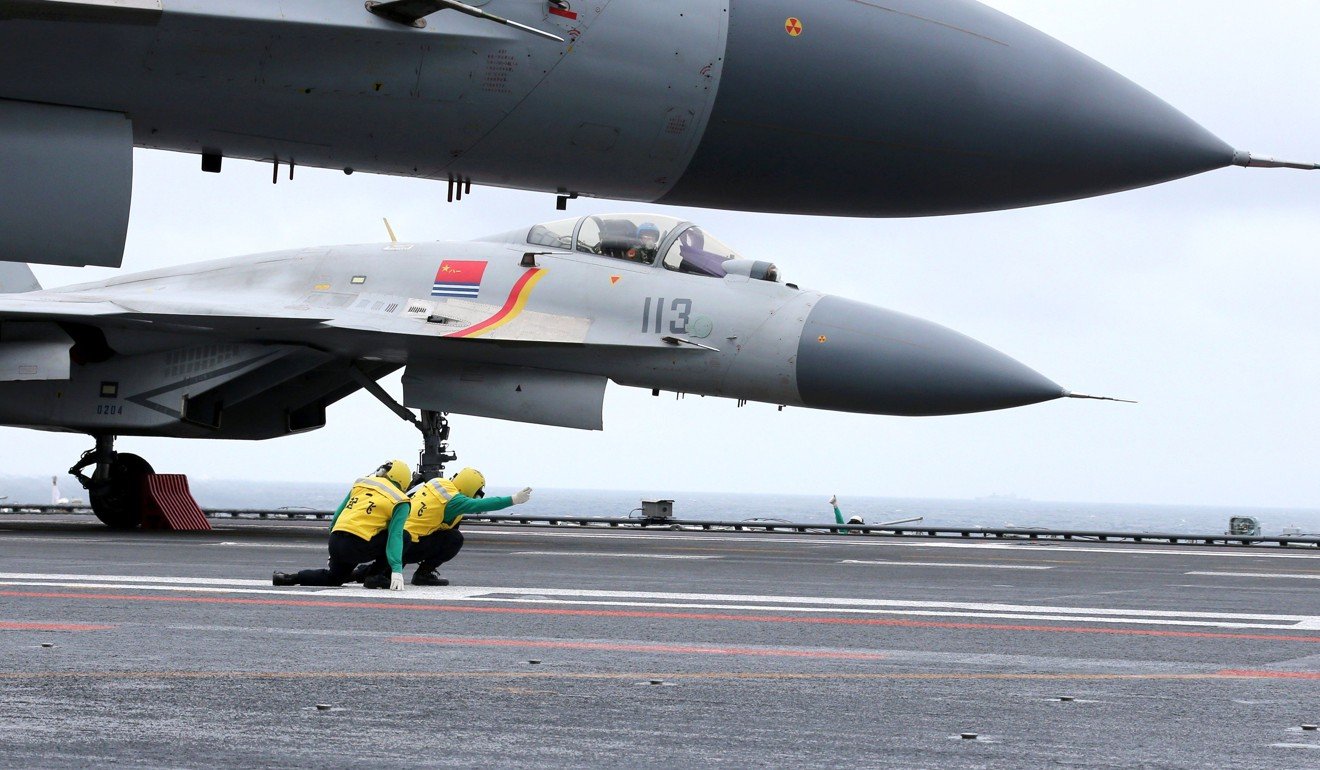
“Like [the stealth fighter jet] J-20… or [carrier-based fighter jet] J-15, we initially didn’t know how to make the best use of them in different circumstances.

“We only recently mastered how to take off and land [J-15s] at night. It is not certain if we are ready to undertake evening flight missions of these aircraft when they are loaded with heavy missiles,” he said.

Military expert Wong said the PLA had yet to resolve many issues, including pairing up its J-15 fighter jets and its aircraft carriers.

“To what extent can PLA troops and these weapons work seamlessly in executing tactics?” Wong said.

“From what we saw on the news, [I would say that] there are still gaps in the quality and quantity of weapons that [our carrier-based aircraft] can actually carry.”

Source: SCMP

05/02/2019

China to remain NYSE’s major contributor of int’l IPOs in 2019

NEW YORK, Feb. 4 (Xinhua) — China has been a major market for the New York Stock Exchange (NYSE) when it comes to international initial public offerings (IPOs) over the past few years, and the trend will continue in 2019, according to the exchange.

The wholly-owned subsidiary of Intercontinental Exchange finished 2018 with 125 billion U.S. dollars in proceeds raised from 356 transactions. In a year marked by elevated volatility in U.S. equity markets, NYSE issuers raised 30 billion dollars in proceeds from 73 IPOs, statistics showed.

A total of 25 international IPOs were executed during the year, raising 10 billion dollars in proceeds, including Tencent Music Entertainment Group from China, PagSeguro Digital Ltd. from Brazil, and Hudson Ltd. and Farfetch Ltd. from Britain.

A total of 18 Chinese companies raised more than 4 billion dollars in proceeds last year, the exchange said in its response to Xinhua’s inquiry. The companies are from a variety of industries, including education, hospitality, technology, and automotive.

Alex Ibrahim, head of international capital markets at NYSE, told Xinhua that it was a “huge highlight” to have companies like Tencent Music Entertainment listing on the exchange and raising over 1 billion dollars.

The IPO of Nio, a leading Chinese electric vehicle maker, also raised more than 1 billion dollars and was a very successful transaction, he noted. “It was super exciting to see those cars in front of the exchange and in Times Square,” Ibrahim said in an exclusive interview with Xinhua.

Asked why so many Chinese companies chose to list in NYSE over other stock exchanges, Ibrahim said one major reason is that U.S. market is the deepest in the world and companies want to have access to liquidity.

He added that the companies also want to be next to their competitors that have already been listed in NYSE so as to make sure the evaluation is aligned and make themselves available to the vast number of investors.

“This trend will continue because I think there are fantastic companies in China,” he said.

He said that the human element the NYSE has is also an important reason companies are willing to be listed there.

On the other hand, the demand from U.S. investors’ side for Chinese companies and products is high.

Ibrahim said there are a lot of great entrepreneurs creating and selling new technologies and tapping the growth of Chinese economy.

“Investors want to be part of this growth,” he said, adding that the way to access the growth is through IPOs.

NYSE-listed companies traded with 45 percent lower volatility compared to companies listed and traded on other U.S. exchanges, according to the stock exchange.

Source: Xinhua

05/02/2019

People from various industries stick to their posts on eve of Spring Festival

#CHINA-SPRING FESTIVAL-EVE-WORK (CN)

Sanitation workers clean a street in Hohhot, capital of north China’s Inner Mongolia Autonomous Region, Feb. 4, 2019. People from various industries stick to their posts on the eve of the Spring Festival which falls on Feb. 5 this year. (Xinhua/Ding Genhou)

Source: Xinhua

Law of Unintended Consequences

continuously updated blog about China & India

ChiaHou's Book Reviews

continuously updated blog about China & India

What's wrong with the world; and its economy

continuously updated blog about China & India