Archive for ‘China alert’

24/01/2019

China clones gene-edited monkeys

CHINA-SHANGHAI-GENE-EDITED MONKEYS (CN)

Photo taken on Nov. 26, 2018 shows the five cloned monkeys with circadian rhythm disorders. China has cloned five monkeys from a gene-edited macaque with circadian rhythm disorders, the first time multiple monkeys have been cloned from a gene-edited monkey for biomedical research. Scientists made the announcement Thursday, with two articles published in National Science Review, a top Chinese journal in English. The cloned monkeys were born in Shanghai at Institute of Neuroscience of Chinese Academy of Sciences. (Xinhua/Institute of Neuroscience of Chinese Academy of Sciences)

SHANGHAI, Jan. 24 (Xinhua) — China has cloned five monkeys from a gene-edited macaque with circadian rhythm disorders, the first time multiple monkeys have been cloned from a gene-edited monkey for biomedical research.

Scientists made the announcement Thursday, with two articles published in National Science Review, a top Chinese journal in English. The cloned monkeys were born in Shanghai at Institute of Neuroscience of Chinese Academy of Sciences.

Researchers said that the advance means that a population of customized gene-edited monkey models with uniform genetic background will be available for biomedical research.

Disorders of circadian rhythm are associated with many human diseases, including sleep disorders, depression, diabetic mellitus, cancer and neurodegenerative diseases, such as Alzheimer’s disease.

Previously, mice and flies were widely used for the research of such diseases, but these animal models differ greatly from human beings in terms of activity routines, brain structure and metabolic rate.

The cloned monkeys, closer to human in physiology, make better models for research on disease pathogenesis and potential therapeutic treatments.

In order to create an ideal donor monkey, researchers knocked out BMAL1, a core circadian regulatory transcription factor, using gene editing at the embryo stage.

They selected one of the gene-edited monkeys with the most severe disease phenotypes as the donor. The fibroblasts of the donor were then used to clone five monkeys by somatic cell nuclear transfer, the same method used to generate Zhong Zhong and Hua Hua, the first cloned monkeys born in China at the end of 2017.

Different from Zhong Zhong and Hua Hua, generated by using fibroblasts from an aborted fetus, the new clones were made using a gene-edited young adult male monkey.

“It shows that besides using fetus, batch cloning of gene-edited male monkeys with diseases is also feasible,” said Qiang Sun of the institute.

Sun said the research program was reviewed and supervised by the institute’s ethic committee in accordance with international ethical standards of animal research.

He said that the research signified the maturing of China’s somatic cell cloning.

Muming Poo, the director of the institute, said that the research team would focus on cloning monkey models with different brain diseases in the future.

Besides being used to study human brain diseases, the models will be used to test medicine effectiveness, which can help reduce the number of animal models used in experiments and lower the cost of medicine development, he said.

Source: Xinhua

24/01/2019

China’s first baby born from transplanted womb

CHINA-SHAANXI-XI'AN-TRANSPLANTED WOMB-BABY-BIRTH (CN)

Doctors perform a cesarean operation on a woman who has successfully received a womb at the Xijing Hospital in Xi’an, northwest China’s Shaanxi Province, Jan. 20, 2019. A woman who successfully received a womb donated by her mother after a uterus transplant in November 2015 gave birth to a healthy baby boy in Shaanxi Province on Sunday. Weighing 2 kg and measuring 48 cm long, the baby is considered to be China’s first and the world’s 14th baby who was born from a transplanted womb, said doctors with the Xijing Hospital. (Xinhua/Zhang Yinan)

XI’AN, Jan. 23 (Xinhua) — A woman who successfully received a womb donated from her mother after a uterus transplant in November 2015 gave birth to a healthy baby boy in northwest China’s Shaanxi Province on Sunday.

Weighing 2 kg and measuring 48 cm long, the baby is China’s first and the world’s 14th baby born from a transplanted womb, doctors with the Xijing Hospital in Xi’an, capital of the province, said Wednesday.

Yang Hua, 26, the new mother, was born without a uterus but has her own ovaries.

When the mother-daughter womb transplant, China’s first human womb transplant, was done in 2015, Yang was 22 and her mother was 43.

Doctors at the Xijing Hospital extracted eggs from Yang. With the help of assisted reproductive technology, they froze 14 embryos in August 2015.

The frozen embryo was successfully implanted in Yang’s womb on June 13, 2018. Yang became pregnant after two weeks.

To ensure the health of Yang and her baby during the pregnancy, the experts from the obstetrics and gynecology department and the urology department of Xijing Hospital made a series of individual immune anti-rejection medication plans and conducted regular ultrasound, plasma concentration and hormone level monitoring.

“The full-term fetus can bring pressure to the transplanted womb, which increases risks during labor,” said Chen Biliang, director of the obstetrics and gynecology department of Xijing Hospital.

Therefore, Chen and his team decided to conduct a cesarean section during the 33th week of Yang’s pregnancy.

Uterus transplants are not new. In the 1960s, Britain and the United States began to experiment with uterus transplants on animals.

In 2000, the world’s first human womb transplant took place on a 26-year-old woman in Saudi Arabia. The transplanted uterus failed after three months and had to be removed.

In 2011, doctors successfully performed a uterus transplant on a woman in Turkey. Two years later, nine women in Sweden successfully received transplanted wombs donated by relatives.

Chen said uterus transplants still remained a medical challenge.

The uterus, with plenty of tenuous blood vessels, grows in the depths of a woman’s pelvic cavity. Therefore, a string of problems including cutting, the structure of the blood vessels during the transplant and strong rejection reactions may occur, according to Chen.

There are about a million women in China suffering from uterine infertility. Due to the limitation of the current assisted reproductive technology and the prohibition of surrogacy in many countries, uterus transplants have provided an effective way for women plagued by uterine infertility to have their own babies, according to Chen.

Source: Xinhua

24/01/2019

Interview: China economy has multiple sources of growth potentials, resilience

NEW YORK, Jan. 23 (Xinhua) — China’s economy enjoys multiple sources of growth potentials and resilience, and its structural change brings about optimism on the country’s ability to tide through difficulties, according to a senior investment advisor with UBS Wealth Management.

Growth potentials and resilience of the Chinese economy stem from a mixed combination of effective fiscal and monetary policies, and the fact that the economy has become more consumption-oriented and less export-dependent, Jorge O. Mariscal, Emerging Markets Chief Investment Officer at UBS Wealth Management, said on Tuesday.

The ongoing transformation of the Chinese economy relies less on traditional exports and more on an increasing number of technological breakthroughs such as 5G and industrial internet, Mariscal said in an email interview with Xinhua.

China’s supply side reform generates the potential momentum of a new model of growth, which fosters innovation and less bureaucracy, Mariscal added.

“The above structural change makes us optimistic about China’s ability to navigate the current difficult juncture,” said Mariscal.

Mariscal said he expected that the Chinese economy would grow 6.1 percent in 2019 amid some mixed trends.

China’s economy, the world’s second largest, grew 6.6 percent year on year to reach 90.0309 trillion yuan (about 13.28 trillion U.S. dollars) in 2018, above the official target of around 6.5 percent, according to data issued by the National Bureau of Statistics (NBS) on Monday.

China also would have higher debt-to-GDP ratio in 2019 due to the slowdown in economic expansion and the easing of fiscal policies, which will likely lead to a rebound of the property sector, liquidity level, and ideally consumption to investment level in 2019, according to Mariscal.

Chinese economy underwent a meaningful slowdown caused by deleveraging in 2018, compounded by negative investment and consumer sentiment due to trade tensions with the United States and a slow and gradual policy response, said Mariscal.

Mariscal also expected more fiscal policies and further expansionary monetary policies from China as China’s central bank has already lowered reserve requirement ratio by 100 basis points so far 2019 with 83 billion U.S. dollars injected to the banking system.

China is still likely to report weak economic indicators in the first quarter of 2019 as the transmission of policies into real economy takes time and the effects of supportive policies are likely to be felt after the first quarter, said Mariscal.

Chinese investment growth has rebounded since October 2018 due to high infrastructure investment from local governments, but it remains to be seen whether it is sufficient to stabilize growth in 2019, according to Mariscal.

A stable economic performance in China will of course promote the stability of global economy as China makes up about 15 percent of global GDP, said Mariscal.

Whether China could manage to mitigate the downside risks by setting forth a series of counter-cyclical policies is crucial to the global economy, especially amid the uncertainties of trade tension between the United States and China.

The impacts from tariffs in 2018 were not as bad as expected based on the most recent statistics of Chinese trade balances, according to Mariscal.

It is estimated that China contributed to nearly 30 percent of the world’s economic growth and remained the largest contributor to global growth in 2018 as China’s economic growth entered a new normal of slower economic growth.

Source: Xinhua

24/01/2019

Chinese VP calls for shaping global architecture for better future of mankind

SWITZERLAND-DAVOS-WANG QISHAN-WEF

Chinese Vice President Wang Qishan addresses the 2019 annual meeting of the World Economic Forum in Davos, Switzerland, on Jan. 23, 2019. (Xinhua/Huang Jingwen)

DAVOS, Switzerland, Jan. 23 (Xinhua) — Chinese Vice President Wang Qishan here on Wednesday called on countries to work together to shape the global architecture in the age of the fourth industrial revolution with the vision to create a better future for all mankind.

While addressing the 2019 annual meeting of the World Economic Forum, Wang said it is imperative to respect national sovereignty and refrain from seeking technological hegemony and interfering in other countries’ domestic affairs.

He called for efforts to uphold multilateralism and jointly build a system of rules for technology and new international cooperation framework featuring peace, security, democracy, transparency, inclusiveness and mutual benefit, so that all people can gain from technological innovation.

Pointing out that new technologies bring opportunities and also create risks and challenges, Wang said that countries need to uphold the security of all mankind and need to improve policy environment and promote social prosperity and stability.

“We need to explore the adoption of relevant rules and standards in a phased way, while leaving broad space for the dissemination and application of scientific discovery and technological innovation,” he said.

Wang also called for accommodating in a balanced manner the interests of all countries, especially those of emerging market and developing countries.

“One should not ask the whole world to address only the security concern and comply only with the standards of developed countries or individual countries,” he said.

This year’s Davos forum gathers global elites to discuss “Globalization 4.0,” a buzzword that means a new wave of globalization in a digital world. More than 60 heads of state or government, 40 international organization heads and 1,700 business leaders attended the event.

Source: Xinhua

23/01/2019

Australia probes reports Chinese-Australian writer is missing in China

SYDNEY (Reuters) – Australia is investigating the whereabouts of a Chinese-Australian man, the Department of Foreign Affairs and Trade (DFAT) said on Wednesday, after a newspaper report raised fears that the dissident former diplomat has been detained in China.

The Sydney Morning Herald newspaper reported on Wednesday that friends feared Yang Hengjun, an author and former Chinese diplomat who is now an Australian citizen, had been detained because he had not been reachable for several days.

His disappearance comes at a time of high tension between China and some parts of the West after two Canadians, a diplomat on unpaid leave and a consultant, were arrested in China on suspicion of endangering state security.

Those arrests were widely seen in the West as retaliation by Beijing for the arrest of Meng Wanzhou, a senior Huawei Technologies [HWT.UL] executive, in Canada on Dec. 1. She is accused of violating U.S. sanctions on Iran.

Two friends contacted by Reuters said they had reported Yang as missing to DFAT. They said he had been missing since he flew from New York to Guangzhou in southern China on Friday.

One of those friends, Feng Chongyi, an academic at the University of Technology in Sydney, said Yang had been scheduled to fly on to Shanghai but never arrived.

“I believe he is in custody of the Ministry of State Security in Beijing,” Feng said.

China’s Foreign Ministry spokeswoman Hua Chunying, asked about Yang’s disappearance, told a regular briefing that she had “no understanding” of the situation.

China’s Ministry of Public Security did not respond immediately to requests for comment.

A DFAT spokeswoman confirmed the department was investigating but did not identify Yang by name.

“The Department of Foreign Affairs and Trade is seeking information about an Australian citizen who has been reported missing in China,” the spokeswoman said.

A source familiar with the investigation said Australia made contact with Chinese officials overnight to ask about Yang’s whereabouts.

Australia joined international condemnation of the arrest of the two Canadians but Yang has long been in the sights of Chinese authorities. He has criticised what he described as Chinese interference in Australia.

Chinese President Xi Jinping has presided over a sweeping crackdown on dissent since coming to power in 2012, with hundreds of rights lawyers and activists detained. Dozens have been jailed.

Source: Reuters

23/01/2019

‘Racist’ D&G ad: Chinese model says campaign almost ruined career

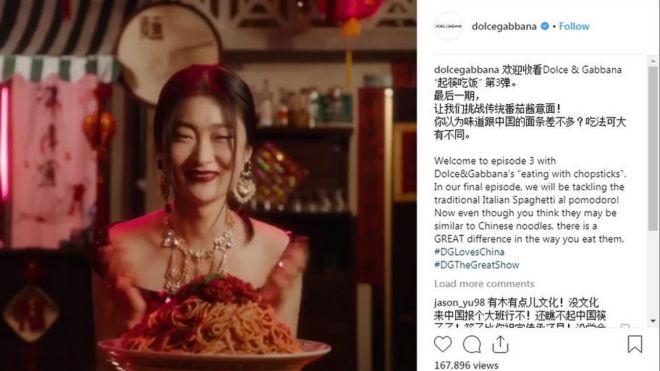
Dolce and Gabbana's #DGLovesChina campaignImage copyrightDOLCE AND GABBANA/INSTAGRAM
Image captionThe ad was supposed to show that ‘#DGLovesChina’

The Chinese model featured in a Dolce & Gabbana ad campaign accused of racism has said the controversy almost ruined her career.

Three videos, released in November, showed Zuo Ye struggling to eat Italian food including cannoli and pizza with chopsticks.

Widely seen as offensive it led to a severe backlash in China with several retailers pulling the brand’s products.

Ms Zuo said she felt “guilty and ashamed” but asked for understanding.

Following her statement on Chinese social media network Weibo, the debate has flared up again with some people saying they hope that she can continue her career as a model and that they understand her hands were tied working with D&G.

‘It nearly killed my career’

In a long post on Monday, Ms Zuo said that usually working for an international brand like D&G would be an exciting career step but that in this case “it nearly killed off my modelling career”.

She explains she understands that “it’s about representing the national image of China and Chinese culture” and that she “therefore feels even more guilty and ashamed”.

She also vowed to “improve my behaviour” in the future.

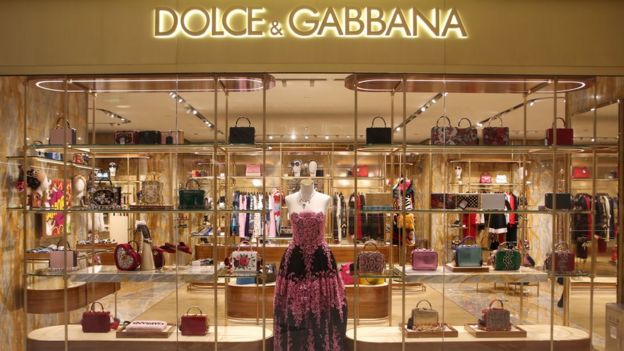
A Dolce & Gabbana store is pictured at Dawanglu on November 22, 2018 in Beijing, ChinaImage copyrightGETTY IMAGES
Image captionConsumers called for a boycott of D&G products in China

According to her statement, she knew the shoot was about trying Italian delicacies but that she felt very awkward when she was asked to eat food like pizza and pasta with chopsticks.

The director told her to show first shock and disbelief, then roll her eyes, and eventually delight and satisfaction at the presumed tastiness of said Italian dishes, she said.

The model explains that she didn’t see the final clip before it was released.

She also writes she didn’t receive any support during the backlash, even when she, her family and agent were all targeted in widespread attacks on social media.

Support and condemnation

Since Ms Zuo’s post, opinion has been divided on Chinese social media.

While some see her as a victim of the Italian brand and sympathise with her experience, others remain critical saying she only had herself to blame.

Others again point out the problem with the powerlessness of models in the industry as a whole where they are often made to do things they might not necessarily want to do.

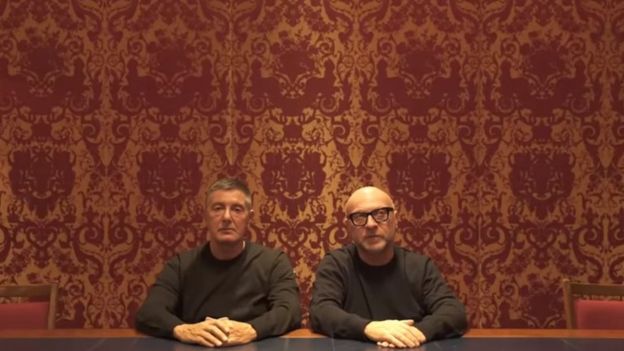
Screengrab of video showing Dolce and Gabbana founders apologising for the campaignImage copyrightDOLCE AND GABBANA
Image captionDomenico Dolce and Stefano Gabbana asked for forgiveness

In November last year, D&G released the videos on social media ahead of a fashion show in Shanghai.

The entire campaign was accused of trivialising Chinese culture and promoting unflattering stereotypes.

“Chinese consumers are not naïve; they will spot insincerity and tokenism a mile off, and respond accordingly,” Dr Julie Bilby of the department of media and communication at RMIT University in Melbourne told the BBC.

The controversy escalated further when screenshots were circulated showing designer Stefano Gabbana allegedly insulting China in an Instagram chat.

D&G insisted the account had been hacked and apologised publicly for the controversial ad campaign.

The Italian luxury company was forced to cancel the fashion show in Shanghai and their products were removed from several Chinese online retailers.

Consumers in China also called for a boycott of the brand.

Source: The BBC

23/01/2019

Israel has enough sense and self interest to avoid efforts to drag it into US-China trade war, analysts say

  • China and Israel mark 27th anniversary of diplomatic ties at a difficult time
  • Relationship could be tested by US efforts to influence Israeli government policy
PUBLISHED : Wednesday, 23 January, 2019, 3:13pm
UPDATED : Wednesday, 23 January, 2019, 4:09pm

Uncertainty over China’s relationship with Israel is growing as the United States puts pressure on its allies to harden their stance on Beijing while trade and geopolitical tensions between the world’s biggest economies get worse.

As China and Israel prepare to mark the 27th anniversary on Thursday of diplomatic ties, analysts from both countries worry that relations, caught in the US-China crossfire, may face more difficult tests.
Like most other countries, Israel wants to maintain good relations with both the US and China and is concerned about an escalating rivalry, Gal Luft, co-director of the Institute for the Analysis of Global Security, a Washington-based think tank, said.

“Sadly, the new atmosphere in US-China relations is putting many countries – Israel included – in an extremely uncomfortable situation in which they are forced to pick sides,” he said.

Luft, a former lieutenant colonel in the Israeli Defence Force, said Israel could become a “sandwich country” like Canada, caught in the middle as Washington continued efforts to build an international coalition against Chinese telecoms giant Huawei

In recent weeks, senior US officials have increased pressure on Israel to reconsider China’s investments in infrastructure and hi-tech sectors there.

US National Security Adviser John Bolton urged Israeli Prime Minister Benjamin Netanyahu two weeks ago to tread carefully where Chinese telecommunications companies, such as Huawei and ZTE, were concerned because of national security concerns.

Bloomberg reported that US deputy secretary of energy Dan Brouillette issued a warning last week in Tel Aviv that Chinese investment in Israel’s national infrastructure, such as the port of Haifa, could compromise intelligence sharing with the US.

“The US has been abusing the idea of ‘national security,’ slandering and striking down the normal commercial activities of Chinese enterprises,” she said on Monday.

The Sino-Israeli relationship is very different from Beijing’s ties with oil-rich Middle Eastern countries such as Saudi Arabia, Qatar, Iran and Iraq, one analyst said.

Apart from its hi-tech industries, Israel has a significant military and political role in the Middle East. Beijing is seeking to increase its presence in the region as the US plans to withdraw troops from Syria and Afghanistan, Huang Jing, dean of Institute of International and Regional Studies at Beijing Language and Culture University, said.

“Israel may be small in size but is fairly influential in regional geopolitics and its long-standing special ties with Washington in particular make it uniquely important for Beijing”, which sought to steady relations with the US, he said.

Assaf Orion, a retired Israeli brigadier general and a visiting fellow at the Washington Institute for Near East Policy, said China for Israel had great potential as a market, a source of investment, a trade and tourism partner, and an infrastructure powerhouse.

“Israel’s China policy mainly seeks to balance the benefits of their bilateral economic ties on the one hand and its own strategic national security concerns on the other, with the all-but-formal strategic alliance with the US being a paramount national interest for Israel,” he said.

Ties between China and Israel have improved in recent years, especially where trade, investment, education and tourism were concerned.

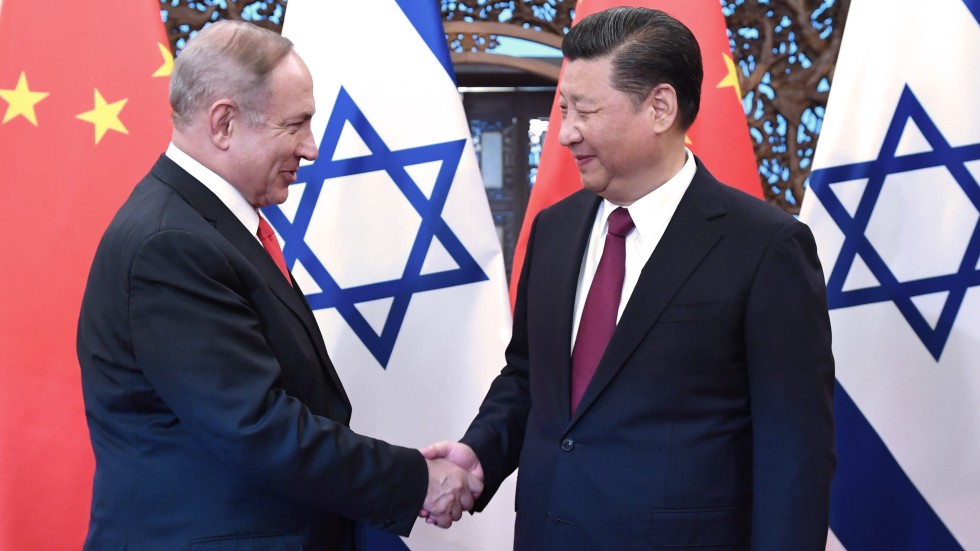
During a visit to Beijing in 2017, Netanyahu said that China accounted for one-third of the investment in Israel’s hi-tech industries.

Citing a report by the Israel Venture Capital Research Centre, Reuters said Israeli tech start-ups raised US$325 million from Chinese investors in the first three quarters of 2018, up 37 per cent from the same period a year earlier.

During a visit to Jerusalem by China’s Vice President Wang Qishan in October, Netanyahu said that the two countries would complete a free trade agreement this year.

According to a report by Israel’s Institute for National Security Studies in 2017, “China is also involved in building infrastructure in Israel, such as digging the Carmel road tunnels in Haifa, laying a light railway in Tel Aviv, and expanding the Ashdod and Haifa seaports.”

Haifa is Israel’s largest port city and a berth for the US Sixth Fleet. In 2013, the Netanyahu government approved China’s Shanghai International Port Group’s plans to operate the container terminal there for 25 years beginning in 2021.

US has stepped up pressure on Israel to scrap the deal and one of the Sixth Fleet’s warships refused to dock at Haifa in October, citing security concerns that doing so could compromise US and Israeli intelligence assets.

But Luft was critical of Washington’s stance on the Haifa port project as the Chinese company was the only bidder in an open tender.

“The US government is punishing the people of Israel twice” by demanding its ally cancel the deal, Luft said. “First, by denying them competition in the port sector, which would lower their cost of living, and second the government will have to pay a large fine to China if the deal is cancelled. This fine will come at the expense of important public services.”

Despite a boost in diplomatic and trade ties and China’s interest in Israel’s military and security technologies, arms sales and military cooperation between the two countries were limited because of US pressure.

The US moved to block the export of the Phalcon airborne early warning system in 2000 and the Harpy killer drones in 2005 to China.

Orion said that while China’s diplomats often speak about win-win relationships, Israel’s challenge was to seek a win-win-win situation within a triangular relation between the two great powers and a start-up nation state.

“When much of the media discourse is pitching Israel into an exclusive ‘either/or’ choice between the two powers, Israel’s strategic concept should seek ‘precision choice’, promoting its relations with China prudently while minimising risk to itself and avoiding any harm to the US and the strategic relations with it,” he said.

But Luft also voiced concerns that as tension grew between the US and China, Washington tended to expand the definition of “national security” to include broader technology fields like microchips, telecommunication and artificial intelligence.

“This is where I foresee the next set of challenges. Israel will have to determine how far it can stretch the definition of national security and strike the right balance between its commercial needs and its relations with Washington. Israel is a sovereign country. Being a friend and ally of the US does not mean that Israel must be subservient to every whim of Washington,” Luft said.

However, Washington’s pressure campaign seemed to have worked as Israeli officials sought to reassure their American ally over the past week.

Under US pressure, Israel is mulling plans that include legislation to vet foreign investments for the first time, according to Israel’s Haaretz newspaper.

Israeli analysts also expressed dismay over China’s close relations with Iran, Israel’s arch rival in the region, and Beijing’s long-standing pro-Arab and pro-Palestinian policies, saying China often voted against motions that Israel favoured at the United Nations.

“China’s relations with the Arab World are less of a concern in the current regional landscape. However, China’s relations with Iran, which is both obsessed about Israel and committed to its destruction, are more of a worry,” said Orion.

China could do more to dissuade Iran from its aggression against China’s partners in the region: Israel, Saudi Arabia and the United Arab Emirates, he said.

“Keeping the relations good requires constant nurturing, especially at a time the US is trying pull Israel away from China,” Luft added.

Huang also said Beijing must be more careful in dealing with Iran. “The ultimate goal for Beijing should be to avoid advancing Iranian ties at the expense of Sino-Israeli relations,” he said.

He said that despite structural differences between the two countries, Israel had rarely adopted an anti-Chinese stance on issues of importance to Beijing.

“While it remains to be seen how Israel deals with mounting pressure from the US over Huawei and other Chinese telecoms companies and a host of geopolitical issues, I think Israel is shrewd enough to avoid taking sides between the US and China,” Huang said.

Source: SCMP

23/01/2019

Opening of China’s market could serve as future global growth driver: experts

DAVOS, Switzerland, Jan. 22 (Xinhua) — The opening of China’s market is likely to increase the competitiveness of the Chinese economy, which could serve as a future driver of global growth, experts attending the ongoing World Economic Forum (WEF) Annual Meeting said Tuesday.

Attending a penal discussion titled “Rethinking Global Financial Risk,” Fang Xinghai, vice chairman of the China Securities Regulatory Commission, said that the Chinese economy may slow down in 2019 but “it won’t be a collapse.”

“China’s vision for the economy is to make it open, large and competitive. It will be a huge opportunity for all companies,” Fang said, adding that declines in overheated sectors, such as real estate and infrastructure, could provide useful correctives for the market.

Saying that opening up is good for China, Fang emphasized that over the last 40 years China has never had a significant financial crisis.

“How has it managed that? We have a very top-down approach to financial risk management. If risks are accumulating the government will step in. There is a lesson that the rest of the world should look at,” he said.

Jin Keyu, professor of economics of the London School of Economics and Political Science, said only two years ago China was considered as a ticking financial bomb, and the slowdown is the consequence of the government’s successful efforts to deleverage.

“These efforts have made China safer, much of this is the deliberate effort of the government,” she said.

Most of the economic experts predicted economic slowdowns in major global markets, including China and the United States, for 2019, but according to Jin, though growth has become more of an issue, the Chinese government is now shifting its focus to revamping growth.

“China has a lot more scope than most countries in this regard,” she said, adding that China’s main challenge is “how to unleash the real potential of the real economy.”

Ray Dalio, founder of investment management firm Bridgewater Associates, noted that there’s a top-down way of setting a mission, and working those things in a top-down way in China that has produced a 20-fold increase in income.

Chairman of the Swiss bank UBS Axel A. Weber said at the discussion that most of the growth seen globally is “generated by China being included in the world economy.”

“The more we can connect stock markets, the more we can bring international investors into the Chinese economy,” he noted.

Though soft but stable growth characterizes the general outlook for 2019, experts attending the discussion noted that a range of serious risks still exist on the periphery, such as a hard Brexit, climate change, and cybersecurity.

Experts at the discussion also predicted that easing monetary policies and fiscal reforms could offset the slowdown, but with interest rates still at post-financial crisis low points, there are questions about how much room central banks have to manoeuvre.

The 2019 annual meeting of WEF kicked off here Tuesday, bringing together more than 3,000 global leaders from politics, government, civil society, academia, arts and culture as well as the media.

Source: Xinhua

23/01/2019

Xi extends Spring Festival greetings to military veterans

CHINA-BEIJING-XI JINPING-MILITARY VETERANS-SPRING FESTIVAL GREETINGS (CN)

Chinese President Xi Jinping, also general secretary of the Communist Party of China Central Committee and chairman of the Central Military Commission, shakes hands with the retirees during a gala for retired military officials with Beijing-based troops in Beijing, capital of China, on Jan. 22, 2019. Xi extended his Spring Festival greetings to military veterans and retired military officials. (Xinhua/Li Gang)

BEIJING, Jan. 22 (Xinhua) — President Xi Jinping on Tuesday extended his Spring Festival greetings to military veterans and retired military officials.

Xi, also general secretary of the Communist Party of China Central Committee and chairman of the Central Military Commission, watched a gala for retired military officials with Beijing-based troops.

Xi shook hands with the retirees and asked about their health and lives.

Songs and dances about building strong armed forces and the military’s loyalty to the Party were performed.

Senior military officials including Xu Qiliang, Zhang Youxia, Wei Fenghe, Li Zuocheng, Miao Hua and Zhang Shengmin were also present at the show.

Spring Festival, the Chinese Lunar New Year, falls on Feb. 5 this year.

Source: Xinhua

22/01/2019

U.S. to formally seek extradition of Huawei executive Meng Wanzhou – Globe and Mail

(Reuters) – The United States will proceed with the formal extradition from Canada of Huawei executive Meng Wanzhou, Canada’s ambassador to the United States told the Globe and Mail, as Beijing vowed to respond to Washington’s actions.

The deadline for filing is Jan. 30, or 60 days after Meng was arrested on Dec. 1 in Vancouver.

Meng, the daughter of Huawei Technologies Co Ltd founder Ren Zhengfei, was arrested at the request of the United States over alleged violations of U.S. sanctions on Iran. She was released on bail last month and is due in court in Vancouver on Feb. 6.

Relations between China and Canada turned frosty after the arrest, with China detaining two Canadian citizens and sentencing to death a Canadian man previously found guilty of drug smuggling.

Beijing has not tied any of the three Canadians’ cases to Meng’s arrest, but has warned of severe consequences if she was not immediately released. Western and former Canadian diplomats have said they have no doubt the cases are linked.

Huawei, the world’s biggest maker of telecommunications equipment, said it had no comment on ongoing legal proceedings when contacted by Reuters on Tuesday. A U.S. Justice Department spokesman said: “We will comment through our filings.”

The Canadian Justice Department did not immediately respond to a request for comment outside regular business hours.

China’s Foreign Ministry on Tuesday reiterated calls for Meng’s immediate release and said her case clearly was “not a regular judicial case”.

Anyone with fair judgment would determine that Canada made a “serious mistake” in this matter, ministry spokeswoman Hua Chunying told a regular news briefing.

“Canada and the United States arbitrarily abused their bilateral extradition treaty to seriously infringe upon a Chinese citizen’s security and legal rights,” Hua said.

China “strongly urges” the United States to correct its “mistake”, cancel the arrest order for Meng, and not make a formal extradition request, she added.

Asked if China would retaliate against the United States if Meng is extradited, Hua said, “China will, of course, respond to U.S. actions.” She did not elaborate.

“PAYING THE PRICE”

Canada is one of over 100 countries with which the United States has extradition treaties.

Once a formal request is received, a Canadian court must determine within 30 days if there is sufficient evidence to support extradition, and Canada’s Minister of Justice must give a formal order.

In an article published on Monday, a former Canadian spy chief said Canada should ban Huawei from supplying equipment for next-generation telecoms networks, while Canada’s government is studying any security implications.

Some of Canada’s allies such as the United States and Australia have already imposed restrictions on using Huawei equipment, citing the risk of it being used for espionage.

Huawei has repeatedly said such concerns are unfounded, while China’s ambassador to Canada last week said there would be repercussions if Ottawa blocked Huawei.

In Monday’s interview, MacNaughton said he had complained to the United States that Canada was suffering from Chinese revenge for an arrest made at the U.S.’s request.

“We don’t like that it is our citizens who are being punished,” the Globe and Mail cited MacNaughton as saying. “(The Americans) are the ones seeking to have the full force of American law brought against (Ms. Meng) and yet we are the ones who are paying the price. Our citizens are.”

Canadian Prime Minister Justin Trudeau previously said China was arbitrarily using the death penalty and called on world leaders to raise concerns about the detained Canadians.

Source: Reuters

Law of Unintended Consequences

continuously updated blog about China & India

ChiaHou's Book Reviews

continuously updated blog about China & India

What's wrong with the world; and its economy

continuously updated blog about China & India