Archive for ‘China alert’

19/01/2019

Xinhua Headlines: Xi urges new, greater progress in Beijing-Tianjin-Hebei coordinated development

CHINA-BEIJING-TIANJIN-HEBEI REGION-XI JINPING-INSPECTION (CN)

Chinese President Xi Jinping, also general secretary of the Communist Party of China Central Committee and chairman of the Central Military Commission, presides over a symposium on the coordinated development of the Beijing-Tianjin-Hebei region and makes an important speech on it. Xi made an inspection tour in the Beijing-Tianjin-Hebei region from Jan. 16 to Jan. 18. (Xinhua/Ju Peng)

BEIJING, Jan. 18 (Xinhua) — Chinese President Xi Jinping has urged more efforts to achieve new, greater progress in the coordinated development of the Beijing-Tianjin-Hebei region.

Xi, also general secretary of the Communist Party of China (CPC) Central Committee and chairman of the Central Military Commission, made the remarks during an inspection tour of the region from Wednesday to Friday.

During the tour, Xi chaired a symposium on the region’s coordinated development and made an important speech.

Vice Premier Han Zheng, also a member of the Standing Committee of the Political Bureau of the CPC Central Committee, accompanied Xi on the tour of the Xiongan New Area in Hebei Province and Beijing and attended the symposium.

THREE-DAY TOUR

On Wednesday morning, Xi visited the exhibition center for the planning of the Xiongan New Area and stressed that the creation of Xiongan is “a strategy that will have lasting importance for the millennium to come.”

China should remain committed to the new development concept and stick to the high-quality growth when building the new area, Xi said.

While visiting a government service center, Xi stressed that development of the Xiongan New Area requires concerted efforts from a large number of enterprises.

“We welcome all companies, whether they are state-owned enterprises or private companies, local firms or companies from Beijing, Chinese enterprises or overseas-funded companies, as long as they conform to the industrial development plan of the new area,” he said.

A good ecological environment represents the important value of the Xiongan New Area, he said while visiting a forestry zone in the region Wednesday afternoon.

Visiting the campus of Nankai University in Tianjin Thursday morning, Xi said it is a priority to nurture patriotism among students for them to become a new generation of capable young people well-prepared to join the socialist cause.

In a square on campus, enthusiastic students welcomed Xi, shouting greetings such as “Welcome, General Secretary” and singing a patriotic song. Xi shook hands with students and waved to others in the crowd.

At a community in Heping District in Tianjin, Xi pointed out that community work should be people-centered with an accurate grasp of people’s needs and provide targeted and elaborate services for the residents in a timely manner.

He then visited a service and administration station for veterans in the community and stressed that setting up institutions for veteran affairs is to enhance the management of veterans and better protect their welfare in order to make military service a publicly respected occupation.

Talking about the large number of unique buildings and streets of historical and cultural significance in Tianjin, Xi asked for more care for the historical and cultural heritage in cities and better coordination of development and protection.

During his visit to the Tianjin port Thursday afternoon, Xi called for efforts to develop it into a world-class smart and green port, which can better serve the coordinated development of Beijing, Tianjin and Hebei as well as joint development of the Belt and Road Initiative.

Xi then visited the Binhai-Zhongguancun Science and Technology Park, where he highlighted the pressing task to rely on self-dependent innovation for advancing high-quality development and replacing old growth drivers with new ones.

On Friday morning, while visiting the sub-center of Beijing, Xi stressed that planning should take precedence over the construction of the sub-center while quality should be the top priority.

He said the sub-center should be made another “shining name card” of Beijing.

SIX DEMANDS

Xi made six demands to promote the coordinated development of the Beijing-Tianjin-Hebei region.

Efforts should be made to relocate the non-capital functions of Beijing in an active, proper and orderly manner, he said.

He stressed high-quality and high-standard planning and development of the Xiongan New Area and called for building a number of major infrastructure projects in transportation, water conservancy and public services in the new area.

The relocation of Beijing’s municipal organs should be taken as an opportunity to pursue high-quality planning and construction of the sub-center, Xi said, adding that the spatial layout and economic structure of Beijing should be optimized.

He stressed the need to take reform and innovation as impetus to inspire high-quality development and establish independent innovation bases.

Joint efforts must be made in the improvement and protection of ecology and environment, while more clean energy should be supplied, Xi said.

He called for a people-centered approach and joint work in developing the basic public services with shared benefits, adding that all poverty-stricken counties in the region should be lifted out of poverty by 2020.

Source: Xinhua
19/01/2019

Over 500 companies confirm participation in China’s 2nd CIIE

SHANGHAI, Jan. 18 (Xinhua) — More than 500 companies from all over the world have confirmed participation in the second China International Import Expo (CIIE), scheduled in early November this year, its organizers said Friday.

The companies are from more than 40 countries and regions, including over 70 Fortune Global 500 firms and leading enterprises in various industries, according to Zhou Lingyan with the CIIE bureau.

About 80 percent of the companies participated in the first CIIE, and most of them plan to expand their exhibition area this year, said Zhou.

A total of 172 countries, regions and international organizations and more than 3,600 enterprises participated in the first CIIE, held on Nov. 5-10 in Shanghai. It was the world’s first import-themed national-level expo.

Source: Xinhua

19/01/2019

China’s naval hospital ship concludes 205-day overseas mission

HANGZHOU, Jan. 18 (Xinhua) — China’s naval hospital ship Peace Ark on Friday arrived at a naval port in Zhoushan, east China’s Zhejiang Province, successfully concluding its 205-day voyage on Mission Harmony-2018.

Covering a distance of 31,800 nautical miles (around 51,177 kilometers), Peace Ark conducted goodwill visits and provided medical services to the local people when it made port calls to countries such as Papua New Guinea, Vanuatu, Fiji, Tonga, Venezuela and Ecuador.

The Chinese naval ship made port calls to Venezuela, the Commonwealth of Dominica, Antigua and Barbuda and the Dominican Republic for the first time.

The crew of the ship was commended for their good deeds by the Navy in December.

During their mission, medical personnel aboard the ship conducted 288 surgical operations and provided treatment and medical check services to tens of thousands of people.

Activities such as medical rescue drills, academic and cultural exchanges and deck receptions were also held during the mission.

Source: Xinhua

18/01/2019

FTSE up on Sino-U.S. trade hopes; Ryanair warning hits airlines

(Reuters) – British blue-chip stocks rebounded on Friday as investors took hope from signs of easing trade tensions between the United States and China, although a Ryanair alert knocked airline stocks.

The FTSE 100 .FTSE advanced 1.1 percent after trading lower most of the week as sterling rose amid a tumultuous week in UK politics. The mid-caps .FTMC were 0.7 percent higher at 0944 GMT after reaching their highest in a month and a half.

The blue chips were still headed for their first weekly drop in a month, while sterling was on track for its best week against the euro since September 2017.

A Wall Street Journal report that Washington was considering lifting some or all of the tariffs imposed on Chinese imports buoyed stocks globally.

Oil majors BP (BP.L) and Shell (RDSa.L) helped to lead the FTSE 100 gains as crude prices rose after data showed OPEC output fell. [O/R] Easing trade frictions also contributed to the rise.

Financial services recovered after from a sell-off on Thursday caused by a profit warning from Societe Generale (SOGN.PA). HSBC (HSBA.L) rose 1.2 percent.

The prospects for Brexit remained unclear at the end of a chaotic week. Prime Minister Theresa May and opposition Labour leader Jeremy Corbyn deadlocked over how to leave the European Union. Brexit campaigner Nigel Farage said the UK is likely to delay Brexit and another referendum is possible.

Housebuilders, some of the stocks most affected by Brexit outcomes, were among the biggest winners on FTSE 100.

Corporate news drove some moves. Shares in Ryanair (RYA.L), Europe’s largest low-cost carrier, fell 1.2 percent after hitting their lowest in nearly four years on its second profit warning in three months. It also predicted a rough outlook for airlines overall.

“We believe this lower fare environment will continue to shake out more loss making competitors, with WOW, Flybe, and reportedly Germania for example, all currently for sale,” CEO Michael O’Leary said.

Budget rival easyJet (EZJ.L) and British Airways-owner IAG (ICAG.L) declined the most among blue chips as markets shunned airline stocks.

Mid-cap security software company Sophos (SOPH.L) recovered some early losses but remained down 22 percent after flagging lower annual billings.

Source: Reuters

18/01/2019

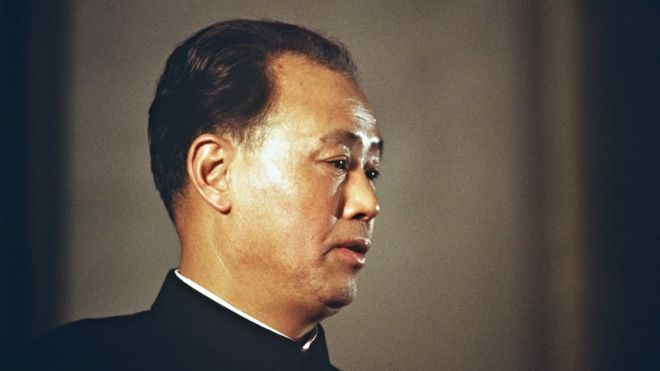
Zhao Ziyang: A reformer China’s Communist Party wants to forget

Picture dated 17 October 1980 in Beijing of Zhao Ziyang,Image copyrightGETTY IMAGES

In a small, central Beijing courtyard, family and friends are gathering to pay tribute to Zhao Ziyang – the most powerful man in China to oppose the decision to send tanks into Tiananmen Square nearly 30 years ago.

He was subsequently erased from Chinese history for what party officials deemed his “serious mistakes” that day.

To reach his traditional courtyard home, mourners and journalists alike must run a gauntlet through a twisted alleyway, with groups of police and plain-clothed guards on every corner, waiting to interrogate and prevent would-be visitors.

Today, on a cold, January day, on the anniversary of Zhao’s death from a stroke in 2005, numerous police vehicles flank every entrance. Parked outside the gate is an unmarked security car; the occupants monitoring arrivals and muttering into radios.

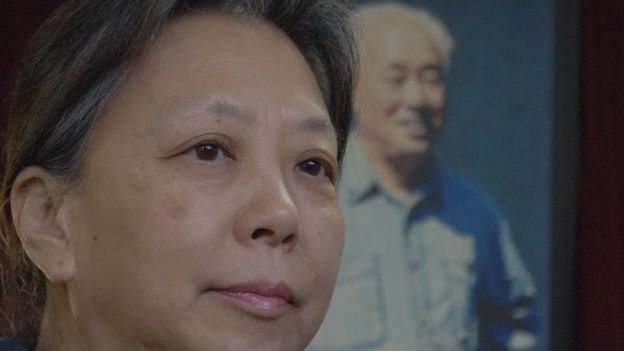
“What a miracle you all showed up here,” Zhao’s daughter, Wang Yannan, tells the small group of us who made it inside the courtyard.

Wang Yannan, the daughter of former leader Zhao Ziyang
Image captionWang Yannan hopes her father may one day be rehabilitated

China’s Communist Party has spent nearly 30 years trying to erase the events of 4 June 1989 from history and young people here have little knowledge or understanding of what happened that day. The story of Zhao Ziyang is proof those efforts still continue: the man who was the highest ranking Party official in the country at the time of those momentous events is now expunged from the record and, even in death, still regarded as a threat.

Every year, the family says, the number of people who come to pay their respects diminishes slightly. Some are stopped from entering when they arrive or – as Zhao Ziyang was for 16 years – prevented from travelling around the city.

“It’s been like this for many years. What else can we do about it?” Zhao’s son, Zhao Er’jun, is resigned to the hassle.

“Sometimes we go out and help people get in. This man used to be a secretary of my father’s – he was dragged into a dispute with the police outside. Even he was nearly prevented from coming in.”

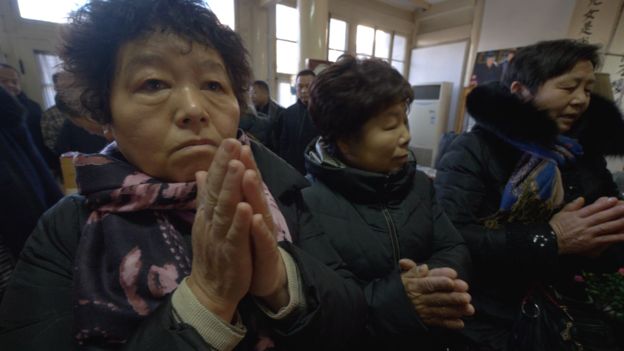
Mourners pay their respects in front of Zhao Ziyang’s tablet on the 14th anniversary of his death on Jan 17, 2019
Image captionSupporters pay their respects to Zhao Ziyang on the anniversary of his death

“Let’s talk in the room,” Er’jun adds, pointing to a tall building next to the courtyard. “There are face-recognition cameras set up over there, visitors’ faces and identities will be recorded. You got in this time, the next time it may be harder.”

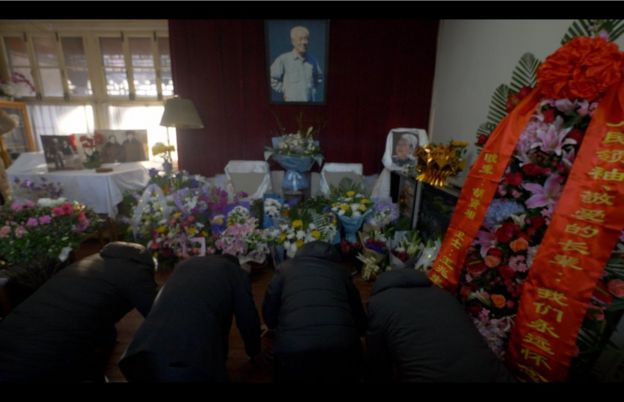
A trickle of people make their way into Zhao’s study, where his photograph, documents and possessions are displayed, alongside photographs of his late wife. It speaks of a loving family, proud of his achievements – Chinese premier, general secretary of the Chinese Communist Party and, before his purge, credited with driving crucial economic reform in China.

It’s already stuffed with flowers and burning incense. More flowers are being placed outside the door.

Most visitors tell us that they are “from his home town”. It might not be true in all cases, but it seems that you’re more likely to get past the guards by saying it. And they are here to keep not just his memory, but his principles alive.

Zhang Baolin, a former journalist, covered the years when Zhao brought wealth to much of China – but also drew criticism for corruption – and then defied his party by defending the student protests in Tiananmen.

He says: “Zhao Ziyang played such a significant role in opening up and reform. Huge progress was made within his time. So I think, to an old man like Zhao who has passed away so many years ago, we should pay our respects. [If his name] is missing in the commemoration of opening-up and reform, we think it’s very unfair.”

Mourners bow to the photographs of former leader Zhao Ziyang and his late wife Liang Boqi
Image captionSupporters prayed among flowers filling Zhao’s study

Zhao’s name is not only missing in Chinese commemorations, but – like nearly everything connected with the events in Tiananmen – from Chinese history books and virtually all official publications since 1989, when he was ousted from the Party. But those in the courtyard hope that won’t always be the case.

One visitor says: “I believe one day Zhao’s reputation will be rehabilitated, because history won’t be distorted for long. One day people will find out the truth. Yes, it’s not included in history textbooks. But in my home we talk about it all the time – I don’t want the next generation to forget.”

Zhao’s daughter Wang Yannan sighs, only cautiously optimistic that one day she might see the political rehabilitation of her father’s legacy.

“Yes, confidence is here. So is the hope. But reality is another thing.”

Zhao went to Tiananmen Square in 1989, knowing that Party hardliners were gaining the upper hand, and implored the students to leave; to save themselves and their future lives; to negotiate with the Party.

“We are already old, we do not matter any more,” he told them.

But nearly 30 years later, remembering Zhao – and his principles – matters more than ever to some.

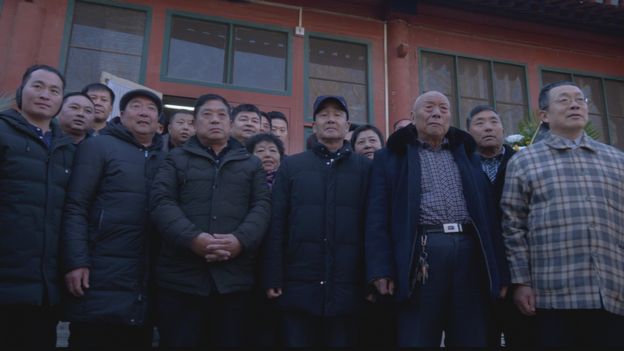
Visitors taking a group photo in front of the study of Zhao Ziyang
Image captionMost of the people who remember Zhao were alive in 1989 – few young people know of him
18/01/2019

Chinese nanny caught on home security camera ‘abusing’ 10-month-old infant

  • Video triggers police investigation and an online conversation among mothers about the struggles of combining career and caring for children
PUBLISHED : Friday, 18 January, 2019, 4:38pm
UPDATED : Friday, 18 January, 2019, 6:35pm

In the video, which is understood to have been recorded in Changsha, in the central province of Hunan, a woman in a black shirt can be seen hurling the child on to a sofa and holding him upside down before dropping him head first on to the floor.

According to the person who this week posted the video to Weibo, China’s version of Twitter, it was originally shared by a relative of the child to a closed chat group.

“The child’s parents wanted to report it to the police, but were not sure if this qualified for a police complaint. The nanny even wanted to settle it privately, so I posted the video for them,” she wrote.

The internet user who shared the video on Weibo said the infant’s parents had hired a friend of the child’s grandmother to take care of him in the morning while they were at work.

The nanny did not know there was a security camera in the flat

Local police said on Thursday they were still investigating whether the video was authentic.

Many women responded to the video on social media by talking about their own struggles in raising children.

“It’s best to take care of your child yourself. Old people sometimes lack patience, just like my mum. She won’t beat my child but will often ignore him. So I quit my job to look after him until he starts going to kindergarten,” one woman wrote in an online fo

“I can either find a job after my child grows up or start a business at home, but my parents would not allow me to work and my husband does not want to give up his high-paying job,” another wrote.

There has been a profusion of such cases in China where the number of housekeepers – including nannies and part-time cleaners – exceeded 25 million people in 2016, a rise of 9.3 per cent on the previous year, according to the Ministry of Commerce.

But the supply of nannies has failed to keep up with demand, fuelled by young families moving away from their home provinces to cities in search of work, along with changing attitudes as more women prioritise a career.

In Beijing, for example, the number of available nannies did not even meet half the demand in the capital last year, according to NetEase News.

Nearly 80 per cent of women born after 1995 want to be financially independent, according to a March 2018 survey by LinkedIn and L’Oreal in China.

In September last year a nanny in Datong, in the northern province of Shanxi, was captured by a hidden camera repeatedly hitting and slapping an eight-month-old baby while the parents were away.

Source: SCMP

18/01/2019

China upbeat about 2019 foreign trade growth: MOC

BEIJING, Jan. 17 (Xinhua) — China is confident in its ability to keep foreign trade growth stable while improving its quality this year despite greater external uncertainties, the Ministry of Commerce (MOC) said Thursday.

“The development of China’s foreign trade remains on a strong and solid foundation,” MOC spokesperson Gao Feng told a news conference.

The confidence derives from deepening supply-side structural reform, improvement in the country’s foreign trade structure and increasing internal impetus to growth, Gao said.

The ministry has unveiled a list of 30 key markets for foreign trade expansion this year, which will see China actively tap into the potential of emerging and developing economies related to the Belt and Road Initiative while continuing to explore the traditional markets in developed countries.

Gao said the ministry will offer enterprises greater support including trade promotion, public information services and government institutional safeguards for trade market diversification.

“We will roll out more measures in a targeted and timely manner to help foreign trade firms turn challenges into opportunities and achieve innovational development,” Gao said.

Commenting on the decline of China’s foreign trade growth in December, Gao said the growth in the fourth quarter was still within reasonable range despite the monthly fluctuation.

“The fluctuation was mainly caused by weaker demand in the international market and a high basis the previous year,” he said.

China’s import and export volume hit a historic high of 30.51 trillion yuan (about 4.5 trillion U.S. dollars) in 2018, up 9.7 percent year-on-year, official data showed.

Source:Xinhua

18/01/2019

Chinese vice premier meets German counterpart

CHINA-BEIJING-HAN ZHENG-GERMANY-MEETING (CN)

Chinese Vice Premier Han Zheng (R), also a member of the Standing Committee of the Political Bureau of the Communist Party of China (CPC) Central Committee, meets with German Vice Chancellor and Finance Minister Olaf Scholz in Beijing, capital of China, Jan. 17, 2019. Scholz is here to attend the second China-Germany High Level Financial Dialogue. (Xinhua/Chen Jianli)

BEIJING, Jan. 17 (Xinhua) — Chinese Vice Premier Han Zheng here on Thursday met with German Vice Chancellor and Finance Minister Olaf Scholz.

Han, also a member of the Standing Committee of the Political Bureau of the Communist Party of China Central Committee, expected the two sides to make good use of the bilateral high-level financial dialogue mechanism, implement the important consensus of the leaders of the two countries, and promote new achievements through cooperation in various fields.

Han also called on the two sides to jointly safeguard multilateralism and rule-based international order, and to become models and leaders for promoting mutual benefit, win-win cooperation and common development in the global arena.

Scholz said Germany is willing to strengthen pragmatic cooperation with China, implement the results reached by the consultations between the German and Chinese governments, jointly safeguard the multilateral trading system and promote the stability and prosperity of the world economy.

Scholz is here to co-chair the second China-Germany High Level Financial Dialogue with Chinese Vice Premier Liu He on Friday.

Source: Xinhua

18/01/2019

Xi Jinping inspects Tianjin

CHINA-TIANJIN-XI JINPING-INSPECTION (CN)

Xi Jinping, general secretary of the Central Committee of the Communist Party of China, Chinese president and chairman of the Central Military Commission, talks to academicians, specialists and teachers at Nankai University in Tianjin, north China, Jan. 17, 2019. Xi was on an inspection tour in Tianjin Thursday. (Xinhua/Xie Huanchi)

Source: Xinhua

17/01/2019

China watchdog bans officials from close ties with liquor giant Moutai

BEIJING (Reuters) – The anti-graft watchdog in China’s southwestern Guizhou province on Thursday banned officials and their family members from taking part in operations or using their position to influence sales for liquor giant Kweichow Moutai Co Ltd.

Guizhou-based Moutai is the world’s largest alcohol firm by market cap, valued at around $110 billion (£85.32 billion), and sells the pungent liquor baijiu for more than $200 per 500 ml bottle.

The brand has close ties to Chinese politics and has largely weathered a crackdown on luxury spending under President Xi Jinping, who has called on Communist Party officials to be frugal, upright and disciplined.

Officials, their spouses and children are prohibited from taking part in the operations of Moutai, according to new rules posted online by the Guizhou Discipline Inspection Commission, the provincial anti-corruption watchdog.

Cadres are also banned from using the power and influence of their position to acquire Moutai business licenses for people they have a “special relationship” with, or to raise sales targets and help facilitate resales at a profit, the rules said.

Cadres should “educate and properly manage” relatives and those close to them to avoid breaking the new rules, the document said.

Officials who engage in any form of business-related interaction with the company have to be recorded in a new registry and failing to do so will trigger a “serious” investigation, the watchdog said.

Moutai’s baijiu liquor is often a lubricant at official banquets and business dinners, and it was once hailed as helping China’s Red Army survive the tortuous Long March in the 1930s.

The company in October posted its weakest quarterly profit since 2015, depressing its shares and raising concerns about the luxury liquor market.

Moutai on Jan. 2 announced a higher than expected sales target for 2019, leading analysts to predict sustained stable growth in the medium-and-long run.

Reporting by Christian Shepherd; editing by Darren Schuettler

Source: Reuters

Law of Unintended Consequences

continuously updated blog about China & India

ChiaHou's Book Reviews

continuously updated blog about China & India

What's wrong with the world; and its economy

continuously updated blog about China & India