Archive for ‘China alert’

17/01/2019

Why are the Chinese buying fewer cars?

President Trump's Cadillac limousineImage copyrightGETTY IMAGES
Image captionThe fact that President Trump’s limousine is a Cadillac is said to have helped the US carmaker’s sales in China

If you’re selling Cadillacs in China, it helps that the US president is driven around in one.

Cao Chenyi, the boss of a Cadillac dealership near Shanghai, told me that customers know that Donald Trump’s presidential limousine is made by the US carmaker. He says they like the prestige.

But Mr Cao’s had a bad year. Demand dropped 30% in 2018. He’s had to shut five of the 11 dealerships his family business owned. Almost half, gone.

“The sales on every new vehicle is causing us to lose money. Basically the more we sell the more we lose,” he says.

Loss leaders are painful. Mr Cao has been forced to shift excess stock, and quickly. The red Cadillac he drove me around in is currently on sale at half price.
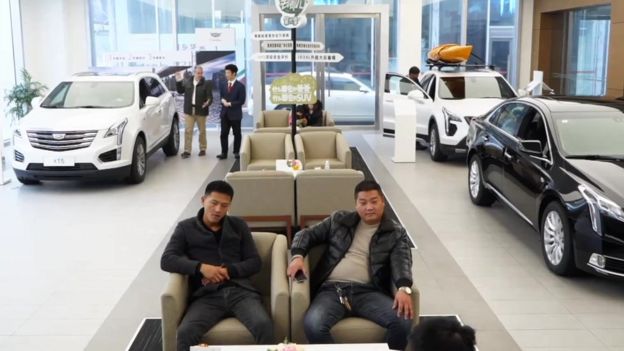
Cao Chenyi's Cadillac dealership near Shanghai
Image captionCao Chenyi’s family have had to close five of their dealerships – these customers did not make a purchase

Nationally, 2018 was a very hard year for the car industry in China, the world’s biggest car market.

Just over 22 million new cars were sold last year. But that’s a near 6% drop on 2017. The first fall in two decades.

Inside Mr Cao’s Cadillac showroom various models are side by side. An SUV at the back has a canoe on its roof rack.

I watched a group of three youngish men come in and sit down for the sales treatment. They didn’t buy.

They didn’t even have a good look inside the cars. Mr Cao thinks the main reason is a tax cut that has gone away.

“In 2018 the government cancelled the tax subsidy on car purchases, which was a shock to us,” he says.

This benefit has been gradually wound down. Others think a credit squeeze has caused the demand for cars to drop.
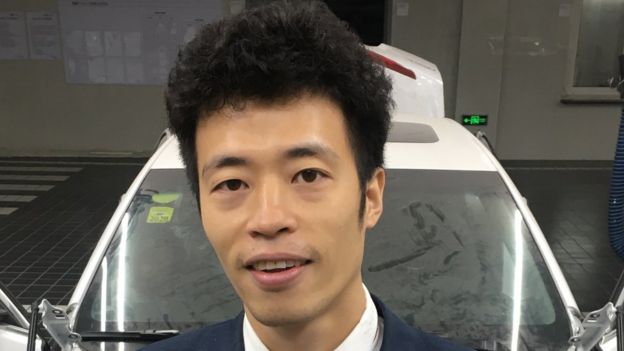
Cao Chenyi
Image captionCao Chenyi thinks that the end of a tax credit is the main reason behind falling car sales

After a decade of near doubling its debt – to almost 300% of China’s GDP – 2018 was the year that the government tried to deal with the aftermath of a credit crisis. That crisis was centred on peer-to-peer lending, known as P2P.

P2P lenders offer loans to individuals from a pool of funds supplied by other individuals and other businesses, thereby cutting out banks.

Cars and houses

Economist Andy Xie says the previously increasing national debt kept demand high, particularly in the property and car sectors.

“Now the property market has tipped over, and it’s affecting a lot of things,” he says.

So why is property so important?

“Auto sales are highly correlated to property sales,” Mr Xie says.

“When people buy property it seems they buy a car at the same time. So when the property market is not doing well the auto demand is down.”
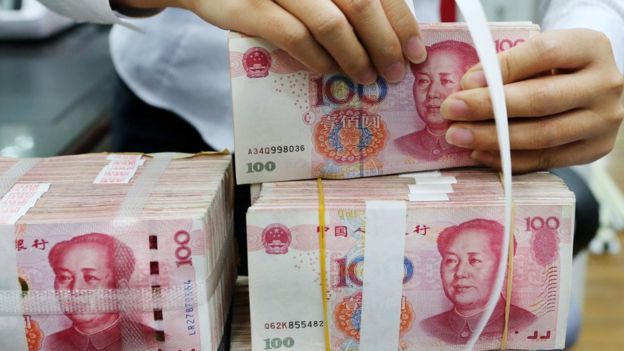
A woman holding bundles of yuan notesImage copyrightGETTY IMAGES
Image captionThe Chinese government is moving to reduce the country’s debt level

The collapse of many of the P2P lending platforms is thought to have had a significant impact on both house and car sales, because borrowed money was being used as down payments for both.

Mr Xie says the credit system “used to be lubricated by these guys” and suddenly that has stopped.

“They lent to people who could not pay back. [Borrowers] shifted their debt from one platform to another.”

He tells me he’s heard statistics suggesting one in four such borrowers “have no ability to pay back”.

Slowing economy

China’s car industry is also a key driver of industrial output and a barometer of consumer demand.

But growth in China’s economy is slowing, and the trade war with the US is starting to bite. Retail sales have slowed to a pace not seen for more than a decade.

A couple of hours away from the car dealership is a tiny hair salon, in the heart of Shanghai’s old west side.

Sun Qiang is the owner and haircutter-in-chief. For a few hours I sat and watched him deal with a handful of customers. First up were three women, two of whom had curlers in, and didn’t look happy to be there.
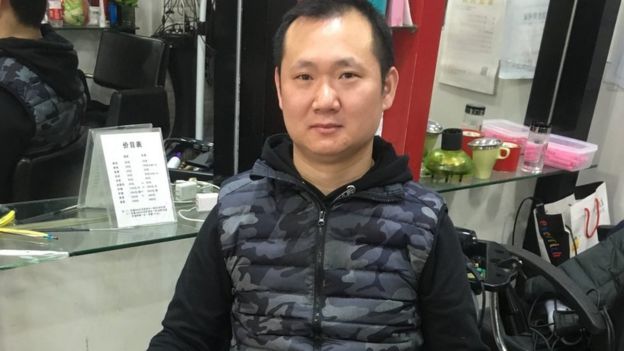
Sun Qiang
Image captionHairdresser Sun Qiang is saving money to pay for education and healthcare

He told me he’d cut my hair for 40 yuan ($6; £4.50). His place is at the bottom end of what you might call the barometer of China’s consumption.

But business isn’t dropping off. He is, though, a barber who also cuts women’s hair.

When it comes to cars he’d like a Chinese brand SUV. But it’s not likely any time soon. He doesn’t live that far from work and the buses are good. Plus he doesn’t want to borrow.

“I think some car dealers, they want to boost their sales, so they need such consumers who love to pay by loans,” he explains.

“But as a traditional Chinese person, I think we should only buy stuff that we can afford.”

Source: The BBC

17/01/2019

Beijing builds cybersecurity industrial park

BEIJING, Jan. 16 (Xinhua) — Beijing is building a national-level cybersecurity industrial park to boost the industry and tap into the potential of domestic tech companies.

Over 10 companies specialized in internet security have signed a contract to move into the park, which has two branches respectively in Haidian district and Tongzhou district, according to the Beijing Municipal Bureau of Economy and Information Technology.

Construction on the park started at the end of 2017. By 2020, the industrial output is expected to reach 100 billion yuan (about 14.5 billion U.S. dollars).

“We are actively advancing the project. Leading firms in cybersecurity from home and abroad will establish their headquarters in the park,” said Jiang Guangzhi, an official with the bureau.

As smart cities’ initiatives using information technology are rolling out in many cities in China, the demand for internet security infrastructure is high.

“The fact that many agencies and organizations are exploring digitization and information technology without sufficient security creates a lot of risks,” said Qi Xiangdong, a member of the Beijing municipal committee of the Chinese People’s Political Consultative Conference. The committee is currently holding its annual session.

“Beijing is the center for political activity, culture, international exchange and technological innovation, but it is also a big target for cyber attacks,” said Qi.

The 360 Enterprise Security Group said it found security loopholes in over half of the one million websites in Beijing. On a daily basis, over 9.55 million malware are detected and blocked from PC users.

The global average of security spending in IT is about 3.7 percent of the total IT spending, but the Chinese average is only 1.1 percent, Qi said.

Insufficient investment in cybersecurity may lead to serious consequences, said Tong Liqiang, also a member of the committee and former director of the Beijing cyber information office.

“A full-fledged internet security shield is still not yet in place, but it is needed to service the development of the IT industry, tackle the security challenges and meet the public demand,” said Tong.

Source: Xinhua

17/01/2019

Russia, China enjoy confident progressive development of relations in all areas: Lavrov

MOSCOW, Jan. 16 (Xinhua) — Russia and China enjoy a “very confident progressive development of relations in all areas,” Russian Foreign Minister Sergei Lavrov said Wednesday.

The two countries reached a record trade turnover in 2018 but this is not a limit, as Russia and China have ambitious plans discussed by President Vladimir Putin and President Xi Jinping at various meetings, Lavrov said at his annual press conference.

According to China’s customs authority, trade turnover between China and Russia surged by 27.1 percent to a record high of 107.06 billion U.S. dollars last year.

The two governments have identified about 70 projects worth a total of more than 100 billion dollars in various fields, including nuclear energy, agriculture, transport and space cooperation, Lavrov said.

He specially mentioned the coordination of the Russian and Chinese global navigation systems GLONASS and BeiDou.

“So our prospects in trade, economic and investment areas are very, very significant,” the top Russian diplomat said.

Lavrov also praised the close cooperation and coordination between Moscow and Beijing in international affairs, including within BRICS (Brazil, Russia, India, China and South Africa), the Shanghai Cooperation Organization and the United Nations, as well as harmonizing the Eurasian Economic Union with the Belt and Road Initiative.

Russia and China have common approaches to resolving conflicts solely by political methods on the basis of international law and dialogue, including in Syria, elsewhere in the Middle East and on the Korean Peninsula, Lavrov said.

“The friendship between Russia and China is not aimed against anyone,” Lavrov stressed.

Russia and China are friends because they are neighbors, have many common interests, are strategic partners in international affairs and equally see the need to make the world more stable, more secure and more democratic, he added.

Source: Xinhua

17/01/2019

Xi orders efforts to promote social justice, ensure people’s wellbeing

CHINA-BEIJING-XI JINPING-CENTRAL CONFERENCE ON POLITICAL AND LEGAL WORK (CN)

Chinese President Xi Jinping, also general secretary of the Communist Party of China (CPC) Central Committee and chairman of the Central Military Commission, delivers a speech at the central conference on political and legal work in Beijing, capital of China. The conference was held in Beijing on Tuesday and Wednesday. (Xinhua/Yao Dawei)

BEIJING, Jan. 16 (Xinhua) — President Xi Jinping has ordered efforts to promote modern social governance, push forward reforms and develop a better force in political and legal work.

Xi, also general secretary of the Communist Party of China (CPC) Central Committee and chairman of the Central Military Commission, made the statement in a speech to the central conference on political and legal work held in Beijing Tuesday and Wednesday.

He instructed law enforcement and judicial agencies to enhance their revolutionary spirit, standardize their practices and improve competence.

Wang Huning, a member of the Standing Committee of the Political Bureau of the CPC Central Committee and a member of the Secretariat of the CPC Central Committee, and Vice Premier Han Zheng, also a member of the Standing Committee of the Political Bureau of the CPC Central Committee, attended the meeting.

Xi demanded more efforts to enhance law enforcement in key areas that matter to the immediate interests of the public so that they can be provided with cleaner air and water, safer food and faster traffic in a more harmonious society.

Xi underlined the need to improve the law-based social governance model under which Party committees exercise leadership, the government assumes responsibility, non-governmental actors provide assistance and the public gets involved. Thus, a social governance system based on collaboration, participation and common interests can be established, he said.

Xi stressed the principle of rule of law so that “law-abiding members of society can feel proud and elated, while lawbreakers shall find it difficult to move one step.”

Xi also spoke of the need to make more efforts on the development of crime prevention and control system, which is multifaceted and features IT application.

Describing mafia-like gangs as “the cancer of society”, Xi vowed to maintain high-handed pressure and continue to crack down on such crimes to achieve a three-year term target.

Xi urged law enforcement and judicial agencies to push for breakthrough development at a higher level and build a functional system that is optimized, coordinated and efficient.

On plans to improve the system of power checks and supervision, Xi said efforts should be focused on prominent problems that prompt the strongest public reaction and resolutely guard against slack law enforcement, miscarriage of justice, breaking the law while in charge of law enforcement and judicial corruption.

Xi called on law enforcement and judicial agencies to provide convenient, efficient, smart and targeted public services that are equitable and beneficial for all.

Efforts should be made to accelerate the establishment of legal service networks that can offer full services accessible at all times and for people from different regions, Xi noted.

Xi also stressed stepping up the building of a safety protection system to safeguard the legitimate rights and interests of the country’s overseas institutions and working staff.

Greater emphasis should be placed on strengthening competence of law enforcement and judicial officials, Xi said, urging Party organizations and leading officials at all levels to support judicial organs in exercising power in a law-based, independent and impartial way.

In his concluding remarks, Guo Shengkun, a member of the Political Bureau of the CPC Central Committee and head of the Commission for the Political and Legal Affairs of the CPC Central Committee, said it is a primary political task to study and implement the spirit of Xi’s speech.

Source: Xinhua

16/01/2019

Pentagon warns of global power play behind Chinese projects such as Belt and Road Initiative

  • US Defence Department highlights range of military and non-military challenges to US strategic interests from Beijing’s favoured projects
PUBLISHED : Wednesday, 16 January, 2019, 6:03pm
UPDATED : Wednesday, 16 January, 2019, 6:20pm

Monday’s report assessed China’s military and non-military expansion efforts, such as the Belt and Road Initiative and the “Made in China 2025” industrial strategy, and their implications for America around the world.

It coincided with another detailed assessment by the US Defence Intelligence Agency on Tuesday, which said China’s drive to acquire cutting-edge weaponry – including nuclear bombers and a space-based early warning system – was intended to establish itself as a global military power.

In December 2017 US President Donald Trump shifted the focus of US national security policy away from terrorism to make “great power rivalry” with China and Russia his main concern.

Since then the White House has taken a number of measures to counter Beijing, including the multibillion-dollar trade war.

“China’s most substantial expansion of its military access in recent years has occurred in its near-abroad, where territorial disputes in the East and South China Seas persist, but China has also expanded its military operations further from the Chinese mainland,” said the US Defence Department report“China’s pursuit of expanded global military access is thus driven both by new PLA missions to protect overseas interests and by a shifting approach to potential contingencies along its maritime periphery,” it said.

The report, mandated by the US National Defence Authorisation Act for the financial year of 2018, reflects increasing hawkish views among the Trump administration.

The acting defence secretary Patrick Shanahan has recently called for an effort to “sharpen and strengthen US competitiveness”.

Although this year marked the 40th anniversary of the normalisation of the US-China relations, recent months have seen growing suspicion and mistrust between the two sides.

Despite a temporary trade ceasefire he reached with Xi last month, Trump has shown little sign of softening his hardline approach towards China.

The report also raised concerns about Beijing’s economic and infrastructure investments and its acquisition of military and dual-use technology.

In particular, it warned that the Belt and Road Initiative, President Xi Jinping’s push for a transcontinental infrastructure and trade network, and the “21st century Digital Silk Road” were designed to serve “greater strategic purposes”.

Echoing widespread criticism about Beijing’s “predatory loans” and “debt-trap diplomacy”, it cited 17 cases where Chinese investment projects have had a detrimental effect on the host country.

“China’s attempts to gain veto authority over other countries’ decisions, and its coercion directed at US allies and partners in particular, will likely threaten US posture and access if not addressed,” it warned.

The Digital Silk Road strategy, announced by Xi in May 2017 as a plan to boost connectivity in the digital economy, has received little international attention so far compared with the Belt and Road Initiative.

Beijing has revealed few details so far, but Xi said the initiative should involve cooperation and development in “frontier areas”, such as the digital economy, artificial intelligence, nanotechnology, and quantum computing, as well as areas such as big data, cloud computing, and “smart cities.”

The report said Beijing was actively using state-owned or state-affiliated enterprises – including China Telecom, China Unicom, China Mobile, Huawei, and ZTE – to push for forced technology transfer and accelerate its race for tech supremacy with the US.

Huawei, the world’s largest telecoms equipment supplier, has suffered major setbacks in its global push to build 5G infrastructure recently and its alleged ties with the Chinese government and military have prompted increasing suspicion around the world.

Despite a seemingly bipartisan support for a tougher approach on Beijing in the US and frequent hostile comments by Trump administration officials, an article published by the Brookings Institute on Tuesday expressed doubts about the White House’s policies towards China.

It said it was not clear “whether the Trump administration’s objectives are to compel China to alter its behaviour in specific areas of concern, to ‘decouple’ the American economy from China’s through supply chain diversification, or to obstruct China’s rise”.

The article was written by Jeffrey Bader, an Asia adviser to US presidents Barack Obama and Bill Clinton, along with senior Brookings fellows David Dollar and Ryan Hass.

“There also is little clarity on the Trump administration’s strategy for achieving its objectives … Such comments reflect an attitude, but not a strategy,” they said.

Source: SCMP

16/01/2019

Senior official stresses Party building at colleges

CHINA-BEIJING-WANG HUNING-PARTY BUILDING AT COLLEGES (CN)

Wang Huning, a member of the Standing Committee of the Political Bureau of the Communist Party of China (CPC) Central Committee and a member of the Secretariat of the CPC Central Committee, speaks during a meeting on Party building at colleges across the country, in Beijing, capital of China, Jan. 15, 2019. (Xinhua/Yao Dawei)

BEIJING, Jan. 15 (Xinhua) — Senior Communist Party of China (CPC) official Wang Huning on Tuesday called for the full implementation of the Party’s education policy to advance Party building and ideological and political work at colleges.

Wang, a member of the Standing Committee of the Political Bureau of the CPC Central Committee and a member of the Secretariat of the CPC Central Committee, made the remarks at a meeting on Party building at colleges across the country.

Enhancing the Party’s political building should be taken as the overarching principle to push forward the colleges’ Party building work with stronger guidance in both politics and value, Wang said.

He also called for the innovative development of the ideological and political work of colleges and more efforts to strengthen the professional ethics and competence of teachers.

The meeting was presided over by Vice Premier Sun Chunlan, who is a member of the Political Bureau of the CPC Central Committee.

Source: Xinhua

16/01/2019

Economic Watch: Private enterprises show great confidence in foreign trade

GUANGZHOU, Jan. 15 (Xinhua) — China’s import and export volume in 2018 rose 9.7 percent year on year to more than 30 trillion yuan (4.4 trillion U.S. dollars), a record high amid the complex circumstances mainly thanks to the country’s robust ang resilient private sector.

“Private enterprises contributed more than half to China’s foreign trade growth in 2018, a bright spot of China’s foreign trade development,” said Li Kuiwen, spokesperson of the General Administration of Customs.

This indicates the private sector’s stronger presence in driving China’s foreign trade.

Song Ziqiang, head of the import and export department of Kingfa Technology Co., Ltd., said his company had achieved over 10 percent growth in both imports and exports in 2018.

“In particular, our exports of biodegradable plastics, a high value-added new material, rose 117 percent year on year, accounting for about a third of such products in the European market,” Song said.

As a private new material enterprise in the southern Guangdong Province, Kingfa uses more than 4 percent of the company’s annual sales revenue for research and development in high-performance new materials such as special plastics and carbon fiber.

“With high-tech innovation and government support for private companies and the real economy, we are confident to realize high-quality development this year,” said Song.

New trade forms and business models, including cross-border e-commerce, are showing greater vitality, according to Gu Xueming, head of the Chinese Academy of International Trade and Economic Cooperation under the Ministry of Commerce.

“The effect of China’s foreign trade transformation and structural adjustment will be further demonstrated,” Gu said.

The official data shows that China’s total retail imports and exports via cross-border e-commerce management platforms of customs increased by 50 percent in 2018.

“Tariff cuts have attracted more overseas quality commodities to China, and consumer goods for daily use have become one of the import priorities,” said Huang Hongying, vice president of Vipshop Holdings Ltd., a Chinese online discount retailer.

“The expanded imported consumer goods market brings new opportunities for e-commerce platforms. Our foreign purchases are estimated to exceed 10 billion yuan in the future,” Huang said.

China’s home appliance marker Galanz exported its products to more than 70 countries and regions along the Belt and Road in 2018. About 3 million microwave ovens were exported. Demands in Southeast Asia have increased significantly, according to Liang Zhaoxian, president of the company.

Domestic appliances are one of China’s major export products. Under the Belt and Road Initiative, the company plans to build more branches along the routes and bring more quality products and services to customers, he said.

China’s robust economy and improved services have also provided a strong impetus for foreign companies to invest in the country. More than 60,000 foreign-funded enterprises were set up in China last year, up 69.8 percent compared with 2017, according to the Ministry of Commerce.

In 2018, Guangdong, a major hub for foreign trade, attracted tens of billions of dollars of investment in petrochemical projects from Germany chemical company BASF SE and U.S. energy giant ExxonMobil. Foreign companies including Toyota, Shell and Hitachi also expanded their investment and production in the province.

“Our efforts in boosting foreign capital use and creating a better business environment have made a significant contribution to Guangdong’s stable development of foreign trade,” Yang Yong, deputy director of the Guangzhou Municipal Bureau of Commerce.

Source: Xinhua

16/01/2019

Xi’s article on building ranks of high-quality officials to be published

BEIJING, Jan. 15 (Xinhua) — An article by President Xi Jinping on building a contingent of high-quality officials who are loyal, clean and have a strong sense of responsibility, will be carried by the second issue of Qiushi Journal, to be published on Wednesday.

Xi, also general secretary of the Communist Party of China (CPC) Central Committee and chairman of the Central Military Commission, says in the article that to unite and lead people to reach the two centenary goals and realize the Chinese Dream of national rejuvenation, the Party’s organizational line in the new era must be comprehensively implemented.

The standard of both integrity and ability must be upheld, and the appointment of officials should be fair, reads the article carried by Qiushi Journal, the flagship magazine of the CPC Central Committee.

In the article, Xi also asks for broader vision in appointing officials and more efforts to inspire officials’ enthusiasm in their work.

Source: Xinhua

16/01/2019

Peng Liyuan attends performance with Finnish first lady

CHINA-BEIJING-PENG LIYUAN-JENNI HAUKIO-PERFORMANCE (CN)

Peng Liyuan (R, front), the wife of Chinese President Xi Jinping, attends a show including poetry reading and musical performances with Jenni Haukio, wife of Finnish President Sauli Niinisto, in Beijing, capital of China, Jan. 15, 2019. (Xinhua/Zhai Jianlan)

BEIJING, Jan. 15 (Xinhua) — Peng Liyuan, the wife of Chinese President Xi Jinping, attended a performance with Jenni Haukio, wife of Finnish President Sauli Niinisto, on Tuesday.

The show, which included poetry reading and musical performances, was held in the stylish bookstore Page One situated in the Qianmen area, a significant symbol of old Beijing.

After having strolled around the bookstore and learning about the history of the bookstore and the surrounding block, Peng and Haukio enjoyed wonderful performances on the top floor. Peng also briefed Haukio on the history and recent renovation of the historic district of Dashilar.

During the show, students majoring in Finnish read Haukio’s award-winning poems, catching her by surprise.

Young ladies dressed in ancient costumes sang traditional Chinese poems with the accompaniment of piano and Chinese zither, a traditional Chinese instrument.

The performance ended with a violinist and a pianist playing a piece work composed by Finnish composer Jean Sibelius.

The show was performed by teachers and students from the Beijing Foreign Studies University and the China Conservatory of Music.

Haukio is in Beijing accompanying President Niinisto who is paying a state visit to China from Sunday to Wednesday.

Source: Xinhua

15/01/2019

Canadian’s death sentence in China ‘horrific’, family says

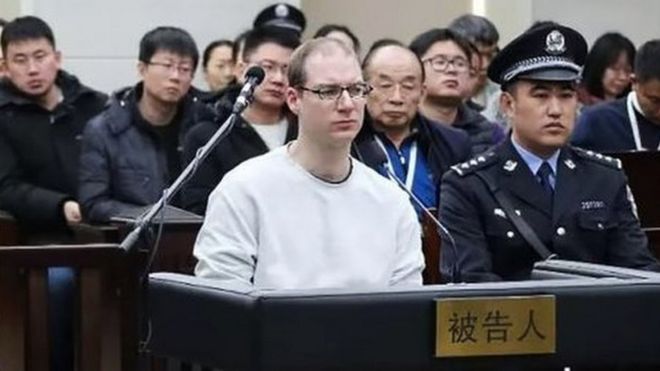
Robert Lloyd Schellenberg (centre) listens during his retrial in Dalian's court. Photo: 14 January 2019Image copyrightAFP/GETTY IMAGES
Image captionRobert Lloyd Schellenberg was sentenced to jail last year but had his case suddenly reviewed

The family of a Canadian man who has been sentenced to death in China say their “worst fears” have been realised.

Robert Lloyd Schellenberg was given a 15-year jail term in November but, on Monday, a court said the sentence for drug smuggling was too lenient.

The ruling is likely to worsen a diplomatic row between the countries.

Last month, Canada arrested a top official at the Chinese telecoms giant Huawei, Meng Wanzhou, on a request from the United States.

The detention of Ms Meng, 46, last month angered China and soured its relations with both Canada and the US.

Following Schellenberg’s death sentence, Canada has updated its travel advice for China, urging citizens to “exercise a high degree of caution due to the risk of arbitrary enforcement of local laws”.

Schellenberg’s aunt, Lauri Nelson-Jones said the death sentence was “a horrific, unfortunate, heartbreaking situation”.

“It is our worst case fear confirmed,” she added. “It is rather unimaginable what he must be feeling and thinking.”

Canadian Prime Minister Justin Trudeau condemned the ruling.

“It is of extreme concern to us as a government, as it should be to all our international friends and allies, that China has chosen to begin to arbitrarily apply the death penalty,” he said in a statement.

China’s foreign ministry said it was “strongly dissatisfied” with Mr Trudeau’s remarks, and said Canada should respect China’s sovereignty.

Schellenberg has 10 days to launch an appeal and his lawyer told Reuters news agency that he would probably do so.

What is Schellenberg’s case about?

The Canadian, who is believed to be 36, was arrested in 2014 and accused of planning to smuggle almost 500lb (227kg) of methamphetamine from China to Australia.

He was sentenced to 15 years in prison in November but, following an appeal, a high court in the north-eastern city of Dalian on Monday sentenced him to death.

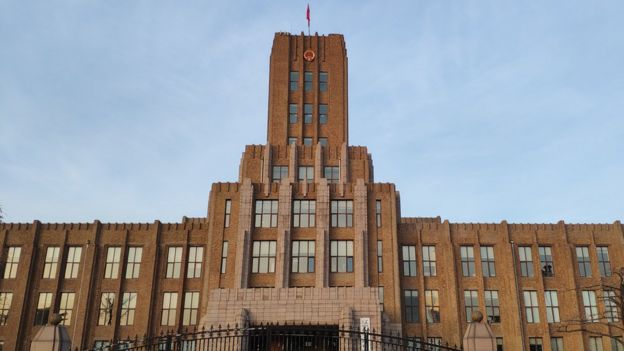
The Dalian Intermediate People's CourtImage copyrightGETTY IMAGES
Image captionThe court in north-eastern China where Schellenberg’s case was reviewed

“I am not a drug smuggler. I came to China as a tourist,” Schellenberg said just before the verdict was announced, the AFP news agency reports.

China is believed to execute more people annually than any other country, but is highly secretive about the number.

Human rights group Amnesty International puts the figure in the thousands – more than the rest of the world’s nations put together.

A number of foreigners have been executed for drug-related offenses in the past, including British man Akmal Shaikh, who was executed in 2009 despite claims he was mentally ill, and an appeal for clemency from the UK prime minister.

What’s the bigger picture?

Relations between China and Canada have deteriorated rapidly since the arrest of Ms Meng in Vancouver on 1 December.

She was granted bail by a Canadian court several days later but remains under constant surveillance and must wear an electronic ankle tag.

Ms Meng, who is the daughter of Huawei’s founder, is accused in the US of using a subsidiary of the company called Skycom to evade sanctions on Iran between 2009 and 2014.

She denies any wrongdoing and says she will contest the allegations.

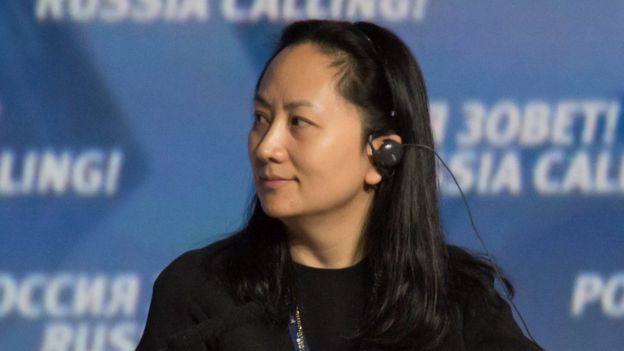
Huawei executive Meng Wanzhou. File photoImage copyrightREUTERS
Image captionMeng Wanzhou is the daughter of Huawei’s founder

In the weeks that followed her arrest China detained two other Canadian citizens.

Former diplomat Michael Kovrig and businessman Michael Spavor face accusations of harming national security.

China has denied the detention of the two men is tied to Ms Meng’s arrest, but many analysts believe it is a tit-for-tat action.

Donald Clarke, a specialist in Chinese law at George Washington University, said that Schellenberg’s death sentence appeared to be “an unprecedented step in China’s diplomacy”.

“I have seen cases I considered unjust before, but I cannot recall a previous case that looked so clearly unconnected to the defendant’s guilt or innocence,” Prof Clarke told the BBC’s Chinese service.

China began working hard to push Schellenberg’s case to international prominence, taking the highly unusual step of inviting foreign journalists into the court, the BBC’s John Sudworth in Beijing reports.

And despite the Canadian’s insistence that he is innocent, his retrial lasted just a day, with his death sentence being announced barely an hour after its conclusion, our correspondent says.

An editorial in the nationalist state-backed Chinese newspaper Global Timeson Tuesday said “unreasonable speculation” in Western media linking his case to Ms Meng’s showed “rude contempt toward Chinese law”.

“The trial will also send the message that China won’t yield to outside pressure in implementing its law,” it said.

However, back in December, the editor of the Global Times warned that China would “definitely take retaliatory measures against Canada” if Ms Meng were not released.

Hu Xijin said in a video posted on the Global Times website: “If Canada extradites Meng to the US, China’s revenge will be far worse than detaining a Canadian.”

Law of Unintended Consequences

continuously updated blog about China & India

ChiaHou's Book Reviews

continuously updated blog about China & India

What's wrong with the world; and its economy

continuously updated blog about China & India