Archive for ‘China alert’

04/01/2019

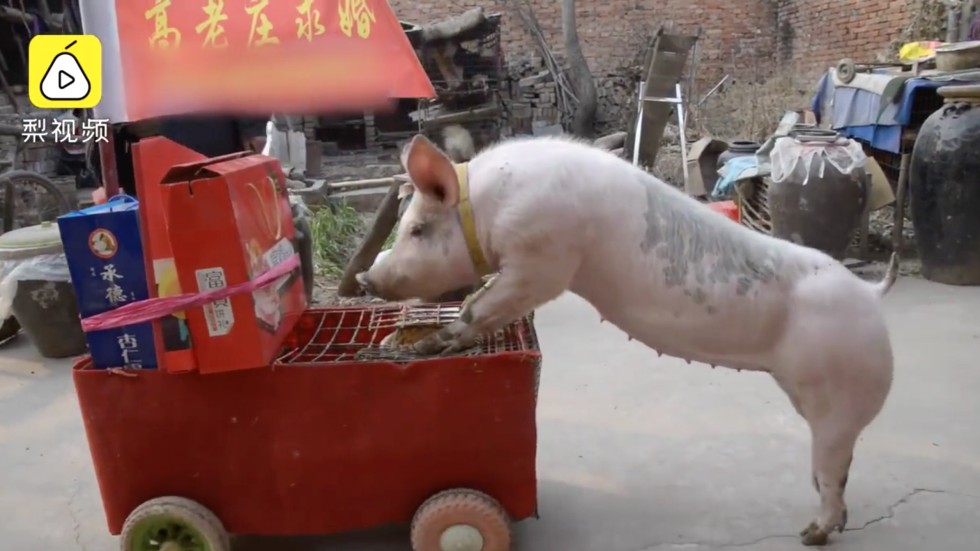
Is this China’s cleverest pig? Farmer trains porker to pull wedding carts

  • Wang Dingxuan has been training animals for past 17 years
  • 75-year-old mother even uses his favourite pig as a private taxi
PUBLISHED : Friday, 04 January, 2019, 4:08pm
UPDATED : Friday, 04 January, 2019, 4:08pm

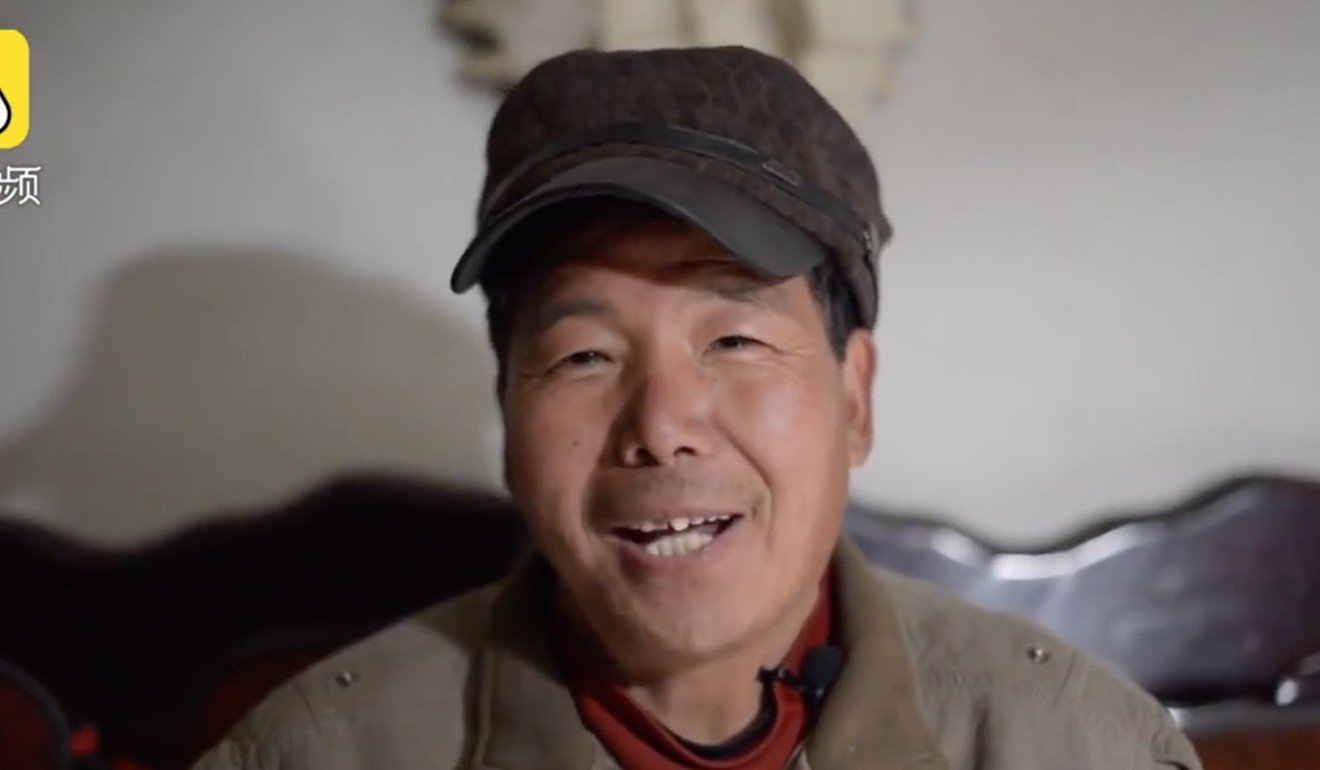
Wang Dingxuan, 54, said his star performer was a pig that he had trained to jump over hurdles and pull wedding carts – in return for a handful of treats.

Over the years, Wang has built up a strong bond with his animals, he said in an interview published on Pearvideo.com.

“I let the pig live in my house,” he said. “We’ve developed a close relationship.”

The farmer, from the city of Yanshi in Henan province, said he had always loved animals and decided to start training them after seeing a dog perform tricks on a Western television show.


After practising for several years, Wang set up the Yanshi City Happy Everyday Pet Performance Group in 2007.

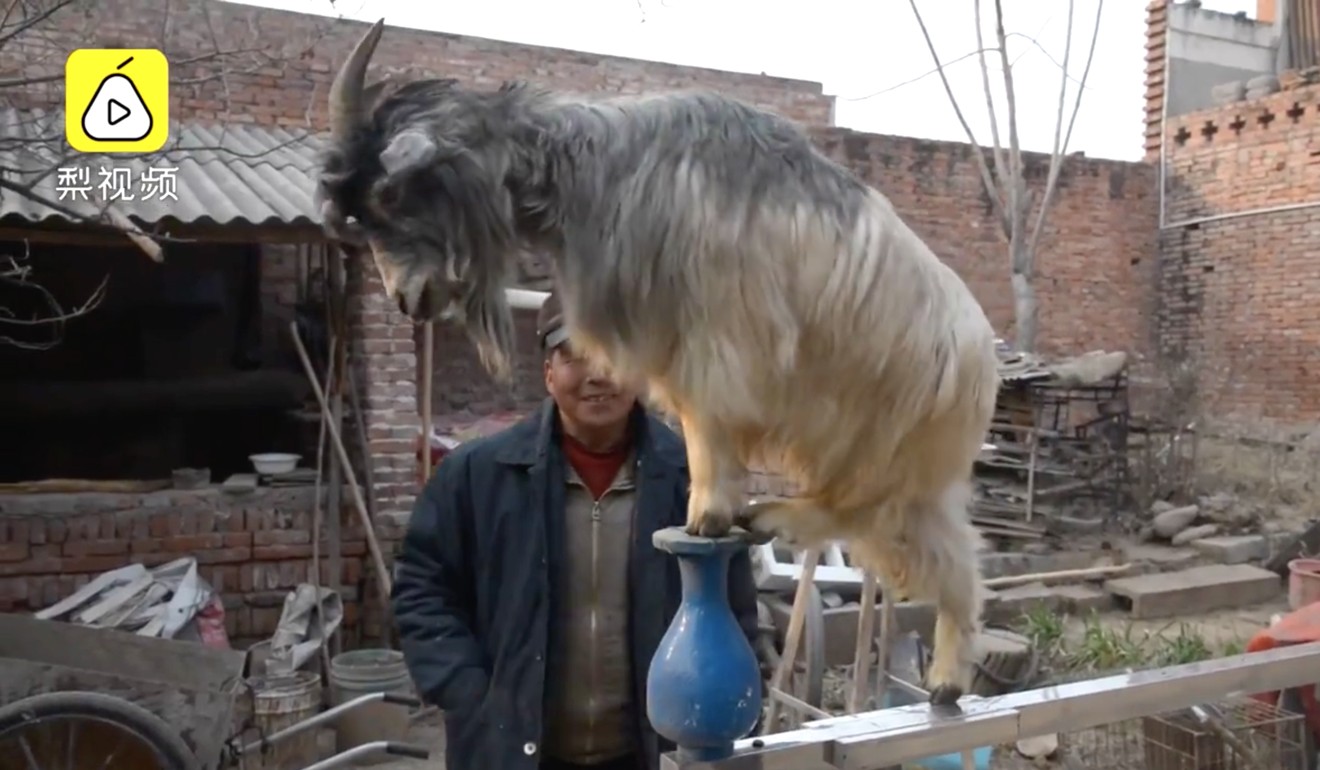
The show features a number of animals, including a pig, dog, goat and pigeon. Footage of a goat walking along a narrow plank became a hit on social media.

“A man from Shandong saw my animals and wanted to buy my pig for more than 10,000 yuan (US$1,450),” Wang said. “I turned him down, but said we were willing to perform for him.”

Although he is now a big hit, Wang said his family was not supportive in the early days.

“They said I should be working in the daytime rather than playing with my animals,” he said. “So I trained my animals at night.”

His persistence worked, and his 75-year-old mother can now often be seen riding the pig on the streets of Yanshi.

04/01/2019

China, Ethiopia agree to deepen cooperation

ETHIOPIA-ADDIS ABABA-WANG YI-ETHIOPIAN PRESIDENT-MEETING

Ethiopian President Sahle-Work Zewde (R) meets with Chinese State Councilor and Foreign Minister Wang Yi in Addis Ababa, capital of Ethiopia, Jan. 3, 2019. (Xinhua/Zhang Yu)

ADDIS ABABA, Jan. 3 (Xinhua) — Ethiopian President Sahle-Work Zewde met with Chinese State Councilor and Foreign Minister Wang Yi here on Thursday, with both sides highlighting the importance of further strengthening bilateral ties.

The Ethiopian government and all sectors of the society are committed to further strengthening cooperation with China, and look forward to a more robust relationship between the two countries, Sahle-Work said during the meeting held at the Ethiopian Presidential Palace in Addis Ababa.

The president also affirmed Ethiopia’s readiness to continue to actively support and participate in cooperation under the Belt and Road Initiative.

Ethiopia and China have consensus and common interests in protecting the world order from shocks of unilateralism, Sahle-Work said, expressing her hope that the two countries would continue to strengthen coordination and cooperation in the United Nations and on other international affairs.

For his part, Wang said that the development of China and Ethiopia will strengthen the developing countries as a whole and enhance the capability of preserving world peace and stability.

Wang said he believes that the Ethiopian government and people have the wisdom to explore a development path which is effective and is in line with Ethiopia’s conditions.

China is willing to be a long-term and reliable partner while Ethiopia is developing the country and rejuvenating the nation, Wang said.

Both sides will implement the outcomes of the Forum on China-Africa Cooperation Beijing Summit held in September 2018, strengthen cooperation under the Belt and Road Initiative platform, and take it as an opportunity to push forward mutually beneficial cooperation in various fields, Wang said.

Wang said he hopes that Ethiopia will continue to play the role of promoting the overall China-Africa cooperation.

03/01/2019

China says detained Canadians ‘without a doubt’ violated the law

BEIJING (Reuters) – China’s top prosecutor said on Thursday that two Canadians detained after Canada arrested a Chinese technology company executive had “without a doubt” violated the law.

Authorities in Beijing had previously said the two men, Michael Kovrig, a former diplomat and an adviser with the International Crisis Group (ICG) think-tank, and businessman Michael Spavor, were suspected of endangering state security.

“Without a doubt, these two Canadian citizens in China violated our country’s laws and regulations, and are currently undergoing investigation according to procedure,” Zhang Jun, China’s prosecutor general, said.

Zhang said the investigation process had been handled “strictly” according to law when asked by Reuters at a briefing when the two men might be charged. He did not elaborate.

The two were detained after Canadian police arrested Huawei Technologies Co Ltd’s chief financial officer Meng Wanzhou on Dec. 1 in Vancouver, at the request of the United States.

U.S. prosecutors have accused her of misleading banks about transactions linked to Iran, putting the banks at risk of violating sanctions.

The Chinese government has only given vague details about the detention of the two Canadians, and it has not drawn a direct link to Meng’s arrest. It has demanded that Canada free her and threatened unspecified consequences if it does not.

Canada has said several times it saw no explicit link between the arrest of Meng, the daughter of Huawei’s founder, and the detentions of Kovrig and Spavor.

But Beijing-based Western diplomats and former Canadian diplomats have said they have no doubt the cases are linked.

Canada has said the detentions are unacceptable and U.S. Secretary of State Mike Pompeo has said China should free the men.

Under Chinese criminal procedure law, special forms of detention and interrogation can be used for state security suspects.

China touts the rule of law, but its judicial system is tightly controlled by the ruling Communist Party.

Rights groups say conditions in Chinese detention facilities are often basic and can be harsh, with lack of legal representation and due process compounding worries about treatment.

03/01/2019

China Moon mission lands Chang’e-4 spacecraft on far side

China says it has successfully landed a robotic spacecraft on the far side of the Moon, the first ever such attempt and landing.

At 10:26 Beijing time (02:26 GMT), the un-crewed Chang’e-4 probe touched down in the South Pole-Aitken Basin, state media said.

It is carrying instruments to analyse the unexplored region’s geology, as well to conduct biological experiments.

The landing is being seen as a major milestone in space exploration.

There have been numerous missions to the Moon in recent years, but the vast majority have been to orbit, fly by or impact. The last crewed landing was Apollo 17 in 1972.

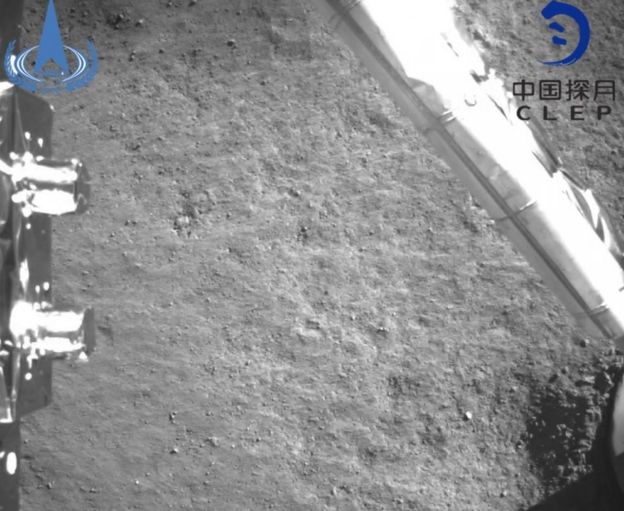
First pictures from the surfaceImage copyrightEPA/CNSA
Image captionAll pictures and data have to be bounced off a separate satellite
Presentational white space

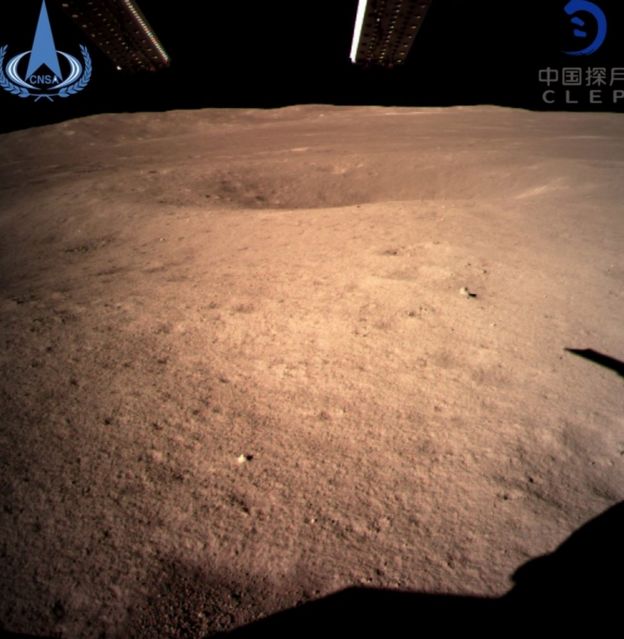
The Chang’e-4 probe has already sent back its first pictures from the surface, which were shared by state media.

With no direct communication link possible, all pictures and data have to be bounced off a separate satellite before being relayed to Earth.

Why is this Moon landing so significant?

Previous Moon missions have landed on the Earth-facing side, but this is the first time any craft has landed on the unexplored and rugged far side.

Ye Quanzhi, an astronomer at Caltech, told the BBC this was the first time China had “attempted something that other space powers have not attempted before”.

First pictures from the surfaceImage copyrightEPA/CNSA
Image captionThe far side is not visible from the Earth due to “tidal locking”
Presentational white space

The Chang’e-4 was launched from Xichang Satellite Launch Centre in China on 7 December; it arrived in lunar orbit on 12 December.

The Chang’e-4 probe is aiming to explore a place called the Von Kármán crater, located within the much larger South Pole-Aitken (SPA) Basin – thought to have been formed by a giant impact early in the Moon’s history.

“This huge structure is over 2,500km (1,550 miles) in diameter and 13km deep, one of the largest impact craters in the Solar System and the largest, deepest and oldest basin on the Moon,” Andrew Coates, professor of physics at UCL’s Mullard Space Science Laboratory in Surrey, told the BBC.

The event responsible for carving out the SPA basin is thought to have been so powerful, it punched through the Moon’s crust and down into the zone called the mantle. Researchers will want to train the instruments on any mantle rocks exposed by the calamity.

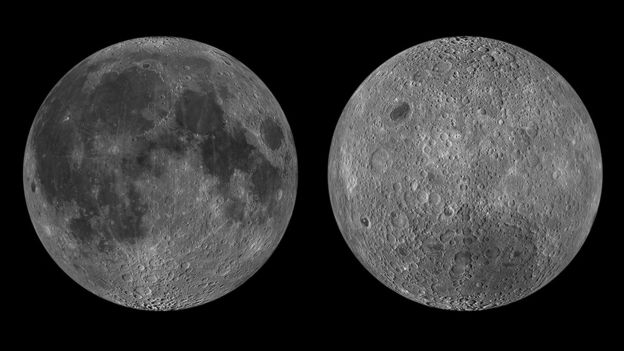
Near side and far side of MoonImage copyrightNASA
Image captionThe near side (L) and far side (R) of the Moon have some key differences

The science team also hopes to study parts of the sheet of melted rock that would have filled the newly formed South Pole-Aitken Basin, allowing them to identify variations in its composition.

A third objective is to study the far side regolith, the broken up rocks and dust that make up the surface, which will help us understand the formation of the Moon.

What else might we learn from this mission?

Chang’e-4’s static lander is carrying two cameras; a German-built radiation experiment called LND; and a spectrometer that will perform low-frequency radio astronomy observations.

Scientists believe the far side could be an excellent place to perform radio astronomy, because it is shielded from the radio noise of Earth. The spectrometer work will aim to test this idea.

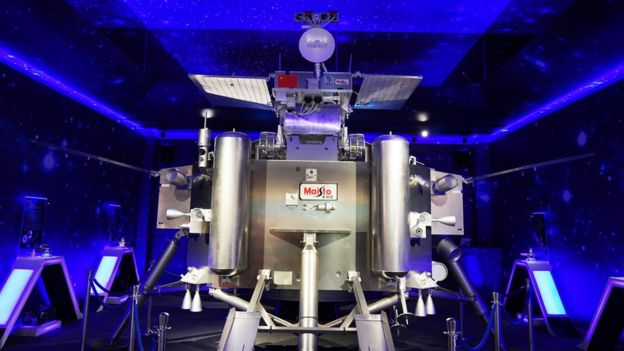
A mock-up of the Chang'e-4 lander and rover, on display in Dongguan, ChinaImage copyrightGETTY IMAGES
Image captionA mock-up of the Chang’e-4 lander and rover, on display in Dongguan, China

The lander carries a 3kg (6.6lb) container with potato and arabidopsis plant seeds – as well as silkworm eggs – to perform biological studies. The “lunar mini biosphere” experiment was designed by 28 Chinese universities.

Other equipment/experiments include:

  • A panoramic camera
  • A radar to probe beneath the lunar surface
  • An imaging spectrometer to identify minerals
  • An experiment to examine the interaction of the solar wind (a stream of energised particles from the Sun) with the lunar surface

The mission is part of a larger Chinese programme of lunar exploration. The first and second Chang’e missions were designed to gather data from orbit, while the third and fourth were built for surface operations.

Chang’e-5 and 6 are sample return missions, delivering lunar rock and soil to laboratories on Earth.

Is there a ‘dark side of the Moon’?

The lunar far side is often referred to as the “dark side”, though “dark” in this case means “unseen” rather than “lacking light”. In fact, both the near and far sides of the Moon experience daytime and night-time.

But because of a phenomenon called “tidal locking”, we see only one face of the Moon from Earth. This is because the Moon takes just as long to rotate on its own axis as it takes to complete one orbit of Earth.

The far side has a thicker, older crust that is pocked with more craters. There are also very few of the “mare” – dark basaltic “seas” created by lava flows – that are evident on the near side.

How will scientists keep track of the rover?

In an article for the US-based Planetary Society in September, Dr Long Xiao from the China University of Geosciences (Wuhan), said: “The challenge faced by a far side mission is communications. With no view of Earth, there is no way to establish a direct radio link.”

So the landers must communicate with Earth using a relay satellite named Queqiao – or Magpie Bridge – launched by China last May.

Queqiao orbits 65,000km beyond the Moon, around a Lagrange point – a kind of gravitational parking spot in space where it will remain visible to ground stations in China and other countries such as Argentina.

What are China’s plans in space?

China wants to become a leading power in space exploration, alongside the United States and Russia.

In 2017 it announced it was planning to send astronauts to the Moon.

It will also begin building its own space station next year, with the hope it will be operating by 2022.

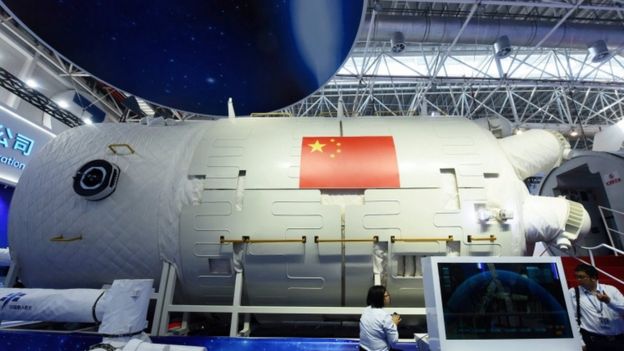
A full-size model of the Tianhe core module of China's space stationImage copyrightREUTERS
Image captionA full-size model of the Tianhe core module of China’s space station

The BBC’s John Sudworth in Beijing says the propaganda value of China’s leaps forward in its space programme has been tempered by careful media management. There was very little news of the Chang’e 4 landing attempt before the official announcement it had been a success.

But Fred Watson, who promotes Australia’s astronomy endeavours as its astronomer-at-large, says the secrecy could simply be down to caution, similar to that shown by the Soviet Union in the early days of its competition with Nasa.

“The Chinese space agency is a young organisation, but perhaps in years to come, it will catch up,” he told the BBC.

Ye Quanzhi says China has made efforts to be more open.

“They live-streamed the launch of Chang’e 2 and 3, as well as the landing of Chang’e 3. PR skills take time to develop but I think China will get there,” he said.

China has been a late starter when it comes to space exploration. Only in 2003, it sent its first astronaut into orbit, making it the third country to do so, after the Soviet Union and the US.

The far side landing has already been heralded by experts at Nasa as “a first for humanity and an impressive accomplishment”.

Media captionFar side of Moon captured by Chinese spacecraft

China says it has successfully landed a robotic spacecraft on the far side of the Moon, the first ever such attempt and landing.

At 10:26 Beijing time (02:26 GMT), the un-crewed Chang’e-4 probe touched down in the South Pole-Aitken Basin, state media said.

It is carrying instruments to analyse the unexplored region’s geology, as well to conduct biological experiments.

The landing is being seen as a major milestone in space exploration.

There have been numerous missions to the Moon in recent years, but the vast majority have been to orbit, fly by or impact. The last crewed landing was Apollo 17 in 1972.

First pictures from the surfaceImage copyrightEPA/CNSA
Image captionAll pictures and data have to be bounced off a separate satellite
Presentational white space

The Chang’e-4 probe has already sent back its first pictures from the surface, which were shared by state media.

With no direct communication link possible, all pictures and data have to be bounced off a separate satellite before being relayed to Earth.

Why is this Moon landing so significant?

Previous Moon missions have landed on the Earth-facing side, but this is the first time any craft has landed on the unexplored and rugged far side.

Ye Quanzhi, an astronomer at Caltech, told the BBC this was the first time China had “attempted something that other space powers have not attempted before”.

First pictures from the surfaceImage copyrightEPA/CNSA
Image captionThe far side is not visible from the Earth due to “tidal locking”

The Chang’e-4 was launched from Xichang Satellite Launch Centre in China on 7 December; it arrived in lunar orbit on 12 December.

The Chang’e-4 probe is aiming to explore a place called the Von Kármán crater, located within the much larger South Pole-Aitken (SPA) Basin – thought to have been formed by a giant impact early in the Moon’s history.

“This huge structure is over 2,500km (1,550 miles) in diameter and 13km deep, one of the largest impact craters in the Solar System and the largest, deepest and oldest basin on the Moon,” Andrew Coates, professor of physics at UCL’s Mullard Space Science Laboratory in Surrey, told the BBC.

The event responsible for carving out the SPA basin is thought to have been so powerful, it punched through the Moon’s crust and down into the zone called the mantle. Researchers will want to train the instruments on any mantle rocks exposed by the calamity.

Near side and far side of MoonImage copyrightNASA
Image captionThe near side (L) and far side (R) of the Moon have some key differences

The science team also hopes to study parts of the sheet of melted rock that would have filled the newly formed South Pole-Aitken Basin, allowing them to identify variations in its composition.

A third objective is to study the far side regolith, the broken up rocks and dust that make up the surface, which will help us understand the formation of the Moon.

What else might we learn from this mission?

Chang’e-4’s static lander is carrying two cameras; a German-built radiation experiment called LND; and a spectrometer that will perform low-frequency radio astronomy observations.

Scientists believe the far side could be an excellent place to perform radio astronomy, because it is shielded from the radio noise of Earth. The spectrometer work will aim to test this idea.

A mock-up of the Chang'e-4 lander and rover, on display in Dongguan, ChinaImage copyrightGETTY IMAGES
Image captionA mock-up of the Chang’e-4 lander and rover, on display in Dongguan, China

The lander carries a 3kg (6.6lb) container with potato and arabidopsis plant seeds – as well as silkworm eggs – to perform biological studies. The “lunar mini biosphere” experiment was designed by 28 Chinese universities.

Other equipment/experiments include:

  • A panoramic camera
  • A radar to probe beneath the lunar surface
  • An imaging spectrometer to identify minerals
  • An experiment to examine the interaction of the solar wind (a stream of energised particles from the Sun) with the lunar surface

The mission is part of a larger Chinese programme of lunar exploration. The first and second Chang’e missions were designed to gather data from orbit, while the third and fourth were built for surface operations.

Chang’e-5 and 6 are sample return missions, delivering lunar rock and soil to laboratories on Earth.

Is there a ‘dark side of the Moon’?

The lunar far side is often referred to as the “dark side”, though “dark” in this case means “unseen” rather than “lacking light”. In fact, both the near and far sides of the Moon experience daytime and night-time.

But because of a phenomenon called “tidal locking”, we see only one face of the Moon from Earth. This is because the Moon takes just as long to rotate on its own axis as it takes to complete one orbit of Earth.

The far side has a thicker, older crust that is pocked with more craters. There are also very few of the “mare” – dark basaltic “seas” created by lava flows – that are evident on the near side.

How will scientists keep track of the rover?

In an article for the US-based Planetary Society in September, Dr Long Xiao from the China University of Geosciences (Wuhan), said: “The challenge faced by a far side mission is communications. With no view of Earth, there is no way to establish a direct radio link.”

So the landers must communicate with Earth using a relay satellite named Queqiao – or Magpie Bridge – launched by China last May.

Queqiao orbits 65,000km beyond the Moon, around a Lagrange point – a kind of gravitational parking spot in space where it will remain visible to ground stations in China and other countries such as Argentina.

What are China’s plans in space?

China wants to become a leading power in space exploration, alongside the United States and Russia.

In 2017 it announced it was planning to send astronauts to the Moon.

It will also begin building its own space station next year, with the hope it will be operating by 2022.

A full-size model of the Tianhe core module of China's space stationImage copyrightREUTERS
Image captionA full-size model of the Tianhe core module of China’s space station

The BBC’s John Sudworth in Beijing says the propaganda value of China’s leaps forward in its space programme has been tempered by careful media management. There was very little news of the Chang’e 4 landing attempt before the official announcement it had been a success.

But Fred Watson, who promotes Australia’s astronomy endeavours as its astronomer-at-large, says the secrecy could simply be down to caution, similar to that shown by the Soviet Union in the early days of its competition with Nasa.

“The Chinese space agency is a young organisation, but perhaps in years to come, it will catch up,” he told the BBC.

Ye Quanzhi says China has made efforts to be more open.

“They live-streamed the launch of Chang’e 2 and 3, as well as the landing of Chang’e 3. PR skills take time to develop but I think China will get there,” he said.

China has been a late starter when it comes to space exploration. Only in 2003, it sent its first astronaut into orbit, making it the third country to do so, after the Soviet Union and the US.

The far side landing has already been heralded by experts at Nasa as “a first for humanity and an impressive accomplishment”.

03/01/2019

Full speed ahead for China’s high-speed rail network in 2019 in bid to boost slowing economy

  • The state-owned China Railway Corporation plans to put a total of 6,800km of new track into service this year, a 45 per cent increase in expansion from 2018
  • Significant infrastructure investment by a Beijing government keen to offset the trade war with the United States
PUBLISHED : Thursday, 03 January, 2019, 6:16pm
UPDATED : Thursday, 03 January, 2019, 6:16pm

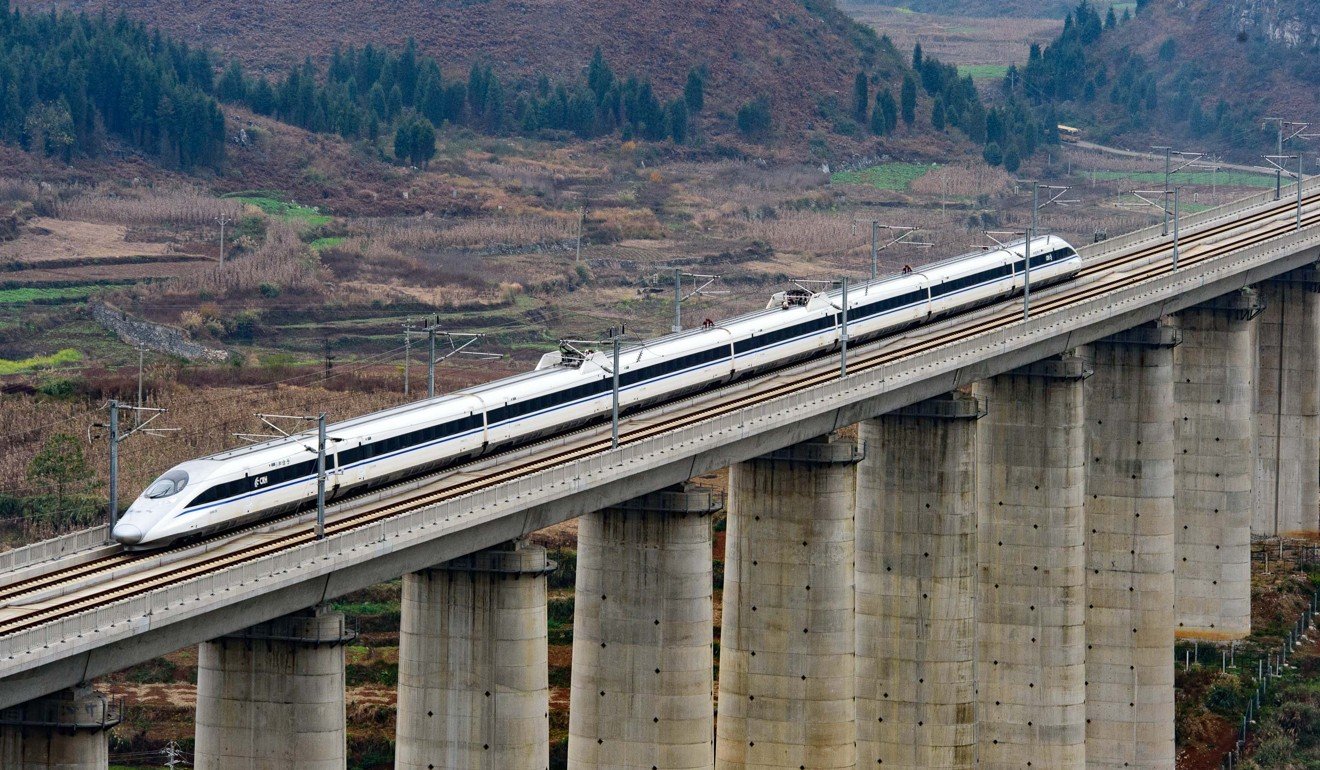
China plans to expand its high-speed rail network by 3,200km in 2019, which is more than is currently being operated in either Spain, Japan, Germany or France, in a bid to aid a slowing economy locked in the trade war with the United States.

The China Railway Corporation, the state-owned agency in charge of railway construction, plans to put a total of 6,800km of new track into service in 2019 as Beijing again relies on infrastructure investment to arrest an economic slowdown, according to a government plan released this week.

Spain, which has the world’s second biggest high-speed rail network after China, only has a total of around 3,100km of track in operation, followed by Japan, Germany and France.

China’s spending spree on railway infrastructure, which started in the aftermath of the global financial crisis a decade ago, means Beijing is well ahead of its schedule to build a total of 30,000km of high-speed railway lines by 2020.

At the end of 2018, China had over 29,000km of 250km/h (155mph) high-speed railway lines, two thirds of the world’s total, having added 4,100km in 2018 as part of a 4,683km overall expansion project last year.

As China is completing its strategic goal of building a nationwide high-speed rail network after a decade of construction, which has greatly reduced travel time between major Chinese cities, the railway authority is now looking at new lines that extend deep into the country’s remote corners.

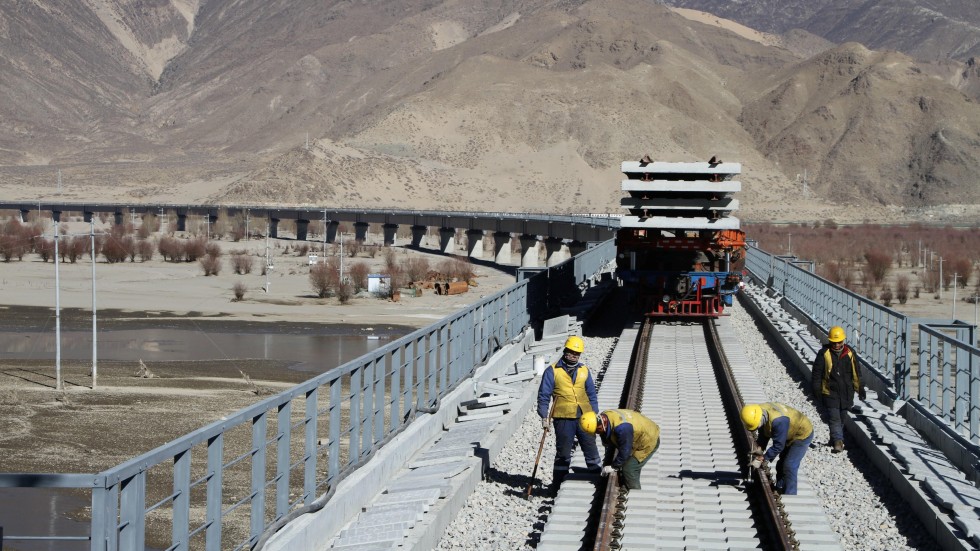
These include a second railway from Sichuan to Tibet – a line that is strategically important but also has to cross some of the deepest valleys in the world along the route.

China Railway said a feasibility study of the 1,700km line winding through the “roof of the world”, with a budget of 250 billion yuan (US$36.42 billion), is scheduled to be completed in the second quarter before before a possible start to construction in the third quarter. The project is not included in the 6,800km total for 2019.

Beijing’s determination to invest in railway infrastructure came after the country’s fixed asset investment, a major growth engine, slowed to a decade-low of 5.9 per cent in the first 11 months of 2018.

Infrastructure construction, including roads and railways, surprisingly slowed to 3.7 per cent from January to November from 20.1 per cent a year earlier.

The slowdown in investment helped to drag down China’s overall economic growth with the world’s second biggest economy facing headwinds from the trade war with the United States.

Iris Pang, chief Greater China economist of ING Bank, said Beijing needs to start making preparations because no one knows for sure what next direction the trade war will take next.

The 90-day trade truce with the United States will end on March 2, right ahead of China’s Two Sessions meeting, during which Premier Li Keqiang will announce the 2019 gross domestic product growth target, fiscal deficit ratio and probably the money supply goal.

China’s first quarter growth for 2019 is widely believed to be a test to Beijing’s policymakers because substantial damages from current US tariffs will be felt, with some predicting it will drop below the psychologically important threshold of 6 per cent in the first half of the year.

“One of the defensive measures would be to push up railway investment when the national economy slowed to certain point, such as below 6 per cent,” said Pang.

At their annual work conference on Wednesday, general manager Lu Dongfu said China Railway “will maintain the intensify” of spending.

While the specific spending target was not disclosed, China’s total investment in its rail network could easily hit a record high in 2019.

Railway construction is often used as a countercyclical tool, with investment plans adjusted according to government needs.

For instance, Beijing had originally planned to cut 2018 railway investment to 732 billion yuan (US$106.63 billion) from 801 billion yuan in 2017, but instead opted to raise spending after the first round of US tariffs were imposed on Chinese exports, eventually spending 802.8 billion yuan last year.

“The infrastructure investment could be stabilised at the current level, but it won’t reach the high growth like [seen a decade earlier],” added Pang.

China’s railway fixed-asset investment jumped 61.5 per cent to 416.8 billion yuan in 2008, when the country started the construction of its high-speed rail network, government data showed.

Investment rose another 69.1 per cent to 701.3 billion yuan in 2009, as the authority stepped up domestic construction to offset the global financial crisis.

03/01/2019

Xinhua Headlines: Xi says “China must be, will be reunified” as key anniversary marked

CHINA-BEIJING-XI JINPING-MESSAGE TO COMPATRIOTS IN TAIWAN-COMMEMORATION (CN)

Chinese President Xi Jinping, also general secretary of the Communist Party of China (CPC) Central Committee and chairman of the Central Military Commission, delivers a speech at a gathering to commemorate the 40th anniversary of issuing Message to Compatriots in Taiwan, at the Great Hall of the People in Beijing, capital of China, Jan. 2, 2019. (Xinhua/Li Tao)

BEIJING, Jan. 2 (Xinhua) — President Xi Jinping on Wednesday said China must be and will be reunified, as he addressed a gathering in Beijing to commemorate the 40th anniversary of the Chinese mainland’s Message to Compatriots in Taiwan.

“It is a historical conclusion drawn over the 70 years of the development of cross-Strait relations, and a must for the great rejuvenation of the Chinese nation in the new era,” said Xi, also general secretary of the Communist Party of China (CPC) Central Committee and chairman of the Central Military Commission.

Speaking at the Great Hall of the People, Xi called for joint efforts across the Taiwan Strait to advance peaceful national reunification.

The long-standing political differences can not be dragged on generation after generation, Xi said.

The Taiwan question originated from national weakness and disorder and has lasted for 70 years.

Xi said since 1949 the CPC, the Chinese government and the Chinese people have always unwaveringly taken resolving the Taiwan question to realize China’s complete reunification as a historic task.

He expressed confidence that the Taiwan question will definitely end with national rejuvenation.

BEST APPROACH

On Jan. 1, 1979, the National People’s Congress Standing Committee issued the Message to Compatriots in Taiwan. It was considered a declaration of the mainland’s policy for peaceful reunification.

Halt to military confrontations was proposed. Visits, cross-Strait transportation, postal services and economic and cultural exchanges were promoted. A page on cross-Strait relations has been turned.

On Wednesday, Xi raised a five-point proposal for peaceful reunification.

He said the principles of “peaceful reunification” and “one country, two systems” are the best approach to realizing national reunification.

He proposed that the mainland and Taiwan conduct democratic consultation on cross-Strait relations and the future of the nation, and establish institutional arrangement for peaceful development of cross-Strait relations.

He said on the basis of ensuring China’s sovereignty, security and interests of development, the social system and way of life in Taiwan will be fully respected, and the private property, religious beliefs and legitimate rights and interests of Taiwan compatriots will be fully protected after peaceful reunification is realized.

The president pledged “utmost sincerity and greatest efforts” for the prospect of peaceful reunification and said Taiwan will be guaranteed lasting peace after reunification.

“We are all of the same family,” Xi said.

While stressing that the “Chinese don’t fight Chinese,” Xi said, “We make no promise to renounce the use of force and reserve the option of taking all necessary means.”

This targets only the interference of external forces and the very small number of “Taiwan independence” separatists and their activities, he added.

IRRESISTIBLE TREND

“‘Taiwan independence’ goes against the trend of history and will lead to a dead end,” Xi said.

The president said achieving the country’s greatness, national rejuvenation and cross-Strait reunification is the trend of history, which can never be blocked by anyone or any force.

The peaceful and stable development of cross-Strait situations and the progress of cross-Strait relations are the tide of the time that can never be stopped by anyone or any force, he said.

Liu Jieyi, head of the State Council Taiwan Affairs Office, noted the strengthened political, economic, cultural, personnel exchanges over the decades.

Between 1988 and 2018, 134 million cross-Strait visits were logged; two-way trade reached 2.6 trillion U.S. dollars; and the mainland has been Taiwan’s largest market and top investment destination outside the island, Liu said.

In his speech, Xi said the future of Taiwan lies in national reunification.

“We sincerely hope all the compatriots in Taiwan treasure peace as much as they treasure their own eyes, and pursue national reunification as much as they pursue happiness.”

NO INTERFERENCE FROM OUTSIDE

Xi said the Taiwan question is China’s internal affair and allows no external interference.

The Chinese people’s affairs should be decided by the Chinese people, Xi said, stressing that the Taiwan question concerns China’s core interests and the national bond of the Chinese people.

China’s reunification does not harm any country’s legitimate interests, including their economic interests in Taiwan, Xi said, adding that it will only bring more development opportunities to other countries.

Over the 70 years, more and more countries and peoples have understood and supported China’s cause of reunification, the president noted.

Wednesday’s gathering was attended by Li Zhanshu, a member of the Standing Committee of the Political Bureau of the CPC Central Committee and chairman of the National People’s Congress Standing Committee.

Wang Yang, a member of the Standing Committee of the Political Bureau of the CPC Central Committee and chairman of the National Committee of the Chinese People’s Political Consultative Conference, presided over the event.

Wang said Xi’s speech demonstrated the historical trend of cross-Strait relations and called for joint efforts to forge ahead for the peaceful national reunification.

Chen Ching-lung, a 54-year-old hotel operator in Xiamen, Fujian Province, followed Xi’s speech, which was broadcast live by China Media Group and on Xinhua News Agency’s website (xinhuanet.com).

A veteran who was once stationed in Kinmen, Chen joined the influx of Taiwan compatriots who found bristle business chances on the mainland.

“The direction of peaceful development is totally correct,” he said. “What the two sides should do is to mitigate differences and enhance their communications.”

Hsueh Ching-te, another Taiwan compatriot who runs a business in Fujian, said he looks forward to complete reunification so that “all Chinese people will live in peace, prosperity and with dignity.”

02/01/2019

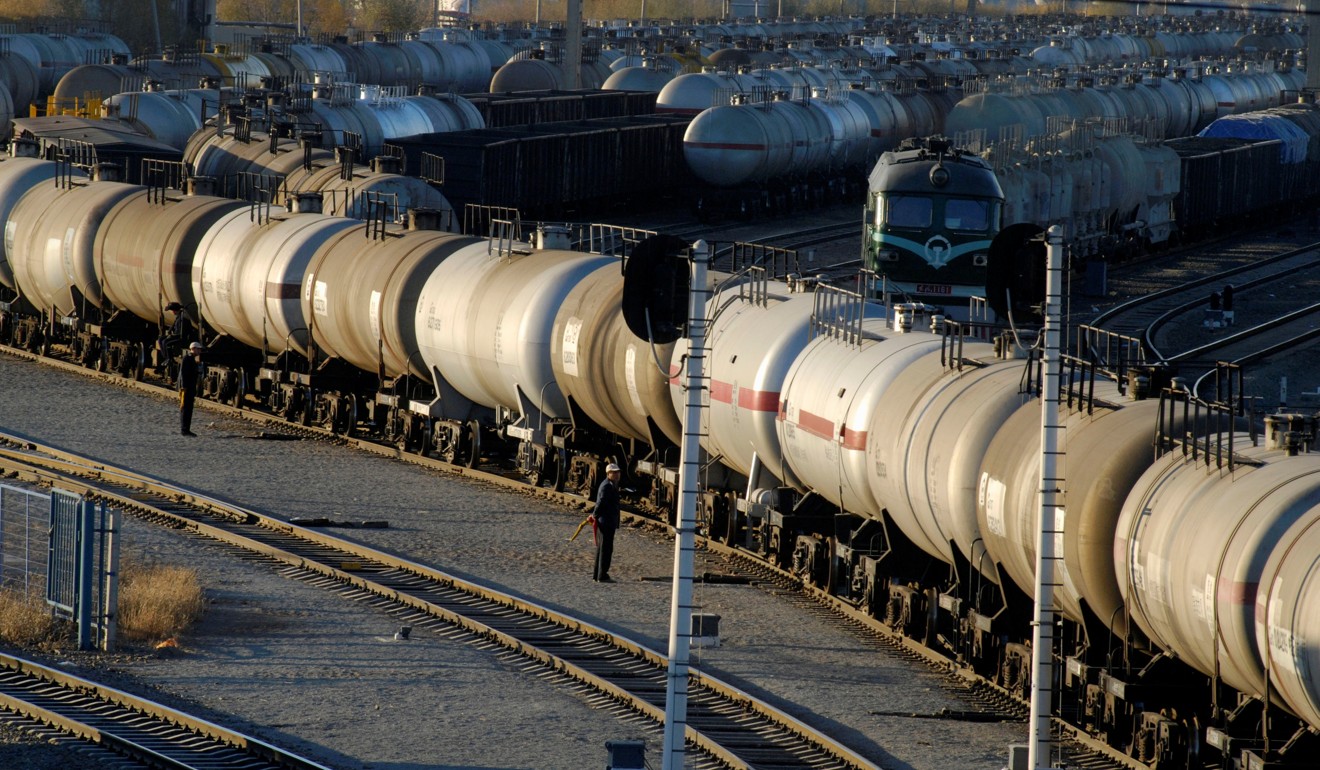
China cuts quotas for crude oil imports in first round of allowances for 2019

  • They total 89.84 million tonnes, down from 121.32 million tonnes a year ago – a move that may signal slowing demand growth in the first half
PUBLISHED : Wednesday, 02 January, 2019, 6:12pm
UPDATED : Wednesday, 02 January, 2019, 6:12pm

China issued its first batch of crude oil import quotas for 2019 on Wednesday at a lower volume than for the same batch a year ago, though expectations are for the volumes to climb later this year.

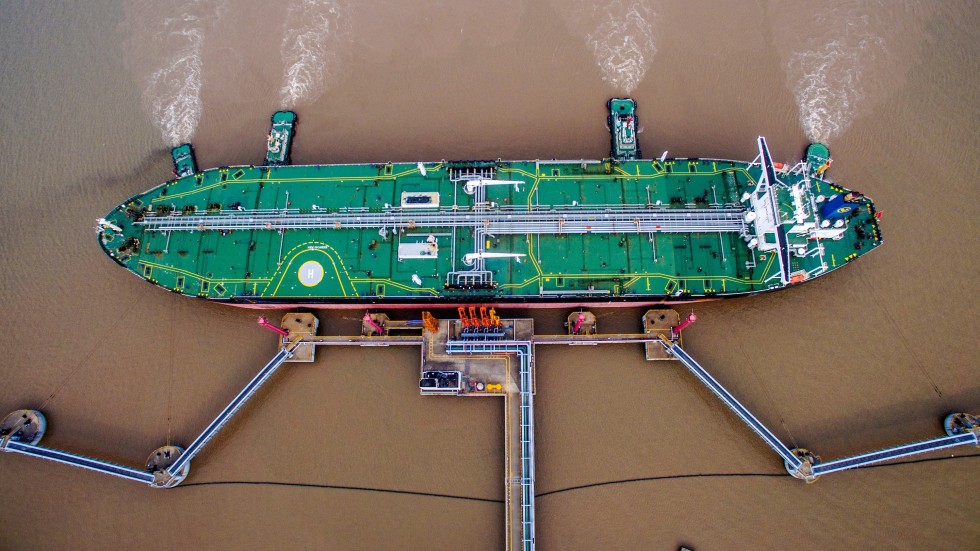
The Ministry of Commerce granted quotas totalling 89.84 million tonnes to 58 companies in its first allowances for 2019, according to four sources with direct knowledge of the matter and documents reviewed by Reuters on Wednesday.

This is down from the 121.32 million tonnes issued in the first batch of allowances for 2018, although the sources said Beijing may increase the overall volume for 2019 in a second batch of quotas later this year.

It comes as Beijing seeks to end a bruising trade war with Washington and reduce the risk of a sharper economic slowdown in 2019.

The trade frictions are already disrupting global supply chains, fuelling concerns of a bigger blow next year to world trade, investment and financial markets.

Official data released this week showed China’s factory activity contracted in December for the first time in over two years, signalling a continued loss of momentum in the Chinese economy.

The official Purchasing Managers’ Index (PMI) – the first snapshot of China’s economy each month – fell to 49.4 in December, below the 50-point level that separates growth from contraction, according to data from the National Bureau of Statistics on Monday.

It was the first contraction since July 2016 and the weakest reading since February 2016. Analysts had forecast it would dip to 49.9 from 50.0 the previous month.

Lower import quotas may signal slowing crude demand growth for the first half of the year in China, the world’s largest oil importer and second-largest oil consumer.

“The market, in general, does not have an upbeat outlook for imports. I think the drop in quota could likely mean easing growth in China’s crude imports in the first half,” said Zhou Guoxia, a crude oil analyst with consultancy JLC.

Private refiners, also known as teapots, received quotas for 70.65 million tonnes of imports, more than 20 per cent lower than the first batch of quotas issued last year, according to the documents and Reuters data.

This volume should be able to cover 10 months of their requirements, Zhou said.

One of the four sources, who works for a private Chinese refiner, said they received about a third of its annual quota in the first batch and expects to get the remainder in a second batch, which Beijing usually issues around September.

But the start-up of new refineries in China in 2019 is expected to raise crude imports to a record, adding 630,000 barrels per day of new demand, 7 per cent higher than last year, according to Beijing-based consultancy SIA Energy.

Dalian Hengli Petrochemical and Zhejiang Petrochemical, which are starting up new refineries in 2019, have each received quotas of 4 million tonnes, according to the documents reviewed by Reuters.

Dragon Aromatics, a petrochemical producer based in Fujian province, has also received import quota of 600,000 tonnes as it resumes operations at its condensate splitter, the sources said.

02/01/2019

Xi highlights breakthroughs in cross-Strait relations over 70 years

BEIJING, Jan. 2 (Xinhua) — President Xi Jinping highlighted the breakthrough progress made in the cross-Strait relations since 1949, at a gathering on Wednesday to commemorate the 40th anniversary of Chinese mainland’s Message to Compatriots in Taiwan.

Over the 70 years, estrangement between the mainland and Taiwan was ended in line with the common will of compatriots across the Strait, and Taiwan compatriots have made great contributions to the reform and opening-up in the mainland, said Xi, who is also general secretary of the Communist Party of China (CPC) Central Committee and chairman of the Central Military Commission.

During the seven decades, the mainland and Taiwan reached the 1992 Consensus based on the one-China principle, and the political exchanges across the Strait have reached new heights, Xi said.

Over the 70 years, the basic principles of “peaceful reunification” and “one country, two systems” were established, and the basic policy of upholding “one country, two systems” and advancing the national reunification was laid out, according to Xi.

He continued that more and more countries and peoples have understood and supported the cause of the reunification of China over the 70 years.

Furthermore, over the 70 years, a series of major victories in the battles against “Taiwan independence” and separatists have been achieved, Xi said.

01/01/2019

China’s military priorities for 2019: boost training and prepare for war

  • PLA’s official newspaper outlines ‘work focus’ in New Year’s Day editorial, saying ‘at no time should we allow any slack in these areas’
PUBLISHED : Tuesday, 01 January, 2019, 10:36pm
UPDATED : Tuesday, 01 January, 2019, 11:40pm

Strengthening training and preparation for war are among the top priorities for China’s military in 2019, its official newspaper said on Tuesday.

“Drilling soldiers and war preparations are the fundamental jobs and work focus of our military, and at no time should we allow any slack in these areas,” the PLA Daily said in its New Year’s Day editorial.

“We should be well prepared for all directions of military struggle and comprehensively improve troops’ combat response in emergencies … to ensure we can meet the challenge and win when there is a situation.”

Other priorities outlined in the editorial included thorough planning and implementation to develop the military, fostering reform and innovation, and party building within the People’s Liberation Army (PLA).

President Xi Jinping, who also heads the military, has been pushing the PLA to boost its combat readiness since he took the top job in late 2012. Observers said stepping up drills could be about flexing the PLA’s military muscle, but spelling it out at the start of the year also suggested it was a more important part of the plan for 2019.

“During the 20 years I spent in the PLA before I left in 2004, military training to boost combat readiness was always one of our top tasks,” said Zeng Zhiping, a retired lieutenant colonel and military analyst based in Nanchang, Jiangxi province.

“But this is something different. When training and preparation for war is highlighted at the beginning of a year it means this is a plan for the whole year, although we don’t know what the real intention behind the rhetoric is at this stage.”

Taiwan’s former deputy defence minister Lin Chong-Pin said it was about showing the PLA’s military strength.

“Prioritising military training and preparation for war is nothing more than a move to boost its diplomatic strength, which the PLA has been emphasising over the past four decades – though it has never gone into battle with any other country during that time,” Lin said.

“This comes at a time when the US has increased pressure on China with a series of military operations. But listen, I’m 100 per cent sure that the PLA will not be waging any war, no matter whether it’s in the South China Sea or the Taiwan Strait. It will only become more cautious when it starts rising more rapidly.”

Meanwhile, at least 38 senior colonels were promoted to the rank of major general in late December, according to local media and Chinese military watchers.

Lin said they were carefully selected by the president himself. “These new major generals were definitely hand-picked by Xi – he intends to build his own army, or the so-called Xi force,” Lin said.

Of those promoted to major general, nine were from the PLA’s ground forces, four were from the air force, three were from the rocket force and 22 from the People’s Armed Police Force.

The military has undergone major upheaval and reform during the past six years, with dozens of generals brought down amid an unprecedented anti-corruption campaign.

They include top generals Guo Boxiong and Xu Caihou, both former Central Military Commission vice-chairmen, Fang Fenghui, who was the PLA chief of staff, and Zhang Yang, former head of the PLA’s General Political Department.

01/01/2019

Xi congratulates Cuban leaders on 60th anniversary of revolution victory

BEIJING, Jan. 1 (Xinhua) — Chinese President Xi Jinping on Tuesday warmly congratulated Raul Castro, first secretary of the Central Committee of the Communist Party of Cuba, and Miguel Diaz-Canel, president of the Council of State and the Council of Ministers of Cuba, on the 60th anniversary of Cuba’s revolution victory on behalf of the Communist Party of China (CPC) and the Chinese government and people.

In his congratulatory message to Raul Castro, Xi, who is also general secretary of the CPC Central Committee, said under the strong leadership of the Communist Party of Cuba over the past 60 years, the Cuban government and people have made great achievements with hard work in the cause of socialist construction, which are highly appreciated and congratulated by the CPC and the Chinese government and people.

The relations between the two parties and two countries have stood the test of international vicissitudes and achieved fruitful results, making the two sides good friends, good comrades and good brothers, Xi noted.

Xi said he attaches great importance to the development of the China-Cuba friendship and is willing to work together with Raul Castro to lead bilateral relations to keep marching forward.

In his congratulatory message to Diaz-Canel, Xi said that the Communist Party of Cuba and its people are endeavoring to update and improve the nation’s socialist system, which will guarantee new developments in Cuba’s socialist cause.

Xi mentioned Diaz-Canel’s historic visit to China around a month ago, during which the two leaders proposed a blueprint for bilateral ties in the new era, adding that he is willing to join hands with Diaz-Canel for continuous development of China-Cuba relations.

Chinese Premier Li Keqiang also sent a congratulatory message to Diaz-Canel on Tuesday, saying Cuba has enjoyed flourishing national developments and will usher in a brighter future.

The two countries have always understood and supported each other, pushing bilateral relations for an all-round and in-depth development, said the premier.

Li also voiced hope that with the joint efforts from both sides, their traditional friendship will continue to bear fruits.

Law of Unintended Consequences

continuously updated blog about China & India

ChiaHou's Book Reviews

continuously updated blog about China & India

What's wrong with the world; and its economy

continuously updated blog about China & India