Chindia Alert: You’ll be Living in their World Very Soon
aims to alert you to the threats and opportunities that China and India present. China and India require serious attention; case of ‘hidden dragon and crouching tiger’.
Without this attention, governments, businesses and, indeed, individuals may find themselves at a great disadvantage sooner rather than later.
The POSTs (front webpages) are mainly 'cuttings' from reliable sources, updated continuously.
The PAGEs (see Tabs, above) attempt to make the information more meaningful by putting some structure to the information we have researched and assembled since 2006.
BEIJING, Dec. 29 (Xinhua) — Top Chinese leaders watched a New Year gala featuring traditional operas on Saturday evening in Beijing.
Leaders of the Communist Party of China (CPC) and the state Xi Jinping, Li Keqiang, Li Zhanshu, Wang Yang, Wang Huning, Zhao Leji, Han Zheng and Wang Qishan, joined an audience of nearly a thousand at the National Center for the Performing Arts.
The program included classic opera excerpts featuring historical stories, martial heroes and love stories, as well as modern excerpts featuring stalwart CPC members, life on a small island, the Long March, among others.
An opera piece named “Towards the Future” expressed the strong faith of the Chinese people under the leadership of the CPC Central Committee with Xi Jinping at the core, to fight for a decisive victory in finishing the building of a moderately prosperous society in all respects and for the realization of the Chinese dream of the rejuvenation of the Chinese nation.
The show featured various forms of traditional operas, including Peking Opera, Kunqu opera and Cantonese Opera.
WASHINGTON/BEIJING (Reuters) – U.S. President Donald Trump said on Twitter on Saturday that he had a “long and very good call” with Chinese President Xi Jinping and that a possible trade deal between the United States and China was progressing well.
As a partial shutdown of the U.S. government entered its eighth day, with no quick end in sight, the Republican president was in Washington, sending out tweets attacking Democrats and talking up possibly improved relations with China.
The two nations have been in a trade war for much of 2018, shaking world financial markets as the flow of hundreds of billions of dollars worth of goods between the world’s two largest economies has been disrupted by tariffs.
Trump and Xi agreed to a ceasefire in the trade war, deciding to hold off on imposing more tariffs for 90 days starting Dec. 1 while they negotiate a deal to end the dispute following months of escalating tensions.
“Just had a long and very good call with President Xi of China,” Trump wrote. “Deal is moving along very well. If made, it will be very comprehensive, covering all subjects, areas and points of dispute. Big progress being made!”
Chinese state media also said Xi and Trump spoke on Saturday, and quoted Xi as saying that teams from both countries have been working to implement a consensus reached with Trump.
“I hope that the two teams will meet each other half way, work hard, and strive to reach an agreement that is mutually beneficial and beneficial to the world as soon as possible,” Xi said, according to the state-run Xinhua news agency.
Having cancelled his plans to travel to his estate in Florida for the holidays because of the government shutdown that started on Dec. 22, Trump tweeted, “I am in the White House waiting for the Democrats to come on over and make a deal.”
The Republican-controlled Congress was closed for the weekend and few lawmakers were in the capital.
The shutdown, affecting about one-quarter of the federal government including 800,000 or so workers, began when funding for several agencies expired.
Congress must pass legislation to restore that funding, but has not done so due to a dispute over Trump’s demand that the bill include $5 billion in taxpayer money to help pay for a wall he wants to build along the U.S.-Mexico border.
The wall was a major 2016 campaign promise of Trump’s, who promised then that it would be paid for by Mexico, which has steadfastly refused to do so. Trump has since demanded that U.S. taxpayers pay for it at an estimated total cost of $23 billion.
He sees the wall as vital to stemming illegal immigration, while Democrats and some Republicans see it as an impractical and costly project. The standoff over Trump’s demand for funding will be a test for Congress when it returns next week.
Trump tweeted on Saturday that the deaths of two migrant children this month who had been taken into U.S. custody after trying to cross the southern border were “strictly the fault of the Democrats and their pathetic immigration policies.”
It was unclear exactly which policies Trump was referring to, but his aides have referred to U.S. laws and court rulings – including laws passed with bipartisan support – that govern the conditions under which children and families can be detained as “loopholes” that encourage illegal immigration.
On Friday, Secretary of Homeland Security Kirstjen Nielsen visited Border Patrol stations in Texas after her agency instituted expanded medical checks of migrant children following the two deaths. She is also due to visit Yuma, Arizona, the Department of Homeland Security said in a statement on Saturday.
In the interim, thousands of employees of federal agencies such as the Homeland Security, Justice, Commerce, Interior, Transportation, Agriculture and other departments were staying at home on furlough or soon to be working without pay.
For instance, members of the U.S. Coast Guard will receive their final paychecks of the year on Monday, the service said in a statement on its website on Friday after previously warning that payments would be delayed due to the shutdown.
“The administration, the Department of Homeland Security [DHS], and the Coast Guard have identified a way to pay our military workforce on Dec. 31, 2018,” the service website read.
That paycheck will be their last until the government reopens.
The Federal Emergency Management Agency also said on Friday that it would resume issuing new flood insurance policies during the shutdown, reversing an earlier decision.
Reporting by Yeganeh Torbati and Katanga Johnson in Washington; additional reporting by Lusha Zhang, Ben Blanchard and Ryan Woo in Beijing; Editing by Kevin Drawbaugh, Daniel Wallis and Diane Craft
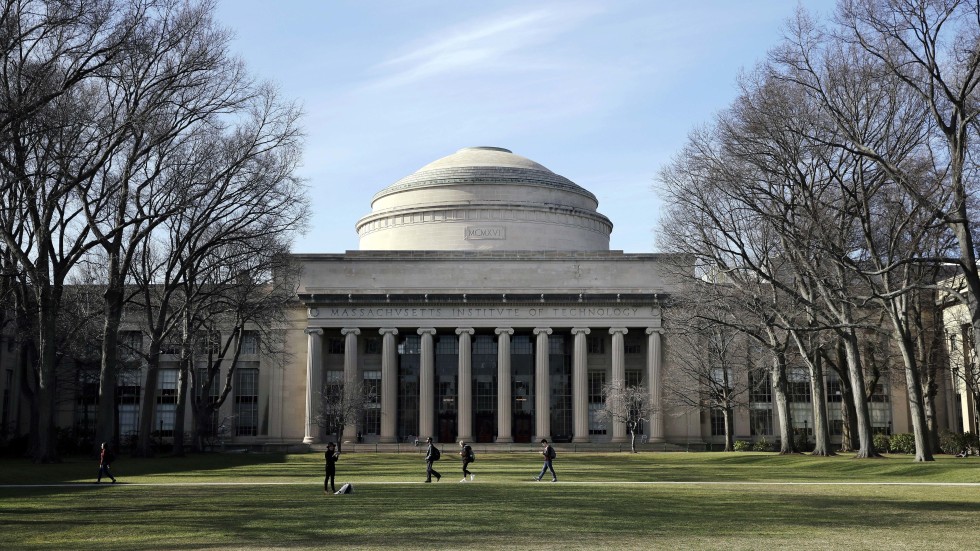
Unlike in the past, when at least a handful of students from Chinese schools made it through the early admission system, according to official results released by the college earlier this month this year there were none.
The news epitomised the falling success rate of mainland Chinese students seeking places at top US colleges in recent years amid growing uncertainty about immigration and visa policies, and the increased importance placed on applicants’ soft skills, some industry insiders have said.
The MIT offered early admission to more than 700 students chosen from 9,600 applicants from around the world. While five of them were Chinese nationals, they all graduated from US high schools.
“This is in line with the overall trend,” said Sun Rui, founder of Insight Education, a company based in the south China city of Shenzhen that helps Chinese students apply for undergraduate programmes in the United States.
“We feel that it’s harder each year to apply for top universities,” she said.
The number of students from Shenzhen who secured a place at one of the top four colleges in the US had been falling year by year, she said.
“Last year, a couple of students from Shenzhen made it to Stanford. This year it was none.”
While Chinese students had a reputation for getting high exam scores, Sun said they were often at a disadvantage when it came to soft skills, such as leadership and citizenship.
Chinese schools did not care about the latter, but American schools valued them greatly, she said.
As more Chinese children were being sent abroad to study at a younger age, those who went to US high schools were replacing those from Chinese schools when it came to undergraduate admissions, she said.
Li Li, whose daughter is at high school in Shanghai, said she had always wanted her child to apply for a top 20 US university but was now reconsidering.
“Given the current circumstances, your know, all the curbs on immigration and visa policy, I think I will consider another country, say Australia,” she said.
With richer parents eyeing better education abroad, Chinese students now account for about a third of all international students in US universities, according to official figures.
But potential applicants are being frightened away as Washington, under the administration of President Donald Trump, tightens it policies on Chinese students out of concerns about them being potential spies. The Financial Times reported recently that the White House had actually debated a proposal to stop all Chinese nationals from studying at US universities over such concerns.
New restrictions and requirements were introduced earlier this year for Chinese postgraduates majoring in science and engineering, as Trump accused China of stealing technology and intellectual property from US companies.
Sun said that an unpredictable admission policy was another reason for the drop off in Chinese students’ success in applying for top American schools.
“For example, unlike before, some top schools now require writing samples from international students, which to some extent shows they have worries about the applicants’ actual skills,” she said.
BEIJING, Dec. 29 (Xinhua) — The central rural work conference was held in Beijing from Dec. 28 to Dec. 29, mapping out plans for the country’s rural and agricultural work in 2019.
The meeting summarized and exchanged local experiences on the implementation of rural vitalization strategy, outlined major tasks related to agriculture, rural areas and rural people in the next two years and mapped out plans for rural and agricultural work in 2019, according to a statement released Saturday after the central rural work conference.
President Xi Jinping, also general secretary of the Communist Party of China Central Committee and chairman of the Central Military Commission, made important instructions on work related to agriculture, rural areas and rural people.
Xi stressed that new achievements were made in the rural and agricultural development in 2018, grain output reaped a good harvest and rural vitalization was off to a good start.
The year 2019 is the key year to secure a decisive victory in achieving the country’s first centenary goal of building a moderately prosperous society in all respects. Solid work related to agriculture, rural areas and rural people will play a significant role in effectively handling various risks and challenges, ensuring a steady and healthy economic development and social stability, said Xi.
BEIJING, Dec. 29 (Xinhua) — China’s meteorological authorities issued a yellow alert for a heavy snowstorm on Saturday morning.
The National Meteorological Center (NMC) said snowstorms would hit parts of Guizhou, Hunan and Jiangxi provinces, with up to 15 centimeters of new snow expected.
The observatory warned that the snow would affect transport during rush hours, and asked local authorities to be prepared for possible damage to crops, plants and livestock.
On Saturday morning, the NMC also issued a yellow alert for a cold wave as the cold front will bring down temperatures by 10 degrees Celsius in the next three days in most parts of China.
China has a four-tier color-coded weather warning system, with red representing the most severe, followed by orange, yellow and blue.
MONTREAL (Reuters) – A Canadian citizen who was detained in China this month has returned to Canada after being released from custody, a Canadian government spokesman said on Friday.
The spokesman did not specify when the Canadian was released or returned to Canada. Earlier in the day, broadcaster CBC identified the citizen as Canadian teacher Sarah McIver.
China’s Foreign Ministry said this month that McIver was undergoing “administrative punishment” for working illegally.
McIver was the third Canadian to be detained by China following the Dec. 1 arrest in Vancouver of Meng Wanzhou, chief financial officer of the Chinese telecommunications giant Huawei Technologies Co Ltd., but a Canadian official said there was no reason to believe that the woman’s detention was linked to the earlier arrests.
Foreign Minister Chrystia Freeland did not mention the woman in calling for the release of the other two Canadians last week.
China’s Foreign Ministry said in a statement sent to Reuters that it was aware of reports she had been released, and referred further questions to the “relevant authority”. It did not elaborate.
On Saturday, a Chinese court is hearing an appeal in the case of a Canadian citizen held on drugs charges, that could further test the tense relations between the two countries.
The high court in the city of Dalian in the northeastern province of Liaoning will hear the appeal of Robert Lloyd Schellenberg from 2 p.m. (0600 GMT), it said in a statement this week.
A Dalian government news portal said Schellenberg was a Canadian and that this was an appeal hearing after he was found by an earlier ruling to have smuggled “an enormous amount of drugs” into China.
Canada’s government said this week it had been following the case for several years and providing consular assistance, but could provide no other details, citing privacy concerns.
Drugs offences are usually punished severely in China.
China executed a Briton caught smuggling heroin in 2009, prompting a British outcry over what it said was the lack of any mental health assessment.
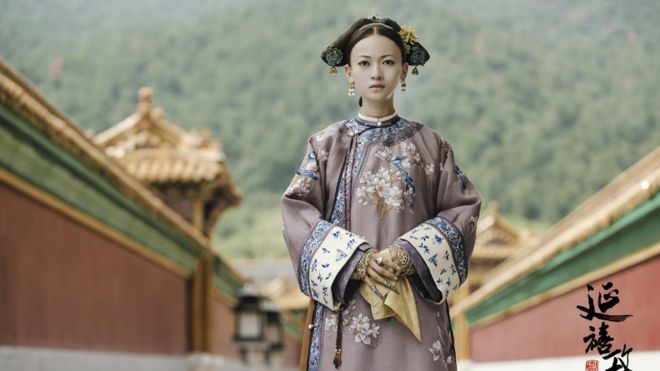
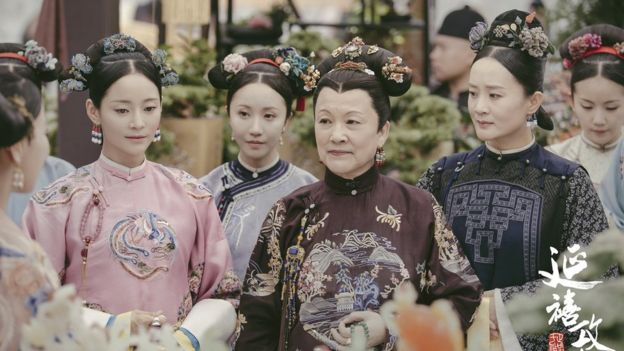
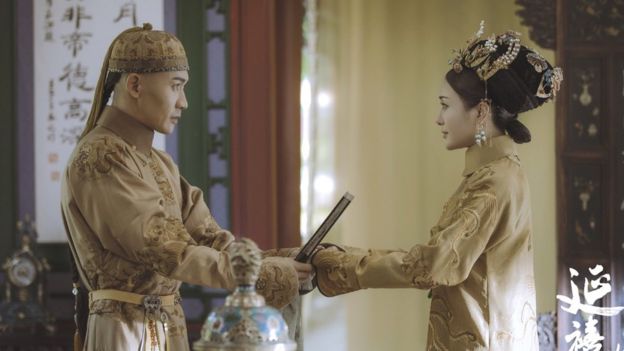
Image copyrightIQIYIImage captionThe Story of Yanxi Palace revolves around its female protagonist, Wei Yingluo
It has love but also hatred, intrigue, revenge, poisoning rivals and even killing babies.
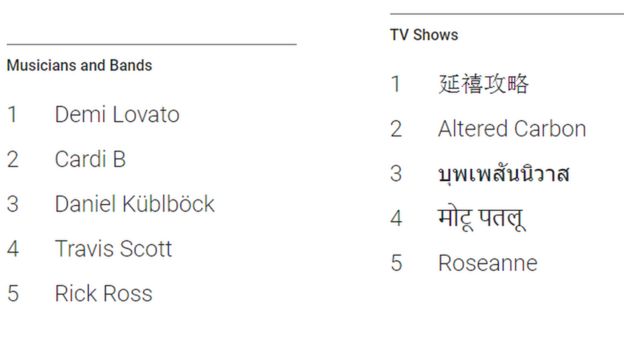
The Chinese drama Story of Yanxi Palace is the most Googled TV show of 2018 globally, despite Google being largely blocked in the country.
The search engine’s analytics suggested that the top interest in the drama has come from Asian regions like Singapore, Malaysia, Brunei and Hong Kong, but its popularity in mainland China has been overwhelming as well.
The series has been streamed more than 15 billion times on iQiyi, China’s Netflix-like site where the show premiered in July before it reached domestic TV channels and more than 70 markets abroad. It was the most watched online drama in China for 39 consecutive days over the summer.
The 70-episode Story of Yanxi Palace fictionalised the power struggles among the concubines of Emperor Qianlong in the 1700s.
The protagonist, a smart girl with a humble background, manages to rise through the ranks among the harem and wins both love and respect from the emperor.
Image copyrightGOOGLEImage captionThe Chinese title of Yanxi Palace appears as the most Googled TV show of 2018
Its theme may be likened to a Cinderella tale or Netflix’s The Crown that chronicles the reign of Queen Elizabeth II. But its own uniqueness has made it the undisputed entertainment sensation of the year.
Here’s how it took over China and its neighbouring regions.
It catches up with a trend of feminist shows
The heroine of the show, Wei Yingluo, is unlike most traditional Chinese female characters who are taught to be tolerant, submissive and fragile.
Inspired by the actual real-life consort of Emperor Qianlong, the story follows Yingluo as a woman of Chinese Han ethnicity in the Qing dynasty – the last imperial dynasty in China ruled by the Manchurian ethnicity that suppressed the Han people.
But her intelligence, determination and appropriate ferocity meant she was eventually granted her the title of imperial noble consort, the highest possible position for a Han person at that time.
Yingluo’s most famous line from the show goes like this : “I, Wei Yingluo, am naturally hot-tempered and not to be pushed around. Whoever keeps talking [nonsense], I have all kinds of methods to go against her.”
Image copyrightIQIYIImage captionWei Yingluo started off as a servant in the palace but slowly worked her way up
The woman she is based on – Xiaoyichun – was posthumously given the title of empress, making her the only Han empress during the Manchu-reigned dynasty.
The show comes as the latest example of how feminist-themed soap operas have captured Chinese audiences.
Other shows like The Legend of Zhenhuan – another imperial rising-up-the-ranks story bought by Netflix – and The Empress of China, that tells the story of the only female emperor in Chinese history, have also taken off in China.
It didn’t face much censorship
Before the show aired on TV screens, it was shown online.
The co-producer and initial distributor of the series, iQiyi, is one of China’s most popular online video platforms – helping the show gain large traffic and, more importantly, easier regulatory scrutiny for its debut.
In China, the National Radio and Television Administration oversees all content on radio and television. A TV project has to obtain the go-ahead from it even before shooting starts.
When video sites emerged a few years ago, they could publish anything as long as they thought it was within the regulator’s rules.
In 2016, an online series featuring gay love went viral but was taken off in the middle of the streaming season. A year later, a a ban on homosexual content was issued.
Online video platforms can’t broadcast shows at will but the censorship they go through is much lighter than TV channels, which are mostly owned by the government.
Low-cost cast, high-quality production
No actor in the show is very famous, except for one Hong Kong actress, Charmaine Sheh, who was willing to play a supporting role.
Gong Yu, founder and CEO of iQiyi, said the company had “deliberately cast lesser known actors… rejecting recent trends in the Chinese industry that put too much emphasis of the celebrity appeal of actors in their productions”.
It came at an essential time when Chinese celebrities’ high income and ambiguous tax practices had caught the attention of the authorities.
Total spending on the show’s cast didn’t even reach one tenth of the total production cost, according to Chinese magazine Portrait citing series producer Yu Zheng, who added that the rest of the money was mainly spent on things like costume and make-up.
Image copyrightIQIYIImage captionThe detailed costumes and intricate sets won over audiences
The well-built sets, elaborate costumes, make-up and attention to detail have won viewers’ love.
For example, concubines in the show wear three earrings on each side, as was the tradition of Manchu women at that time.
So if you’ve never heard of Yanxi Palace, you could try Googling it – you wouldn’t be the first.
US President Donald Trump’s surprise decision to withdraw US forces from Syria will leave China’s intended investment into the country’s reconstruction in uncertainty, analysts said, adding that the move might also suggest a stronger strategic focus by Washington on the Indo-Pacific region to put pressure on Beijing.
Experts said it remains unclear when the troop withdrawals will be completed but the departure is likely to prolong instability in Syria and delay its reconstruction.
“Trump is restarting the game and all parties there will make their own moves. China is watching closely how changes in the Middle East would affect its own interests there,” said Wu Xinbo, director of the Centre for American Studies at Fudan University in Shanghai.
China has kept its distance from the Syria conflict but is interested in promoting its economic presence in the war-torn country under the “Belt and Road Initiative”, according to Wang Jian, a Middle East expert at the Chinese Academy of Social Sciences in Beijing.
“Chinese companies and investment cannot hurry now,” he said, adding that security would be a major concern with the withdrawal of US troops.
“If the security situation worsens, it will affect China’s intended economic cooperation in the region. Security risks may also spill over to other countries such as Turkey, Saudi Arabia and the UAE where China has extensive economic interests.
Although China is the world’s biggest oil importing country and heavily relies on energy imports from the Middle East, it does not have a military presence in the region.
Chinese businesses used to invest in and trade with Syria before the civil war broke out in 2011. Bilateral trade between China and Syria amounted to US$2.4 billion that year. Almost all Chinese companies have since pulled out or suspended operations there.
But should the situation stabilise, Chinese companies will return and Beijing is keenly interested in reconstruction. Analysts said the belt and road plan emphasises trade and infrastructure construction, and that both will be urgently needed when reconstruction begins. According to United Nations estimates, the seven-year military conflict has wiped out nearly US$400 billion worth of assets in Syria.
Analysts said also that Chinese businesses were likely to be welcome in a post-war Syria as they have been in Iraq. In a recent interview with Xinhua, Wafiqa Hosni, Syria’s state minister for investment affairs, said the Assad government considered China, which has taken a stance similar to that of Russia at the UN Security Council concerning Syrian issues, a “friendly country”.
China, meanwhile, has already taken steps to establish an early foothold in the Syrian market. Last year, it convened its first “Syria Reconstruction Projects Fair” in Beijing, putting forward a US$2 billion plan to build an industrial estate in the country that could accommodate as many as 150 companies.
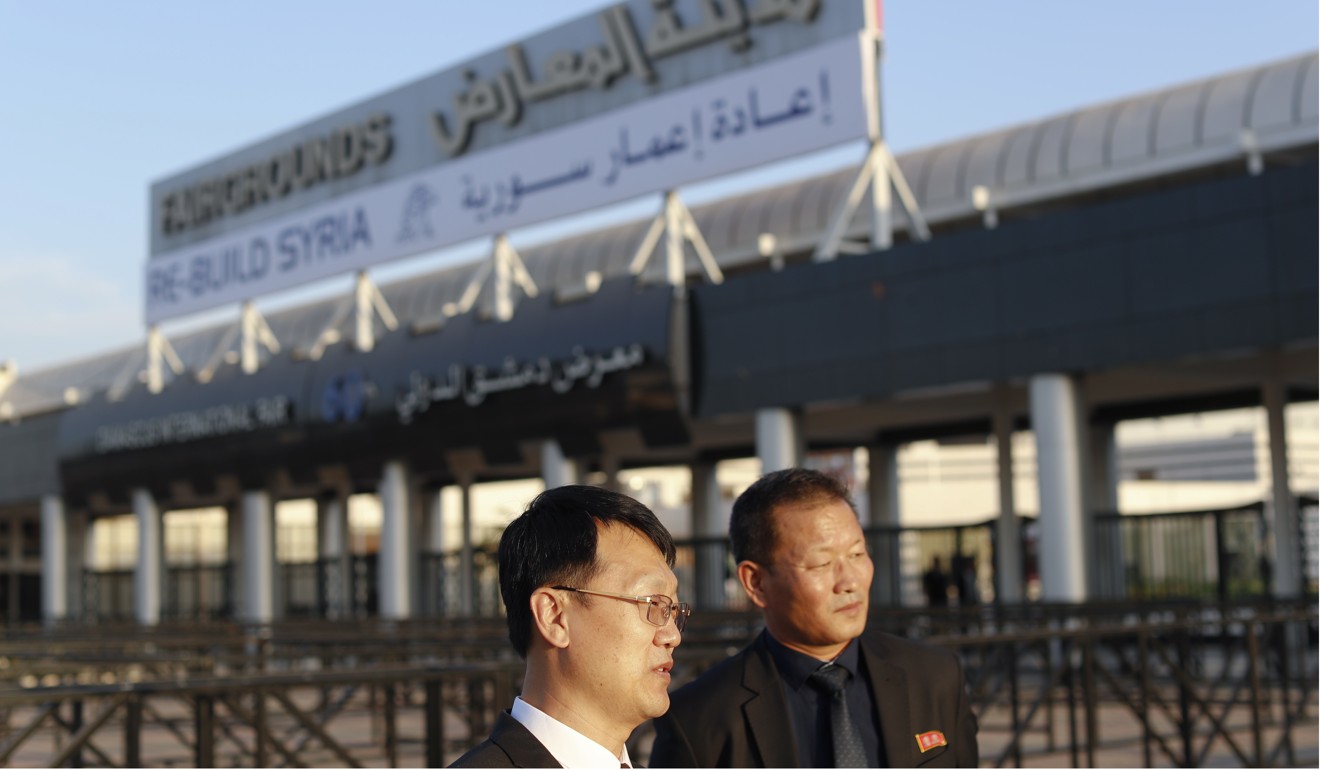
in September, China sent a delegation of 200 companies to the 60th Damascus International Fair, most of which are state-owned enterprises looking to tap in Syria and build a working relationship in its reconstruction process.
John Lee, a professor at the University of Sydney in Australia and a senior fellow at the Hudson Institute in Washington, said the troop withdrawal may also signal a rethinking of Washington’s Indo-Pacific policies.
“It represents a shift in strategic thinking [in the US] that the Middle East is becoming less important to America as more attention is being directed towards the Indo-Pacific,” he said.
“The US already views China as its primary and long-term challenge. This is brought out in the National Security Strategy, National Defence Strategy and in the speech by Vice-President Mike Pence.”
The US military’s Pacific Command has been renamed Indo-Pacific Command, and plans to upgrade equipment and weapons systems and enhance exercises with its regional allies. More specifically, it has increased patrols in the South China Sea to challenge China’s territorial claims.
In the past two years, the US navy has carried out eight freedom of navigation operations near the China’s controlled islands in the South China Sea.
However, Wu from Fudan University believes the use of US military forces in the Indo-Pacific will be limited. Their purpose, he said, was mainly to maintain a presence and profile of the US in the region for its allies and to pressure China.
“It’s unlikely that the US will take China’s South China Sea islands by force or force China to give up its ‘Maritime Silk Road’ plans,” he said, referring to Beijing’s strategy to boost infrastructure connectivity throughout Southeast Asia, Oceania and East African countries.
“I am not convinced the US will actually use military means in this region.”




 CHINDIA ALERT: You'll be living in their world, very soon


COMMENTS: 5