Archive for ‘India alert’

12/12/2019

Citizenship Amendment Bill: India calls in army to Assam and Tripura states

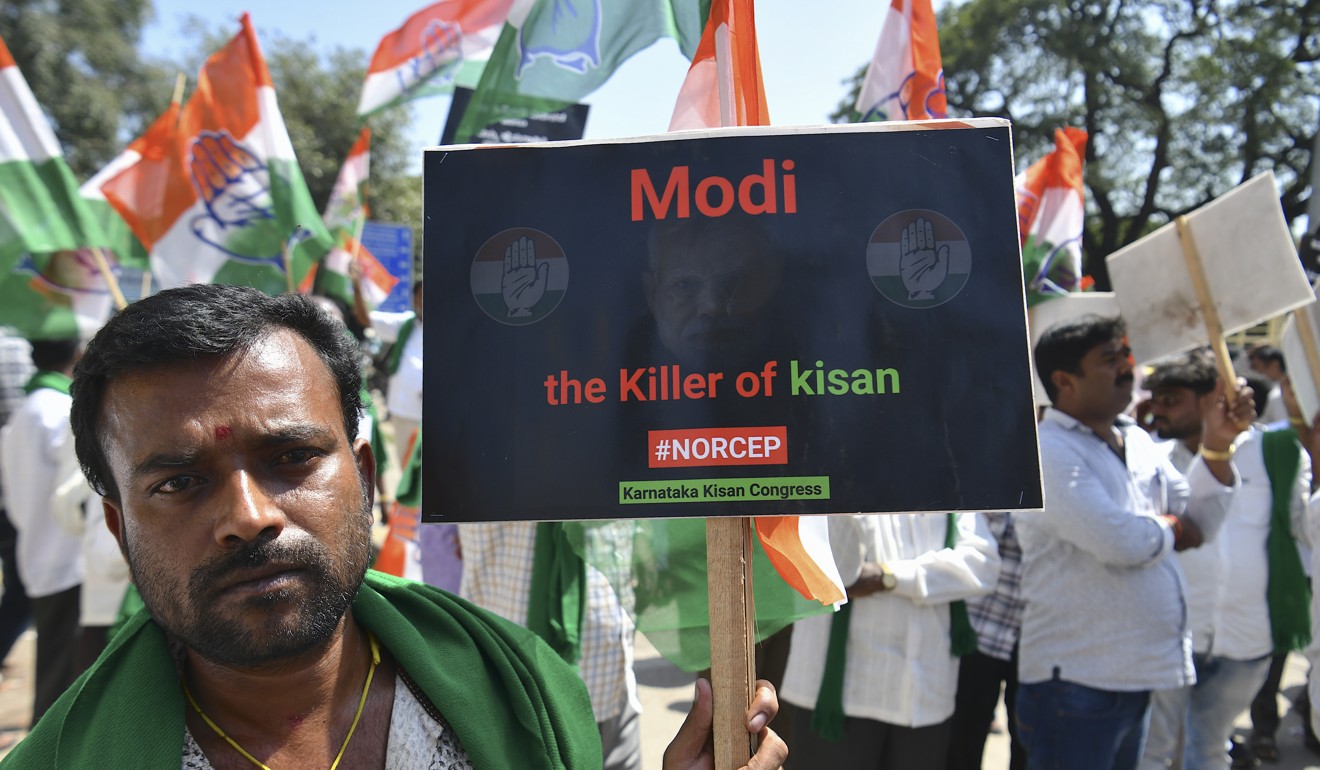
The army has been called into north-eastern India, after thousands of people defied curfews to protest against a new citizenship bill.

The Citizenship Amendment Bill (CAB) offers amnesty to non-Muslim illegal immigrants from three countries.

Critics say the bill discriminates against Muslims – but in the north-east, protesters claim they will be “overrun” by Hindus from Bangladesh.

Indian Prime Minister Narendra Modi has appealed for calm.

Officials said 20-30 people were injured in the demonstrations, and air and railway services have been severely impacted.

The bill – which applies to people from Afghanistan, Bangladesh and Pakistan – was passed in the upper house of parliament on Wednesday night.

It is yet to be ratified by the president, but that is merely a formality.

The ruling Hindu nationalist Bharatiya Janata Party says the CAB will give sanctuary to people fleeing religious persecution.

Illegal migration from Bangladesh has long been a concern in the north-east.
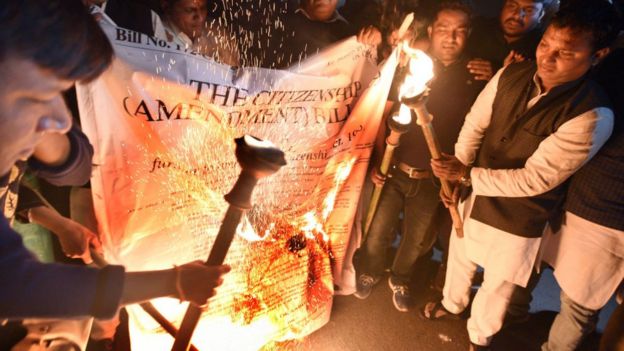
NYC National President Srinivas B.V with party supporters during a torch procession against the Citizenship Amendment Bill at Rajpath near India Gate, on December 11, 2019 in New Delhi, India. Normal life came to a halt on Tuesday in several states amid protests over the Citizenship (Amendment) Bill.Image copyright GETTY IMAGES

How bad are the protests?

Violent protests intensified on Thursday, and have been particularly bad in the states of Assam and Tripura, which border Bangladesh.

The army has deployed thousands of personnel, as protesters defy curfew orders and spill into the streets.

The protesters blocked roads and set vehicles on fire. There are reports that at least two railway stations have been burned down.

Railway services are suspended and some airlines have started offering rescheduling or cancellation fee waivers.

The AFP news agency reported that police fired blanks into the air in a bid to disperse crowds. They have also used tear gas shells.

Prime Minister Narendra Modi sought to reassure people in Assam, telling them they had “nothing to worry” about.


Read more about the Citizenship Amendment Bill:


“The central government and I are totally committed to constitutionally safeguard the political, linguistic, cultural and land rights of the Assamese people,” he tweeted.

However, with internet and mobile services shut down, it is unlikely residents would have been able to read the message.

The chief minister of Assam was stranded at the airport for several hours on Wednesday because roads were blocked by protests.

What do protesters want?

They want the bill to be repealed, as they say their ethnic and cultural identity is under threat from illegal migration.

Essentially, they do not want any migrants – regardless of religion – to be allowed into the state.

What is further fuelling passions in Assam, is the fact that two million residents – deemed to be illegal immigrants- were left off a citizens’ register last August.
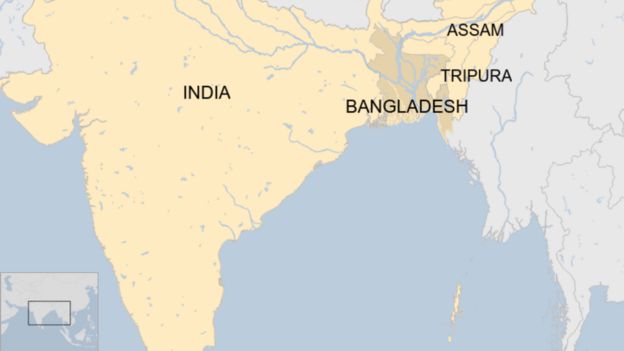
map

The National Register of Citizens (NRC) is a list of people who can prove they came to the state by 24 March 1971, a day before neighbouring Bangladesh became an independent country.

In the run-up to its publication, the BJP had supported the NRC, but changed tack days before the final list was published, saying it was error-ridden.

The reason for that was a lot of Bengali Hindus – a strong voter base for the BJP – were left off the list, and would possibly become illegal immigrants.

The CAB is seen as being linked to the register, although it is not the same thing.

It will help protect non-Muslims who are excluded from the register and face the threat of deportation or internment.

Has the bill been challenged?

The Indian Union Muslim League, a political party, has petitioned the country’s top court to declare the bill illegal.

In their petition to the Supreme Court, the Indian Union Muslim League argued that the bill violated articles of equality, fundamental rights and the right to life.

Source: The BBC
01/12/2019

India plans to invest $1.39 trillion in infrastructure to spur economy

NEW DELHI (Reuters) – India will unveil a series of infrastructure projects this month as part of a plan to invest 100 trillion rupees ($1.39 trillion/£1.08 trillion) in the sector over the next five years, the finance minister said on Saturday, in a push to improve the country’s economy.
Nirmala Sitharaman’s comments, as cited in local newspapers, followed data released on Friday that showed India’s economic growth slowed to 4.5% in the July-September quarter – its weakest pace since 2013 – upping the pressure on Prime Minister Narendra Modi’s government to speed reforms.
“A set of officers are looking into the pipeline of projects that can be readied so that once the fund is ready, it could be front-loaded on these projects,” Sitharaman said at a business summit in Mumbai, the newspapers reported.
“That task is nearly completed. Before December 15, we will be able to announce frontloading of at least ten projects,” she said.
Modi came to power in 2014 on the promise to improve India’s economy and boost foreign investments, but he has struggled to meet those aims due to a lack of structural reforms. Modi won a second term in May and has taken various measures since 2014 to spur growth, including cutting the corporate tax and speeding up privatisation of state-run firms.
But several economic indicators show domestic consumption is weak, and many economists expect the current slowdown could persist for another two years.
Source: Reuters
30/11/2019

Rediscovering the forgotten Indian artists of British India

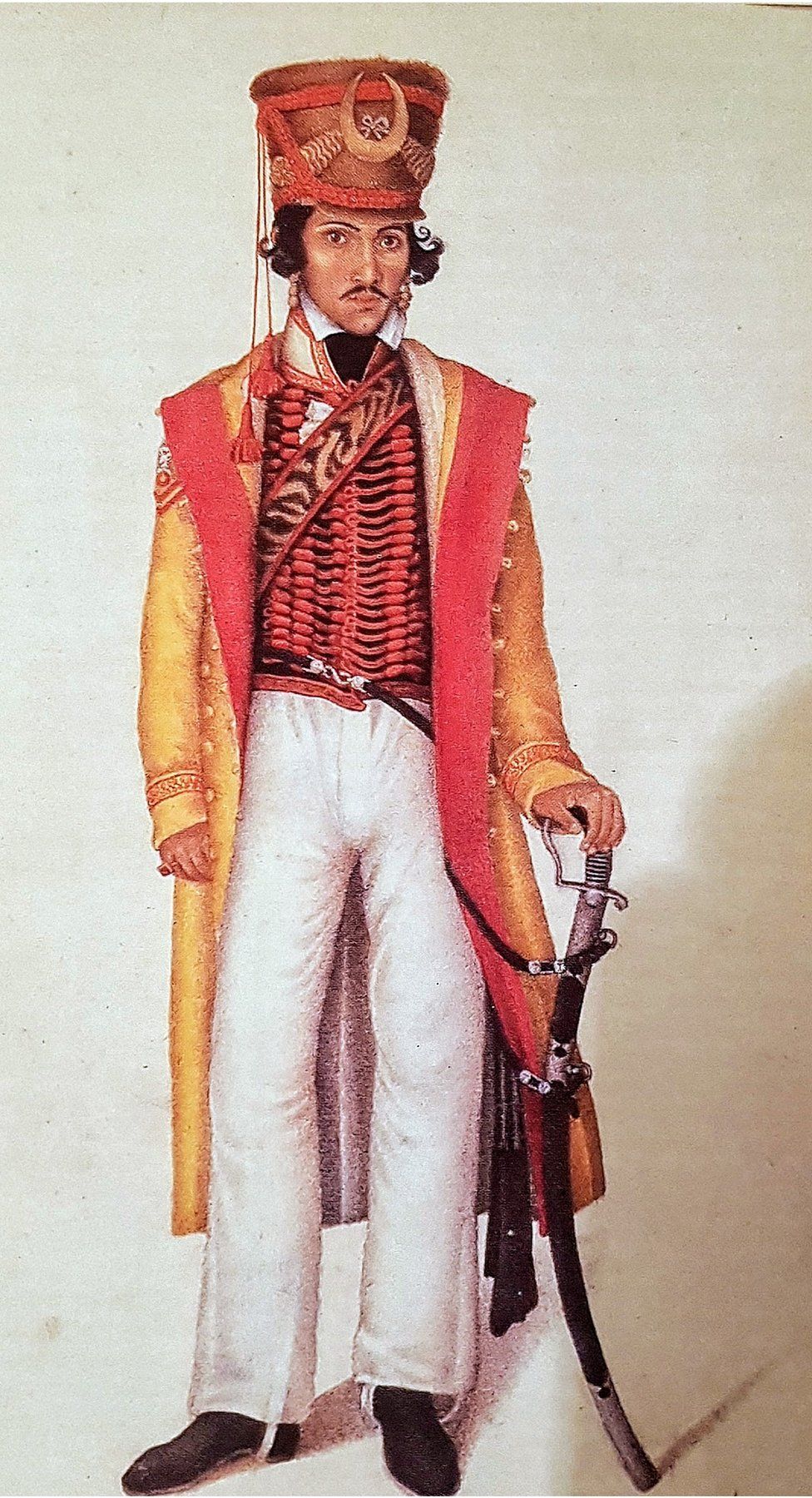
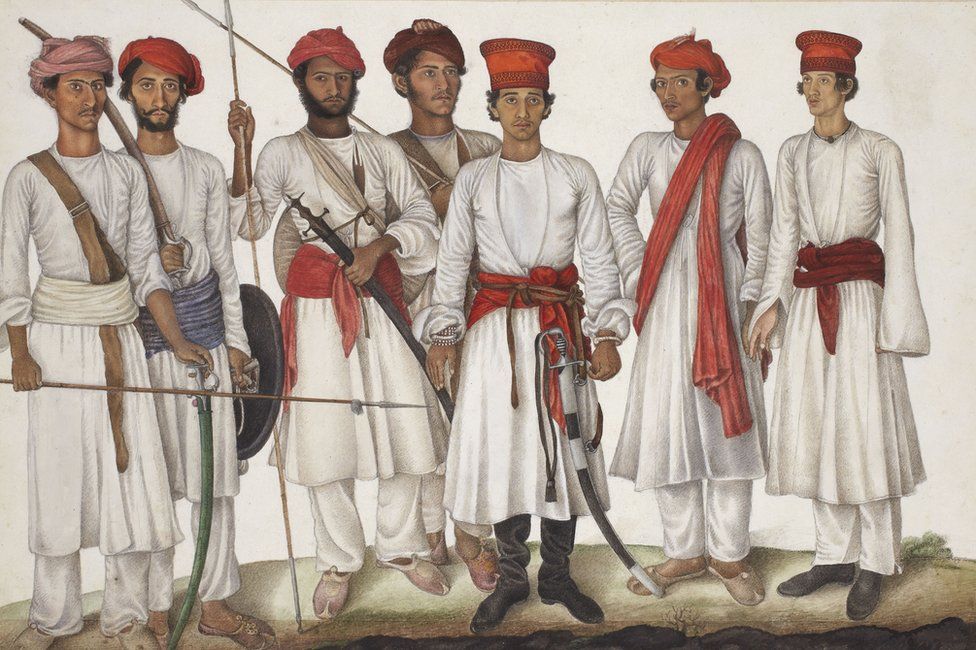
A group of Indian troopers who fought for the English by Ghulam Ali Khan, 1815-16Image copyright PEMILLE KLEMP
Image caption A group of Indian troopers who fought for the English, Ghulam Ali Khan, 1815-16

The English East India Company, founded in 1600, was established for trading. But as the powerful multinational corporation expanded its control over India in the late 18th Century, it commissioned many remarkable artworks from Indian painters who had previously worked for the Mughals. Writer and historian William Dalrymple writes about these hybrid paintings which explore life and nature.

Calcutta in the late 1770s was Asia’s biggest boom town: known as the City of Palaces, the East India Company’s bridgehead in Bengal had doubled in size to 400,000 inhabitants in a decade.

It was now unquestionably the richest and largest colonial city in the East – though certainly not the most orderly.

“It would have been so easy to turn it into one of the most beautiful cities in the world,” wrote the Count de Modave, a friend of Voltaire who passed through at this time. “One cannot fathom why the English allowed everyone the freedom to build in the most bizarre taste, with the most outlandish planning.”

Nor were visitors much taken by its English inhabitants. Most had come East with just one idea: to amass a fortune in the quickest possible time.

Impey
Image caption An Indian trooper who fought for the English, Ghulam Ali Khan, 1819
Calcutta (now Kolkata) was a city where great wealth could be accumulated in a matter of months, then lost in minutes in a wager or at the whist table. Death, from disease or excess, was a commonplace, and the constant presence of mortality made men hard and callous.

Rising with Olympian detachment above the mercantile bawdiness of his contemporaries was the rotund figure of the chief justice of the new Supreme Court, Sir Elijah Impey.

A portrait of him by Johan Zoffany still hangs, a little lopsidedly, in the Kolkata High Court. It shows him pale and plump, ermine gowned and dustily bewigged.

Impey was, however, a serious scholar and unusual in taking a serious interest in the land to which he had been posted.

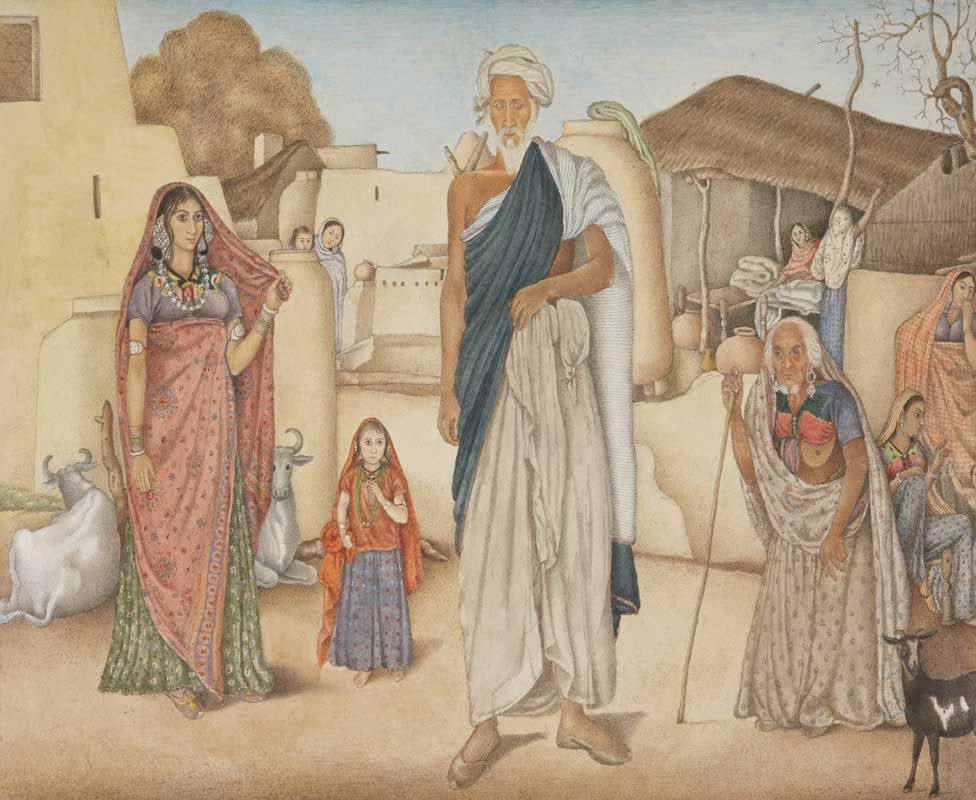
Indian villagers by Ghulam Ali Khan, 1815-16Image copyright PEMILLE KLEMP
Image caption Indian villagers by Ghulam Ali Khan, 1815-16Presentational white space

On the journey out to India, a munshi (administrator) had accompanied him to teach him Bengali and Urdu, and on arrival the new chief justice began to learn Persian and collect Indian paintings. His house became a meeting place where the more cultured elements of Calcutta society could discuss history and literature.

Impey and his wife Mary were also greatly interested in natural history and began to collect a menagerie of rare Indian animals.

At some stage in the mid-1770s, the Impeys decided to bring a group of leading Mughal artists – Sheikh Zain ud-Din, Bhawani Das and Ram Das – to paint their private zoo.

It was probably not the first commission of Indian artists by British patrons. “The Study of Botany is of late Years become a very general Amusement,” noted one enthusiast, and we know that the Scottish nurseryman James Kerr was sending Indian-painted botanical drawings back to Edinburgh as early as 1773.

But the Impeys’ albums of natural history painting remain among the most dazzlingly successful of all such commissions: today, a single page usually reaches prices of more than £330,000 ($387,000) at auctions, and the 197 images from the Impey Album are now widely recognised as among the very greatest glories of Indian painting.

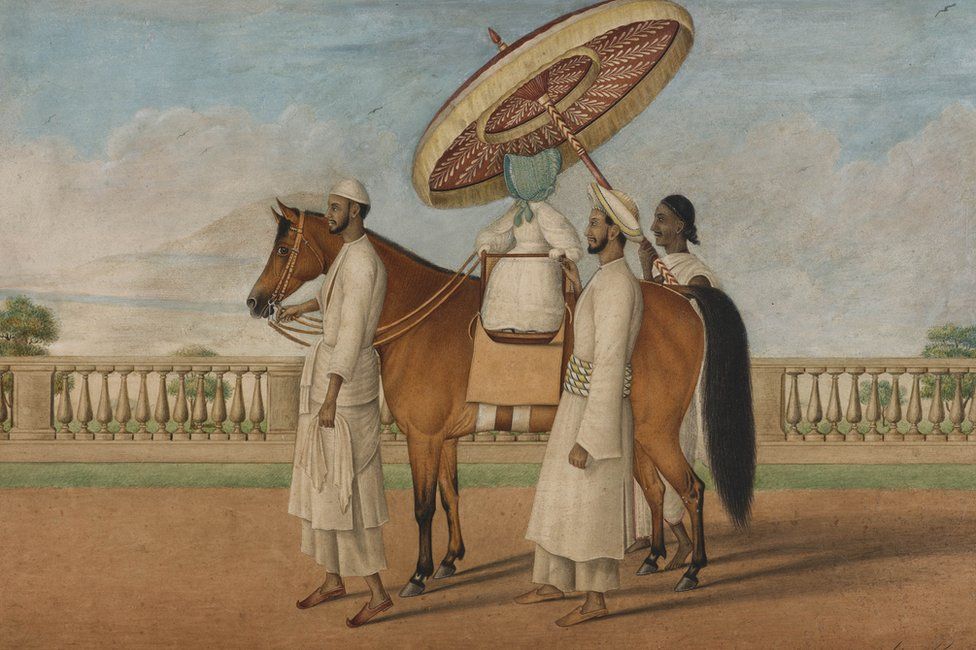
English child seated on a pony and surrounded by three Indian servants, 1830-1850Image copyright FRANCIS WARE
Image caption English child seated on a pony and surrounded by three Indian servants by Shaikh Muhammad Amir

This month, for the first time since the Impey Album was split up in the 18th Century, around 30 of its pages will be reassembled for a major exhibition in the Wallace Collection in London.

Forgotten Masters: Indian Painting for the East India Company celebrates some of the extraordinary work which resulted from commissions made by East India Company patrons from master Indian artists between the 1770s and 1840s.

It will be a unique chance to see some of the finest Indian paintings which are now scattered in private collections around the world.

The three artists who Impey summoned to his fine classical house in Middleton Street were all from Patna, 200 miles (320km) up the Ganges.

The most prolific was a Muslim, Shaikh Zain-al-Din, while his two colleagues, Bhawani Das and Ram Das, were both Hindus.

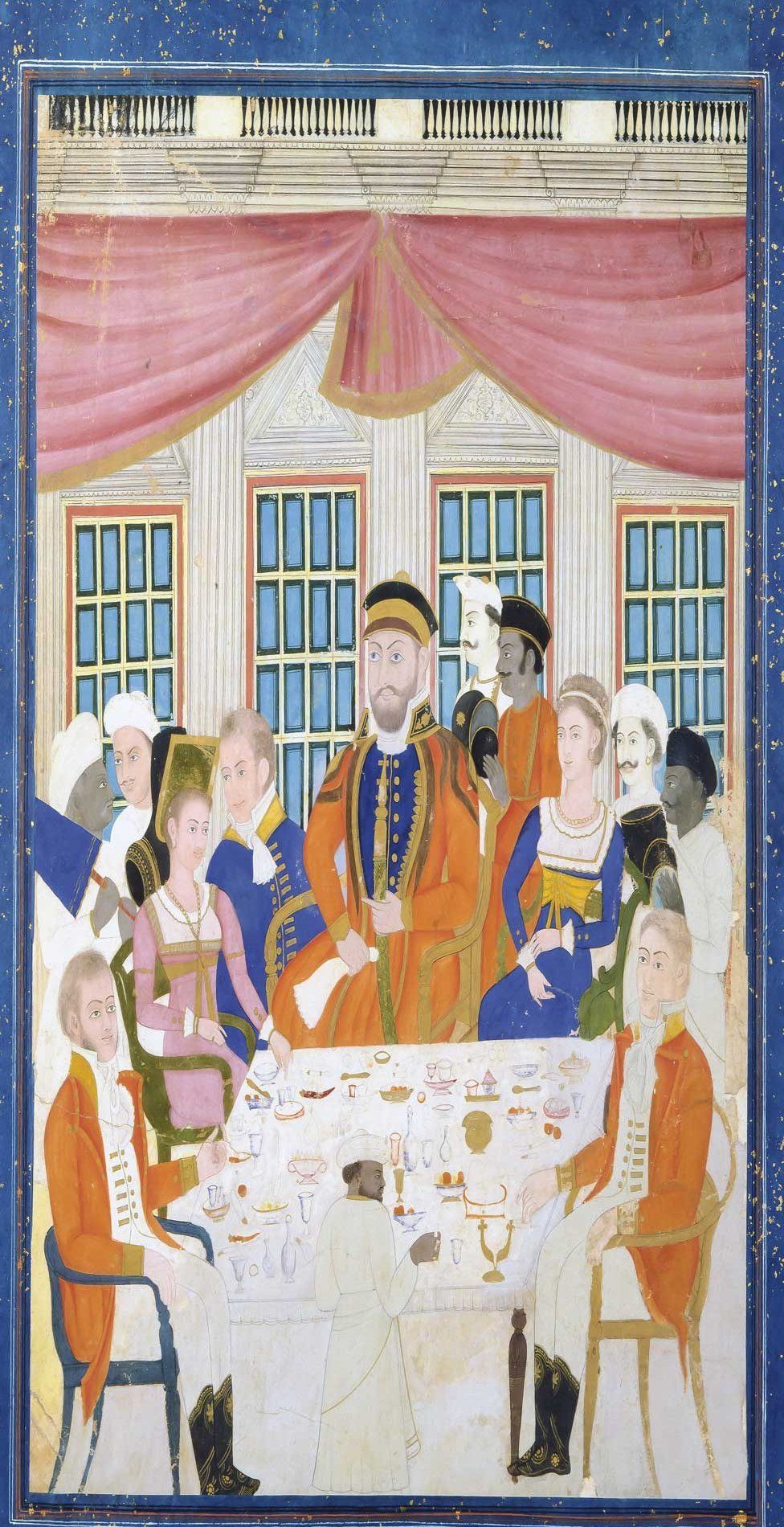
A finely painted miniature depicting four British officers with their wives taking refreshments at a table
Image caption A finely painted miniature depicting four British officers with their wives taking refreshments at a table, artist unknown

Trained in the late Mughal style and patronised by the Nawabs of Murshidabad and Patna, they quickly learned to use English watercolours on English Watman watercolour paper, and take English botanical still lives as their models. In this way an extraordinary fusion of English and Mughal artistic impulses took place.

Zain ud-Din’s best works reveal a superb synthesis between a coldly scientific European natural history specimen illustration, warmed with a profoundly Indian sensibility and vital feeling for nature.

At his best – whether by instinct or inherited knowledge and training – he channels the outstanding Mughal achievement in natural history painting of 150 years earlier, when the great Mughal artist Mansur painted animals and birds for the Emperor Jahangir.

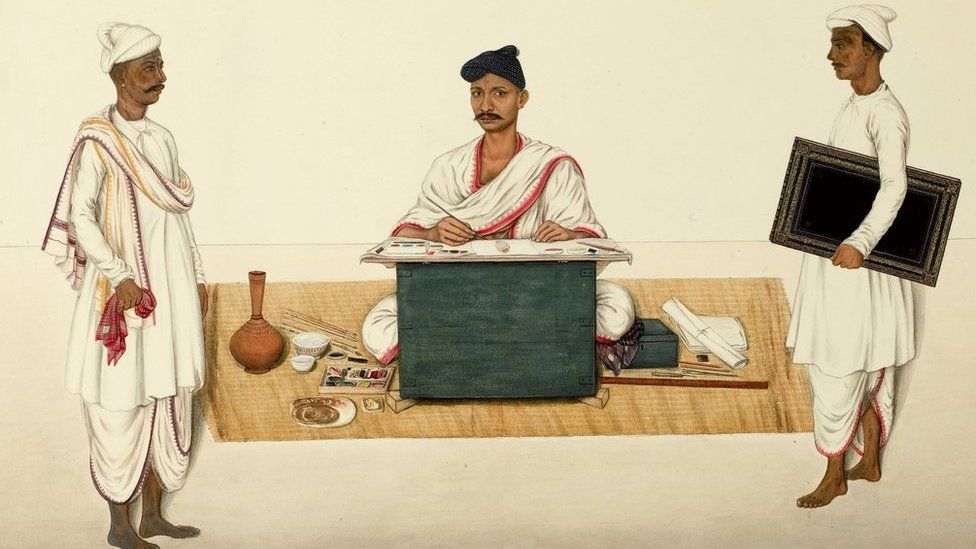
A man sits and draws while attended by two other men
Image caption Portrait of a Mughal artist, by Yellapah Of Vellore, 1832-1835

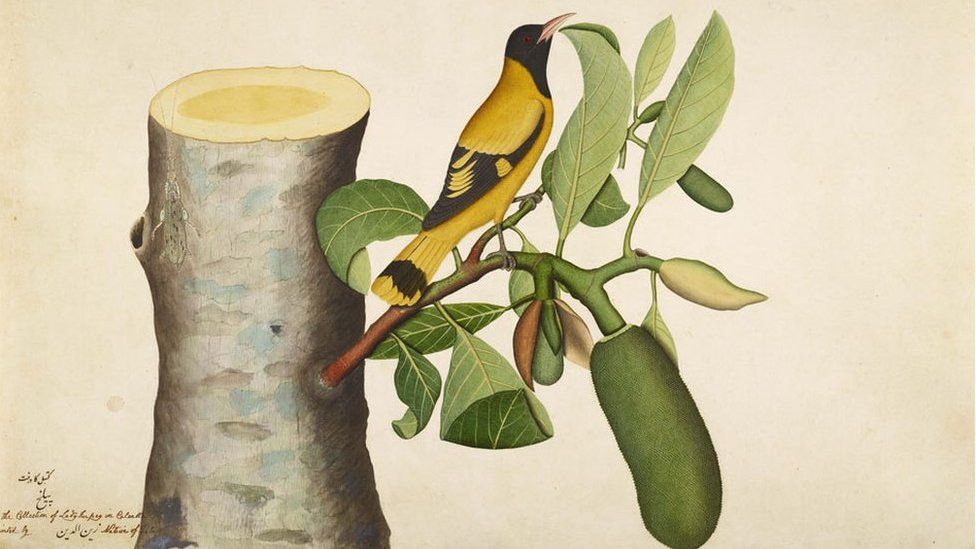
Nowhere are the merits of Company Painting better illustrated than in Zain ud-Din’s astonishing portrait of a Black Headed Oriole (No. 27).

At first glance, it could pass for a remarkably skilful English natural history painting. Only gradually does its hybrid origins become manifest.

The brilliance and simplicity of the colours, the meticulous attention to detail, the gem-like highlights, the way the picture seems to glow, all these point unmistakably towards Zain ud-Din’s Mughal training.

Zain Ud din’s portrait of black headed oriole
Image caption Portrait of a black headed oriole by Zain ud-Din

An idiosyncratic approach to perspective also hints at this background: the tree trunk is rounded, yet the grasshopper which sits on it is as flat as a pressed flower, with only a hint of outline shading to give it depth – the same technique used by Mansur.

Yet no artist working in a normal Mughal atelier would have placed his bird detached from a landscape against a white background, with the jackfruit tree on which its sits cut into a perfect, scientific cross-section.

Equally no English artist would have thought of painting the bark of that cross section the same brilliant yellow as the oriole; the tentative washes of a memsahib’s watercolour are a world away.

The two traditions have met head on, and from that blinding impact an inspirational new fusion has taken place.

Bhawani Das, who seems to have started off as an assistant to Zain ud-Din, is almost as fine an artist as Zain ud-Din.

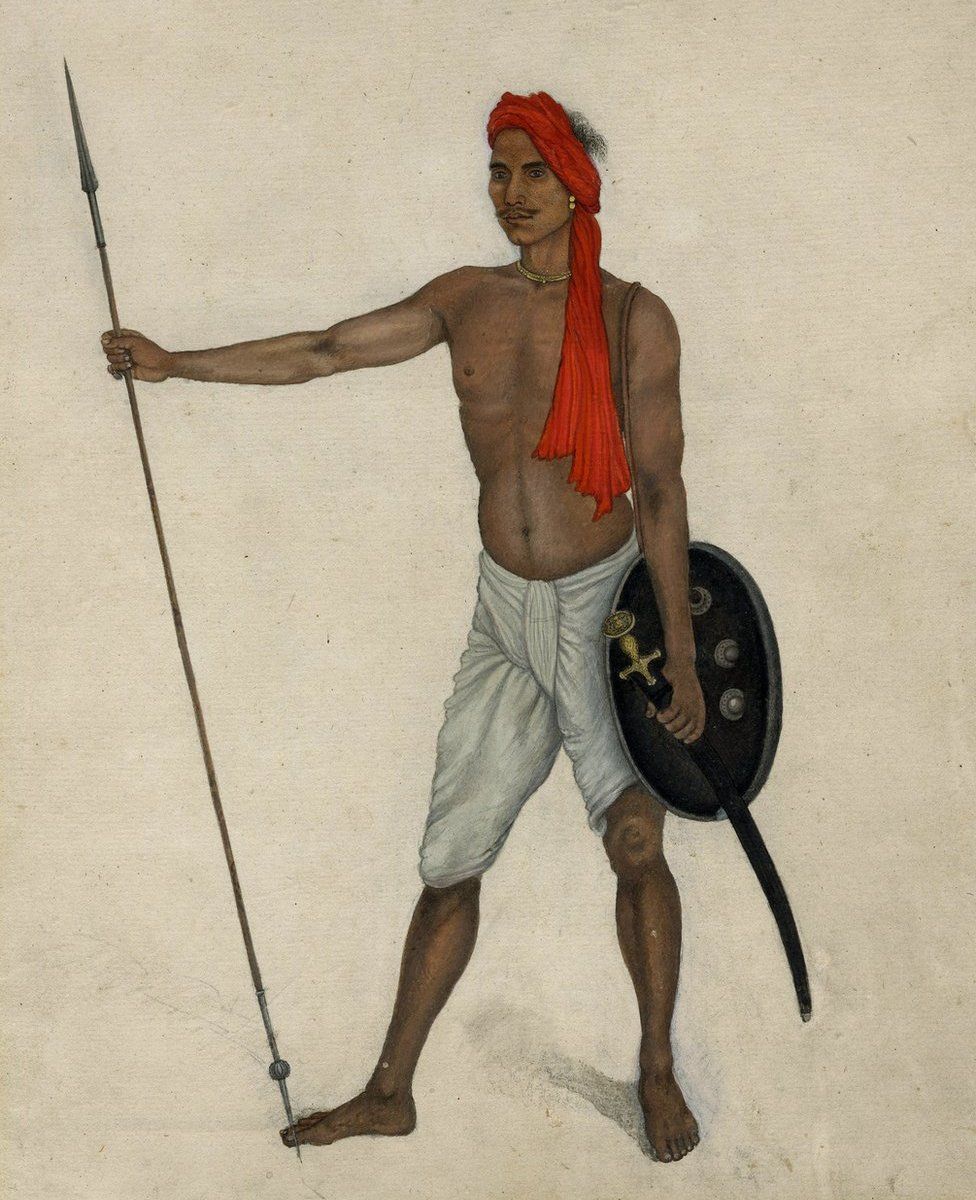
Indian trooper holding a spear by Ghulam Ali Khan, 1815-186
Image caption Indian trooper holding a spear by Ghulam Ali Khan, 1815-186

He is acutely sensitive to shape, texture and expression, as for example in his celebrated study of a great fruit bat with the contrast between its soft, furry body with the angular precision of its blackly outstretched wings, as if it were some caped Commendatore ushering a woman into a Venetian opera rather than a creature in a colonial menagerie.

Now, for the first time, the work of these great Indian artists painting in this brilliantly hybrid Anglo-Indian style are beginning to get the attention they deserve.

The first-ever museum show of this work in the UK aims to highlight and showcase the work of a series of extraordinary Indian artists, each with their own style and tastes and agency. Indeed the greatest among them – such as Zain ud-Din- deserve to be remembered as among the most remarkable Indian artists of all time.

William Dalrymple is the author, most recently, of The Anarchy: The Relentless Rise of the East India Company and Forgotten Masters: Indian Painting for the East India Company (Bloomsbury)

Source: The BBC

15/11/2019

Xi urges BRICS countries to champion multilateralism

BRAZIL-BRASILIA-CHINA-XI JINPING-BRICS-SUMMIT

Chinese President Xi Jinping delivers a speech entitled “Together for a New Chapter in BRICS Cooperation” at the 11th summit of BRICS in Brasilia, Brazil, Nov. 14, 2019. The 11th summit of BRICS, an emerging-market bloc that groups Brazil, Russia, India, China and South Africa was held on Thursday in Brasilia. Brazilian President Jair Bolsonaro presided over the summit. Chinese President Xi Jinping, Russian President Vladimir Putin, Indian Prime Minister Narendra Modi and South African President Cyril Ramaphosa also attended the summit. (Xinhua/Li Xueren)

BRASILIA, Nov. 14 (Xinhua) — Chinese President Xi Jinping on Thursday called on the BRICS countries to undertake their due obligations in championing and practicing multilateralism.

Xi made the appeal in a speech entitled “Together for a New Chapter in BRICS Cooperation” at the 11th summit of BRICS, an emerging-market bloc that groups Brazil, Russia, India, China and South Africa.

Noting that the summit was held at a time when crucial developments are taking place in the world economy and international landscape, Xi pointed out that a new round of technological revolution and industrial transformation is in the ascendant, and the unstoppable rise of emerging markets and developing countries has injected strong impetus to the reform of the global economic governance system.

Nevertheless, there are also causes for concern, Xi said, referring to rising protectionism and unilateralism; greater deficit of governance, development and trust; and growing uncertainties and destabilizing factors in the world economy.

Faced with profound changes rarely seen in a century, Xi said, the BRICS countries should grasp the trend of the times, respond to the call of the people, and shoulder their responsibilities.

“We must remain true to our unwavering commitment to development and strengthen solidarity and cooperation for the well-being of our people and for the development of our world,” he said, before laying out a three-pronged proposal.

First, the BRICS countries should work to foster a security environment of peace and stability, he said, urging the five members to safeguard peace and development for all, uphold fairness and justice, and promote win-win results.

“It is important that we uphold the purposes and principles of the UN Charter and the UN-centered international system, oppose hegemonism and power politics, and take a constructive part in settling geopolitical flash points,” he said.

The BRICS countries should also maintain close strategic communication and coordination and speak in one voice for a more just and equitable international order, he added.

Second, the BRICS countries should pursue greater development prospects through openness and innovation, said the Chinese president.

The five-member bloc should deepen the BRICS Partnership on New Industrial Revolution, and strive for more productive cooperation in such fields as trade and investment, digital economy and connectivity, so as to achieve high-quality development, Xi said.

He called for the five countries to advocate extensive consultation, joint contribution and shared benefits in global governance, and push for reform of the global economic governance system.

The BRICS countries should stand firm against protectionism, uphold the WTO-centered multilateral trading system, and increase the voice and influence of emerging markets and developing countries in international affairs, Xi said.

The Chinese president also urged the BRICS member states to prioritize development in the global macro policy framework, follow through the UN 2030 Agenda for Sustainable Development and the Paris Agreement on climate change, and promote coordinated progress in the economic, social and environmental spheres.

Third, the BRICS countries should promote mutual learning through people-to-people exchanges and take their people-to-people exchanges to greater breadth and depth, said Xi.

Xi proposed to leverage “BRICS Plus” cooperation as a platform to increase dialogue with other countries and civilizations to win BRICS more friends and partners.

In his speech, the president also stressed that China will open up still wider. “We will import more goods and services, ease market access for foreign investments, and step up intellectual property protection. With these efforts, we will break new ground in pursuing all-dimensional, multi-tiered and all-sectoral opening-up in China,” he said.

China will continue to act in the principle of extensive consultation, joint contribution and shared benefits, and pursue open, green and clean cooperation within the framework of the Belt and Road Initiative, Xi said.

“We will continue to follow a high-standard, people-centered, and sustainable approach to promote high-quality Belt and Road cooperation with partner countries,” he said.

China, added the president, will stay committed to an independent foreign policy of peace and to the path of peaceful development, and continue to enhance friendship and cooperation with all other countries on the basis of the Five Principles of Peaceful Coexistence.

China is committed to working with Africa for an even stronger China-Africa community with a shared future, Xi said, adding that China will pursue closer cooperation with Latin America and the Caribbean (LAC) in various areas and build a China-LAC community with a shared future and common progress.

Meanwhile, China strives for an Asia-Pacific community with a shared future that features openness and inclusiveness, innovation-driven growth, greater connectivity, and mutually beneficial cooperation, Xi said.

“All in all, China will work with the rest of the international community toward the goal of building a new type of international relationship and of building a community with a shared future for mankind,” he said.

Source: Xinhua

14/11/2019

Sabarimala temple: India court to review ruling on women’s entry

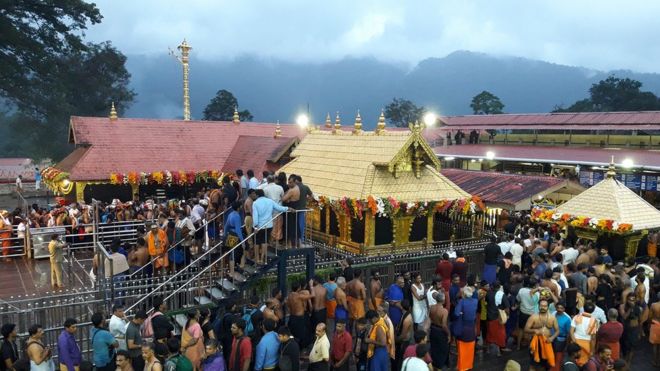
Devotees inside the Sabarimala templeImage copyright KAVIYOOR SANTHOSH
Image caption Sabarimala is one of the most prominent Hindu temples in the country

India’s Supreme Court has agreed to review its landmark judgement allowing women of menstruating age to enter a controversial Hindu shrine.

A five-judge bench last year ruled that keeping women out of the Sabarimala shrine in the southern state of Kerala was discriminatory.

The verdict led to massive protests in the state.

Women who tried to enter the shrine were either sent back or, in some cases, even assaulted.

The move is likely to anger women who fought hard to win the right to enter the temple.

Hinduism regards menstruating women as unclean and bars them from participating in religious rituals.

Many temples bar women during their periods and many devout women voluntarily stay away, but Sabarimala had a blanket ban on all women between the ages of 10 and 50.

What did the court say?

On Thursday the five-judge bench, responding to dozens of review petitions challenging the court’s landmark judgement last year, said that the matter would now be heard by a larger bench.

In doing so, however, it did not stay its earlier order. This means women can still legally enter the temple.

But it’s not going to be easy for them.

Two women trying to enter the temple in full riot gear
Image caption Some women tried to enter the temple last year

A temple official welcomed the ruling and appealed to women to stay away.

Women trying to enter the temple after the verdict last year were attacked by mobs blocking the way.

Many checked vehicles heading towards the temple to see if any women of a “menstruating age” – deemed to be those aged between 10 and 50 years – were trying to enter.

Following Thursday’s verdict, police in Kerala have appealed for calm, saying that action will be taken “against those who take the law into their own hands”. They added that social media accounts would be under surveillance and those stoking religious tensions online would be arrested.line

‘One step forward, two steps back’

Geeta Pandey, BBC News, Delhi

Today’s verdict will come as a massive disappointment to women’s rights campaigners. It’s a case of one step forward, two steps back.

In 2018, while lifting the ban on women’s entry into the shrine, the Supreme Court had said that everyone had the right to practice religion and that the ban was a form of “untouchability”.

It was seen as a hugely progressive ruling and had given hope to women that they were equal before the law and could now claim equality before the gods too. What happened in court today has taken that sense away.

The Supreme Court has not put its earlier order on hold, but with the ambiguity over women’s entry continuing, it’s very likely they could be kept out in the name of keeping peace.

With the case now to be reopened by a larger seven-judge bench, the fight will have to be fought all over again.line

Why is the temple so controversial?

Part of the violent opposition to the Supreme Court order to reverse the temple’s historical ban on women was because protesters felt the ruling goes against the wishes of the deity, Lord Ayappa, himself.

While most Hindu temples allow women to enter as long as they are not menstruating, the Sabarimala temple is unusual in that it was one of the few that did not allow women in a broad age group to enter at all.

Hindu devotees say that the ban on women entering Sabarimala is not about menstruation alone – it is also in keeping with the wish of the deity who is believed to have laid down clear rules about the pilgrimage to seek his blessings.

Indian Police patrol during clashes between Communist Party of India (Marxist) (CPM) and Bhartiya Janta Party (BJP) in front of the Kerala Government Secretariat in Thiruvnanthapuram on January 02, 2019Image copyright GETTY IMAGES
Image caption The entry of women into the Sabarimala temple sparked angry scenes

Every year, millions of male devotees trek up a steep hill, often barefoot, to visit the shrine. They also undertake a rigorous 41-day fast, abstaining from smoking, alcohol, meat, sex and contact with menstruating women before they begin the journey.

Women’s rights campaigners who appealed to the Supreme Court to lift the ban said that this custom violated equality guaranteed under India’s constitution. They added that it was prejudiced against women and their right to worship.

Supporters of the ban argued that the practice had been in effect for centuries, and there was no need to change it now.

So, were any women able to enter last year?

In January, two women defied protesters and entered the shrine.

Kanakadurga, 39, and Bindu Ammini, 40, made history when they entered the Sabarimala shrine – but they had to do so under heavy police protection and were also met with massive protests after.

Right-wing groups, supported by India’s ruling Hindu nationalist Bharatiya Janata Party (BJP), demanded a state-wide shutdown after, and businesses and transportation became paralysed.

Across the state hundreds were arrested, and at least one person was killed in clashes.

In an interview with the BBC, the women said they felt it necessary to uphold women’s rights and they weren’t afraid of mobs “enraged” by their actions.

Media caption One of the women who defied protesters to enter the Sabarimala temple says she has ‘no fear’

“I am not afraid. But every time women make any progress, society has always made a lot of noise,” Ms Kanakadurga told the BBC in January.

But their decision to enter the temple also came at heavy personal cost.

She alleged that she had been beaten by her mother-in-law and abandoned. She has since filed for divorce.

Source: The BBC
12/11/2019

Guru Nanak: Sikh founder’s 550th birthday celebrated

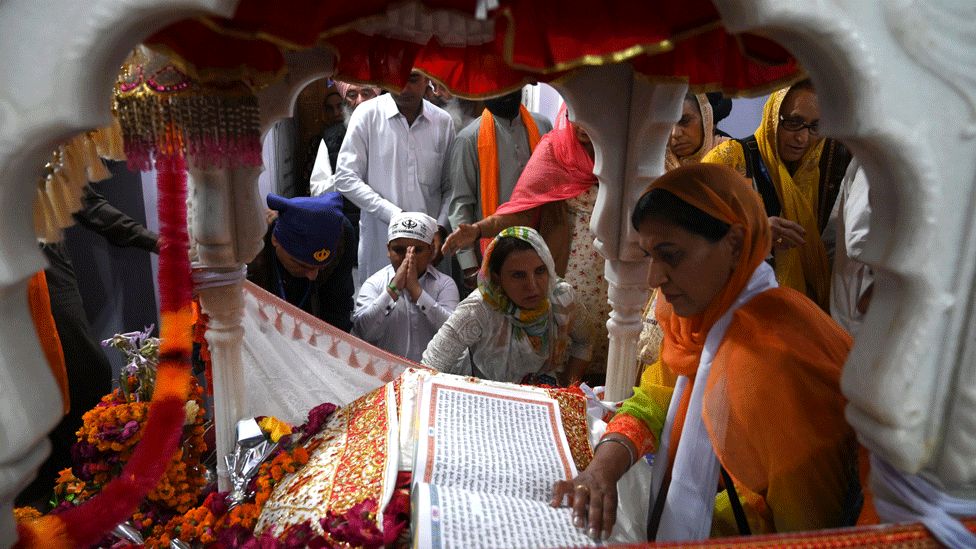
Sikh pilgrims take part in a religious ritual as they gather to celebrate the 550th birth anniversary of Guru Nanak Dev, at Nankana SahibImage copyright AFP
Celebrations have taken place in India and Pakistan to mark the 550th anniversary of the birth of Guru Nanak – the founder of Sikhism.

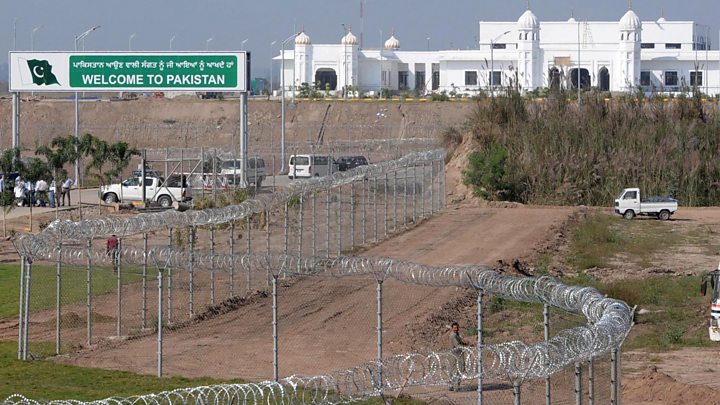
The anniversary comes just a few days after the historic opening of the Kartarpur corridor, which allows Indians access to one of Sikhism’s holiest shrines in Pakistan without having to apply for a visa.

Tensions between the neighbours have made it difficult for Indian pilgrims to visit the site in Pakistan in recent years. But an agreement reached last month allows Indians to make the 4km (2.5-mile) crossing to the Gurdwara Darbar Sahib Kartarpur – where Guru Nanak spent the last 18 years of his life.

On Tuesday, Sikh pilgrims in Pakistan gathered at Nankana Sahib, the birth place of Guru Nanak, which is about 80km (50 miles) from the city of Lahore.

Sikh pilgrims take part in a religious ritual as they gather to celebrate the 550th birth anniversary of Guru Nanak Dev, at Nankana SahibImage copyright AFP

Large numbers of devotees, including women, took part in the religious rituals.

Sikh pilgrims take part in a religious ritual as they gather to celebrate the 550th birth anniversary of Guru Nanak Dev, at Nankana SahibImage copyright AFP

The auspicious day for Sikhs was also marked in India, where Guru Nanak’s birth anniversary is an annual public holiday.

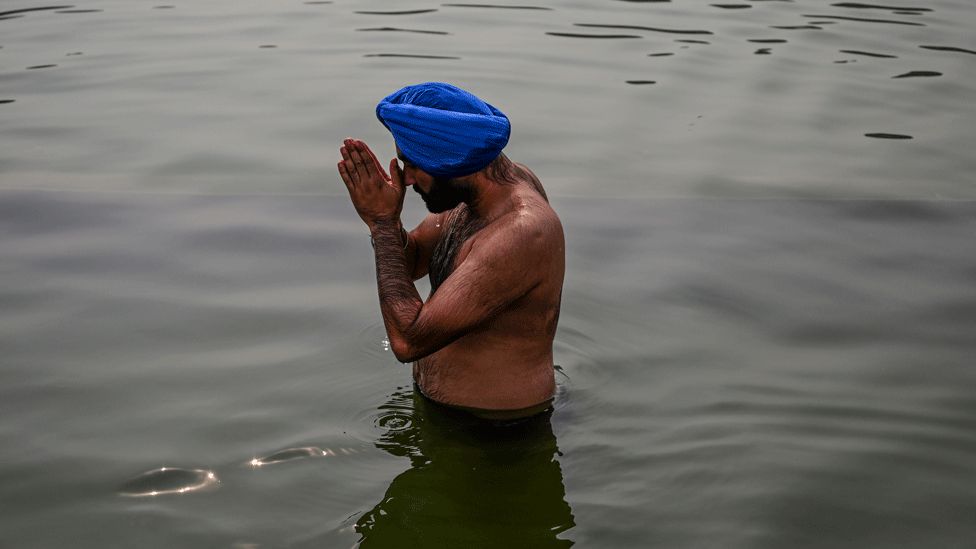
A Sikh devotee takes a holy dip on the occasion of the 550th birth anniversary of Sikhism founder Guru Nanak Dev at Gurudwara Bangla Sahib in New Delhi on November 12, 2019Image copyright AFP
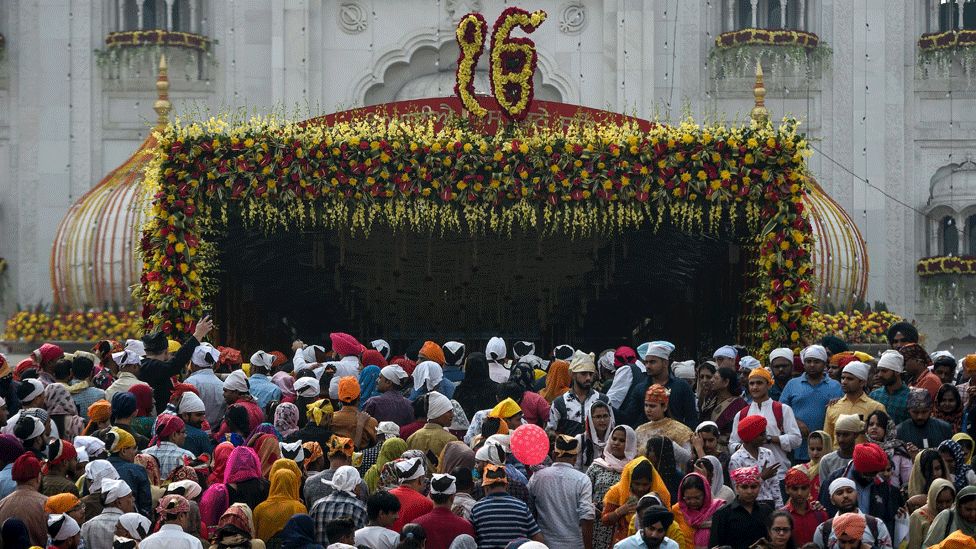
Sikh devotees gathered in huge numbers at the Bangla Sahib Gurdwara in the capital Delhi.
Sikh devotees gather to pay their respects on the occasion of the 550th birth anniversary of Sikhism founder Guru Nanak Dev at Gurudwara Bangla Sahib in New Delhi on November 12, 2019Image copyright AFP

Indian Prime Minister Narendra Modi greeted the nation on the occasion, saying it was “a day to rededicate ourselves” to Guru Nanak’s “dream of a just, inclusive and harmonious society”.

Though Guru Nanak’s anniversary is an important event for Sikhs annually, this time the celebrations were more special due to the opening of the Kartarpur corridor.

Devotees from across the world visit the Kartarpur shrine every year to commemorate his birth. Indian Sikhs will now be able to visit with just their passports, but they will not be allowed to leave the site or stay overnight.

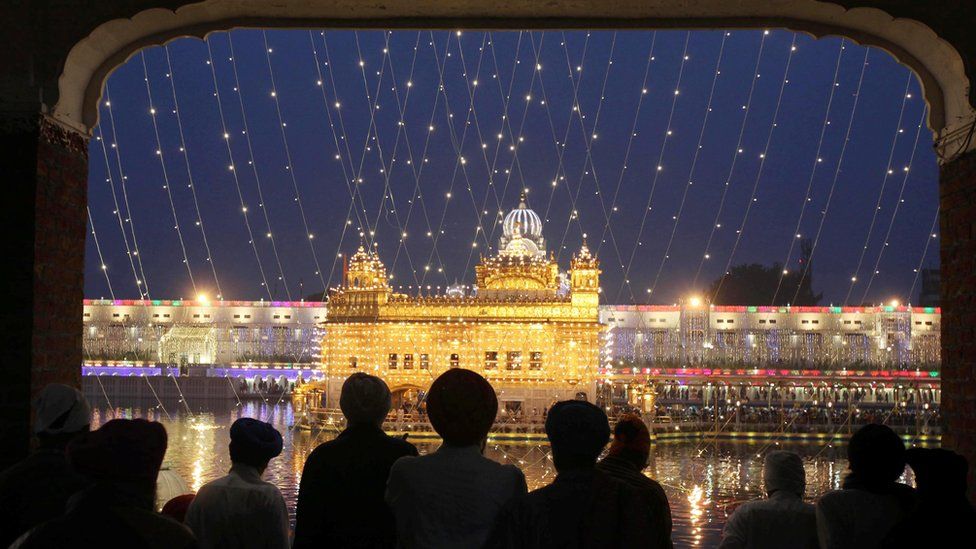
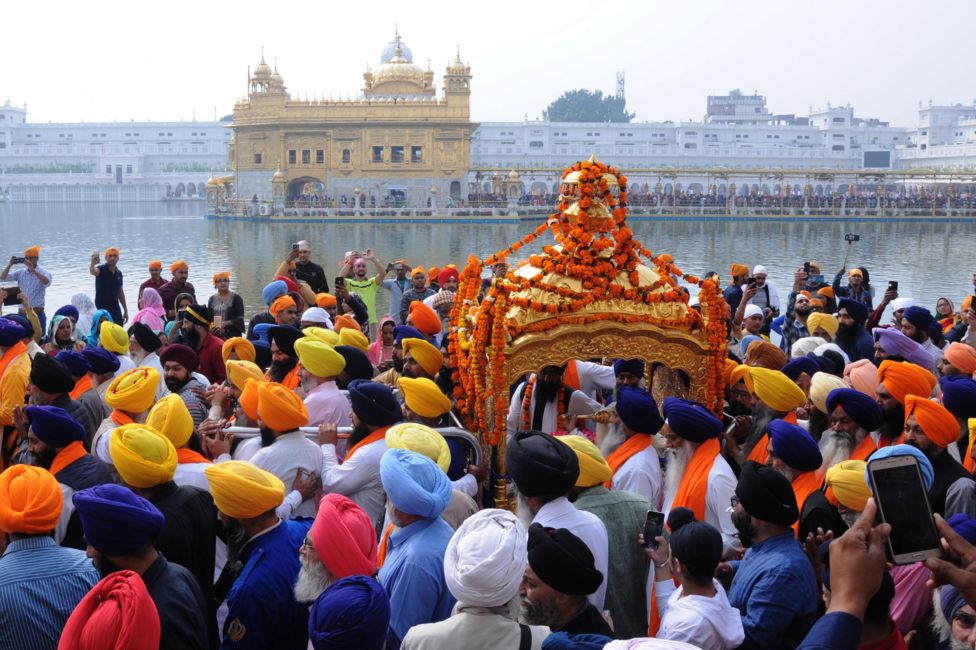
The Golden Temple in Amritsar, in north-western India, is the holiest Gurdwara (where Sikhs worship). On the eve of the anniversary, it was lit up to host processions as Sikh worshippers took part in the three-day celebration of Guru Nanak’s birth.

The Golden Temple lit up as Sikhs watch from a windowImage copyright REUTERS
On the first day of the celebrations, Sikhs read the Sikh holy book – the Guru Granth Sahib – from beginning to end.

As is the tradition on the second day, the holy book was paraded through the streets of Amritsar on Monday in a hand-held carriage.

The procession was led by five people representing the original Panj Pyare – the Five Beloved Ones – who helped shape the religion.

Sikh devotees carrying the Sri Guru Granth Sahib ji - the holy book of Sikh religion - in a hand-held, golden carriageImage copyright EPA
You might also be interested in:

Media caption Find out more about the Kartarpur corridor, which leads to one of the holiest sites in the Sikh religion

Source: The BBC
11/11/2019

Cyclone Bulbul kills 13 across India and Bangladesh

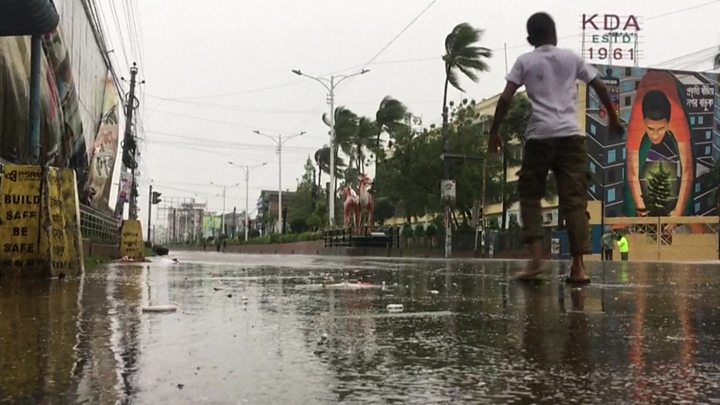
Cyclone Bulbul has ripped through coastal areas of Bangladesh and India, killing at least 13 people while more than two million others were forced to spend a night in storm shelters.

The storm packed winds of up to 120km/h (75 mph), injuring dozens and destroying thousands of homes.

Five of the six who lost their lives in Bangladesh were hit by falling trees.

Officials say that further casualties were avoided because people were evacuated in time.

Authorities say the storm is now weakening.

What damage did Cyclone Bulbul cause?

Seven people were killed in the Indian state of West Bengal, the state’s minister for disaster management told reporters.

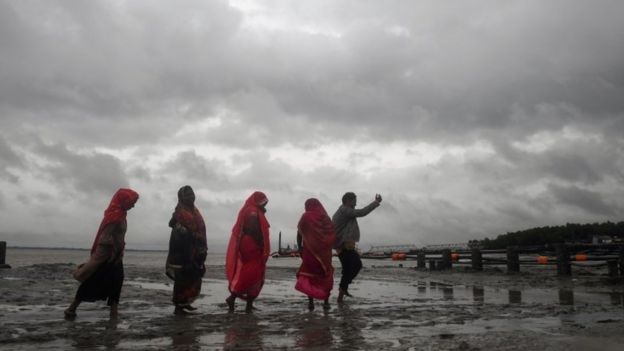
Hindu pilgrims walk back from the dock after a ferry service to Sagar Island was suspended due to the approaching Cyclone Bulbul in Kakdwip in West Bengal stateImage copyright AFP
Image caption West Bengal is one of the worst hit areas in India

The five victims hit by trees in Bangladesh included a 52-year old woman who died when a tree dropped onto her house.

A 60-year-old fisherman also lost his life after ignoring evacuation warnings.

There are increasing concerns after two fishing boats carrying more than 30 men failed to return, an official in Bangladesh’s Bhola district said.

Around 1,200 tourists, most of them Bangladeshi, were stuck on St Martin’s Island, part of Cox’s Bazar district, an official told the Reuters news agency.

“All of them will be rescued,” he said.

Services at many sea ports and airports in the region were also suspended – including the busy Kolkata airport.

Bangladesh’s two biggest ports, Mongla and Chittagong, were closed and flights into Chittagong airport were stopped.

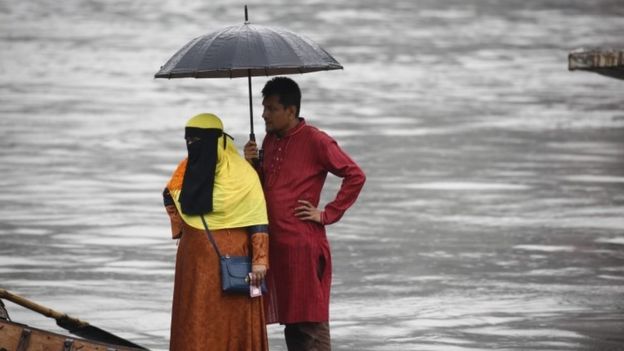
Bangladeshi passengers use an umbrella as they cross the Buriganga River by boat during a rainy day in Dhaka, BangladeshImage copyright EPA
Image caption Storms have battered areas of Bangladesh

Bangladesh’s low-lying coast is often hit by deadly cyclones, but the country has successfully reduced the number of casualties in recent years.

Media caption People in Khulna, Bangladesh, seek shelter from the storm

Source: The BBC
08/11/2019

Xi Focus: Xi’s trip to Greece, Brazil to advance bilateral ties, BRICS cooperation

BEIJING, Nov. 7 (Xinhua) — Chinese President Xi Jinping’s upcoming visit to Greece and Brazil is expected to intensify China’s relations with the two countries and enhance BRICS cooperation, officials said here Thursday.

At the invitation of Greek President Prokopis Pavlopoulos, Xi will pay a state visit to Greece from Nov. 10 to 12, said Vice Foreign Minister Qin Gang.

This will be the first visit to the European country by a Chinese president after an interval of 11 years, which will exert a historic influence of China-Greece ties and push forward China-Europe relations and Belt and Road cooperation, Qin said.

He noted that China and Greece, both with old civilizations, are trustworthy and helpful friends respecting and supporting each other on core interests and major concerns.

Greece is among the first European Union (EU) countries to sign an intergovernmental cooperation document with China to jointly construct the Belt and Road, Qin said, adding that Greek prime ministers attended the first and second Belt and Road Forum on International Cooperation in Beijing.

The two sides have conducted fruitful cooperation on the principle of mutual benefit and win-win cooperation and witnessed increased bilateral trade and investment, Qin said.

“The Piraeus Port project, a flagship project for the Belt and Road cooperation, has made important contributions to the local economic and social development of Greece and played an important role in advancing connectivity in various regions around the globe,” said the vice foreign minister.

Speaking of people-to-people and cultural exchanges, Qin said peoples of the two countries respect each other and advocate openness and inclusiveness in their close interactions.

“Both China and Greece hold that different civilizations should respect each other and facilitate experience sharing, mutual learning and conversation among civilizations,” he said.

China and Greece are new friends of the “17 +1” cooperation. In April this year, Greece became a full member of the China-Central and Eastern European Countries Cooperation Mechanism, adding new opportunities to the development of this mechanism, which is also conducive to developing China-EU relations and China-EU connectivity, Qin said.

Greek Prime Minister Kyriakos Mitsotakis led a delegation to the ongoing second China International Import Expo (CIIE). Xi met with him, and the two leaders visited the Greek pavilion, Qin said.

According to Qin, in Greece, Xi is scheduled to hold talks respectively with Pavlopoulos and Mitsotakis, in a bid to consolidate political mutual trust and traditional friendship between the two countries, intensify pragmatic cooperation in trade, investment, infrastructure and other fields, uphold multilateralism and free trade and build an open world economy.

Besides, Qin noted that the Chinese and Greek leaders will conduct cultural exchanges and advocate dialogues among civilizations.

The two sides will issue a joint statement on strengthening the comprehensive strategic partnership, draw up a blueprint for the development of bilateral ties, sign intergovernmental cooperation documents on investment and education, and ink commercial agreements in such fields as ports, finance, and energy.

Greece, in the West, and China, in the East, are heirs of ancient civilizations. Noting that both China and Greece are faced with the mission of rejuvenation and prosperity, Qin said the two countries can enlighten the world to deal with various problems and challenges.

Xi’s upcoming visit to Greece shows respect and appreciation of the ancient Chinese civilization to the ancient Greek civilization, as well as the expectation of jointly building a community with a shared future for humanity, Qin said.

It is believed the visit will elevate the level of bilateral cooperation in an all-round way and inject new impetus to the development of China-EU relations with fruitful results, Qin stressed.

According to Vice Foreign Minister Ma Zhaoxu, at the invitation of Brazilian President Jair Messias Bolsonaro, Xi will attend the 11th BRICS summit in Brasilia, the capital of Brazil, from Nov. 13 to 14.

BRICS is the acronym for an emerging-market bloc that groups Brazil, Russia, India, China and South Africa.

Xi is scheduled to attend the closing ceremony of the BRICS business forum, closed and public meetings of the BRICS leaders’ meeting and the BRICS leaders’ dialogue with the BRICS Business Council and the New Development Bank. The leaders’ declaration is expected to be released, Ma said.

Xi will hold talks with Bolsonaro, sign cooperation documents in various fields, and hold bilateral meetings with leaders of other participating countries to exchange views on ties and BRICS cooperation, Ma said.

As the world is undergoing changes rarely seen in a century and confronted with unprecedented opportunities and challenges, BRICS countries have drawn ever-growing attention worldwide, Ma said, stressing that China appreciates the efforts made by Brazil in its preparation and stands ready to jointly prompt the meeting to achieve fruitful results.

He voiced expectations of the Chinese side.

“The Chinese side hopes that BRICS countries will further enhance political mutual trust, boost mutually beneficial cooperation and forge a more comprehensive, closer and broader partnership,” Ma said.

As for safeguarding multilateralism and strengthening global governance, Ma voiced China’s determination to make joint efforts with other BRICS countries to safeguard the rules-based multilateral trade system, the international order based on international law, and the international system with the UN at the core.

This aims to promote a more equitable, open, transparent and inclusive global governance system and safeguard common interests and development space of emerging markets and developing countries, Ma said.

“China believes the five BRICS countries should follow the trend of the new industrial revolution and facilitate economic transformation and upgrading,” Ma noted.

As an important outcome of last year’s Johannesburg meeting, the BRICS partnership for a new industrial revolution has progressed well in the past year, he said, adding that China is willing to work with concerned parties to accelerate the development of the partnership and tap more potential for cooperation projects, so as to propel high-quality development of the five countries.

“China looks forward to more cooperation on economy, trade, finance, political security and people-to-people exchanges, with projects meeting the development needs of the five countries and serving the interests of their peoples,” he said.

The Chinese side believes that with concerted efforts of all parties and under the political guidance of the five countries’ leaders, the 11th BRICS Summit will be a full success, Ma said, stressing that the BRICS countries will continue to contribute to world peace and development and the building of a community with a shared future for humanity.

Source: Xinhua

04/11/2019

Seven years on, still no RCEP trade deal, and India pulls out

  • Hopes were high a regional summit could finally wrap up negotiations on the Regional Comprehensive Economic Partnership
  • But despite claims of ‘significant progress’ in the 16-nation talks, India remains a stumbling block
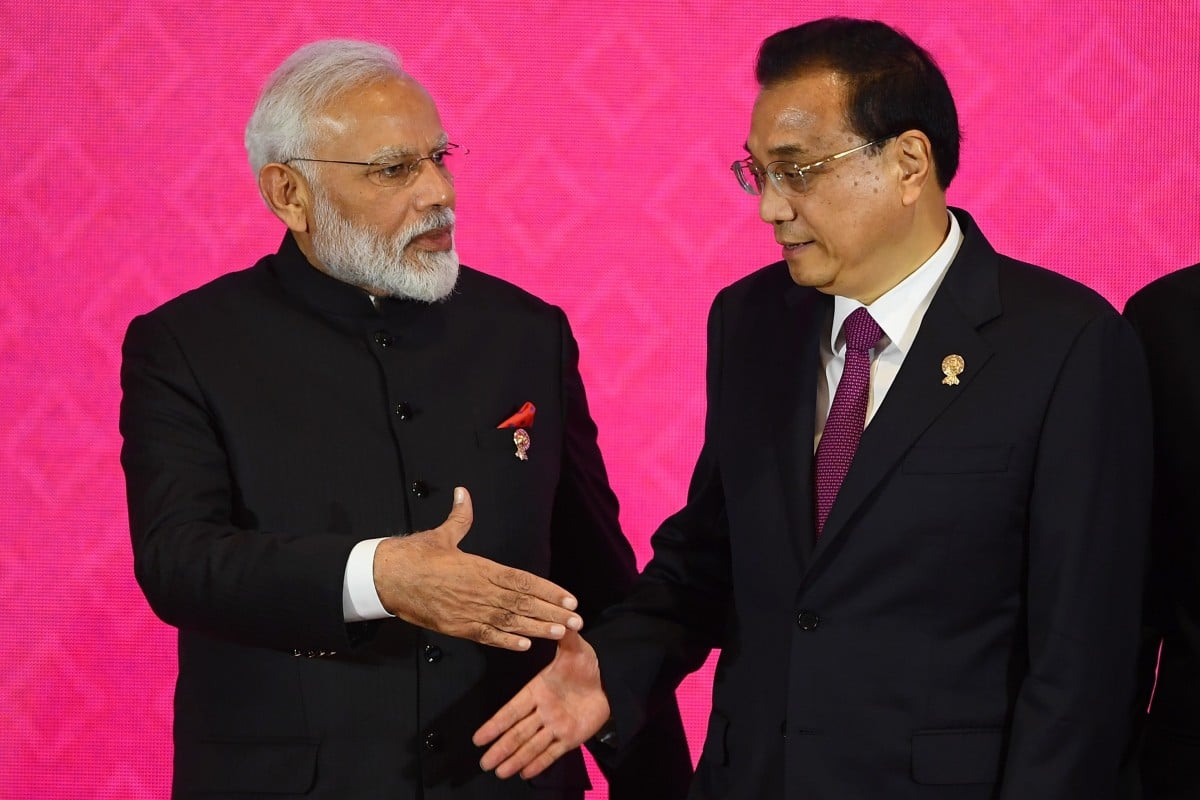
Indian Prime Minister Narendra Modi and China’s Premier Li Keqiang attend the Regional Comprehensive Economic Partnership Summit in Bangkok. Photo: AFP
Fifteen of the countries involved in negotiating a mammoth 16-nation Asian trade pact were on Monday hoping to seal the deal after seven years of talks but faced a fresh setback as India signalled it was pulling out over terms that were against New Delhi’s interests.
A joint statement by all 16 states involved in the Regional Comprehensive Economic Partnership (RCEP) said 15 economies had “concluded text-based negotiations for all 20 chapters and essentially all their market access issues”, and would undertake legal scrubbing of the proposed pact before a formal signing in 2020.
But “India has significant outstanding issues, which remained unresolved”, the statement said.
“All RCEP participating countries will work together to resolve these outstanding issues in a mutually satisfactory way. India’s final decision will depend on satisfactory resolution of these issues.”
Multiple Indian media outlets reported that Prime Minister Narendra Modi had told a Monday evening meeting of leaders from the RCEP countries that “neither the talisman of [Mahatma Gandhi] nor my own conscience permit me to join the RCEP”.

“When I measure the RCEP agreement, with respect to the interest of Indians, I don’t get a positive answer,” he was quoted as saying.

Indians protest against the Modi-led government’s backing of the Regional Comprehensive Economic Partnership. Photo: AFP

Henry Gao, a law professor at the Singapore Management University focusing on international trade law, said an RCEP without India would be “even more worthwhile” for the so-called RCEP-15.

He cited two reasons: India’s “low ambitions” for the pact, and the high level of integration among the countries of East and Southeast Asia which are part of the RCEP-15.

“A mega trade deal like RCEP will only further accelerate the integration process and greatly boost trade and economic growth in the region,” Gao said.

Explained: Regional Comprehensive Economic Partnership (RCEP)
Earlier expectations were that the joint statement would declare at least a “substantial conclusion”, “near conclusion” or “in principle conclusion” of the RCEP, which aims to create a free-trade zone spanning 39 per cent of the world economy.
The phrasing used to describe the progress of negotiations is being closely parsed because, since it requires endorsement from all RCEP countries, it accurately captures the sentiment of all the 16 negotiating teams.
Last year, Singapore, as chair of the Association of Southeast Asian Nations (Asean), pushed for a conclusion of the deal, but eventually the joint statement declared that only “substantial progress” had been made.
Asean countries plus six others are negotiating the trade pact. Photo: AFP

Indian media, citing government sources, said the pact’s inadequate protection against import surges, the possible circumvention of rules of origin, and a lack of “credible assurances” on market access and non-tariff barriers, proved too much for New Delhi to swallow.

India,

facing fierce domestic criticism for being in the pact despite opposition even from

Modi’s 

Hindu nationalist support base, last week piled on a fresh set of demands that other countries balked at, negotiators from Southeast Asian countries said over the weekend.

Furious efforts that continued up to Sunday night failed to bridge the gap between India and the 15 countries.
India’s concerns about RCEP remain the major obstacle to world’s largest trade deal

Indian critics of the RCEP say the deal will have a ruinous impact on the South Asian economy, which has trade deficits with the other 15 countries.

The biggest opposition has come from the country’s long protected industries, such as its dairy sector, which fears it could be wiped out by lower tariffs on Australian and New Zealand products that would result from the RCEP.

Indian government sources on Monday said the country had not made last-minute demands, but Southeast Asian negotiators said major demands were made as late as Thursday.

Gao, the Singapore-based law professor, said it “makes sense for India to stay out” as it would have faced “a lot of competition from Chinese manufactured products” if it were part of the deal.

“India could temporarily shield its firms from Chinese competition by staying out, but whether this will work in the long term is a different question,” he said.

Source: SCMP

02/11/2019

Germany, India sign wide-ranging agreements to deepen bilateral ties

NEW DELHI (Reuters) – German Chancellor Angela Merkel and Indian Prime Minister Narendra Modi signed wide-ranging agreements in New Delhi on Friday to deepen strategic cooperation and exchanged notes on ways to boost bilateral trade.

Merkel, accompanied by several cabinet colleagues and a business delegation, is in India on a three-day visit that began on Thursday.

“We’re encouraging our private sectors to give an impetus to our growing bilateral trade and Chancellor Merkel and I will meet some of the top business and industry leaders,” Modi told a joint news conference with the German leader.

“We’re encouraging our private sectors to give an impetus to our growing bilateral trade and Chancellor Merkel and I will meet some of the top business and industry leaders,” Modi said.

Bilateral trade between the two countries rose to $24.06 billion (18.5 billion pounds) in the 2018/19 fiscal year ending in March from $22 billion the previous year, while German companies have invested nearly $12 billion in India since 2000.

Germany is India’s largest trading partner in Europe and more than 1,700 German companies are operating in India.

The agreements struck on strategic cooperation, included agriculture, cyber security and artificial intelligence. Modi said the two countries would also bolster ties to combat “terrorism and extremism”.

Germany and India also agreed to join hands in the area of education.

“As many as 20,000 Indian nationals are studying in Germany and we would like to see more,” Merkel said.

Although Merkel and Modi didn’t mention anything about restarting talks on finalising a free trade agreement between India and the European Union, sources earlier said the two leaders could take up the trade deal.

Eric Schweitzer, president of the Association of German Chambers of Commerce and Industry (DIHK), earlier said India had enormous potential but there has been uncertainty among companies after an investment protection agreement between the two countries ended in 2016.

“Small and medium-sized German companies stand in a labyrinth of regulations and shy away from larger investment. Negotiations should restart and Merkel’s visit could help,” he said.

VDA, Germany’s car industry association that counts automakers like Volkswagen (VOWG_p.DE), Daimler, BMW and Audi as members, also wanted India to restart the FTA talks.

Daimler’s Mercedes-Benz, BMW and Audi dominate India’s luxury car market.

Source: Reuters

Law of Unintended Consequences

continuously updated blog about China & India

ChiaHou's Book Reviews

continuously updated blog about China & India

What's wrong with the world; and its economy

continuously updated blog about China & India