Archive for ‘India alert’

10/12/2018

VIPs arrive at pre-wedding bash for daughter of India’s richest man

NEW DELHI (Reuters) – Dozens of chartered planes carrying celebrities, including former U.S. secretary of state Hillary Clinton, flew into a sleepy airport in western India for the lavish pre-wedding festivities for the daughter of India’s richest man.

Former U.S. Secretary of State Hillary Clinton poses with Mukesh Ambani, Chairman of Reliance Industries, and his wife Nita Ambani after her arrival in Udaipur to attend pre-wedding celebrations of their daughter Isha Ambani in the desert state of Rajasthan, India, December 8, 2018. Reliance Industries/Handout via REUTERS

Isha Ambani, 27, daughter of Reliance Industries chairman Mukesh Ambani, will marry Anand Piramal, 33, in the financial capital of Mumbai next Wednesday, but the celebrations began this weekend in the desert city of Udaipur, with feasts, singing and dancing, and other pre-wedding rituals.

Security was beefed up as the high-profile guests started arriving at Udaipur’s airport, said a source at the scene, who asked not to be identified. Outside, they were awaited by luxury sedans driven by chauffers wearing white uniforms and colourful Rajasthani turbans.

The Clintons and the Ambanis have an association that goes back more than 18 years and have met several times both in India and abroad, according to Indian media reports.

Then President Bill Clinton held meetings in India with the Ambanis, including deceased founder and Mukesh’s father Dhirubhai Ambani, just before and after he left the presidency in 2000-2001.

In March this year, when Hillary Clinton visited India to deliver a keynote speech at a conference in Mumbai, she dined with the Ambanis at their 27-floor Antilia residence – one of the world’s most expensive homes, according to local media.

Many other top industrialists, politicians, sports and Bollywood stars descended in Udaipur on Saturday to join what has been dubbed locally “the big, fat Indian wedding.”

Indian steel magnate Lakshmi Mittal, Maharashtra Chief Minister Devendra Fadnavis, cricket legend Sachin Tendulkar and newly-weds, actress Priyanka Chopra and singer Nick Jonas were among the guests joining the bash.

Former head of advertising giant WPP, Martin Sorrell, BP Group CEO Bob Dudley, Huffington Post founder Arianna Huffington, 21st Century Fox CEO James Murdoch and Saudi Energy Minister Khalid Al-Falih are also invited.

Guests for the celebrations, which will bring together two of India’s most influential families, have access to an app mapping out the activities, which include a private concert by Beyonce.

Many in India, where millions live in dire poverty, have closely followed the preparations, including the Ivy League-graduate couple’s engagement at the luxury Villa D’Este hotel on Italy’s Lake Como, attended by more than 600 guests, and featuring a private performance by singer John Legend.

10/12/2018

Vijay Mallya should be extradited to India, London court rules

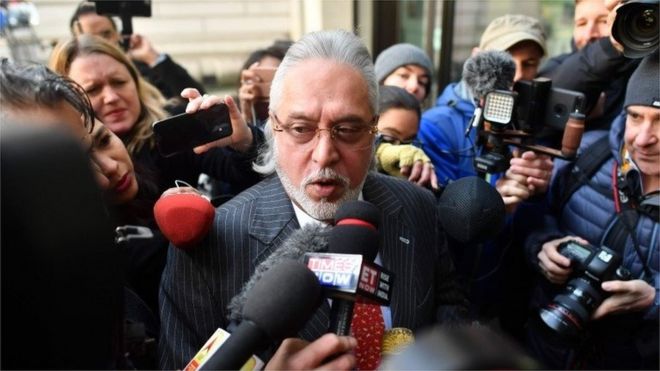
Vijay MallyaImage copyrightAFP/GETTY

Indian business tycoon Vijay Mallya should be extradited from the UK to India where he faces fraud charges, a London court has ruled.

The extradition ruling will be passed to the Home Secretary for approval.

Mr Mallya, whose business empire once included Kingfisher beer, left India in March 2016 after defaulting on debts of more than $1bn (£785m).

He denies “fleeing” from India, and says he made an “unconditional” offer to pay back the sum in full in July.

Mr Mallya attended Westminster Magistrates Court for the hearing.

The businessman’s fall from grace is being avidly tracked in India, where he was once listed as one of India’s wealthiest people.

Mr Mallya built his fortune from Kingfisher beer, before branching out into Indian cricket and Formula 1 racing. He set up the now defunct Kingfisher Airlines in 2005.

He faces a raft of charges relating to financial irregularities at Kingfisher Airlines. His monetary affairs are being investigated by India’s Central Bureau of Investigation and the Enforcement Directorate, which handles financial crimes.


Paul Blake, BBC Business Reporter, Westminster Magistrates Court

Vijay Mallya entered the court surrounded by a scrum of reporters shouting questions in English and Hindi.

As we stood in line for our turn at the x-ray machine, Mr Mallya told me that he believed “clearly this is extremely political, it’s really obvious”.

While awaiting his hearing, Mr Mallya paced around the corridors, intermittently sitting among reporters in the public gallery.

When his case was called, Mr Mallya heard a detailed judgement against him, which concluded with the judge saying he should be extradited to stand trial in India.

From the scrum to the judgement, Mallya appeared calm – relaxed even.

The case is now in the hands of Home Secretary, Sajid Javid.


In 2012, he sold a majority stake in his United Spirits group to UK drinks giant Diageo. The deal was supposed to help Mr Mallya reduce United Spirits’ debts and free up funds for Kingfisher Airlines.

But the airline, which was grounded in 2012, lost its flying permit the following year. It made annual losses for five years in a row and finally collapsed after lenders refused to give it fresh loans.

Mr Mallya’s total debts, including unpaid wages and operating costs, are estimated to exceed $1bn.

He is a high-profile figure who has in the past been called “India’s Richard Branson” and the “King of Good Times” for his lavish lifestyle.

10/12/2018

Urjit Patel: India’s central bank governor resigns

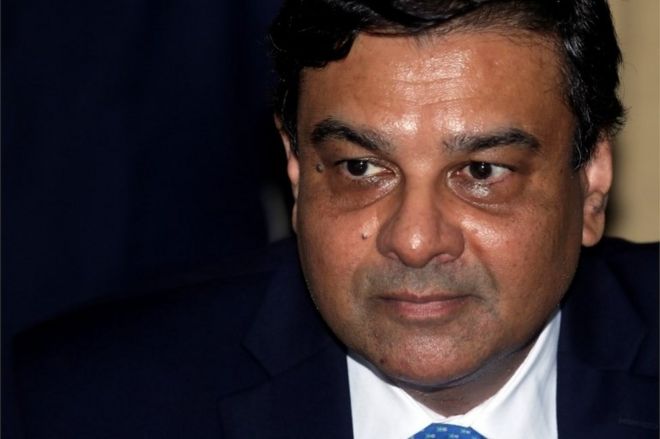
The Reserve Bank of India (RBI) Governor Urjit Patel arrives to attend a news conference after a monetary policy review in Mumbai, India, October 5, 2018. REUTERSImage copyrightREUTERS
Image captionRumours that Mr Patel was going to quit have been swirling around for weeks

India’s central bank governor Urjit Patel has resigned from his post citing “personal reasons”.

His resignation comes amid reports of a rift between the Reserve Bank of India (RBI) and Prime Minister Narendra Modi’s government,

This marks a rare case of a serving governor leaving his job midway through his five-year term.

Correspondents say the move is likely to undermine confidence in the economy and cause the rupee to fall.

In a statement, Mr Patel thanked his staff and officers, calling them the reason for the “bank’s considerable accomplishments in recent years”.

But speculation has been mounting for weeks that Mr Patel could resign over government pressure on the bank.

In late October, the RBI’s Deputy Governor Viral Acharya fired what appeared to be a broadside against attempts to undermine the bank’s independence.

“Governments that do not respect central bank independence will sooner or later incur the wrath of the financial markets, ignite economic fire, and come to rue the day they undermined an important regulatory institution,” he said.

The government reportedly wants the RBI to allow ailing state-owned banks, groaning under bad loans to industries, to resume lending to small businesses. It also wants the regulator to lower interest rates to inject much-needed liquidity into the economy.

Reports say the government also wants to access the RBI’s surplus reserves.

Fears for economy

Prime Minister Modi and Finance Minister Arun Jaitley have issued statements voicing appreciation for Mr Patel’s work.

Mr Modi tweeted that Mr Patel left behind a “great legacy” while Mr Jaitley described a “deep sense of appreciation” for him.

However, others have responded with concern.

A former governor of the RBI, Raghuram Rajan, said that Mr Patel’s resignation should be seen as a statement of protest. Former Finance Minister Yashwant Sinha said “the resignation is a clear sign of the government trying to interfere with the working of the RBI”.

“Although India’s $2.6tn (€2.3tn; £2tn) economy has recently been boosted by a strong performance in consumer spending and manufacturing, the rupee has fallen by about 15% against the surging dollar so far this year, private investment remains slack and there are doubts on whether the economy will accelerate further,” says the BBC’s Soutik Biswas.

“The trade deficit, inflation, and high oil and commodity prices are a major concern,” our correspondent adds.

10/12/2018

Rivals and neighbours: China and India count down to joint military drill

In addition, Chinese State Councillor and Foreign Minister Wang Yi will visit India later this month to launch a forum for high-level exchanges between China and India.

But there is still various sources of friction, including a growing maritime rivalry.

Long Chunxing, a visiting scholar and Southeast Asian affairs specialist at the S. Rajaratnam School of International Studies in Singapore, said the military exchanges would not resolve mistrust but could help prevent differences from escalating into another conflict.

“China’s reluctance to allow India into the Nuclear Suppliers Group and refusal to agree on a US ban to list Masood Azhar as a terrorist have upset India,” Long said, referring to the founder and leader of Jaish e-Mohammed, designated by the United Nations as a terrorist group and active mainly in Pakistan-administered Azad Kashmir.

At the same time, China and India are strengthening their capacity to project power at sea.

Indian media reported last week that the Indian Navy was planning to add ships, helicopters and fixed-wing planes, and expand its base in Chennai to bolster its presence in the southern part of the Bay of Bengal.

China, meanwhile, has expanded its military presence in the Indian Ocean to help safeguard its growing interests overseas.

In a report in April, the US-based think tank the Centre for Strategic and International Studies said those interests included defending vital trade routes, particularly for energy supplies.

Collin Koh, a research fellow also at the S. Rajaratnam School of International Studies, said the Indian Navy’s build-up increased the chance of interaction between Indian and foreign forces, including those from China.

Koh said these interactions were generally professional and safe but there was a chance of confrontation.

“The risk of untoward incidents would largely tie in with broader bilateral tensions, such as over the land border issue or if there are upheavals in the neighbouring Indian Ocean littoral states, and it has been reported the People’s Liberation Army Navy [of China] has monitored Indian Navy warships traversing those waters in the South China Sea too,” he said.

But Rajeev Ranjan Chaturvedy, a research associate at the Institute of South Asian Studies at the National University of Singapore, said India’s naval build-up would not directly affect China’s growing military presence.

He also said the Indian navy’s reliability and confidence would grow further in handling regional security challenges.

09/12/2018

Lakhs attend mega rally at Delhi’s Ramlila Maidan to press for Ram temple in Ayodhya

A sea of saffron was witnessed at Ramlila Maidan and roads leading to it in New Delhi as lakhs answered a Vishwa Hindu Parishad (VHP) call for a ‘Dharm Sabha’ on Sunday.

Various estimates suggested that over a lakh were present at the mega gathering organised to press the Centre for the construction of a Ram temple in Ayodhya.

The massive rally comes just two days before the commencement of Parliament’s winter session.

Amid chants of Jai Shree Ram, the gathering send across a message that the calls for a legislation to pave the way for the construction of the temple are now stronger.

At the rally, the executive head of Rashtriya Swayamsevak Sangh (RSS), Suresh ‘Bhaiyyaji’ Joshi, gave a warning to the Union government for the temple construction.

“Those in power today had promised to construct the Ram temple. They should listen to people and fulfil the demand. They are aware of the sentiments (of people),” he said without naming the Bharatiya Janata Party (BJP)-led NDA government at the Centre.

“We are not begging for it. We are expressing our emotions. The country wants Ram rajya,” warned the powerful RSS leader.

VHP president Vishnu Sadashiv Kokje and its international working president Alok Kumar are also expected to address the rally.

VHP’s spokesperson Vinod Bansal had earlier told PTI that the gathering will change the hearts of all those who are not in favour of bringing the bill for construction of a grand Ram mandir in Ayodhya.

Reports say that most of the supporters came from Ghaziabad, Gautam Budh Nagar, Baghpat and Meerut – all of them neighbouring districts in western Uttar Pradesh. Visuals on TV showed thousands on the streets waving saffron flags and carrying posters showing a temple.

Anticipating the turnout, the Delhi traffic police had already placed diversions around Ramlila Maidan.

No traffic was allowed on Ranjeet Singh Flyover (from Guru Nanak Chowk to Barakhambha Road), JLN Marg (from Rajghat to Delhi Gate), Chaman Lal Marg near VIP gate.

Snipers were deployed on high-rises around the Maidan and other security arrangements were made.

The final Dharam Sansad’ will be held on 31 January and 1 February.

(With inputs from agencies.)

09/12/2018

Slow train to China: India’s trade ties with Beijing taking time to ripen

NEW DELHI (Reuters) – China and India may be talking about improving their trade relationship but there is little action to go with the words.

According to Indian government officials and representatives of various Indian trade bodies, progress is very slow – and may even be getting slower after last weekend’s truce between the United States and China in their trade war.

Both India and China have sought to rebuild trust after a armed standoff over a stretch of the Himalayan border last year.

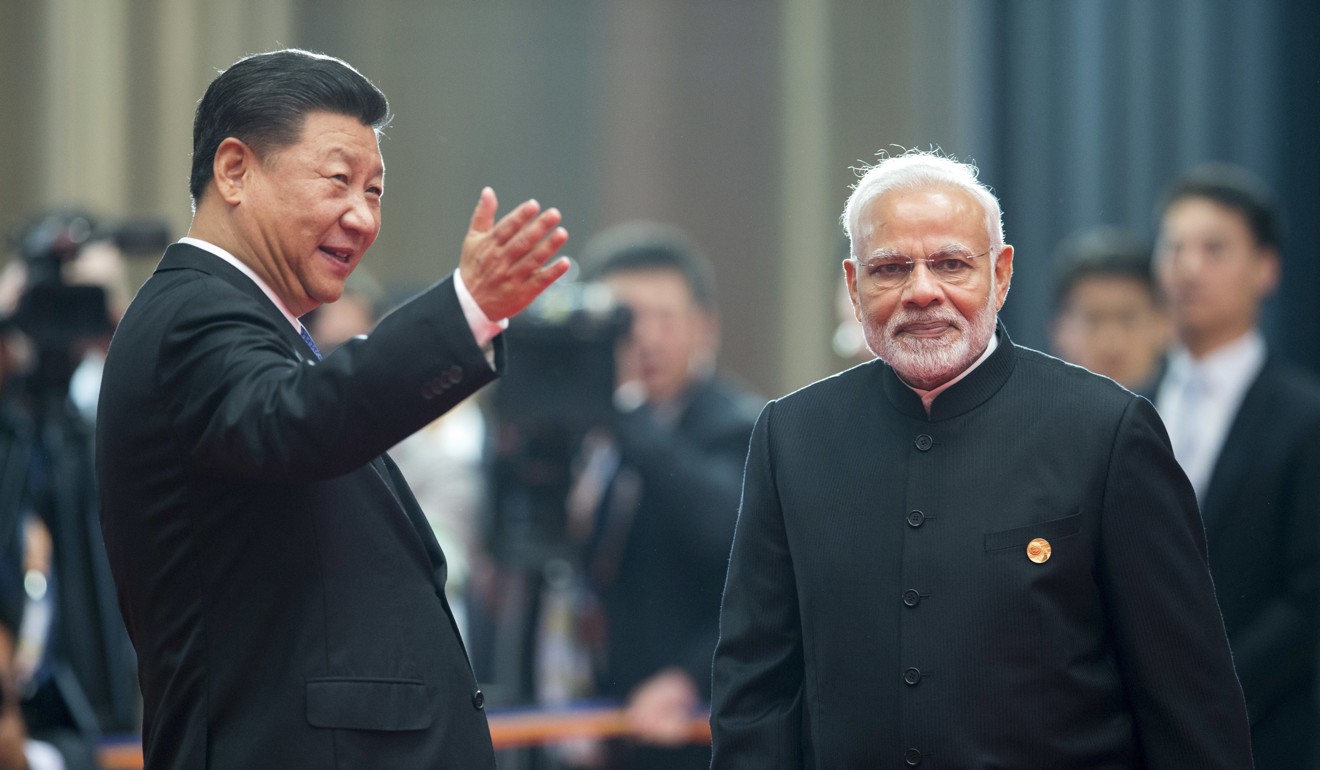
Indian Prime Minister Narendra Modi and Chinese President Xi Jinping have met a number of times this year to give impetus to the trade discussions. The latest was last week, when they met on the sidelines of the G20 meeting in Argentina.

Indian and Chinese officials said after that meeting there was talk of Beijing increasing its soymeal, rapeseed meal, rice and sugar imports from India, while China would push for more Chinese exports of dairy products, apples and pears to India.

India is also keen to increase its exports of drugs to China.

In reality, though, getting such exchanges turned into deals is going to be a laborious process.

“When we say the Chinese are receptive, it means the talks are happening, but it’s going slow,” said one senior Indian government official with direct knowledge of the discussions. “It can be termed as progress because just a few months ago, we weren’t even talking,” said the official, who did not wish to be named because he is not authorized to talk to media.

The Chinese commerce ministry did not respond to a faxed request for comment for this article.

Bilateral trade between China and India touched $89.71 billion in the year ending March 2018, with the trade deficit widening to $63.05 billion in China’s favor, more than a nine-fold increase over the past decade.

The Indian government is very keen to reduce that gap. A recent study commissioned by India’s trade ministry and reviewed by Reuters, said: “There is no bilateral trade relationship of greater economic and political significance for India than with China.”

The reduction in trade tensions between Washington and Beijing, which has led to a delay in the imposition of larger punitive tariffs by the United States pending further trade talks over a 90-day period, means that the Chinese government may not feel the need to speed up its discussions with New Delhi, Indian officials said.

The government has received calls from jittery exporters who want to know whether the improvement in the relationship between China and the United States would make India’s position weaker, said the senior Indian government official.

ROADBLOCK FOR INDIA

Ajay Sahai, director general of the Federation of Indian Export Organisations, also said China’s truce with the United States may be a roadblock to improved trade with Beijing.

“As it is, the China-U.S. tariff tension was a temporary opportunity and it is not correct for companies to base their long-term strategies on it,” said Sahai.

One longer term impediment to improved trade is product quality, and trade, industry and government officials in India said both Beijing and New Delhi could take time to iron out their differences.

Last week, India and China signed an agreement allowing Beijing to inspect imports of Indian fish meal and fish oil.

A Chinese trade delegation is coming to India on Dec. 10 to inspect soymeal plants, said D.N. Pathak, executive director of the Soybean Processors Association of India.

India wants China to drop a years-long ban on soymeal imports from the South Asian nation. China was a leading buyer of Indian soymeal, a key ingredient in animal feed, until Beijing banned the purchases in late 2011 over quality concerns.

In November, India’s trade ministry said the country could export up to 2 million tonnes of sugar, but trade officials said the target was too steep because China has already exhausted its import quota for this year.

Although India has contracted to sell some tiny shipments of rice to China, officials said New Delhi would find it difficult to boost volumes as Beijing has traditionally been importing the staple from Vietnam and Thailand and the Chinese would take time to develop a taste for Indian rice.

09/12/2018

India’s ruling BJP seen losing ground in key state polls before national vote

NEW DELHI (Reuters) – Indian Prime Minister Narendra Modi’s ruling party is likely to lose two heartland states while a third is too close to call, exit polls showed on Friday in the final test of popularity before a national election due by May next year.

Surveys broadcast at the end of voting for five state assemblies showed the ruling Hindu nationalist Bharatiya Janata Party (BJP) trailing behind the rival Congress party in some areas.

The actual votes will be counted on Tuesday, and exit polls have been wrong in the past, partly because of the sheer scale of Indian elections involving millions of votes.

Still, nearly all the polls showed that the Congress – led by Rahul Gandhi, the scion of the Nehru-Gandhi family – will win a clear majority in western Rajasthan state and scrape through in eastern Chhattisgarh, according a survey of surveys pulled together by NDTV.

In Madhya Pradesh, the same polls suggested the BJP and the Congress were locked in a fight down to the wire.

The combined surveys showed the BJP winning 110 seats, the Congress 108, and smaller groups 12 in the 230-member house. To rule, a party requires 116 seats.

The three states are part of the northern Hindi belt, a bastion of the ruling Hindu nationalists.

CLUES

“The BJP is struggling everywhere, for all its bravado,” said Juhi Singh, a spokesman of the regional Samajwadi Party.

Modi, who came to power with a sweeping majority in 2014, has been praised for improving governance and cutting some red tape, but has been criticised for failing to create enough jobs for the thousands of young people entering the jobs market every month.

He has also faced criticism for allowing hardliners in his party to undermine India’s secular foundations.

Foreign investors who largely remain bullish on India’s long-term prospects, are watching the state polls closely for clues to the national vote.

“The result would be consistent with what most polls are showing: that we are heading for hung parliament,” said Jan Dehn, head of research at emerging markets fund manager Ashmore.

“The market may discount the results a little bit given these are state elections and there are often protest votes.”

But a divided parliament would make it difficult for the incoming government to carry out reforms in the banking sector and other areas, he said.

09/12/2018

As election nears, religious tensions surge in an Indian village

NAYABANS, India (Reuters) – Nayabans isn’t remarkable as northern Indian villages go. Sugar cane grows in surrounding fields, women carry animal feed in bullock carts through narrow lanes, people chatter outside a store, and cows loiter.

But this week, the village in Uttar Pradesh state became a symbol of the deepening communal divide in India as some Hindu men from the area complained they had seen a group of Muslims slaughtering cows in a mango orchard a couple of miles away.

That infuriated Hindus, who regard the cow as a sacred animal. Anger against Muslims turned into outrage that police had not stopped an illegal practise, and a Hindu mob blocked a highway, threw stones, burned vehicles and eventually two people were shot and killed – including a police officer.

The events throw a spotlight on the religious strains in places like Nayabans since Prime Minister Narendra Modi’s Hindu nationalist Bharatiya Janata Party (BJP) came to power at the national level in 2014 and in Uttar Pradesh in 2017. Tensions are ratcheting up ahead of the next general election, due to be held by May.

The BJP said it was “bizarre” to assume the party would benefit from any religious disharmony, dismissing suggestions that its supporters were largely responsible for the tensions.

“In a large country like India nobody can ensure that nothing will go wrong, but it’s our responsibility to maintain law and order and we understand that,” party spokesman Gopal Krishna Agarwal said. “But people are trying to politicize these issues.”

SPONSORED

Nayabans, just about three hour’s drive from Delhi, has about 400 Muslims out of a population of 4,000, the rest are Hindu. Relations between the communities began deteriorating around the Muslim holy month of Ramadan last year when Hindus in the village demanded that loudspeakers used to call for prayer at a makeshift mosque be removed, local Muslims said.

“For 40 years mikes were used in the mosque, calls for prayer were made five times a day, but no one objected,” said Waseem Khan, a 28-year-old Muslim community leader in Nayabans.

“We resisted initially but then we thought it’s better to live in peace then create a dispute over a mike,” he said. “We don’t want to give them a chance to fan communal tensions.”

Reuters spoke with more than a dozen Muslims from the village but except for Khan, no one else wanted to be named for fear of angering the Hindu population.

Several among a group of Muslim women and girls standing outside the mosque said they have been living in fear since the BJP came to power in the state in 2017.

They said that Hindu groups now hold provocative processions through the village during every Hindu festival, loudspeakers blaring, something that used to happen rarely before. They said they felt “terrorised” by Hindu activists.

“While passing through our areas during their religious rallies, they chant ‘Pakistan murdabad’ (down with Pakistan) as if we have some connection to Pakistan just because we are Muslims,” Khan said.

HINDU PRIEST CHIEF MINISTER

The subcontinent was divided into Muslim Pakistan and Hindu-majority India at the time of independence from British colonial rule in 1947.

During the violence on Monday, many Muslims in Nayabans locked themselves in their homes fearing attacks. Some who had attended a three-day Muslim religious congregation some miles away stayed outside the area that night to avoid making themselves targets for the mob.

Muslim villagers say they are particularly fearful of the top elected official in Uttar Pradesh, Chief Minister Yogi Adityanath, who is a Hindu priest and senior BJP figure. Hindu hardliners started asserting themselves more in the village after he was elected, they say.

Uttar Pradesh sends 80 lawmakers to the lower house of parliament, the largest of any state in the country.

Considered the county’s political crucible, it has also been the scene for spiralling Hindu-Muslim tensions.

Slideshow (8 Images)

Adityanath said the lead up to the rioting in Nayabans was a “big conspiracy”, but did not elaborate.

In the only statement from his office on the incident, Adityanath ordered police to arrest those directly or indirectly involved in the slaughter of cows and made no mention of the death of the police inspector. He announced 1 million rupees ($14,110) as compensation for the family of the other dead man, a local who is among those accused by police for the violence.

Both men were Hindus and died of bullet wounds, although police said it was not yet clear who shot whom.

Police say they have arrested up to five people for the cow slaughter but have not given their religion. Locals say all the arrested people are Muslims. Four Hindu men have been arrested for the violence leading to the deaths.

“All invidious elements who may have conspired to vitiate the situation will be exposed through a fair and transparent investigation,” Anand Kumar, the second highest police official in Uttar Pradesh, told Reuters.

Asked if there was any bias against Muslims, Uttar Pradesh government spokesman Sidharth Nath Singh – who is also the state’s health minister – told Reuters: “We believe in equality and our motto is sabka saath, sabka vikas”, using a Hindi phrase often used by Modi that means “collective effort, inclusive growth”.

RELATIVE HARMONY

The two communities in Nayabans have lived in relative harmony for years, residents from both groups said.

But now Hindus in the village, who mostly say they support Yogi, accuse the Muslims of trying to turn themselves into the victims when they weren’t.

“Can’t believe they are raising our processions with journalists!” said Daulat, a Hindu daily wage labourer who goes by one name. “They are making it a Hindu-Muslim issue, we are not. Their people have been accused of killing cows, so they are playing the victim.”

At a middle school, metres from the police outpost near where the two men got killed, two women teachers, sitting on a veranda soaking in the winter sun, said its 66 students stopped coming for classes in the first few days after the violence.

“We worship cows and their slaughter can’t be accepted,” said one of the teachers, Uma Rani. “Two Hindus died here but nothing happened to the cow killers.”

Both teachers were Hindus.

Political analysts say relations between the two communities are likely to stay tense ahead of the national vote, particularly in polarised states such as Uttar Pradesh.

The BJP made a near-clean sweep in Uttar Pradesh in 2014, helping Modi win the country’s biggest parliamentary mandate in three decades, but pollsters predict a tighter contest next year because of a lack of jobs and low farm prices.

“Facing economic headwinds and lacklustre job growth, Modi will rally his conservative base by selectively resorting to Hindu nationalism,” global security consultancy Stratfor said last month.

Muslims say they increasingly feel like second-class citizens in their own country.

“The BJP will definitely benefit from such incidents,” said Tahir Saifi, a Muslim community leader a few miles from the area of violence who supports a regional opposition party in Uttar Pradesh. “They want all Hindus to unite, and when religion comes into the picture, other issues like development take a back seat.”

08/12/2018

Delhi doctor used electric shock to ‘treat’ homosexuals, called it ‘genetic mental disorder’

Though Dr P K Gupta was debarred by the Delhi Medical Council (DMC), he was still indulging in this bizarre practice

A doctor, who terms homosexuality as “genetic mental disorder” and uses electric shock to treat gay and lesbian people, has been summoned by a Delhi court as an accused for violating norms.

Though Dr P K Gupta was debarred by the Delhi Medical Council (DMC), he was still indulging in this bizarre practice.

The court took note of a complaint against Gupta by the DMC, which claimed that he was using hormonal and shock therapy to provide treatment. The complaint said the DMC had debarred Gupta in 2016 from practising in Delhi and as he was still projecting himself as a doctor, he was liable for prosecution.

Metropolitan magistrate Abhilash Malhotra said treatment given by doctors as a part of “conversion therapy” was not recognised either by medical science or by legislature.

Conversion therapy is an attempt to change a person’s sexual orientation using psychological or spiritual interventions.

The court summoned the doctor as accused saying he was prima facie found to be contravening a provision of the Indian Medical Council Act which entails a maximum of one year jail term.

08/12/2018

Bulandshahr violence: Top police officer removed over UP cop killing after 6 days

Six days after an inspector and a civilian were killed in mob violence after cattle carcasses were found in Uttar Pradesh’s Bulandshahr, top police officer Krishna Bahadur Singh has been transferred to DGP Headquarters, Lucknow.

Sitapur Superintendent of Police, Prabhakar Chaudhary has replaced Singh and has been appointed as the Senior Superintendent of Police of Bulandshahr.

Two other police officials were also transferred in connection with the mob violence earlier this week.

Acting on a report submitted by the Additional Director General of Police SB Shiradkar, Circle Officer (CO) Satya Prakash Sharma and Suresh Kumar, the in-charge of Chingravathi police chowki, have been transferred “for their failure in responding in time to the situation arising on Monday in that area”.

A senior home department official said they have been taken to task for not being fast enough in reacting to the situation that arose after some Hindu right-wing activists found some animal carcasses in the field and took them on tractor trolleys to block a road.

Police inspector Subodh Kumar Singh and the civilian from Chingravathi village, Sumit Singh, were killed in the mob violence thereafter.

The action was taken after a high-level meeting was presided over by the Director General of Police (DGP) OP Singh, who had handed over the report to Chief Minister Yogi Adityanath on his arrival from New Delhi.

Meanwhile, Yogi Adityanath has termed the Bulandshahr incident an “accident”. He had earlier said the incident was result of a “big conspiracy” but at a media event in Delhi on Friday, he said that the incident was actually an accident.

The police have so far arrested nine accused but the main conspirator Yogesh Raj, the district convener of the Bajrang Dal, remains at large.

Meanwhile, a soldier allegedly involved in the Bulandshahr firing was detained by his unit in Jammu and Kashmir on Saturday, Army sources said.

Jitendra Malik alias Jeetu Fauji was detained by the 22 Rashtriya Rifles in Sopore town.

A special investigation team (SIT) of the Uttar Pradesh Police is expected to reach Srinagar later to take him into custody. Earlier, a UP police team was sent to Jammu to arrest him.

Sedition is one of the 17 charges in the FIR in which 27 people have been named besides 50-60 unidentified people. They were allegedly involved in the violence that led to the killing of Inspector Subodh Singh and Sumit Kumar.

Law of Unintended Consequences

continuously updated blog about China & India

ChiaHou's Book Reviews

continuously updated blog about China & India

What's wrong with the world; and its economy

continuously updated blog about China & India