Archive for ‘India alert’

03/12/2018

Slowing Growth, Below Par GST Collections, Fiscal Deficit New Headache for Govt

Slowing Growth, Below Par GST Collections, Fiscal Deficit New Headache for Govt

(Image for representational purpose)
New Delhi: Three separate economic data points released last week could create a new headache for the government, which is still putting out the fires it ignited by releasing the GDP back series data in the same week.

Economic growth is a major worry particularly now, since there has already been intense politics over the rate of growth during the two terms of the UPA government (through the back series data) versus the present regime, very close to the 2019 Lok Sabha elections. And with the fate of the ruling BJP hanging in balance as crucial state polls are at various stages of completion, the narrative of robust economic growth during the current government’s last few months in office becomes even more crucial.

But this, a benign narrative about having ushered in robust economic growth, is not easy to craft. First, the November gross GST collections came in, showing that the anecdotal Rs 1 lakh crore monthly collection mark has been missed again. The Finance Ministry put out a statement which showed that collections totalled Rs 97,637 crore last month.

The second pain point emerged when it became known that GDP growth slowed down in the second quarter versus the April-June period and after galloping for four consecutive quarters. India remains among the fastest growing economies in the world and several external factors were to blame for this state of affairs but the data on Q2 growth has been used by analysts to predict that economic growth in the second half of the fiscal year – October to March – will be even slower than the first half.

And finally, the fiscal deficit number released by the government for April-October also proved worrisome, as the country has already breached the target set out for the entire fiscal in these seven months.

Of course, not every chance of things improving in the coming months can be ruled out. The Centre could dip into the states’ share in GST collections, it could postpone certain expenditure items, overall tax collections could surprise or there could be a last minute burst of activity on disinvestment.

Any or all of these actions could make the government remain within its fiscal deficit target. As ratings agency Care Ratings pointed out, the government meeting the fiscal deficit target of 3.3% for the year would be contingent on:

—Realisation of disinvestment target of Rs 80,000 crore (less than a sixth has been achieved till now)

—Higher GST collections. The collections so far have been lower than the target for 5 out of the total 7 months.

—The government has lowered gross borrowings by Rs 70,000 crore which will enable it to maintain the fiscal deficit target of 3.3%

But till all of the above happen, the narrative of robust growth under the present regime remains weak. The September quarter GDP growth stood at 7.1% versus 8.6% in the June quarter. The government described the numbers as “reasonable”, saying GDP growth in the first six months was at 7.6% and GVA (Gross value Added) at 7.4%.

“Growth in the second quarter is on higher base compared to the growth of the first quarter. Manufacturing growth on a base of 7.1% in Q2 2017-18 has been 7.4% in Q2 2018-19. Construction sector has grown by 7.8%. The Gross Fixed Capital Formation as a ratio of GDP has increased by almost 1.3 percentage points over Q2 of last year. Exports for Q2 have grown by 13.4%. The government consumption for the quarter has also significantly increased by 12.7%…. The Indian economy is on track to maintain a high growth rate in the current global environment.”

Ratings agency India Ratings noted that the Q2 GDP and GVA growth numbers were marginally lower than its expectations but “on the whole, second quarter GDP numbers do not ring in any alarm or indicate any serious deviation from the expected growth numbers. No doubt the sudden spurt in crude oil prices and depreciation in rupee had somewhat destabilising impact on the economy lately but over the past month they have corrected equally fast. India Ratings therefore believes that the FY19 may still end up with a GDP growth of 7.3%.”

And Care Ratings lowered growth forecast for the fiscal to 7.4% from 7.5% earlier due to “subdued pickup in economic activity in the second quarter and given the constraints in the financial system that would have a bearing on overall economic growth in the remainder of the financial year”.

As for GST collections, they tot up to Rs 7.76 lakh crore between April and November or a shortfall of about Rs 24,000 crore, averaging at about Rs 97,000 crore each month against Rs 1 lakh crore target. Achieving the revenue collection target is crucial as it has a direct bearing on the fiscal deficit. In the last eight months, tax mop-up has crossed Rs 1 lakh crore only twice — in April and October.

So with GDP growth cooling off, GST collections remaining below par and fiscal deficit remaining a worry, all eyes will be on the rabbits the Finance Minister produces from his hat in the interim Budget. If the ruling dispensation does not fare well in the state polls, perhaps a slew of fiscal sops cannot be ruled out. ​

(Author is a senior journalist. All views expressed are personal)

03/12/2018

Kerala, which aims to become digitally literate by 2020, still doesn’t have an online RTI facility

A website with the domain, rti.kerala.gov.in, that looked like it’s managed by the Kerala government, displayed the message, “This site is currently under maintenance. We should be back shortly.”

Only a few states in India such as Maharashtra and Odisha have set up portals to accept RTI inquiries.

By 2020, Kerala wants to be a fully ‘digitally-literate’ state in India. An ambitious policy framework, envisaged by the previous Congress-led government, involved several key objectives such as making digital infrastructure of the government accessible to the public and sustaining economic growth through digital knowledge initiatives. The present Left government has continued on that path by launching a unified governance app called ‘m-Kerala’ and making efforts to turn government schools digital.

However, sadly, Kerala still does not have an online facility through which the public can file Right to Information (RTI) applications. Only a few states in India such as Maharashtra and Odisha have set up portals to accept RTI inquiries apart from the nodal website that takes in queries regarding departments and ministeries under the central government. Since 2005, when the RTI came into effect, the Department of Personnel and Training (DoPT) of the Centre has sent circulars to state governments to set up individual portals to accept RTI queries.

A website with the domain, rti.kerala.gov.in, that looked like it’s managed by the Kerala government, displayed the message, “This site is currently under maintenance. We should be back shortly.”

Indianexpress.com spoke with at least 10 officials of general administration, information and public relations and the state information commission to inquire whether the website belonged to the government and if yes, why it was down. Not a single official could say who managed the website.

03/12/2018

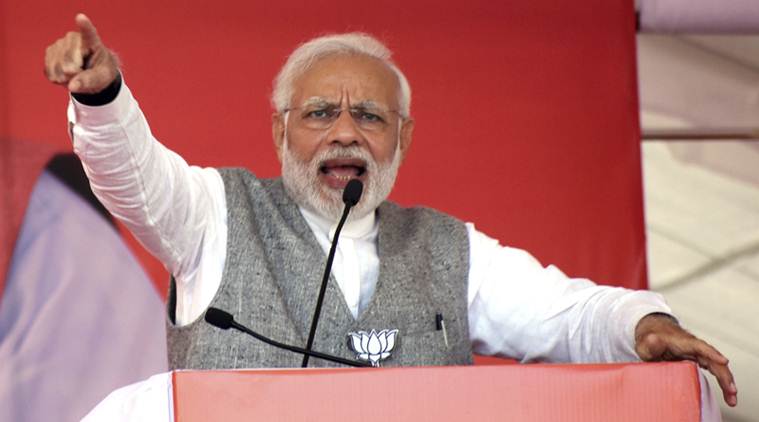
Nehru wore rose on his suit, but was ignorant of farmers’ woes: PM Modi

“He (Nehru) used to wear rose and had the knowledge of gardens but did not know about farmers or farming, due to which the community faced hardship,” PM Modi was quoted as saying without naming the first Prime Minister.

Nehru wore rose on his suit, had knowledge of gardening but was ignorant of farmers' woes: PM Modi
PM Modi also stated that Nehru had objections about President Rajendra Prasad’s visit for the consecration of Somnath temple which was destroyed by foreign invaders and ‘renovated’ by Sardar Vallabhbhai Patel. (PTI File photo)

Campaigning for the upcoming assembly elections in Rajasthan, Prime Minister Narendra Modi on Monday resorted to ‘kaamdaar-naamdar’ (worker-dynast) jibe in his attack on Congress party which had earlier questioned his knowledge on Hinduism. The prime minister also invoked the first prime minister Jawahar Lal Nehru while talking about the agrarian distress in the country.

Without naming Nehru, Modi said a leader wore a rose and had knowledge of gardening but didn’t know about farming, which he held as the reason behind farmers’ distress. “He (Nehru) used to wear rose and had the knowledge of gardens but did not know about farmers or farming, due to which the community faced hardship,” PM Modi was quoted as saying by PTI.

He also claimed that Nehru had objections about President Rajendra Prasad’s visit for the consecration of Somnath temple which was destroyed by foreign invaders and ‘renovated’ by Sardar Vallabhbhai Patel.

Modi also stated that he is a petty “kaamdaar” who never made the claim of having complete knowledge of Hinduism, nevertheless, the “naamdaar” has the right to speak. He also asked the Congress party about the source of its expertise on religion. PM Modi has often labelled the Congress president to be a dynast or “naamdaar” on multiple occasions previously.

03/12/2018

30,000 Come To See Statue Of Unity Every Day, Gujarat Officials Say

30,000 Come To See Statue Of Unity Every Day, Gujarat Officials Say

Statue of Unity, the world’s tallest statue, is quickly emerging as a top tourist spot in India.


VADODARA: The 182-metre tall Statue of Unity, dedicated to Sardar Patel in Gujarat’s Narmada district, is quickly becoming one of the top tourist spots in the country and is now attracting about 30,000 people every day, senior state officials said on Monday.

Both Gujarat Chief Secretary JN Singh and the state’s Principal Secretary (Tourism) SJ Haider put the number of visitors over the past few days at 30,000.

The world’s tallest statue, located on an islet on the Sardar Sarovar Dam in Kevadiya, was inaugurated by Prime Minister Narendra Modi on October 31.

United States Consul-General Edgard Kagan visited the statue on Monday. He also spent time at the viewing gallery, located at a height of 153 metres. “The statue is very impressive and I’m happy to learn the purpose behind its construction,” Mr Kagan said after the visit.

COMMENT

Mr Kagan later visited Abhinay Gram Vikas, an NGO based in Rajpipla, which works for tribal welfare and rural development.

03/12/2018

PM Modi Creating 2 Indias, One For Ambani, One For Farmers: Rahul Gandhi

PM Modi Creating 2 Indias, One For Ambani, One For Farmers: Rahul Gandhi

Rahul Gandhi has been attacking the Modi government over Rafale jet deal.


NEW DELHI: Congress chief Rahul Gandhi on Monday attacked Prime Minister Narendra Modi over the farmers’ issue, saying he was making “two Hindustans” – one for Anil Ambani and the other for farmers.

He cited a media report which claimed that for 750 kg of onion, a farmer was given Rs. 1040 in Maharashtra.

“Modi-ji is making two Hindustans. One is the Hindustan for Anil Ambani — who without doing anything, without making an airplane, will get the Rafale contract worth Rs. 30,000 crore from Modiji.

“The second is the Hindustan for farmers — whose 750 kg of onion grown after four months of toil will get only Rs. 1040 from Modiji,” the Congress president wrote on Twitter.

The Congress has been attacking the Modi government over issues concerning the farmers, alleging that the government’s policies have left them in distress.

The government has rejected the claims and pointed out the number of steps it has taken for the welfare of farmers.

The Congress and its chief have also launched an offensive on PM Modi and his government, alleging corruption and favouritism in the fighter jet deal for purchase of 36 Rafale aircraft from France’s Dassault Aviation, a charge the government has strongly denied.

03/12/2018

Tuhin Satarkar, First Indian To Scale Sahayadri Mountain Range In 12 Days

Tuhin Satarkar, First Indian To Scale Sahayadri Mountain Range In 12 Days

A climb like this has never been done and I was thrilled to do this, Tuhin Satarkar said.


NEW DELHI: Bouldering sensation Tuhin Satarkar pushed his limits as he scaled three routes in the treacherous Sahayadri mountain range in 12 days, from November 16 to 28, to become the first Indian to ever achieve the feat, it was announced today.

In this project the Pune-based climber set out to climb three peaks in the Sahayadri mountains on a 12-day camping trip.

It was a true test of endurance, speed and invention as he studied the rock faces, set the route, successfully executed the climbs, and moved on to the next destination all within the 12 days he set out to complete the project.

The climb took him to Dhodap, Jivdhan and Naneghat, three famous peaks which are known to have been ascended by Chatrapati Shivaji Maharaj and his Marathi Malvas.

“The Sahayadri range has one of the most daunting mountains in Maharashtra. Being a Maharashtrian, I was excited to get an opportunity to pay tribute to Chatrapati Shivaji Maharaj and his band of Marathi Malvas,” the Red Bull athlete said.

“I would like to thank Red Bull for their continued support. It has been an exciting test for me- three climbs, across three forts and one ancient route in 12 days is definitely a challenge. A climb like this has never been done and I was thrilled to do this,” he added.

COMMENT

The Red Bull athlete Tuhin is the finest of India’s current generation of climbers. Inspired by his parents, who were both climbers, Tuhin took to the vertical sport at the age of eight and has been pushing boundaries ever since.

03/12/2018

Upset Over Getting 20 Paise For Brinjal Crop, Farmer Destroys Plantation

Upset Over Getting 20 Paise For Brinjal Crop, Farmer Destroys Plantation

The Maharashtra farmer had planted brinjal on two acres of land. (Representational)


MUMBAI: After being offered a meagre 20 paise per kilogram for his brinjal production, a farmer in Maharashtra destroyed the entire plantation on his land to save himself from incurring further losses.

Rajendra Bawake, from Sakuri village of Ahmednagar, claimed he earned only Rs. 65,000 after investing Rs. 2 lakh and putting in all his energy to cultivate the brinjal crop.

Frustrated with low income, the farmer uprooted all brinjal plants from his field and threw them away on Sunday.

“I had planted brinjal on two acres of land and laid pipes for drip irrigation. I used fertilisers, pesticides and modern mulching techniques to enhance the production. The total investment came to around Rs. 2 lakh. In return, I earned only Rs. 65,000,” Mr Bawake said today.

The cultivator said he now owes dues worth over Rs. 35,000 to fertilisers and pesticide suppliers. “I don’t know how I am going to raise that money,” he said.

Mr Bawake claimed that when he tried to sell his produce at the wholesale markets in Nashik and Surat, he fetched only 20 paise per kg.

“I never got better returns in the last three-four months and so, I decided to do away with the plantation,” he added.

Mr Bawake said he rears three cows at home and needs money to buy fodder for the cattle. “I had hopes from brinjal farming, but now I don’t know how to take care of my cattle.”

Recently, an onion-grower from Nashik who had to sell his produce for little over Re 1 per kg and fetched only Rs. 1,064 for 750 kg of the vegetable, sent his earnings to prime minister Narendra Modi last month as a mark of protest.

COMMENT

Farmers from across the country gathered in New Delhi last Thursday in protest to press for various demands, including debt relief and remunerative prices for their produce.

02/12/2018

India and US to participate in 12-day joint air force exercise

The aim of the exercise is to provide operational exposure and undertake a mutual exchange of best practices towards enhancing operational capability.

ADVERTISEMENT
Cope India 2018

Cope India is bilateral joint exercise held between the Indian Air Force and the US Air Force held in India. (Photo: IAF)

HIGHLIGHTS

  • Exercise to be held from December 3-14
  • Will be held at 2 air force bases in West Bengal
  • Approximately 200 US airmen will be arriving in India for exercise

The air forces of the United States and India are participating in a 12-day joint exercise called ‘Cope India 2018’ at two air force stations in West Bengal. Cope India 2018 is the fourth edition in the series of bilateral joint exercises held between the Indian Air Force and the US Air Force, which is conducted in India.

For the first time, the exercise is being planned at two air force bases, Kalaikunda and Panagarh from December 3-14. The Cope India exercise is being held after a gap of eight years, with the last one having taken place in 2010.

The USAF is participating with 12 XF15C/D fighter plane and 3 XC-130 planes. The IAF is participating with the Su-30 MKI, Jaguar, Mirage 2000, C-130J & AWACS aircraft.

The exercise showcases efforts and commitment of the two nations to a free and open Indo-Pacific region, a communique from the US Consulate said. “Exercise CI18 is a long-standing bilateral US Pacific Air Forces (PACAF)-sponsored Field Training Exercise (FTX), conducted with the Indian Air Force (IAF), focused on enhancing US-Indian mutual cooperation and building on existing capabilities, aircrew tactics and force employment,” the communique said.

Approximately 200 US airmen with 15 aircraft from the 18th Wing, Kadena Air Base, Japan and 182nd Airlift Wing, will be taking part in the exercise alongside their IAF counterparts.

The aim of the exercise is to provide operational exposure and undertake a mutual exchange of best practices towards enhancing operational capability. First held in 2004, the exercise has evolved to incorporate subject matter expert exchanges, air mobility training, airdrop training and large-force exercises, in addition to fighter-training exercises.

02/12/2018

Why do billions of people still lack basic sanitation?

  • 23 November 2018
Community leader NasimaImage copyrightWSUP
Image captionDhaka, Bangladesh: Community leader Nasima shows off her village’s new community toilet

Hi-tech loos that use little or no water and can recycle waste products safely and sustainably promise to give billions of people around the world access to much-needed sanitation. So why do so many still lack this basic amenity?

About 2.3 billion people still lack basic toilets, according to the World Health Organization (WHO). And 4.5 billion don’t have safely managed sanitation, with waste disposed in a way that won’t contaminate drinking water.

Each year contaminated water kills half a million children under five through diarrhoeal diseases, the WHO says.

So many inventors, entrepreneurs and research institutions around the world have been working on hi-tech loos that can function without the need for expensive mains sewerage systems.

Image captionMillions of people live next to unsanitary open sewers with potentially fatal consequences

One approach is taking chloride from urine, turning it into chlorine with electricity, and using that as a disinfectant, says Dr Brian Hawkins, a research scientist in nanomaterials at Duke University, North Carolina.

Activated charcoal can remove organic material and nano-membranes replace the need for septic tanks, he says.

A solar-powered toilet using this approach, developed at Duke and nearby universities, is being tested at a cotton mill in Coimbatore, India and a township in South Africa.

Currently, it can handle about 15 users a day.

New membrane technology means toilets can “get clean water out of human waste, which is pretty cool”, says Dr Alison Parker, a lecturer at Cranfield University in Bedford.

But power is needed to push waste through the membranes. So the challenge is making a self-contained loo that doesn’t need external electricity.

Image captionCranfield University’s clever loo can produce clean water from human waste

Her lab’s Nano Membrane Toilet works by “relying on the energy we can get from human waste, burning faeces, and the person lifting the lid and closing it again – so that’s not a huge amount of energy to work with,” she says.

But reverse electrodialysis, from putting faeces components on one side of the membrane and urine on the other, “gives us a little extra energy”, she says, and is “just enough to give it the boost to do what we need”.

Heating urine before it goes through the membrane to be closer to the vapour state makes it more efficient, too, says Dr Parker.

More Technology of Business

She says her lab’s waterless flush toilet is “basically ready and could be commercialised straight away”.

A challenge now is making them feasible for rural areas – the membranes need cleaning every three months, which is more easily achieved in cities.

Reducing costs

While there is lots of innovation going on, the key challenge is making sanitation affordable, says Jack Sim, World Toilet Day founder.

He remembers growing up in Singapore in the 1950s and 60s and having to use his village’s communal outhouse. It was a “very traumatic” experience, he says, involving buckets and lots of green flies.

Moving to public housing with a flushable loo was “like a miracle”, he recalls.

Image captionWorld Toilet Day founder Jack Sim (r) meets Indian Prime Minister Narendra Modi

He believes people on low incomes need to be convinced to “sacrifice something else and build a toilet first”.

But many promising products are now stuck in the “valley of death”, says Duke University’s Dr Hawkins.

This is the space between developing a successful prototype and “getting to a locked-down product you can scale up, mass produce, and find a market share”.

The aim is to get the operating expenses of clean toilets down to five cents (3.8p) per person per day, he says.

And Neil Jeffery, chief executive of Water & Sanitation for the Urban Poor, a non-profit organisation focusing on African and Indian cities, points out that it’s “not just about the toilets – it’s about how you collect waste safely, transport it, treat it, and how it’s then used”.

Most African cities only have 10-15% of households connected to mains sewerage, he says, with many urban settlements sharing pit latrines instead.

When these fill up, a lorry needs to take their contents to a treatment plant.

Image captionCrane Engineering’s waste treatment trucks will be trialled in 2019

But this can be a costly two- or three-hour drive, says Mark Hassman, project manager for the Mobile Septage Treatment System at Crane Engineering in Wisconsin.

He says the amount of waste that trucks actually bring to treatment plants is “less than 5% [of the total] in some cities”.

Instead, they dump it in ditches, mix it with rubbish and burn it, or “plop it in a ditch, and if it’s rainy season, it goes downstream”.

Mr Hassman has been leading a team designing trucks that can process 70-80% of the waste on site. So instead of emptying two pits, “they can now maybe do eight in one drive, and that hopefully reduces the cost and enables people to afford clean pit emptying,” he says.

He says the trucks are “fairly close” to producing potable water.

The trucks will have trial runs in Africa in 2019, and his company is “looking to get these units out there” commercially in 2020.

The crucial requirement is to create a market that enables companies to make a profit from loos that are also affordable for poorer households, he says.

Image captionSpecial treatment trucks can turn human waste into clean water

Lack of sanitation also has an economic impact.

The Bill & Melinda Gates Foundation, which has been running its Reinvent the Toilet Challenge since 2011, says “more than $200bn (£155bn) is lost due to healthcare costs and decreased income and productivity” as a result of poor sanitation.

This is one of the reasons why Indian Prime Minister Narendra Modi has committed $20bn to build 111 million latrines by 2019 – “the biggest toilet building project in the history of mankind”, says Mr Sim.

The goal of sanitation for all may still be “some years” away. “But I can see this problem being solved in the next decade,” he says.

Not a day too soon for the billions still suffering.

02/12/2018

Kartarpur corridor: A road to peace between India and Pakistan?

  • 29 November 2018
Gurcharan Singh
Image captionGurcharan Singh welcomes the opportunity to unite Indians and Pakistanis

Seventy-five-year-old Gurcharan Singh was just a child during Partition in 1947, when his family left their home in the city of Sialkot, in modern day Pakistan, to head to India.

Now on a visit to the Sikh temple in the Pakistani village of Kartarpur, he was delighted that the two countries had agreed to construct a corridor allowing visa-free access to pilgrims from India.

“Since Pakistan was created our community has wanted this,” he told the BBC. “Two families,­ Indians and Pakistanis,­ are meeting again.”

The Gurdwara Darbar Sahib Kartarpur is one of the holiest places in Sikhism. It’s believed to have been built on the site where Guru Nanak, the founder of the religion, died in the 16th Century.

Image captionThe Gurdwara Darbar Sahib Kartarpur, close to the Pakistan-Indian border, is one of the holiest sites in Sikhism

The temple is located around 4km (2.5 miles) from the border with India, but tensions between the neighbouring countries have meant Sikh pilgrims have often found it difficult to visit. Some have had to be content with viewing it through binoculars from India.

The “Kartarpur corridor” will however lead from the Indian border straight to the gurdwara, with the sides fenced off.

The move has been welcomed enthusiastically by the Sikh community, and also represents a rare instance of co-operation between the two countries, which have fought three wars against each other since independence.

Image captionThe ceremony was attended by Sikh children

Relations between India and Pakistan remain strained, but at a ceremony formally starting construction work on the pathway on the Pakistani side of the border, the country’s Prime Minister Imran Khan said: “We will only progress when we free ourselves from the chains of the past”.

A number of Indian politicians were amongst those attending.

Pakistani Foreign Minister Shah Mahmood Qureshi told the BBC the Kartarpur project would help improve the countries’ relationship.

“The more people meet, the more they realise how much in common we have, and what we are missing by not resolving our outstanding issues.” he said.

Formal talks between India and Pakistan have stalled since an attack in 2016, which Indian authorities blamed on Pakistani-backed militants. Pakistan denied the claim.

Prime Minister Khan directly addressed the commonly held view that Pakistan’s powerful military and intelligence services don’t want peace with India, whilst civilian governments generally do.

“My political party, the rest of our political parties, our army, all our institutions are all on one page. We want to move forward,” he said.

Image captionPakistani PM Imran Khan spoke of his hope that the two neighbours can one day be friends

However India’s Foreign Minister, Sushma Swaraj, said the initiative did not mean “bilateral dialogue will start”, adding: “Terror and talks cannot go together. The moment Pakistan stops terrorist activities in India, bilateral dialogue can start.”

Pakistan denies supporting militants targeting Indian forces in Kashmir and in return accuses India of supporting separatist movements within Pakistan.

Following his election victory this summer, Mr Khan announced that for every “one step” India takes on improving relations, Pakistan would take “two”. However, a planned meeting between the countries’ foreign ministers on the sidelines of the United Nations General Assembly in September was cancelled by Indian officials, amidst anger over stamps issued by Pakistan commemorating what they termed Indian atrocities in Kashmir.

Analyst Michael Kugelman, from the Wilson Centre, told the BBC the Kartarpur border crossing was a “significant” development but it would be wrong to suggest that the next step was a peace process.

“It’s a confidence building measure but at the end of the day India and Pakistan are still at loggerheads”.

Image captionSikhs will be celebrating a landmark birthday of their founder next year

Many observers have also predicted that substantial progress on dialogue between the neighbours would have to wait at least until after elections are held in India, next April or May.

Mr Kugelman said: “It’s politically risky for the Indian government, particularly for a Hindu nationalist government like the current one, to extend an olive branch to Pakistan during the height of campaign season.”

The Kartarpur corridor is due to become operational next year, in time for celebrations of the 550th anniversary of the birth of Guru Nanak.

Law of Unintended Consequences

continuously updated blog about China & India

ChiaHou's Book Reviews

continuously updated blog about China & India

What's wrong with the world; and its economy

continuously updated blog about China & India