Chindia Alert: You’ll be Living in their World Very Soon
aims to alert you to the threats and opportunities that China and India present. China and India require serious attention; case of ‘hidden dragon and crouching tiger’.
Without this attention, governments, businesses and, indeed, individuals may find themselves at a great disadvantage sooner rather than later.
The POSTs (front webpages) are mainly 'cuttings' from reliable sources, updated continuously.
The PAGEs (see Tabs, above) attempt to make the information more meaningful by putting some structure to the information we have researched and assembled since 2006.
Soon afterwards, about 50 other women came forward with their own allegations about sexual abuse in the sect.
‘The complete truth’
Ram Rahim Singh, 51, had long painted himself as a pious spiritual leader, encouraging followers all over the world to take vows of abstinence and celibacy.
But this facade started to slip in 2002, with the publication of a letter in a local newspaper.
The article was written by an anonymous follower of Ram Rahim Singh, and published by Mr Chhatrapati in his Hindi-language newspaper Poora Sach – “The Complete Truth”.
It described instances of sexual abuse at the sect.
Anshul Chhatrapati, the late editor’s son, told The Print that his colleagues warned his father at the time to be careful, because “someone will shoot you one day”.
To this, he reportedly replied: “A real reporter takes the bullet, not a shoe.”
Five days later, on 24 October 2002, Dera Sacha Sauda followers shot Mr Chhatrapati outside his home.
Less than a month later, Mr Chhatrapati died – but the letter published in Poora Sach had already sparked a major investigation into abuse at the sect.
Anshul, who was 21 when his father died, took over the running of the newspaper, and pushed for rape and murder charges to be brought against Ram Rahim Singh.
“My father sacrificed his life for truth,” he said in the 2017 interview. “I could not have let his sacrifice go waste.”
NEW DELHI/MUMBAI (Reuters) – Two political rivals in the northern Indian state of Uttar Pradesh will form an alliance in a bid to defeat Prime Minister Narendra Modi’s Bharatiya Janata Party (BJP) in national election scheduled for May, leaders of the parties said.
The Samajwadi Party (SP) and the Bahujan Samaj Party (BSP), both of whom command large support bases among Uttar Pradesh state’s working class and are led by former chief ministers, will contest the election as a team, they said.
Uttar Pradesh is India’s most populous state and accounts for about a sixth of all members of the parliament, the highest by a single state. Barring a couple of exceptions in the 1990s, the party winning the most number of seats there has helped form the federal government.
Out of the 80 seats in the state, SP and BSP will nominate candidates for 38 seats each, BSP chief Mayawati Das said at a joint press conference with SP chief Akhilesh Yadav on Saturday.
They will not contest the other four seats, which include two that have historically been held by the country’s main opposition party, Congress.
Congress, which ruled India for nearly four decades since its independence from Britain in 1947, has also been working to build a “grand alliance” with other parties ahead of the polls.
Mayawati, however, said Congress would not be a part of the BSP-SP alliance in Uttar Pradesh. “We can surely stop the BJP from coming to power with this alliance with SP,” she said.
On Friday, Yadav had told news channel NDTV: “We can give Congress two seats they have always held”, referring to the constituencies from where Congress President Rahul Gandhi and his mother Sonia Gandhi have contested in the past.
Mamata Banerjee, head of Trinamool Congress party and chief minister of eastern India’s West Bengal state who has been pushing to create a mega alliance of regional parties to defeat the BJP, welcomed the announcement in a tweet.
“I welcome the alliance of the SP and the BSP for the forthcoming Lok Sabha elections,” Banerjee tweeted.
Akhilesh Yadav, Chief Minister of the northern state of Uttar Pradesh and Samajwadi Party (SP) President, addresses a news conference before resigning from his post in Lucknow, India, March 11, 2017. REUTERS/Pawan Kumar
“Let us cherish the ‘idea of India’ for which our freedom fighters laid down their lives. Our people and our great institutions must strive to remain “independent”, in the true sense of the word.”
OPPOSITION GETS A FILLIP
Opposition parties across the country received a fillip last month, when India’s ruling party lost power in three states and dealt Modi his biggest defeat since he took office in 2014.
The BJP, SP and BSP contested against each other during the state elections in March 2017, which the BJP comfortably won, but political analysts say a BSP-SP alliance could affect the ruling party’s prospects.
The BJP had a 40 percent vote share in the state polls, the BSP and SP put together accounted for 44 percent. To be sure, voting patterns could be different when the world’s largest democracy goes to polls.
The BJP, however, is confident of winning elections in Uttar Pradesh. “We will win 74 out of the 80 seats in Uttar Pradesh,” president Amit Shah said in a televised address on Friday.
Despite the strategic significance and having been ruled by different parties since independence, Uttar Pradesh remains one of India’s most backward states.
It is notorious for its crime rate and unlicensed gun use, has below-average literacy levels, an abysmally low human development index and worrying levels of population growth.
Amethi is Congress president Rahul Gandhi’s parliamentary constituency and Rae Bareilly is that of UPA chairperson Sonia Gandhi.
SNS Web | New Delhi | January 13, 2019 4:34 pm
Congress leader Ghulam Nabi Azad. (File Photo: IANS)
Breaking the suspense over its election plans in the state of Uttar Pradesh for the upcoming 2019 Lok Sabha elections, the Congress on Sunday announced that it will be fielding candidates on all the 80 Lok Sabha seats.
This was informed by senior party leader Ghulam Nabi Azad, who is also the Leader of Opposition in the Rajya Sabha.
“We will fight all 80 seats in Uttar Pradesh in the Lok Sabha elections. We are fully prepared. And just like the Congress emerged the number one party in Uttar Pradesh in 2009 Lok Sabha elections, it will happen again in 2019,” said Azad while interacting with the media in UP capital Lucknow.
“We had earlier also said that we are ready to walk with every party that wants to defeat the BJP. But we can’t force anyone. They have (SP-BSP) closed this chapter, so we will continue this fight to defeat the BJP on our own,” he added.
On Saturday, the Bahujan Samaj Party (BSP) and Samajwadi Party (SP) had officially announced their alliance ahead of the 2019 Lok Sabha elections, keeping the Congress out.
While BSP and SP will contest on 38 Lok Sabha seats each, they have left two seats for other parties. “We have left Amethi and Rae Bareilly for Congress, which is not part of our alliance,” Mayawati had said addressing the media at Lucknow’s Hotel Taj on Saturday.
Amethi is Congress president Rahul Gandhi’s parliamentary constituency and Rae Bareilly is that of UPA chairperson Sonia Gandhi.
“BSP and SP are not going to get any benefit from an alliance with Congress. Our experience is that we do not get votes on seats we leave and they go to the BJP. Congress benefits from us but honest parties like us do not get any benefit,” Mayawati had said, drawing attention to the BSP’s alliance with the Congress in 1996 and SP’s in 2017.
Azad was speaking after a meeting at the party’s state headquarters in Lucknow.
BEIJING (Reuters) – Bank of China’s New York branch will enable Chinese firms to receive payment in yuan rather than dollars from their sales on U.S. e-commerce platforms this year, the official Xinhua news agency reported on Sunday.
Pledging to introduce more services for small and medium-sized enterprises engaged in cross-border trade between the United States and China, executives from the branch said payment in yuan would be possible by tapping new functions of e-MPay, a cross-border payment system launched by the branch in 2016.
The branch is developing a system using an existing platform to “facilitate trade finance for e-commerce players,” said Xu Chen, president and chief executive officer of Bank of China USA, Xinhua reported, without providing further details.
The system will adhere to U.S. anti-money laundering rules through artificial intelligence and cyber security technologies, Xu added.
Bank of China has run into problems with overseas anti-money laundering regulations in the past. In February 2017, it agreed to pay a 600,000 euro ($688,000) fine to settle a case involving its Milan branch. Prosecutors had alleged more than 4.5 billion euros was smuggled to China from Italy between 2006 and 2010.
A unit of fellow state-owned bank Industrial and Commercial Bank of China (ICBC) last year settled money laundering charges in the United States.
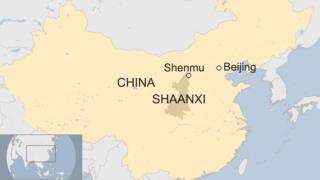
At least 21 miners died when a roof collapsed in a coal mine in northern China, officials say.
Sixty-six miners were rescued after the accident on Saturday at the Lijiagou mine near the city of Shenmu in Shaanxi province.
The cause of the collapse is under investigation, the official Xinhua news agency reported.
Mining accidents in China are quite common despite efforts to improve safety.
The Lijiagou mine is operated by the Baiji Mining Company, Xinhua said. No further details of the incident were available.
Last October, 21 coal miners were killed when an underground rock fall blocked a shaft in eastern Shandong province.
According to the latest figures from China’s National Coal Mine Safety Administration, there were 375 deaths in coal mines in 2017, a fall of about 28% on the previous year.
In a statement last January, the bureau said the “situation of coal mine safety production is still grim” despite improvements.
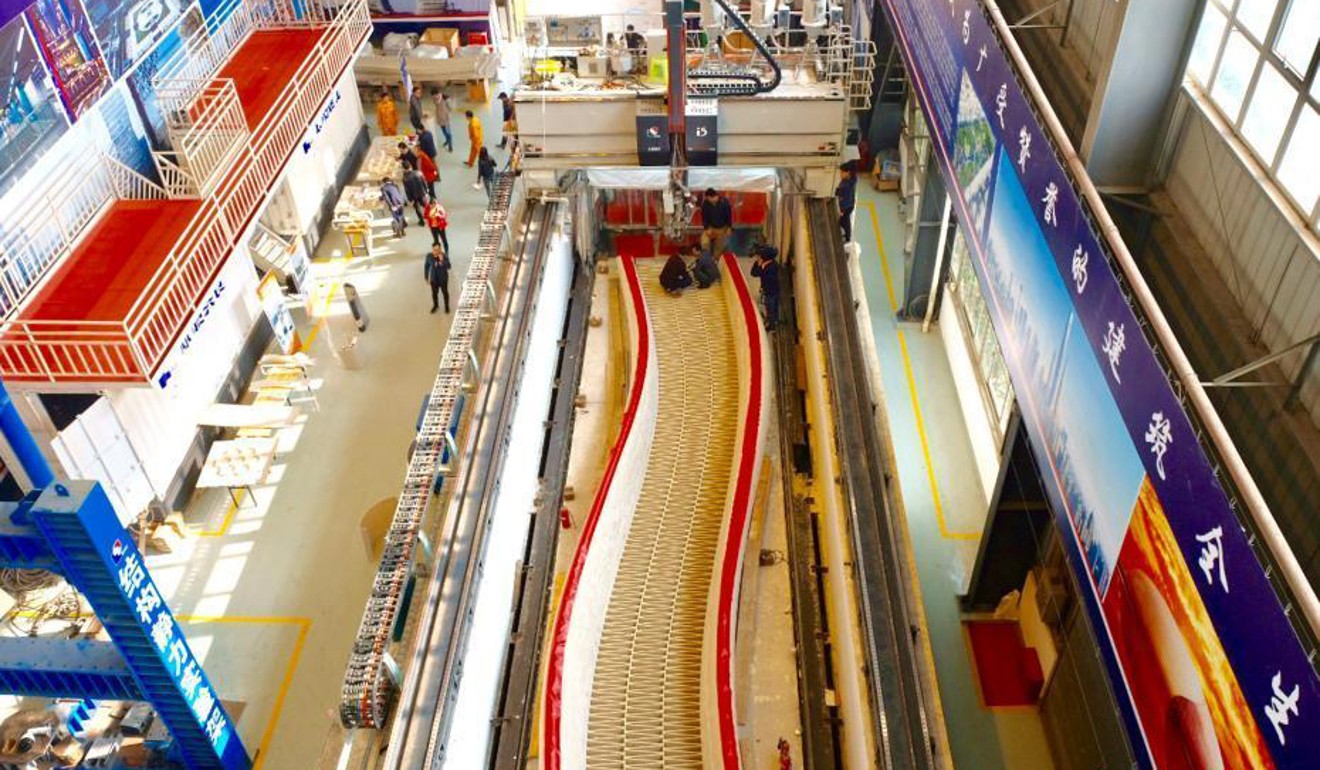
The span, which opened for business on Friday, was created by Shanghai Machinery Construction Group using materials made by Polymaker, the state-run China News Service reported.
“It’s both an everyday, practical application and an interactive one that involves people touching and even relying upon … a 3D printed thing,” Polymaker said on its website.
“Many people have never touched a 3D printed object and they still think of it as part fantasy and part future tech, so projects like this do a lot of good in terms of exposing the public to the reality and the possibilities of 3D printing,” it said.
The footbridge, which engineers said should last about 30 years, was installed over a narrow creek at the Taopu Smart City complex in Shanghai’s Putuo district, the news report said.
On its website the Shanghai government described the new bridge as an “innovative way to promote 3D printing technology and popularise it in urban construction”.
Polymaker said the machine used to print the bridge, which is 3.8 metres wide, 1.2 metres deep and about 5,800kg (12,800lbs) in weight, cost US$2.8 million.
The span was made as a single piece from a combination of glass fibre and a printable plastic filament known as acrylonitrile styrene acrylate, it said.
A separate report by Xinming Evening News quoted an engineer as saying the bridge was capable of bearing a load of 250kg per square metre, or about the weight of four adults.
Before starting the printing process, the build team spent 18 months in research and planning, it said.
While the Shanghai bridge is the first of its kind in China, it is not a world first in terms of 3D printing.
That honour goes to a 12-metre walkway installed at a park in Madrid in 2017, while a 3D-printed steel bridge was unveiled in the Netherlands in October.
BEIJING, Jan. 12 (Xinhua) — China will continue its efforts to widen market access for foreign investment and build a better business environment, Minister of Commerce Zhong Shan has said.
In an interview on Friday, Zhong said measures will be taken to shorten negative lists for foreign investors adopted in pilot free trade zones (FTZs) and nationwide, and wholly-foreign ownership will be allowed in more sectors.
China will press ahead with opening-up in the service sector, and encourage foreign investment in manufacturing and high-tech industries, and in central and western regions, Zhong said, adding that governments will help foreign companies address difficulties in investing in China.
To provide a favorable environment, the ministry will push for the foreign investment law and improve governments’ handling of complaints from foreign businesses, Zhong said.
As a major investment destination in the world, China maintained stable growth in foreign direct investment (FDI) against a gloomy global climate. Its FDI went up 3 percent year on year to 135 billion U.S. dollars last year, while that of the world’s total and developed countries slumped 41 percent and 69 percent, respectively, in the first half of 2018.
The World Bank has raised China by 32 places in terms of business environment, and 95 percent of companies surveyed by the U.S.-China Business Council said they would increase investment or maintain the existing presence in China in the coming year.
“The Chinese market has huge potential and sound prospects,” Zhong said. China’s goods consumption is expected to gain 9.1 percent from a year ago in 2018 to 38 trillion yuan (5.6 trillion U.S. dollars), serving as the biggest growth driver for five consecutive years.
“China is steadily marching toward the largest country of goods consumption,” Zhong said.
The ministry will further stimulate domestic consumption this year, with measures to promote urban consumption upgrades, tap into the potential in rural areas, foster modern supply chains, and bolster services consumption.
China’s foreign trade also remained steady, with the total imports and exports up 14.8 percent to stand at 4.2 trillion U.S. dollars in the first 11 months, hitting a new high. The services trade increased 15 percent from a year ago to 656.2 billion U.S. dollars in the first ten months, the world’s second largest.
Zhong listed three major tasks of the ministry in 2019: holding the second import expo, properly handling trade frictions with the United States, and pushing forward pilot FTZs and the Hainan free trade port.
The ministry will implement the consensus reached between Chinese and U.S. heads of states, propel economic and trade negotiations, and expand cooperation with U.S. states and cities, businesses and non-governmental institutions in a bid to promote stable China-U.S. economic ties and win-win cooperation.
Guo Shengkun (R), a member of the Political Bureau of the Communist Party of China (CPC) Central Committee and head of the Commission for Political and Legal Affairs of the CPC Central Committee, meets with Afghan president’s national security adviser Hamdullah Mohib in Beijing, capital of China, Jan. 11, 2019. (Xinhua/Shen Hong)
BEIJING, Jan. 12 (Xinhua) — Guo Shengkun, a member of the Political Bureau of the Communist Party of China (CPC) Central Committee, met with Afghan president’s national security adviser Hamdullah Mohib Friday in Beijing.
Guo, also head of the Commission for Political and Legal Affairs of the CPC Central Committee, called on China and Afghan to implement the consensus reached by the two heads of state and continue to advance the strategic cooperative partnership between the two countries.
China’s law enforcement and security departments stand ready to enhance cooperation with Afghan in counter-terrorism, border security, institution and personnel security, so as to safeguard security and development interests of the two countries, and promote regional peace and stability.
Mohib said Afghan will resolutely fight against terrorism, and stands ready to deepen law enforcement and security cooperation between the two countries.
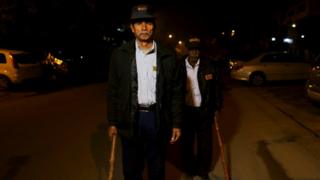
Image captionRanjit Singh goes on foot patrols every night with his torch
On a dimly-lit street, they look like lone warriors against unknown threats. From afar, their shadows loom over suburban Noida, a newly-gentrified satellite city on the outskirts of India’s capital, Delhi.
Heavy silence blankets the area, broken only by the occasional shrill blast from a whistle.
Two men, dressed in dark blue jackets and caps with the word “security” sewn in bright yellow, have just begun their nightly patrol.
“I have stopped thieves from stealing cars,” 55-year-old Khushi Ram, who goes by a first name only, says with pride. “And then I handed them over to the police.”
He and Ranjit Singh, 40, are security guards. But they are not protecting banks, brightly-lit jewellery stores or corporate offices.
They protect more than 300 posh homes every night – and they do this by going on foot patrol for hours.
“I like my job because I feel like I’m doing something for the public,” Khushi Ram says.
It is bitingly cold and as they rub their hands together to spark some warmth, they breathe out – and it blends easily with the dense smog hanging in the air.
Walk through any of the grid-like neighbourhoods that make up the bulk of Delhi’s residential housing for the middle and upper classes, and you will see many such security guards whose jobs are a halfway point between a watchman and a police officer.
Image captionKhushi Ram (L) and Ranjit Singh say they are proud of their job
They can be seen sitting on plastic chairs at the entrance to a neighbourhood, logging details as vehicles enter and exit; or patrolling the blocks through the night while tapping their wooden sticks on the ground – a familiar sound that is both tedious and reassuring.
They are part of India’s informal and often invisible workforce, which runs into hundreds of millions by some estimates. Many informal workers end up in jobs that are crucial to city neighbourhoods, from domestic workers to security guards.
“Everybody in the neighbourhood – from small children to the elderly – depends on us for their safety,” says Ranjit. “This is always on my mind when I am patrolling and it pushes me to do my best.”
Image captionThey protect more than 300 homes every night
Ranjit’s weapon is a torch. And Khushi Ram has a whistle slung around his neck.
The two men divide the sprawling block – lined with metal and wooden gates that stand in front of two and three-storey homes – between them and set off. Often, they walk and occasionally, they cycle.
They cautiously stop in front of every house and examine it through the gates before walking past.
The two men did not think they would be checking gates and streets in a neighbourhood they could never afford to live in when they left their villages in search of greener prospects.
The invisible workforce – stories about the unorganised workers at the heart of India’s economy
Ranjit is from the eastern state of Bihar and Khushi Ram is from the northern state of Uttar Pradesh – both are largely rural and among India’s poorest states.
Many of the guards I spoke to say they moved to Delhi in search of a government job, hoping to work for the police or the railways. These jobs are coveted because they come with benefits and tenure. Some of them even harboured dreams of joining the Indian Army.
Image captionEach neighbourhood in Noida has five or six such security guards
“We work with the police to keep residents safe,” says Ranjit, who moved to Delhi two years ago. He was immediately hired by a local contractor to guard the neighbourhood in Noida.
Local police have also benefited from the work of such guards, seeing as there are about five or six of them in each residential block. “We consider them an extra force,” says Ajay Pal Sharma, a senior police officer in Noida. The crime rate in the Noida, he adds, decreased by 40% in 2018 compared with the year before.
“This is partly because of our relationship with the guards, who have a lot of manpower, so we try and work closely with them.”
Mr Sharma adds that his precinct has also trained some of the guards in recent years, as the bulk of them do not receive any formal training.
He said they have taught the guards to watch out for car thieves and suspicious activity.
The guards also keep their ears open for stray dogs – they say barks from them signal something worth investigating.
Image captionKhushi Ram says he has handed over car thieves to the police
Khushi Ram moved to Delhi more than 20 years ago and has been doing the same job ever since.
He says that most people in the neighbourhood respect him, but others tend to look down on this line of work. “Some get nasty because they see us as a lowly-paid person who doesn’t deserve respect.”
His first pay check was for 1,400 rupees (about $20; £15.50). Now, he earns 9,000 rupees a month. “The increase in pay is not much, considering how basic living costs constantly go up when you live in cities,” he says. “I can barely survive with this income, but I don’t have any other skill so I have to continue.”
“I employ 200 guards and pay them the best I can. But the problem is that people don’t want to pay a lot,” says Himanshu Kumar, who owns a small private security firm that stations guards in residential areas.
He says that many see these guards as chowkidars, a term for villagers who voluntarily patrol the streets in exchange for food and money.
“But cities are different,” Mr Kumar says. “You have to pay more because the job is tougher. Unfortunately, people’s attitudes have not changed.”
Image captionRanjit Singh and Khushi Ram work in the biting cold in winter and sweltering heat at other times of the year
It is a winter night in Delhi, and the air is leaden with pollution. As Ranjit and Khushi Ram walk, they cough frequently.
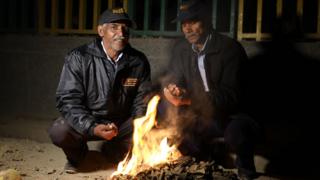
The job requires that they walk for at least five to six hours every night and sometimes, they stop to make a fire to warm themselves.
There is no relief in the summer either as sweltering temperatures persist through the night.
It can be a pretty thankless job, says Ranjit, who only gets to see his family once a year since they still live in Bihar.
“In an ideal world, I would be paid more for this job but the pay is so low that I want to quit,” he says.
“It is harder than you think – to stay awake when the rest of the city sleeps.”
NEW DELHI/MUMBAI (Reuters) – Two political rivals in the northern Indian state of Uttar Pradesh will form an alliance in a bid to defeat Prime Minister Narendra Modi’s Bharatiya Janata Party (BJP) in national election scheduled for May, leaders of the parties said.
The Samajwadi Party (SP) and the Bahujan Samaj Party (BSP), both of whom command large support bases among Uttar Pradesh state’s working class and are led by former chief ministers, will contest the election as a team, they said.
Uttar Pradesh is India’s most populous state and accounts for about a sixth of all members of the parliament, the highest by a single state. Barring a couple of exceptions in the 1990s, the party winning the most number of seats there has helped form the federal government.
Out of the 80 seats in the state, SP and BSP will nominate candidates for 38 seats each, BSP chief Mayawati Das said at a joint press conference with SP chief Akhilesh Yadav on Saturday.
They will not contest the other four seats, which include two that have historically been held by the country’s main opposition party, Congress.
Congress, which ruled India for nearly four decades since its independence from Britain in 1947, has also been working to build a “grand alliance” with other parties ahead of the polls.
Mayawati, however, said Congress would not be a part of the BSP-SP alliance in Uttar Pradesh. “We can surely stop the BJP from coming to power with this alliance with SP,” she said.
On Friday, Yadav had told news channel NDTV: “We can give Congress two seats they have always held”, referring to the constituencies from where Congress President Rahul Gandhi and his mother Sonia Gandhi have contested in the past.
Mamata Banerjee, head of Trinamool Congress party and chief minister of eastern India’s West Bengal state who has been pushing to create a mega alliance of regional parties to defeat the BJP, welcomed the announcement in a tweet.
“I welcome the alliance of the SP and the BSP for the forthcoming Lok Sabha elections,” Banerjee tweeted.
Akhilesh Yadav, Chief Minister of the northern state of Uttar Pradesh and Samajwadi Party (SP) President, addresses a news conference before resigning from his post in Lucknow, India, March 11, 2017. REUTERS/Pawan Kumar
“Let us cherish the ‘idea of India’ for which our freedom fighters laid down their lives. Our people and our great institutions must strive to remain “independent”, in the true sense of the word.”
OPPOSITION GETS A FILLIP
Opposition parties across the country received a fillip last month, when India’s ruling party lost power in three states and dealt Modi his biggest defeat since he took office in 2014.
The BJP, SP and BSP contested against each other during the state elections in March 2017, which the BJP comfortably won, but political analysts say a BSP-SP alliance could affect the ruling party’s prospects.
Congo’s opposition leader wins chaotic presidential election
The BJP had a 40 percent vote share in the state polls, the BSP and SP put together accounted for 44 percent. To be sure, voting patterns could be different when the world’s largest democracy goes to polls.
The BJP, however, is confident of winning elections in Uttar Pradesh. “We will win 74 out of the 80 seats in Uttar Pradesh,” president Amit Shah said in a televised address on Friday.
Despite the strategic significance and having been ruled by different parties since independence, Uttar Pradesh remains one of India’s most backward states.
It is notorious for its crime rate and unlicensed gun use, has below-average literacy levels, an abysmally low human development index and worrying levels of population growth.


 Image copyrightAFP












COMMENTS: