Archive for ‘Chindia Alert’

05/12/2018

Woman set on fire in India after complaining of attempted assault

NEW DELHI (Reuters) – Two men accused of trying to molest a 20-year-old woman in northern India set her on fire two days later after she lodged a complaint with police, authorities and her family said.

Women in India have struggled to secure prosecution for sexual attacks in the face of widespread police indifference, rights activists say.

The woman was in a field near her home in the Sitapur district of Uttar Pradesh state when the men, both neighbours and known to her family, accosted her and tried to drag her away, her brother Vinod Kumar told Reuters.

She bit their hands and managed to break free and escape, and her father filed a complaint with police same day, he said. When no action resulted, the family lodged a second complaint.

“We waited for the police to come for inquiries the entire day but no one came,” Vinod said.

The next day, the two men returned to the field where she was working, doused her with kerosene and set her on fire, Regional police superintendent Prabhakar Chaudhary told Reuters. She suffered burns to 40 percent of her body and was hospitalised.

Chaudhary said her suspected attackers were arrested and three policemen suspended for dereliction of duties.

After a gruesome gang rape of a young woman in 2012, India launched fast-track courts and a tougher rape law that included the death penalty. But crime statistics indicate sexual assault on women have risen, not fallen, since then.

Even if cases are registered, crime statistics show that police files remain open for about a third of all rapes that were investigated for each year between 2012 and 2016.

Rights groups have accused Indian police of bowing to pressure from local politicians to bury investigations. In some cases investigations of sexual assault have evaporated out of sheer police apathy, activists say.

Editing by Sanjeev Miglani and Mark Heinrich

05/12/2018

Two killed in violence over cow slaughter in north India

NEW DELHI (Reuters) – A senior police officer and another man were killed on Monday in violent protests over reports of a slaughtered cow, an animal sacred in Hindu culture, in India’s Uttar Pradesh state.

A crowd angered over what they believed was the slaughter of the cow threw stones and torched vehicles outside a police station. The officer died from gunshot wounds, district magistrate Anuj Jha told Reuters.

Earlier, police had said the officer was stoned to death and the other man died from gunshot wounds.

“Villagers complained after they found a dead cow, and took to the streets to protest. They blocked a road with a tractor and pelted stones,” he said.

So-called cow vigilantes from India’s Hindu majority have attacked and killed a number of Muslims involved in transporting cattle to slaughterhouses in recent years. However, the exact circumstances of Monday’s protests were not clear.

Reporting by Sudarshan Varadhan, Himani Singh and Amit Ganguly; Edited by Mark Heinrich

05/12/2018

India launches ‘heaviest’ satellite for internet access

The heaviest, largest and most-advanced high throughput communication satellite of India, GSAT-11 was launched successfully from Kourou Launch Zone today onboard Ariane 5 VA246 launch vehicle.Image copyrightISRO
Image captionThe satellite was launched from the Kourou spaceport in French Guiana early on Wednesday

India’s heaviest satellite has gone into orbit on a French rocket to help boost broadband internet services.

Weighing about 5,854kg (12,906lb), the GSAT-11 is India’s “most-advanced” multi-band communication satellite.

The Indian Space Research Organisation (Isro) launched the satellite from the Kourou spaceport in French Guiana early on Wednesday morning.

It will be placed in a geostationary orbit by the end of this month and its transponders will be switched on.

Isro chief K Sivan told reporters that the satellite will “play a vital role in providing broadband services across the country”.

Scientists say it will provide internet access to “off-grid” remote areas in India – hills and islands, for example – where traditional fixed-line broadband services are not available and would be helpful during emergencies and disaster relief. And it will also help provide internet connectivity during air travel in India.

India hired a French rocket to carry the satellite, which is expected to have a life span of 15 years, because it does not have a rocket to carry such a heavy payload.

There are more than 440 million internet users in India, and the number is expected to double by 2022.

However, slow speeds or lack of services still affect access in the remotest areas where is there is no cable connectivity.

India has emerged as a major player in the multi-billion dollar space market with dozens of communication and weather satellites in orbit.

In 2014, it successfully placed a space vessel in orbit around Mars, making it the first nation in the world to do so in its first attempt.

It also launched 104 satellites of varying sizes in one go in 2017, overtaking the previous record of 37 satellites launched by Russia in 2014.

05/12/2018

Vice premier stresses quality development of Confucius Institute

CHENGDU, Dec. 4 (Xinhua) — The Chinese government encourages cross-cultural exchanges, and supports both Chinese sides and their foreign partners in making Confucius Institute a success, Vice Premier Sun Chunlan said on Tuesday.

Sun, who is also chair of the Council of the Confucius Institute Headquarters, made the remarks at the opening of the 13th Confucius Institute Conference in Chengdu, southwest China’s Sichuan Province.

Sun spoke highly of the contribution made by the Confucius Institute in catering to people’s need of learning Chinese and serving the economic and trade cooperation between China and other countries.

“Through joint efforts of both Chinese sides and their foreign partners, the education quality of the Confucius Institute has steadily increased, with increasingly active cultural exchanges and continuously enhanced service capability,” she said.

To build a community with a shared future for humanity and push forward prosperity of all nations, languages need to play a unique role in enhancing understanding, building consensus, promoting cooperation and deepening friendship, Sun said.

She called on the Confucius Institute to innovate teaching methods, nurture more talent familiar with other countries, and build platforms for country-to-country friendly exchanges.

About 1,500 representatives from 154 countries and regions attended the conference.

05/12/2018

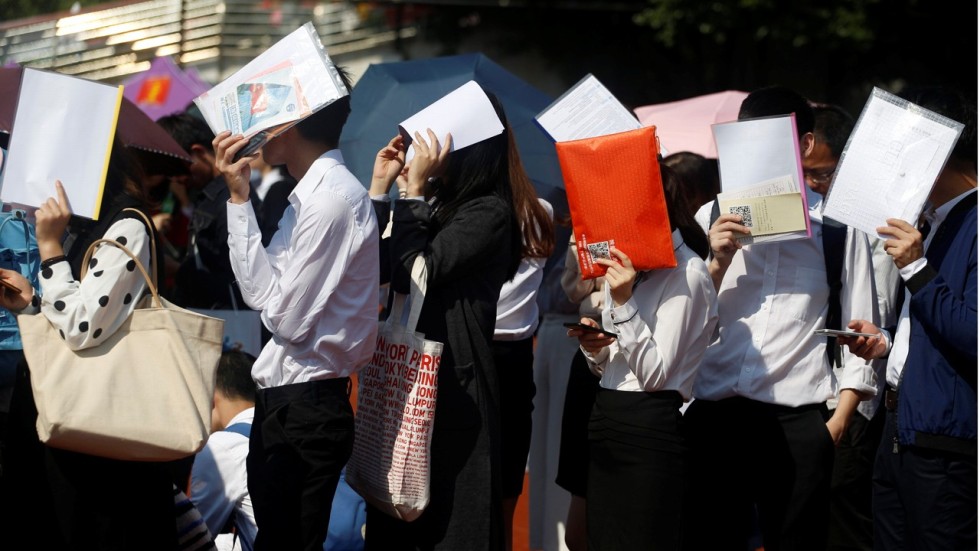
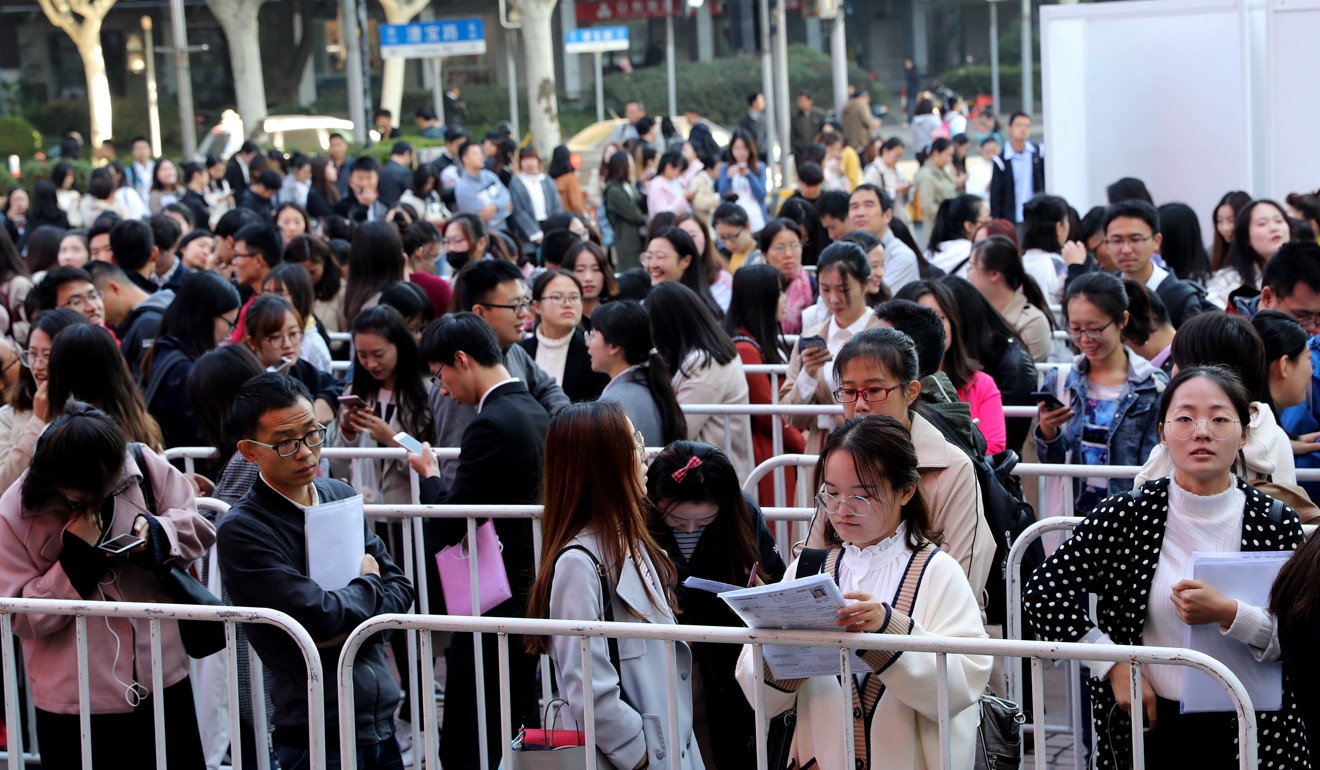
China takes steps to support jobs as trade war starts to hit employment

  • Cabinet unveils measures including unemployment insurance refunds for firms that do not lay off staff and subsidies for all jobless young people aged 16 to 24
PUBLISHED : Wednesday, 05 December, 2018, 4:15pm
UPDATED : Wednesday, 05 December, 2018, 4:17pm


Beijing is now officially worried about unemployment, as the US-China trade war continues to weigh on the world’s second largest economy.

On Wednesday, the State Council unveiled policies ranging from refunding unemployment insurance payments to companies that do not lay off staff to giving subsidies to jobless young people aged 16 to 24 rather than only to college graduates without jobs, according to a document on the government’s website.

The cabinet’s policy paper, which was drafted on November 16 but only made public this week, had already been passed down to local governments last month. The local governments were told to draft their own versions, taking account of local conditions, within 30 days.

Beijing has prioritised employment stability over other economic targets in various meetings, but the document offers the first sign of unease within the central government leadership over whether it can fight off unemployment pressure, as the trade war continues to reduce corporate hiring demand, particularly from export manufacturers.

While the official survey-based unemployment rate remained stable at 4.9 per cent in October compared to September, other indicators point to a weakening jobs market. The employment sub-index in both the official and Caixin purchasing managers’ index for the manufacturing sector showed factories have started to cut their workforces during the past few months because of weak overseas demand.

In the export sector, hiring demand fell by more than half in the third quarter, according to the China Institute for Employment Research, with the supply of new jobs declining even more in coastal cities such as Ningbo and Suzhou that rely heavily on international trade.

“Employment is facing new challenges this year, particularly since the start of the trade conflict,” Zhang Yizhen, vice-minister of human resources and social security, said at a press conference on Wednesday. “These [firms] operating mainly in import and export trade, particularly those exposed to and concentrating on US trade, are facing greater pressure [on employment].”

According the State Council policy paper, companies that do not lay off staff or only scale down their workforce mildly can get a 50 per cent refund of unemployment insurance payments made on behalf of their employees last year. And for firms that face temporary operational difficulties but have had few lay-offs, the refunds could be higher.

Companies in China are required to pay 2 per cent of their total payroll in unemployment insurance every month.

Beijing also called for local governments to increase their financial support for individual entrepreneurs and small private-sector enterprises, which are the main driver of urban employment in China. These entrepreneurs and firms should be offered government-guaranteed loans of between 150,000 yuan (US$21,900) and 3 million yuan (US$438,200).

Southern Guangdong province, a major hub of China’s export economy, is one of the first regions to heed Beijing’s call to lay out a detailed subsidy plan to stabilise employment, based on a notice dated last Friday but published on the government’s website on Monday this week.

In the Guangdong plan, third-party recruitment agencies will get a subsidy of up to 800 yuan from the provincial government for each rural worker they help find a job, through which the worker contributes to the social security fund for more than six months.

A small company that was registered within the last three years can get up to 30,000 yuan in total subsidies depending on the number of workers they hire. The government also offered subsidies – from hundreds to thousands of yuan – to encourage people who start new business in rural areas, college graduates who go to work for rural governments, and small enterprises that hire workers living below the poverty line.

At least for now, Beijing remains confident it can keep the job market under control.

“Even though key indicators have shown that employment remains stable, of course, we are concerned about the uncertainty surrounding the domestic economy and external markets,” Zhang said. “These new measures from the State Council will further stabilise and stimulate employment. We are confident [that they will do that].”

05/12/2018

China’s hotel hygiene horror continues with new scandal

Alice Yan

<a class="scmp-icon-cross" onclick="popoverClose(this);"></a><h3 class="popover-title"></h3>

” data-original-title=””> 

37SHARE

Related Articles

Weeks after some of China’s upmarket hotels were exposed for using the same soiled towels to clean drinking cups and toilets, officials have uncovered another hygiene issue at a mid-price hotel in the country’s northern province of Shanxi.

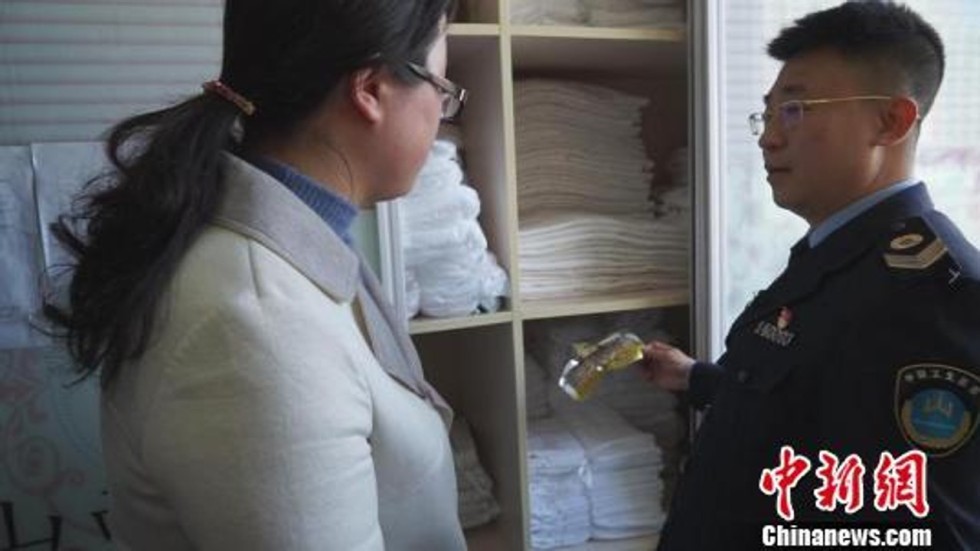
Health officials from the provincial capital of Taiyuan found disinfected towels stored with shoes and half-consumed snacks during an inspection on Tuesday.

According to the China News Service, the inspection found a number of hotels did not follow hygiene rules to sterilise customer utensils and were also not monitoring air, water, light and noise levels as required.

The health inspectors highlighted the case of one hotel in the downtown area, part of the Jinjiang Inn franchise, where clean towels were found stored in the same small room as the rubbish bins. Regulations require that towel cabinets are not placed with other items.

Inside the towel cabinet were a box of men’s shoes, half a pack of melon seeds and personal cosmetic products that belonged to hotel employees, the officials said.

“These items are probably not clean and can’t be stored with things that have already been cleaned; otherwise there will be cross-contamination,” an inspector was quoted as saying.

Officials also found items in the hotel’s sterilising room which should not have been there, and two employees working in the sterile area without the mandatory health certificate.

Last month Huazong, an online celebrity in China, uploaded a video in which some cleaners at five-star hotels were seen using the same towel to clean a bathroom mirror, basin, toilet and drinking cups.

Amid the uproar caused by the video, a commenter on Weibo, China’s Twitter-like service, wrote, “Hygiene problems exist in expensive hotels. I dare not imagine how bad the situation is in other hotels?”

05/12/2018

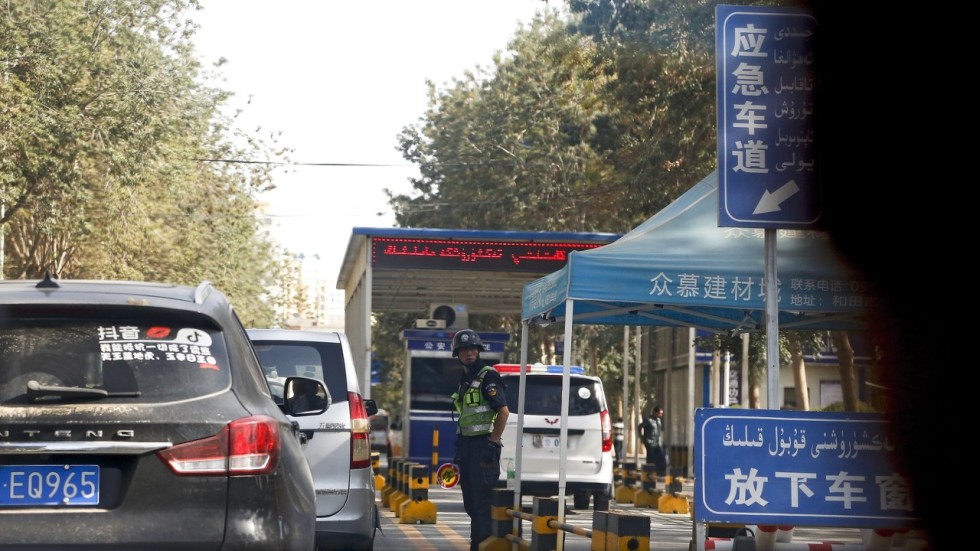
China ‘rejects German human rights delegation’s request’ to visit Xinjiang

China has denied a German human rights delegation access to the far western region of Xinjiang to investigate mass detention centres for Uygurs, according to the German foreign ministry.

German Human Rights Commissioner Bärbel Kofler said on Tuesday that the request was made as part of preparations for the annual German-Chinese Human Rights Dialogue in Lhasa on Thursday and Friday.

“I am shocked by reports of the treatment of the Turkic Uygur minority, more than one million of whom are estimated to be imprisoned in internment camps in Xinjiang,” Kofler said, adding that she would continue to ask for permission to travel to Xinjiang.

She said she would also raise Germany’s concerns about religious freedom, civil society, and other human rights issues in China during the meeting in Tibet.

Germany has been a vocal critic of China’s human rights record, including the interment camps in Xinjiang

China says the camps are vocational training centres and part of its anti-terrorism efforts, but critics say Uygurs are forced into centres in violation of human rights.

Former inmates and monitoring groups say people in the camps are subjected to prison-like conditions and forced to renounce their religion and cultural background.

On a trip to China last month, German Foreign Minister Heiko Maas urged Beijing to be more transparent about conditions in the camps.

Germany, along with the United States and France, called on China to close the camps during a United Nations review of China’s human rights record in Geneva last month.

Last week, Uygur woman Mihrigul Tursun told the United States Congress that she was tortured multiple times while detained in one of the centres, where a number of detainees died.

After the dialogue in Tibet, Kofler will return to Beijing to meet German President Frank-Walter Steinmeier, who is on a state visit.

Last year’s human rights dialogue was cancelled by China, with neither China nor Germany saying why it was called off.

05/12/2018

Seoul voices concerns as more Chinese military aircraft spread their wings in South Korean air defence zone

Lee Jeong-ho reports on China's diplomacy for the Post. He also covers East Asian security and defence stories. ” data-title=”<a href="/author/lee-jeong-ho">Lee Jeong-ho</a>” data-html=”true” data-template=”

” data-original-title=””> 

6SHARE

Related Articles

South Korea has voiced its frustration about repeated intrusions into its air defence identification zone by Chinese military aircraft, moves that analysts say reflect Beijing’s opposition to strengthening ties between Seoul, Tokyo and Washington.

South Korean authorities said a Chinese plane, possibly a Shaanxi Y-9 electronic warfare and surveillance aircraft flew into the Korean zone Monday last week without notice. The plane entered near Socotra Rock in the Sea of Japan, or East Sea, at about 11am and flew out and into Japan’s air defence identification zone about 40 minutes later.

The plane re-entered the South Korean air defence zone, near the southeastern city of Pohang, at about 12.43pm. Then it travelled up to South Korea’s Exclusive Economic Zone in the Sea of Japan, cutting between the South Korean mainland and Ulleung island.

It was unusual for a Chinese aircraft to have taken that route. The plane was reported to have left the zone at 3.53pm.

Air defence identification zones are not covered by any international treaty and it is standard practice to notify the country concerned before entering its airspace.

The aircraft did not enter South Korean territorial airspace, which under the United Nations Convention on the Law of the Sea is defined as 12 nautical miles from shore.

According to the South Korean Air Force, the number of Chinese military aircraft entering its identification zone is rising. In 2016, there were about 60 incursions, 70 in 2017 and 110 were reported up to September this year.

Seoul called Du Nongyi, the Chinese military attaché to South Korea, to its defence ministry after Monday’s incident to expressed its “serious concerns” and called for “measures to prevent recurrences”.

A middle-ranking South Korea Air Force officer said Seoul paid “extra attention” to the incident.

Security analysts said the flights were a demonstration of China’s worries about increased US military activity in the region if US-North Korea negotiations failed.

Sending military planes over area allowed China to extend its surveillance and sent a message that it was watching and, if necessary, willing to act to protect its interests in the region, analysts said.

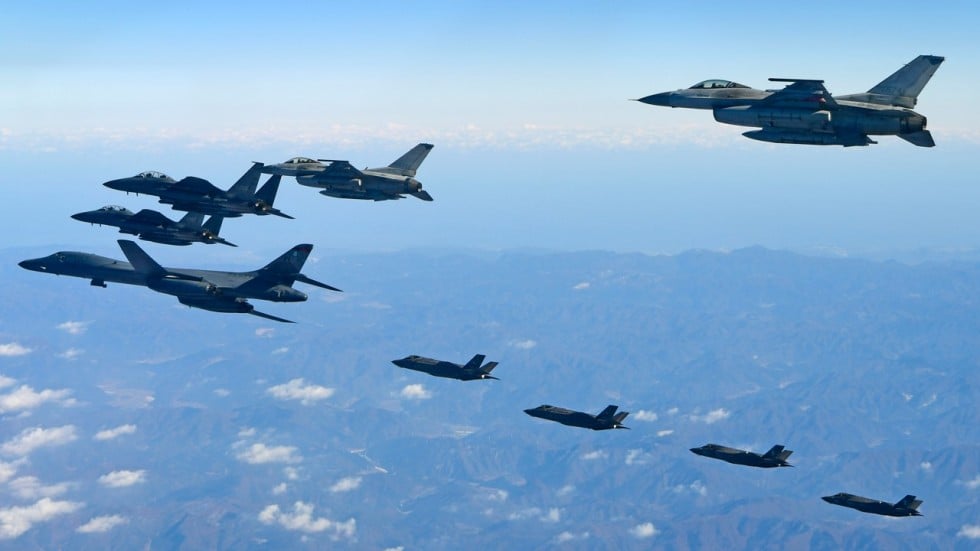
The US has sent military assets, including nuclear-capable B-52 bombers, to the Sea of Japan, prompting criticism from Beijing and Pyongyang. The US has long said North Korea’s behaviour was justification for joint military exercises with South Korea. These were stepped down this year to encourage Pyongyang at the negotiation table but could be stepped up again if talks on denuclearisation fail.

“China’s moves are part of its grand strategy to exert greater influence, presence, and pressure in the Indo-Pacific region … Possible failure of US-North Korea negotiations would be in [Beijing’s] calculations,” said Ryo Hinata-Yamaguchi, a visiting professor at Pusan National University in South Korea and adjunct fellow at the Pacific Forum – a donor-funded, non-profit foreign policy research institute based in Honolulu, Hawaii.

“I expect the [US-South Korea] exercises to resume at full scale [if] the US-North Korea negotiations or inter-Korean relations deteriorate … when both Washington and Seoul view that [the drills are] necessary.”

Zhao Tong, a fellow with the nuclear policy programme at the Carnegie-Tsinghua Centre for Global Policy in Beijing, said Monday’s overflight had several meanings.

The resumption of US-South Korea drills and Japan’s recent military modernisation “would be viewed by China as a direct threat to its own security and the overfly of Chinese aircraft could be used to send a deterrence signal”.

“Japan, in particular, is hosting increasingly advanced US military assets on its territory. Chinese reconnaissance aircraft flying in the Sea of Japan can help it keep an eye on what is going on in that region,” Zhao said.

Beijing fears the strengthening of an alliance network between the South Korea and Japan and, consequently, the completion of a US-South Korea-Japan triangle, often referred to as an Asian Nato.

South Korea and Japan signed a military intelligence pact in 2016, which China criticised as a deal between countries that shared a “cold-war mentality”.

“For China, the formation of a US-South Korea-Japan alliance triangle would be one of their biggest concerns as it would essentially be a powerful containment strategy against Beijing,” Hinata-Yamaguchi said.

“China would take, and has taken, measures to avoid the formation of an US-South Korea-Japan alliance triangle, such as the [push for] ‘three positions’ promised between China and the South Korea in the autumn of 2017,” Hinata-Yamaguchi said.

But Beijing played down the flight and called it a “routine arrangement”.

Ren Guoqiang, spokesman at the Ministry of National Defence, said last week that Chinese forces were “in line with the international law and practice” and the South Korea side “didn’t have to be too surprised about it”.

The ministry did not respond to requests for further comment.

05/12/2018

Chinese president arrives in Portugal for state visit

PORTUGAL-LISBON-CHINA-XI JINPING-ARRIVAL

Chinese President Xi Jinping (L) and his wife Peng Liyuan disembark from the airplane after arriving in Lisbon, Portugal, on Dec. 4, 2018. Xi arrived in Portugal on Tuesday for a two-day state visit. (Xinhua/Li Xueren)

LISBON, Dec. 4 (Xinhua) — Chinese President Xi Jinping arrived in Portugal on Tuesday for a two-day state visit aimed at carrying forward friendship and expanding cooperation between the two countries.

It is the first visit by a Chinese head of state to the European country in eight years.

Two Portuguese fighter jets escorted Xi’s plane as it entered the country’s airspace.

Xi and his wife, Peng Liyuan, were greeted by senior Portuguese government officials at the airport.

While delivering a written speech upon arrival, Xi praised the traditional friendship between China and Portugal, saying that the bilateral relations have withstood the test of time and international vicissitudes and become even stronger.

In 1999, the two countries properly resolved the question of Macao through friendly consultations, setting an example for other nations to tackle issues left over from history, Xi said.

In 2005, China and Portugal established a comprehensive strategic partnership, which enabled their mutually beneficial cooperation to embark on a fast lane of development and deliver substantial benefits to the people of the two countries, Xi said.

He said that next year marks the 40th anniversary of the establishment of diplomatic ties between the two countries, which is a new starting point in history for the bilateral relations.

Xi said that he is looking forward to meeting President Marcelo Rebelo de Sousa, Prime Minister Antonio Costa and other Portuguese leaders to draw up the blueprint for future bilateral cooperation.

He added that he believes with the concerted efforts of both sides, the China-Portugal comprehensive strategic partnership will enjoy an even brighter future.

Portugal is the final stop of Xi’s Europe and Latin America tour, which has already taken him to Spain, Argentina and Panama.

In Buenos Aires, Argentina, Xi also attended the 13th Group of 20 summit, and met U.S. President Donald Trump as well as leaders of other countries.

When Xi left Panama for Portugal, Panamanian President Juan Carlos Varela went to the airport to see him off.

04/12/2018

India urges global planemakers to ‘Make in India’

MUMBAI, June 3 (Reuters) – India wants to encourage aircraft makers to manufacture in the country, starting with components and moving eventually to complete aircraft, Aviation Minister Suresh Prabhu said on Sunday.

In a series of messages on Twitter, Prabhu appealed to Airbus and Boeing Co to participate in the push as part of the government’s flagship “Make In India” campaign, highlighting the growth potential of the booming market, which has been adding passengers and cutting fares.

India’s booming aviation market and economy needs more than 1,000 passenger planes and “many more” cargo planes, Prabhu, who last week visited an Airbus facility in Toulouse in France, wrote in the Twitter post.

Airbus said last year it expected Indian carriers to order 1,750 aircraft over 20 years. Boeing predicted up to 2,100 planes would be sold in the same period. (Reporting by Aditi Shah and Devidutta Tripathy, editing by Larry king)

Law of Unintended Consequences

continuously updated blog about China & India

ChiaHou's Book Reviews

continuously updated blog about China & India

What's wrong with the world; and its economy

continuously updated blog about China & India