Chindia Alert: You’ll be Living in their World Very Soon
aims to alert you to the threats and opportunities that China and India present. China and India require serious attention; case of ‘hidden dragon and crouching tiger’.
Without this attention, governments, businesses and, indeed, individuals may find themselves at a great disadvantage sooner rather than later.
The POSTs (front webpages) are mainly 'cuttings' from reliable sources, updated continuously.
The PAGEs (see Tabs, above) attempt to make the information more meaningful by putting some structure to the information we have researched and assembled since 2006.
India is ready to send its top diplomat to Pakistan for talks focused on fighting cross-border terrorism, sources at foreign ministry said on Wednesday, after a spike in tension in the disputed northernmost region of Kashmir.
Foreign Secretary Subrahmanyam Jaishankar was willing to attend talks on the invitation of his Pakistani counterpart, the sources said, stressing cross-border terrorism was central to the situation in Jammu and Kashmir state.
The olive branch comes after 40 days of violent protests in Indian-ruled Kashmir set off by the killing by security forces of a field commander of Pakistan-based Islamic militant group Hizbul Mujahideen who enjoyed wide support.
At least 64 people have died and thousands injured in clashes with security forces, denounced by Pakistan, which also claims the right to rule Jammu & Kashmir in a territorial dispute that dates back to partition in 1947.
The Indian sources, who declined to be identified, made it clear, however, that India “rejects in their entirety the self-serving allegations regarding the situation in J&K, which is an integral part of India.”Jammu and Kashmir (J&K) is the name of India’s only Muslim-majority state that includes the disputed Kashmir region.
A spokesman for Pakistan’s foreign ministry declined to comment late on Wednesday, saying the government was preparing a response to the proposed Indian visit.
A U.N. human rights official expressed “deep regret” at the failure of both the Indian and Pakistani authorities to grant access to the separate parts of Kashmir that each run to investigate allegations of serious human rights violations.
U.N. High Commissioner for Human Rights Zeid Ra’ad Al Hussein said in a statement issued in Geneva it was unfortunate that sincere attempts by the United Nations to independently assess the facts in relation to reports of human rights violations had failed.
“Without access, we can only fear the worst,” said Zeid.
The nuclear-armed neighbours, which have fought three wars since independence in 1947, both claim Kashmir in full but rule it in part.
In the latest violence on Wednesday, militants killed three members of the security forces when they ambushed an army convoy and then fired on a police jeep that came to the scene.
In a worrying escalation the previous day, security forces fired live rounds at a crowd of stone-throwing protesters in Baramulla district, killing five and wounding 10.
Earlier, police and troops trying to control crowds had resorted to the use of shotguns, whose pellets are meant to incapacitate but not kill.
But residents of Kashmir say the shotguns have inflicted severe injuries and even blinded hundreds of people including bystanders.
Prime Minister Narendra Modi ratcheted up tensions in his annual Independence Day speech on Monday, accusing Pakistan of glorifying terrorism.
In a tit-for-tat escalation in the war of words between the neighbours, Modi said he had received messages of support from leaders in restive regions of Pakistan, in particular the troubled southwestern province of Baluchistan.
India accuses Muslim Pakistan of supporting Kashmiri fighters while Pakistan accuses India of meddling in Pakistani trouble spots, in particular of helping separatists fighting the Pakistani state in resource-rich Baluchistan.
With the end of his colorful turban blowing in the wind, he outlined his government’s achievements and took a swipe at Pakistan.
Here are 10 quotes from the 90-minute speech, based on the official translation from Mr. Modi’s office:
On India’s progress: “India is not 70 years old but this journey is 70 years long.
”On governance: “Now turning self governance to good governance is the resolve of 1.25 billion countrymen.”
On India’s problems: “If India has thousands of problems, it also has 1.25 billion brains that have the ability to resolve them.
”On economic growth: “As far as GDP growth rate is concerned, we have left behind even the big economies of the world.”
On the goods-and-services tax: “The GST regime is to become a powerful tool to strengthen the economy.
”On toilets: “More than 20 million toilets have been constructed in our villages. Over 70,000 villages have been free from open defecation.
”On stalled projects: “Blocking projects, delaying them and wasting money amounts to criminal negligence.
”On inflation: “I will not allow the poor man’s dish to become costlier.”
On Pakistan and the Kashmir region: “The way the people of Balochistan, Gilgit and Pakistan-occupied Kashmir praised me, has enhanced the prestige of my 1.25 billion countrymen.”
On caste and minority divisions: “Serve all people without discrimination. Do not disregard anyone for his age or caste, Respect all.”
When workers are paid differently for little reason, even the higher-paid ones are less productive and happy, a new study suggests.
Economists at Columbia University and University of California, Berkeley, have shown that workers seem to be highly averse to pay inequality, just as primatologist Frans de Waal’s capuchin monkeys famously threw food at their keepers when they were rewarded differently.The new study reveals a sharp drop in output, attendance and social cohesion among groups of workers paid differently compared with groups where everyone was paid the same.
In a study the authors claims is the largest such experiment ever conducted, 378 Indian workers—with differing levels of productivity—were trained and hired into month-long seasonal contract jobs, working in factories that produced low-tech items such as ropes and brooms.
They were organized in teams of three workers. All 378 were paid either 240 rupees ($3.59) a day to turn up to work, or 5% more or 5% less than that amount.
In most of the teams, the three workers were paid the same amount. But, crucially, in some, workers’ pay differed according to the workers’ individual levels of productivity (which had been determined earlier). This clever design meant the economists could compare the performance of workers who earned the same amount—either high, middle or low—but differed according to whether they were members of equally or unequally paid teams.
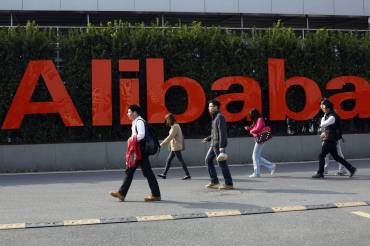
As its business matures at home, Chinese e-commerce giant Alibaba Group Holding Ltd. is looking to boost growth elsewhere in Asia — especially India, home to a nascent but fast-growing online shopping sector.
Here’s how — and why – it is targeting the world’s second-most-populous nation.
1.2 billion
The number of customers outside of China that Alibaba would like to reach, according to the company’s Chairman Jack Ma.
$127 billion
The projected value of India’s e-commerce market in 2025, up from $11.2 billion last year, according to Goldman Sachs Global Investment Research.
$500 million
The amount of money New Delhi, India-based e-commerce startup Snapdeal.com raised in a fundraising round led by Alibaba last year.
More than $500 million
The amount Alibaba and its affiliate Ant Financial Services Group last year paid for 40% of One97 Communications, the parent company of Noida, India-based online-payment and marketplace startup Paytm.
2 or more
Prominent executives Alibaba has hired in recent months who have experience in India’s e-commerce sector.
IF THERE is a modern gateway from the east to Africa, it is arguably Addis Ababa’s airport. Passengers passing through its dusty terminals on their way to some far-flung capital will be surprised to find that getting an Ethiopian meal is remarkably difficult. Asian dumplings, however, are available at two different cafés. Signs marking the gates are in English, Amharic and Chinese, as are announcements.
Dozing gently on the beige loungers are untold numbers of young Chinese workers waiting for flights. They are part of a growing army of labourers, businessmen and engineers who can be seen directing the construction of roads, railways and ports across much of east Africa.
Concerns about China’s involvement in Africa are often overplayed. Accusations that it is buying up vast tracts of farmland, factories and mines, for instance, are blown out of proportion. Even so, its growing influence on the continent has nettled India and Japan, who are both boosting their engagement in response.
As with previous rounds of rivalry in Africa, such as during the cold war, at least some of this activity relates to access to bases and ports to control the sea. China’s involvement in Africa now includes a growing military presence. Thousands of Chinese soldiers have donned the UN’s blue helmets in Mali and South Sudan, where several have been killed trying to keep an imaginary peace. Chinese warships regularly visit African ports.
China maintains a naval squadron that escorts mostly Chinese-flagged vessels through the Gulf of Aden. But some diplomats fret that China has been using these patrols to give its navy practice in operating far from home, including in offensive actions. “You wouldn’t normally use submarines for counter-piracy patrols,” says one.
Patrolling for pirates has also given China an excuse to set up its first overseas base in Djibouti, next door to an existing American one. Yet the more alarmist worries about China—that it is planning to build naval bases in a “string of pearls” stretching from China to the Red Sea and as far as Namibia’s Walvis Bay on the Atlantic coast—have not materialised. The Walvis Bay rumour seems to be a red herring. China has used its ships and soldiers to protect its own citizens in Africa and the Middle East: in 2011 it evacuated 35,000 of them from Libya and last year one of its ships rescued 600 from Yemen. But its main naval focus remains the South China Sea.
Wary does it
Still, India is deeply suspicious of China’s presence in the Indian Ocean. A wide network of some 32 Indian radar stations and listening posts is being developed in the Seychelles, Madagascar and Mauritius, among other countries. This will enable India to monitor shipping across expanses of the ocean. It is also improving its ability to project power in waters it considers its own, and is arming friendly countries such as Mauritius. Among other things, India is building a naval and air base on Assumption Island, north of Madagascar and within easy reach of many of east Africa’s newly discovered offshore gasfields. “It’s the Indian Ocean, stupid,” quips one seasoned commentator in mimicry of Indian diplomats on its power projection. “They say it’s ‘our near abroad’.”
Japan has also been flexing its naval muscle but in a more limited manner. This month it pledged $120m in aid to boost counter-terrorism efforts in Africa. It has been a stalwart contributor to the multinational naval force policing the seas off Somalia’s coast. Sino-Japanese rivalry is fiercest in diplomacy and trade. Two prizes are on offer: access to natural resources and markets, and the continent’s 54 votes at the UN. Much of the effort to win the former was pioneered by Japan in the 1990s, when it helped build ports and railways. Akihiko Tanaka of the University of Tokyo, a former president of the Japan International Co-operation Agency, says that for years Japan’s aid to Africa was “qualitatively different” from that of other rich nations in part because it focused on infrastructure rather than the direct alleviation of poverty. “We were criticised a lot,” he says. “Now there is an almost unanimous view that you need to invest in infrastructure.”
Japan’s latest spending spree on infrastructure will speed economic growth on the continent; but there is a degree of one-upmanship and duplication. Japan recently handed over the keys to a new cargo terminal at Kenya’s main port in Mombasa. Meanwhile, a short hop down the coast at Bagamoyo, Tanzania is building east Africa’s biggest port—with Chinese cash.
On the diplomatic front both Japan and India are trying to make common cause with African states that want to reform the UN Security Council. They argue that Africa deserves permanent seats on it, as do they. China favours a permanent seat for an African country, and it doesn’t mind India having one. But in return it expects endorsement of its stand against Japan getting a seat.
Both Japan and China back up such diplomatic efforts with aid and, at least in China’s case, this seems to have helped win it friends. Countries that vote with China in the UN (for instance over Taiwan) usually get more cash from it, according to AidData, a project based at the College of William and Mary in Virginia.
China also makes African friends by selling arms. In the five years to 2015 it nearly doubled its share of weapons supplied to sub-Saharan Africa, from little more than a tenth of the total to almost a quarter, according to the Stockholm International Peace Research Institute, a think-tank. It has sold tanks and jets to Tanzania, armoured vehicles to Burundi and Cameroon, and missile launchers to Morocco, to name but a few. It also wins friends among the continent’s war criminals through its policy of “non-interference” in the internal affairs of other countries, for instance by opposing the International Criminal Court (ICC).
Japan, which until 2014 was prohibited by its constitution from selling weapons, and supports the ICC, has had a harder time. It has concentrated on dispensing aid and using soft power, such as awarding scholarships for study in Japan and free classes in akido and karate at its embassy in Nairobi. But even in this sphere it is outclassed by China, which has established some 46 Confucius Institutes in Africa to teach Chinese language and culture. China also flies thousands of Africa’s ruling-party officials, civil servants and trade unionists to attend political-training schools in China. This has worked so well in South Africa that the ruling African National Congress last year published a foreign-policy discussion document suggesting that China’s Communist Party “should be a guiding lodestar of our own struggle.”
Yet apart from South Africa, which has slavishly aligned itself with China (for instance by voting with it against a UN resolution to protect the right of people to hold peaceful protests), most African countries are good at playing off rivals against each other, says Alex Vines of Chatham House, a London think-tank. Many have diversified their diplomatic links by opening new embassies, including ones that cross previous divisions between rival powers in Africa. Countries including Burundi, Mauritania and Togo, that used to fall firmly within France’s sphere of influence have opened embassies in Britain. “This is a really great time for clever African countries to get really good deals,” says Mr Vines.
U.S. and UK tech startups welcome in China – with a little supervision Martin Anderson. Editor, The Stack, Friday 12th August
On August 1st Travis Kalanick, CEO and co-founder of Uber, finally admitted defeat regarding the company’s three-year crusade to gain a foothold in China, with the ‘merging’ (most consider it a ‘sale’) of Uber’s Chinese operations with local incumbent Didi Chuxing. Whatever Kalanick may have recovered from the concession, it seems unlikely that Uber will recoup the billions it has already poured into its most distant territory. But there was no alternative – by January of this year, the Uber board was urging that the ride-sharing giant – such an indefatigable combatant in so many contested territories – throw in the towel.
Ultimately Didi was going to win this battle; despite cash and equity of $28 billion vs Uber’s $68 billion, Didi had reserved $10 billion to strengthen its grip on this fundamental societal change in China – almost on a par with what the better-financed Uber was willing to invest.
A headline-grabbing contest of this nature gives the false impression of China as isolationist in terms of cooperating with global tech startups – it isn’t. The country runs a UK-China tech incubator in Shenzhen, backed by Tencent and providing crucial advice on the peculiarities of the Chinese market to Brit startups. The deal even offers free office space, business counsel and pitch opportunities. Whilst willing to repel boarders on the scale of Uber, China has no problem in contributing to a post-Brexit UK brain drain.
Likewise Alibaba runs a similar scheme to increase tech migration from the United States – almost impossibly tempting for new companies dazzled by the economy-of-scale that Chinese success promises, and struggling for attention in saturated home markets. Perhaps the most useful aspect of these international schemes is the business advice from native sources – western entrepreneurs see huge opportunities in Chinese numbers, yet fail to take account of national psychology; either on an individual level (the Chinese consumer), or at the level of a state which is well aware of its riches – and needs only as much western genius to exploit them as serves its future interests in the post-sharing economy.
Recently, I noticed that the Indian armybagpipe bands tend to sway as they march. See https://www.youtube.com/watch?v=9fkT6SdD9LQ and https://www.youtube.com/watch?v=fgW0HnY9crA Bands without bagpipes do not sway.
I tried to check via Google if the Pakistani army bagpipe bands did the same and couldn’t find any example. So, my conclusion is that it was not a habit formed during the Raj but developed indigenously after Independence.
So the question: when and why did the Indian army bagpipe bands develop this swaying action?
The country could create sustainable economic conditions in five ways, such as promoting acceptable living standards, improving the urban infrastructure, and unlocking the potential of women.
Twenty-five years ago, India embarked on a journey of economic liberalization, opening its doors to globalization and market forces. We, and the rest of the world, have watched as the investment and trade regime introduced in 1991 raised economic growth, increased consumer choice, and reduced poverty significantly.
Now, as uncertainties cloud the global economic picture, the International Monetary Fund has projected that India’s GDP will grow by 7.4 percent for 2016–17, making it the world’s fastest-growing large economy. India also compares favorably with other emerging markets in growth potential. (Exhibit 1).
The country offers an attractive long-term future powered largely by a consuming class that’s expected to more than triple, to 89 million households, by 2025.Exhibit 1
Liberalization has created new opportunities. The challenge for policy makers is to manage growth so that it creates the basis for sustainable economic performance. Although much work has been done, India’s transformation into a global economic force has yet to fully benefit all its citizens. There’s a massive unmet need for basic services, such as water and sanitation, energy, and health care, for example, while red tape makes it hard to do business. The government has begun to address many of these challenges, and the pace of change could accelerate in coming years as some initiatives gain scale.
From our vantage point, India has an exciting future. In the new McKinsey Global Institute report India’s ascent: Five opportunities for growth and transformation, we look at game-changing opportunities for the country’s economy and the implications for domestic businesses, multinational companies, and the government. The five areas we focus on by no means provide a comprehensive assessment of India’s prospects, but we believe they are among the most significant trends. Foreign and Indian businesses would do well to recognize these opportunities and reflect on how to exploit them.
1. From poverty to empowerment:
Acceptable living standards for allThe trickle-down effect of economic liberalization has lifted millions of Indians from indigence in the past two decades. The official poverty rate declined from 45 percent of the population in 1994 to 22 percent in 2012, but this statistic defines only the most dismal situations. By our broader measure of minimum acceptable living standards—spanning nutrition, water, sanitation, energy, housing, education, and healthcare—we find that 56 percent of Indians lacked the basics in 2012.
The country will need to address these gaps to achieve its potential. The task is certainly within India’s capacity, but policy makers will have to promote an agenda emphasizing job creation, growth-oriented investment, farm-sector productivity, and innovative social programs that help the people who actually need them. The private sector has a substantial role to play both in creating and providing effective basic services.
2. Sustainable urbanization:
Building India’s growth enginesBy 2025, MGI estimates, India will have 69 cities with a population of more than one million each. Economic growth will center on them, and the biggest infrastructure building will take place there. The output of Indian cities will come to resemble that of cities in middle-income nations (Exhibit 2).
In 2030, for example, Mumbai’s economy, a mammoth market of $245 billion in consumption, will be bigger than Malaysia’s today. The next four cities by market size will each have annual consumption of $80 billion to $175 billion by 2030.Exhibit 2To achieve sustainable growth, these cities will have to become more livable places, offering clean air and water, reliable utilities, and extensive green spaces. India’s urban transformation represents a huge opportunity for domestic and international businesses that can provide capital, technology, and planning know-how, as well as the goods and services urban consumers demand.
3. Manufacturing for India, in India
Although India’s manufacturing sector has lagged behind China’s, there will be substantial opportunities to invest in value-creating businesses and to create jobs. India’s appeal to potential investors will be more than just its low-cost labor: manufacturers there are building competitive businesses to tap into the large and growing local market. Further reforms and public infrastructure investments could make it easier for all types of manufacturing businesses—foreign and Indian alike—to achieve scale and efficiency.
4. Riding the digital wave:
Harnessing technology for India’s growthTwelve powerful technologies will benefit India, helping to raise productivity, improving efficiency across major sectors of the economy, and radically altering the provision of services such as education and healthcare. These technologies could add $550 billion to $1 trillion a year of economic value in 2025, according to our analysis, potentially creating millions of well-paying, productive jobs (including positions for people with moderate levels of formal education) and helping millions of Indians to enjoy a decent standard of living.
5. Unlocking the potential of Indian women: If not now, when?
Our research suggests that women now contribute only 17 percent of India’s GDP and make up just 24 percent of the workforce, compared with 40 percent globally. In the coming decade, they will represent one of the largest potential economic forces in the country. If it matched the progress toward gender parity of the region’s fastest-improving country, we estimate that it could add $700 billion to its GDP in 2025. Movement toward closing the gender gap in education and in financial and digital inclusion has begun, but there is scope for further progress.
Public-sector efforts to address the five areas are under way. The government is attempting to improve the investment climate and accelerate job creation—India’s ranking on the World Economic Forum’s Global Competitiveness Report climbed to 55 in 2015–16, from 71 a year earlier. Officials are moving to make the government more efficient, using technology that can leapfrog traditional bottlenecks of a weak infrastructure. One billion Indian citizens, for example, are now registered under Aadhaar, the world’s largest digital-identity program and a potent platform for delivering benefits directly to the poor.
Realizing India’s promise will require national, state, and local leaders to adopt new approaches to governance and the provision of services. To meet the people’s aspirations, these officials will also need new capabilities. The requirements include private sector–style procurement and supply-chain expertise, deep technical skills for planning portfolios of infrastructure investments, and strong project-management capabilities to ensure that large capital projects finish on time and on budget. Training will be needed to help staff members use digital technologies to automate and reengineer processes, manage big data and advanced analytics, and improve interactions among citizens through digitized touchpoints, online-access platforms, portals, and messaging and payment platforms. The government could acquire these capabilities by adopting quality-oriented procurement policies and taking advantage of secondments from the private sector. For businesses, India represents a sizable market but will require a granular strategy and a locally focused operating model.
No single report can capture all the changes taking place in the country, but we have tried here to identify the most significant trends. Foreign and Indian businesses should consider how their strategies will be influenced by them. Policy makers should focus on helping all stakeholders to capitalize on them. By any measure, the challenge is daunting, but success could give a historic boost to India’s economy.
For two days in row, Chinese swimmer Fu Yuanhui clambered out of the Olympic pool in Rio clueless about her breakthrough performances: breaking personal records and clinching a bronze medal.
Each time a poolside reporter had to break the news to the bubbly 20-year-old, whose vivacious epiphanies on live television have broken the Chinese internet.“I was so fast! I’m really pleased!” Ms. Fu exclaimed Monday after learning that she swam the 100-meter backstroke semifinal in 58.95 seconds, a new personal best. “I’ve already… expended my primordial powers!”
After Tuesday’s final, when told that she trailed the silver medalist by just 0.01 second, Ms. Fu replied, “Maybe it’s because my arms are too short.”
Her gleeful candor made her an overnight online sensation. Fans feted her as “Primordial Girl” in online memes and viral videos spoofing her exuberant expressions. Her Weibo microblog following swelled more than sixfold to 3.8 million users.
China has a new sports star, and never mind that she didn’t finish first. In a country long obsessed with winning gold medals, Ms. Fu’s newfound fame seemed to signal shifting social perceptions about the meaning of sport.
“‘Primordial Girl’ and the netizens who appreciate her have taught all of us a lesson: sport is about the struggle and, especially, enjoyment, but most definitely not about spinning gold,” the Communist Party’s flagship newspaper, People’s Daily, said in a Tuesday commentary.
“The warm support from netizens,” according to the newspaper, “shows that public attitudes toward competitive sport and the Olympics have sublimated to a higher level.
”Ms. Fu’s fans, for their part, credited her “authentic” demeanor, which contrasted with the mild mien typical of Chinese Olympians. “We love your happy optimism and strong personality,” a Weibo user wrote on Ms. Fu’s microblog. “That’s what makes a true athlete.
”Winning used to be everything for China’s Olympians, virtually all of whom came through a grueling state-run sports regime that fetishized success. Athletes who strike gold can expect fame and fortune, while those who disappoint often suffer neglect or even ignominy.
Liu Xiang, a hurdler who became the first Chinese man to win an Olympic gold in athletics at the 2004 Athens Games, saw public adulation turn into anguish and anger at the Beijing Games four years later, when an injury forced him to withdraw just before running his first race.E
China nonetheless crowned a grandly staged Beijing Olympics by topping the gold-medal tally for the first time, with 51 in all. Their gold haul dropped to a second-place 38 at the 2012 Games in London, and some Chinese pundits expect a further slip in Rio, to between 30 and 36.
State media, for its part, has tried to manage public expectations about China’s ebbing gold rush.
“As we mature in mentality, learn how to appreciate competition, and become able to calmly applaud our rivals, we’d showcase the confidence and tolerance of a great country,” state broadcaster China Central Television said Sunday in a Weibo post after a goldless first day.
“We still need our first gold medal to boost morale, but what we really need is to challenge ourselves, surpass ourselves,” CCTV said. By Tuesday Chinese athletes had racked up eight golds, alongside three silvers and six bronzes.The message seems to be filtering through, with many Chinese fans appearing more tolerant of athletes who underperformed.
Among the beneficiaries was Ning Zetao, a swimmer who won widespread popularity at last year’s world championships with his boyish good looks—and a 100-meter freestyle gold.
After crashing out of the same event in Rio at the semifinal stage on Tuesday, the 23-year-old appeared philosophical about his failure.
“I’ve done my best,” he told a CCTV reporter.
His comments found a receptive audience among his Weibo fandom. “This is Ning Zetao’s first time participating in the Olympics,” one user wrote. “Don’t give him too much pressure!”
PHOTO: Employees worked on the cabin of a Sikorsky S-92 at the Tata Advanced Systems Ltd. facility at Adibatla in the south Indian city of Hyderabad, June 07, 2016.
Having signed a string of multibillion-dollar orders from foreign firms to make parts for helicopters, jet fighters and trains, India is struggling to find people with the skills to build them.
In a $3.3 billion push, it is racing to equip 15 million people by 2020 with the skills necessary to realize Indian Prime MinisterNarendra Modi’s aim to bring more high-grade manufacturing to the country.
But the challenges are significant at a time when foreign suppliers including Boeing Co., Airbus Group SE and Alstom SA often can’t find the employees with the training and experience to help fulfill Mr. Modi’s ‘Make in India’ program.E
More than 80% of engineers in India are “unemployable”, Aspiring Minds, an Indian employability assessment firm, said in a January report after a study of about 150,000 engineering students in about 650 engineering colleges in the country.
A lack of specialized courses mean companies have to train their own people from scratch. At one training center outside Hyderabad in southern India, young workers in their early 20s toil with high-precision hand tools as they are taught for the first time how to fix rivets on aircraft-grade aluminum sheets as part of a year-long training program.




 Liberalization has created new opportunities. The challenge for policy makers is to manage growth so that it creates the basis for sustainable economic performance. Although much work has been done, India’s transformation into a global economic force has yet to fully benefit all its citizens. There’s a massive unmet need for basic services, such as water and sanitation, energy, and health care, for example, while red tape makes it hard to do business. The government has begun to address many of these challenges, and the pace of change could accelerate in coming years as some initiatives gain scale.
 In 2030, for example, Mumbai’s economy, a mammoth market of $245 billion in consumption, will be bigger than Malaysia’s today. The next four cities by market size will each have annual consumption of $80 billion to $175 billion by 2030.Exhibit 2To achieve sustainable growth, these cities will have to become more livable places, offering clean air and water, reliable utilities, and extensive green spaces. India’s urban transformation represents a huge opportunity for domestic and international businesses that can provide capital, technology, and planning know-how, as well as the goods and services urban consumers demand.