Archive for ‘Chindia Alert’

01/11/2015

China Pessimism Is Overblown, IMF Says, Citing Booming Services Sector – China Real Time Report – WSJ

Recent Chinese economic data is stoking fear the world’s second largest economy is decelerating at pace that could pull the global economy into a recession. But the International Monetary Fund’s top Asia economist, Changyong Rhee, says such pessimism may be unwarranted.

A booming services sector—such as shipping and retail—is offsetting the collapse in manufacturing, he argues. Advertisement “We don’t think there’s enough evidence based on the manufacturing sector that there will be a hard landing,” Mr. Rhee said in an interview. “They definitely have a manufacturing slowdown, an overcapacity problem. But other parts of China are actually growing faster.” If Beijing relies too much on monetary policy to stimulate growth, it could fuel China’s economic problems rather than fix them, the IMF official cautioned. His warning came as the People’s Bank of China on Friday cut interest rates again in a bid to revive growth.

Old ways of measuring China’s economy—such as looking at electricity consumption—are outdated because they don’t accurately reflect the changing nature of growth, Mr. Rhee said. Services now account for more than 50% of the country’s economy and there is a good chance their contributions are being underestimated, he said. On first glance, China’s trade data appears to support worries about the economy. But digging a little deeper into the numbers may actually show the country’s move towards a growth model more reliant on consumer demand is already bearing fruit.

Although the value of imports has fallen, volumes tell a different story. By adjusting for the fall in commodity prices and the appreciation in the yuan, the IMF calculates imports actually grew in July by 2%. And while the amount of goods imported has declined, imports of services are in double digits.

China’s real-estate sector has also fomented concerns. But Mr. Rhee said there are signs property prices are stabilizing. That is not to say the IMF believes there is no cause for apprehension. Beijing fueled its stellar growth rate over the last two decades through cheap credit. Souring global growth prospects revealed a country vastly overinvested in manufacturing capacity, particularly by state-owned enterprises. The IMF estimates overinvestment totals nearly 25% of the country’s growth domestic product. That means government-owned firms will struggle to pay their loans on mountains of credit. “If they mismanage the financial market, then they could have a hard landing,” Mr. Rhee said.

Beijing is facing a daunting task. Winding down the amount of credit in the system too quickly could stall growth. But failure to cut corporate debt levels and deal with bad loans quickly could create a bigger credit crisis over the next couple of years. “One question is whether China can manage this transition with the current governance system,” the senior IMF official said. “That is a critical issue.” Beijing will need to ensure government agencies take greater responsibility for their respective areas of oversight and state-owned companies will need to have stronger budget constraints, he said. China’s recent market turmoil revealed a weak regulatory structure. And overhauling a political system that relied on state-owned firms to boost growth and enrich regions is also expected to be a challenge.

That’s why, even though the IMF is backing more stimulus by Beijing to prevent too much deceleration in the economy, fund officials are concerned the government may depend too much on the old system of juicing the economy through credit. Counting on monetary policy, rather than using the budget to stimulate the economy, could exacerbate the problem of overcapacity.

“If they rely on monetary policy too much, then they would continue the classic credit expansion,” Mr. Rhee said. Besides fueling bad investments by state-owned enterprises, it could also “drag on necessary structural and governance reforms.”

Source: China Pessimism Is Overblown, IMF Says, Citing Booming Services Sector – China Real Time Report – WSJ

01/11/2015

China Abandons the One-Child Policy – China Real Time Report – WSJ

China on Thursday said it would formally end its notorious one-child policy, which was intended to curb a surging population but has since been blamed for looming demographic problems in the world’s No. 2 economy.

As WSJ’s Carlos Tejada reports: In a brief statement on Thursday, China’s official Xinhua News Agency said all Chinese would be allowed to have two children. It didn’t provide a time frame or any other details. China effectively hobbled the one-child policy two years ago, when it allowed couples to have two children if one parent came from a household without other siblings. It has also long allowed exceptions in some parts of the country. Advertisement

Still, Thursday’s move marked a symbolic shift as well as an acknowledgment that China now faces a looming worker-shortage in coming decades. China’s fertility rate, or the number of births per woman, was below the replacement level at 1.17 in 2013, according to the most recent data from the World Bank. Demographers have been urging Beijing to do more to thwart a predicted labor shortage, arguing that they should lift birth restrictions entirely. Read the full story on WSJ.com. Sign up for CRT’s daily newsletter to get the latest headlines by email.

Source: China Abandons the One-Child Policy – China Real Time Report – WSJ

21/10/2015

Time to end China’s one-child policy urgently: government advisers warn of demographic crisis ahead | South China Morning Post

Government advisers have strengthened calls for China to further ease its stringent one-child policy urgently, ahead of a meeting this month during which the Communist Party’s decision-making body will set the tone for national economic and social development for the next five years.

Newborns receive vaccines in a hospital in China. Photo: Reuters

In a report recently submitted to the authorities, China’s top think tanks urged Beijing to immediately relax restrictions on the number of children couples are allowed to have, according to an academic with knowledge of the matter.

The report was based on a survey jointly conducted by several institutes including the Chinese Academy of Social Sciences, Renmin University and a think tank under the national family planning office, said the academic, who did not want to be named.

“There is already a consensus among China’s demographers that the limits should be relaxed,” said Wang Feng, a demographer with the University of California, Irvine, and a guest professor at Fudan University. “It’s … already too late to be doing so.”

While the survey’s contents were not made public, an earlier report by the China Business Network, a consultancy group, said it included predictions of the population trend and when it would peak. The survey had been commissioned by the decision-making authorities, highlighting the likelihood of a revision in the policy, the group said.

Source: Time to end China’s one-child policy urgently: government advisers warn of demographic crisis ahead | South China Morning Post

21/10/2015

British royal welcome for Chinese president highlights China-UK partnership – Xinhua | English.news.cn

Few national leaders has had the honor of meeting so many British royals in one day, but with Chinese President Xi Jinping, all efforts have been made to ensure the distinguished guest receives a full set of British hospitality.

BRITAIN-CHINA-XI JINPING-VISIT-ROYAL WELCOME Addressing the State Banquet for Xi at Buckingham Palace on Tuesday evening, British Queen Elizabeth II said the United Kingdom and China have “truly a global partnership” and the president’s state visit to Britain is a “defining moment” for the future of Sino-UK relations.
Britain and China have achieved success not only in economic cooperation but also in jointly addressing pressing international challenges, and are now ready to take bilateral relations to “ambitious new heights,” the Queen said.

The 89-year-old Queen recalled her visit to China with the Duke of Edinburgh in 1986 as with “great fondness,” and applauded China’s work over the past decades in “lifting hundreds of millions of people out of poverty.”

Echoing the queen, Xi said China and Britain, with their outstanding civilizations, have been influencing each other for centuries though far away from each other geographically.

Both as founding members of the United Nations (UN) and permanent members of the UN Security Council, the two countries share a “sacred” obligation to promote world peace and development, Xi said.

Throughout Tuesday, the royal family have spent quite some quality time with Xi and his wife Peng Liyuan.

A traditional ceremonial welcome was held by the Queen for the Chinese president at noon Tuesday in central London with the presence of senior royal family members and political leaders.

Earlier, the president and his wife had been greeted by Prince Charles on behalf of the Queen at their hotel and traveled with the Prince of Wales and the Duchess of Cornwall to Horse Guards Parade for the ceremony.

With 41 rounds of gun salute fired from Green Park and 62 from the Tower of London, the Queen and the Duke of Edinburgh, bathed in rare London sunshine, formally welcomed Xi and Peng at the Royal pavilion on Horse Guards Parade.

Xi, accompanied by the Duke of Edinburgh, inspected the Guard of Honor and later joined the Queen and the Duke for a state carriage procession along The Mall to Buckingham Palace, with Chinese National Anthem being played.

Thousands of people have lined around the Buckingham Palace and surrounding routes since early morning to welcome the president, who is the first Chinese head of state to visit Britain in 10 years, initiating a “golden era” for bilateral ties.

After riding through cheering crowds in the golden and black Diamond Jubilee Coach, Xi enjoyed a private lunch at Buckingham Palace with the Queen. He then viewed an exhibition of China-related items from the Royal Collection in the picture gallery of the palace and exchanged gifts with the Queen.

The enthusiastic welcome from the British side for the Chinese president is a “step forward for bilateral ties” and represents “the West and the East warmly embracing each other for a better future,” said Fu Xiaolan, professor of technology and international development at Oxford University.

Closer cooperation between China and Britain could “raise the living standards of ordinary people” and “send more kids to school,” she said, adding that Britain’s “knowledge and creativity” will also help China in its future development.

In the afternoon, Xi and Peng enjoyed tea time and Welsh music with Charles and his wife Camilla at Clarence House, after a visit to the parliament.

Source: British royal welcome for Chinese president highlights China-UK partnership – Xinhua | English.news.cn

21/10/2015

India’s Bharat Petroleum Wants to Use Gas Stations to Bring E-Commerce to Rural India – India Real Time – WSJ

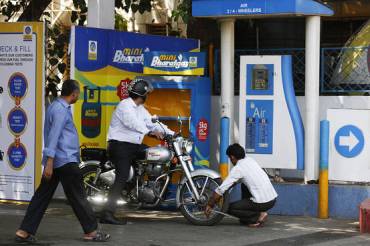
Bharat Petroleum Corp. Ltd., India’s lumbering state-run fuel company, is planning use its nationwide network of 12,800 gas stations to deliver online retail to rural India.

The oil refiner and retailer is hoping it can leverage its outlets and logistical staff across India to succeed as a latecomer to India’s ongoing online retail boom. It is upgrading its technology and logistics network to be able to sell farmers everything from fertilizer to smartphones.

The e-commerce push will begin December, with BPCL’s rural gas and cooking gas distributors starting to accept orders and payments online, said BPCL Chairman and Managing Director S. Varadarajan.  As early as next year, the company is also considering using its urban branches to sell and distribute groceries.

While the early movers in e-commerce in India such as Flipkart Internet Pvt. Ltd.’s flipkart.com, Jasper Infotech Pvt. Ltd.’s snapdeal.com and Amazon Seller Services Pvt. Ltd.’s amazon.in are still struggling to find cost-effective ways to reach the hundreds of millions of Indians who live outside the biggest cities, BPCL already has employees and properties throughout the country.

“About 30% of our retail outlets are in rural India,” Mr. Varadarajan said. Rural customers can shop online then “pick up stuff when they fill fuel at their local gas station.”

India’s state-run oil refiners are desperate to find new sources of revenues as the fall in oil price as well as increased competition from the private sector weigh on their sales.

BPCL’s retail ambitions are “a response to competition by improving margins,” said Deepak Mahurkar, head of PwC’s Oil & Gas Industry practice in India.

Analysts say that while BPCL does theoretically have unique access to much of India’s middle class, which uses its stations to refuel their cars and motorcycles, whether this traditionally slow-moving company can capture a corner of the rapidly-evolving online retail business remains to be seen.

BPCL has prime properties on the main streets and highways across the country, but few of its gas stations have the facilities or the staff to do more than pump gas. Many don’t even have running water in their bathrooms, much less the Internet connections, storage facilities and delivery technology a vibrant e-commerce company would require.

Diving into e-commerce would necessitate a big change in mindset for BPCL which is not used to worrying much about competition or consumers, said Anand Kumar Jaiswal, who heads the Centre for Retailing at IIM Ahmedabad, an Indian management school.

“I am really skeptical about it,” said Vishnu Kumar, an assistant vice president for research at Chennai-based broker Spark Capital Advisors (India) Pvt. Ltd.  “If I am a consumer I am not going to check with BPCL for a microwave.”

Even people within BPCL’s own network doubt the company can pull it off.

Sachin Shah, the manager of a company that delivers BPCL cooking gas cylinders to more than 20,000 customers in the southern city of Hyderabad, said the company will have to radically improve its logistics system to guaranteed delivery if it wants to sell more than gas cylinders and gas stoves

“If Bharat Petroleum doesn’t deliver, I will lose face,” he said.

BPCL’s Mr. Varadarajan said the company is confident it can deliver because it will use its best dealers and a new distribution system to get products to customers.

Source: India’s Bharat Petroleum Wants to Use Gas Stations to Bring E-Commerce to Rural India – India Real Time – WSJ

21/10/2015

Powering Down: Chinese Electricity Demand Stalls Amid Slowing Growth – China Real Time Report – WSJ

A slowing economy means keeping the lights on in China is getting a whole lot easier.

The China Electricity Council, a state-backed industry group, is trimming its estimate of just how much power the country needs, after weak third-quarter economic data on Monday reinforced fears about a slowdown of China’s economy. The official Xinhua News Agency on Tuesday quoted Ouyang Changyu, deputy secretary general of the China Electricity Council, as saying the group had revised down its full-year electricity-demand estimate to 1% growth this year, from 2% previously. As recently as 2011, electricity demand had grown by 12% annually.

The revised estimate reflects both a slowdown in China’s overall growth rate—which is struggling to hit the government’s target of about 7% this year—as well as important changes in the type of growth China is experiencing. The government wants to make the country less reliant on the energy-intensive sectors that propelled growth for four decades and instead shift toward cleaner and higher-paying industries and companies, ranging from financial services to web-based startups. In the first nine months of 2015, electricity demand has grown by .8%, down from 3.9% growth in the same period last year.

Electricity demand that is falling far faster than the government’s GDP data is among the reasons economists and investors are skeptical over the accuracy of official growth figures. The government said Monday GDP rose 6.9% in the first quarter. Chinese Premier Li Keqiang said in 2007 – back when he was a more junior official — that he relied on electricity data among other hard figures to get a truer picture of the country’s economic health.

Beyond electricity, other reasons for skepticism over the data include the decline of both imports and exports during the third quarter, weaker-than-expected industrial production and decelerating fixed-asset investment.

The ramifications of China’s slowing demand for electricity are global, and could contribute to weaker bottom lines at big companies such as coal and natural gas producers. Hong Kong-listed coal giant China Shenhua Energy Co. said its coal sales had plummeted by nearly one-fifth this year. The company is exporting far more coal this year than it’s importing — a sharp turnabout from 2014, when it imported four times as much coal as it exported.

The decline in electricity demand growth could also further weigh on natural gas—a cleaner alternative to coal in electricity production—which has suffered from stagnant demand this year.

Source: Powering Down: Chinese Electricity Demand Stalls Amid Slowing Growth – China Real Time Report – WSJ

20/10/2015

Xi Jinping visit: UK royals and MPs to greet Chinese leader – BBC News

Members of the Royal Family and politicians are due to greet China’s President Xi Jinping as he begins his four-day state visit to the UK.

Supporters of ChinaMr Xi and his wife, Peng Liyuan, will take part in a procession along The Mall to Buckingham Palace, ahead of a state banquet held by the Queen later.

Foreign Secretary Philip Hammond said Britain was going into closer relations with China with its “eyes wide open”.

He denied allegations the UK was acting like “a panting puppy” towards Beijing.

Ministers expect more than £30bn of trade and investment deals to be struck during the visit, which will also include talks between Mr Xi and Prime Minister David Cameron.

On Tuesday, Mr Xi will: Receive a ceremonial welcome from the Queen and Duke Of Edinburgh Take part in a state carriage procession to Buckingham Palace Address MPs and Lords at the Palace of Westminster Meet Prince Charles and the Duchess of Cornwall as well as the Duke of Cambridge Hold talks with Mr Cameron and Labour’s Jeremy Corbyn Attend a state banquet

Source: Xi Jinping visit: UK royals and MPs to greet Chinese leader – BBC News

20/10/2015

Survey Shows China Passes U.S. in Stuff Built – China Real Time Report – WSJ

China is the world’s No. 2 economy by most measures, but by one it has surpassed the U.S. China has overtaken the U.S. as the world’s wealthiest nation in terms of built assets in 2014, and is likely to double that of the U.S. by 2025, according to the Arcadis Global Built Asset Wealth Index.

The study compares 32 countries in terms of their buildings and infrastructure – homes, schools, roads, airports, power plants, malls, rail tracks  and other structures. In fact, China’s stock of built assets will exceed the next four economies combined in the next 10 years, according to the index.

The firm calculates the data at purchasing-power-parity rates, which adjusts the figures to account for differing costs in each country. That measure tends to boost the size of figures from developing countries. China has the largest stock of built assets at $47.6 trillion in 2014 and the U.S. came in second at $36.8 trillion, according to the study released Monday. In the last report, the U.S. was ahead at $39.7 trillion in 2012 compared to China’s $35.4 trillion. China’s rapid asset building came alongside soft investment in the U.S. to replace old machinery, equipment and buildings, the report said.

The index is billed as an alternative economic indicator to measure a country’s performance. the index quantifies the value of a country’s infrastructure as well as its public and private property.

Policymakers have been trying to direct the Chinese economy to rely more on consumer spending rather than investment. Still,  the pace of economic rebalancing has been slow, leading to softer growth despite some positive signs in China’s consumer sector.

The transition “is encountering difficulties, as the government has repeatedly used fiscal stimulus to try to meet its growth targets,” said the report. “The proportion of the economy accounted for by investment is falling only very slowly.  This keeps China’s built asset stock growing rapidly.”

China’s economy grew at 6.9% in the third quarter this year, falling below 7% for the first time since 2009. In the past two years, Beijing has been struggling to turn to more sustainable drivers of growth amid mounting concerns about manufacturing overcapacity and an oversupplied property market.

“There is also likely to be significant underutilization of assets in China given growth is so rapid and much asset creation is pre-emptive, also known as ‘build it and they will come,’” said the biennial report. Since 2000, China has invested $33 trillion in built assets, with its investment in infrastructure at 9% of GDP, dwarfing the U.S.’s current 2%said the report. In per capita terms, however, populous China appears far from being overbuilt.

China’s built asset wealth per person stood at $34,100, which ranks it No. 24 worldwide, unchanged from its previous ranking in 2012, according to the index. The latest figure is slightly less than a third of the U.S. per capita figure of $114,100. The countries at the top of this ranking are disproportionately made up of smaller nations by population or area, hence the density of built asset stock is much greater per resident, the report said.

Source: Survey Shows China Passes U.S. in Stuff Built – China Real Time Report – WSJ

18/10/2015

Top African leaders to meet PM Modi in his trademark jacket

PM Narendra Modi has not only gained prominence across world for giving a personal touch in his diplomatic efforts but he is also famous for his impeccable dress sense. Prime Minister will take the diplomatic skills to new level when he will host a dinner for top African leaders later this month.

Top African leaders to meet PM Modi in his trademark jacket

According to a report in The Times of India, All of the 42 heads of state and government, who are attending the 3rd India-Africa Forum Summit, from Egyptian President Abdel Fattah el-Sisi to South African counterpart Jacob Zuma, will attend the dinner wearing Modi’s trademark jacket. They are specially designed by government agencies.

The bundi waistcoat that PM Modi made his own accessory will be at the heart of his latest bit of sartorial diplomacy. The sleeveless jackets will be available in several brilliant colours.

The African leaders will also be wearing unique ‘ikkat kurta’ (no pyjamas) being gifted to them by the government during their visit to India.

A senior African diplomat said to TOI that he was really impressed with the attention PM Modi was giving to the summit despite his hectic campaigning for Bihar elections.

Source: Top African leaders to meet PM Modi in his trademark jacket

18/10/2015

Sonia says Modi govt imposing its ideology on people – The Hindu

Congress president Sonia Gandhi on Saturday blamed the Modi government for the growing intolerance to intellectuals and communal tensions in the country. The government, she said, was anti-poor and corporate-friendly.

Congress president Sonia Gandhi at an election rally in Buxar, Bihar on Saturday. Photo: Ranjeet Kumar

“Ever since Narendra Modi came to power, the intellectuals are being harassed and an effort has been made to stoke communal tensions through rumours. The BJP is trying to enforce its own ideology on people. It is shameful,” she said at election meetings at Buxar and Chappra. Her comments refers to the recent lynching of a man at Dadri in Uttar Pradesh and writers returning their Sahitya Academy awards.

“Modiji, Hindu aur Musalmaan apas main ladte nahi, balki unko ladaya jata hai… kyunki communal jhagde band ho gaye toh kuch logo ki dukaandari band ho jayegi, aur yeh BJP se behtar kaun janta hai? [Mr. Modi, Hindus and Muslims don’t clash with each other but they are being pushed to do it … If communal clashes are being stopped, many people’s business will be closed, and who knows this better than the BJP?],” she said.

Ms. Gandhi said the Modi government worked only for big businesses and had no concern for the poor.

She said the Congress would not allow the Goods and Services Tax (GST) Bill to go through the Rajya Sabha as it was against the welfare of the people. “The UPA government wanted the GST law for the development of industry, but we are opposing it now for the welfare of the people,” she said.

“Mr. Modi speaks much but delivers little. Has he delivered on the tall claims made by him during the last Lok Sabha polls,” she asked. When the crowd yelled “no”, she said: “It is high time he understood the pain of the people.”

The government was silent when pulse prices were rising, farmers were committing suicide and unemployment among the youth was rising, she said.

Taking on Mr. Modi for alleging that the Congress had done little in the past 60 years of its regime, Ms. Gandhi said: “When we got freedom, we had nothing; but the Congress government did revolutionary works in education, health and employment in the past 60 years. We maintained the unity and integrity of the country and strengthened democracy.”

Source: Sonia says Modi govt imposing its ideology on people – The Hindu

Law of Unintended Consequences

continuously updated blog about China & India

ChiaHou's Book Reviews

continuously updated blog about China & India

What's wrong with the world; and its economy

continuously updated blog about China & India