Archive for ‘Chindia Alert’

05/09/2014

The U.S. Trade Deficit Shrinks—Except With China – Businessweek

The good news? The overall U.S. trade deficit unexpectedly shrank a bit less than 1 percent in July from June. It was the smallest gap in half a year, and exports broke a record. The bad news? The U.S. deficit in manufacturing set a monthly record, and the deficit in goods traded with China also broke a record.

China Shipping Container Lines containers sit stacked at the Port of Los Angeles in San Pedro, California on April 8

Alan Tonelson, a trade analyst who blogs at RealityChek, dwelt on the negative in an interview today. “There’s no doubt that major barriers to U.S. exports remain,” he said. “China is case in point No. 1. It’s still one of the most protectionist economies in the world.”

Boston Consulting Group has argued in a series of reports that the U.S. has a bright future in manufacturing because the high productivity of American workers makes it an affordable location for production, while China is slowly pricing itself out of the market through rising labor costs. It calls the U.S. a “rising global star.”

But that stardom isn’t showing up yet in the trade data. Says Tonelson of Boston Consulting’s view: “If they’re just premature, they seem wildly premature.”

As reported by the Bureau of Economic Analysis, the overall U.S. trade deficit in both goods and services was $40.5 billion in July—down from June, but up $1.1 billion from a year earlier. The July deficit with China in goods was $30.9 billion, vs. a previous high of $30.6 billion. The overall manufacturing deficit, at $67 billion in July, is running 11 percent ahead of last year’s record pace, Tonelson calculates.

via The U.S. Trade Deficit Shrinks—Except With China – Businessweek.

05/09/2014

China’s ‘Birthplace of Kung Fu’ Hopes to Train CEOs to Meditate – Businessweek

The ancient Shaolin Temple, perched on a leafy mountaintop in eastern China, is widely recognized as the birthplace of kung fu. For at least 1,500 years, its resident monks have preserved the physical and psychological training regimen of the legendary martial work. Now they’re trying to master commercial arts, too.

A monk practicing kung fu at the Shaolin Temple in Dengfeng, China

The temple is hiring a media director and social media editor, according to state-run Chinese newswire Xinhua. “The need arises from an internationalizing Shaolin,” a monk who works for the temple’s “Intangible Assets Management Center” told the newswire. The ideal candidate would be versed in China’s fast-growing social media platforms, especially Twitter (TWTR)-like Sina Weibo (SINA), as well as fluent in both Mandarin and English.

Shaolin already offers high-end, live-in meditation courses for chief executive officers willing to live on the mountain as martial arts apprentices for a month, as China Daily recently reported. For those with less time to spare, one-time sit-down sessions with the temple’s abbot are also available. Earlier this year, members of the elite China Entrepreneurs Club attended a private conference at the temple with the theme “self cultivation of entrepreneurs.”

Last year, about 800 foreign executives also came to study and train on the mountain. A marketing manager from Greece who came to Shaolin for a two-week course told the newspaper: “In business, you have to be flexible; you have to find new paths and change. You have to see a crisis and avoid it. Kung fu teaches you to be fluid, like water, because everything in kung fu flows, and stagnation is bad.”

Once its social media marketing team is in place, Shaolin hopes to expand outreach to overseas business leaders who seek to cultivate kung fu mindfulness. Its courses are a relative bargain compared to executive MBA programs, ranging from $800 to $10,000.

via China’s ‘Birthplace of Kung Fu’ Hopes to Train CEOs to Meditate – Businessweek.

05/09/2014

U.S. South Draws Global Manufacturers With Low Taxes, Cheap Labor – Businessweek

Just before the recession hit in 2007, Electrolux (ELUXA:SS), the Swedish home-appliance maker, was trying to decide what to do about an aging plant outside Montreal. The building was more than 100 years old and the line of high-end stoves and ovens produced there needed a refresh. The factory’s 1,300 union workers earned around $20 an hour.

Rather than sink more money into the old plant, Electrolux decided to move where it could operate more cheaply. In Europe, it was shifting work from Sweden, England, and Denmark, to Hungary, Poland, and Thailand, where workers are paid less. In North America, Electrolux settled on another low-cost region: the American South.

Alabama, North Carolina, and Tennessee—along with Mexico—all competed for the plant, offering generous incentive packages. The winner was Tennessee, which together with the city of Memphis and Shelby County, assembled an offer that, according to Electrolux, was worth $182 million, including public infrastructure funds, tax breaks, and, crucially, worker training. The company committed $100 million to build the plant. In December 2010, Electrolux announced that a site just eight miles from Graceland would be home to its most advanced factory. “We don’t just grab at every project that comes through here,” says Memphis Mayor A C Wharton Jr. “But this one was particularly appealing.”

Manufacturing is slowly returning to the U.S.—and much of the action has been below the Mason-Dixon line. With its low tax rates and rules that discourage unionization, the South has for decades been seen as business-friendly, which helped the region attract service companies that rely on low-skilled workers, such as call centers and warehouses. Now industries such as autos and aerospace are moving in. According to Southern Business & Development (SB&D) magazine, which tracks commercial projects valued at more than $30 million, manufacturing made up 68 percent of investments announced last year. The number of projects totaled 410, the most in 20 years.

Changing conditions in the oil market and China have a lot to do with manufacturing’s resurgence in the South. In 2001, when China joined the World Trade Organization, the price of oil was $20 a barrel and the hourly manufacturing wage in China’s Yangtze River Delta was 82¢ an hour. Oil is now more than $100 a barrel and workers in the Yangtze make $4.93 an hour. The once enormous manufacturing advantage of the People’s Republic has in some cases vanished.

An April 2014 study by Boston Consulting Group found that the U.S. now ranks second only to China in manufacturing competitiveness among the top 10 exporting countries. Three years ago, BCG Managing Director Harold Sirkin, co-author of the report, forecast that states such as South Carolina, Alabama, and Tennessee would become “among the least expensive production sites in the industrialized world.” That’s especially true for companies making things for sale in the U.S. The South “has become the cheapest place to make things inside the largest economy in the world,” says Michael Randle, publisher of SB&D.

via U.S. South Draws Global Manufacturers With Low Taxes, Cheap Labor – Businessweek.

05/09/2014

Alibaba’s Taobao, Tmall Transform Shopping in China’s Small Cities – Businessweek

Li Yuxin remembers when she had to travel from Zhangjiekou, her northern Chinese home town, to visit her half-sister in Beijing so she could buy the right clothes. Sure, Zhangjiekou has large shopping malls full of cheap t-shirts and baggy jackets, but not stores where the aspiring fashionista could purchase accessories from such foreign luxury brands as Prada (1913:HK) or even popular Western sportswear made by Nike (NKE) and Adidas (ADS:GR).

Checking deliveries from online marketplaces Tmall and Taobao at an express delivery company in Beijing

But since she started ordering clothes from Taobao and Tmall—websites owned by Alibaba Group—her options and her wardrobe have dramatically expanded. “Maybe I spend too much money now, but I have to catch up with Li Zhu,” her half-sister who lives in China’s capital, she says.

E-commerce has quickly changed the face of shopping and consumer marketing in China. Mirroring the rise of Amazon (AMZN) in the U.S., the ascendance of Alibaba in China has greatly accelerated this trend and turned China into the world’s second-largest e-commerce market.

via Alibaba’s Taobao, Tmall Transform Shopping in China’s Small Cities – Businessweek.

05/09/2014

India’s $33 Smartphone Sales Surge, Setting the Stage for a Shakeup – India Real Time – WSJ

The maker of India’s $33 Mozilla Firefox smartphone says sales of the world’s cheapest smartphone have been strong since it launched last week.

Intex Technologies India Ltd. said it quickly sold out of its first batch of Cloud FX phones–which use Mozilla Corp.’s Firefox operating system—and that it has already had to order another large shipment. It expects to sell 100,000 handsets this month and a total of 500,000 by the end of the year, the company said.

Another super-cheap Firefox-powered smartphone hit the Indian market on Tuesday. India’s Spice Retail Ltd. started selling its Spice Fire One Mi FX1 for about $37. The company did not respond to requests for early sales figures.

The less-than-2,000-rupee price tags make the Firefox mobile operating system smartphones more than 30% cheaper than the least-expensive smartphones which use Google Inc.’s Android operating system.

Other phone sellers say they are also planning Firefox handsets. India’s Karbonn Mobiles says it plans to launch a $41 Firefox smartphone by the end of September. It will be less than half the price of Karbonn’s latest Android phone, making it a “game changer,” said Pardeep Jain, managing director of Jaina Mobiles India Pvt., which  controls the Karbonn brand.

Reviews for the ultralow-cost phones have so far been generally positive. While the phones may lack some functionality and speed, buyers and technology reporters agreed they were still a great deal for the price and a good option for first-time smartphone buyers who use their phones for basic calls, web surfing and social networking.

While Mozilla phones will make smartphones affordable to millions of new users, they will likely get more competition soon on price from Android, the operating system used on most phones from Samsung Electronics and others, analysts said.

Google is expected to launch its Android One low-cost smartphone in the next few weeks.

via India’s $33 Smartphone Sales Surge, Setting the Stage for a Shakeup – India Real Time – WSJ.

05/09/2014

China warns again of dark side of the mooncakes | Reuters

China’s crackdown on corruption, a scourge Communist Party leaders fear threatens their hold on power, is likely to last at least another five years, an official said, warning also against the mid-autumn tradition of handing out mooncakes as gifts.

Freshly-baked mooncakes pass along a conveyor belt at a mooncakes factory in Shanghai September 12, 2013.  REUTERS/Aly Song

Wang Qishan, secretary of China’s anti-corruption watchdog, was quoted as saying the government’s “campaign against extravagance and corruption” would continue for at least five years, the official China Daily said.

Wang’s comments, also reported on television on Thursday, were made in August at a meeting in Beijing.

President Xi Jinping has promised to go after “tigers and flies” in rooting out rampant graft, a campaign that has brought down politicians and company executives in industries including oil, cars and healthcare.

The campaign has also dragged down sales of high-end products from the fiery sorghum-based liquor, baijiu, to mooncakes, both traditional popular gifts for smoothing business and official ties.

Wang criticized the tradition of giving mooncakes as presents around the Mid-Autumn Festival, adding that the practice created opportunities for graft, the China Daily said.

Mooncake sales have taken a steep hit ahead of this month’s festival. In key production regions, sales were half the level of last year, the China Daily said, citing the Wuchuan Association of Mooncakes.

via China warns again of dark side of the mooncakes | Reuters.

05/09/2014

Modi’s first 100 days looked more like Manmohan’s than Vajpayee’s

The new prime minister hasn’t faced a major crisis or unveiled a startlingly new policy.

For the last week, Indian newspapers, channels and websites have been plastered with evaluations of Narendra Modi’s first 100 days. From dedicating entire editions to the 100-day landmark to building complex timelines describing every policy announcement over the last three months (and even comparing what has been achieved to the Bharatiya Janata Party’s campaign promises), there has been so much content that it’s hard to arrive at a conclusion about whether Modi’s Prime Ministership has been good or bad.

That might be expected, considering the scale of the challenge that the new government has set for itself. Alternatively, it might also be surprising: many expected Modi Sarkar to be a hate-it-or-love-it administration, rather than one that would leave people with lukewarm feelings.

Another way to approach the question might be to try and figure out how Modi’s first 100 days will be remembered. The first few months of new governments can often set the tone for what is to come. In hindsight, the trends picked up in the first days are then grafted on to narratives that are applied to entire tenures.

A look back at previous prime ministers might give us an inkling of how this will play out.

via Scroll.in – News. Politics. Culture..

05/09/2014

In Assam, villagers struggle to protect their land from the roaring Brahmaputra

Descending from the plateaus of Tibet and flowing through China, India and Bangladesh, the Brahmaputra is one of India’s mightiest rivers, its width running up to 10 kilometers at some places. On its 3,000-kilometer journey, the Brahmaputra provides a livelihood to thousands of communities living on its banks. They depend on it for food, water and farming. In 1950, however, the great earthquake in Assam altered the topography of the river valley and the people of Assam have since been struggling with intense droughts and floods.

Since the earthquake, Assam has witnessed severe cases of river erosion. According to official records, 36 villages, 10 schools, six tea gardens and hundreds of humans and animas have been washed away. The situation has been exacerbated by increasing deforestation and erratic climate changes.

In 2012, floods in Assam displaced over a million people and affected close to 4,500 villages. Today, these villagers from Tinsukia district in Upper Assam are struggling to protect their land and livelihoods from the eroding banks and the rising waters of the mighty Brahmaputra.

via Scroll.in – News. Politics. Culture..

05/09/2014

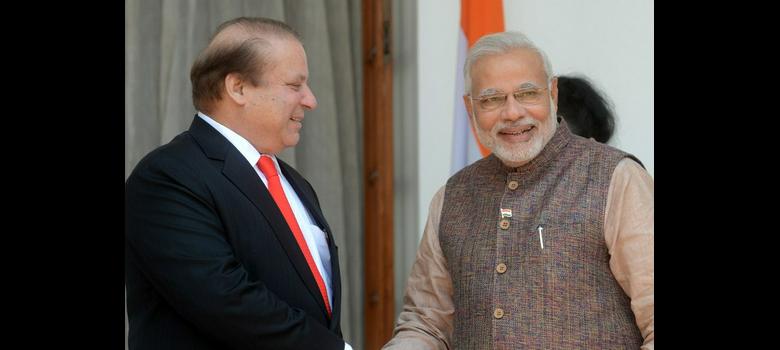
Nawaz Sharif attempts mango diplomacy to placate Modi

Pakistan government keen on reigniting diplomatic ties with India

Pakistan Prime Minister Nawaz Sharif on Thursday sent a package of special mangoes from his country through “official channels” to his Indian counterpart Narendra Modi. This move is seen in Indian diplomatic circles as Pakistan’s initial attempt to rectify the damage caused by its High Commissioner Abdul Basit’s meetings with separatist leaders from Kashmir last month. In response to these meetings, India had cancelled foreign-secretary levels talks with Pakistan scheduled for August 25. Meanwhile, there is speculation that Modi and Sharif might conduct bilateral talks on the sidelines of the United Nations General Assembly summit in New York later this month.

via Scroll.in – News. Politics. Culture..

04/09/2014

Businessman caught in Colombia is China’s first economic fugitive extradited from Latin America | South China Morning Post

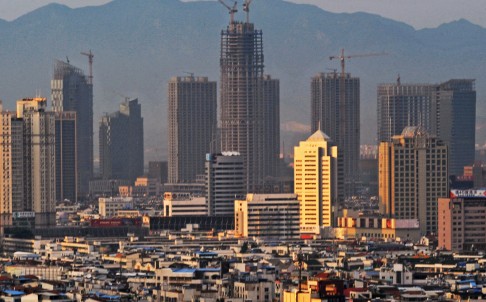
A businessman from Zhejiang province, who was arrested in Colombia over allegations he fled the mainland after leaving debts totalling millions of yuan, was repatriated to China yesterday.

a-yiwu.jpg

The case is the first time the mainland has extradited an economic fugitive from a Latin American country, China News Service reported.

The 35-year-old suspect, whose surname was given as Wu, was arrested in Colombia on August 28, it said.

He owned a trading company in Yiwu city and reportedly fled China on a flight from Shanghai‘s Pudong International Airport on September 9, 2012.

He had allegedly left unpaid debts totalling more than four million yuan (more than HK$5 million).

Zhejiang police launched an investigation into Wu about a month later, and order for his arrest was issued in December 2012.

After cooperating with Interpol, Zhejiang police discovered in July that Wu was in Colombia, said Ding Pinglian, of the Zhejiang provincial police bureau.

Four police officers were then sent to Colombia to assist with Wu’s arrest and extradition.

Wu is expected to stand trial in Yiwu, China News Service reported.

A total of 11 people suspected of economic crime have been repatriated since the Ministry of Public Security launched a campaign to return fugitives in July, the report said.

The ministry said last month that more than 150 mainlanders suspected of economic crimes were in the United States, which had become the “top destination” for Chinese fugitives.

via Businessman caught in Colombia is China’s first economic fugitive extradited from Latin America | South China Morning Post.

Law of Unintended Consequences

continuously updated blog about China & India

ChiaHou's Book Reviews

continuously updated blog about China & India

What's wrong with the world; and its economy

continuously updated blog about China & India