Archive for ‘Chindia Alert’

03/04/2012

* Insight: Bullish China shops in industrial Germany

Reuters: “German businessman Norbert Scheuch was bowled over by his red-carpet treatment on a visit to China late last year and by how fast the country’s largest construction firm sealed the deal to buy his company. The head of Sany Heavy Industry, which is controlled by China’s richest man, Liang Wengen, personally gave Scheuch a tour of their plant and then had a top manager drive him to the airport and wait with him for his flight home. “Nobody would ever do that in Europe,” said Scheuch, CEO of concrete pump maker Putzmeister.

“The Chinese made it very clear from the beginning they wanted the company immediately,” he added. Barely a month later, Sany’s top negotiator Xiang Wenbo was in the offices of law firm Shearman Sterling in Frankfurt at 3 am to sign the deal to buy Putzmeister for 360 million euros ($472 million) after a nine-hour session with the notary.

The purchase, which gives Sany a technological edge over its rivals, illustrates how Chinese investors are becoming more savvy about foreign takeovers, not just to gain access to raw materials or patents but as an engine for growth. By keeping the German management in place after its acquisition and announcing that Putzmeister would become its new international distribution hub outside China for concrete machinery, Sany also defied the clichés about Chinese practices and assuaged local anxiety among employees. “I had to promise the Chinese solemnly that our management would stay on board,” Scheuch said.

Germany, Europe’s largest economy and home to many small and medium-sized companies famed for their technological know-how and exporting prowess, is especially attractive for cash-rich Chinese businesses looking to build a global profile. Some German and other European companies also look cheap to Chinese buyers after the euro zones sovereign debt crisis.”

Rest of long article is equally interesting.

via Insight: Bullish China shops in industrial Germany | Reuters.

Related articles:

03/04/2012

# Does a country’s national games mimic its mindset?

Chess Set (Shatranj in Iranian), glazed fritwa...

Chess Set (Shatranj in Iranian), glazed fritware, 12th century. New York Metropolitan Museum of Art. (Photo credit: Wikipedia)

I have a hypothesis that a country’s mindset mimics its national sports and games.

For instance, the Chinese and Japanese are keen on chess and Go. These are games of strategy and take a long-term view. Indians say they invented chess. In any case they do play it well. Perhaps not as good as the Russians. Wonder why the Russians lost the ‘cold war’?

The British play soccer – a very dynamic game, but also cricket which is one of strategy and patience. These games may explain the divergent behaviour of the British – colonial conqueror and commonwealth sustainer?

Americans love their football and baseball. Both are what I call start and stop games. You play a set of tactics and then regroup. I wonder if that explains the lack of clear success in wars like Iraq and Afghanistan?

The Middle East used to play a game from which polo was derived. Their game involved riding on horses and trying to capture and throw the head of a goat (or in medieval times, the head of a defeated enemy) into the opponents’ goal. Individual courage and devil-may-care ruled the tactics. Perhaps that means the West will never ‘win’ in Iraq and Afghanistan.

Don’t forget that Iran has both Middle East roots and also claim to have invented chess. The term ‘check mate’ comes from ‘shah mat‘ meaning the king is dead in Farsi.

What do you think of my hypothesis? What are India’s national games? Kabaddi? Hockey? Cricket? How do these explain the Indian mindset?

See also: 


02/04/2012

* Trade Groups: Foreign Firms Giving Up on India

Wall Street Journal: “A group of international trade and industry associations claiming to represent some 250,000 companies have written to Prime Minister Manmohan Singh strongly criticizing the proposal, tucked away in the budget, to tax transactions potentially as far back as 1962.

“This is now prompting a widespread reconsideration of the costs and benefits of investing in India,” the letter said, adding that confidence in doing business here has been undermined. Hello China, Brazil, and Indonesia in other words.

The controversial proposal, which would impose tax on the exchange of an Indian asset by two companies outside India, already has sparked howls of protest among foreign companies. It would reverse a recent Supreme Court ruling on the issue in favor of Vodafone Group PLC of the U.K. and be retroactive in its impact. It would potentially affect hundreds of corporate acquisitions. Many foreign companies say they now feel singled out for financial punishment as the government seeks to narrow its troublingly high fiscal deficit.”

via Trade Groups: Foreign Firms Giving Up on India – India Real Time – WSJ.

It seems that India has acquired the habit of shooting itself in the foot now and then. This is one of these occasions.

02/04/2012

* China to deepen reforms to drive growth: vice premier

Xinhua: “Chinese Vice Premier Li Keqiang said Monday that China will deepen reforms and opening-up to remove obstacles on its course to transfer growth mode and drive economic and social development.

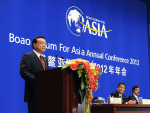
Li made the remarks when delivering a keynote speech at the opening ceremony of the Boao Forum for Asia Annual Conference 2012, which runs from Sunday to Tuesday in Boao, a scenic town in south China’s island province of Hainan. “Faced with the profound changes in international and domestic landscapes, we must let reforms and opening-up continue to lead the way in removing the institutional obstacles that hamper the shift of the growth model,” Li said. Noting that the country has entered a critical stage of reform, Li said China will deepen reform of the fiscal sector, taxation, finance, pricing, income distribution and enterprises.

The country will endeavor to make breakthroughs in key areas and key links, and bring into better play the markets role in resource allocation and advance institutional, technological and management innovation so as to increase the internal driving force and dynamism of development, Li said. Li said the country will adopt an even more proactive opening-up strategy and attach equal importance to export and import so as to boost balanced development of foreign trade and raise the level of an open economy. “China is dedicated to creating an open, transparent, fair, competitive and predictable marketplace and legal environment,” Li said, adding that more efforts will be made to step up intellectual rights protection to promote development of all enterprises in China during its course to transform growth mode.

More than 2,000 government, business and academic leaders from around the globe attended the meeting, which this year adopts the theme “Asia in the Changing World: Moving toward Sound and Sustainable Development.””

via China to deepen reforms to drive growth: vice premier – Xinhua | English.news.cn.

This declaration of reform by the Premier-to-be reaffirms the current Premier’s call for reform posted earlier. So this means the new leadership is fully behind the outgoing leadership.

Related post: https://chindia-alert.org/2012/03/14/premier-wen-says-china-needs-political-reform-warns-of-another-cultural-revolution-if-without/

02/04/2012

* Sino-ASEAN ties key to peace in S. China Sea

China Daily: “China and the Association of Southeast Asian Nations should work hard to boost practical cooperation and maintain peace and stability in the South China Sea, said a joint statement due to be issued on Monday by China and Cambodia. According to the statement, the two countries agreed that “China and ASEAN countries shall continue to abide by the purpose and spirit of the Declaration on the Conduct of Parties in the South China Sea and give full play to all the existing mechanisms including the guidelines for the implementation of the DOC to make it a sea of peace, friendship and cooperation for China and ASEAN countries”.

Monday is the final day of President Hu Jintao’s four-day state visit to Cambodia, which holds the rotating chair of ASEAN in 2012 and plays an important role in East Asian cooperation and China-ASEAN relations. It also comes just two days ahead of a two-day regional summit of ASEAN in Phnom Penh.”

via Sino-ASEAN ties key to peace in S. China Sea|Politics|chinadaily.com.cn.

Given the increasing tension in the South China Seas due to conflicting oceanic territoriual claims, where large depositis of oil and gas are predicted, this must be good news.

31/03/2012

* Chinese websites closed, six detained for spreading rumors

Xinhua: “Chinese authorities closed 16 websites and detained six people responsible for “fabricating or disseminating online rumors,” the State Internet Information Office SIIO and Beijing police said Friday. The websites, including meizhou.net, xn528.com and cndy.com.cn, were closed for spreading rumors of “military vehicles entering Beijing and something wrong going on in Beijing,” which were fabricated by some lawless people recently, said a spokesman with SIIO. The rumors have caused “a very bad influence on the public” and the websites were closed in accordance with laws for failing to stop the spread of rumors, said the spokesman.

Beijing police also detained six people for allegedly fabricating and spreading the above-mentioned rumors, particularly through microblogging posts, according to the Beijing Municipal Bureau of Public Security. An undisclosed number of people who had disseminated similar rumors on the Internet were also “admonished and educated,” who have shown intention to repent, the police said.”

via Websites closed, six detained for spreading rumors – Xinhua | English.news.cn.

One wonders if there is “no smoke without a fire”?

30/03/2012

* Apple hit by China Foxconn factory report

BBC News: “An independent investigation has found “significant issues” among working practices at Chinese plants making Apple iPhones and iPads. The US Fair Labor Association FLA was asked by Apple to investigate working conditions at Foxconn after reports of long hours and poor safety. The FLA says it has now secured agreements to reduce hours, protect pay, and improve staff representation.Apple said it “fully accepted” the reports recommendations. “We share the FLAs goal of improving lives and raising the bar for manufacturing companies everywhere,” it said in a statement.

The findings emerged as Apple CEO Tim Cook visited Foxconn facilities. Mr Cook toured Zhengzhou Technology Park, where 120,000 employees work, on Wednesday. A string of suicides at Foxconn last year put the spotlight on working conditions at its factories. Last month, the company announced it was to send independent inspectors from the FLA to audit the facilities.

The investigation – one of the largest ever conducted of a US companys operations abroad – found employees often worked more than 60 hours a week and sometimes for seven days running without the required day off. Other violations included unpaid overtime and health and safety risks. Average monthly salaries at the three factories ranged from $360 (£227) to $455 (£289).

Deutsch: Foxconn Logo

Deutsch: Foxconn Logo (Photo credit: Wikipedia)

Foxconn raised salaries by up to 25% recently. The FLA said Foxconn had agreed to comply with the associations standards on working hours by July 2013, bringing them in line with a legal limit in China of 49 hours per week. The company will hire thousands more workers in order to compensate for the move, Reuters reports.

The BBC’s Adam Brookes in Washington says the report has been much anticipated as embodying a new and transparent approach to an old problem: that of cheap but popular consumer goods manufactured in poor conditions in developing countries. However, he says, a telling line in the report is the one which notes that the Foxconn workers did not have true trade union representation. The authorities in China are very wary of unions and are likely to remain so. Before the report was released, labour unions expressed doubts that the company was committed to improving standards. “The report will include new promises by Apple that stand to be just as empty as the ones made over the past 5 years,”

SumOfUS.org, a coalition of trade unions and consumer groups, said.Foxconn employs 1.2 million workers in China to produce products for Apple as well as Microsoft, Hewlett-Packard, and other companies.”

via BBC News – Apple hit by China Foxconn factory report.

Good news: Foxconn workers to be treated fairly under Chinese labour laws. Bad news: having incvreased pay by 25% recently and now having to increase it further, China’s 1.2 million workers at Foxconn (a Taiwanese company) better be prepared for layoffs in the medium term as Foxconn turn to countries with cheaper labour; and there are plenty of these around. The latter follows the “law of unintended or contrary consequences.”

30/03/2012

* Senior leader underlines infrastructure building in Xinjiang

Maps of Xinjiang Uygur Autonomous Region of Ch...

Maps of Xinjiang Uygur Autonomous Region of China Español: Región autónoma de Xinjiang (Photo credit: Wikipedia)

Xinhua: “Senior Chinese leader Zhou Yongkang on Thursday demanded infrastructure be improved in the western Xinjiang Uygur autonomous region through projects supported by central government.

Zhou, a member of the Standing Committee of the Political Bureau of the Communist Party of China CPC Central Committee, urged authorities to give more support to the construction of major projects in the region, including irrigation systems, reservoirs, railways, electricity and natural gas schemes. Antiquated public facilities had created a major bottleneck constraining the regions development, Zhou said at a meeting attended by representatives from the National Development and Reform Commission, the central bank, and ministries of finance, railways, and water resources. These departments and a group of large state-owned enterprises and commercial banks have been tasked to assist the projects.

Three Uyghur girls at a Sunday market in the o...

Zhou called for more financial support and administrative coordination to push forward these projects, which he said will help enhance the regions capability of self-initiated development, ensure sound economic and social development, and create more jobs. The projects should benefit Xinjiang by improving people’s livelihoods, promoting ethnic solidarity and maintaining social stability, according to Zhou. He also demanded efforts to avoid illegal land use, prevent excessive exploitation of resources and protect the environment in Xinjiang.”

via Senior leader underlines infrastructure building in Xinjiang – Xinhua | English.news.cn.

30/03/2012

* China driving US exports

China Daily: “The United States exported more than $100 billion in goods and services to China in 2011 and 30 states now count the country as one of their top three export markets.That’s according to a report released by the Washington-based US-China Business Council on Wednesday.

Between 2000 and 2011, US exports to China rose by 542 percent – going from $16.2 billion in 2000 to a record $103.9 billion in 2011 – while its exports to the rest of the world only increased by 80 percent. After the recent recession, the US exports to China regained momentum faster than the country’s exports to any other place in the world, the council said.”The annual report said China is the third most common destination for US exports, just behind Canada and Mexico, which border the US and have a free-trade agreement with it.

“Exports to China are vital to America’s economic health and create good jobs for American workers,” said Erin Ennis, vice-president of the US-China Business Council, which represents about 240 American companies doing business in China. Wang Haifeng, director of international economics at the Institute for International Economic Research, a think tank under the National Development and Reform Commission, said the export figures reveal a great opportunity. “The fact that a record was set in US exports to China, which shows the great potential of US exports, not only reduces the trade imbalance between the top two economies but also alleviates unemployment in the US and speeds up the US economic recovery,” he said.

Related articles: China’s Surprising U.S. Buying Spree – Businessweek (businessweek.com)via China driving US exports|Economy|chinadaily.com.cn.

There are some Cassandra’s who are concerned that in the foreseeable future, military conflict between America and China is inevitable. My personal view is that as more and more bilateral trade between America and China builds up, the chance of war between them becomes less and less probable. The two countries are so interdependent that war between them would be tantamount to ‘civil war’. You might say that has happened in most countries sometime in their past. You will be right. So I’m not saying peace is inevitable or forever, only that war is not inevitable and less likely.

30/03/2012

* More Chinese investments in India soon

Times of India: “China has committed to facilitating Indian exports into Chinese markets to address the yawning trade imbalance between the two countries. Chinese president Hu Jintao said this to Manmohan Singh in his hour-long meeting with the PM at the end of the BRICS summit on Thursday. This will be Hu’s last summit as Chinese president.

In return, the PM invited Chinese investment in manufacturing and infrastructure projects in India. Chinese companies are kept out of several strategic sectors, but there is a significant change in the Indian government’s approach to Chinese investment.

With the two leaders kicking off a year of friendship celebrations, the overwhelming sense from the meeting was that the two nations are determined to get along, despite many difficulties and differences of outlook. Singh and Hu announced “expanded” foreign office consultations, and launched three new dialogues with China – on West Asia, Central Asia and Africa. India and China pursue markedly different policies in Africa, though with the same stated aims.”

via More Chinese investments in India soon – The Times of India.

Related page:

In the 50s, PM Nehru and PM Chou met and agreed Panchsheel, the five principles of peaceful coexistence. The press coined a phrase Hindi Chini bhai bhai, meaning Indians and Chinese are brothers.  It looked like the slogan was reflecting reality until in the late summer of 1962, due to the long-standing border dispute (legacy of British Raj) Chinese tanks rolled over the Himalyas and reached the oil fields of Assam in the East and also in Ladakh in the west.  Since then matters have thawed. BRIC (and now BRICS) was invented. This news release is good news, at least for India and China.

Law of Unintended Consequences

continuously updated blog about China & India

ChiaHou's Book Reviews

continuously updated blog about China & India

What's wrong with the world; and its economy

continuously updated blog about China & India