Chindia Alert: You’ll be Living in their World Very Soon
aims to alert you to the threats and opportunities that China and India present. China and India require serious attention; case of ‘hidden dragon and crouching tiger’.
Without this attention, governments, businesses and, indeed, individuals may find themselves at a great disadvantage sooner rather than later.
The POSTs (front webpages) are mainly 'cuttings' from reliable sources, updated continuously.
The PAGEs (see Tabs, above) attempt to make the information more meaningful by putting some structure to the information we have researched and assembled since 2006.
A London court has rejected Vijay Mallya’s plea against extradition, bringing him one step closer to being repatriated to India.(Getty Images)
In another legal win for India, a judge in the appeals court of the high court has rejected controversial businessman Vijay Mallya’s application for permission to appeal against home secretary Sajid Javid’s February 4 order to extradite him to India.
Mallya had applied to the court on February 14 and the Home Office submitted its response within the stipulated 20 days. Legal experts say the case is usually allowed to go for a full appeals hearing if new grounds or evidence not previously considered in lower courts are cited.
The appeals court has refused him permission, according to individuals with close knowledge of the case. The refusal suggests that the judge may not have seen merit in Mallya’s application. The case is now expected to revert to the Home Office.
Mallya is likely to make a representation to the home secretary to prevent extradition on human rights and other grounds. He previously lost his challenge in the Westminster magistrates court, which ordered his extradition in December 2018.
There is a precedent for resorting to ‘representations’ as the last recourse. Tiger Hanif, who is wanted in India in connection with blasts in Surat in 1993, lost all legal challenges in 2013, but has since made representations to prevent extradition to the home secretary, who has not yet taken a decision.
Facing charges in India of financial irregularities amounting to over Rs 9,000 crore, Mallya has been putting forth his version of events through social media in recent weeks, most recently on March 31 following an interview to a television channel by Prime Minister Narendra Modi.
In a series of tweets, Mallya used the reported financial problems of Jet Airways to plug his case, demanding that his assets placed before the Karnataka high court be used to pay off banks and other creditors, adding: “It will help them to save Jet Airways if nothing else”.
Noting that banks were reportedly bailing out Jet Airways, Mallya said: “I invested 4000 crores into Kingfisher Airlines to save the Company and its employees. Not recognised and instead slammed in every possible way.”
“The same PSU Banks let India’s finest airline with the best employees and connectivity fail ruthlessly. Double standards under NDA”, he added.
Wishing banks had similarly bailed out his Kingfisher Airlines, he said: “BJP spokesman eloquently read out my letters to PM Manmohan Singh and alleged that PSU Banks under the UPA Government had wrongly supported Kingfisher Airlines”.
“Media decimated me for writing to the PM. I wonder what has changed now under the NDA Government”.
Mallya has previously taken to twitter to seek to change the narrative that he “stole” money from India and fled, reiterating that he had offered to return the loans, wondering why the government was not taking up the offer.
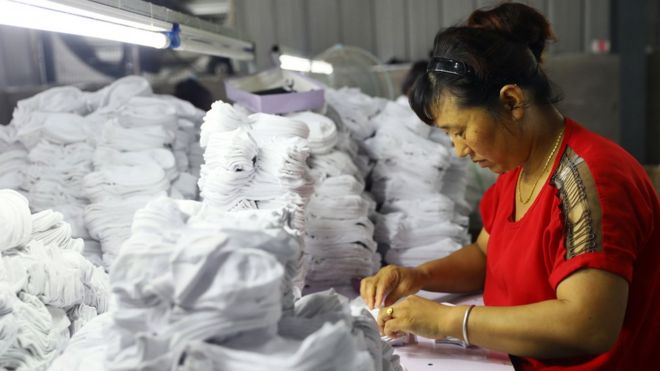
BEIJING, April 6 (Xinhua) — Countries and regions along the Belt and Road Initiative (BRI) have become major destinations for China’s overseas investment in the textile sector, an industry association has said.
Over 80 percent of the industry’s global investment has flown to the BRI region in the past five years, according to the China National Textile and Apparel Council (CNTAC).
The textile industry can help industrial development, as well as create national wealth and employment in BRI regions, said CNTAC deputy director Xu Yingxin.
The CNTAC will facilitate international textile production capacity partnership, especially the development of overseas cooperation zones, Xu added.
Industrial data showed that China’s textile and apparel export to the BRI region continued to grow in 2018, up 5.3 percent year on year.
BRUSSELS, April 6 (Xinhua) — China-European Union (EU) relations in tourism get a boost as the 2018 EU-China Tourism Year has scored a success, an official recently said.
During the tourism year, China and the EU held more than 100 promotional activities. It “has been extremely successful,” said Eduardo Santander, executive director of the European Travel Commission (ETC).
There was a 5.1-percent year-on-year increase in Chinese arrivals in EU destinations in 2018, and among the top ones in terms of the volume of Chinese arrivals were Britain, Germany and France, according to the latest figures from the ETC and the air travel analysis agency ForwardKeys.
“We continue to see the benefits in 2019,” Santander added. “The growth in Chinese travellers has been solid, and the near future, judging by current bookings, will see the EU continuing to increase its share of this valuable market, not just to traditional destinations, but lesser-known and emerging ones as well.”
Chinese bookings to the EU for the first four months of 2019 are 16.9 percent ahead of where they were at the end of 2017, said the ETC, adding that this compares very favorably to the global trend, which is 9.3 percent ahead.
According to a recent report by China Tourism Academy and China’s online travel agency Ctrip, 70 percent of Chinese tourists in 2018 chose “package tours” when traveling in Europe, due to language, visa, culture and other factors.
Nevertheless, the proportion of independent and customized travel continues to rise. In 2018, the demand for customized European tours booked by the travel website increased by 127 percent over the past year, far higher than the growth rate of the overall market, said the report.
In addition, a number of new routes were launched between China and Europe in 2018, including direct flights from Fuzhou to Moscow, Changsha to London, Jinan to Paris, and Shenzhen to Brussels. In 2018, there were more than 600 flights a week between China and Europe, according to the report.
Ctrip in 2018 forecast that consumption of each tourist in Europe will exceed 25,000 yuan (about 3,721 U.S. dollars) in two years, with the total annual consumption to reach 150 billion yuan (about 22.3 billion dollars).
“Our findings confirm what a concerted effort to boost tourism can achieve. It also appears to have lasting effects, as we can see in the forward booking figures,” said Olivier Jager, CEO of ForwardKeys.
China’s domestic travel agencies are also deepening the cooperation with Europe. For example, the SkyScanner, Ctrip’s online travel search platform, set up its first overseas calling service center in Edinburgh in April 2018.
BEIJING, April 6 (Xinhua) — An opera dedicated to the epic Long March led by the Communist Party of China will return to the National Center for the Performing Arts (NCPA) in Beijing for this year’s Army Day, which falls on Aug. 1.
“The Long March” will be performed in Guangzhou, capital of Guangdong Province, in south China, at the end of May.
The six-act opera is an original NCPA production that debuted in 2016 to mark the 80th anniversary of the victory of the Long March.
The Long March was a military maneuver carried out by the Chinese Workers’ and Peasants’ Red Army from 1934 to 1936. During this period, they left their bases and marched through rivers, mountains and arid grassland to break the siege of Kuomintang forces and continue to fight Japanese aggressors. Many marched as far as 12,500 kilometers.
Deputy prime minister Yannis Dragasakis hopes ‘logic will prevail’ ahead of EU-China summit
Affirms Greek support for Beijing’s belt and road plan for global trade
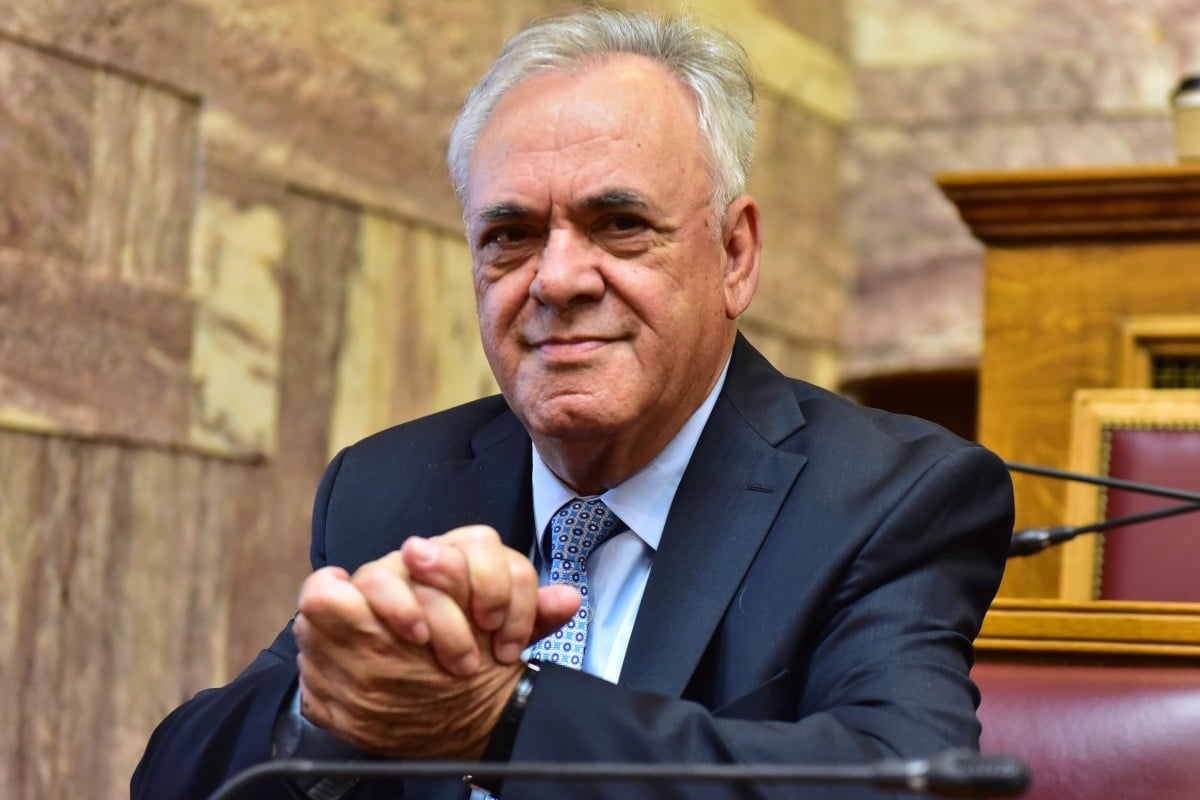
Greece’s deputy prime minister Yannis Dragasakis says the European Union’s suspicion about China is in danger of becoming a “self-fulfilling prophecy”. Photo: Alamy
The deputy prime minister of Greece has warned that European Union suspicion of China is in danger of becoming a “self-fulfilling prophecy” while reaffirming his country’s support for Beijing’s controversial “Belt and Road Initiative”.
In an exclusive interview with theSouth China Morning Post in Athens on Monday, Yannis Dragasakis said he hoped logic would prevail in the EU’s relationship with the world’s second-largest economy.
“We would like to see the EU having good relations with China,” he said.
“Seriously, we should start [the discussion about China] from the opposite end, which is, what are the needs and problems that we can work on with China?”
Dragasakis was speaking ahead of the annual summit between the EU and China in Brussels on Wednesday, which this year will take place against a backdrop of suspicion among some EU countries over Beijing’s political and commercial ambitions in the region.
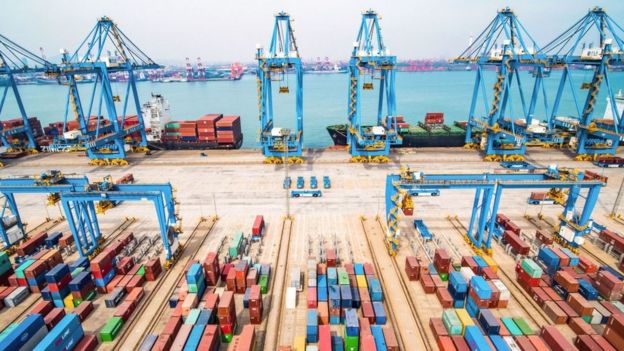
Europe has been divided over whether to work with China’s enormous belt and road plan, which aims to link China by sea and land with southeast and central Asia, the Middle East, Europe and Africa, through an infrastructure network along the lines of the old Silk Road.
Italy becomes first G7 nation to sign up for China’s belt and road plan
Washington has criticised the scheme as a “vanity project”, and the EU looks set to refer to China as a “strategic rival”, with some European leaders fearing Beijing’s diplomatic manoeuvres could derail unity among member states.
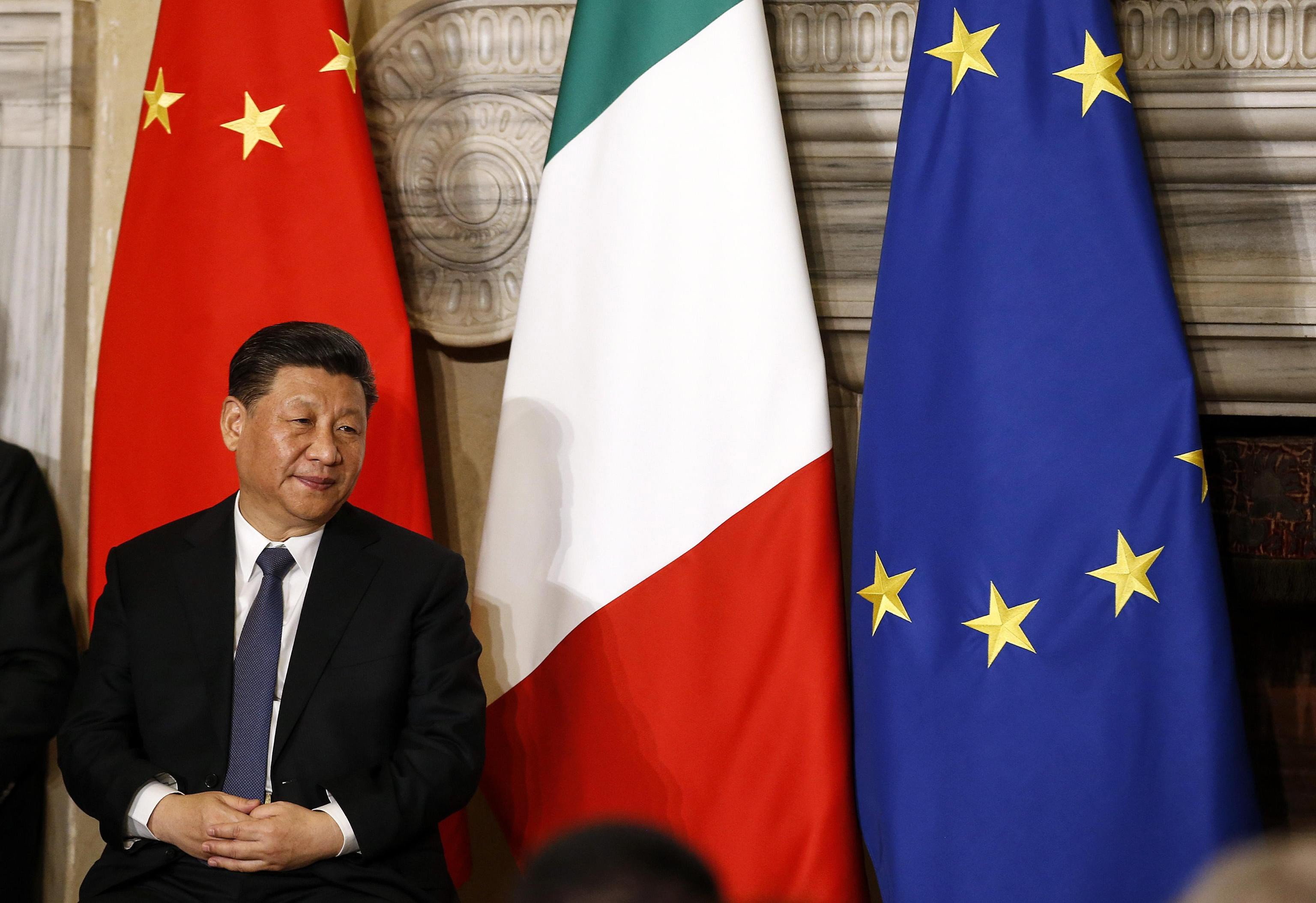
Last month Italy, which is grappling with its third recession in a decade, became the first G7 nation to join the belt and road programme, in a bid to boost exports and upgrade its port facilities.
Last year Greece – ranked second lowest in economic competitiveness within the EU by the World Economic Forum in 2018 – signed up to the scheme, after years of relying on China to help it through its own financial crisis.
Chinese state-owned shipping company Cosco bought a 51 per cent stake in Pireaus Port, Greece’s most important infrastructure hub in 2016 with an option to buy another 16 per cent after five years.
China aims to make the port the “dragon head” of its belt and road programme, serving as a gateway for its cargo to Europe and North Africa.
Will Greece be China’s bridge to the rest of Europe?
With its warming relationship with Beijing, Athens has, at times, departed from EU positions on China.
In 2016, Greece helped stop the EU from issuing a unified statement against Chinese aggression in the South China Sea. The following year, Athens stopped the bloc from condemning China’s human rights record. Days later, it opposed tougher screening on China’s investments in Europe.
Dragasakis was clear that the EU should not devise any policies that may hinder Greece’s ability to revive its economy.
“Greece badly needs investment. We hope logic will prevail at the end of the day, which means we should take advantage of all opportunities and build on these prospects to further our collaboration,” he said.
“Greece will keep following a multidimensional policy, an inclusive policy, without excluding anyone.”
Dragasakis hit back at France and Germany for treating China as a geopolitical rival, while simultaneously signing up to trade agreements with Beijing.
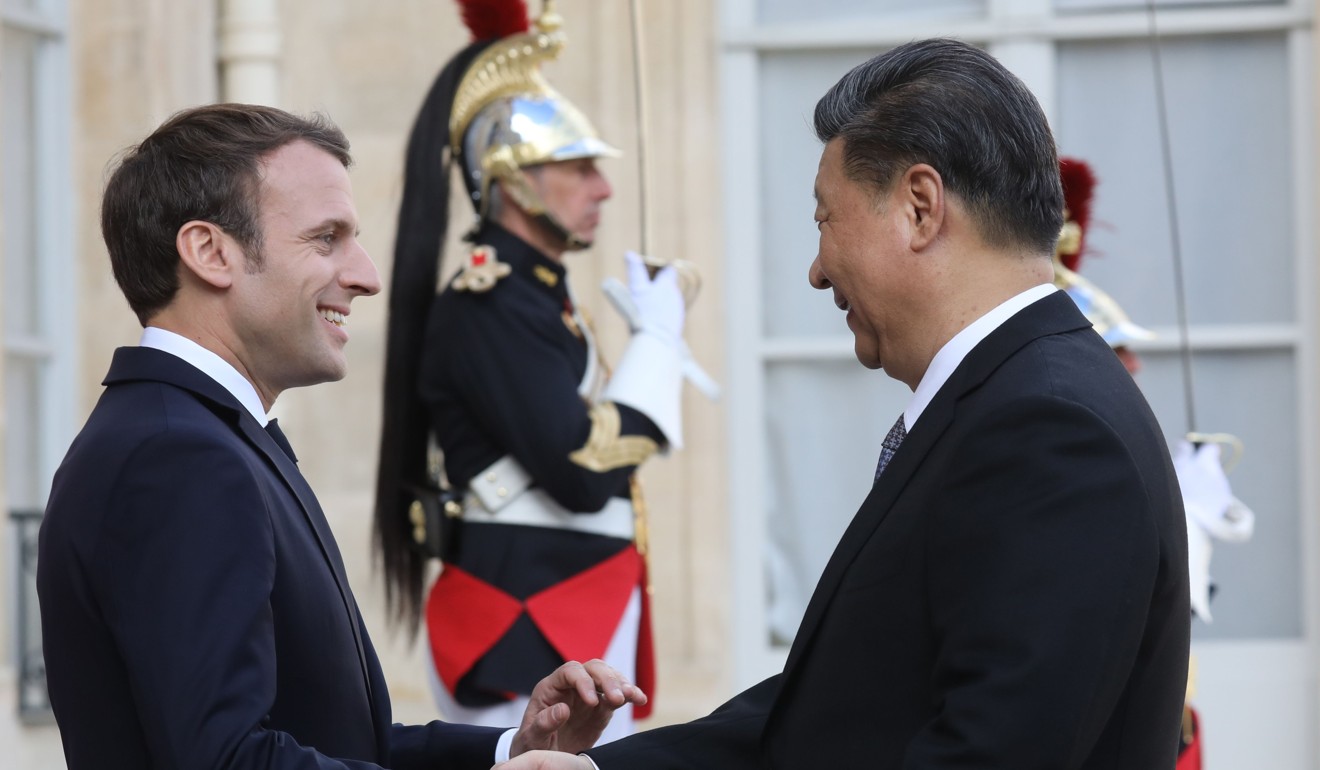
Days before receiving Chinese President Xi Jinping in France last month, President Emmanuel Macron declared that the “time of European naivety” towards China was over – a remark the Greek deputy prime minister described as “interesting” during the interview.
“It’s so interesting, yes. Mr Macron, despite his statement, actually signed very large-scale agreements with China,” he said, adding: “Germany, the same”.
French President Emmanuel Macron welcomes Chinese President Xi Jinping to the Elysee Palace in Paris last month. Photo: AFP
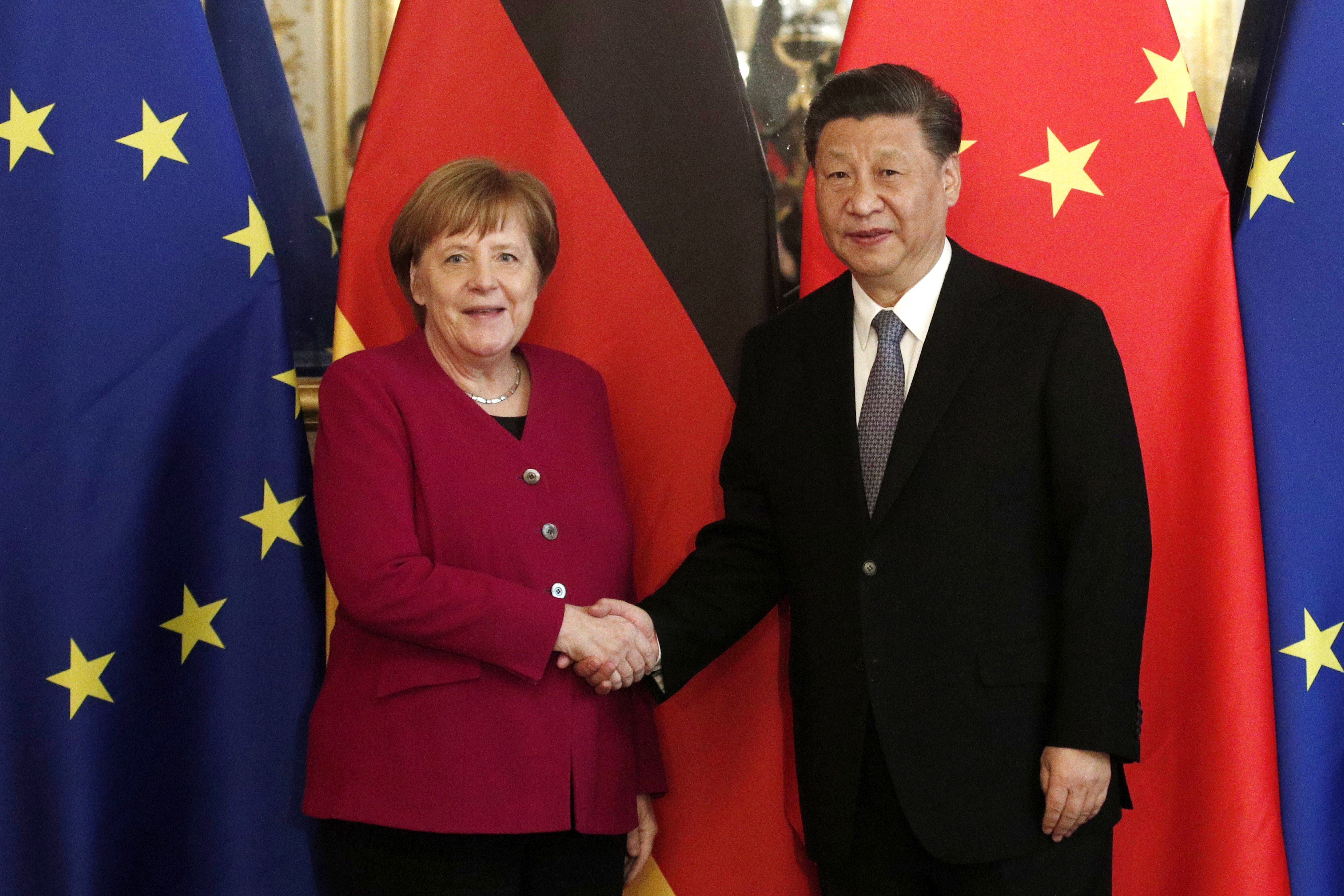
Macron invited German Chancellor Angela Merkel and European Commission President Jean-Claude Juncker to his meeting in Paris with Xi, where the four sought to reassure each other over economic cooperation between the European trading bloc and China.
Dragasakis said Greece’s relations with China were based on “very solid ground” with the two countries sharing complementary interests, particularly through the belt and road plan.
Greek Prime Minister Alexis Tsipras is understood to be considering joining Foreign Minister George Katrougalos at the belt and road summit in Beijing, which will be hosted by Xi later this month.
More than 40 heads of state are expected to attend the summit, with China’s foreign ministry recently saying that Europe had started to see the value of the scheme.
If confirmed, Tsipras’ presence at the summit will be interpreted as an attempt by Greece to consolidate Chinese support in the wake of Italy’s joining of the scheme.
He will also need to mend ties with Beijing, following a recent decision by Greece’s archaeological body to block a plan by Cosco to upgrade facilities at the Piraeus port, throwing the future of the multimillion euro privatisation deal into uncertainty.
Portugal’s support for China’s belt and road plan ‘bad news’ for EU
Dragasakis said there were strong prospects for the future relationship between Greece and China because of the two countries’ reciprocal interest.
Relations with other Asian countries, while not yet as close as Greek ties with China, would continue to be developed, he said.
Dragasakis said Athens would not adopt discriminatory policies against any country as it looked to shore up foreign investments to boost its economy.
India, for instance, has set its sights on Greece as a potential business partner, with President Ram Nath Kovind becoming its first titular head of state to visit Greece last year.
“Relations with India are lagging behind – they are not at the same level as with China, but of course we are mulling further developments with India,” Dragasakis said, adding that Greece would also work more closely with Japan, South Korea and Vietnam.
EU leaders hold out olive branch to China over belt and road
Read more
China will not divide Europe, senior diplomat says
Read more
Beijing calls for ‘objective’ assessment of human rights record.
Sticking points in negotiations in recent weeks have included how fast to roll back tariffs and how a deal would be enforced.
Mr Trump suggested at the press conference that some of these persisted.
He said it would be tough for the US to allow trade to continue with China in the same way as in the past, if a deal did not materialise.
‘Conflicting signals’
The world’s two largest economies imposed tariffs on billions of dollars worth of one another’s goods over the past year.
Negotiations between them have continued since a trade truce was agreed in December, but have at times been rocky.
The BBC’s China correspondent Robin Brant said that both sides were – yet again – giving conflicting signals.
Mr Liu said the US and China had reached a new consensus on important issues like the text of the economic and trade agreement, Xinhua reported.
While that echoed Mr Trump’s comments, US Trade Representative Robert Lighthizer sounded more cautious. He said there were still some major issues left in trade talks, according to reports.
Mr Brant said there was clearly still significant distance between the two sides on the crucial issue of enforcement.
What’s being discussed?
The US accuses China of stealing intellectual property from American firms, forcing them to transfer technology to China.
Washington wants Beijing to make changes to its economic policies, which it says unfairly favour domestic companies through subsidies and other support, and wants China to buy more US goods to rein in a lofty trade deficit.
China accuses the US of launching the largest trade war in economic history, and is unlikely to embrace broader structural changes to its economy.
Image copyrightGETTY IMAGES
What’s at stake?
Failure to achieve a deal may see the US more than double the 10% tariffs on $200bn (£153bn) of Chinese goods and impose fresh tariffs.
Mr Trump has in the past threatened to tax all Chinese goods going into the US.
The US has already imposed tariffs on $250bn worth of Chinese goods, and China has retaliated with duties on $110bn of US products.
The damaging trade war has already cast a shadow over global trade and the world economy.
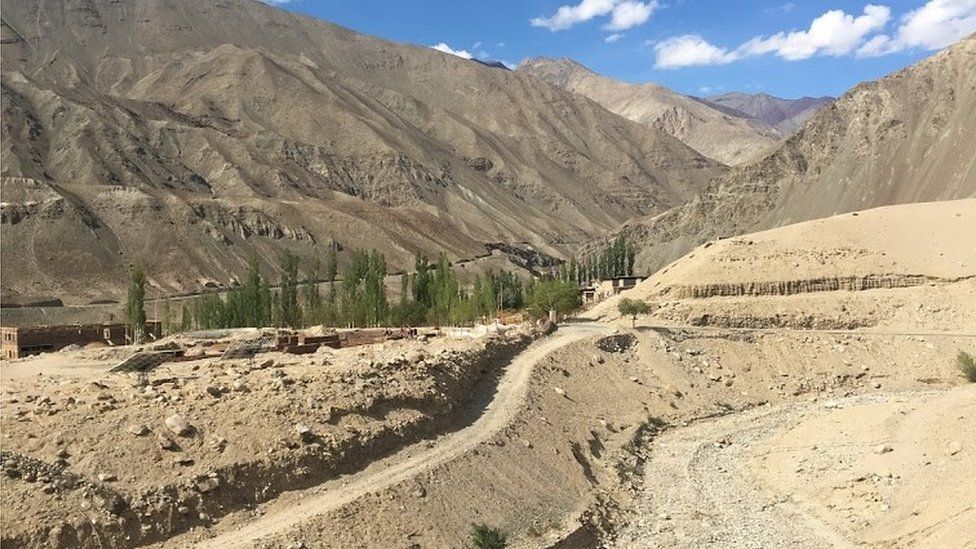
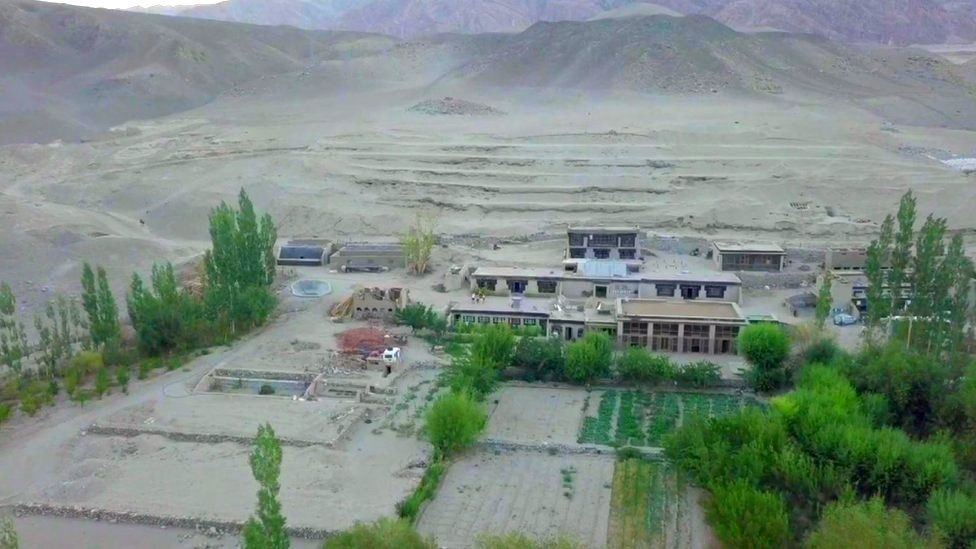
Image captionThe school’s surrounding mountainous landscape is almost devoid of vegetation as it is above the tree line
Secmol is a school pioneering practical green education in one of the world’s harshest environments.
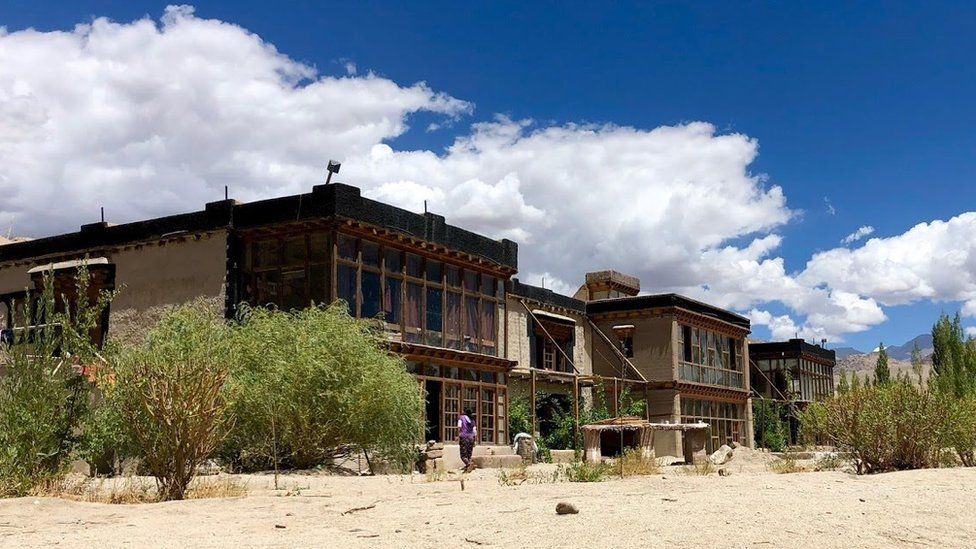
Its campus is perched nearly 11,000ft (3,350m) up in the pre-Himalayan mountains along the Indus River in Ladakh, in the Indian state of Jammu and Kashmir.
The teenage pupils at Secmol (Students’ Educational and Cultural Movement of Ladakh) lack wi-fi and almost all phone coverage, in an area only accessible by air during the long harsh winter when deep snow renders roads out of the province impassable.
The surrounding mountainous landscape is almost devoid of vegetation as it is above the tree line.
Image copyrightSUMEDH CHAPHEKAR
The school even sets its own time zone to maximise sunlight, which also reminds every student and visitor that when they pass the gates they are entering a different world.
Pupils are all from the regular Ladakhi school system and only those who have failed their year 10 exams are permitted to attend. There are also a number of university students who form a core part of the community along with the teachers.
School director Konchok Norgay explained to the BBC that the students learn about the environment for an hour or two each day.
In a typical maths lesson, they may calculate if the water from the spring is enough for tree planting, or work out the efficiency of the solar cooker that they use for heating water.
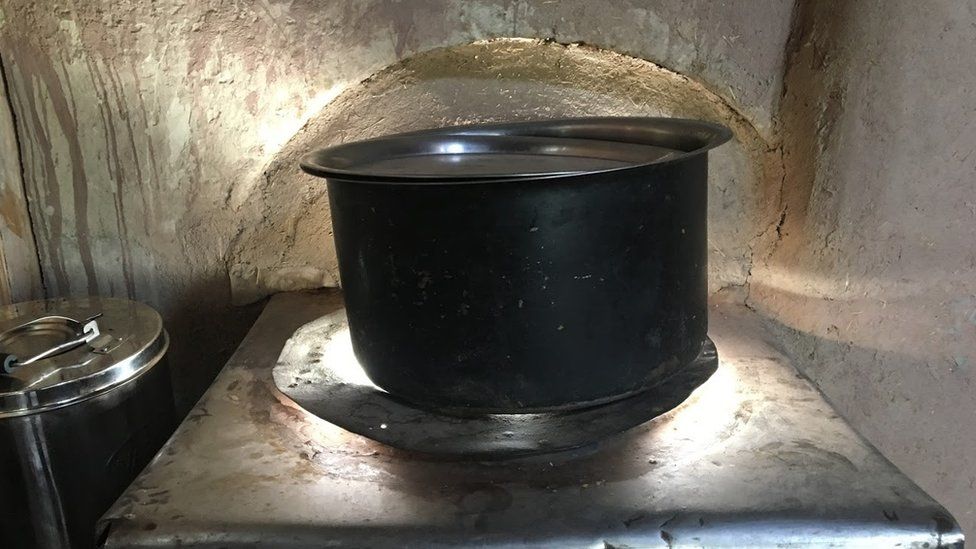
The solar cooker looks impressive, with mirrors crafted to catch the harsh sunlight, focusing their power to create intense heat.
But it is currently only used to boil water for tea.
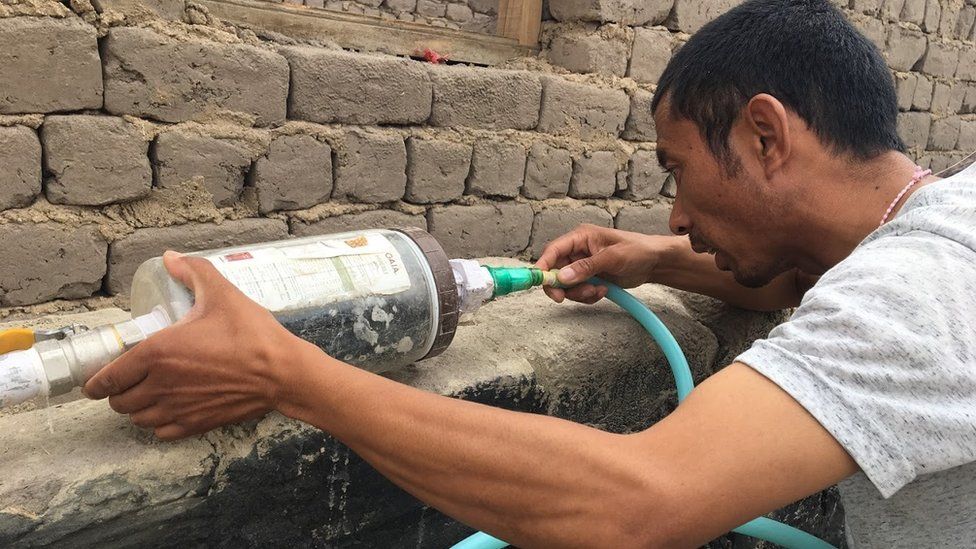
Norgay proudly showed off his experimental biogas methane digester, which is powered by slurry.
Dung is mixed with water and then placed in a long tube and left for several days.
The gas rises to the top, and is filtered through steel wool to ensure the gas does not corrode the oven, before reaching a plastic inflatable reserve tank.
“It’s fantastic as not only do you use less commercial gas, but you use natural materials instead,” student Stanzin Sungrab says. “And we can use the slurry waste as fertiliser in the kitchen garden.”
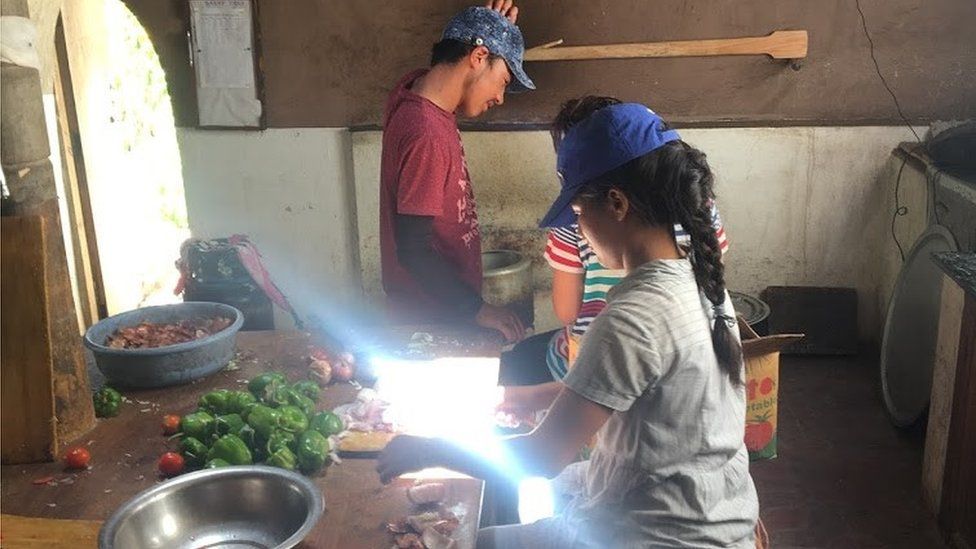
Each student must perform daily responsibility shifts and develop their confidence with nightly presentations to the rest of the school and visitors.
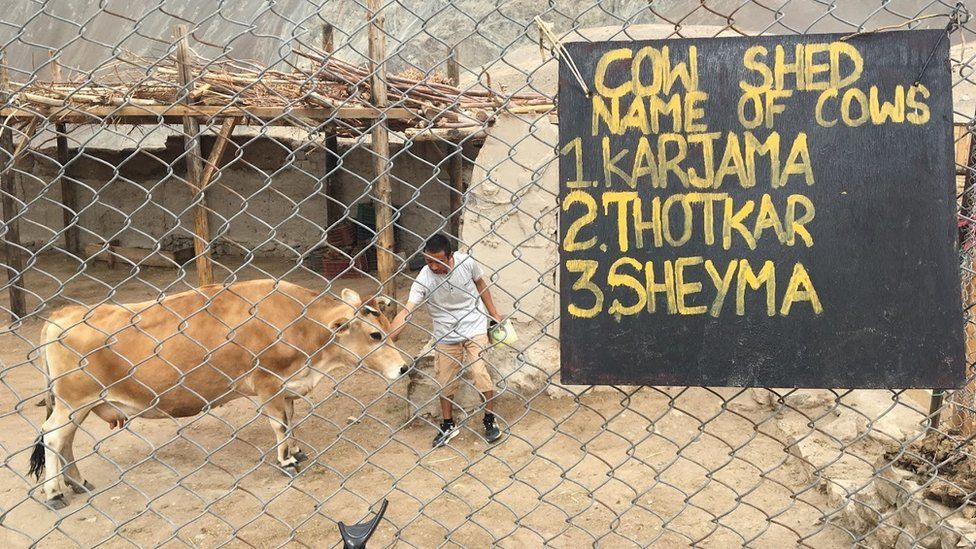
Stanzin has spent many hours developing relationships with Karjama, Thotkar and Sheyma, the campus cows.
When students are not on the 04:00 breakfast preparation shift, the day starts at 07:00 with a seven-minute group meditation.
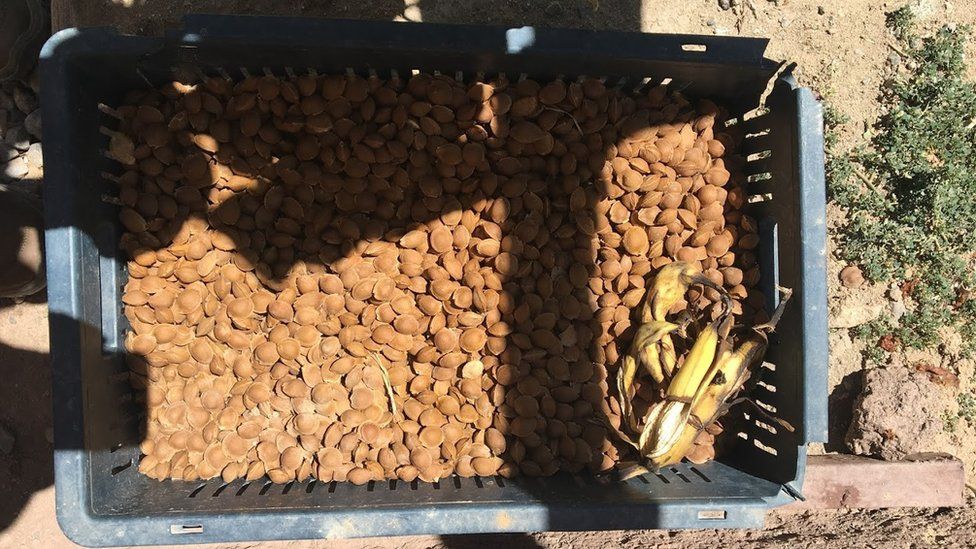
Students are encouraged to focus on goals for the day over a meal of cold roti bread and homemade apricot jam.
The apricot stones are sent to a neighbouring monastery, where the kernels are recycled into apricot oil.
Innovation is hard-wired into the architecture of the campus, challenged by an environment where winter temperatures typically reach -15C to -25C, and summer can often peak at 30C.
Ladakh has longstanding environmental credentials – even if the recent sprouting of large concrete hotels and increasing pollution in the capital Leh are challenging its green record.
“We banned plastic bags here 30 years ago,” says Sonam Gatso, who operates a local green organisation.
Sonam also believes local Buddhist culture helps promote environmental awareness. “We try to be compassionate as we believe in Karma – cause-and-effect. If you do wrong to anyone else or the environment, wrong will come to you.”
Secmol is an impressive school, but how far can its lessons extend beyond its innovative but isolated campus?
Urgain Nurbu, a former Secmol student who is now living on campus again, has been so inspired by what he learnt that he organised an environmental youth camp in his remote village.
The camp-goers make rain jackets from old plastic, and Urgain invites environmental speakers to inspire the young people.
One graduate has started her own eco-travel company, another makes environmentally-themed films.
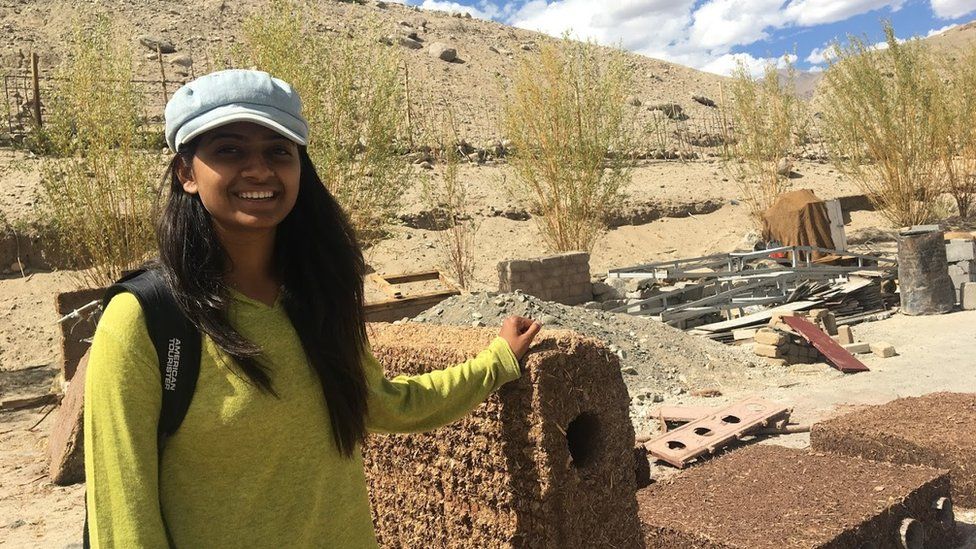
Shara, an architectural student, is now experimenting with creating pre-fabricated building blocks from mud, wood shavings and straw.
She is part of a team designing a new university in the area which plans to teach eco-tourism and green architecture, scaling the influence of ideas nurtured in Secmol’s pioneering atmosphere.
For now, the school’s impact is achieved by transforming individual mindsets to create a sense of shared responsibility.
“My grandfather told me how quiet and beautiful our village used to be and there were fish in the river,” student Padma Doma told the BBC.
“That’s why it’s so important to me to protect our precious environment. In the future, maybe it can be like that again.
“I want to go home and convince my family to segregate their garbage. Will they listen? Perhaps not, but I will try, and if I see somebody throwing away a packet, I will pick it up.”
Stanzin feels this is “a really critical time for our planet”.
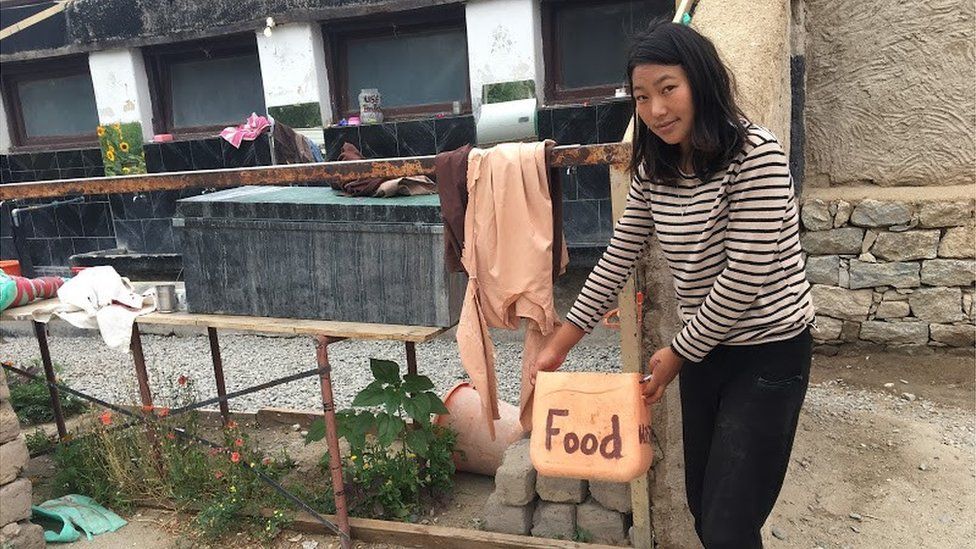
“In our homes we throw away garbage but here we recycle. In our homes we throw away plastic but here we use it for insulation.”
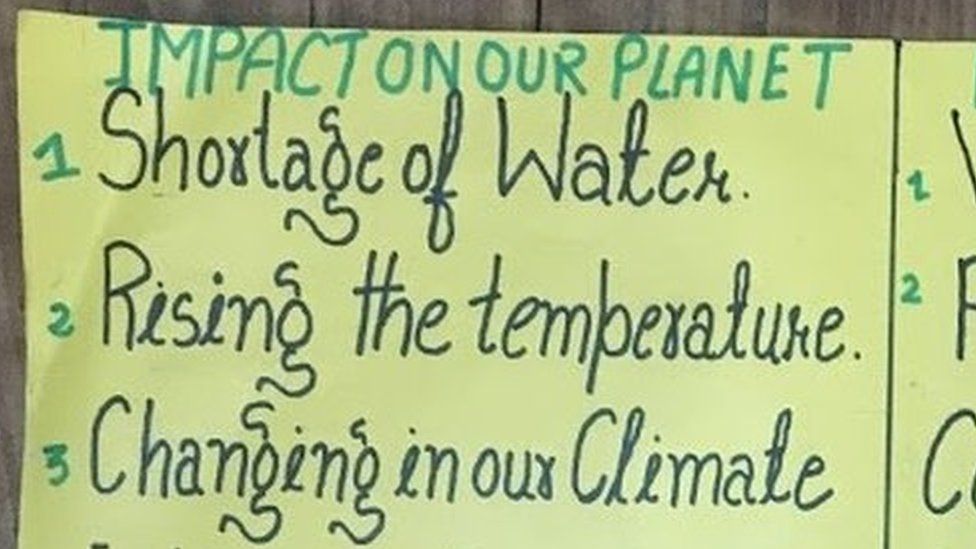
As the environment is so harsh, Ladakhis are very conscious of subtle changes in the weather, and have become increasingly aware of climate change, he says.
“Last year, we didn’t have much snow so there’s not enough snowmelt in the springtime. Because we are so high up and everything must be treasured, you learn to understand the value of the smallest drop of water.”
All photos Emily Kasriel unless indicated. Subject to copyright.
KARACHI (Reuters) – Pakistan has “reliable intelligence” that India will attack again this month, Foreign Minister Shah Mahmood Qureshi said on Sunday, as tension over a February standoff between the two nuclear-armed neighbours had appeared to ease.
The attack could take place between April 16 and 20, he said, adding that Pakistan had told the five permanent members of the U.N. Security Council of its concerns.
A suicide car bombing by Pakistan-based militants in Indian-controlled Kashmir killed at least 40 Indian paramilitary police on Feb. 14 and the risk of conflict rose dramatically on Feb. 27, when India launched an air strike on what it said was a militant training base.
The following day Pakistan shot down an Indian fighter jet and captured its pilot who was later released.
“We have reliable intelligence that India is planning a new attack on Pakistan. As per our information this could take place between April 16 and 20,” Qureshi told reporters in his hometown of Multan.
He did not elaborate on what evidence Pakistan had or how he could be so specific with the timing, but he said Prime Minister Imran Khan had agreed to share the information with the country.
India’s foreign office didn’t immediately respond to an email seeking comment.
Khan blamed India’s ruling Bharatiya Janata Party (BJP) for “whipping up war hysteria” over claims that India shot down a Pakistani F-16 during the February standoff.
India said it, too, had shot down a Pakistani aircraft and the air force displayed pieces of a missile that it said had been fired by a Pakistani F-16 before it went down.
The success of Indian air strikes on a camp of the Jaish-e-Mohammed militant group in northwestern Pakistan has also been thrown into doubt after satellite images showed little sign of damage.
Pakistan closed its airspace amid the standoff but most commercial air traffic has since resumed and major airports have opened.
H. Roger Wang, chairman of Committee of 100, a non-profit U.S. leadership organization of Chinese Americans, speaks during a press conference in New York, the United States, April 5, 2019. Speaking at a press conference on Friday, H. Roger Wang said he is positive that the situation would improve although China’s outbound investment in the United States currently hit the bottom. (Xinhua/Wang Ying)
NEW YORK, April 5 (Xinhua) — China’s outbound investment in the United States is going to recover after posting a deep drop in 2018, according to chairman of Committee of 100, a non-profit U.S. leadership organization of Chinese Americans.
Speaking at a press conference on Friday, H. Roger Wang said he is positive that the situation would improve although China’s outbound investment in the United States currently hit the bottom.
“You will see more Chinese investment into the United States,” said Wang.
Chinese investors only invested 4.8 billion U.S. dollars in the United States in 2018, down from 29 billion U.S. dollars in 2017 and 46 billion U.S. dollars in 2016, according to data from the research institute Rhodium Group.
The slump of Chinese investment in the United States last year resulted from tighter regulatory checks from both the United States and China, according to Wang.
Most companies indicated that they would maintain or accelerate their investment in each other’s markets in 2019, according to a new snap survey with top executives from companies which are committed to doing business in both the United States and China.
“Businesses in both countries plan to stay engaged with most planning to maintain or increase investment,” said a release issued on Friday on the survey jointly conducted by Committee of 100 and the U.S.-China Business Council, which represents American companies that do business with China.
BEIJING, April 6 (Xinhua) — China and Central and Eastern European Countries (CEEC) saw steady trade growth last year as cooperation between the two sides strengthened.
Bilateral trade reached 82.23 billion U.S. dollars last year, up 21 percent year on year, according to the Ministry of Commerce (MOC).
China’s exports to the CEEC totaled 59.19 billion dollars last year, while imports reached 23.04 billion dollars, up 19.6 percent and 24.6 percent respectively, said MOC spokesperson Gao Feng.
Investment between the two sides also expanded. Chinese firms have invested over 10 billion dollars in the CEEC, while receiving more than 1.5 billion dollars from them. Bilateral investment covers sectors including auto parts, chemicals, finance and medicine.
China is willing to deepen economic and trade cooperation with the CEEC and further align the Belt and Road Initiative with CEEC national development strategies to seek win-win partnership, Gao said.






 CHINDIA ALERT: You'll be living in their world, very soon