Archive for ‘Chindia Alert’

13/11/2019

China sends five satellites into orbit via single rocket

CHINA-TAIYUAN-SATELLITE LAUNCH-NINGXIA-1 (CN)

The five new remote-sensing Ningxia-1 satellites are launched by a Long March-6 carrier rocket from the Taiyuan Satellite Launch Center in north China’s Shanxi Province on Nov. 13, 2019. The five Ningxia-1 satellites were sent into planned orbit here on Wednesday. The satellites are part of a commercial satellite project invested by the Ningxia Jingui Information Technology Co., Ltd. and will be mainly used for remote sensing detection. (Photo by Zheng Taotao/Xinhua)

TAIYUAN, Nov. 13 (Xinhua) — Five new remote-sensing satellites were sent into planned orbit from the Taiyuan Satellite Launch Center in north China’s Shanxi Province Wednesday.

The five Ningxia-1 satellites were launched by a Long March-6 carrier rocket at 2:35 p.m. (Beijing Time).

The satellites are part of a commercial satellite project invested by the Ningxia Jingui Information Technology Co., Ltd. and will be mainly used for remote sensing detection.

The satellites and carrier rocket were developed by the DFH Satellite Co., Ltd. and the Shanghai Academy of Spaceflight Technology.

Wednesday’s launch was the 318th mission for the Long March series carrier rockets.

Source: Xinhua

12/11/2019

Feature: Xi spearheads closer China-LatAm cooperation for common prosperity

MEXICO CITY, Nov. 12 (Xinhua) — China and Latin America sit on the opposite sides of the globe, but the formidably vast Pacific Ocean that separates them did not stop them from sharing a long history of exchanges.

Today, the major developing country in the East is forging an increasingly close partnership with the dynamic region in the Western Hemisphere, especially since Chinese President Xi Jinping took office in 2013, and set into motion what is now known as Xiplomacy.

In the past six years, Xi has visited 11 Latin American and the Caribbean (LAC) countries. On Tuesday, he is setting foot on the region for the fifth time as president, as he arrives in Brazil for the upcoming 11th BRICS summit.

Thanks in no small part to Xi’s push, the time-honored, distance-defying China-Latin America relationship is flourishing with new vitality. China has become the second largest trading partner of Latin America, while the latter is one of the fastest growing sources of exports to China. Two-way trade rose 18.9 percent year on year to 307.4 billion U.S. dollars in 2018.

GRAND VISION

Every time Xi visited Latin America, he reaffirmed China’s commitment to cementing bilateral friendship and expanding win-win cooperation.

His first trip to the region as head of state, in 2013, took him to Trinidad and Tobago, Costa Rica and Mexico. The following year saw him travel to Brazil, Argentina, Venezuela and Cuba.

It was in Brazil that Xi met with leaders from 11 LAC countries, and for the first time laid out his grand vision for building a China-Latin American community with a shared future.

“Let us seize the opportunities presented to us and work together to blaze new trails in building a community of shared destiny for common progress and usher in a bright future for the relations between China and Latin America and the Caribbean,” Xi said in a keynote speech at the first ever China-Latin American and Carribean Countries Leaders’ Meeting in 2014.

He then proposed a “1+3+6” cooperation framework to “promote faster, broader and deeper cooperation between the two sides for real results.”

The “1” refers to “one plan,” the Chinese-Latin American and Caribbean Cooperation Plan (2015-2019), formulated to promote inclusive growth and sustainable development.

The “3” alludes to “three engines” for driving practical cooperation for comprehensive development, namely trade, investment and financial cooperation.

The “6” means the six priority cooperation fields of energy and resources, infrastructure building, agriculture, manufacturing, scientific and technological innovation, and information technologies.

In 2016, Xi visited Ecuador, Peru and Chile. Two years later, he traveled to Argentina for the Group of 20 summit as well as Panama, a Central American country which established diplomatic ties with China in June 2017.

In a landmark speech at the Peruvian Congress in Lima in 2016, Xi expounded the significance of strengthening China-Latin America cooperation.

“With one fifth of the world’s total area and nearly one third of the world’s population, China and Latin America and the Caribbean are crucial forces for world peace and stability,” he said.

China, he added, “will increase sharing of governance experience and improve planning and coordination of macro policies with Latin American and Caribbean states to better synergize our development plans and strategies.”

Besides top-level engagement, Xi also reaches out to local people from all walks of life, in order to keep cementing the China-Latin America friendship and the public support for bilateral cooperation.

While in Costa Rica, Xi visited a family-run coffee plantation and tried some local brew. “I think some more coffee can well be exported to China,” Xi told his hosts with a smile.

Today, Costa Rica exports coffee to the Asian market, along with pork, dairy, pineapples and other high-quality agricultural goods, especially after the inauguration of the China International Import Expo in 2018.

NEW OPPORTUNITIES

With international cooperation within the framework of the Belt and Road Initiative (BRI) gaining steam worldwide, the Xi-proposed vision is creating new opportunities for China-Latin America cooperation.

The BRI, designed to promote common development along and beyond the ancient Silk Road trade routes, comprises the Silk Road Economic Belt and the 21st Century Maritime Silk Road, and the latter is closely connected to Latin America.

For two and a half centuries, from the mid-1500s to the early 1800s, galleons laden with Chinese silk, spices, porcelain and other goods sailed across the ocean to today’s port city of Acapulco on the Mexican Pacific coast.

Latin America is the natural extension of the 21st Century Maritime Silk Road, Xi said in a meeting with visiting Argentine President Mauricio Macri in May 2017.

In a congratulatory message to the second Ministerial Meeting of the China-Community of Latin American and Caribbean States (CELAC) Forum held in Chile on Jan. 22, 2018, Xi stressed that China and LAC countries “need to draw a new blueprint for our joint effort under the Belt and Road Initiative and open a path of cooperation across the Pacific Ocean that will better connect the richly endowed lands of China and Latin America and usher in a new era of China-LAC relations.”

During Xi’s visits, the Chinese president is always dedicated to better aligning the BRI — an open platform for cooperation — with the development plans of LAC countries.

In his meeting with Macri, Xi called for dovetailing the BRI with Argentina’s development strategy, expanding cooperation in such sectors as infrastructure, energy, agriculture, mining and manufacturing, and implementing existing major cooperation projects in hydro-power, railway and other fields.

Similarly, during the state visit to Panama in December 2018, Xi said the National Logistics Strategy of Panama 2030 and the BRI are highly compatible, calling on the two sides to synergize their respective development strategies, boost cooperation and promote connectivity.

So far, 19 LAC countries have signed BRI cooperation agreements with China. China-Latin America cooperation in various areas has effectively promoted local economic and social development, bringing visible and tangible benefits to the Latin American people.

Just as Xi said in his speech at the Peruvian Congress in 2016, “China will share its development experience and opportunities with the rest of the world and welcome other countries to board the express train of its development, so that we can all develop together.”

SOurce: Xinhua

12/11/2019

Guru Nanak: Sikh founder’s 550th birthday celebrated

Sikh pilgrims take part in a religious ritual as they gather to celebrate the 550th birth anniversary of Guru Nanak Dev, at Nankana SahibImage copyright AFP
Celebrations have taken place in India and Pakistan to mark the 550th anniversary of the birth of Guru Nanak – the founder of Sikhism.

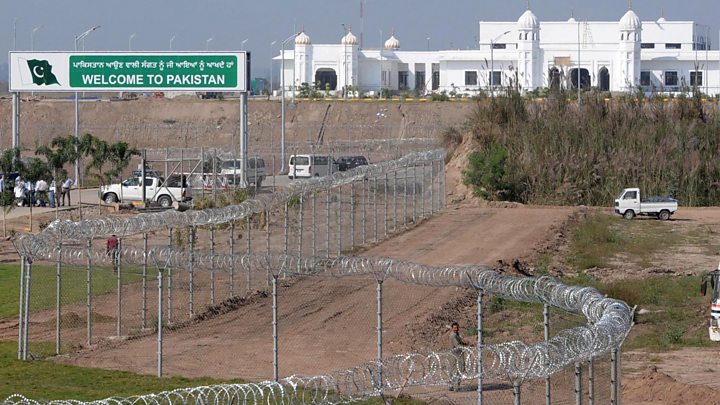
The anniversary comes just a few days after the historic opening of the Kartarpur corridor, which allows Indians access to one of Sikhism’s holiest shrines in Pakistan without having to apply for a visa.

Tensions between the neighbours have made it difficult for Indian pilgrims to visit the site in Pakistan in recent years. But an agreement reached last month allows Indians to make the 4km (2.5-mile) crossing to the Gurdwara Darbar Sahib Kartarpur – where Guru Nanak spent the last 18 years of his life.

On Tuesday, Sikh pilgrims in Pakistan gathered at Nankana Sahib, the birth place of Guru Nanak, which is about 80km (50 miles) from the city of Lahore.

Sikh pilgrims take part in a religious ritual as they gather to celebrate the 550th birth anniversary of Guru Nanak Dev, at Nankana SahibImage copyright AFP

Large numbers of devotees, including women, took part in the religious rituals.

Sikh pilgrims take part in a religious ritual as they gather to celebrate the 550th birth anniversary of Guru Nanak Dev, at Nankana SahibImage copyright AFP

The auspicious day for Sikhs was also marked in India, where Guru Nanak’s birth anniversary is an annual public holiday.

A Sikh devotee takes a holy dip on the occasion of the 550th birth anniversary of Sikhism founder Guru Nanak Dev at Gurudwara Bangla Sahib in New Delhi on November 12, 2019Image copyright AFP
Sikh devotees gathered in huge numbers at the Bangla Sahib Gurdwara in the capital Delhi.
Sikh devotees gather to pay their respects on the occasion of the 550th birth anniversary of Sikhism founder Guru Nanak Dev at Gurudwara Bangla Sahib in New Delhi on November 12, 2019Image copyright AFP

Indian Prime Minister Narendra Modi greeted the nation on the occasion, saying it was “a day to rededicate ourselves” to Guru Nanak’s “dream of a just, inclusive and harmonious society”.

Though Guru Nanak’s anniversary is an important event for Sikhs annually, this time the celebrations were more special due to the opening of the Kartarpur corridor.

Devotees from across the world visit the Kartarpur shrine every year to commemorate his birth. Indian Sikhs will now be able to visit with just their passports, but they will not be allowed to leave the site or stay overnight.

The Golden Temple in Amritsar, in north-western India, is the holiest Gurdwara (where Sikhs worship). On the eve of the anniversary, it was lit up to host processions as Sikh worshippers took part in the three-day celebration of Guru Nanak’s birth.

The Golden Temple lit up as Sikhs watch from a windowImage copyright REUTERS
On the first day of the celebrations, Sikhs read the Sikh holy book – the Guru Granth Sahib – from beginning to end.

As is the tradition on the second day, the holy book was paraded through the streets of Amritsar on Monday in a hand-held carriage.

The procession was led by five people representing the original Panj Pyare – the Five Beloved Ones – who helped shape the religion.

Sikh devotees carrying the Sri Guru Granth Sahib ji - the holy book of Sikh religion - in a hand-held, golden carriageImage copyright EPA
You might also be interested in:

Media caption Find out more about the Kartarpur corridor, which leads to one of the holiest sites in the Sikh religion

Source: The BBC

11/11/2019

Spotlight: China-Brazil trade set to reach new heights

SAO PAULO, Nov. 11 (Xinhua) — Though separated by oceans and continents, China and Brazil have fostered deepening bilateral cooperation over the years, especially in  investment, trade and finance.

With the upcoming 11th BRICS summit in Brazil’s capital Brasilia, expectations are high for the development of closer ties between the two countries.

STRENGTHENING INVESTMENT

China and Brazil have bolstered investment ties in recent years, and the Asian country has become Brazil’s largest source of foreign investment.

The two countries are not only deepening cooperation in the traditional areas of agriculture, electricity, mining and infrastructure, but also fostering growth in new areas such as technology innovation and the digital economy.

Last month, Brazilian telecommunications giant Oi put Chinese company Huawei’s 5G technology to the test during a local music festival — the largest trial of the 5G technology in Brazil.

Chinese Internet giant Alibaba’s website AliExpress has become one of Brazil’s most popular cross-border e-commerce platforms. Chinese Internet company Tencent and mobile ride-hailing platform DiDi have also invested in Brazilian companies.

Finally, the participation of Latin American countries — including Brazil — in jointly building the Belt and Road will provide a great opportunity for these countries to enhance investment cooperation with China, said Oliver Stuenkel, an expert of international relations at Brazil’s Getulio Vargas Foundation.

INCREASING TRADE

Although the global economy is facing downward pressure, bilateral trade between China and Brazil has continuously climbed, as both countries are committed to opening up their markets.

China has been Brazil’s largest trading partner and largest export market for a decade. In 2018, bilateral trade hit a record 100 billion U.S. dollars, official data showed.

Cheese bread, Brazil’s favorite breakfast and snack food, is now available at cafeterias in China, thanks to the first China International Import Expo (CIIE) in Shanghai last year.

In May, Brazil’s leading cheese bread maker Forno de Minas shipped its first container of 10 tons of cheese bread to China, supplying cafeterias in Shanghai. Two months later, the bakery shipped a second batch of 18 tons to China.

Brazil is also dedicated to opening up by optimizing its business environment. Li Tie, general manager of the Brazilian branch of BYD, a leading Chinese manufacturer of electric vehicles and batteries, said that the Brazilian government has actively promoted pension and labor law reforms and is planning to carry out tax reforms.

China and Brazil should further enhance their economic and trade relations, which have been fruitful and mutually beneficial, said Sergio Segovia, president of the Brazilian Trade and Investment Promotion Agency.

FINANCIAL COOPERATION

The two countries have enhanced cooperation in the financial sector.

In September, the Brazil government relaxed restrictions on the establishment of financial institutions. Bank XCMG, affiliated to China’s Xuzhou Construction Machinery Group, has become the first foreign bank that was approved by Brazil’s central bank after the release of the new regulation, and the bank’s foreign shareholding ratio is as high as 100 percent.

Wang Yansong, XCMG’s vice president, said that Bank XCMG will carry out financial leasing and other services in Brazil and help companies reduce exchange rate risks and financing costs.

As cross-border trade grows, fin-tech companies from both countries have carried out in-depth cooperation, such as that between Brazilian financial payment company Ebanx and AliExpress, in providing consumers with cross-border payment solutions.

In 2018, Ebanx handled 35 million cross-border transactions related to Chinese merchants, said its co-founder and CFO Wagner Ruiz. He expressed the hope that the company can help Chinese merchants sell more in Latin America in the future.

The BRICS leaders’ meeting is an excellent opportunity for Brazil to deepen business, investment and financial cooperation with China and other BRICS countries, said Marcos Trojan, special secretary for foreign trade and international affairs of Brazil’s Ministry of Economy.

Source: Xinhua

11/11/2019

Cyclone Bulbul kills 13 across India and Bangladesh

Cyclone Bulbul has ripped through coastal areas of Bangladesh and India, killing at least 13 people while more than two million others were forced to spend a night in storm shelters.

The storm packed winds of up to 120km/h (75 mph), injuring dozens and destroying thousands of homes.

Five of the six who lost their lives in Bangladesh were hit by falling trees.

Officials say that further casualties were avoided because people were evacuated in time.

Authorities say the storm is now weakening.

What damage did Cyclone Bulbul cause?

Seven people were killed in the Indian state of West Bengal, the state’s minister for disaster management told reporters.

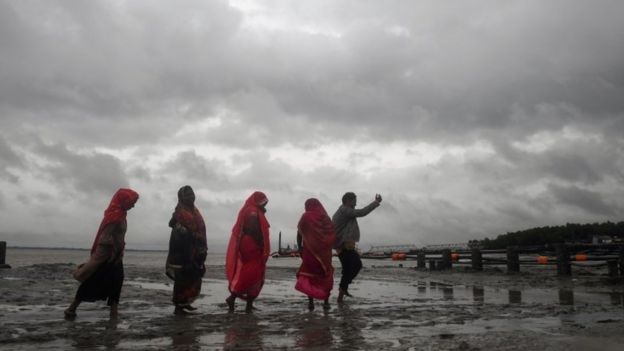
Hindu pilgrims walk back from the dock after a ferry service to Sagar Island was suspended due to the approaching Cyclone Bulbul in Kakdwip in West Bengal stateImage copyright AFP
Image caption West Bengal is one of the worst hit areas in India

The five victims hit by trees in Bangladesh included a 52-year old woman who died when a tree dropped onto her house.

A 60-year-old fisherman also lost his life after ignoring evacuation warnings.

There are increasing concerns after two fishing boats carrying more than 30 men failed to return, an official in Bangladesh’s Bhola district said.

Around 1,200 tourists, most of them Bangladeshi, were stuck on St Martin’s Island, part of Cox’s Bazar district, an official told the Reuters news agency.

“All of them will be rescued,” he said.

Services at many sea ports and airports in the region were also suspended – including the busy Kolkata airport.

Bangladesh’s two biggest ports, Mongla and Chittagong, were closed and flights into Chittagong airport were stopped.

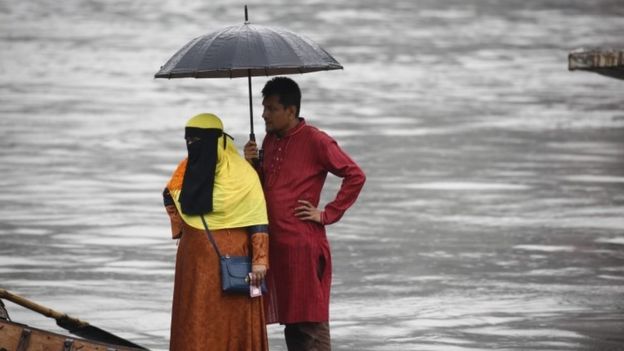
Bangladeshi passengers use an umbrella as they cross the Buriganga River by boat during a rainy day in Dhaka, BangladeshImage copyright EPA
Image caption Storms have battered areas of Bangladesh

Bangladesh’s low-lying coast is often hit by deadly cyclones, but the country has successfully reduced the number of casualties in recent years.

Media caption People in Khulna, Bangladesh, seek shelter from the storm

Source: The BBC

08/11/2019

Xi Focus: Xi’s trip to Greece, Brazil to advance bilateral ties, BRICS cooperation

BEIJING, Nov. 7 (Xinhua) — Chinese President Xi Jinping’s upcoming visit to Greece and Brazil is expected to intensify China’s relations with the two countries and enhance BRICS cooperation, officials said here Thursday.

At the invitation of Greek President Prokopis Pavlopoulos, Xi will pay a state visit to Greece from Nov. 10 to 12, said Vice Foreign Minister Qin Gang.

This will be the first visit to the European country by a Chinese president after an interval of 11 years, which will exert a historic influence of China-Greece ties and push forward China-Europe relations and Belt and Road cooperation, Qin said.

He noted that China and Greece, both with old civilizations, are trustworthy and helpful friends respecting and supporting each other on core interests and major concerns.

Greece is among the first European Union (EU) countries to sign an intergovernmental cooperation document with China to jointly construct the Belt and Road, Qin said, adding that Greek prime ministers attended the first and second Belt and Road Forum on International Cooperation in Beijing.

The two sides have conducted fruitful cooperation on the principle of mutual benefit and win-win cooperation and witnessed increased bilateral trade and investment, Qin said.

“The Piraeus Port project, a flagship project for the Belt and Road cooperation, has made important contributions to the local economic and social development of Greece and played an important role in advancing connectivity in various regions around the globe,” said the vice foreign minister.

Speaking of people-to-people and cultural exchanges, Qin said peoples of the two countries respect each other and advocate openness and inclusiveness in their close interactions.

“Both China and Greece hold that different civilizations should respect each other and facilitate experience sharing, mutual learning and conversation among civilizations,” he said.

China and Greece are new friends of the “17 +1” cooperation. In April this year, Greece became a full member of the China-Central and Eastern European Countries Cooperation Mechanism, adding new opportunities to the development of this mechanism, which is also conducive to developing China-EU relations and China-EU connectivity, Qin said.

Greek Prime Minister Kyriakos Mitsotakis led a delegation to the ongoing second China International Import Expo (CIIE). Xi met with him, and the two leaders visited the Greek pavilion, Qin said.

According to Qin, in Greece, Xi is scheduled to hold talks respectively with Pavlopoulos and Mitsotakis, in a bid to consolidate political mutual trust and traditional friendship between the two countries, intensify pragmatic cooperation in trade, investment, infrastructure and other fields, uphold multilateralism and free trade and build an open world economy.

Besides, Qin noted that the Chinese and Greek leaders will conduct cultural exchanges and advocate dialogues among civilizations.

The two sides will issue a joint statement on strengthening the comprehensive strategic partnership, draw up a blueprint for the development of bilateral ties, sign intergovernmental cooperation documents on investment and education, and ink commercial agreements in such fields as ports, finance, and energy.

Greece, in the West, and China, in the East, are heirs of ancient civilizations. Noting that both China and Greece are faced with the mission of rejuvenation and prosperity, Qin said the two countries can enlighten the world to deal with various problems and challenges.

Xi’s upcoming visit to Greece shows respect and appreciation of the ancient Chinese civilization to the ancient Greek civilization, as well as the expectation of jointly building a community with a shared future for humanity, Qin said.

It is believed the visit will elevate the level of bilateral cooperation in an all-round way and inject new impetus to the development of China-EU relations with fruitful results, Qin stressed.

According to Vice Foreign Minister Ma Zhaoxu, at the invitation of Brazilian President Jair Messias Bolsonaro, Xi will attend the 11th BRICS summit in Brasilia, the capital of Brazil, from Nov. 13 to 14.

BRICS is the acronym for an emerging-market bloc that groups Brazil, Russia, India, China and South Africa.

Xi is scheduled to attend the closing ceremony of the BRICS business forum, closed and public meetings of the BRICS leaders’ meeting and the BRICS leaders’ dialogue with the BRICS Business Council and the New Development Bank. The leaders’ declaration is expected to be released, Ma said.

Xi will hold talks with Bolsonaro, sign cooperation documents in various fields, and hold bilateral meetings with leaders of other participating countries to exchange views on ties and BRICS cooperation, Ma said.

As the world is undergoing changes rarely seen in a century and confronted with unprecedented opportunities and challenges, BRICS countries have drawn ever-growing attention worldwide, Ma said, stressing that China appreciates the efforts made by Brazil in its preparation and stands ready to jointly prompt the meeting to achieve fruitful results.

He voiced expectations of the Chinese side.

“The Chinese side hopes that BRICS countries will further enhance political mutual trust, boost mutually beneficial cooperation and forge a more comprehensive, closer and broader partnership,” Ma said.

As for safeguarding multilateralism and strengthening global governance, Ma voiced China’s determination to make joint efforts with other BRICS countries to safeguard the rules-based multilateral trade system, the international order based on international law, and the international system with the UN at the core.

This aims to promote a more equitable, open, transparent and inclusive global governance system and safeguard common interests and development space of emerging markets and developing countries, Ma said.

“China believes the five BRICS countries should follow the trend of the new industrial revolution and facilitate economic transformation and upgrading,” Ma noted.

As an important outcome of last year’s Johannesburg meeting, the BRICS partnership for a new industrial revolution has progressed well in the past year, he said, adding that China is willing to work with concerned parties to accelerate the development of the partnership and tap more potential for cooperation projects, so as to propel high-quality development of the five countries.

“China looks forward to more cooperation on economy, trade, finance, political security and people-to-people exchanges, with projects meeting the development needs of the five countries and serving the interests of their peoples,” he said.

The Chinese side believes that with concerted efforts of all parties and under the political guidance of the five countries’ leaders, the 11th BRICS Summit will be a full success, Ma said, stressing that the BRICS countries will continue to contribute to world peace and development and the building of a community with a shared future for humanity.

Source: Xinhua

07/11/2019

Chinese top legislator meets Czech parliament speaker

CHINA-BEIJING-LI ZHANSHU-CZECH PARLIAMENT SPEAKER-MEETING (CN)

Li Zhanshu, chairman of the Standing Committee of the National People’s Congress (NPC), meets with Speaker of the Czech Chamber of Deputies Radek Vondracek in Beijing, capital of China, Nov. 7, 2019. (Xinhua/Ding Haitao)

BEIJING, Nov. 7 (Xinhua) — Chinese top legislator Li Zhanshu met with Speaker of the Chamber of Deputies Radek Vondracek in Beijing on Thursday.

Li, chairman of the Standing Committee of the National People’s Congress (NPC), said China and the Czech Republic have traditionally enjoyed friendly ties, and China’s further opening-up will bring greater opportunities for cooperation between the two countries.

Li called on China and the Czech Republic to uphold mutual respect, mutual trust and mutual benefit to push the strategic partnership between the two countries to new heights.

The NPC stands ready to work with the parliament of the Czech Republic, he said.

Vondracek said the Czech Republic is willing to seize the important opportunity provided by China’s development and further opening-up, enhance high-level exchanges, promote practical cooperation and explore the Chinese market. The Czech Republic will continue to uphold the one-China principle, he said.

Source: Xinhua

06/11/2019

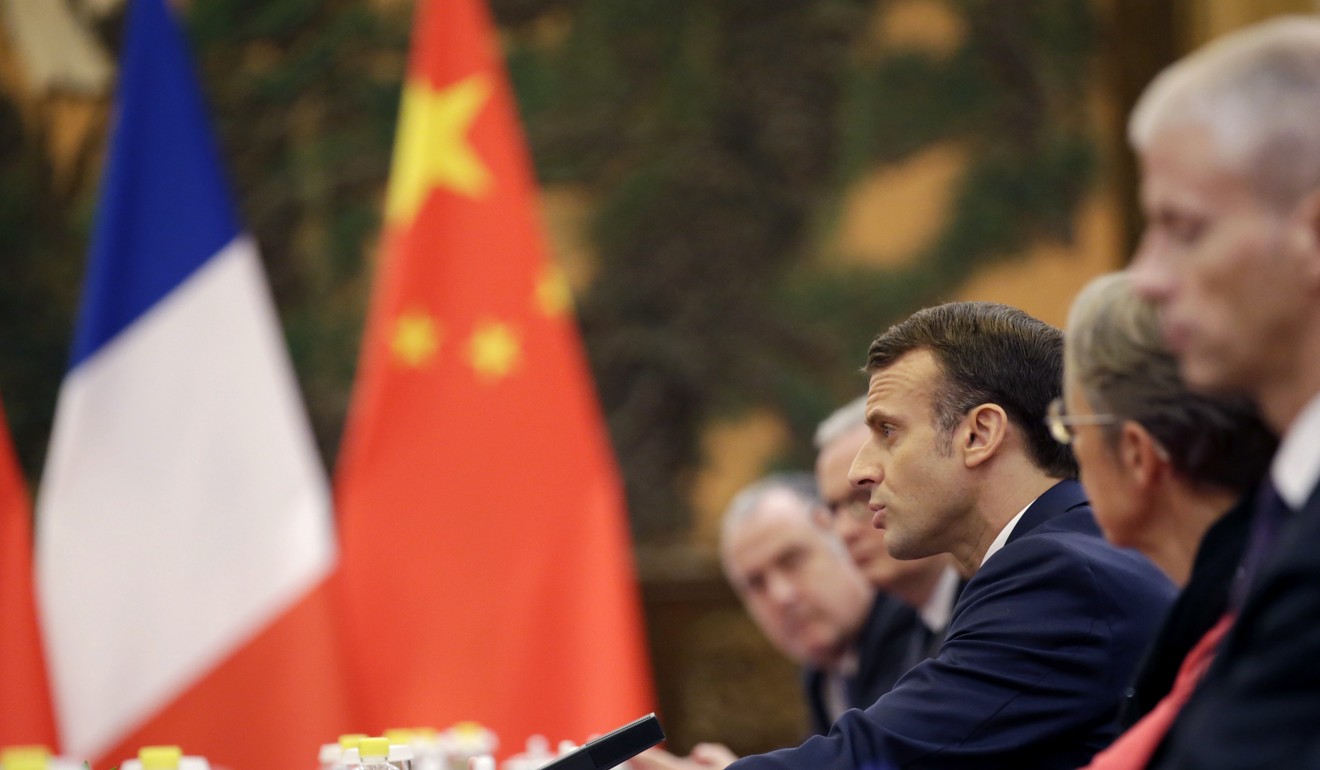
French President Emmanuel Macron tells Chinese leader Xi Jinping talks are needed to calm Hong Kong situation

  • French leader calls for restraint and says he raised the topic ‘on several occasions’ during his visit
  • Two sides find common ground on need to defend free trade and fight climate change as Donald Trump starts process of pulling US out of Paris Climate Agreement
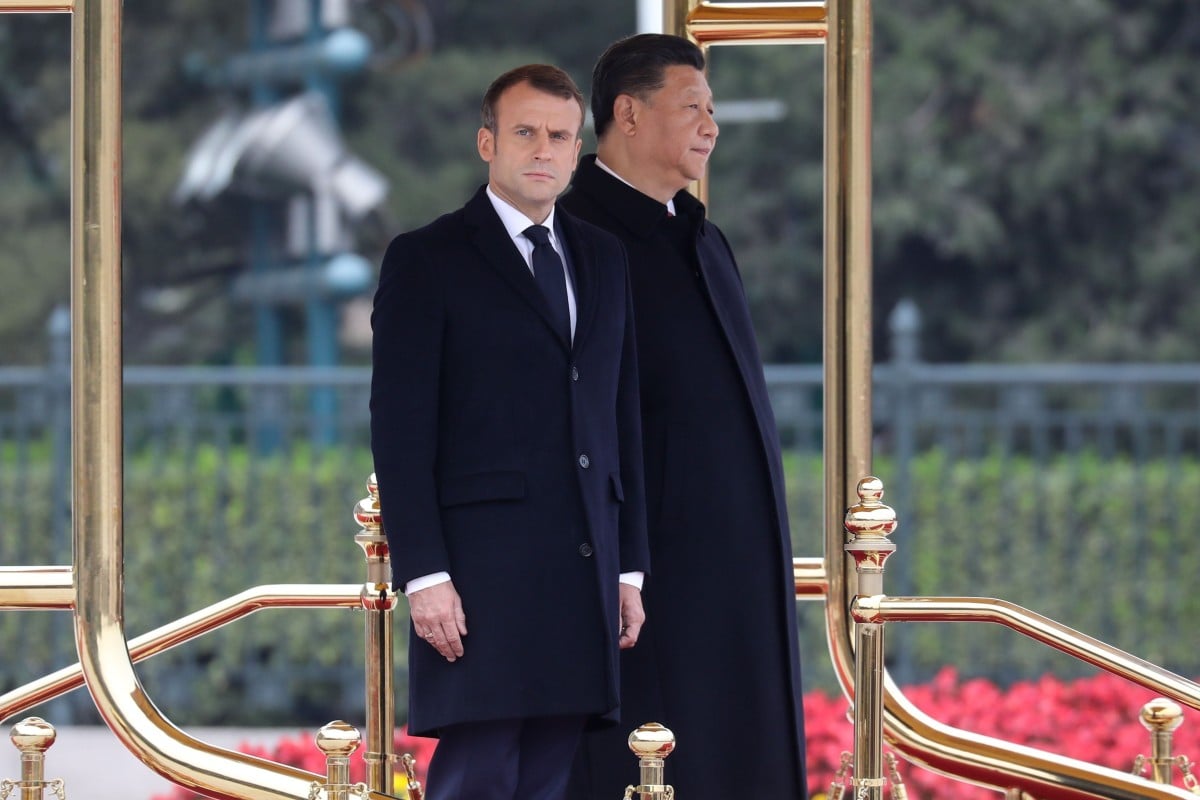
Xi Jinping and Emmanuel Macron at a welcome ceremony ahead of their talks in Beijing on Wednesday. Photo: AFP

French President Emmanuel Macron said he raised human rights and the Hong Kong situation during his talks with his Chinese counterpart Xi Jinping on Wednesday.

Macron’s visit to China concluded with pledges to work together on climate change, but the French leader also said he also called for a de-escalation of the situation in the city through dialogue after months of protests.

Macron, who had promised to raise “taboo” topics during the visit, told a press conference: “I obviously raised this with President Xi Jinping on several occasions.

“We have repeatedly called on the parties involved to [engage in] dialogue, to show restraint, to de-escalate.”

The discussion followed Xi’s meeting with Hong Kong’s embattled Chief Executive Carrie Lam Cheng Yuet-ngor in Shanghai on Monday, where he expressed “high trust” in her and “fully affirmed” support for her response to the unrest that has gripped the city since June.

Earlier the French and Chinese leaders had restated their commitment to protect free trade and pledged their continued support for the Paris Agreement as the United States begins the process of formally withdrawing from the global climate deal.

Macron expressed “regret” over “some countries’ negative attitude” towards environmental protection and the fight against climate change and pledged to work with China to halt the loss of biodiversity.

The French president’s office also released a statement on Wednesday that reaffirmed France and China’s joint support for the “irreversible” Paris Agreement.

Macron points to common ground with China on tariffs and climate action

With the European Union, China and Russia backing the pact, he added, “the isolated choice of one or another is not enough to change the course of the world. It only leads to marginalisation.”

The two countries also agreed to work together to develop joint nuclear power projects and signed a series of contracts worth US$15 billion.

The deals covered aeronautics, energy and agriculture, including approval for 20 French companies to export poultry, beef and pork to China.

An additional action plan released after the talks said French utility giant EDF and China General Nuclear Power should be encouraged to cooperate on projects in China or third countries, citing the joint efforts by the two companies to build nuclear reactors at the Hinkley Point C station in Britain as an example.

The two sides also committed to signing a contract for the construction of a nuclear fuel recycling plant in China, which would involve French energy giant Orano, by January 31.

Xi took what appeared to be a veiled swipe at the United States, which is still embroiled in a protracted trade war and other confrontations with Beijing.

“We advocate for mutual respect and equal treatment, and are opposed to the law of the jungle and acts of intimidation,” Xi said.

“We advocate for openness, inclusion and for mutually beneficial cooperation, and are opposed to protectionism and a zero-sum game.”

Macron said China and the European Union should work in partnership as the world became more unstable, calling on the two sides to further open up market access.

“We call again for trade multilateralism to respond to distortions that have appeared in the global economy, which have led to a profound rise in inequalities and imbalances that explain the surge of challenges to the international systems,” he said.

“China and Europe also share the same views that the trade war only leads to loss.”

Macron kicks off China visit with deal to protect wine and cheese from counterfeiting

Chinese state news agency Xinhua said the two countries agreed to work together to push forward with plans to assemble Airbus’s A350 model in China.

Meanwhile, Beijing Gas Group and French utility firm Engie will collaborate on a liquefied natural gas terminal and storage in the northern city of Tianjin, while France’s Total will set up a joint venture with China’s Shenergy Group to distribute liquid nitrogen gas by truck in the Yangtze River Delta.

The two countries also agreed to reach an agreement by the end of January 2020 on the cost and location of a nuclear fuel reprocessing facility to be built by Orano, formerly known as Areva.

Wu Libo a professor and director of the Centre for Energy Economics and Strategies Studies at Fudan University, said there was “great potential” for further cooperation between the two countries on nuclear energy.

“France has many useful experiences in the operation and management of nuclear power plants and its plants have long-term safe and stable operation records,” she said.

The two sides agreed to work together on joint nuclear power projects. Photo: AP

Jiang Kejun, a senior researcher at the Energy Research Institute of China’s National Development and Reform Commission, said China’s cooperation with France would add credibility to potential third-country projects.

“China has advanced third-generation technology but it’s still a new member in the nuclear power market, while France has developed nuclear energy for a long time, and its EPR reactors – a technology designed and developed in France – are in business operation,” he said.

Jiang said possible markets for the joint projects included Argentina and India, while some Middle Eastern states – such as Saudi Arabia and Qatar – had expressed interest in nuclear energy.

China’s ambassador hits out at Macron’s team for backing ‘hypocritical’ EU stance on Hong Kong

Tong Jiadong, professor of international trade at Nankai University, said that the deals between the two sides helped show that France and China could work together to counteract US unilateralism.

“Objectively speaking, this will form, or at least imply, an opposition to US unilateralism,” Tong said. “China hopes the cooperation between these two countries produces demonstrable effects for other EU member states.”

Ding Chun, a professor of European Studies at Fudan University, said he did not think the EU wanted to “choose a side” between the US and China.

But Ding continued: “If we are talking about free trade and multilateralism, there’s no doubt that the EU and China share a common view and can balance Donald Trump’s unilateralism.”

Source: SCMP

04/11/2019

Seven years on, still no RCEP trade deal, and India pulls out

  • Hopes were high a regional summit could finally wrap up negotiations on the Regional Comprehensive Economic Partnership
  • But despite claims of ‘significant progress’ in the 16-nation talks, India remains a stumbling block
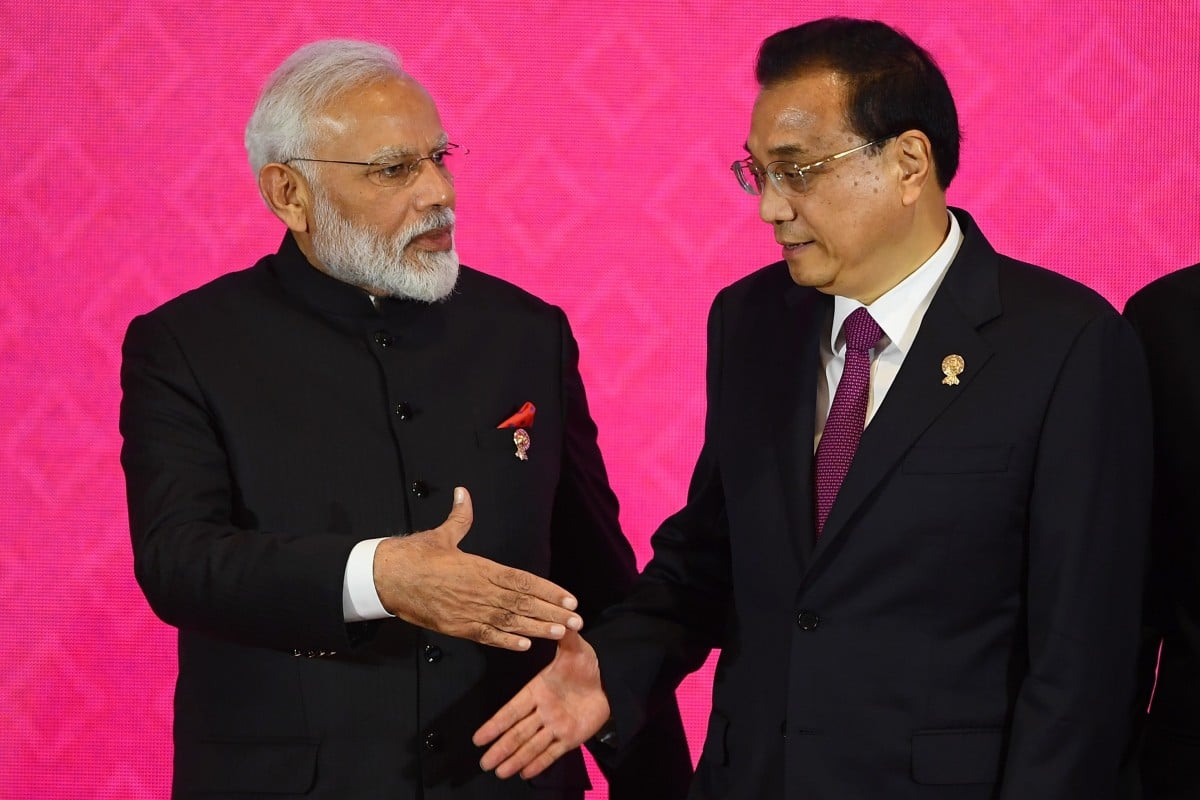
Indian Prime Minister Narendra Modi and China’s Premier Li Keqiang attend the Regional Comprehensive Economic Partnership Summit in Bangkok. Photo: AFP
Fifteen of the countries involved in negotiating a mammoth 16-nation Asian trade pact were on Monday hoping to seal the deal after seven years of talks but faced a fresh setback as India signalled it was pulling out over terms that were against New Delhi’s interests.
A joint statement by all 16 states involved in the Regional Comprehensive Economic Partnership (RCEP) said 15 economies had “concluded text-based negotiations for all 20 chapters and essentially all their market access issues”, and would undertake legal scrubbing of the proposed pact before a formal signing in 2020.
But “India has significant outstanding issues, which remained unresolved”, the statement said.
“All RCEP participating countries will work together to resolve these outstanding issues in a mutually satisfactory way. India’s final decision will depend on satisfactory resolution of these issues.”
Multiple Indian media outlets reported that Prime Minister Narendra Modi had told a Monday evening meeting of leaders from the RCEP countries that “neither the talisman of [Mahatma Gandhi] nor my own conscience permit me to join the RCEP”.

“When I measure the RCEP agreement, with respect to the interest of Indians, I don’t get a positive answer,” he was quoted as saying.

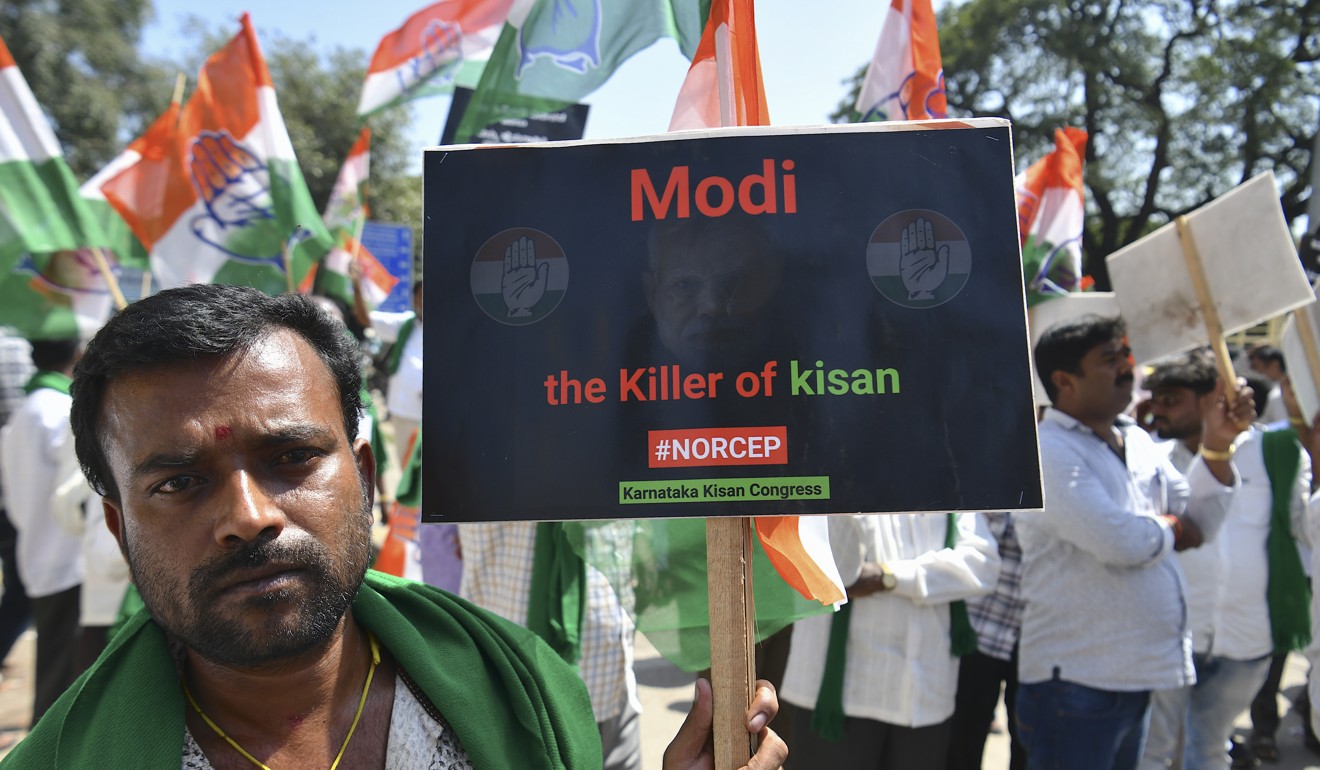
Indians protest against the Modi-led government’s backing of the Regional Comprehensive Economic Partnership. Photo: AFP

Henry Gao, a law professor at the Singapore Management University focusing on international trade law, said an RCEP without India would be “even more worthwhile” for the so-called RCEP-15.

He cited two reasons: India’s “low ambitions” for the pact, and the high level of integration among the countries of East and Southeast Asia which are part of the RCEP-15.

“A mega trade deal like RCEP will only further accelerate the integration process and greatly boost trade and economic growth in the region,” Gao said.

Explained: Regional Comprehensive Economic Partnership (RCEP)
Earlier expectations were that the joint statement would declare at least a “substantial conclusion”, “near conclusion” or “in principle conclusion” of the RCEP, which aims to create a free-trade zone spanning 39 per cent of the world economy.
The phrasing used to describe the progress of negotiations is being closely parsed because, since it requires endorsement from all RCEP countries, it accurately captures the sentiment of all the 16 negotiating teams.
Last year, Singapore, as chair of the Association of Southeast Asian Nations (Asean), pushed for a conclusion of the deal, but eventually the joint statement declared that only “substantial progress” had been made.
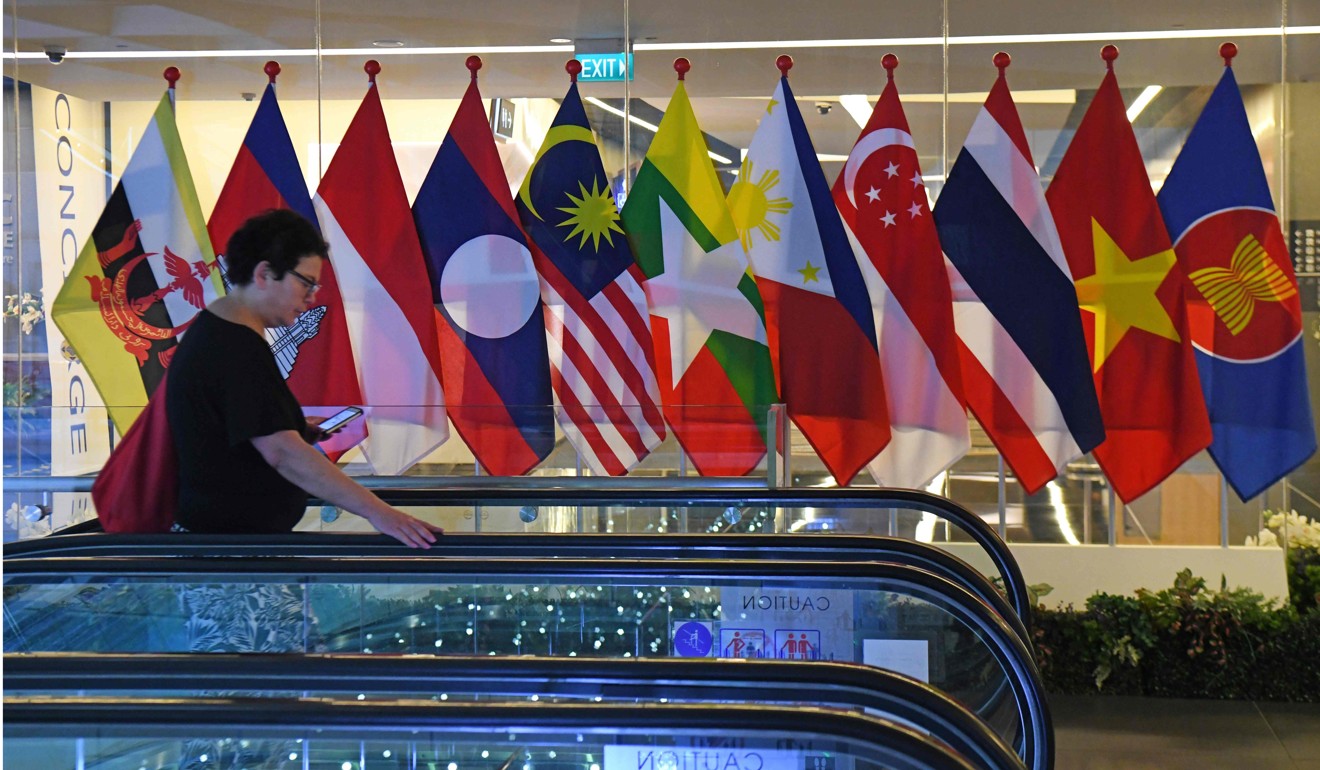
Asean countries plus six others are negotiating the trade pact. Photo: AFP

Indian media, citing government sources, said the pact’s inadequate protection against import surges, the possible circumvention of rules of origin, and a lack of “credible assurances” on market access and non-tariff barriers, proved too much for New Delhi to swallow.

India,

facing fierce domestic criticism for being in the pact despite opposition even from

Modi’s 

Hindu nationalist support base, last week piled on a fresh set of demands that other countries balked at, negotiators from Southeast Asian countries said over the weekend.

Furious efforts that continued up to Sunday night failed to bridge the gap between India and the 15 countries.
India’s concerns about RCEP remain the major obstacle to world’s largest trade deal

Indian critics of the RCEP say the deal will have a ruinous impact on the South Asian economy, which has trade deficits with the other 15 countries.

The biggest opposition has come from the country’s long protected industries, such as its dairy sector, which fears it could be wiped out by lower tariffs on Australian and New Zealand products that would result from the RCEP.

Indian government sources on Monday said the country had not made last-minute demands, but Southeast Asian negotiators said major demands were made as late as Thursday.

Gao, the Singapore-based law professor, said it “makes sense for India to stay out” as it would have faced “a lot of competition from Chinese manufactured products” if it were part of the deal.

“India could temporarily shield its firms from Chinese competition by staying out, but whether this will work in the long term is a different question,” he said.

Source: SCMP

04/11/2019

Li urges China, ASEAN to uphold multilateralism, free trade

THAILAND-BANGKOK-LI KEQIANG-CHINA-ASEAN LEADERS' MEETING

Chinese Premier Li Keqiang addresses the 22nd China-ASEAN (10+1) leaders’ meeting in Bangkok, Thailand, Nov. 3, 2019. (Xinhua/Zhai Jianlan)

BANGKOK, Nov. 3 (Xinhua) — Chinese Premier Li Keqiang on Sunday called on China and ASEAN to uphold multilateralism and free trade, resist risks and realize common development at the 22nd China-ASEAN (10+1) leaders’ meeting in Bangkok.

Since China and ASEAN established dialogue relations, they have brought benefits to each other and the wider region, Li said, adding that China always supports ASEAN’s central role in East Asian cooperation.

Noting that the mounting downward pressure on the global economy brings new severe challenges, Li said China and ASEAN countries should jointly uphold multilateralism and free trade, withstand risks and realize common development.

The premier said China and ASEAN countries should stick to the principle of shared benefits and win-win outcomes, and speed up the work to upgrade economic and trade cooperation.

He called for an early conclusion of the negotiations on the Regional Comprehensive Economic Partnership (RCEP) so as to lay the foundation for East Asia’s economic integration, and the implementation of the China-ASEAN Free Trade Area Upgrade Protocol to promote trade and investment liberalization and facilitation.

Li said China and ASEAN countries should enhance strategic mutual trust and safeguard peace and stability in the region.

The Code of Conduct (COC) in the South China Sea is an upgraded version of the Declaration on the Conduct of Parties in the South China Sea (DOC). Last year, China proposed that all parties should try to finish the COC talks in three years. The first reading of the single draft negotiating text of the COC in the South China Sea has been completed ahead of schedule, and the second reading has been launched.

Li said he hopes all sides will actively carry forward the consultations according to the previously agreed timetable, meet each other halfway, and safeguard peace and stability in the South China Sea.

The premier also said China and ASEAN countries need to carry forward their friendship from generation to generation, and stay ready to enhance people-to-people and cultural exchanges in such areas as media, health, education and tourism.

China is willing to train 1,000 administrative health staff and technical professionals in the following three years for ASEAN and will support projects such as the China-ASEAN Young Leaders Scholarship, said the premier.

Stressing that China will unswervingly pursue the path of peaceful development and an opening-up strategy of mutual benefit, Li said China is willing to synergize the Belt and Road Initiative with the development strategies of ASEAN as a whole and its members as well.

He urged to accelerate the construction of the existing economic corridors, promote infrastructure connectivity cooperation, as well as support the building of the Brunei Darussalam Indonesia Malaysia Philippines East ASEAN Growth Area.

Li encouraged innovation cooperation in the areas including digital economy, artificial intelligence, big data and cyber security, and the establishment of a China-ASEAN partnership on blue economy to enhance maritime exchanges and cooperation.

Thailand’s Prime Minister, also the rotating chair of ASEAN, Prayut Chan-o-cha, Philippine President Rodrigo Duterte, Brunei’s Sultan Haji Hassanal Bolkiah, Indonesian President Joko Widodo, Malaysian Prime Minister Mahathir Mohamad, Vietnamese Prime Minister Nguyen Xuan Phuc, Myanmar’s State Counselor Aung San Suu Kyi, Singaporean Prime Minister Lee Hsien Loong, Lao Prime Minister Thongloun Sisoulith and Cambodian Prime Minister Samdech Techo Hun Sen attended the meeting. Li and Prayut co-chaired the meeting.

At the meeting, ASEAN leaders expressed congratulations on the 70th anniversary of the founding of the People’s Republic of China, saying that the ASEAN-China partnership is the most dynamic one in all the partnerships ASEAN has forged.

Speaking highly of the new cooperation progress over the past year, the leaders said their countries would like to take an active role in building the Belt and Road, expand cooperation in areas of inter-connectivity, science and technology innovation, e-commerce, smart cities and blue economy, and increase two-way investment.

They also expressed the hope that the ASEAN-China trade volume can exceed 1 trillion U.S. dollars at an early date.

The leaders also applauded the new progress made in the COC negotiation, saying that their countries would like to maintain the momentum and advance the process.

During the meeting, China and ASEAN agreed to make an action plan to implement The Joint Declaration on China-ASEAN Strategic Partnership for Peace and Prosperity (2021-2025), issued statements on the Belt and Road Initiative, smart cities and media exchanges, and announced that the year 2020 will be the year of China-ASEAN digital economy cooperation.

Li arrived in Bangkok late on Saturday for an official visit to Thailand and a series of events including the 22nd China-ASEAN (10+1) leaders’ meeting, the 22nd ASEAN-China, Japan and South Korea (10+3) leaders’ meeting, and the 14th East Asia Summit.

Source: Xinhua

Law of Unintended Consequences

continuously updated blog about China & India

ChiaHou's Book Reviews

continuously updated blog about China & India

What's wrong with the world; and its economy

continuously updated blog about China & India