Archive for ‘Chindia Alert’

10/02/2019

More than 100 million Chinese register to volunteer

CHINA-100 MILLION VOLUNTEERS (CN)

Volunteers carry bamboos for sale in Chishui, southwest China’s Guizhou Province, July 14, 2018. More than 100 million Chinese have registered as volunteers by the end of 2018, according to the Ministry of Civil Affairs. There have been about 12,000 organizations of volunteer services registered by the end of 2018, which provided more than 1.2 billion hours of service in total, according to a ministry statement published earlier. Chinese have taken an increasingly active part in volunteering in recent years, particularly at major international events such as the 2008 Beijing Olympic Games, the 2010 Shanghai World Expo, the G20 Hangzhou summit in 2016 and the Shanghai Cooperation Organization Qingdao summit in 2018. The country’s first regulation on volunteer services took effect in December 2017, clarifying the principles and establishing administrative institutions in this regard. With the number of volunteers growing fast, more efforts will be made to encourage their participation in public service and social governance, and improve the quality of their service, said a statement from the China Volunteer Service Federation. (Xinhua/Wang Changyu)

BEIJING, Feb. 9 (Xinhua) — More than 100 million Chinese have registered as volunteers by the end of 2018, according to the Ministry of Civil Affairs.

There have been about 12,000 organizations of volunteer services registered by the end of 2018, which provided more than 1.2 billion hours of service in total, according to a ministry statement published earlier.

Chinese have taken an increasingly active part in volunteering in recent years, particularly at major international events such as the 2008 Beijing Olympic Games, the 2010 Shanghai World Expo, the G20 Hangzhou summit in 2016 and the Shanghai Cooperation Organization Qingdao summit in 2018.

The country’s first regulation on volunteer services took effect in December 2017, clarifying the principles and establishing administrative institutions in this regard.

With the number of volunteers growing fast, more efforts will be made to encourage their participation in public service and social governance, and improve the quality of their service, said a statement from the China Volunteer Service Federation.

Source: Xinhua
10/02/2019

Clean energy powers northwest China province

XINING, Feb. 9 (Xinhua) — Clean energy powers the economy of northwest China’s Qinghai Province as China seeks to reduce coal consumption to improve its energy mix.

By the end of 2018, the total installed power generating capacity in Qinghai reached nearly 28 million kilowatts, with clean energy contributing to 86 percent, according to the State Grid Qinghai Electric Power Company.

The installed solar power generating capacity reached 9.6 million kilowatts and that of wind power hit 2.7 million kilowatts. The hydropower capacity reached 11.9 million kilowatts, the company said.

Qinghai started to invest heavily in solar energy in 2009. And in the past few years, it started to build two 10 million kilowatts renewable power generating bases.

Qinghai, rich in solar and wind power, has 100,000 square kilometers of desertified land suitable for the construction of solar and wind farms.

Local authorities have been encouraging more local consumption of the clean energy-generated electricity and pushing to transmit more to other regions.

Last year, the grid transmitted 10 billion kwh of such electricity to other regions. So far this year, the firm has signed deals with regions like Shanghai, Chongqing, Henan and Jiangsu to send them 7 billion kwh of electricity.

Source: Xinhua

10/02/2019

Chinese children miss out on winter holiday as parents send them back to class

  • Manager of private tuition centre in eastern city of Hangzhou says demand from parents has been ‘overwhelming’
PUBLISHED : Sunday, 10 February, 2019, 6:12pm
UPDATED : Sunday, 10 February, 2019, 6:12pm
1SHARE

Related Articles

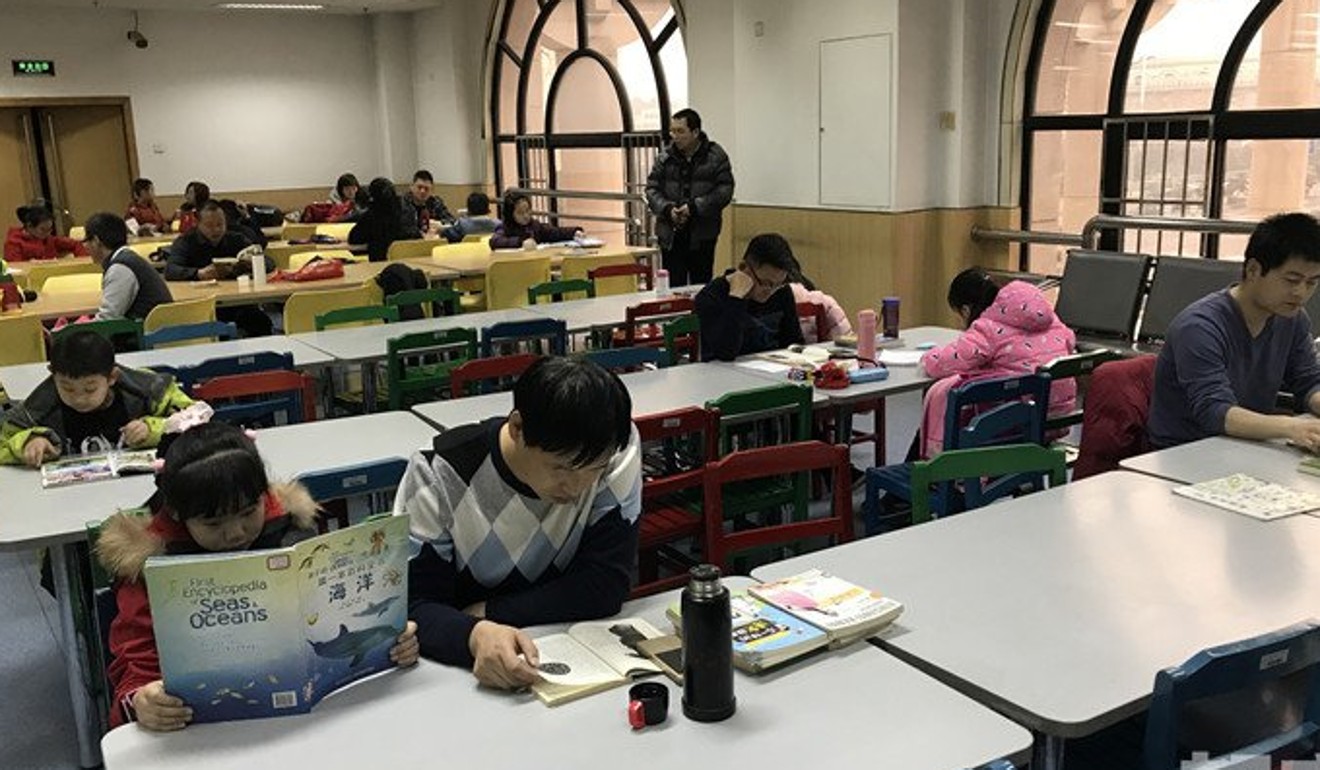
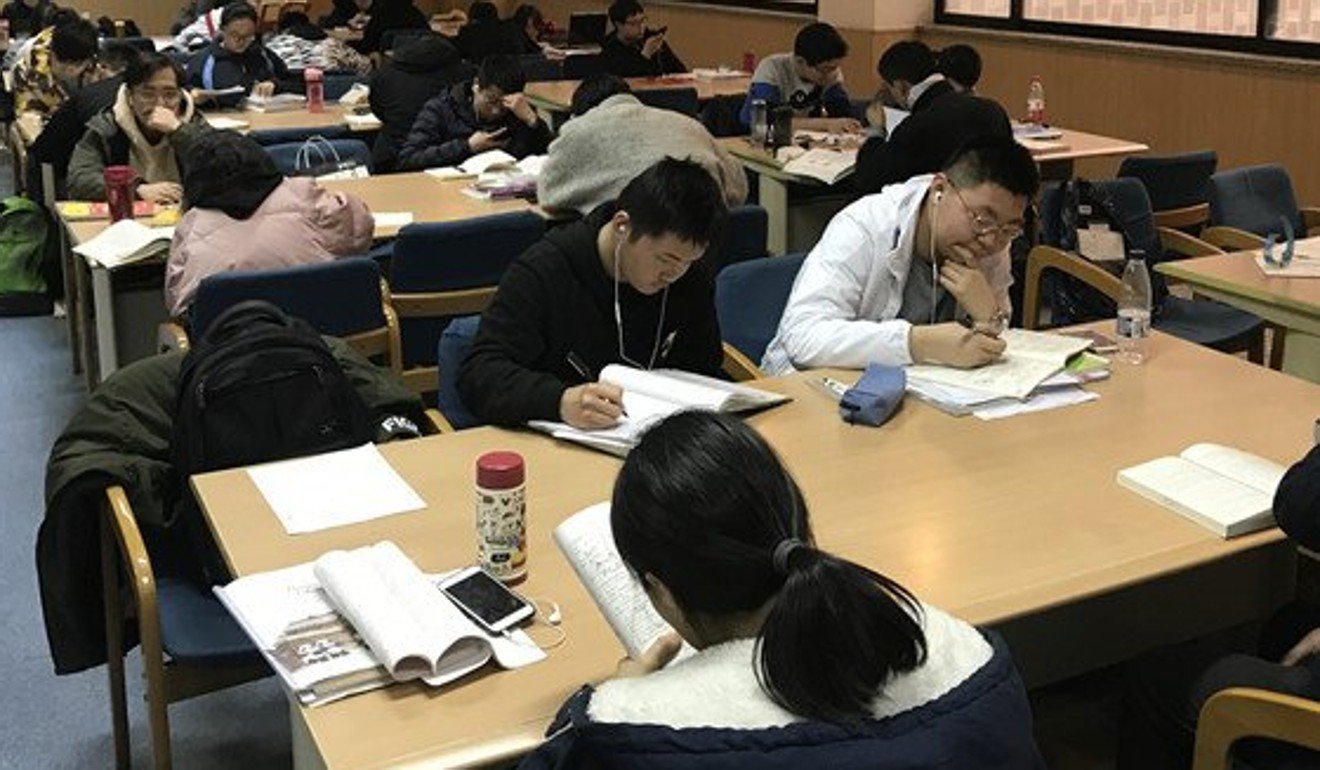
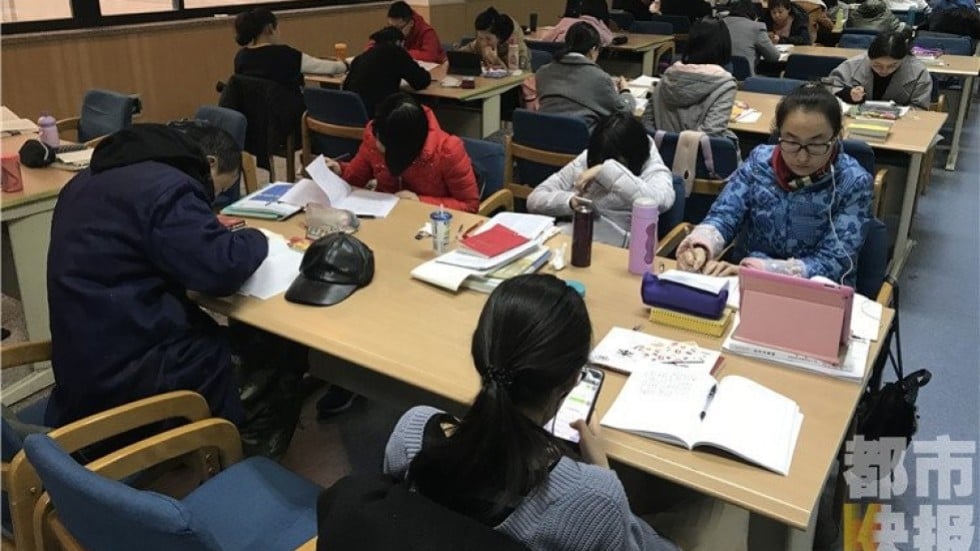
While most schoolchildren in the east China city of Hangzhou spent last week’s Lunar New Year holiday visiting relatives and opening cash-filled red envelopes, others found themselves taking extra lessons at a privately run tuition centre.

The manager of the company, surnamed Wong, said business had been brisk over the holiday period.

“Usually students have a week’s break for Lunar New Year, but not those who are sitting the gaokao,” he said, using the informal name for the National Higher Education Entrance Examination.

Demand for extra tuition from parents whose children were preparing for the test had been “overwhelming”, he said.

The cost of lessons during the holiday period was 250 yuan (US$37) per hour, Wong said, adding that most students had four lessons a day.

Chinese schoolchildren get a month’s holiday in the winter, which incorporates the national Lunar New Year break.

Wong’s centre does not just cater for older children. According to a report by local newspaper Metro Express, a woman surnamed Lu paid for her son, who goes to primary school, to have extra lessons in mathematics and science.

“Many children spend their whole winter holiday studying,” she said, but added that she had allowed her son to have last week off.

Another woman was quoted in the report as saying she had signed her child, who also goes to primary school, up for nine classes.

There are no laws against the operation of private tuition centres in China but they are governed by certain regulations. For instance, they cannot recruit people whose primary job is as a teacher and they are not allowed to teach classes beyond what the children have already learned in school.

China’s education ministry last year launched a review of more than 400,000 tuition centres and found problems of one sort or another at 65 per cent of them.

In the wake of that assessment, authorities in the cities of Beijing, Tianjin and Shanghai, and the provinces of Shanxi, Liaoning and Zhejiang said they had rectified the problem. Hangzhou is the capital of Zhejiang.

According to a report by Xinhua, a secondary school student from Shanghai, nicknamed Xiao Ma, said she had to get up at 6.30am every day during the winter holiday to get to her extra lessons by 8.30am.

“I don’t ask for a lot,” she said. “I just wish there were a few days when I could get a bit more sleep and have time to see my friends.”

Source: SCMP

10/02/2019

Turkey demands China close camps after reports of musician’s death

John Sudworth reports from Xinjiang, where one million Uighurs have reportedly been detained

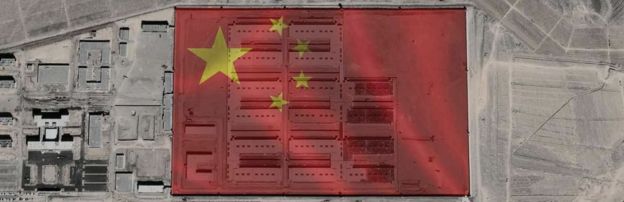
Turkey has called on China to close its detention camps following the reported death of a renowned musician from the ethnic Uighur minority.

Abdurehim Heyit is thought to have been serving an eight-year sentence in the Xinjiang region, where up to a million Uighurs are reportedly being detained.

A statement from Turkey’s foreign ministry said they were being subjected to “torture” in “concentration camps”.

China described the comments as “completely unacceptable”.

The Uighurs are a Muslim Turkic-speaking minority based in the north-west Xinjiang region of China, which has come under intense surveillance by Chinese authorities.

Their language is close to Turkish and a significant number of Uighurs have fled to Turkey from China in recent years.

So far few Muslim-majority countries have joined in public international condemnation of the allegations. Analysts say many fear political and economic retaliation from China.

What did Turkey say?

In a statement issued on Saturday, foreign ministry spokesman Hami Aksoy said: “It is no longer a secret that more than a million Uighur Turks exposed to arbitrary arrests are subjected to torture and political brainwashing” in prisons, adding that those not detained were “under great pressure”.

“The reintroduction of concentration camps in the 21st century and the systematic assimilation policy of Chinese authorities against the Uighur Turks is a great embarrassment for humanity,” Mr Aksoy said.

He also said the reports of Heyit’s death “further strengthened the Turkish public’s reaction to the serious human rights violations in Xinjiang” and called on UN Secretary General Antonio Guterres “to take effective steps to end the human tragedy” there.

Presentational grey line

China’s hidden camps

BBC
Presentational grey line

Rights groups say Uighurs, Kazakhs and other Muslim minorities are being detained indefinitely without charge for infractions like refusing to give a DNA sample, speaking in a minority language, or arguing with officials.

What was Beijing’s response?

In a statement quoted by the Associated Press, China through its embassy in Ankara called on Turkey to withdraw its “false accusations”.

“Both China and Turkey face the arduous task of fighting terrorism. We are opposed to maintaining double standards on the question of fighting terrorism,” it said.

“We hope the Turkish side will have a correct understanding of the efforts made by China to legally deploy measures to effectively fight terrorism and extremism, withdraw its false accusations and take measures to eliminate their harmful effects.”

Beijing claims that the detention camps in Xinjiang are “vocational education centres” designed to help rid the region of terrorism.

Speaking last October, the top Chinese official in Xinjiang, Shohrat Zakir, said “trainees” in the camps were grateful for the opportunity to “reflect on their mistakes”.

What do we know about Heyit’s fate?

Amnesty International said it was very concerned about reports of his death, which has not been officially confirmed.

Heyit was a celebrated player of the Dutar, a two-stringed instrument that is notoriously hard to master. At one time, he was venerated across China. He studied music in Beijing and later performed with national arts troupes.

Heyit’s detention reportedly stemmed from a song he performed titled Fathers. It takes its lyrics from a Uighur poem calling on younger generations to respect the sacrifices of those before them.

But three words in the lyrics – “martyrs of war” – apparently led Chinese authorities to conclude that Heyit presented a terrorist threat.

Presentational grey line

Who are the Uighurs?

Uighur men read newspapers in Xinjiang (2015)Image copyrightGETTY IMAGES

The Uighurs make up about 45% of the population in Xinjiang.

They see themselves as culturally and ethnically close to Central Asian nations.

In recent decades, large numbers of Han Chinese (China’s ethnic majority) have migrated to Xinjiang, and the Uighurs feel their culture and livelihoods are under threat.

Xinjiang is officially designated as an autonomous region within China, like Tibet to its south.

Source: The BBC

10/02/2019

China border crossings up over Lunar New Year holiday – Xinhua

SHANGHAI (Reuters) – Border crossings into and out of China during the Lunar New Year holiday rose 11 percent to 12.53 million this year from the same 2018 period, the official Xinhua news agency reported on Sunday as the week-long holiday drew to a close.

More than 6.2 million arrivals were recorded, an increase of 9.5 percent, while there were over 6.3 million exits, up 12.5 percent, it said, citing data from the State Immigration Administration.

Chinese residents crossing the border for personal reasons made a combined 7.22 million entries and exits, an increase of nearly 16 percent over the previous year, Xinhua said.

The growth in border crossings during the country’s biggest holiday underscores the rise of Chinese tourism and comes in spite of a slowing economy.

Top overseas destinations for Chinese residents this Lunar New Year were Thailand, Japan, Vietnam, South Korea, Singapore, Malaysia, the United States, Hong Kong, Macau and Taiwan, Xinhua reported.

In 2017, Chinese people made 143 million international tourist trips and were the world’s biggest spenders on international tourism, the United Nations World Tourism Organization said.

The Lunar New Year holiday is one of China’s longest breaks and over 400 million people – more than a quarter of the population – had been expected to travel domestically for family reunions, according to Chinese travel agency Ctrip.

Source: Reuters

09/02/2019

China Airlines resumes talks with striking pilots amid airport chaos

  • Transport minister urges swift resolution so stranded travellers can get home after Lunar New Year holiday
  • Airline rebuked for breakdown in negotiations and pilots urged to consider the rights of passengers
PUBLISHED : Saturday, 09 February, 2019, 7:17pm
UPDATED : Saturday, 09 February, 2019, 7:17pm

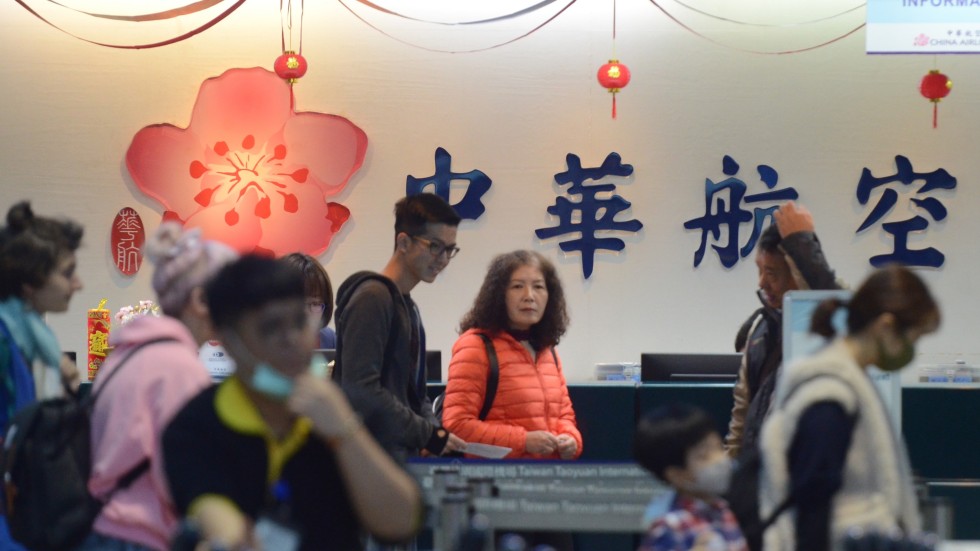
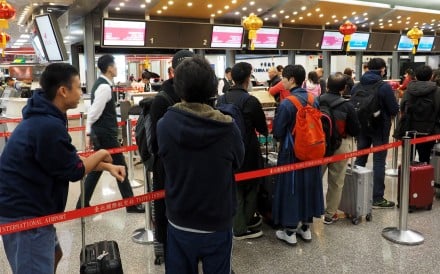
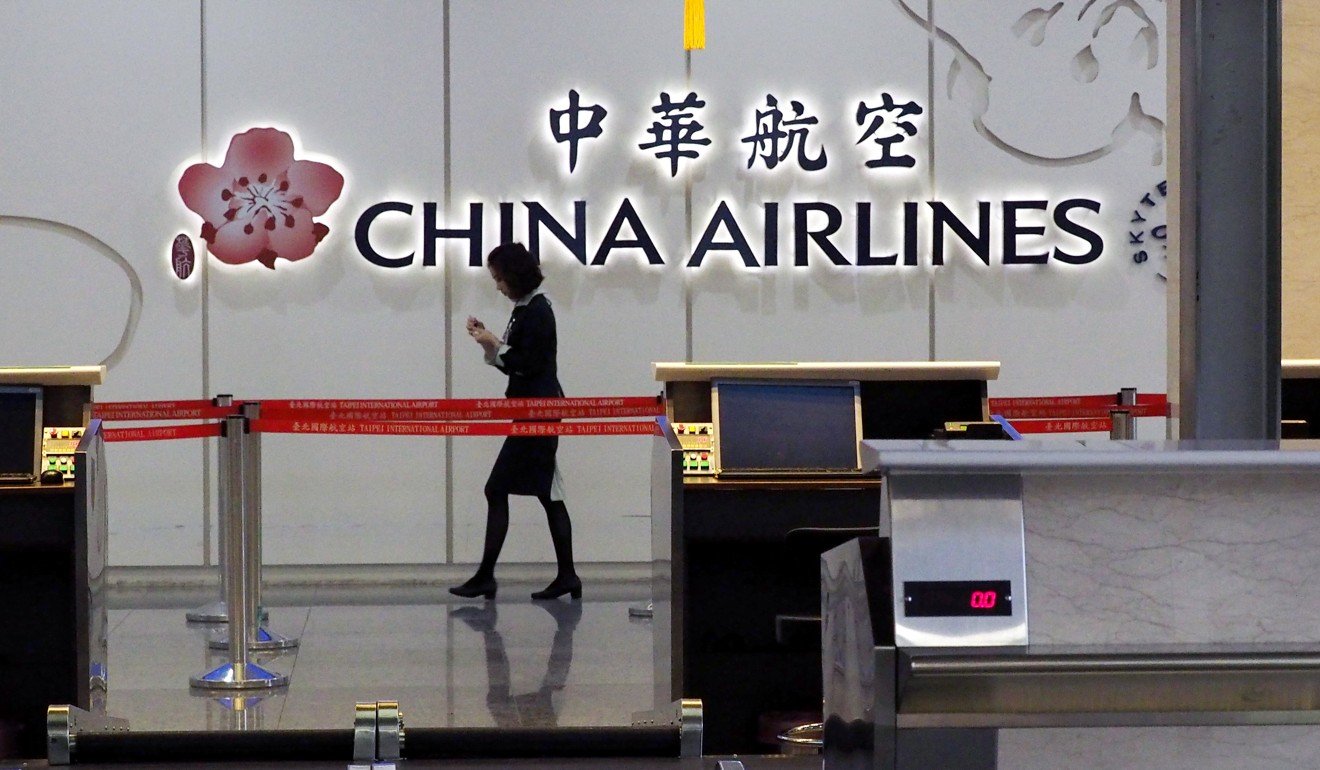
Taiwan’s largest airline China Airlines and its pilot union returned to the negotiating table on Saturday in a closed-door coordination meeting over an ongoing strike that so far has forced the cancellation of 34 flights, including at least 12 to or from Hong Kong.

The carrier cancelled four Saturday flights between Hong Kong and Kaohsiung and three between Taipei and Hong Kong, after scrapping five flights to and from Hong Kong the previous day. More than 12 flights have been delayed in the past two days, according to the airline.

The China Airlines branch of the Taoyuan Union of Pilots is protesting the airline’s failure to improve pilots’ working conditions and launched industrial action at 6am on Friday after talks broke down on Thursday, saying the strike would continue indefinitely until China Airlines agreed to meet its demands.

Taiwan’s transport ministry stepped in, asking China Airlines and the union to hold a new round of talks on Saturday afternoon under the supervision of the Taoyuan Labour Affairs Department.

Earlier on Saturday, transport minister Lin Chia-lung said airline management should have reviewed the reasons behind the breakdown in talks, in light of last year’s successful negotiations between EVA Air, another major Taiwan carrier, and its pilots.

“Senior officials of China Airlines should have listened to the voices of their employees and put aside their emotion to properly handle the labour dispute,” Lin said, adding that the union should also take note of the rights of travellers and resume negotiations with the employer to jump-start reform of China Airlines’ aviation safety and systems.

The union voted to strike in August and obtained approval from the labour authorities following disputes dating back to December 2017 between pilots and the two airlines over working conditions.

The EVA pilots agreed not to strike after a consensus was reached with airline, coordinated by the labour authorities, but no agreement was reached between China Airlines and its pilots, prompting Friday’s action.

Lin said he hoped the dispute could be settled as soon as possible so that stranded passengers could return home in time for work on Monday, the day after the official end of the Lunar New Year holiday.

In a statement released on Friday, the union said it staged the strike because China Airlines had refused to take note of the fatigued condition of pilots required to work overtime, which it said created a flight risk.

The union is demanding an additional backup pilot for flights lasting eight hours or more, and two pilots on long-haul flights lasting 12 hours or more.

The pilots also want a more transparent system of promotion, a year-end bonus similar to EVA Air’s, and other concessions, including replacement of the management staff they say were responsible for the breakdown in talks.

The union is also demanding an assurance that there will be no later punishment for the strike action.

China Airlines has rejected the union’s demand for extra manpower on long-haul flights, saying the pilots’ working conditions are in line with international practice and that “increasing manpower would raise human resources costs and seriously affect the competitiveness of the company”.

Deputy transport minister Wang Kwo-tsai appeared to support the union’s position on fatigue and promotion issues.

“After all, fatigue would cause flight risks and protection of the benefits for employees would enable the company to operate continuously,” he told reporters on Saturday.

Wang stressed the strike had already disrupted air traffic and stranded passengers, and said there was a strong need for the two sides to swiftly resolve the dispute to ensure the rights of passengers.

Source: SCMP

09/02/2019

Relief reaches blizzard-hit Tibetan prefecture

XINING, Feb. 9 (Xinhua) — After days of snow storms, roads in many areas of Yushu Tibetan Autonomous Prefecture, northwest China’s Qinghai Province, are covered under snow as deep as 45 centimeters.

Tsertra, deputy director of the Yushu Disaster Relief Work and Emergency Headquarters, said one city and five other counties in Yushu were hit by the snow storms. Thousands of livestock were reported dead.

The local authority has sent vets, medicine and fodders to the blizzard-hit areas.

Drapa Sum, director of the health center in Gyeldo County, one of the worst-hit areas, said that he and his colleagues this week visited a number of blizzard-hit villages, some 5,000 meters above sea level on average.

“Villagers were relieved to see doctors and vets come to their rescue,” said Drapa Sum.

He said the trips were extremely dangerous, as roads were buried in snow.

By Friday, 4,653 tonnes of fodders had been transported to the blizzard-hit areas. The bureau of agriculture and rural affairs with the Qinghai Provincial Government has set aside 10 million yuan (about 1.48 million U.S. dollars) to purchase more fodders, said He Bo, deputy head of Yushu Tibetan Autonomous Prefectural Government.

He said the primary relief work now is to clear the snow-covered roads to ensure supplies reach the disaster-hit villages. Strong winds are blowing snow to block the roads despite the efforts to clear them.

The snowstorms have also led to the deaths of wild animals by the hundred in the region.

The Administration for the National Park of Sanjiangyuan (Three-River-Source) has earmarked a fund of 100,000 yuan for helping wild animals survive the harsh winter.

Source: Xinhua

09/02/2019

China’s information consumption surges in 2018

BEIJING, Feb. 9 (Xinhua) — China’s information consumption saw a rapid increase last year, according to the Ministry of Industry and Information Technology (MIIT).

Total business volume of the telecommunication sector rose by 137.9 percent from the previous year, the MIIT has said.

Services of 4G continued to develop last year, with the number of users reaching 1.17 billion.

The average household usage of mobile traffic reached 6.25GB per month in December 2018, more than double the amount in the same period in the previous year, the ministry said.

The ministry attributed the soaring information consumption to Chinese telecommunications operators’ measures of increasing Internet connection speed and cutting connection costs.

Wen Ku, director of the telecom department at the MIIT, said the ministry would make continued efforts to expand Internet coverage, improve service quality and release the potential of the digital economy.

Source: Xinhua

09/02/2019

China voices strong opposition to Modi’s visit to region on east section of its border with India

BEIJING, Feb. 9 (Xinhua) — The Chinese Foreign Ministry on Saturday expressed strong opposition to Indian Prime Minister Narendra Modi’s visit to a region on the east section of the China-India border.

Spokeswoman Hua Chunying’s remarks came in response to a query about news reports saying that Prime Minister Modi visited the so-called “Arunachal Pradesh” earlier in the day.

“China’s position on the China-India border issue is consistent and clear-cut,” said Hua, stressing that the Chinese government has never recognized the so-called “Arunachal Pradesh.”

While urging the Indian side to bear in mind the common interests of the two countries, Hua called on the neighboring country to respect interests and concerns of the Chinese side, cherish the momentum of improvement in bilateral ties and refrain from “any action that may lead to an escalation of disputes or complicate the border issue.”

Source: Xinhua

09/02/2019

India capital Delhi enjoys unusual hail storm

Hail in NoidaImage copyrightPTI
Image captionMany people compared the unusual sight to scenes from Chicago or London
Presentational white space

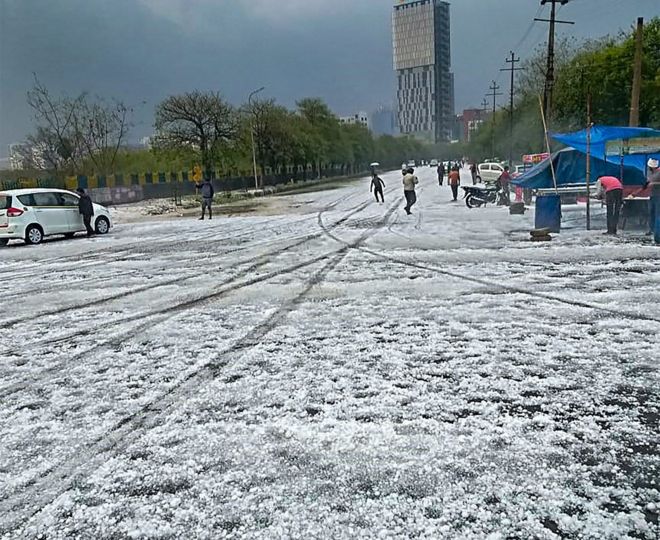
India’s capital Delhi was hit by a strong hailstorm on Thursday, turning the city white and leaving people stunned and delighted.

Pictures and videos posted on social media show cherry-sized ice balls and streets covered in white.

Many people compared the unusual sight to scenes from Chicago or London.

Hailstorms “are not rare for Delhi, but their occurrence is infrequent,” according to US website Accuweather’s senior meteorologist Jason Nicholls.

The severe weather also forced more than 30 flights to be diverted during the early hours of the evening.

However, the hail and rain storm did have an upside. Apart from delighting Delhi’s residents, it also helped improve the city’s notoriously toxic air quality.

Hail in NoidaImage copyrightZUBAIR AHMAD ANSARI
Image captionPictures and videos posted on social media show cherry-sized ice balls and streets covered in white
Presentational white space

The harsh weather in the country’s north has also led to avalanche warnings and schools closures.

Source: The BBC

Law of Unintended Consequences

continuously updated blog about China & India

ChiaHou's Book Reviews

continuously updated blog about China & India

What's wrong with the world; and its economy

continuously updated blog about China & India