Archive for ‘chinese citizens’

09/04/2020

Coronavirus in Suifenhe: Remote border town locks down as China opens up

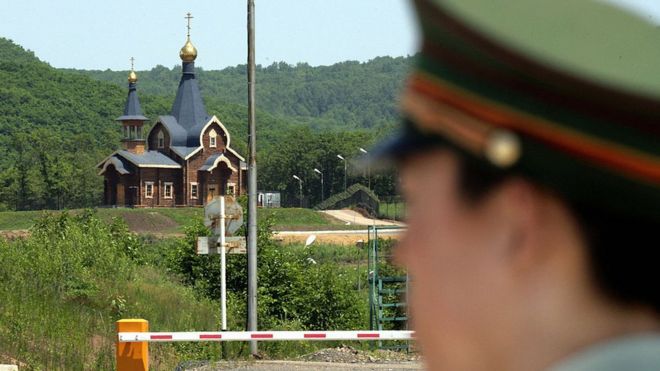
Guard at the Russian borderImage copyright AFP / GETTY
Image caption Suifenhe, where around 100,000 people live, has a road and rail crossing with Russia

A Chinese city on the Russian border is entering a “lockdown” due to an increase in coronavirus cases – even as the rest of China cautiously opens up.

In Suifenhe, 1,000 miles from Beijing, people have been ordered to stay indoors, with some exceptions.

The border is closed to people, although not goods, and a 600-bed isolation hospital is being built.

One business owner told the BBC she was “very scared” – but another local said he had confidence in the government.

What is the virus situation in Suifenhe?

On Wednesday, China reported 59 imported cases of Covid-19 across the whole country.

According to state media, 25 of them entered the country via Suifenhe – making the remote north-east crossing something of a hotspot.

The patients were all returning Chinese citizens who had flown from Moscow to Vladivostok, a Russian city around 100 miles south.

All the new patients were taken to hospital, with two in a serious condition.

In addition, another 86 people in Suifenhe – who came via the same route – were classed as “asymptomatic” but positive for the virus, which China counts separately.

What has Suifenhe done?

The border was closed to people on Tuesday, the local government said, although cargo can continue. Russia closed its border with China in February.

People in the city have been told to stay at home, although the lockdown isn’t as severe as Hubei province experienced. One person per house can shop for essentials every three days.

At the same time, the new hospital – in an existing building – is due to open this weekend, intended for patients with mild symptoms.

“Of course I’m very scared,” one woman who runs a bakery shop told the BBC.

“We don’t leave the house now. Many people already left the city. But we can’t do that, because we have a shop need to take care of.”
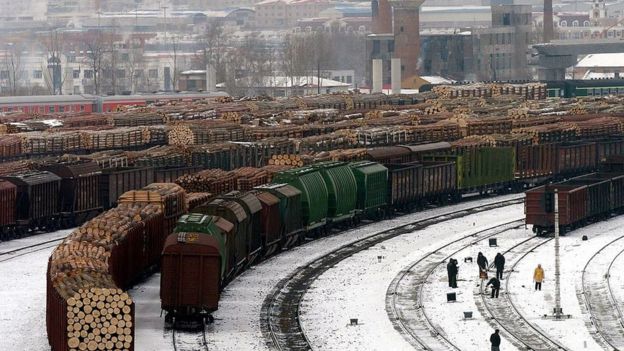
This picture from 2005 showed the extent of Russian timber exports passing through Suifenhe railway stationImage copyright SOVFOTO
Image caption This picture from 2005 showed the extent of Russian timber exports passing through Suifenhe railway station

Meanwhile, a member of staff at a restaurant in the city said it was normally their high season, with around 1,000 customers a day.

Instead, they were told to close earlier this week, with “no idea” when they can open again.

But the staff member was not critical of the government. He said the lockdown made him feel “secure” – and that he was “very confident” the government would look after the situation.

What is the situation in the rest of China?

China’s recorded rate of Covid-19 infections has slowed dramatically in recent weeks.

On Tuesday, it reported no new deaths for the first time since publishing daily figures in January.

On Thursday, it reported 63 cases – 61 imported from overseas – and just two new deaths.

The “flattening of the curve” has allowed restrictions to be lifted, and some normality to return.

On Wednesday, people were allowed to leave Wuhan – where the outbreak emerged – for the first time in 11 weeks if they were deemed virus-free.

There were 221 inbound and outbound flights, with more than 7,000 people leaving and 4,500 arriving. More than half a million used public transport, state media reported.

But although people from Wuhan can leave, they still face restrictions in other cities. In Beijing, for example, they will be tested upon arrival, according to local media.

Even if they pass, they will then be quarantined for 14 days – and tested again – before being released.

Source: The BBC
07/04/2020

China reports no new coronavirus deaths as cases decline

BEIJING (Reuters) – Mainland China reported no coronavirus deaths for the first time since the pandemic began, and a drop in new cases, a day before the central city of Wuhan, where the virus emerged late in December, is set to lift its lockdown.

China had 32 new infections by Monday, down from 39 a day earlier, the National Health Commission said.

For the first time since the commission began publishing nationwide data in late January, Hubei’s provincial capital of Wuhan saw no new deaths, joining the rest of mainland China, which has recorded none since March 31.

Wuhan, a city of 11 million that reported only two new infections in the past fortnight is due to allow residents to leave the city on Wednesday, for the first time since it was locked down on Jan. 23 to curb the spread of the virus.

With mainland China well past February’s peak of infections, authorities have turned their attention to imported cases and asymptomatic patients, who show no symptoms but can still pass on the virus.

Total infections in mainland China stood at 81,740 on Monday with 3,331 deaths, the commission said. It reported 30 new asymptomatic cases, nine involving incoming travellers. Of the new asymptomatic cases, 18 were in Hubei.

By the end of Monday, 1,033 asymptomatic patients were under medical observation.

TIGHTER LAND BORDERS

Overseas arrivals made up all 32 of the new cases with symptoms, down from 38 a day earlier. Total imported infections stand at 983, the commission said.

China faces the “dual risks” of imported infections and domestic cluster outbreaks, a commission spokesman told a briefing on Tuesday.

The northeast province of Heilongjiang reported 20 new cases, all in Chinese citizens returning from neighbouring Russia. It had reported 20 new infections on Sunday, all also cases imported from Russia.

On Tuesday, the Chinese consulate in the Russian city of Vladivostok near the border with China said it strongly reminded Chinese nationals not to return home through the border port of Suifenhe, which is to be closed to all arrivals from Tuesday.

China has shut its borders to foreigners as the virus spread globally, though most imported cases have involved Chinese nationals returning from overseas.

The number of inbound travellers through airports is fewer than 3,000 a day, down from about 25,000 in late March, before China slashed the number of international flights.

It also started testing all international arrivals for the virus this month.

Source: Reuters

01/04/2020

Chinese province bars citizens from leaving the country to stop coronavirus spread

  • Authorities in Yunnan limit land and river ports to cargo traffic, locking down border communities
  • Province on alert for imported cases of Covid-19
Yunnan is on alert for imported cases of the coronavirus. Photo: Xinhua
The southwestern province of Yunnan has banned Chinese citizens from leaving the country via its more than 30 land and river ports to stop the spread of the coronavirus epidemic through returning nationals.
Yunnan, which borders Vietnam, Laos and Myanmar, had restricted its 19 land ports and 14 river ports to cargo, the provincial government said on Tuesday.
The authorities said that from Tuesday night, all departures by Chinese citizens via the checkpoints would be suspended, with exemptions granted for approved foreign aid, technical support or emergency medical workers.
China closed its borders to foreign travellers and residency holders

on Saturday. But non-Chinese residents of border areas who have permits to cross into Yunnan could still enter the province, according to a previous report by China News Service.

Those permit holders can still cross into Yunnan but will be discouraged from doing so. Under the new restrictions, they will need to test negative for two nucleic acid tests and one antibody test before being put in seven days of centralised isolation and another seven days of home isolation, all at their own expense.

Coronavirus: Decoding Covid-19
Residents in border cities and counties will be restricted to the village and community level to prevent entry and exit of outsiders. They would also be encouraged to report illegal immigrants, the government said.
Yunnan, which recorded 174 local coronavirus cases including two deaths, said all patients in its initial wave were discharged by March 14. The province is now on alert for imported cases, with eight patients who travelled to the province from overseas being treated as of Tuesday.

Xiao Xian, a professor of international relations from Yunnan University, said some permit holders could be deterred from crossing into Yunnan by the cost of tests and quarantine.

Xiao also said that banning Chinese citizens from crossing the border would affect border trade and tourism, but it was necessary to stop transmission of the coronavirus.

“The need to prevent the spread of an infectious disease outweighs trade and tourism. It is understandable since it is the country’s top priority now,” Xiao said.

Source: SCMP

Law of Unintended Consequences

continuously updated blog about China & India

ChiaHou's Book Reviews

continuously updated blog about China & India

What's wrong with the world; and its economy

continuously updated blog about China & India