25/10/2019
- Haiyang Dizhi 8 in waters close to Macau as of 4pm Friday, MarineTraffic reports
- Vessel’s work in disputed waters ‘now complete’, foreign ministry says
The Haiyang Dizhi 8 was close to Macau as of Friday afternoon, according to the MarineTraffic maritime information service. Photo: Weibo
The Chinese survey ship that has been at the centre of a stand-off with Vietnam in the
was back in waters close to home on Friday afternoon, according to an online platform that provides information about maritime activity.
As of 4pm, the Haiyang Dizhi 8 (Marine Geology 8), which had been operating close to Vanguard Bank – a disputed reef in the Spratly Island chain claimed by both Beijing and Hanoi – was located just off Macau, the MarineTraffic service said.
China’s foreign ministry said on Thursday that the vessel had finished the work it had started “in Chinese-controlled waters in early July”.
“According to our understanding the work is now complete,” spokeswoman Hua Chunying told a regular press briefing, without elaborating.
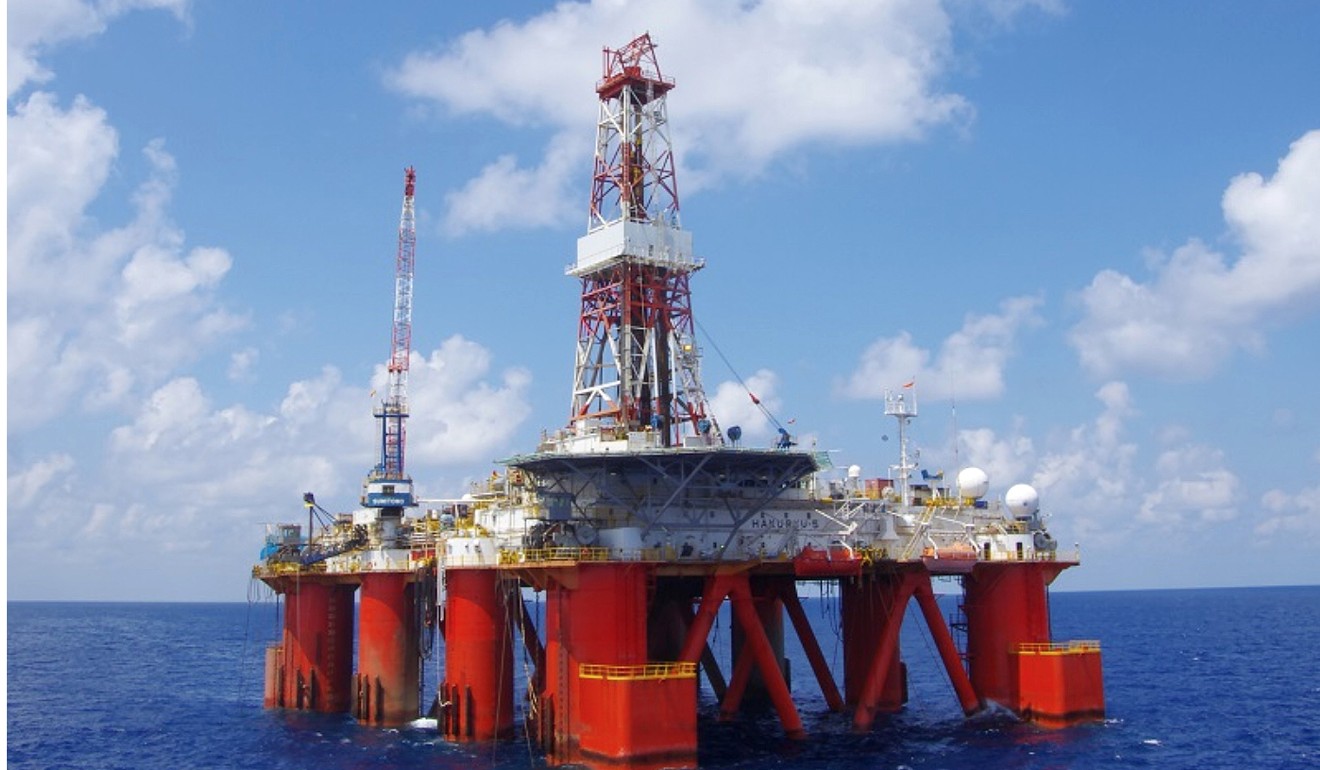
The Japanese oil rig, Hakuryu 5, is reported to have completed its drilling mission near Vanguard Bank earlier this week. Photo: Japan Drilling Co
While in the Vanguard Reef area, the
Haiyang Dizhi 8, escorted by heavily armed coastguard vessels, made multiple passes by an oil block operated by Russian energy company Rosneft.
Observers say the presence of the Chinese vessels in the region is part of Beijing’s efforts to prevent Hanoi from partnering with international energy firms to explore energy reserves in the disputed waterway. The latest activity triggered a months-long stand-off between the two countries.
The departure of the Haiyang Dizhi 8 came amid reports that the Japanese oil rig, Hakuryu 5, owned by Tokyo-based Japan Drilling Company and employed by Rosneft, had earlier this week completed a drilling mission it started in May near Vanguard Bank.
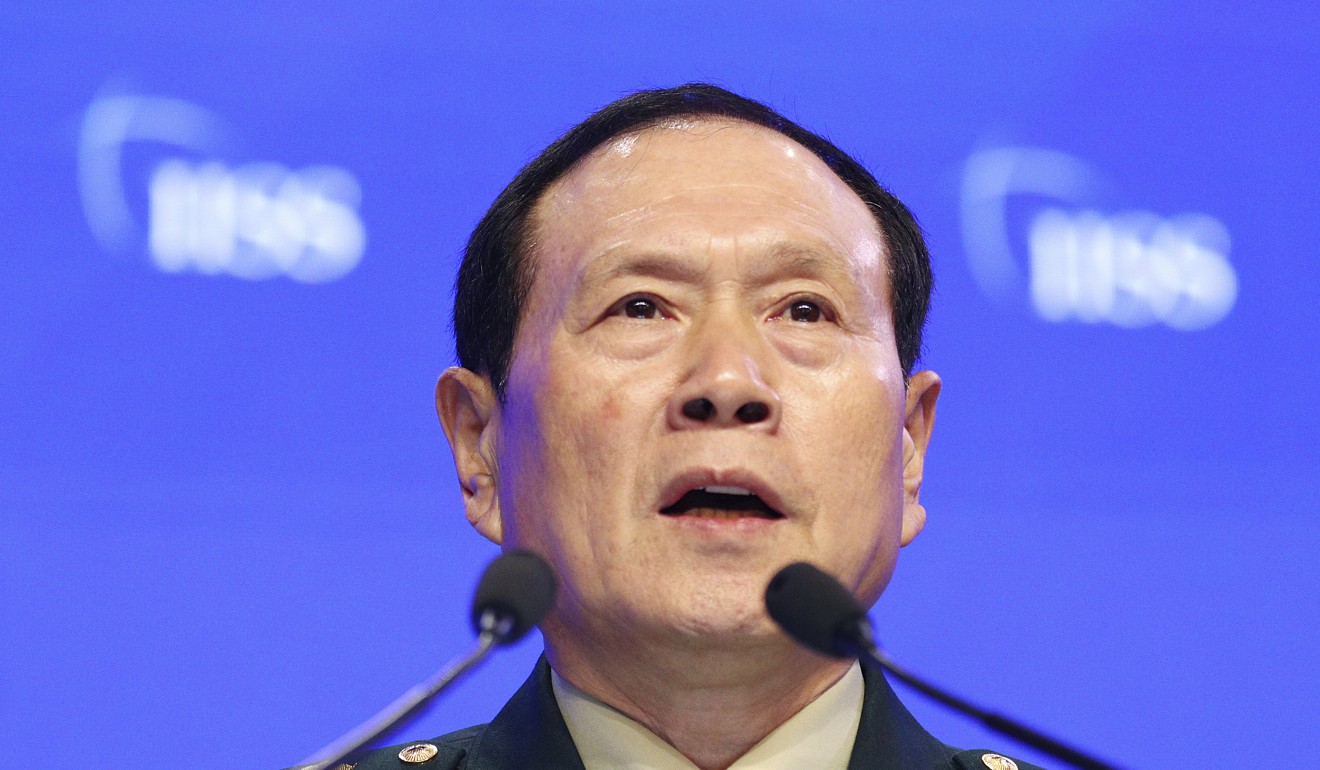
China’s Defence Minister Wei Fenghe told a regional security conference that the South China Sea was an inalienable part of China’s territory. Photo: AP
Although China and Vietnam have said they are looking for a diplomatic solution to prevent confrontations, neither has shown any signs of backing down and tensions have continued to rise.
On Monday, China’s Defence Minister Wei Fenghe told military and defence officials attending a regional security conference in Beijing that the South China Sea was an inalienable part of China’s territory.
“We will not allow even an inch of territory that our ancestors have left to us to be taken away,” he said in his opening speech at the Xiangshan Forum.
Also on Monday, Vietnamese Prime Minister Nguyen Xuan Phuc told lawmakers at the National Assembly that Hanoi would never give any territorial concessions.
“The situation in the South China Sea has become increasingly complicated,” he said. “Our party and state have consistently stated that what belongs to our independence, sovereignty and territorial integrity, we will never give up.”
Last week, Hanoi pulled DreamWorks’ animated film Abominable from theatres over a scene featuring a map that shows Beijing’s self-declared “nine-dash line” in the South China Sea. China uses the U-shaped line to claim sovereignty over more than 80 per cent of the resource-rich waterway, parts of which are also claimed by Vietnam, Malaysia, the Philippines and Brunei.
Ian Storey, a senior fellow at the ISEAS-Yusof Ishak Institute in Singapore, said that the withdrawal of the Haiyang Dizhi might only be “temporary”.
“China has made its point about drilling activities within the nine-dash line and expects Vietnam to suspend further exploration and production activities,” he said. “[But] of course Vietnam won’t.”
China, Malaysia seek to resolve South China Sea disputes with dialogue mechanism
Zhang Mingliang, a specialist in Southeast Asian affairs at Jinan University in the south China city of Guangzhou, said that the Chinese ship’s withdrawal was unlikely to have had anything to do with the comments made by Vietnam.
“I think the main reason is that it had finished its work,” he said. “But the withdrawal could also be seen as an attempt to ease the [China’s] tensions with the US.”
The significance for relations between Beijing and Hanoi was minimal, he said, as the two nations were engaged in one of the world’s most complicated territorial disputes.
“The impact on Sino-Vietnam relations will be limited because there have been too many disputes like this one,” he said.
Source: SCMP
Posted in animated film, “Abominable”, “nine-dash line”, back home, Beijing, Brunei, China's territory, Chinese, Chinese Defence Minister, confrontations, diplomatic solution, disputed waters, DreamWorks, drilling activities, drilling mission, energy company, Foreign Ministry, Guangzhou, Haiyang Dizhi 8, Hakuryu 5, Hanoi, heavily armed, inalienable part, involved, ISEAS-Yusof Ishak Institute, Japanese oil rig, Jinan University, lawmakers, Macau, Malaysia, map, Marine Geology 8, MarineTraffic, National Assembly of Vietnam, Nguyen Xuan Phuc, now complete, Philippines, regional security conference, Rosneft, Russian, Singapore, Sino-Vietnam relations, South China Sea, Southeast Asian affairs, sovereignty, Spratly Island, stand-off, survey ship, territorial concessions, theatres, U-shaped line, Uncategorized, Vanguard Bank, Vessel, Vietnam, Vietnamese Prime Minister, waters, Wei Fenghe, Xiangshan forum |
Leave a Comment »
09/07/2019
- Relations between the Asian giants had been strained after a 73-day military stand-off at their disputed border last year
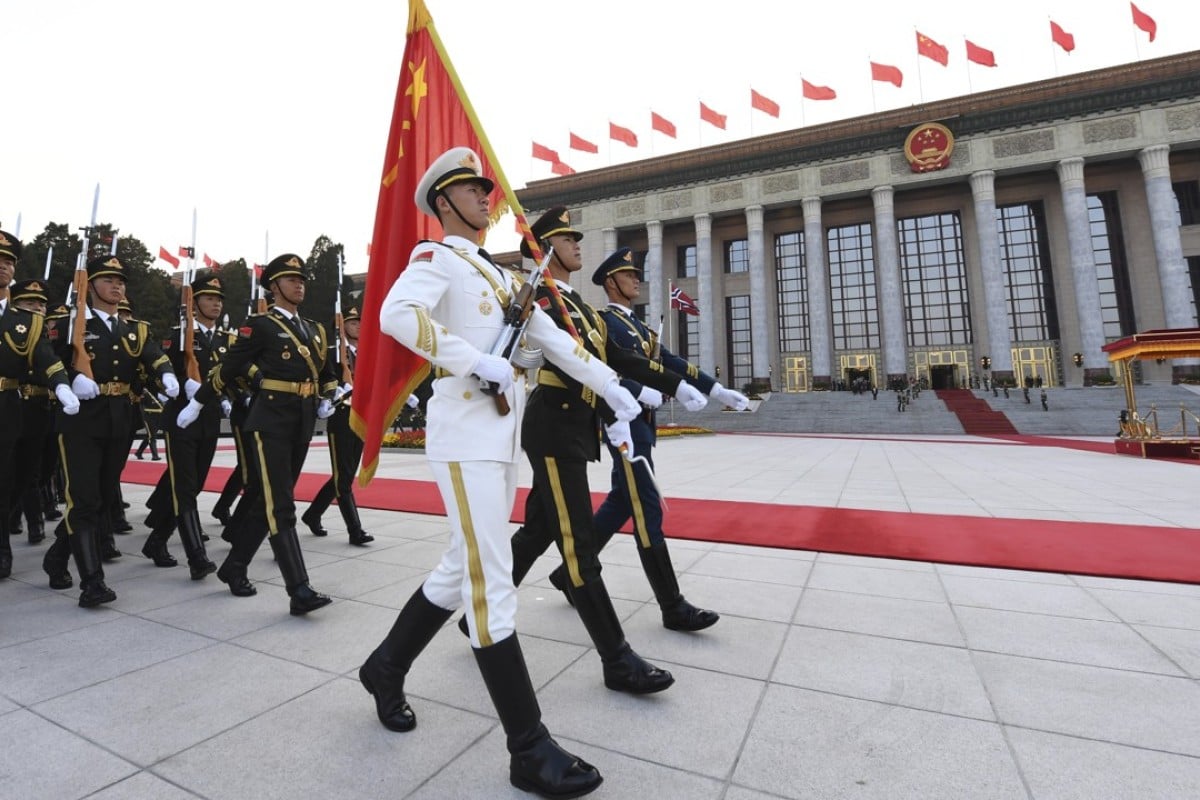
The Chinese People’s Liberation Army in Beijing. Photo: EPA
China and India aim to hold joint army drills in China before the end of this year, China’s Defence Ministry said on Thursday, as the two countries continue a rapid rapprochement.
Relations between the Asian giants were strained last year over a 73-day military face-off in a remote, high-altitude stretch of their disputed Himalayan border.
Chinese ‘tourists’ face 7 years in Indian jail over shahtoosh shawls made from endangered antelope
But the neighbours have over recent months been working on mending ties and Chinese Defence Minister Wei Fenghe met Indian Prime Minister Narendra Modi in New Delhi in August.
Speaking at a regular monthly news briefing, Chinese Defence Ministry spokesman Wu Qian said that the joint exercise was planned for before the end of this year.
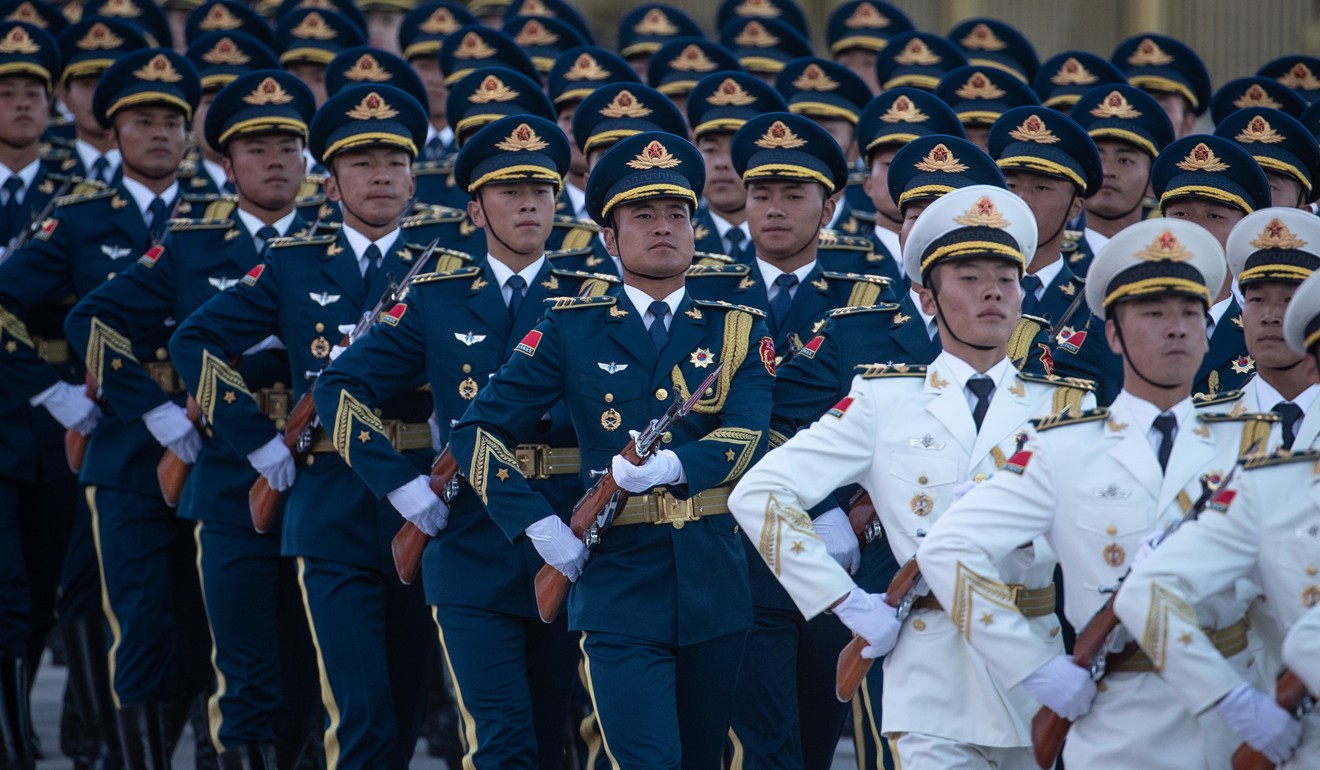
China and India are aiming to hold joint army drills this year as part of an ongoing rapprochement. Photo: EPA
The two countries would meet in the southwestern Chinese city of Chengdu next month to discuss the arrangements, he added, without giving other details.
India and China fought a war in 1962 and the unresolved dispute over stretches of their 3,500km (2,200 miles) border has clouded relations ever since.
But the two big Asian economies share similar positions on a host of issues including concern about US tariffs and Chinese President Xi Jinping and Modi agreed in April to improve relations.
Source: SCMP
Posted in Chengdu, China alert, Chinese Defence Minister, Chinese President Xi Jinping, defence ministry, face-of, Himalayan border, India alert, Indian Prime Minister Narendra Modi, Indian Prime Minister Narendra Modi, joint military drills, New Delhi, People’s Liberation Army (PLA), seek thaw, Uncategorized |
Leave a Comment »
10/06/2019
- Beijing has to reconcile the competing needs to appear tough to the Chinese public and conciliatory to an international audience
- China feels US has long had the advantage in shaping global opinion but it now needs to make itself heard
China must appear tough for an increasingly nationalistic audience at home and be conciliatory to an international audience wary of China’s assertive foreign and defence policy. Photo: Xinhua
In just the last week, a Chinese official posed a question that would resonate among his fellow cadres: as China rises, why are we not making more friends and why are our voices not heard?
The question has gained weight as the trade war with the United States has deepened, and Chinese officials have scrambled to win the battle of public opinion at home and abroad.
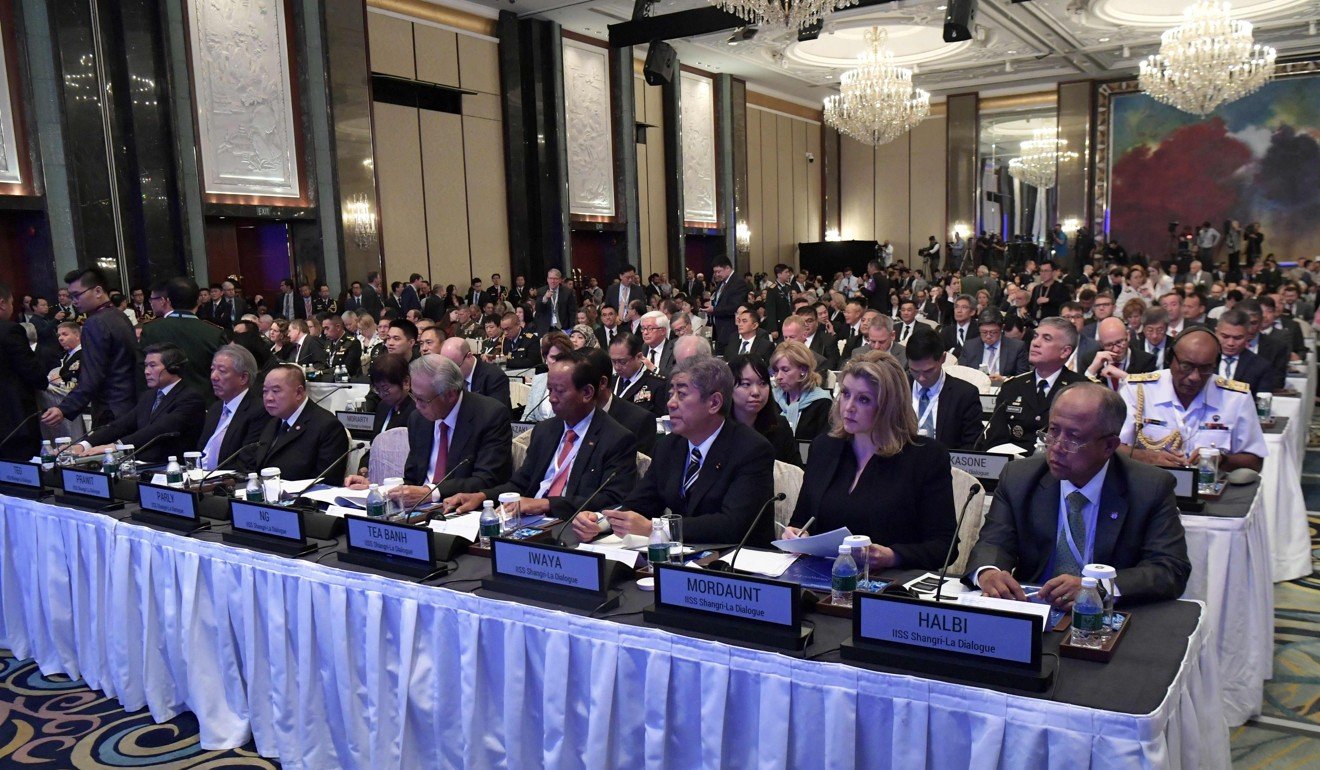
It also came to the fore at the annual Shangri-La Dialogue security forum in Singapore on the weekend, when Chinese officials were faced with balancing the need to appear tough for an increasingly nationalistic audience at home and being conciliatory to an international audience wary of China’s assertive foreign and defence policy.
Senior Colonel Zhao Xiaozhuo, a senior fellow at the People’s Liberation Army’s Academy of Military Sciences and a public diplomacy veteran for the military, said the expectations clashed in Singapore.
“Currently there are two parallel worlds in the public opinion landscape, one domestic and another international, and the two of them are basically split and in two extremes,” Zhao said.
“[The Shangri-La Dialogue] is a place where the two worlds clash. As the Chinese delegation [at the forum] we need to show our position, but it is becoming more difficult to balance [the expectations of the two sides].
“If you are tough, the domestic audience will be satisfied, but it won’t bode well with the international audience. But if we appear to be soft, we will be the target of overwhelming criticism at home.”
China asks state media to pick battles carefully with long US trade war looming, sources say
Zhao said this was an unprecedented challenge for Chinese cadres, who must also satisfy the expectations of the leadership.
“Our task was about diplomacy and making friends. But [with the tough position] you may not be able to make friends, and might even exacerbate the tension,” he said.
The pressure was immense when Chinese Defence Minister General Wei Fenghe took to the stage on Sunday in a rare appearance at the forum. Concerned about how Wei’s performance would be received at home, Beijing ordered Chinese media to minimise their coverage of acting US defence secretary Patrick Shanahan’s address in case it made China appear weak, according to a source familiar with the arrangements for Chinese media.
In his speech, Wei struck a defiant tone, vowing that the PLA would “fight at all costs” for “reunification” with Taiwan and that China was ready to fight the US to the end on the trade front.
Chinese Defence Minister Wei Fenghe makes a rare appearance at the Shangri-La Dialogue in Singapore. Photo: Reuters
Major General Jin Yinan, from the PLA’s National Defence University, a member of the Chinese delegation to the Singapore summit, said Wei’s speech defied expectations that China would show restraint with the US, and demonstrated China’s confidence on the world stage.
The public response at home was immediate and positive. Tens of thousands of Chinese internet users flooded social media platforms such as the Twitter-like Weibo service to express their approval for Wei’s hard line.
“This is the attitude that the Chinese military should show to the world,” one commenter said.
“I am proud of my country for being so strong and powerful,” another said.
Over the past year, Beijing’s propaganda apparatus has tightly controlled the domestic media narrative on the trade war, barring independent reporting on the tensions. But since the breakdown of trade talks in early May, the authorities have gone one step further by escalating nationalistic rhetoric in newspapers and on television.
How Donald Trump’s tweets outgunned China’s heavy media weapons in the trade war publicity battle
China has also tried to make its case to the world with an official statement. On the same day that Wei addressed the gathering in Singapore, the State Council, China’s cabinet, put China’s side of the dispute in a white paper, saying the US should bear responsibility for the breakdown of the trade talks.
A Chinese delegate at the forum said Beijing felt Washington had long had the advantage in shaping global opinion and there was an urgent need for China to make itself heard.
“We should get more used to voicing our position through Western platforms. The US has been criticising us on many issues. But why should the Americans dominate all the platforms and have the final say over everything?” the delegate said.
Before Wei’s appearance at the dialogue, China had not sent such a high-ranking official for eight years. It had long sought to play down the importance of the forum, seeing it as a platform wielded by the US and its Western allies to attack China.
In 2002, China set up the Beijing Xiangshan Forum to rival the Singapore gathering and amplify its voice on security issues.
But Chinese officials are well aware that Xiangshan does not have the same impact and profile as the Shangri-La Dialogue, according to Collin Koh, a research fellow at the S. Rajaratnam School of International Studies at Nanyang Technological University in Singapore.
“[At the same time, the long absence of high-level Chinese representation to the Shangri-La Dialogue also] raises the question of whether it might be sustainable in the long run for [the dialogue] if they continue to not have such ministerial representation [from China],” Koh said.
Zhao, who is also the director of the Xiangshan forum’s secretariat office, agreed that China lagged the US in promoting the image of the military and in winning public opinion.
“China has not fought a war in 30 years. We have only built some islands in the South China Sea and yet have received so much criticism from the international media. The US has engaged in many wars but they are seldom criticised. This reflects that China is in a disadvantaged position in international discourse,” he said.
Expectations collided at the Shangri-La Dialogue in Singapore this month. Photo: AFP
In a rare conciliatory gesture – and just days before the 30th anniversary of the crackdown on pro-democracy protesters in Tiananmen Square – Wei took questions from a room of international delegates on a range of sensitive issues, including the crackdown and China’s mass internment camps in Xinjiang. While he largely toed the official line in his reply, his presence at the forum and willingness to address the questions raised hopes that China would become a more responsible partner in global affairs despite its continuing disputes with the US.
Andrea Thompson, US undersecretary of state for arms control and international security, said Wei’s attendance at the Singapore gathering was a “positive sign” and she hoped that China would be more open and transparent in addressing issues such as arms control and cybersecurity.
“I appreciate that he is here. I think it’s important to have a dialogue … There will be areas where we will agree, and some areas where we disagree, but you still have to have dialogue,” Thompson said.
Source: SCMP
Posted in Academy of Military Sciences, Andrea Thompson, Beijing, Beijing Xiangshan Forum, China alert, Chinese Defence Minister, General Wei Fenghe, make itself heard, National Defence University, Patrick Shanahan, People’s Liberation Army, S. Rajaratnam School of International Studies, Shangri-La Dialogue, Singapore, Singapore’s Nanyang Technological University, struggles, Uncategorized, US defence secretary, US undersecretary of state for arms control and international security, Washington, win friends, Xiangshan forum, Yinan |
Leave a Comment »




 CHINDIA ALERT: You'll be living in their world, very soon