Archive for ‘chinese government’

05/04/2020

As Trump administration debated travel restrictions, thousands streamed in from China

(Reuters) – In defending his strategy against the deadly coronavirus, President Donald Trump repeatedly has said he slowed its spread into the United States by acting decisively to bar travelers from China on Jan. 31.

“I was criticized by the Democrats when I closed the Country down to China many weeks ahead of what almost everyone recommended. Saved many lives,” he tweeted, for instance, on March 2.

But Reuters has found that the administration took a month from the time it learned of the outbreak in late December to impose the initial travel restrictions amid furious infighting.

During that time, the National Security Council staff, the state department and other federal agencies argued about everything from how best to screen for sick travelers to the economic impact of any restrictions, according to two government officials familiar with the deliberations.

The NSC staff ultimately proposed aggressive travel restrictions to high-level administration officials – but it took at least a week more for the president to adopt them, one of the government officials said.

In meetings, Matthew Pottinger, deputy national security adviser and a China expert, met opposition from Treasury Secretary Steven Mnuchin and National Economic Council director Larry Kudlow, said two former NSC officials and one of the government officials involved in the deliberations. The two top aides were concerned about economic fallout from barring travelers from China, the sources said.

Each day that the administration debated the travel measures, roughly 14,000 travelers arrived in the United States from China, according to figures cited by the Trump administration. Among them was a traveler who came from Wuhan to Seattle in mid-January, who turned out to be the first confirmed case in the United States.

On Jan. 22, Trump downplayed the threat posed by the virus, telling CNBC from the World Economic Forum in Davos, Switzerland, “We have it totally under control.”

The battle within the White House over whether and how to stop infected travelers from China lasted nine more days.

On Jan. 31, Trump issued a proclamation barring entry of non-U.S. citizens, other than the immediate family of citizens and permanent residents, who had traveled to China within the last two weeks. The restrictions have since been expanded to many other countries.

It is unclear when the president was made aware of the NSC’s proposal and what prompted his decision to act, but the decision followed the World Health Organization’s declaration the day before that the epidemic was a “public health emergency of international concern.”

U.S. Centers for Disease Control and Prevention officials told Reuters that they contributed to the decision as part of the administration’s newly convened coronavirus task force.

A Treasury Department spokesperson said that Mnuchin “never objected to the decision to restrict flights from China.”

A White House spokesman, Judd P Deere, said: “Any suggestion that Larry Kudlow objected to restricting flights from China to contain COVID-19 and protect the health of the American people is completely false. Larry fully supported the President’s bold decision.”

In a statement, NSC spokesman John Ullyot said that the council’s early meetings about the coronavirus involved great expertise and robust discussion and were professional.

As of April 4, the coronavirus has infected more than 300,000 people in the United States, and killed over 8,000, according to the Reuters coronavirus tracker. The country has more cases than anywhere else in the world.

The sources for this story, former NSC members, public health officials and others involved in, or briefed on, the administration’s response, spoke on condition of anonymity because they were not authorized to comment on the record.

POPPING A FLARE

The NSC, which operates within the White House to coordinate policies and recommendations involving national security across agencies, was at the center of the effort to formulate the early response to the outbreak.

The council was first notified of the outbreak on the morning of Dec. 31, according to one of the government officials involved, when an NSC official was forwarded an email from a Department of Health and Human Services (HHS) attache in Beijing that had been sent to senior HHS officials the night before.

The “pop-a-flare” notice, as it is known, described strange cases of pneumonia that could not be definitively traced to seasonal flu, said the government official, who saw the message. The email said the Chinese would soon be notifying the World Health Organization, the official said.

On Jan. 3, Dr. Gao Fu, head of China’s disease control agency, informed his U.S. counterpart, Dr. Robert Redfield, director of the CDC, in an emotional telephone call that the outbreak was growing out of control, according to the same federal official and a former NSC official. Both said they had been informed of the details.

Gao’s agency did not respond to a request for comment.

Ullyot, the NSC spokesman, disputed the timeline, saying the council did not learn of the coronavirus outbreak until Jan. 3. The CDC, a part of HHS, confirmed to Reuters that it learned of an outbreak in late December and that the call with Gao occurred Jan. 3.

Health agencies were scrambling to gather information, the two government officials involved in the deliberations said. Questions went back to the U.S. Embassy in Beijing, and experts across the government: How many travelers arrive daily from Wuhan, China, the initial site of the outbreak? What U.S. airports do they fly into? What would be the pros and cons, including costs, of any travel restriction?

In discussions with the NSC, public health officials, including from HHS and CDC, initially argued for the targeted approach of medically screening travelers from Wuhan, as they sifted through information about where and how quickly the virus was spreading, one of the government officials involved said. Public health officials tend not to favor border closures because they can restrict medical response and divert limited resources.

The NSC’s Pottinger was pushing hard for strict travel restrictions – expressing doubt about the truth of the data China was releasing, according to the official.

There was “a lot of yelling, a sign of frustration,” said a former NSC staffer who was not in the meetings but got messages from colleagues in attendance expressing dismay. The person described the messages but did not share them with Reuters. The two current federal officials confirmed the acrimony.

The NSC struggled to reconcile conflicting viewpoints, the two government officials involved said.

The debate delayed the screening of travelers from China by at least a week, one of the officials said. CDC officials ultimately announced enhanced medical screenings for travelers from Wuhan at three international airports, in Los Angeles, San Francisco and New York’s John F. Kennedy, on Jan. 17, expanding them to 20 U.S. airports by Jan. 28.

At one point, during a meeting, Pottinger snapped at health officials that their approach “really has to take a step back,” so that national security interests could shape the response, the official said.

The CDC declined to comment on the debate.

Some former NSC officials who spoke to Reuters traced what they saw as an ineffective response by the council in part to structural changes in 2018 in which former National Security adviser John Bolton had folded the council’s Global Health Security and Biodefense directorate into a larger operation, with the result that pandemic planning was not as great a priority. Others said that, under Bolton, the NSC worked effectively on biopreparedness, but after he departed it lost a number of important experts.

NSC spokesman Ullyot rejected as false the suggestion that the council lacked expertise. The council is staffed by officials with “extensive experience in virology, infectious disease epidemiology, global health security, public health, and emergency response,” he said.

The NSC’s own public health experts were involved in the discussions from the beginning, advocating “early and often” for traveler screening and raising the issue of banning flights from Wuhan, he said.

While the conflict soured the interactions, one of the government officials involved said, data soon emerged that led the health agency officials to agree with Pottinger: A travel restriction for all of China was needed. They saw that there were thousands of travelers arriving daily from Wuhan’s Hubei province to the United States, as well as a rising number of Covid-19 cases reported by the Chinese government beginning in mid-January, the source said.

In its statement to Reuters, the CDC did not directly address what led to its ultimate decision to support the travel restrictions.

By Jan. 24, the staff of the NSC had proposed restricting flights from China, said the government official involved in the deliberations. But as Pottinger met with deputies from other cabinet-level agencies, the recommendation met with resistance because of concerns about spooking the markets and scaring the public, three sources with knowledge of the deliberations told Reuters.

STILL DIVIDED

With opinions still divided, the matter went to top White House aides, at which point Treasury Secretary Mnuchin and National Economic Council director Kudlow argued strongly against the travel restrictions, said two former NSC officials and the government official involved in the deliberations.

In addition to the impact on the stock market, the two top aides expressed concern about the supply chain for everything from semiconductors to ingredients for pharmaceuticals, said one of the government officials involved in the deliberations.

Pottinger was “pleading with Mnuchin and others” to stop travelers from coming, the former NSC official said.

By then, the first known patient in the United States – a man in his 30s who had traveled from Wuhan to Seattle on Jan. 15 – tested positive for the coronavirus disease, COVID-19.

He had slipped through travel screenings because his trip had been broken up, so the Wuhan origin of his trip had not been obvious to customs agents, said the government official with knowledge of the deliberations.

At the World Economic Forum in Davos, Switzerland, President Trump told CNBC on Jan. 22: “It’s one person coming in from China, and we have it under control. It’s going to be just fine.”

On Jan. 29, the Council of Economic Advisers, which advises the president on economic policy, presented an analysis describing a worst-case scenario of what a pandemic and travel restrictions could do to the economy, according to one of the government officials involved in the deliberations, who read it. The report supported Kudlow and Mnuchin’s arguments against such restrictions and “scared everyone,” the source said.

The next day, at an afternoon meeting of the White House’s newly formed coronavirus task force, as well as other attendees, travel restrictions were still being debated, according to the government official involved in the deliberations and a former NSC official who learned of the meeting from former colleagues.

During the meeting, Mick Mulvaney, then President Trump’s chief of staff, entered the room, telling a smaller group, including Pottinger: “The president wants to see you now,” according to the official involved in the deliberations and the former NSC officials.

Mulvaney referred questions to the White House, which did not respond.

Trump issued the order the next day. By then, the novel coronavirus was already carving a lethal path through a Seattle nursing home.

Source: Reuters
05/04/2020

Philanthropists step up citizens’ diplomacy with gifts even as US, Chinese diplomats play the blame game amid coronavirus pandemic

  • The philanthropic foundations of Jack Ma and Joe Tsai, two of China’s wealthiest technology entrepreneurs, have donated 23 million face masks, 2,000 ventilators and 170,000 pieces of protective gear to New York
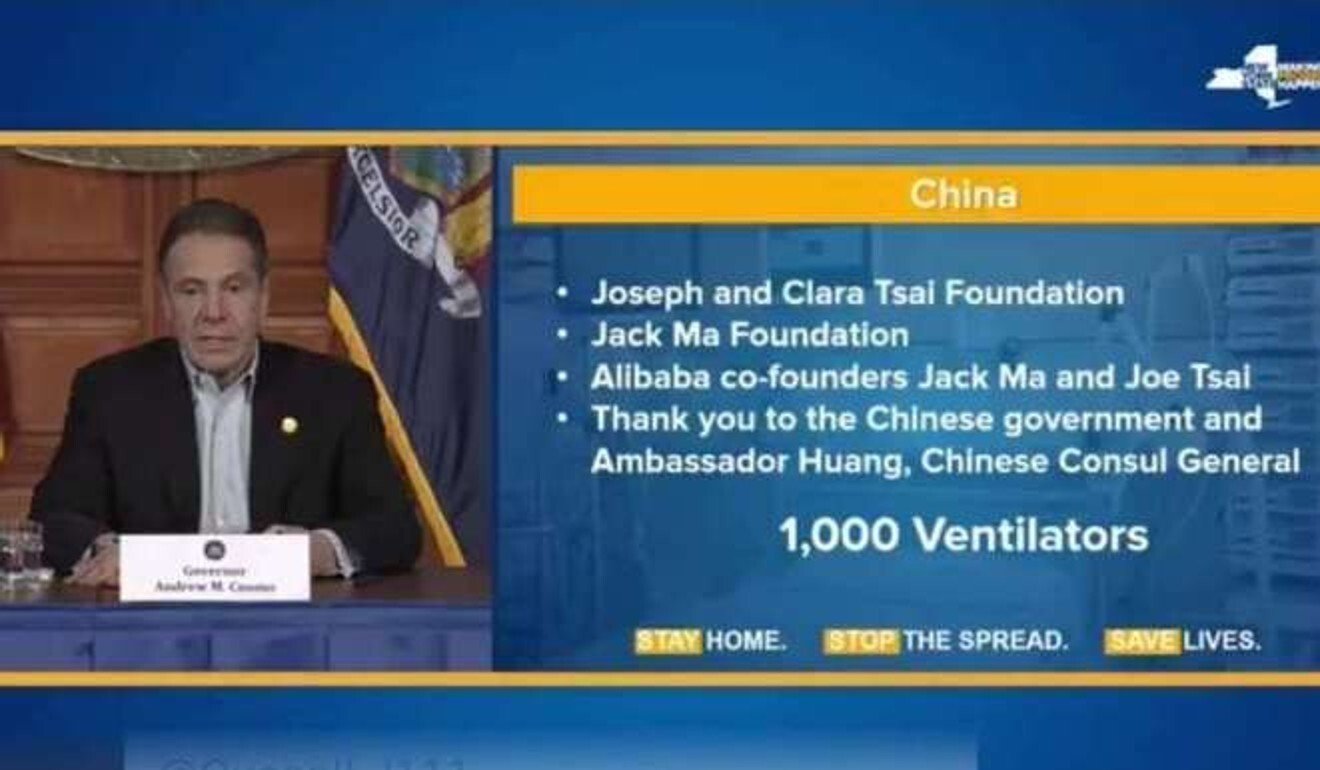
  • The donation, the biggest by private citizens to the epicentre of the global coronavirus pandemic, was described by New York Governor Andrew Cuomo as ‘really good news’
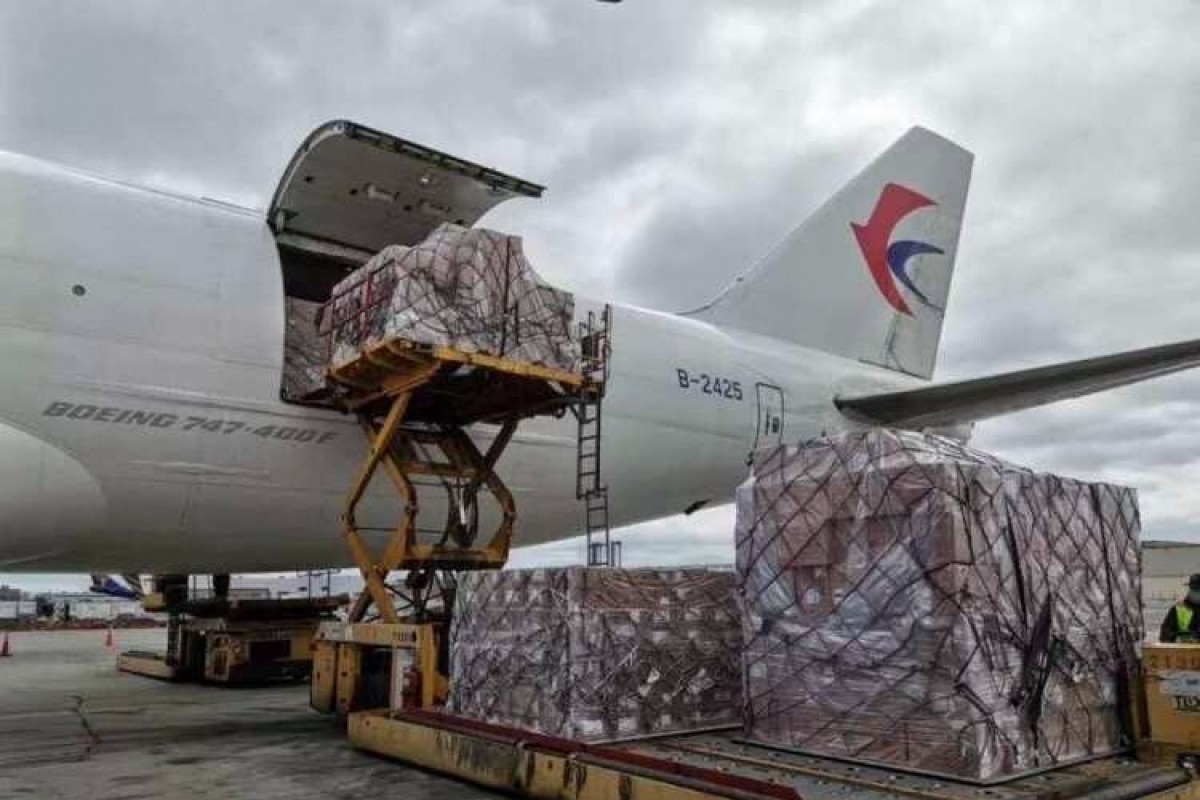
A shipment of 1,000 ventilators donated by Jack Ma Foundation and Joe Tsai Foundation, has arrived in New York. Photo: Handout
Chinese philanthropists are stepping up their donation of protective gear, essential medical and diagnostic kits to the United States, Europe and Asian countries, despite rising acrimony between diplomats and government officials looking to pin blame amid the world’s worst pandemic in decades.
The private foundations of Jack Ma and Joe Tsai, co-founders of this newspaper’s owner Alibaba Group Holding and two of China’s wealthiest technology entrepreneurs, have donated a combined 23 million face masks, 2,000 medical ventilators and 170,000 pieces of protective gear to New York city.
The first 1,000 medical ventilators arrived today, with another 1,000 on the way, for a total donation valued at US$50 million, according to a person familiar with the matter.

Delivery of the essential materials, made possible by behind-the-scene manoeuvres by the donors and officials from both the Chinese and US sides due to import and export regulatory hurdles, highlights the role of civil diplomacy in dealing with the global public health crisis.

New York Governor Andrew Cuomo thanks the Chinese government for the 1,000 ventilators donated by Jack Ma Foundation and Joe Tsai Foundation, which arrived in New York on Saturday. Photo: Handout
The gesture comes as diplomats of both countries, and even government officials including the US president and his secretary of state, have engaged in a tit-for-tat war of words, as they attempt to pin the blame for the worlds worst pandemic in decades on each other.
Confirmed cases in the US have soared and surpassed China as the new global epicentre. In the US there are nearly 310,000 cases and nearly 8,500 people have died so far from the Covid-19 disease.

Jack Ma is a friend of mine and he’s made it very possible to get about 1,000 ventilators from China. But that was from him and my other friend [Tsai] that was really a gift – Andrew Cuomo, governor of New York

Andrew Cuomo, governor of New York, thanked the Chinese government for easing the transfer of the ventilators to the hard-hit state, the current epicentre of the coronavirus outbreak in the US.

He said the donations were “really good news”, as the state pushes up against the apex of the outbreak, which is likely to hit in about seven days.

“This is a big deal, and this is going to make a significant difference for us,” Governor Andrew Cuomo said on Saturday.

“Jack Ma is a friend of mine and he’s made it very possible to get about 1,000 ventilators from China. But that was from him and my other friend [Tsai] that was really a gift. And we appreciate it very much.”

One of the challenges in making the donation possible was the fact that the US had previously blocked China-made “KN95” standard masks, only allowing “3M N95” masks to be used. Although the two masks have different standards, they essentially have the same performance. On Friday, the US Food and Drugs Administration issued an emergency use authorisation for KN95 masks.

Alfred Wu, associate professor in Lee Kuan Yew School of Public Policy at National University of Singapore, said that what China is doing with its so-called masks diplomacy is very clear. “But given the emergency situation in New York, whatever channel – private or public sources – the equipment comes from, should not matter, especially those for medical workers,” he said.

Separately, the western state of Oregon has also said that it would send 140 ventilators to New York.

The state, like other areas of the US, is facing shortages of medical gear, including masks and ventilators.

“We are not yet at the apex. We are getting closer,” Cuomo said, adding that this was good as it gave the authorities more time to prepare.

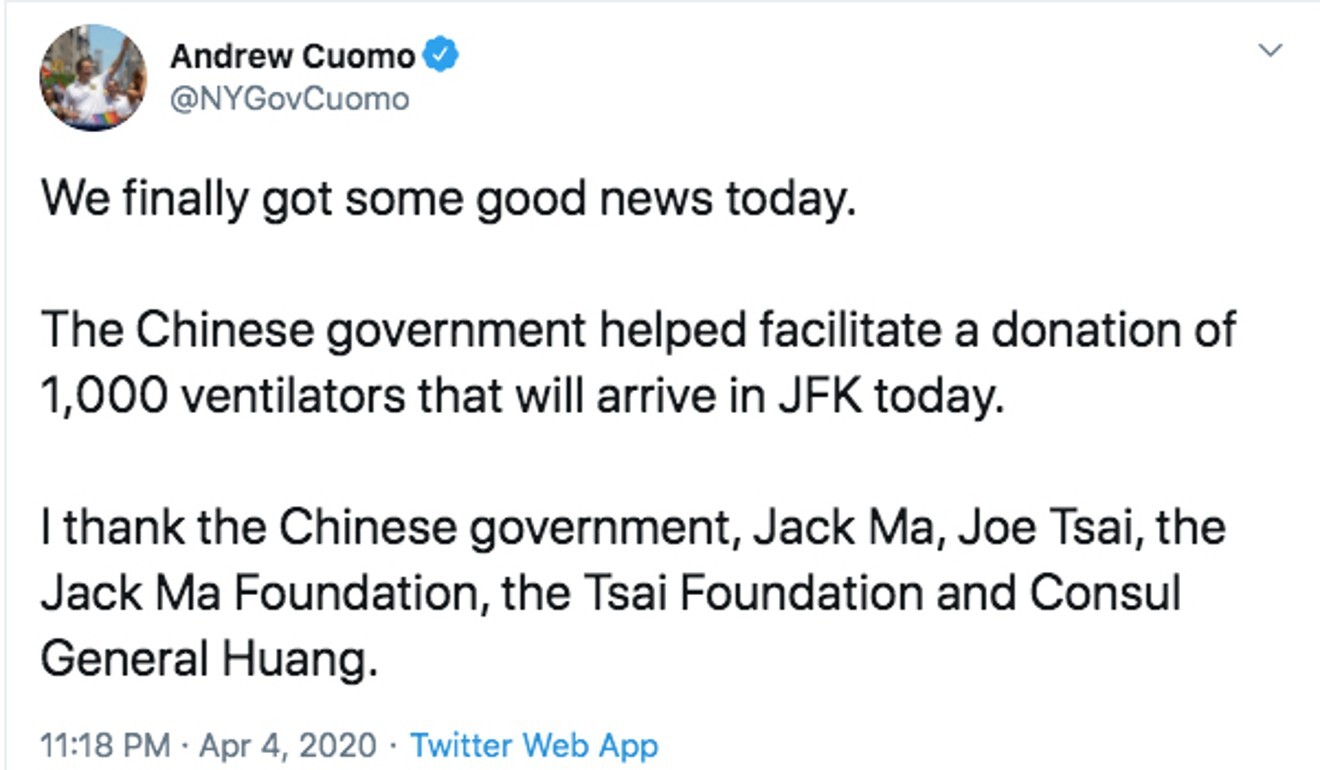
A tweet from New York Governor Andrew Cuomo thanking the Chinese government for the 1,000 ventilators donated by Jack Ma Foundation and Joe Tsai Foundation. Photo: Twitter
Cuomo said 113,704 people in New York have tested positive for the coronavirus, with 15,000 having been hospitalised The state’s death toll saw a significant spike on Saturday to reach 3,565, up from 2,935 the previous day.
The White House has been criticised for not better coordinating the supply of medical goods to states, who are competing with each other on the open market.
NUS’ Wu said that tussle between the federal and state governments in the US on key decisions on acquiring medical supplies was not helping the fight against the pandemic. “Unlike in China, where the central government has the say over local governments, in the US, when it comes to public health provision, the power belongs to the state,” he said.

Meanwhile, Cuomo acknowledged that he asked the White House and others for help negotiating the ventilators.

Trump said he would like to hear a more resounding “thank you” from Cuomo for providing medical supplies and helping quickly to add hospital capacity.

Source:SCMP

04/04/2020

Coronavirus: China’s deserted shops and restaurants show that even as lockdown ends, scars remain

  • Lockdown may have been lifted, but shops, bars and restaurants remain empty in Beijing, showing struggle facing economic recovery
  • Controls have been returning in other parts of China, where cinemas and tourist attractions shut amid fears of new wave of infections
The nearly two month-long lockdown has changed the consumption behaviour of Chinese residents, many of whom have turned to home cooking to cut their spending. Photo: AFP

China’s urban lockdown may have eased, but deserted streets and stores in the capital Beijing this week suggest that for the services sector, the impact of the coronavirus outbreak could be deeper and longer than expected.

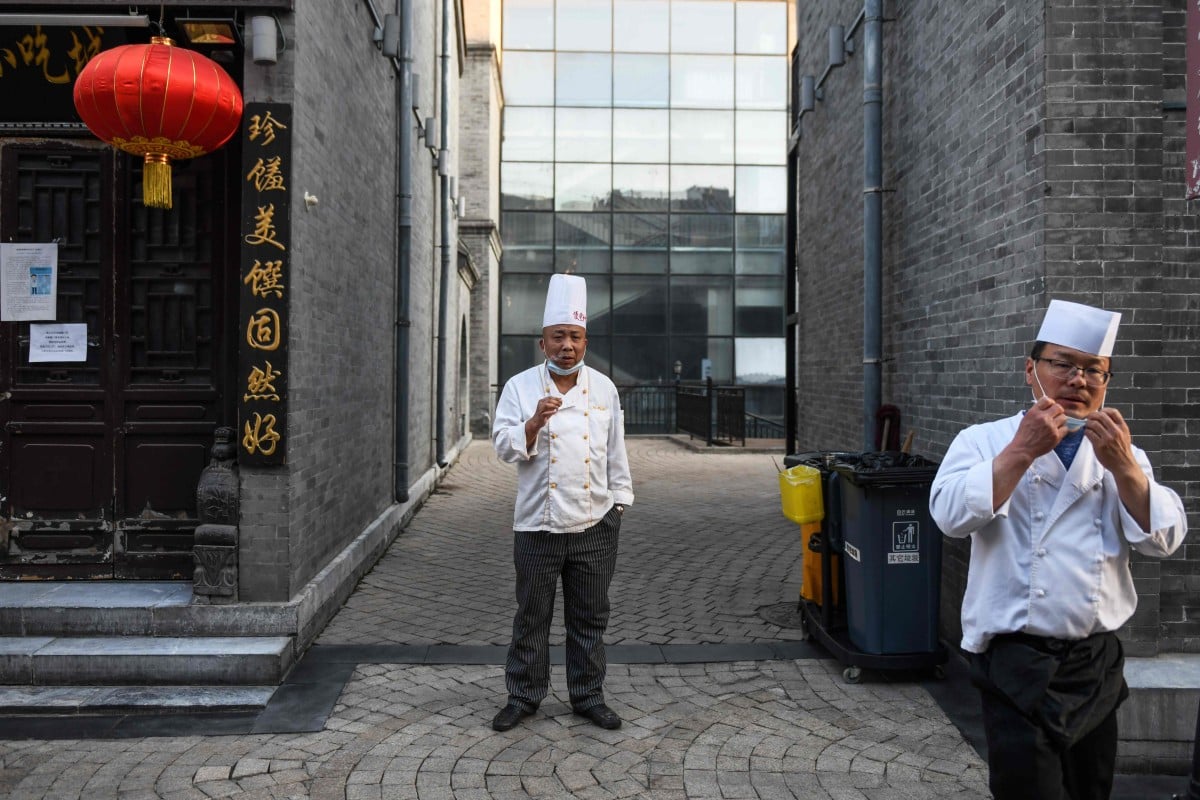
Many restaurants, cafes and pubs remained closed in the city, where vigilance remains high about a second wave of infections. Among those that were open, there were few customers to be seen.

The usually crowded Wangfujing shopping street was quiet on Wednesday, with just a few shoppers patronising what is usually the heartbeat of the city’s commerce and tourism. There were more staff than consumers at the Apple store, while everyone wore a mask. Shops along the pedestrianised zone closed their doors before sunset, but many did not open at all.

In a downtown food court, a handful of people dined during what would usually be the lunch rush hour, each restricted to their own small table to maintain social distancing, in great contrast with the usual frantic dash for seats.

Coronavirus: What impact will the economic fallout from the Covid-19 pandemic have on you?
While China has largely stemmed the domestic spread of Covid-19, threats of imported cases, with the virus having infected over one million people worldwide, and asymptomatic carriers continue to hamper the recovery in China’s 
A survey published on Friday showed that in March, sentiment among small service sector firms remained depressed. The Caixin / Markit services purchasing managers’ index (PMI) was 43.0 for last month, with a number below 50 meaning the sector is shrinking. “There are too few people now. We only sold about a hundred bowls of noodles, that was just half of our normal level,” said one Beijing street vendor, who had also cut many items from the menu due to insufficient demand.

A bookstore in the city centre held an official opening ceremony after a soft opening followed by a two and a half month-long forced shutdown, but received only four visitors on a morning, one of which was the South China Morning Post reporter. All four were required to go through a body temperature check and write down their personal contact details before entering.

Service sector workers said the situation was surreal and that they were worried that there was no end in sight.

“I have never seen KFC look like this,” said an employee of the fast food chain restaurant at Wangfujing, pointing to the virtually empty dining hall.

A grocer at a nearby food market continually shook her head when talking about the decline in customers, but said she felt lucky that she could come back to Beijing from her hometown before the 14-day mandatory quarantine requirement was imposed on February 14.

This situation is not restricted to Beijing. When the Chinese government reopened around 500 cinemas nationwide in March, each one attracted on average

only two customers

per day.

Now, many places across China are reimposing controls amid fears of a new spike in infections, the same fear leading people to stay home instead of going to those venues which have reopened.

Shanghai has closed tourist attractions while Sichuan has again closed karaoke lounges. Cinemas have also been reclosed across the country.

President Xi Jinping said during a visit to Hangzhou last Sunday that China must remain alert. “If you want to watch a movie, rather than going to a cinema, you can watch it online,” Xi said.

Services account for 60 per cent of China’s economy and the majority of employment. The slowness of the sector’s recovery is placing huge pressure on the world’s second 

largest economy

at a time when manufacturers are seeing export orders nosedive.

Liang Zhonghua, chief macro analyst at Zhongtai Securities, a brokerage, said that China’s damaged consumption alone could drag economic growth down by 4.5 per cent in the second quarter.
“(Chinese) residents’ fear of the epidemic is not over,” he wrote in a note this week.
Beijing’s malls still empty after coronavirus lockdown lifted
In Beijing all travellers entering the city are required to undergo a 14-day quarantine, while mass gatherings are still forbidden.
The containment measures have stopped many migrant workers from getting back to 
their jobs

, if they still exist. Many local residents still choose to work from home, even though authorities had been trying to encourage people to go out and spend money.

On April 1, the traffic flow on Beijing’s subway system was 3.05 million passengers a day, less than a third of the level a year ago, according to the operator, while car traffic was still about 15 per cent less than it was last year, government data showed.

I will keep cooking for myself, even when everything goes back to normal, it is much healthier and cheaper – Beijing resident

The nearly two month-long lockdown has changed the consumption behaviour of Chinese residents, many of whom have turned to home cooking to cut their spending.

“I will keep cooking for myself, even when everything goes back to normal, it is much healthier and cheaper,” said a Beijing lawyer whose family name is Li.

The effect of this behavioural shift is borne out in the 17.9 per cent drop in retail sales in the capital over the first two months of the year, only slightly better than the nationwide drop of 20.5 per cent.

Beijing businesses have clubbed together to issue some 150 million yuan in 

vouchers

to lure customers in since March 18. But with more economic hardship ahead, businesses and consumers alike are hunkering down for the storm.

Source: SCMP
02/04/2020

Shenzhen becomes first Chinese city to ban eating cats and dogs

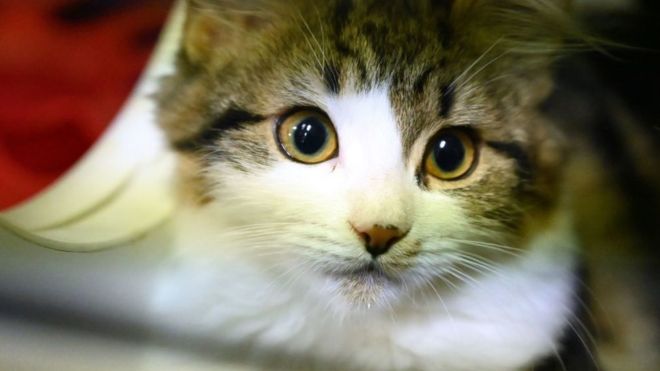
A cat waiting to be adopted looks out of its cage at the Royal Society for the Prevention of Cruelty to Animals (RSPCA)Image copyright GETTY IMAGES
Image caption Most Chinese people don’t actually consume dogs and cats and never plan to

Shenzhen has become the first Chinese city to ban the sale and consumption of dog and cat meat.

It comes after the coronavirus outbreak was linked to wildlife meat, prompting Chinese authorities to ban the trade and consumption of wild animals.

Shenzhen went a step further, extending the ban to dogs and cats. The new law will come into force on 1 May.

Thirty million dogs a year are killed across Asia for meat, says Humane Society International (HSI).

However, the practice of eating dog meat in China is not that common – the majority of Chinese people have never done so and say don’t want to.

“Dogs and cats as pets have established a much closer relationship with humans than all other animals, and banning the consumption of dogs and cats and other pets is a common practice in developed countries and in Hong Kong and Taiwan,” the Shenzhen city government said, according to a Reuters report.

“This ban also responds to the demand and spirit of human civilization.”

Animal advocacy organisation HSI praised the move.

“This really could be a watershed moment in efforts to end this brutal trade that kills an estimated 10 million dogs and 4 million cats in China every year,” said Dr Peter Li, China policy specialist for HSI.

However, at the same time as this ruling, China approved the use of bear bile to treat coronavirus patients.

Bear bile – a digestive fluid drained from living captive bears – has long been used in traditional Chinese medicine.

The active ingredient, ursodeoxycholic acid, is used to dissolve gallstones and treat liver disease. But there is no proof that it is effective against the coronavirus and the process is painful and distressing for the animals

Brian Daly, a spokesman for the Animals Asia Foundation, told AFP: “We shouldn’t be relying on wildlife products like bear bile as the solution to combat a deadly virus that appears to have originated from wildlife.”

Banner image reading 'more about coronavirus'
Banner

A wildlife market

In February, Chinese authorities banned the trade and consumption of wild animals.

The move came after it emerged that a market in Wuhan selling wild animals and wildlife meat could have been the starting point for the outbreak of the new coronavirus, providing the means for the virus to travel from animals to humans.

News of this led the Chinese government to crack down strongly on the trade and on the markets that sold such products.

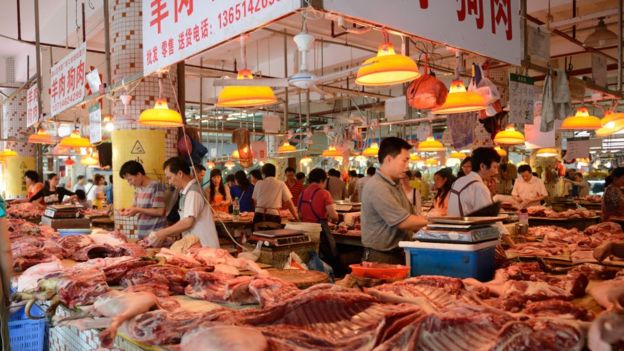
Covered market in ShenzhenImage copyright GETTY IMAGES
Image caption File photo of a wet market in China

There are now close to one million confirmed cases of the virus worldwide, and more than 47,000 deaths, according to a Johns Hopkins University tally.

In China alone, there are 81,589 confirmed cases and 3,318 deaths, said the National Health Commission.

Scientists and researchers are still no closer to finding out what the source of the virus is and how it could have spread to humans.

Source: The BBC

01/04/2020

TikTok, a Chinese soft-power time bomb in US living rooms?

  • The coronavirus has fuelled explosive growth of the app, which now has 800 million users, few of whom will know it is owned by China’s ByteDance
  • While videos of dancing teens may seem benign, there are growing fears in America it could be a Trojan Horse for mass surveillance by Beijing
TikTok is seen by some as the latest front in the US-China tech war. Photo: Shutterstock
Your average, not-so-hip adult would have probably drawn a blank at the mention of

TikTok

not long ago – unless they have a child addicted to the wildly popular app, on which users make and share short, amusing videos.

It has grown explosively since its 2016 launch, with 800 million monthly active users now – 300 million of them outside China in places such as India (120 million) and the 
United States

(37 million). And many have no idea it is owned by a Chinese company, ByteDance.

The first Chinese app to mount a real global challenge to Facebook and Instagram, it is seen as one of the shiniest new weapons in the US-China technology war. And a boost, perhaps, to Chinese soft power.
TikTok, the missing link between Hong Kong and Indian protesters?
9 Feb 2020
It experienced a growth spurt in 2019 that analysts predicted would slow a little this year. That, however, was before the coronavirus, which seems to be giving the app a bump, especially beyond its core teenage fan base.
As pandemic fears rise and millions are stuck indoors, major Hollywood celebrities such as Jennifer Lopez, 50, have taken to posting their own all-singing, all-dancing videos, which then go viral on other media platforms.
Even the World Health Organisation has jumped on the bandwagon, joining the app in late February to share public health advice.
The TikTok logo on a smartphone. Photo: Getty Images
But to some, the growth of TikTok is far from benign.

Privacy advocates and several US congressmen want to rein in the app over concerns it may censor and monitor content for the Chinese government, and be used for misinformation and election interference. This despite the fact that TikTok keeps its servers outside China and swears it will not hand over user data.

Are these fears justified – or fuelled by political and anticompetitive motives?

Thinkers such as Yuval Noah Harari warn that the coronavirus pandemic could be a watershed in the history of mass surveillance.
But Eric Harwit, a professor of Asian studies at the University of Hawaii, does not buy such arguments against TikTok, especially given that 60 per cent of its US users are aged 16 to 24.

“ByteDance has done a pretty good job of having a firewall between TikTok and the Chinese version of it, Douyin.

TikTok, iPhone: all you need to escape Mumbai’s slums – for 15 seconds

1 Nov 2019

“Also, many users in the US are teens and they’re not a particularly useful source of national security information.

“So I’d say the concerns are motivated more by a general fear of any kind of Chinese telecommunication application rather than actual attempts to siphon off valuable US intelligence information.

“And Facebook and other American companies have similar products,” Harwit points out. “US government officials will always want to protect American commercial interests.”

Sarah Cook, a China analyst for Freedom House – the US government-funded think tank – disagrees.

“We have concerns about how Facebook and Twitter deal with information affecting electoral politics, and that’s magnified if you’re talking about a Chinese company that now has a user base that rivals theirs.”

Chinese officials, she argues, have shown a willingness to censor and manipulate information well beyond their country’s borders – for instance, regarding the scale of the initial outbreak in Wuhan, an obfuscation that may have exacerbated its impact abroad.

“For those who think Chinese government censorship is only Chinese people’s problem, this pandemic shows how much that’s not the case.

“And even if it’s not happening right now with TikTok, the concern is that Chinese companies are beholden to their government, whether they want to be or not.

“I’m not saying block TikTok entirely,” she says. “It’s a question of looking at it in a democratic system and deciding on reasonable oversight and safeguards to protect users and information flows when that time comes.”

When it comes to expanding China’s cultural influence, though, neither Cook nor Harwit believes the app is especially effective.

Most people are oblivious to its Chinese origins, which the user experience does not reflect in any way. So there is no goodwill-generating soft power of the sort wielded by, say, 

South Korea

through the K-pop industry.

If anything, TikTok often promotes the increasingly homogenous, Western-leaning culture seen on many globally popular social media apps.
So says Morten Bay, a lecturer in digital and social media at the University of Southern California’s Annenberg School for Communication and Journalism.
“A semi-Western culture, with small variations of local culture, is becoming the norm on social media. And Chinese soft power is difficult to assert because there’s no value difference.”
And even if Chinese tech companies keep taking bigger bites of the Western market, he is sceptical of China’s “ability to leverage that for soft power in a geopolitical sense”.

“Because there is a very big apparatus pushing against China in that regard. As soon as TikTok started gaining traction in the US, people came out against it, trying to make everyone aware of the privacy and geopolitical issues.

The #KaunsiBadiBaatHai campaign on TikTok aims to raise awareness about women's safety issues in India. Image: TikTok
The #KaunsiBadiBaatHai campaign on TikTok aims to raise awareness about women’s safety issues in India. Image: TikTok
“So China faces a lot of resistance,” Bay concludes. “And I’m not sure a social media platform on its own can do much about that.”
Still, if you had to back a horse in this race, TikTok would be it, says Zhang Mengmeng.

When she and her colleagues from global industry analysis firm Counterpoint Research visited the company, they were impressed by its research and development capabilities.

“Because they’re a very young company, their pace for incubating new projects is a lot faster, especially compared to successful but older internet companies in China which have been around for 15 to 20 years.

Indian invasion of Chinese social media apps sparks fear and loathing in New Delhi

28 Apr 2019

“They have lots of little start-up projects within the company and their organisational structure is very flat – it doesn’t matter what your age is, if you have a good idea, you get promoted very quickly.”

TikTok’s rise is also emblematic of a broader role reversal in the US-China tech war, she believes.

“Before, the US was more advanced in terms of internet development and China seemed to just copy its new ideas. Now, this is reversing. There are so many people in China using the internet that start-ups there can test ideas very easily.

“So now it seems like a lot of US companies are trying to see what ideas are coming out of China.” 

Source: SCMP

20/03/2020

Why China’s ‘zero new coronavirus infections’ could be cause for optimism – or caution

  • The country’s only new infections confirmed in the past two days have been imported from overseas, suggesting containment measures worked
  • But there are still likely to be infected people with mild or no symptoms, and questions over how the data was compiled, experts say
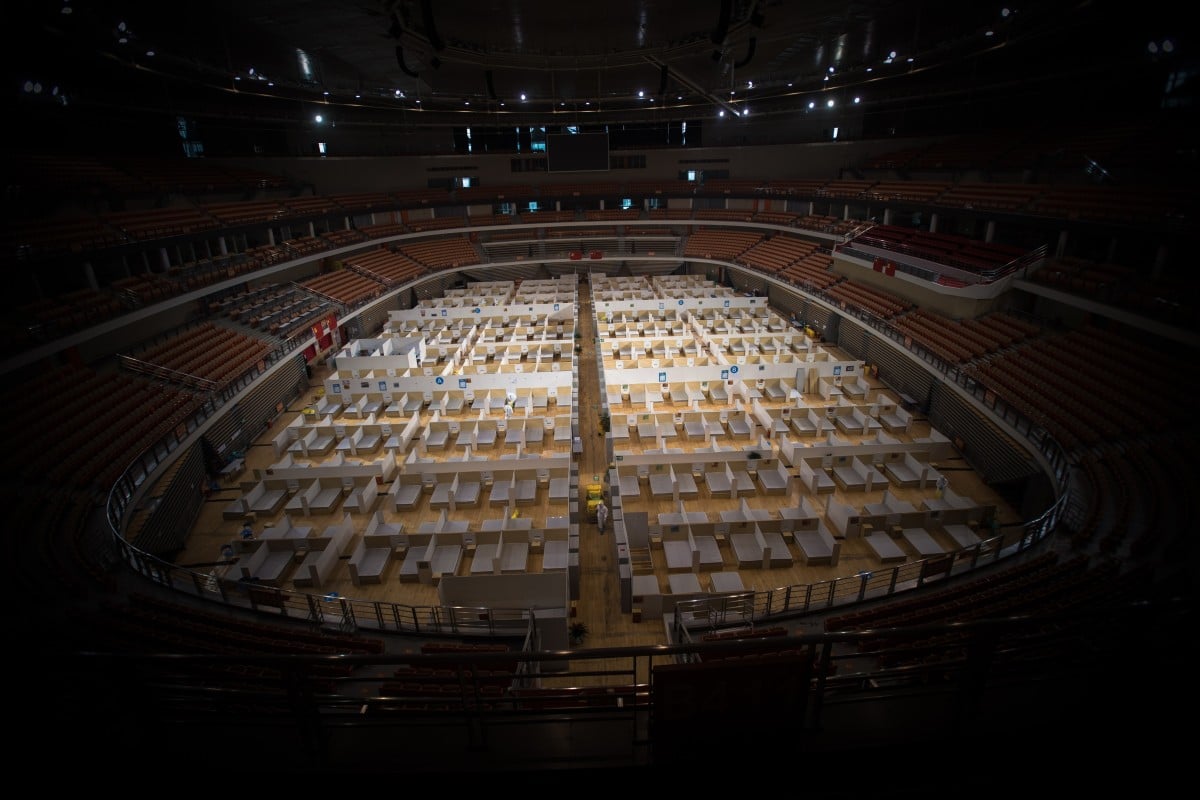
A makeshift hospital in Wuhan, converted from a sports arena, closed on Sunday after its last patients were discharged. Photo: Xinhua
China reached an apparent milestone this week in the fight against the Covid-19 pandemic, announcing zero new non-imported infections on Thursday and Friday, but experts said the figures needed to be treated with caution.
After reporting thousands of daily new infections for much of February, China had a sharp decline this month while the wider world experienced the opposite trend as the coronavirus spread.
As China closes makeshift coronavirus hospitals in the outbreak’s initial epicentre of Wuhan because of a lack of patients, and eases some quarantine restrictions in the city and the broader Hubei province, there is consensus that its unprecedented measures changed the direction of the epidemic, offering hope for other countries.
But there are concerns over whether China’s rock-bottom case numbers reflect the full picture in the country. The high incidence of mild cases of Covid-19 is one reason, health experts said, warning that there could be infected people who were not counted but still able to spread the disease.
Coronavirus: More people have now died from Covid-19 in Italy than in China
“It is important that China is doing a good job testing and screening throughout the country to ensure that there are no pockets of infection remaining,” virologist Jeremy Rossman, of Britain’s University of Kent, said, adding that the news was “exciting” but needed to be “treated with caution”.

“With many of these cases having mild to no symptoms, ensuring that the whole country remains prepared and is actively looking for new cases is essential,” he said. “While it is possible there are no new cases, it is also very possible that somewhere in the country there are mildly infected people.”

Missing mild cases, and those infected but showing no symptoms, are a “legitimate concern”, according to Xi Chen, an assistant professor at the Yale School of Public Health.

Unconfirmed cases ‘may be behind rapid spread of coronavirus in China’
19 Mar 2020

“Eighty per cent of cases have mild symptoms, so zero cases is a milestone, but not the end of the epidemic in China,” he said. Patients with mild symptoms or who are asymptomatic can still spread the disease to others, he added, and this needed to be monitored carefully in the coming weeks.

Are medicines to prevent and cure the coronavirus disease within reach?
China has come under scrutiny for how it treats asymptomatic cases. The National Health Commission excludes patients who test positive yet show no symptoms from its number of confirmed cases, although it monitors those cases when it knows of them.

The extent to which asymptomatic carriers contribute to spreading the disease is yet to be understood by scientists.

In addition, Hubei province in mid-February changed how it classified its confirmed cases, which caused a surge in infection numbers. This decision, which allowed doctors to diagnose a person by a clinical examination, not only by a positive laboratory test, was later reversed, leaving confusion about the true extent of the disease.

China must focus on keeping out imported cases, expert says

20 Mar 2020

Other commentators said it could not be ignored that political considerations may play a part as China looks to highlight its communist governance model and portray itself as a global leader in combating the disease.

“We are in the midst of the most intensive propaganda operation of the [Communist] Party state in living memory, in trying to project its success in dealing with the virus,” Steve Tsang, director of the University of London’s SOAS China Institute, said. “That narrative requires statistical backup.

Coronavirus: China starts getting back on track after being hit hard by the Covid-19 pandemic
“I’m not saying [the zero number] is necessarily wrong; I’m simply saying we don’t know. What we do know is that there is now a political imperative for the statistics to be [low], and now we have statistics that serve the political imperative.”

Data can be trusted when it comes with transparency about how it was collected, so that it can be independently evaluated, Tsang said.

Nis Gruenberg, an analyst with Berlin-based independent think tank the Mercator Institute for China Studies, said that the numbers could be viewed as an “indicator” of a reduction of cases in China.

China’s economy slowly emerging from lockdown with power, transport gains

20 Mar 2020

“Some [Western critics] have been saying China and its system are ill-equipped to handle this outbreak, and now the Chinese government is trying to invert that argument and say, ‘Look at you, you are not doing it well enough,’” Gruenberg said.

The message from the Chinese government that it has succeeded in containing the virus may “politicise” the figures and is a potential driver for under-reporting around the country, according to Gruenberg.

“If history is any guide in China then there is a massive history of under-reporting for various reasons, both within the system and internationally,” he said. “I’m sceptical that this is the true number, or that anyone really knows the true number.”

Source: SCMP

29/02/2020

Chinese, Chilean presidents discuss COVID-19 epidemic, bilateral ties over phone

BEIJING, Feb. 29 (Xinhua) — Chinese President Xi Jinping and his Chilean counterpart, Sebastian Pinera, held a telephone conversation on Friday night to discuss the ongoing COVID-19 epidemic and how to further deepen bilateral ties.

Xi said the COVID-19 outbreak is a major public health emergency that features the fastest speed of transmission, the most extensive range of infection and the highest level of containment difficulty in the country since the founding of the People’s Republic of China.

“Since the outbreak of the epidemic, I have been personally commanding the work and making arrangements. The whole country has become a nation of one mind sharing the same boat, and has taken the most comprehensive, rigorous and thorough prevention and control measures,” said Xi, adding that the positive trend in preventing and controlling the epidemic is gaining momentum thanks to the hard work.

“We have full confidence, capacity and certainty to win the battle against the epidemic,” he added.

In this anti-epidemic fight, he stressed, China has always adhered to the vision of a community with a shared future for mankind and an attitude of openness, transparency and responsibility, sharing information with the WHO and the international community in a timely fashion as well as actively responding to the concerns of various sides and strengthening international cooperation, so as to prevent the epidemic from spreading around the world.

The WHO and the international community have spoken highly of China’s prevention and control work, he said, adding that the governments and people of many countries, including Chile, have offered China strong support in various ways, for which China is sincerely grateful.

Xi pointed out that the Chinese nation has experienced many ordeals in its history, but has never been overwhelmed, and that the impact of the epidemic on China’s economy is temporary and generally manageable, and the fundamentals of China’s long-term sound economic growth remain unchanged.

While making unrelenting, solid and meticulous efforts in epidemic prevention and control, China will roll out a series of policies and measures to gradually restore orderly production and life and ensure realization of this year’s economic and social development goals, he added.

With China and Chile being comprehensive strategic partners, their relationship has long been taking the lead in China-Latin America relations, Xi said, recalling that Pinera’s China visit last year bore rich fruit.

Noting that this year marks the 50th anniversary of bilateral diplomatic relations, Xi urged the two sides to take it as an opportunity to maintain close high-level exchanges and ensure the success of celebration events.

He also called on the two sides to expand cooperation in such fields as trade, investment, technological innovation and infrastructure construction by promoting high-quality Belt and Road cooperation.

At the same time, the two sides should work together to firmly safeguard multilateralism, promote trade and investment liberalization and facilitation, and tackle such global challenges as climate change, he added.

In so doing, Xi said, the two countries can carry forward their friendship, ensure a sound development of bilateral cooperation and bring more benefits to both peoples.

Pinera, on behalf of the Chilean government and people, extended sincere sympathies to the Chinese people over the COVID-19 outbreak and offered firm support to the Chinese people for their united efforts in fighting the epidemic.

He said that under the strong command of the Communist Party of China and the Chinese government, the Chinese side has taken very effective measures to deal with the epidemic, whose spread has been gradually put under control.

Noting that China is a great country that has gone through numerous hardships and difficulties, Pinera said he believes that under the strong leadership of Xi, China will surely achieve a complete victory over the epidemic at an early date.

The Chilean side stands ready to strengthen cooperation with the Chinese side to jointly tackle the challenge of infectious diseases and safeguard global public health security, he added.

Chile, he said, has always regarded its relations with China as a foreign policy priority, and is willing to take the 50th anniversary of bilateral diplomatic ties as an opportunity to join hands with China to further bolster collaboration in various fields, promote Belt and Road cooperation, safeguard multilateralism, and strengthen coordination in international affairs, so as to lift Chile-China relations to a new level.

Source: Xinhua

28/02/2020

China Focus: Xi says China, Mongolia help each other in face of difficulties

CHINA-BEIJING-XI JINPING-MONGOLIAN PRESIDENT-TALKS (CN)

Chinese President Xi Jinping holds talks with Mongolian President Khaltmaa Battulga at the Great Hall of the People in Beijing, capital of China, Feb. 27, 2020. (Xinhua/Liu Bin)

BEIJING, Feb. 27 (Xinhua) — Chinese President Xi Jinping Thursday held talks with Mongolian President Khaltmaa Battulga at the Great Hall of the People in Beijing.

Xi said the Chinese government and people are making all-out efforts to fight the novel coronavirus outbreak (COVID-19), during which the Mongolian government and people have offered precious support.

Hailing Battulga as the first foreign head of state to visit China since the outbreak, Xi said the special visit by Battulga to express consolations and support to China fully embodies the high attention he pays to the China-Mongolia ties and the profound friendship between the two peoples.

This vividly shows that China and Mongolia, as neighboring countries, can rely on each other in difficult times, said Xi.

Xi expressed his welcome as Battulga paid the visit only one day after Mongolia’s traditional Tsagaan Sar holiday, and sent festive greetings to the Mongolian people.

Xi said that since the outbreak of COVID-19, the Communist Party of China (CPC) and the Chinese government have attached great importance to the epidemic, activated a national response mechanism and taken the most comprehensive, thorough and rigorous measures.

A leading group of the CPC Central Committee on the prevention and control of the COVID-19 was established immediately and a central government guiding team was sent to Hubei province, said Xi.

After arduous work, the positive trend in the prevention and control work is now expanding, Xi said, adding that the country has full confidence, capability to win this battle against the epidemic.

China has coordinated the prevention and control work with the economic and social development, and tried its best to minimize the impact of the epidemic, he said.

According to Xi, China has adopted a targeted approach in different regions to advance resumption of work and production based on local health risks, ensure timely agriculture work in spring and guarantee people’s basic livelihood.

Noting that China’s economy is resilient with broad domestic demand and a strong industrial basis, Xi said China will strive to meet this year’s economic and social development targets.

Xi said that guided by the vision of a community with a shared future for humanity, China is making every effort not only to protect the life and health of its own people but also to contribute to global public health security.

With an open, transparent and responsible attitude, the Chinese government has actively stepped up international cooperation on fighting the outbreak, said Xi, adding that China’s efforts have been highly affirmed and recognized by the World Health Organization and the international community.

China will continue to work with countries including Mongolia to fight the epidemic and safeguard regional and global public health security, he said.

Noting that China and Mongolia are friendly neighbors linked by waters and mountains, Xi said China has attached high importance to the bilateral relations and always taken Mongolia as an important direction of China’s neighborhood diplomacy.

China is committed to cementing political mutual trust with Mongolia and enhancing Belt and Road cooperation to benefit both peoples, he said.

Battulga expressed consolations to the Chinese people over the outbreak and spoke highly of China’s rapid establishment of a joint prevention and control mechanism and national people-oriented efforts to fight the epidemic.

Stressing that Mongolia and China are comprehensive strategic partners, Battulga said the Mongolian people completely relate to what the Chinese people are going through and would like to stand closely together with the Chinese people in the difficult times.

Mongolia launched fund-raising activities to support China’s fight against the epidemic, and received active responses from all walks of life, he said, adding that Mongolia will send additional 30,000 sheep apart from the previous donations.

Battulga said he believes that the Chinese people will definitely win the battle against the epidemic at an early date and overcome the difficulties to realize the set goals of social and economic development under the strong leadership of President Xi.

Mongolia commends China’s pursuit of neighborhood diplomacy featuring amity, sincerity, mutual benefit and inclusiveness, and stands ready to work with China to deepen mutual trust and support, enhance cooperation to promote greater development of bilateral relations, said Battulga.

Source: Xinhua

17/11/2019

Chinese vice president addresses international conference to commemorate Confucius’s birth

CHINA-BEIJING-WANG QISHAN-CONFERENCE-CONFUCIUS' BIRTH (CN)

Chinese Vice President Wang Qishan poses for a group photo with representatives of guests before they attend the opening ceremony of the international conference in commemorating the 2,570th anniversary of Confucius’ birth and the sixth Congress of the International Confucian Association (ICA) in Beijing, capital of China, Nov. 16, 2019. Wang addressed the opening ceremony of the conference here on Saturday. (Xinhua/Ju Peng)

BEIJING, Nov. 16 (Xinhua) — Chinese Vice President Wang Qishan addressed the opening ceremony of the international conference in commemorating the 2,570th anniversary of Confucius’ birth and the sixth Congress of the International Confucian Association (ICA) Saturday.

Wang, on behalf of President Xi Jinping and the Chinese government, extended sincere congratulation to the opening of the conference.

The notable achievements in the past 70 years of the People’s Republic of China were made through the hard work of Chinese people, drawing on the wisdom and fine elements of Chinese civilization, Wang said.

President Xi’s keynote speech at the fifth ICA Congress in 2014 pointed out the direction of how to advance Confucianism and other fine elements in traditional culture as well as promote mutual learning among different civilizations, he said.

Wang called for the efforts to borrow the wisdom from traditional Chinese culture, respect other cultures across the world and enhance exchanges and mutual learning.

He also expressed the hope that the ICA will use Confucianism as a bridge to explore and improve understanding of the world and contribute to the progress of human civilization.

Source: Xinhua

09/10/2019

US imposes China visa restrictions over Uighur issue

Uighur protesters demonstrating in the US in FebruaryImage copyright GETTY IMAGES
Image caption Protests calling for Uighur freedom have been happening all year

The US has said it will impose visa restrictions on Chinese officials accused of involvement in repression of Muslim populations.

It follows the decision on Monday to blacklist 28 Chinese organisations linked by the US to allegations of abuse in the Xinjiang region.

US Secretary of State Mike Pompeo said the Chinese government had instituted “a highly repressive campaign”.

China has dismissed the allegations as groundless.

In a statement, Mr Pompeo accused the Chinese government of a string of abuses against Uighurs, ethnic Kazakhs, Kyrgyz Muslims and other minority Muslim groups.

These included “mass detentions in internment camps; pervasive, high-tech surveillance; draconian controls on expressions of cultural and religious identities; and coercion of individuals to return from abroad to an often perilous fate in China”.

China has rebuffed the US moves.

“There is no such thing as these so-called ‘human rights issues’ as claimed by the United States,” foreign ministry spokesman Geng Shuang said on Monday.

“These accusations are nothing more than an excuse for the United States to deliberately interfere in China’s internal affairs.”

Media caption The BBC visits the camps where China’s Muslims have their “thoughts transformed”

Visa restrictions are to be imposed on Chinese government and Communist Party officials, as well as their family members.

“The United States calls on the People’s Republic of China to immediately end its campaign of repression in Xinjiang, release all those arbitrarily detained, and cease efforts to coerce members of Chinese Muslim minority groups residing abroad to return to China to face an uncertain fate,” the US statement said.

The US and China are currently embroiled in a trade war, and have sent delegations to Washington for a meeting about the tensions later this week.

What is the situation in Xinjiang?

China has been carrying out a massive security operation in Xinjiang, in its far west, in recent years.

Human rights groups and the UN say China has rounded up and detained more than a million Uighurs and other ethnic minorities in vast detention camps, where they are forced to renounce Islam, speak only in Mandarin Chinese and learn obedience to the communist government.

But China says they are attending “vocational training centres” which are giving them jobs and helping them integrate into Chinese society, in the name of preventing terrorism.

Media caption The BBC’s John Sudworth meets Uighur parents in Turkey who say their children are missing in China

There have been increasingly vocal denunciations from the US and other countries about China’s actions in Xinjiang.

Last week, Mr Pompeo alleged that China “demands its citizens worship government, not God” in a press conference in the Vatican.

And in July more than 20 countries at the UN Human Rights Council signed a joint letter criticising China’s treatment of the Uighurs and other Muslims.

Who are the Uighurs?

Uighurs are ethnically Turkic Muslims. They make up about 45% of the Xinjiang region’s population; 40% are Han Chinese.

China re-established control in 1949 after crushing short-lived state of East Turkestan.

Since then, there has been large-scale immigration of Han Chinese and Uighurs fear erosion of their culture.

Xinjiang is officially designated an autonomous region within China, like Tibet to its south.

Source: The BBC

Law of Unintended Consequences

continuously updated blog about China & India

ChiaHou's Book Reviews

continuously updated blog about China & India

What's wrong with the world; and its economy

continuously updated blog about China & India