Archive for ‘Chinese human rights abuses’

30/07/2019

China jails award-winning cyber-dissident Huang Qi

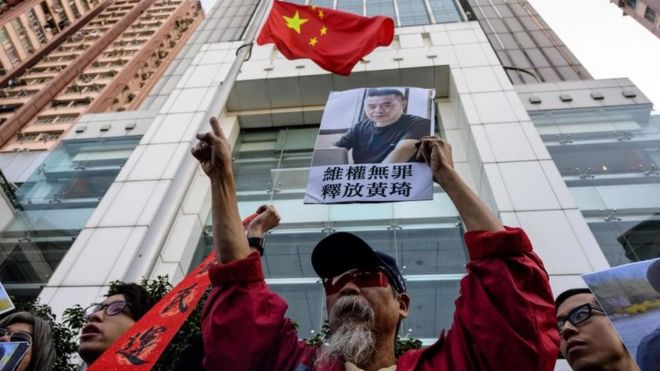
Huang Qi placardImage copyright GETTY IMAGES
Image caption Pro-democracy campaigners in Hong Kong have previously demanded Huang Qi’s release

A Chinese court has sentenced a civil rights activist widely referred to as the country’s “first cyber-dissident” to 12 years in jail.

Huang Qi is the founder of 64 Tianwang, a news website blocked in mainland China that covers alleged human rights abuses and protests.

An official statement said he had been found guilty of intentionally leaking state secrets to foreigners.

Huang has been detained since being arrested nearly three years ago.

He has already served previous prison sentences related to his journalism.

The statement, from Mianyang Intermediate People’s Court, added Mr Huang would be deprived of his political rights for four years and had also been fined 20,000 yuan ($2,900; £2,360).

Huang has kidney and heart disease and high blood pressure. And supporters have voiced concern about the consequences of the 56-year-old remaining imprisoned.

“This decision is equivalent to a death sentence, considering Huang Qi’s health has already deteriorated from a decade spent in harsh confinement,” said Christophe Deloire, the secretary-general of Reporters Without Borders.

The press-freedom campaign group has previously awarded Huang its Cyberfreedom Prize. It has now called on President Xi Jinping to “show mercy” and issue a pardon.

Amnesty International has called the sentence “harsh and unjust”.

“The authorities are using his case to scare other human rights defenders who do similar work exposing abuses, especially those using online platforms,” said the group’s China researcher Patrick Poon.

Repeated arrests

Huang created his website in 1998 to help people search for friends and family who had disappeared. But over time it began covering allegations of corruption, police brutality and other abuses.

In 2003, he became the first person to be put on trial for internet crimes in China, after he allowed articles, written by others, about the brutal crackdown of 1989’s Tiananmen Square pro-democracy protests to be published on the site.

That led to a five-year jail sentence.

He was subsequently sentenced to a further three years in prison, in 2009, after giving advice to the families of children who had died in an earthquake in Sichuan the previous year.

The relatives had wanted to sue the local authorities over claims that school buildings had been shoddily built – a claim the central government denied.

Huang was detained again, in 2014, after 64 Tianwang covered the case of a woman who had tried to set herself on fire in Tiananmen Square to coincide with the start of that year’s National People’s Congress.

Then he was arrested in November 2016 and accused of “inciting subversion of state power”, since when he has been incarcerated.

Since then, several human rights organisations, including Freedom House and the China Human Rights Lawyers Concern Group, have called for his release and raised concerns about reported threats to his 85-year-old mother, who had been campaigning on his behalf.
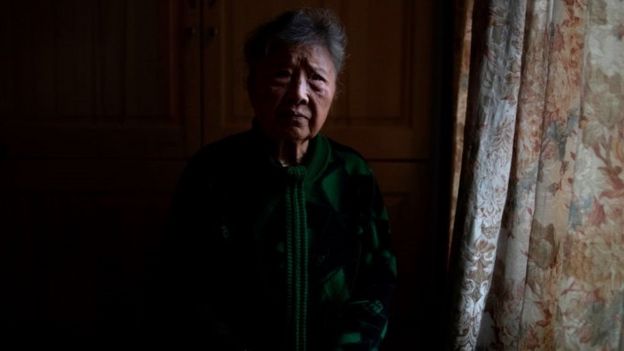
Pu WenqingImage copyright GETTY IMAGES
Image caption Huang’s mother, Pu Wenqing, had travelled to Beijing to plead her son’s case

And in December 2018, a group of the United Nations’ leading human rights experts also pressed for Huang to be set free and be paid compensation.

According to Reporters Without Borders, China currently holds more than 114 journalists in prison.

Source: The BBC
11/06/2019

Huawei: ‘We stand naked in front of the world’

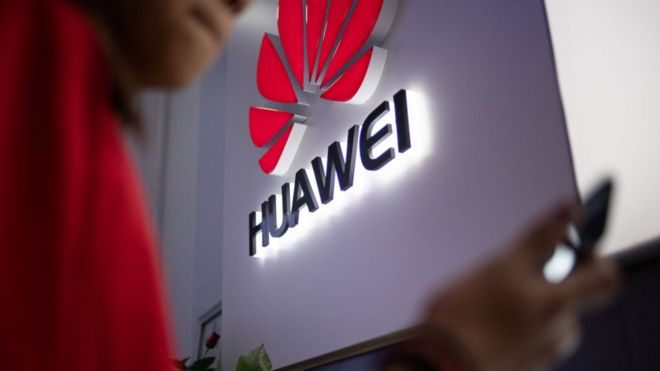
Huawei logoImage copyrightAFP

Huawei has denied that it has any links to the Chinese government.

Huawei’s cyber-security chief John Suffolk told MPs on Monday that the tech giant had never been asked by China or any other government to “do anything untoward”.

Mr Suffolk said Huawei welcomed outsiders to analyse its products and detect engineering or coding flaws.

“We stand naked in front of the world, but we would prefer to do that, because it enables us to improve our products.”

He added: “We want people to find things, whether they find one or one thousand, we don’t care. We are not embarrassed by what people find.”

Huawei was invited to the Technology and Science Select Committee to answer questions from MPs on the security of its equipment, and its links to the Chinese government.

The US has encouraged allies to block Huawei – the world’s largest maker of telecoms equipment – from their 5G networks, saying the Chinese government could use its products for surveillance.

Huawei cyber-security chief John SuffolkImage copyright PARLIAMENT TV
Image caption Huawei’s cyber-security chief John Suffolk said the tech giant has no access to mobile networks

“We’ve never had a request from the Chinese government to do anything untoward at all,” said Mr Suffolk.

“We have never been asked by the Chinese government or any other government, I might add, to do anything that would weaken the security of a product.”

MPs raised concerns about Chinese human rights abuses, such as reports that up to a million Muslims are in detention centres in Xinjiang province.

They asked whether Huawei was required to provide equipment to Xinjiang province, especially in light of the 2017 Chinese intelligence law, which requires individuals and associations to comply with Chinese intelligent agencies.

Mr Suffolk said: “We have had to go through a period of clarification with the Chinese government, that has come out and made it quite clear that that is not the requirement of any company.

“We’ve had that validated via our lawyers and revalidated by Clifford Chance…according to our legal advice, that does not require Huawei to undertake anything that weakens Huawei’s position in terms of security.”

Remote access

MPs asked whether Huawei would be able to remotely access the UK’s 5G mobile networks via its equipment.

A woman using 5G to access the internet on her smartphoneImage copyright GETTY IMAGES
Image caption Huawei said it would have no access to any data on a 5G mobile network

In reply, Mr Suffolk stressed that Huawei is a provider of telecommunications equipment to mobile network operators.

“We don’t run networks, and because we don’t run the network, we have no access to any of the data that is running across that network,” he said.

He also explained that Huawei is only one of about 200 vendors who would be providing various different bits of equipment that would eventually make up a 5G network in the UK.

However, if an operator were to have a problem with Huawei equipment, a support centre based in Romania would be able to remotely access the equipment to fix the problem.

MPs wanted to know whether it would be possible for a 5G network to be used to track an individual user.

In response, Mr Suffolk explained that mobile phone technology requires the mobile operator to constantly track a user’s phone, in order to be able to connect them to the mobile network.

By that logic, the operator is constantly tracking all of its customers, all the time.

He also told MPs that only about 30% of the the components in Huawei products are actually made by the company – the rest of the components are obtained from a global supply chain that Huawei closely monitors in order to prevent security breaches.

Source: The BBC

Law of Unintended Consequences

continuously updated blog about China & India

ChiaHou's Book Reviews

continuously updated blog about China & India

What's wrong with the world; and its economy

continuously updated blog about China & India